

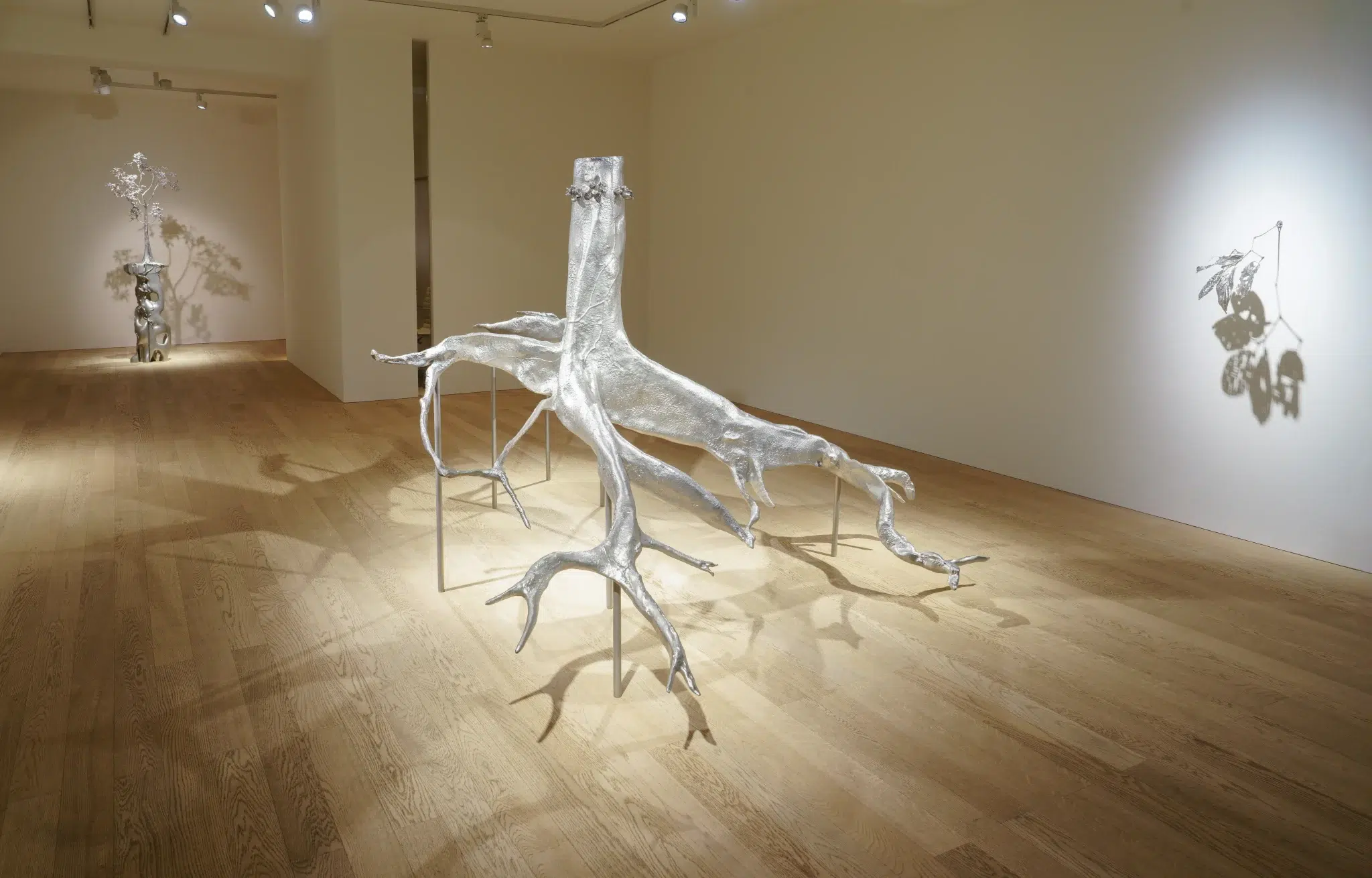
The Berlin-born artist Timur Si-Qin has spent his career dissolving the line between the natural and the synthetic, and since 2019 he has returned to the Peruvian Amazon to study its plant life. As Frieze London 2026 gets underway, Lola Clark speaks to Si-Qin about his new exhibition Pristine, Part I at Albion Jeune, growing up amid Apache ceremony in Arizona and why he believes technology was never the enemy of nature.
Lola: Your childhood involved experiences across different cultural environments, including Germany, China and the American Southwest. How has your upbringing and experience of different cultures and relocation influenced your work and your way of perceiving the world?
Timur: There are so many different experiences that have been woven together to create a sense of tapestry within the meaning of my work. When you have this multi-cultural background, you’re always a kind of outsider and feel like you never really belong to any one specific place. I am always the foreigner no matter what the context is. But the advantage is that no one culture is necessarily more formative over your reality than the other. And then you’re able to step outside and see your own culture back in on itself. I think that is fundamentally what being an artist is. You can take a bird’s eye view and examine which culture defines your perspective and which culture defies it.
When it comes to my upbringing, my mom is German and my dad is ethnic Mongolian Chinese. My mom is a Sinologist, and she went to China in the 1970s and met my dad there. They eventually moved to Berlin, where I was born. Some years later, they divorced. My mom moved us to the States and was very involved in Native American human rights activism, where she eventually met my stepfather, who was incarcerated at the time. So we moved to Arizona and they got married.
Clark: So they got married while he was in prison?
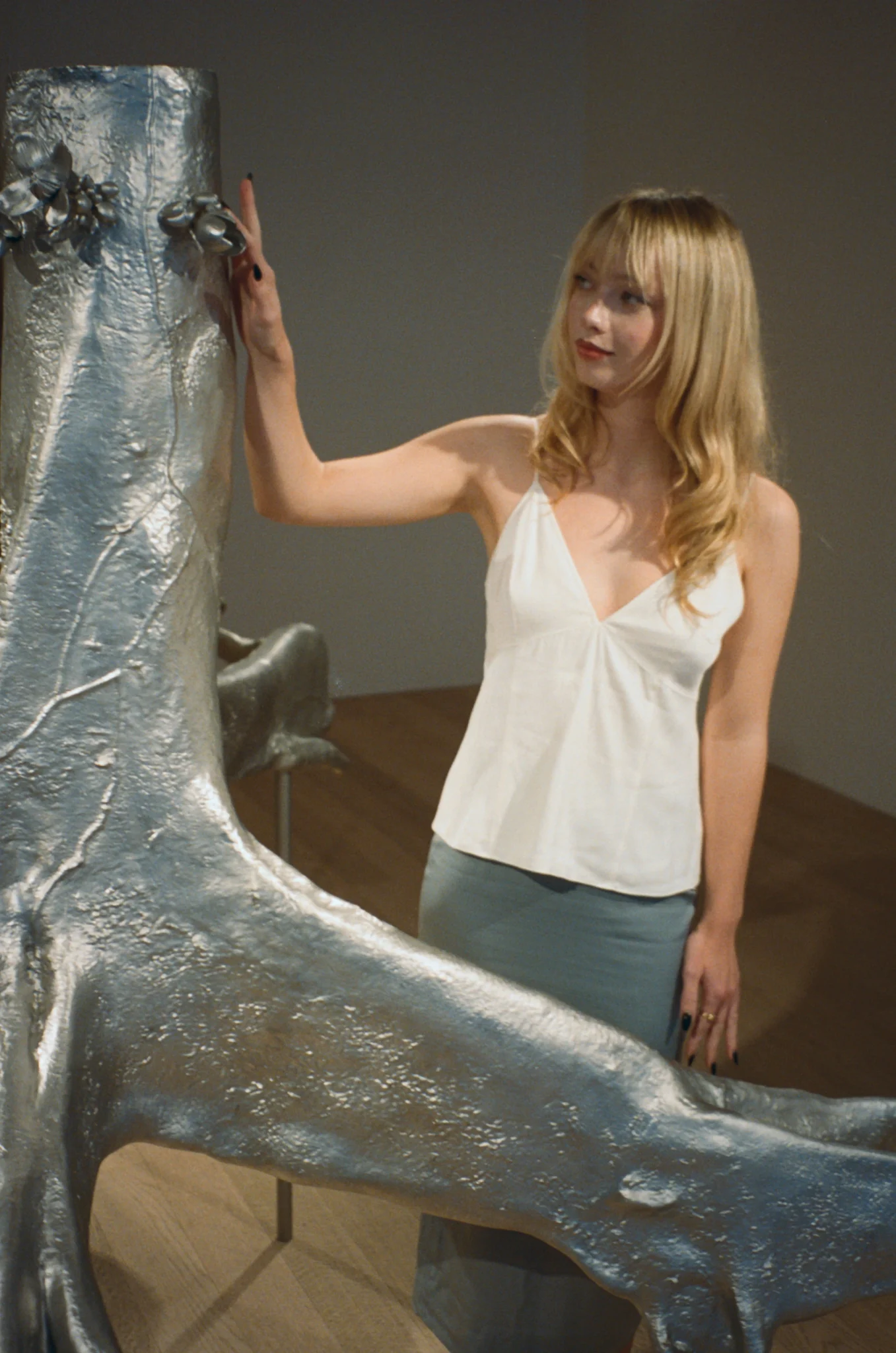
Si-Qin: Yes, and then had a ceremony some months later. My stepfather participated in a lot of ceremonial life in the Southwest, and we attended many rituals and ceremonies. He was a Chiricahua Apache. Through that upbringing and experience, I discovered the Sun Dance. The Sun Dance is this really incredible ceremony where the men fast for something like four days with no food or water, and in that period they would dance around this tree. As part of this ritual, the tribe will go out and find a tree and cut it down, and they will never let it touch the ground. The village will hold it, carry it to the ceremony site and place it in the center of this arbor. At some point, the Sun Dancers have ropes that are tied to the tree, and they will pierce their chest muscles with eagle talons that are connected to the other end of the rope. Eventually they hoist the tree up, and these men will hang from it by their pectoral muscles.


Clark: Did you watch this as a kid?
Si-Qin: Yes, the Sun Dancers will hang from the tree until it rips through their flesh.
Clark: Do you think this has influenced your work? Especially its ties to ancient practices.
Si-Qin: Definitely. It’s an incredibly old practice. They say that this ritual is a way for men to bleed for the earth. Nature is at the core of the indigenous cultural value system. Animals are the main characters of their mythologies, and they’re always praying to the animals and the ecosystems and so on and so forth.
There’s this Native American scholar named Vine Deloria Jr. and he wrote this great book called God Is Red. He walks you through a really fine-grained analysis regarding the different value systems, and essentially points out that Western culture is stuck in the abstraction of time, and what is important in Western culture is likened to what has happened in history.
On the other hand, in indigenous cultures, it’s not about time, it’s about space. So what’s important is places, sacred places, their ecosystems, the relationships with the animals that live there. That difference is fundamental to what I focus on in my work. I feel that even today the topic of the environment is still quite unrepresented in contemporary art and very much on the periphery. I don’t know if you’re going to go to Frieze art fair, but if you go, you’ll see that nature is still quite a small percentage.
Clark: Would you say that your work is a way of preserving that?
Si-Qin: There’s an element of that, of course. Especially with this show, I’m really fascinated by the experience of wilderness, which I don’t think most people have experienced. Most people haven’t been to places even an hour’s walk from a car in a public spot. What I find is that when you do get into these wild places, they have vastly different qualities. Plants look different, animals look different, and everything is just generally more vibrant. I can’t articulate it in any other way, but the wilderness just looks different, and it looks healthier. Even the light on the trees is different, because you need a certain air quality for the light to be that way. You just won’t see that anywhere near cities. The birds are more colorful, the lizards even. Their phenotypic expression is more profound. And that difference is just really interesting to me. It’s also subtle, and it’s not really talked about that much in art, so I try to bring some of that into these art spaces, into urban environments, in order to really just remind people that these places actually still exist. And—
Clark: —and they’re missing it.
Si-Qin: Exactly. And they’re missing it.
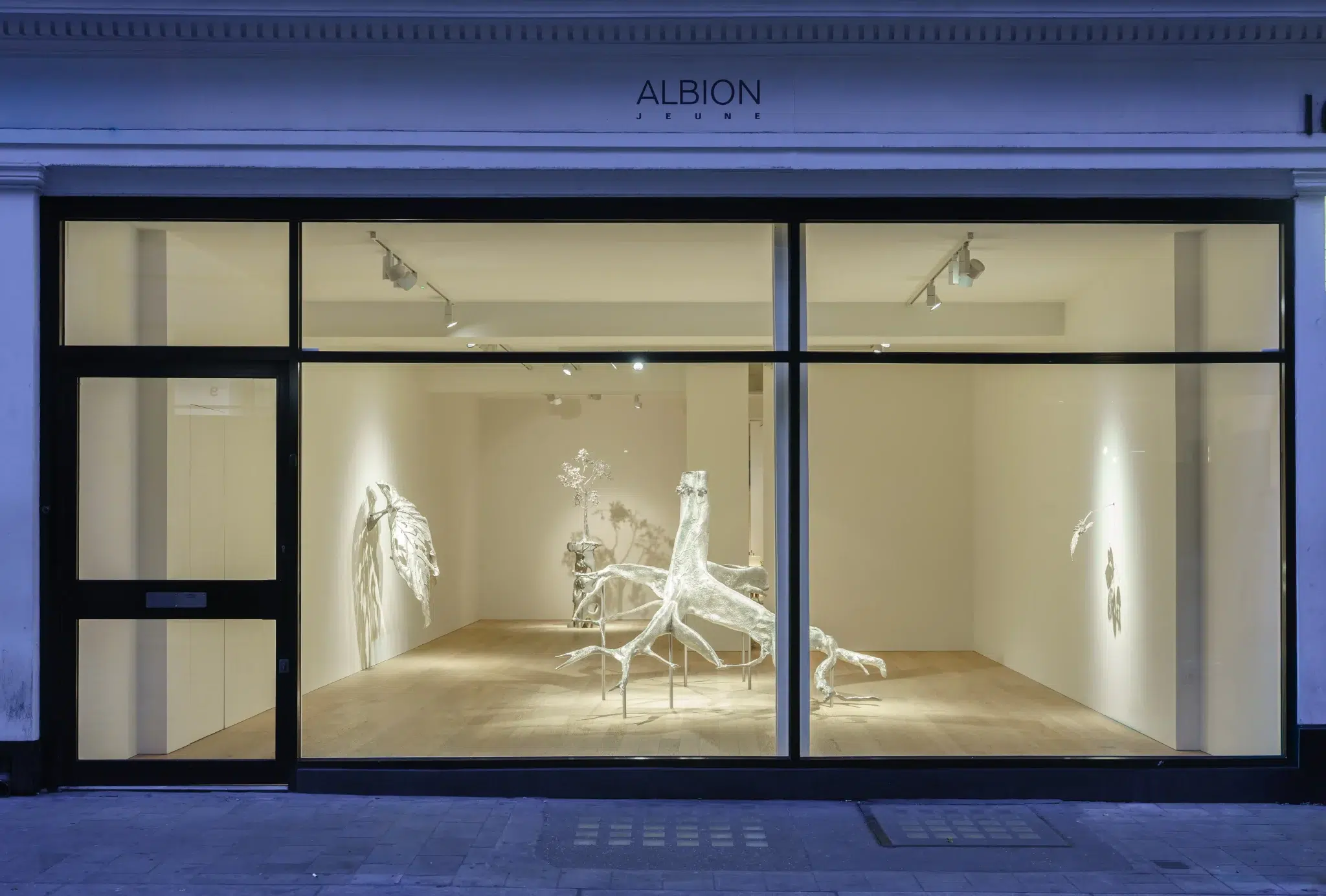
An outdoor view of Timur Si-Qin’s Pristine Part 1 at Albion Jeune
Clark: Pristine is rooted in the Peruvian Amazon. Why Peru, and what drew you to these particular species?
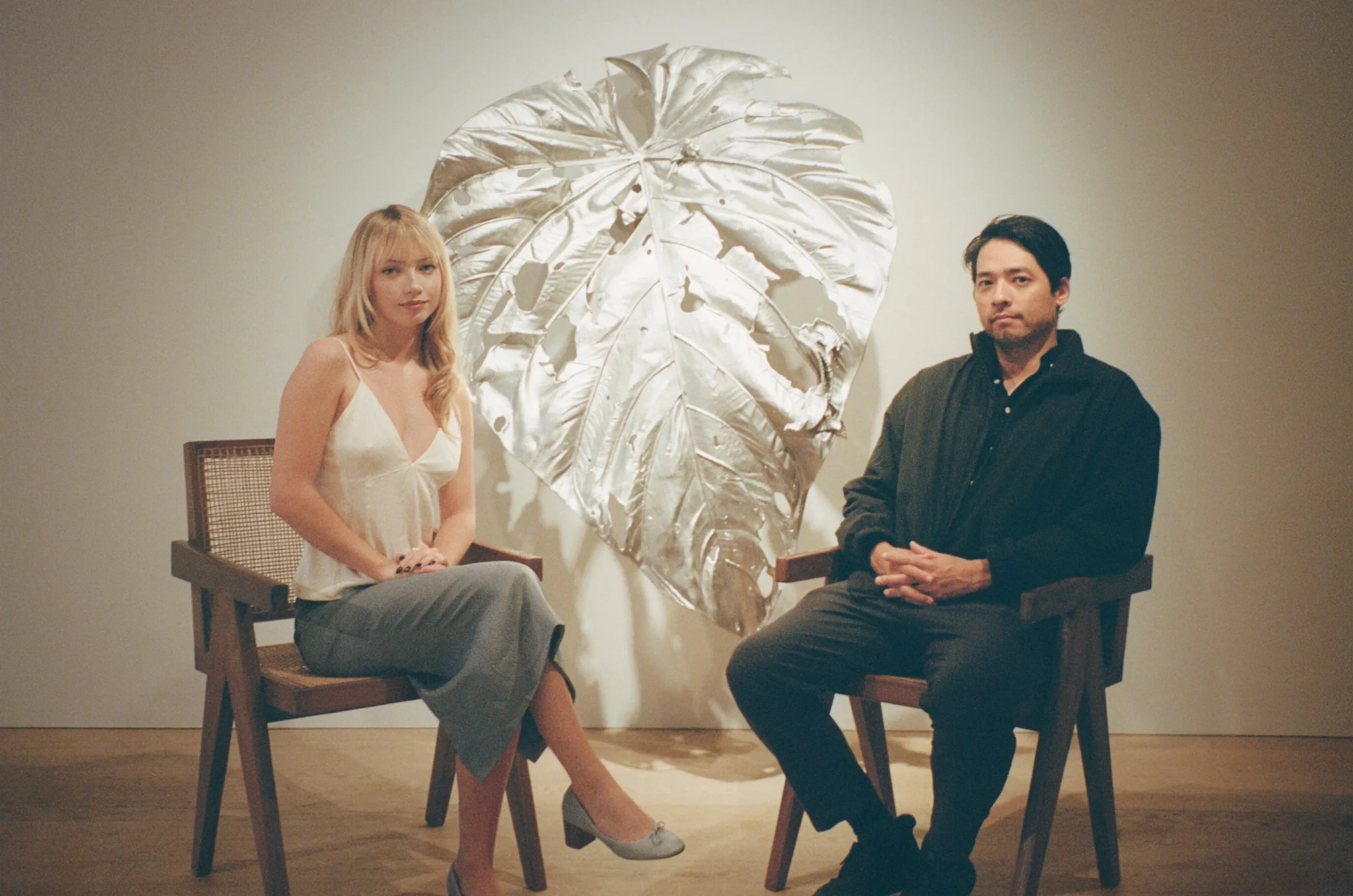
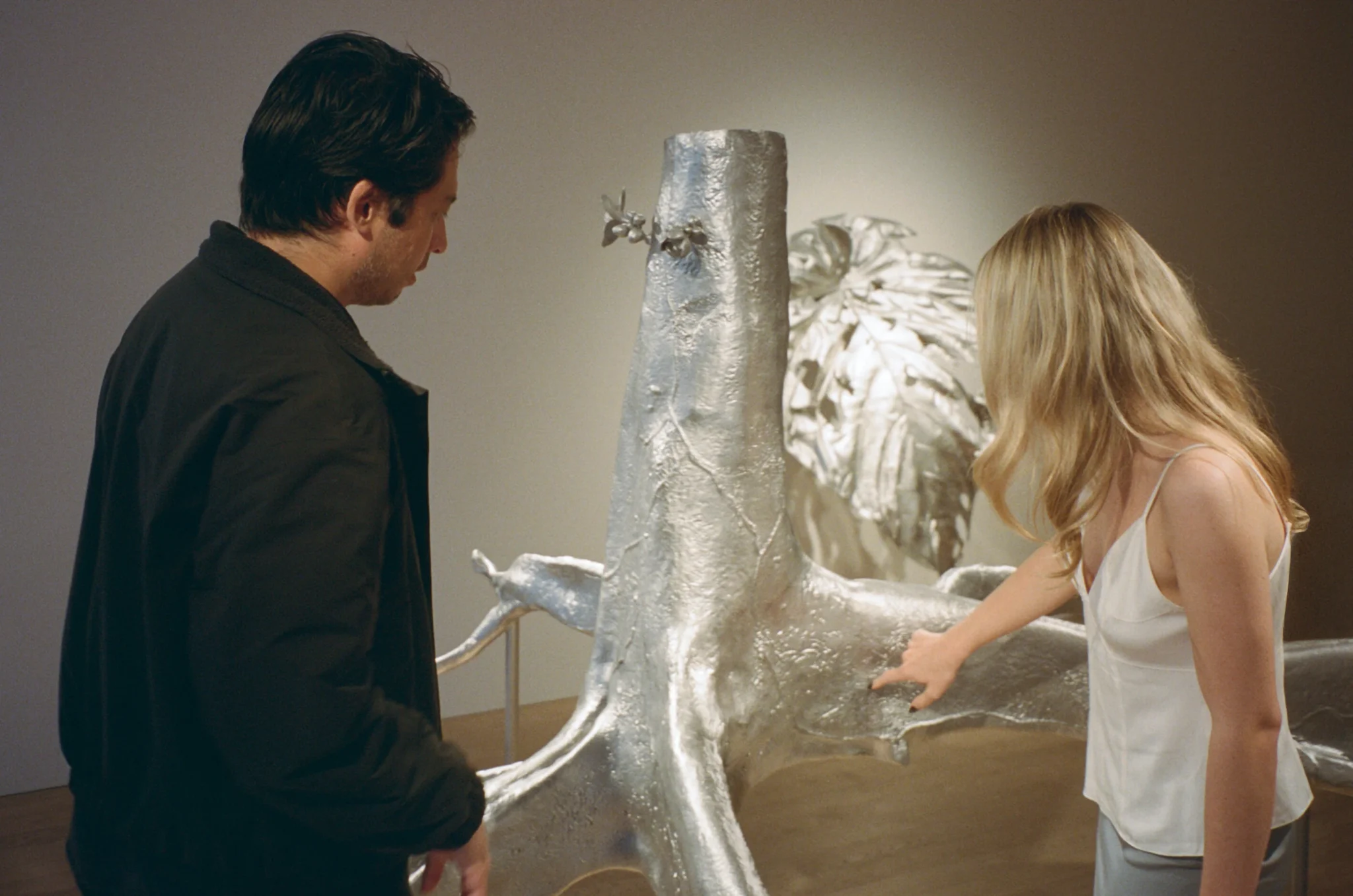
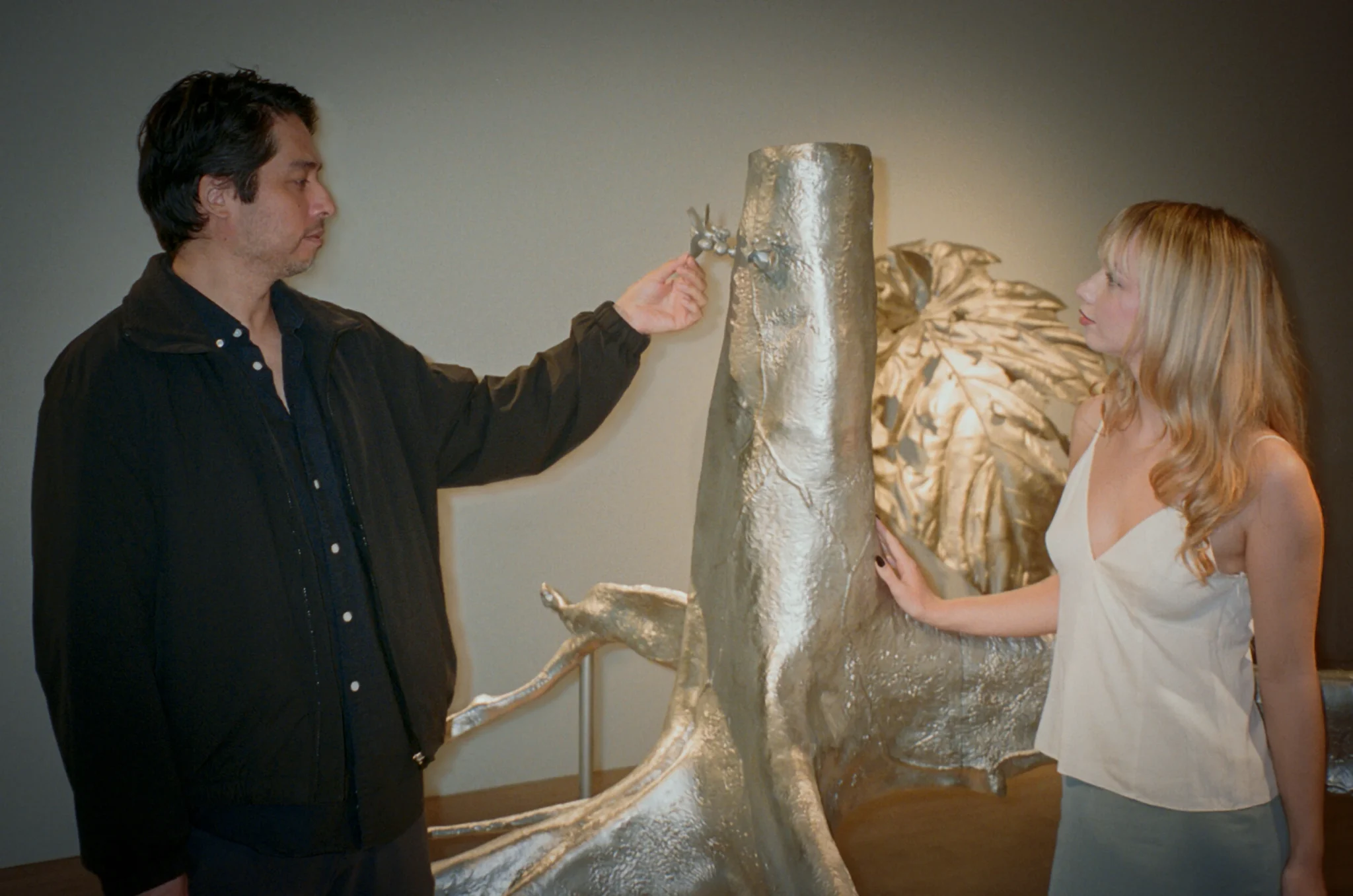
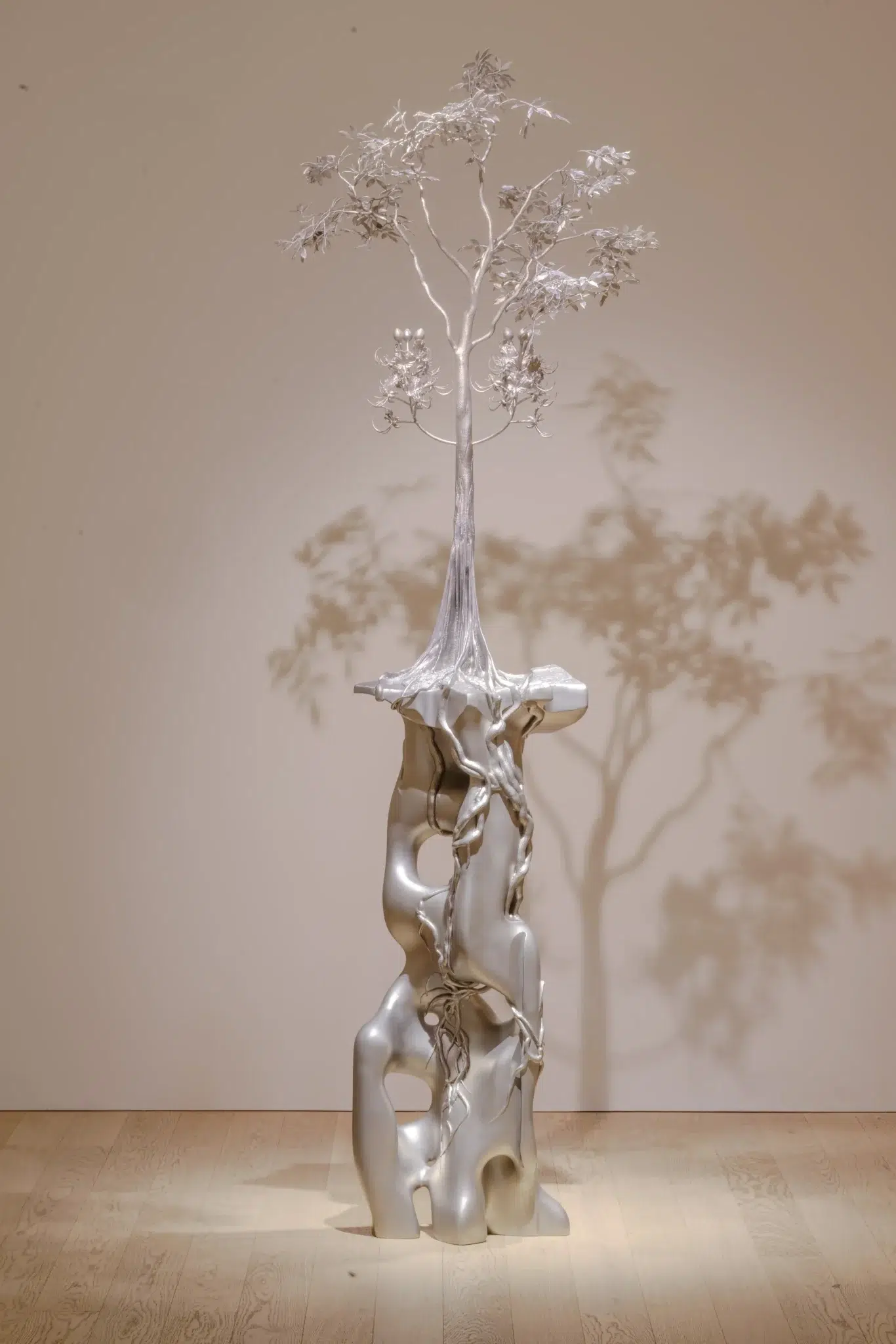
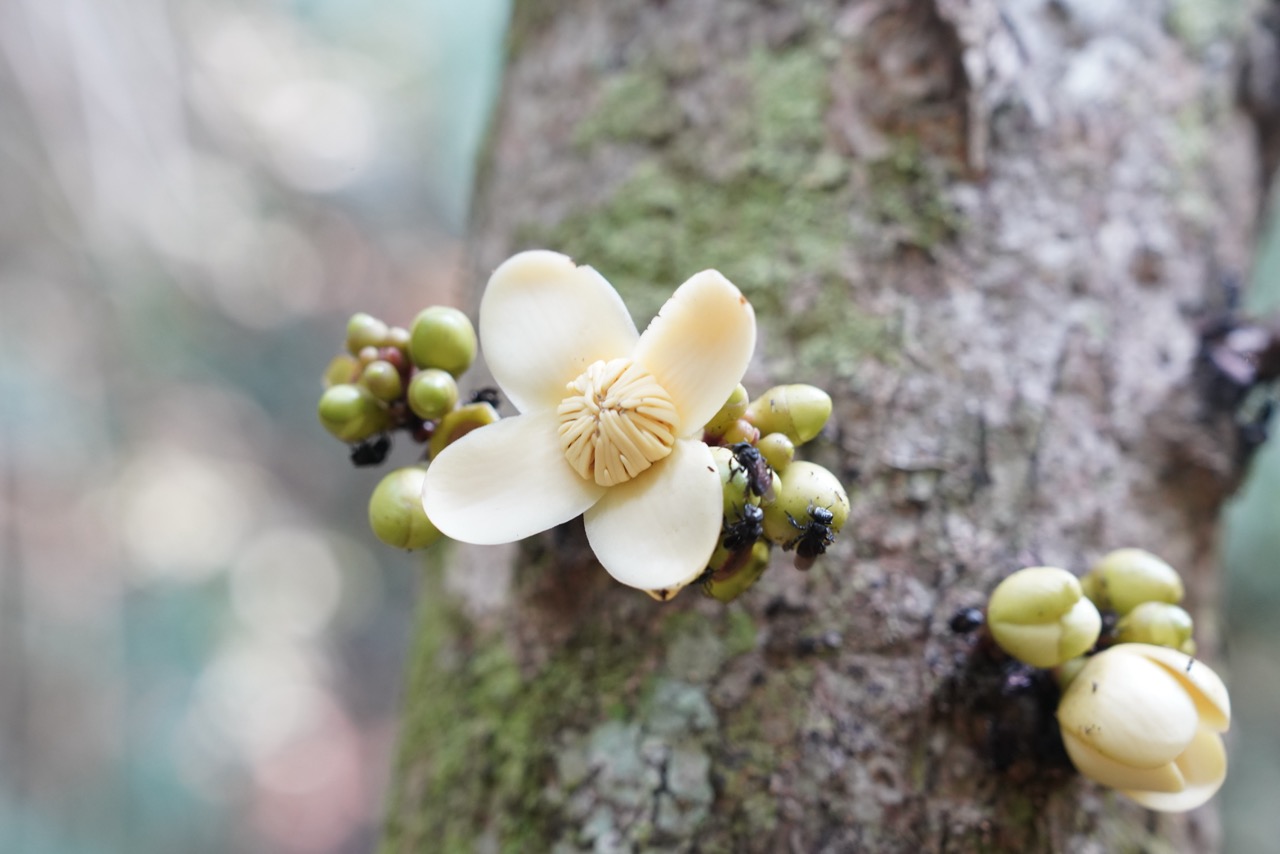
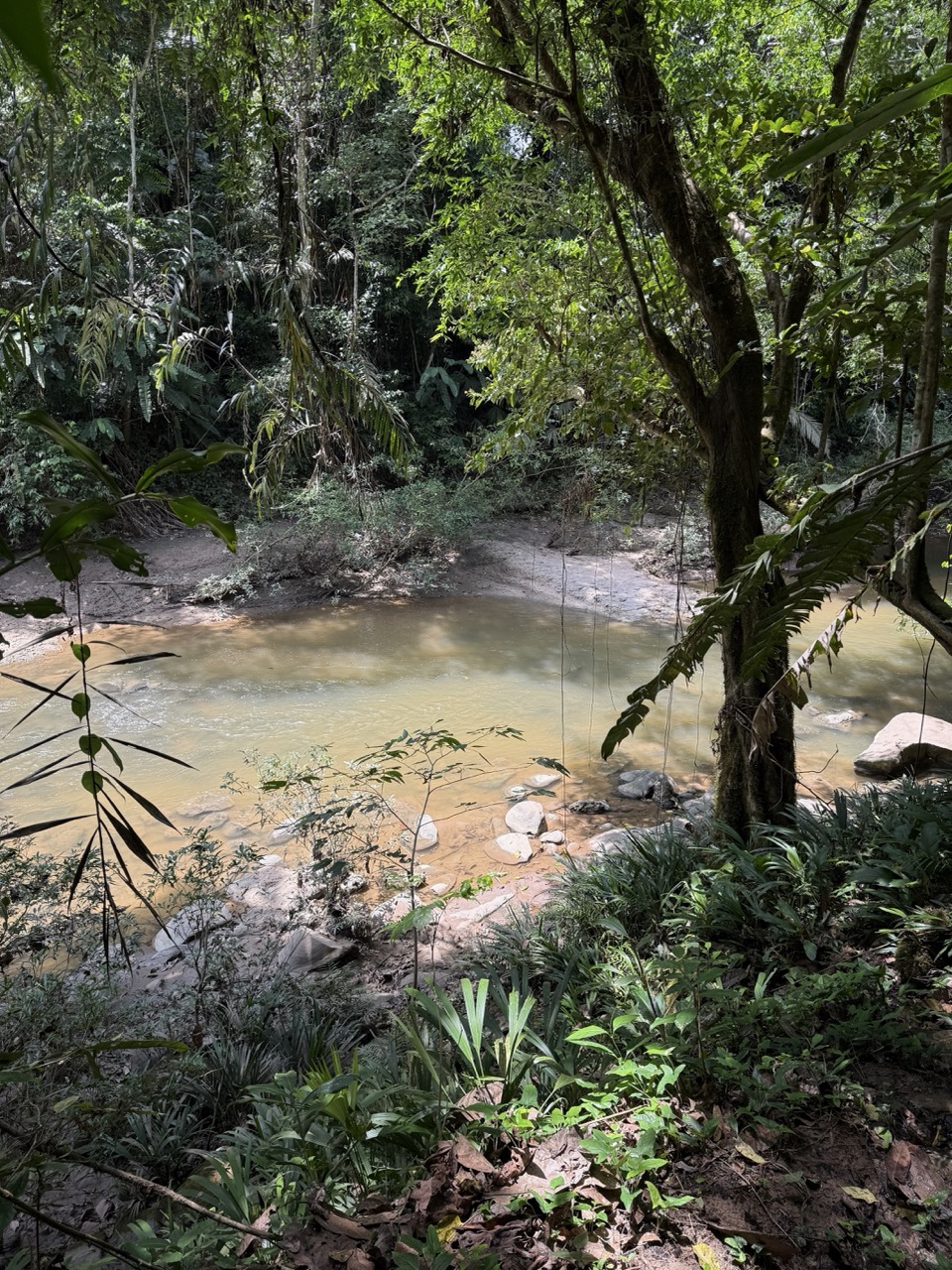
Si-Qin: I first went in 2019 and I have been going every year for the past three years. To me, these trips are a period of isolation: 10 days in the very remote jungle; isolated running water and electricity; a very restricted diet; and participating in ceremonies. This sculpture here—this is a Cumaceba tree. What’s really fascinating is that you realize you can form relationships with all plants, open these chains of communication with them, and then they can teach you things.
Clark: Nature is a recurring theme in your work. Why do you keep coming back to it? What inspires you about it?
Si-Qin: We’re in a situation where there’s a technical-evolutionary mismatch, so from that point of view, we’re now facing these environmental crises. I don’t know if you’ve seen in the last few days, but 60% of all the orangutan forest in Africa has burned down and I think we’ve lost something around 70% of the total biomass of animals in the world already. I want my work to be a reminder of this mismatch, but I am not trying to do it in a heavy-handed way. Ultimately, I think it’s more effective to remind people of the beauty of what’s being lost, and what is valuable, rather than trying to be, you know, what’s the term?
Clark: Lectured
Si-Qin: Right, to be lectured. Art is a really good vehicle to articulate that reminder. My work asks the question ‘how do you articulate a contemporary spirituality of nature?’ That’s essentially what I am trying to do.
Clark: Your work often challenges the distinction between the natural and the artificial suggesting that nature and technology are not opposites but deeply intertwined. Do you think our understanding of nature is itself a cultural construct? How does your work help us imagine a different relationship with the living world?
Si-Qin: There is an argument in contemporary theory and philosophy that nature is a construct. However, my intuition runs the opposite way. It’s not that nature is a construct; it’s that everything is nature. I think even technology is nature. Ultimately, technology is the extended phenotype of Homosapiens. When we create something, nature is growing out of us, and oftentimes, we blame technology for the destruction of the environment. But it’s actually culture that defines how we use technology in relation to the environment.
Clark: In the sense that we’re using it the wrong way?
Si-Qin: Right, and that same perspective also omits that it’s specific cultures, and suggests that all cultures use technology in some sense. But it’s not indigenous people that are destroying nature, and it’s not because they don’t use technology. It’s because their value system is different. So that’s the point I’m trying to make. It’s not the technology, it’s the value system.
Clark: How do ideas of beauty and our expectations of what is beautiful come into play in your work?
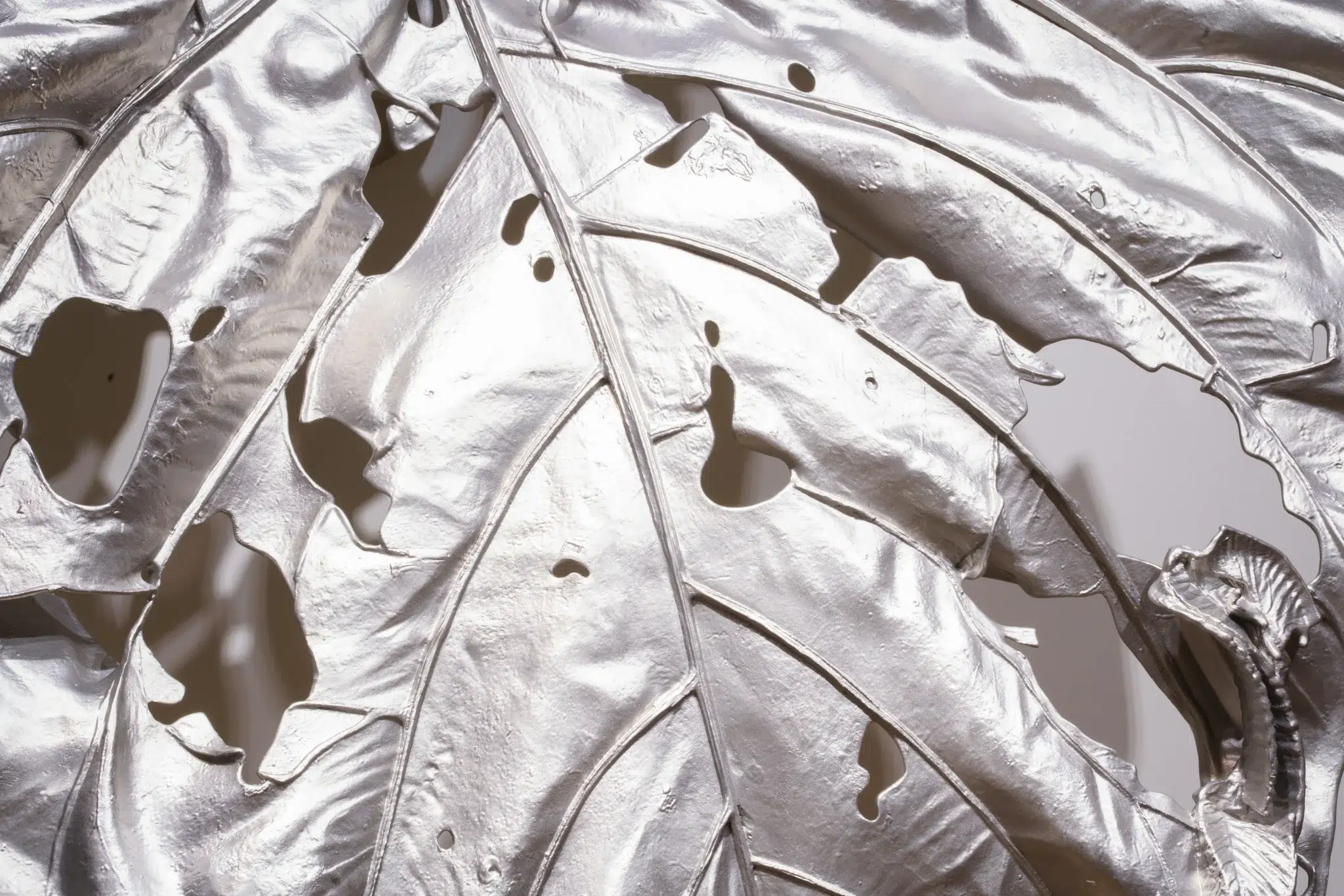
Si-Qin: Beauty is what this thing is all about. Nature, down to the very leaf, is the master work. That’s what I’m trying to remind people of.
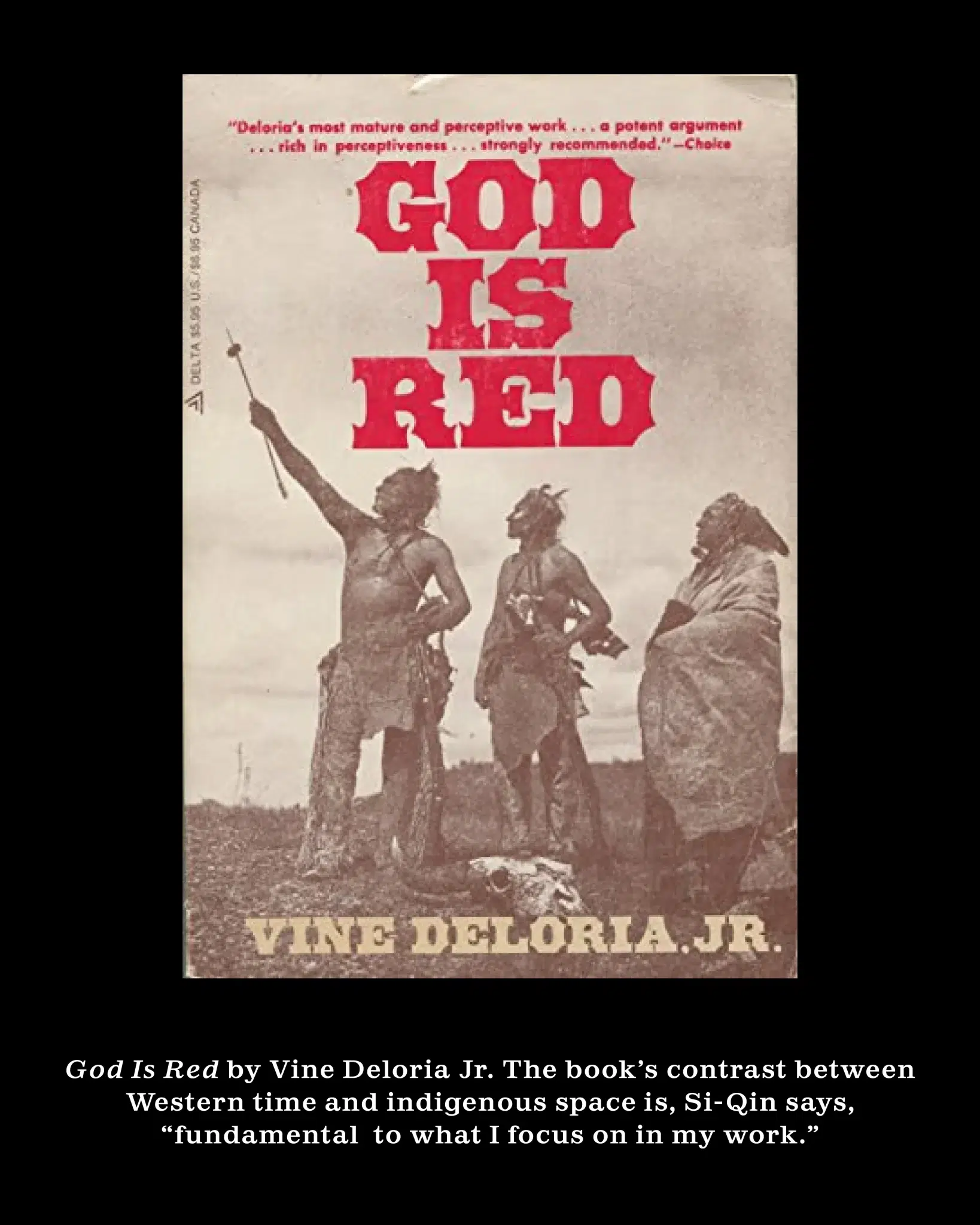

“Western culture is stuck in the abstraction of time. In indigenous cultures, it’s not about time, it’s about space. What’s important is places, sacred places, their ecosystems, the relationships with the animals that live there.”
Clark: I want to go back to the technology bit for a second. Technology also plays an important role in your practice. How do you see the relationship between nature and technology? You’ve said technology has been with us since the beginning of time, in many different forms. Can you expand on that?
Si-Qin: Technology goes back to the very beginning. All art, other than maybe singing and dancing, goes back to technology. Even the ochre of cave painting and Aboriginal art was technology. You can’t really make a cut off between technology and nature. The goal isn’t to not use tech, but to use it in a way that benefits nature.
Clark: How long do you spend researching vs. how long do you spend creating?
Si-Qin: It depends—I go backpacking a lot, and I’ve been doing that since I was a kid in Arizona. Those experiences shaped me, and I would love to keep doing that throughout all these naturally diverse places. But there is a ticking clock; these places are losing land year by year, and it’s given me an urgency to do the research and capture the identity of these places that are slowly being lost. I was really able to build this practice in a way that I love. I was able to build it by going to these fantastical places where nature in-and-of itself is so inspiring.
Clark: Are you working on any exciting new projects you can tell us about?
Si-Qin: There is this tree in Sherwood forest, Major Oak, which is over 1200 years old. It’s gigantic and it just died this past summer. So my plan is to go there in a couple of days and scan it.
Clark: What would your dream commission be?
Si-Qin: I’m not sure [laughs]. I think that’s a dream to be had.
Clark: Are there any films that have inspired your work?
Si-Qin: I think my favorite film in recent years has been Embrace of the Serpent, which is a beautiful film about the story of two explorers set 40 years apart in the Colombian amazon who, through different journeys, discover the same plant.