

In Rome, we visit Willem Dafoe to learn about his chapter as theatre director for Venice Biennale Teatro, as well as his philosophy for life and acting, and the pursuit of obligation.
Friday the 17th, July. The hottest day of the year in Italy— a hair dryer without an off-switch. In the Roman suburb of Testaccio, the great American actor Willem Dafoe is on a studio set swaying to Rosalía. Then he quietly dismantles an oak prop table and stacks the pieces. It threatens to topple, Jenga-like on the concrete floor, much to the horror of the prop designer. “Don’t worry,” he grins, as we look on. Performance is Dafoe’s expertise, and he knows how far to push. “I see shoots as mini projects,” he explains. I stay out of his way. The next day, I will visit him at his farm an hour from Rome, preferably with a clean slate. You never want to leave an impression before an interview, especially when it’s 40-degree, sweat-patch weather and your small talk translates into hysterical babble because of the heat. Ahead of speaking to Dafoe, I’d been told by those who have worked with him that he was a serious person. They mentioned a real authenticity and intelligence, and an evident desire for privacy. But a balance had to be maintained or it’d be toppled over—like the pieces of the desk. “Sometimes, I don’t know why I do these things,” he admits, when I ask about photoshoots and press days. The rest of us are enthralled; it has become a chance to see an artist in action. “But if I’m going to do it, I may as well do it right.”
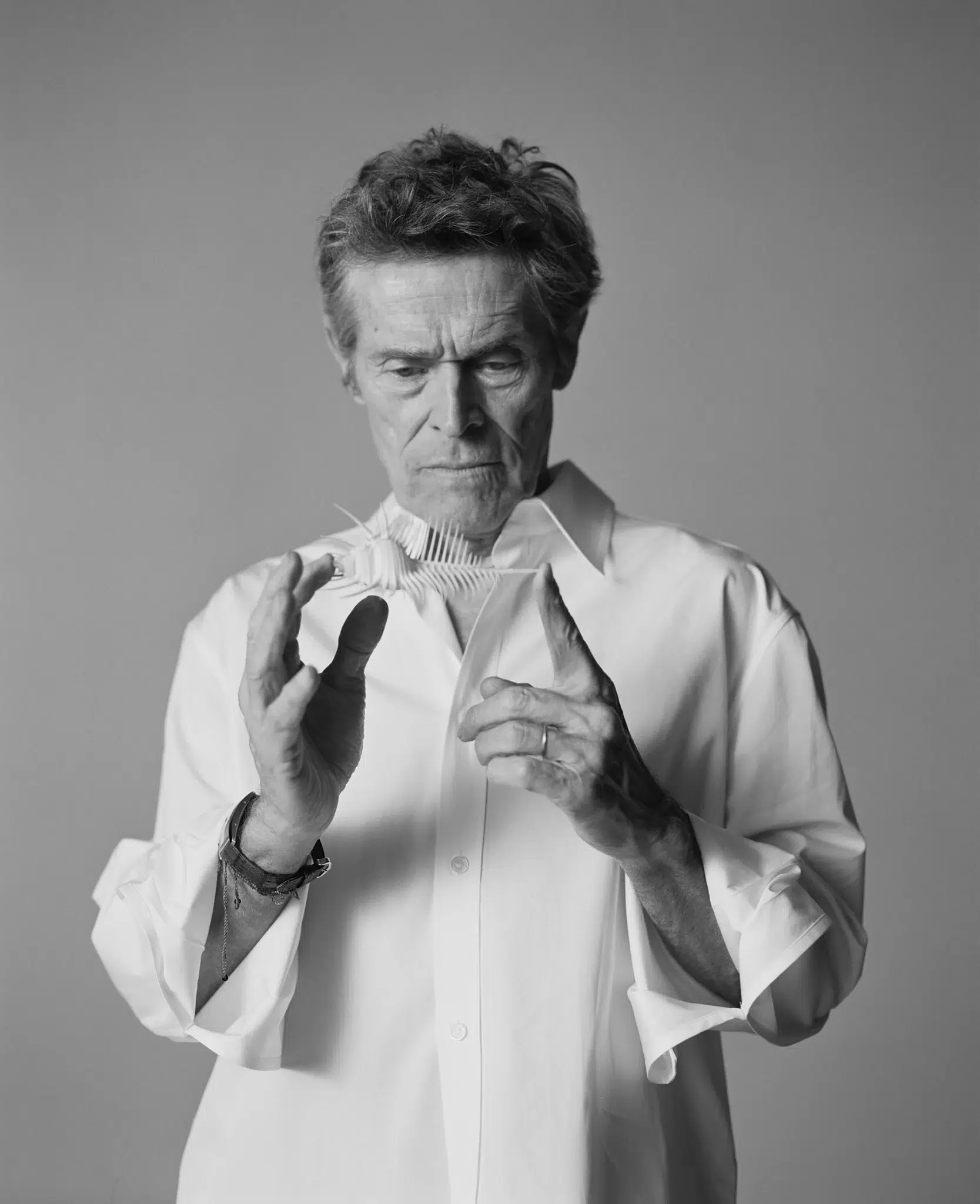
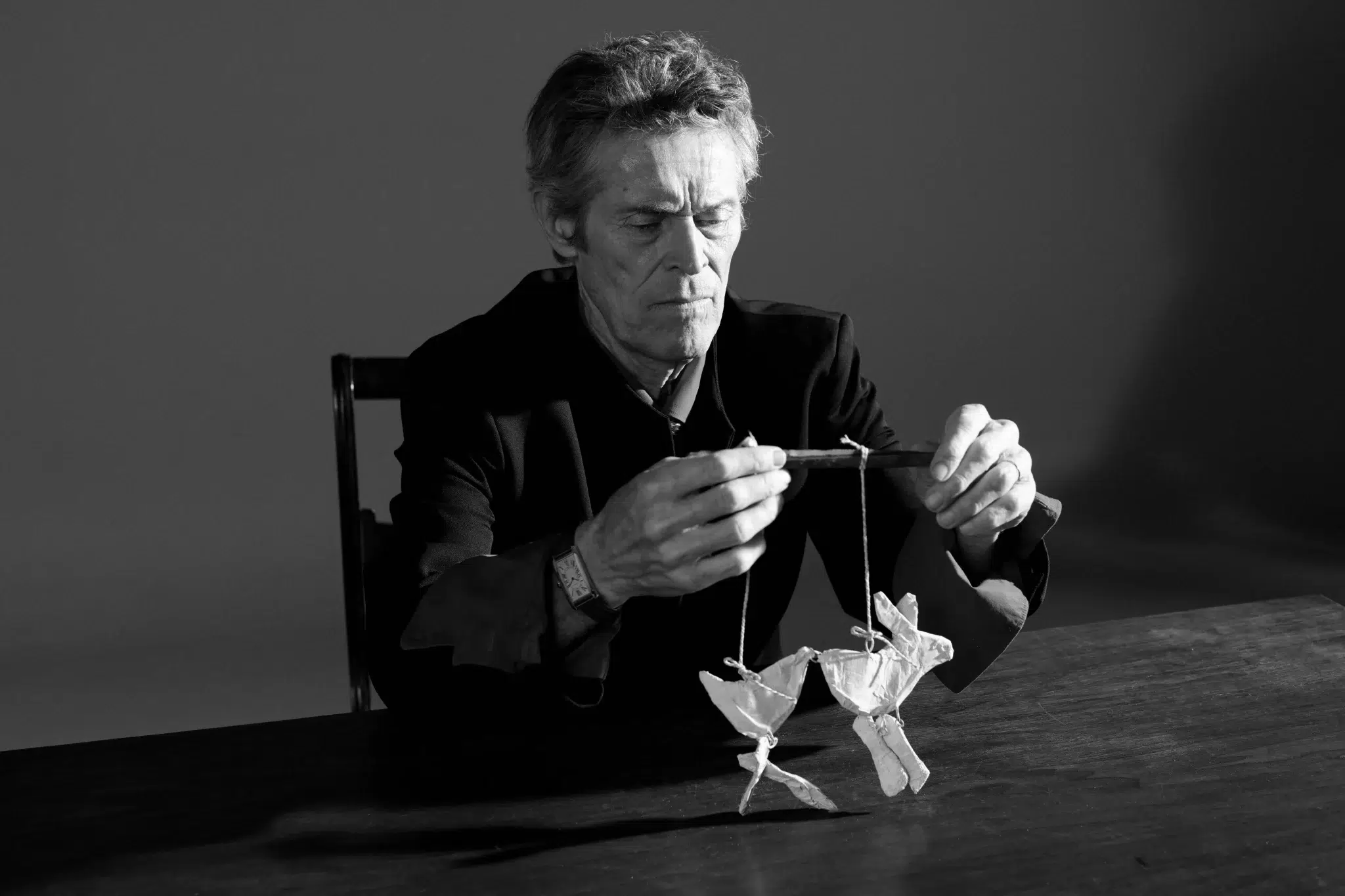
Willem Dafoe for A Rabbit’s Foot, 2026. Willem is wearing a Bottega Veneta silk shirt and Cartier Tank Cintrée watch.
Willem Dafoe is a four-time Oscar- nominated American actor who is not in America. We meet at his farm, outside Rome, where he lives with his wife—the director, actor, and musician Giada Colagrande—and around 30 goats, as many birds, sheep, donkeys, two friendly greyhounds, and 16 alpacas.
“I’m a little distracted,” he explains, as we walk towards his office. There’s a particular chicken he’s nervous about. This morning, the bird developed a bad case of diarrhoea and the Hollywood star is unsure if she will make it. The good news is that an alpaca has just given birth. “It can seem like Noah’s Ark sometimes,” he admits as a parrot flies over my head and perches beside its cage. Dafoe mumbles a bop and the pair start dancing.
This is a real farm, not the type that a successful star buys on a whim. Dafoe is at home wandering through allotments, picking sweet tomatoes and green beans. He becomes giddy about a type of insect-warding lantern and the prospect of eating the first watermelon of the season at lunch. As we wander up a hill, a herd of goats stampede toward us like an ambushing cavalry in Lawrence of Arabia. His favourite is named Black Phillip (like the Satanic buck in Robert Eggers’s The Witch (2015)).
Has Eggers met Black Phillip? “Eggers indeed met Black Phillip,” Dafoe says as the goat nudges him for food.
At this, I remember that I’m speaking with one of the world’s major movie stars. Audiences will see Dafoe in Eggers’s next horror Werwulf (2026), marking their fourth film together as a self-described “puzzle piece”. He also leads a quintet of smaller-budget dramas: The Birthday Party by Miguel Ángel Jiménez (2026); Late Fame by Kent Jones (2026), Gonzo Girl by Patricia Arquette (2026), and The Souffleur by Gaston Solnicki (2026). He will also have Jennifer Peedom’s Tenzing (2026), among other releases. Each of them, he notes when we sit down in the office, have something to say about legacy—about becoming older.
Dafoe, at 71, is famously private; a man who has quietly reorganised himself around an obligation to things outside of himself, including his recent role as the theatre head of the Venice Biennale Teatro. He’s happy to stay out of the spotlight. “I don’t have that kind of interest… I’ve got things to do. And I want things to happen to me.”
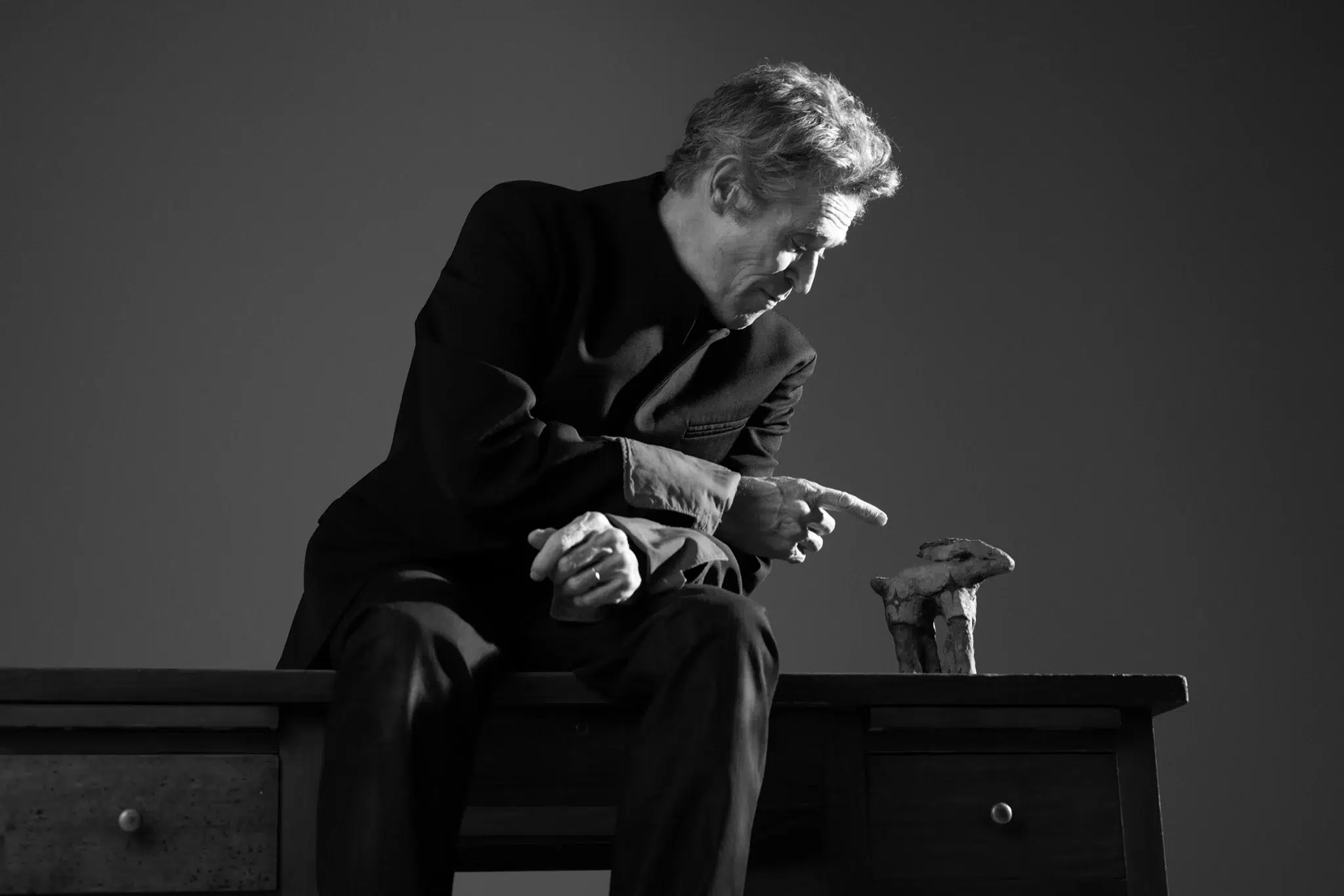
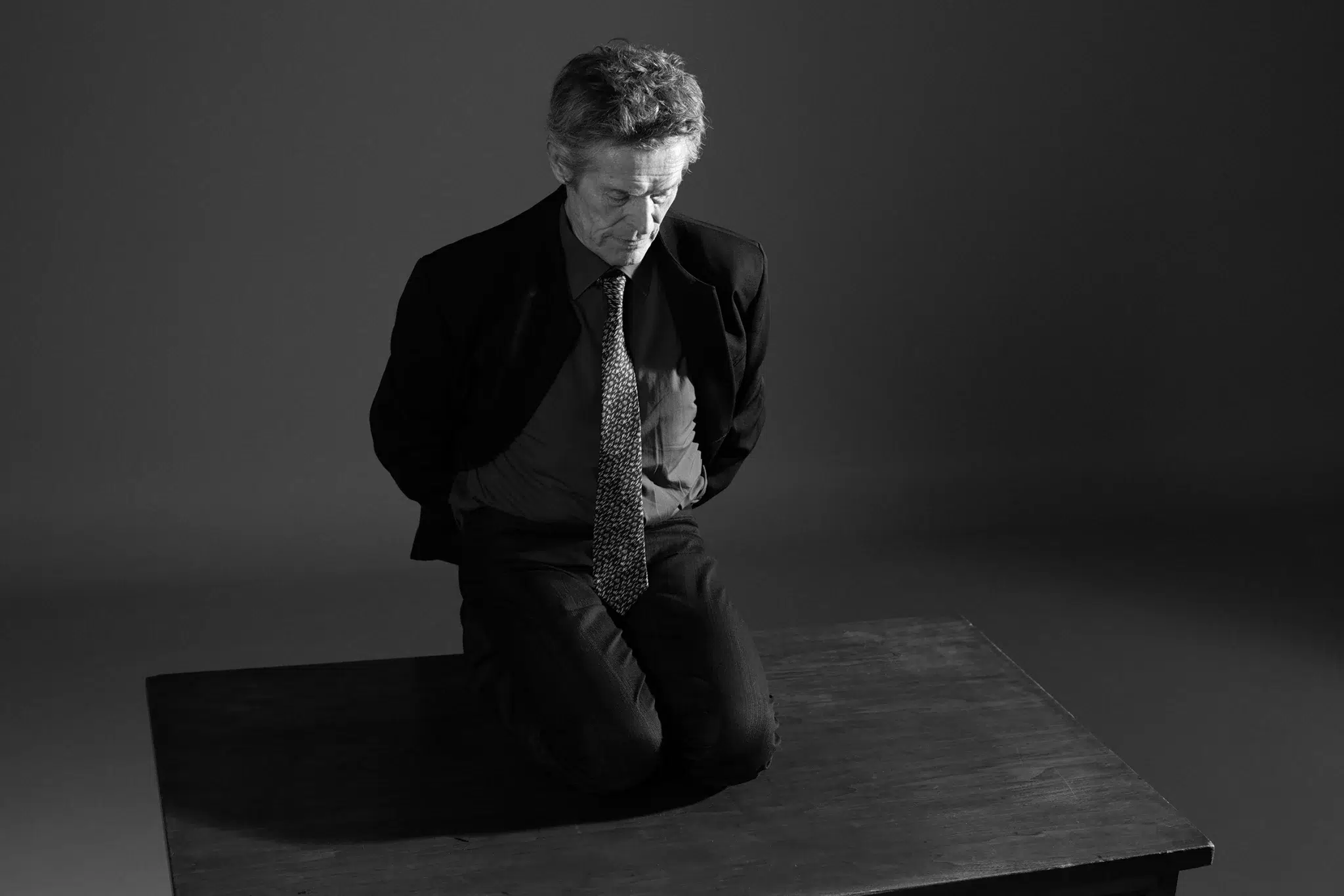
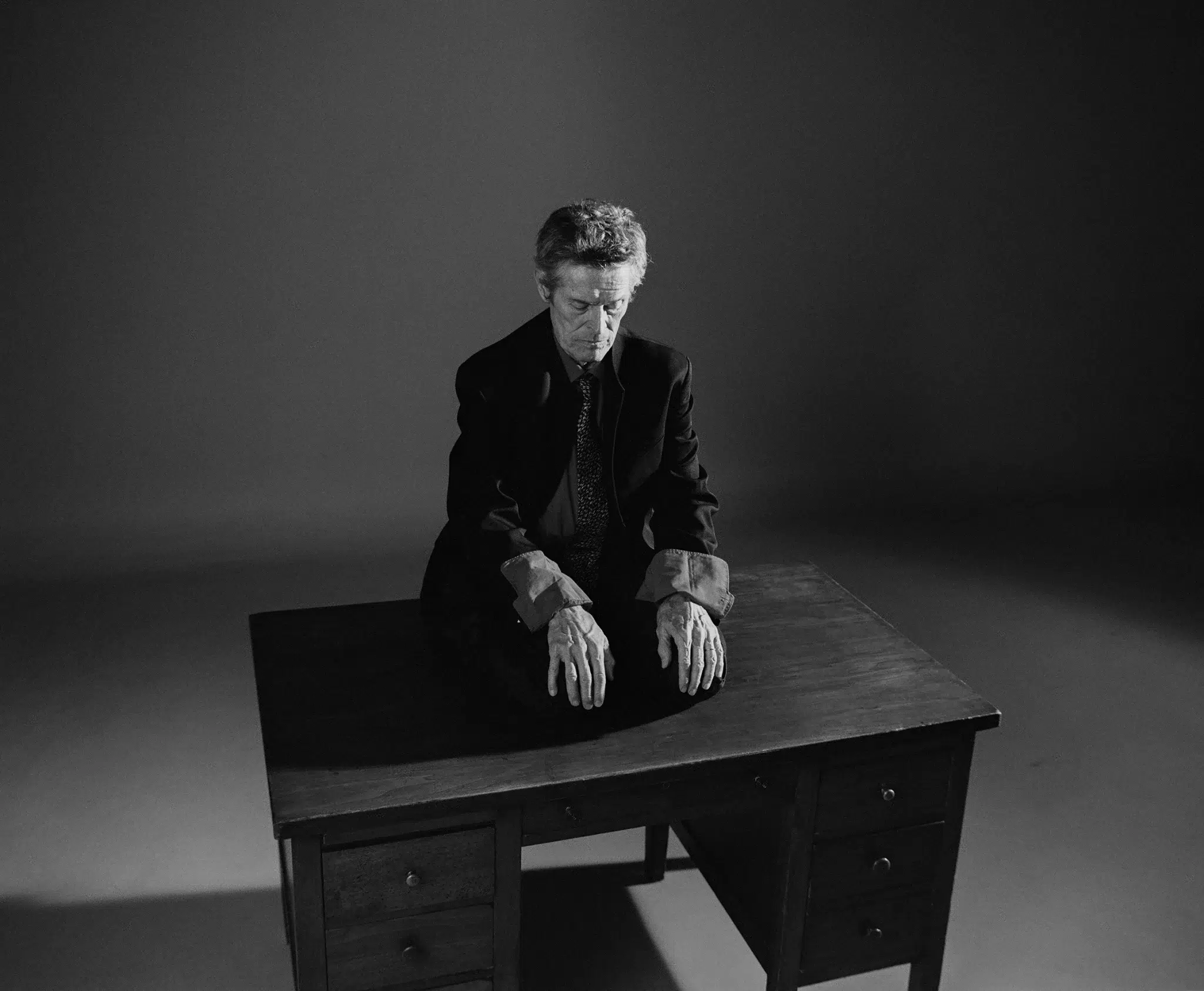
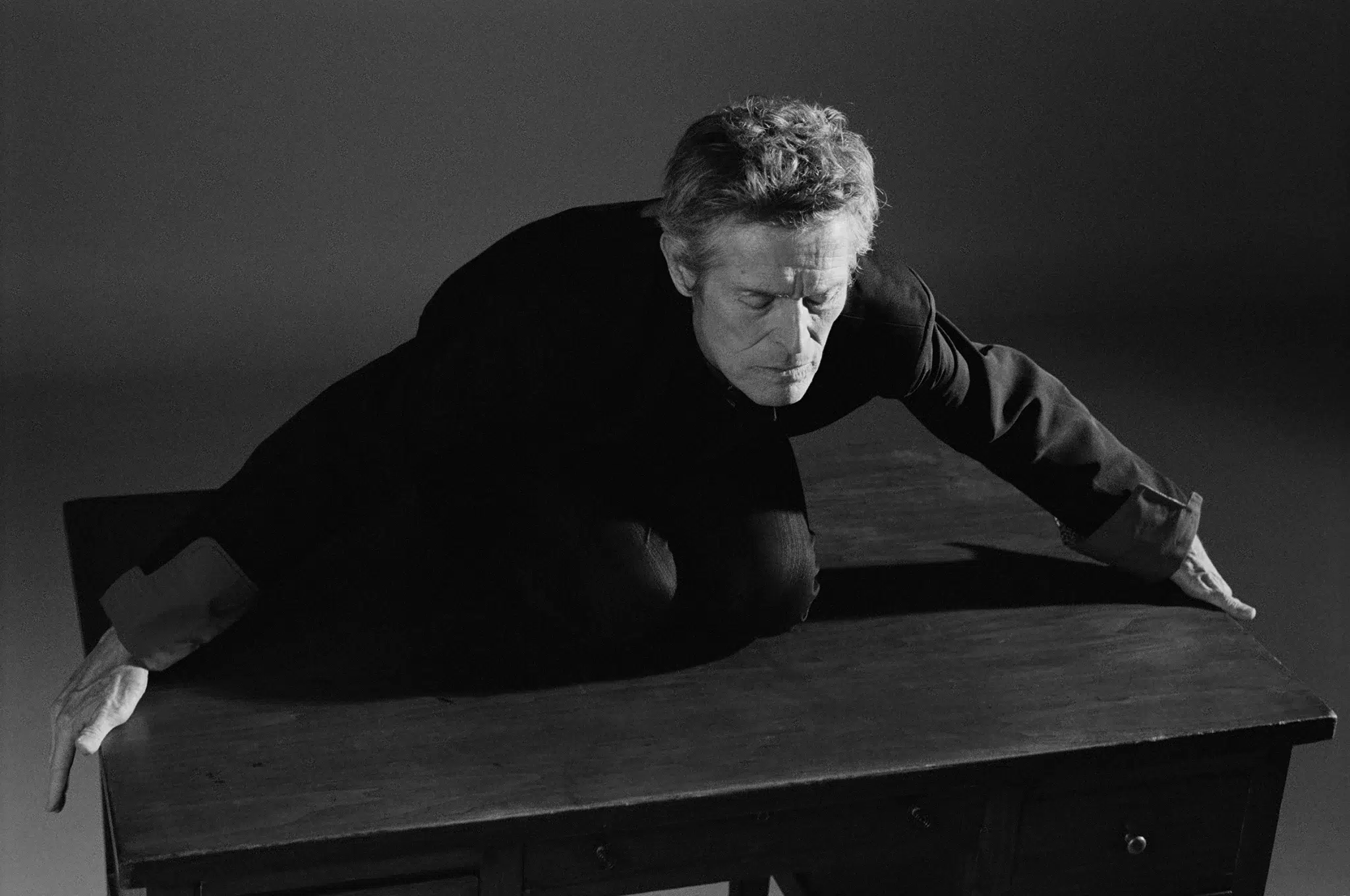
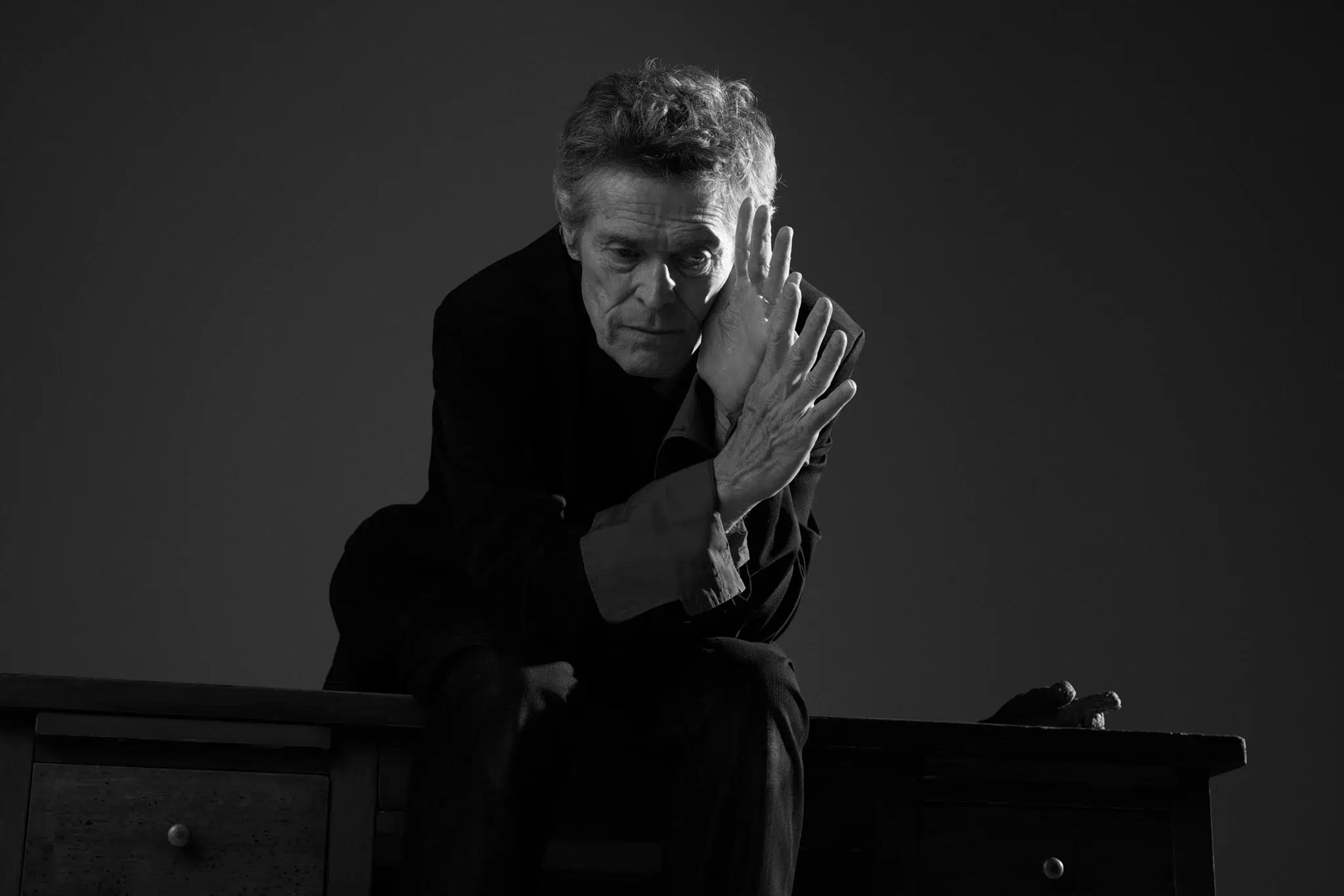


Dafoe is aware of the absurdity of his life. As a kid, he never had pets; now there’s Gigantesche Abruzzese Shepherds he takes care of.
We are far from his roots in small-town Appleton, Wisconsin and from New York City, where he lived for many decades before moving to Rome—not least the theatres, studio sets, and red carpets.
“On his deathbed, I asked my father what it was all about. He said: ’It’s a test.’ This might sound harsh, but he was a good man who believed you had to apply yourself—that became your pleasure. I believe that too in the same way some philosophies say happiness comes from finding your obligation and serving it.”
Dafoe is on his way to over 200 film projects. The list includes everything from indie dramas (his breakout was in Kathryn Bigelow’s biker story The Loveless (1981)) to Marvel franchises (his Green Goblin remains Spiderman’s most memorable nemesis) and voice acting in an Oscar-winning Ghibli animation, and he was an essential part of Wes Anderson, Abel Ferrara, and Yorgos Lanthimos’s acting troupes. All of this has made him one of the medium’s chameleons—a flexible performer recognised for his versatility, blessed with a unique face that is able to carry compassion as effectively as menace.
After studying drama at University Wisconsin-Milwaukee (even sleeping on the theatre’s sofas), he left for New York City in 1976. This was CBGB, Richard Hell, and “I’m walkin’ ’ere” big bad NYC, he recalls with a broad smile: “I was just a kid from the Midwest with a hunger for an adventurous life… New York was exciting. I was ambitious enough to feel an obligation to make something of myself.” He joined the avant-garde troupe The Performance Group under theatre pioneer Richard Schechner before co-founding the Wooster Group in Soho with director Elizabeth LeCompte. The group was composed of painters, musicians, and poets, as well as actors—and remains a vital part of Dafoe’s early career. “It became my education. I was drawn to the people: older than me and politically progressive,” he says.
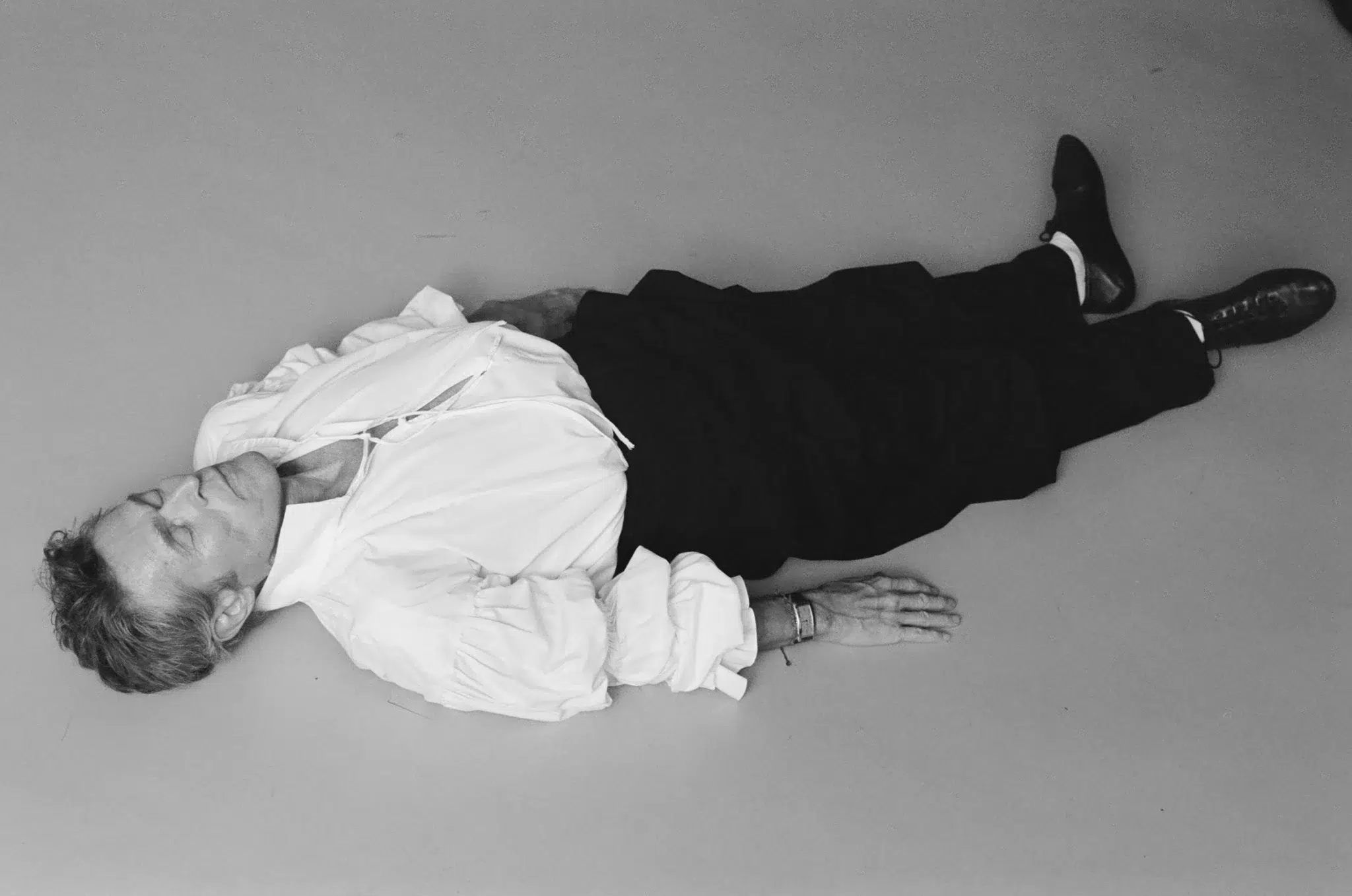
Willem Dafoe for A Rabbit’s Foot, by Daniel Sannwald, 2026. Willem wears Jacquemus Le Pantalon Tuxedo trousers with a Cartier Tank Cintrée watch.

“I used to be the youngest in the room, now I’m the oldest… But if I’ve got anything, it’s energy. I’m a bunny rabbit.”
Willem Dafoe
When LeCompte referred to the Wooster Group as a “community theatre”, a young Dafoe, desperate to be seen as a serious actor, became mad with her. Later, he finally understood what it meant: it was a wake-up call to the ego, an early lesson in collaboration. This community theatre spirit is an approach he continues to carry over to movie sets.
Dafoe still walks the New York streets and he continues riding the subway. Recently, he went viral when a content creator bumped into him in the Lower East Side and asked the actor to describe his outfit (Dafoe does not have social media, so he was bemused at its popularity). “New York remains a place of thrilling spontaneity,” he says. Looking back on those early years is another reason he was so interested in Late Fame, which is set among a group of intellectuals in the city. The film— inspired by a recently rediscovered novella from Arthur Schnitzler—explores the newfound fame of Ed Saxberger, the author of a poetry collection that received little notice upon release but gained appreciation years later among a group of artists including actress Gloria (Greta Lee).
Originally, Dafoe was hunting for ideas to use with Ferrara. A friend sent him the Schnitzler novella, but Ferrara stepped away. “I kept carrying it around. Then I ran into Kent Jones on a plane, who was casting it for his own movie,” he adds. “I couldn’t believe it.” Jones decided to move the story from period Vienna to present- day New York. “My heart sank at first, but I realised there was now a more personal stake. As a New Yorker, I saw people from a creative scene with huge passion who watched that scene disappear around them… I was playing myself if my life went differently,” he admits.
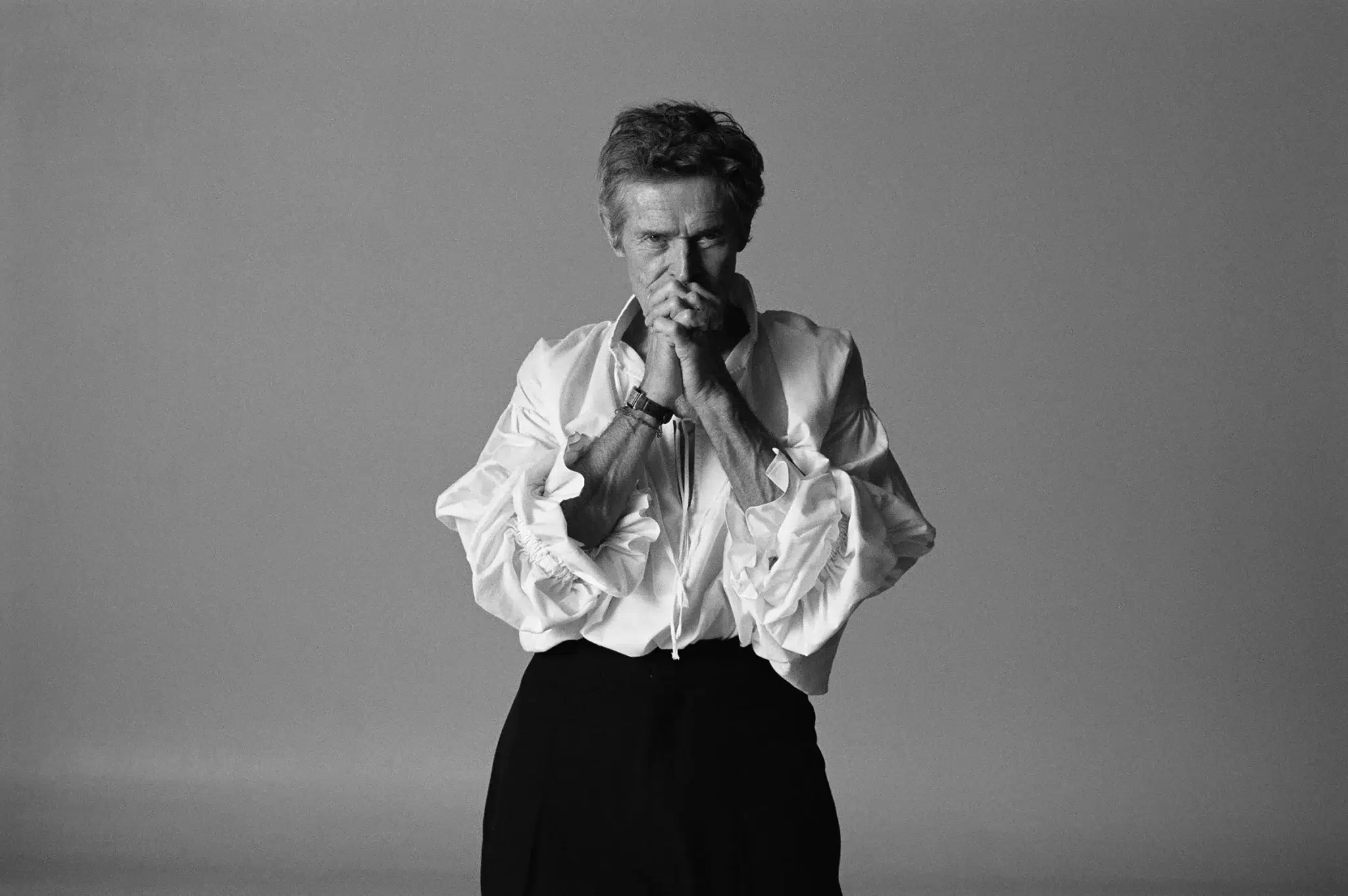
Willem Dafoe for A Rabbit’s Foot, by Daniel Sannwald, 2026. Willem wears Jacquemus Le Pantalon Tuxedo trousers with a Cartier Tank Cintrée watch.
Late Fame includes one of Dafoe’s most uniquely sober performances—more internal than the muscularity he is capable of bringing. At times, it is so natural, he seems on the precipice of the avant-garde—Dafoe allowing himself to tap into a more personal version of himself on screen.
Being prolific is one thing, I suggest, but how do you go between Late Fame, an Eggers horror, and, say, the sweeping biopic Tenzing—where he plays a ruffled Colonel Blimp-type English officer—in such a short period of time?
“You have to see things as they are, not as you want them to be,” he says with Buddhist sagacity, recalling a conversation with painter and filmmaker Julian Schnabel while playing Vincent van Gogh in At Eternity’s Gate (2018). Dafoe had asked Schnabel for painting advice. What he got instead was a valuable lesson that sums up his own acting philosophy. “Julian told me, ’Don’t draw the tree, draw the light’. Draw what you see: the yellow, the curves. Look at the tree’s origin. Don’t label anything by function. Once you do that, your work becomes inflexible. Stay tuned to where things come from… how they’re speaking to you.”
In The Birthday Party, Dafoe may be playing a troubled Greek shipping tycoon, inspired by Aristotle Onassis, but what he’s interested in is deeper than that. “At first, I kept saying, ’I’m not Greek’—but the director reminded me that there’s a quality I bring that fuels the character.” Instead, he set about building a relationship with the cast, particularly the wife of his character: “The way we related was very specific.”
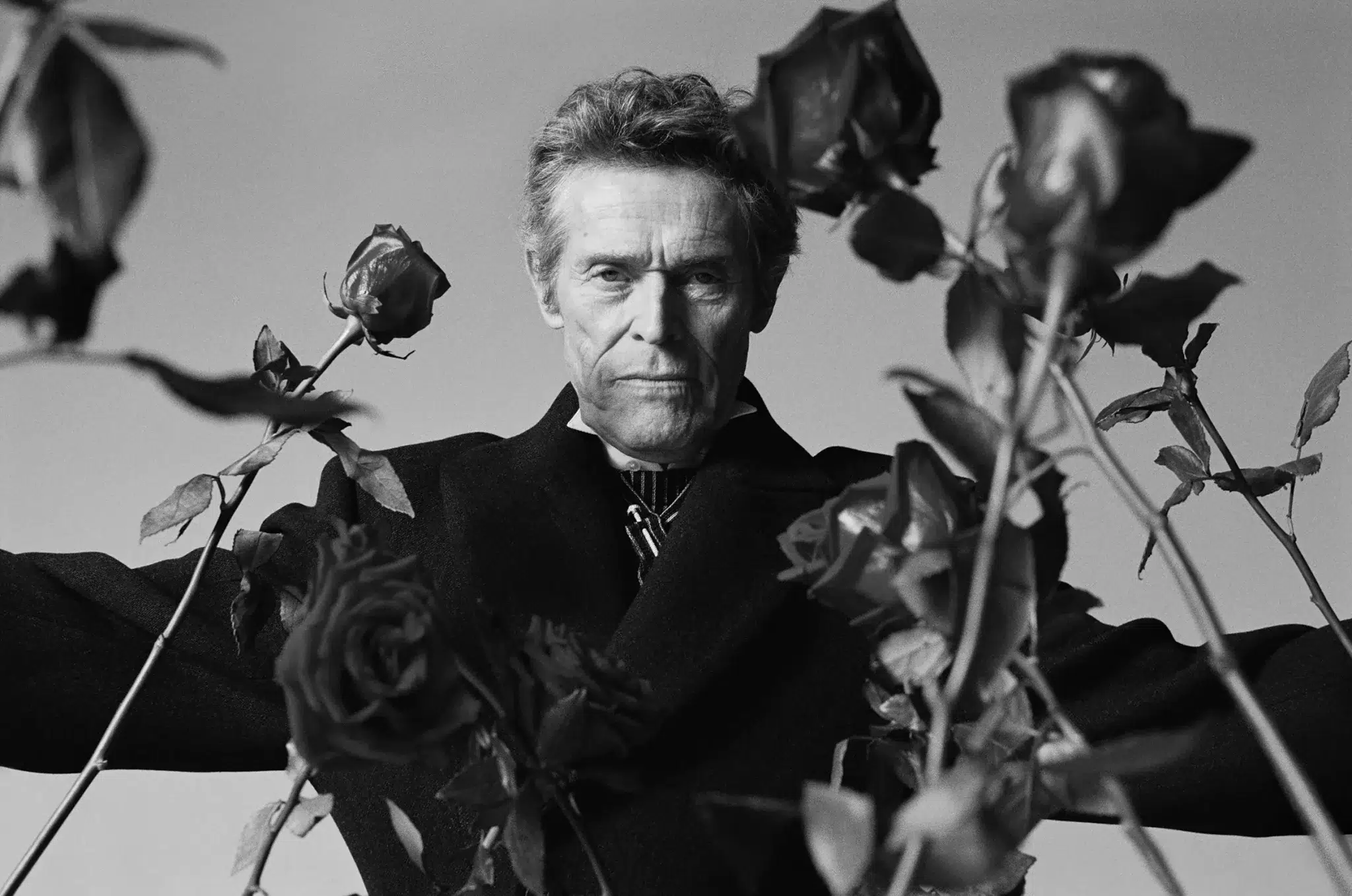
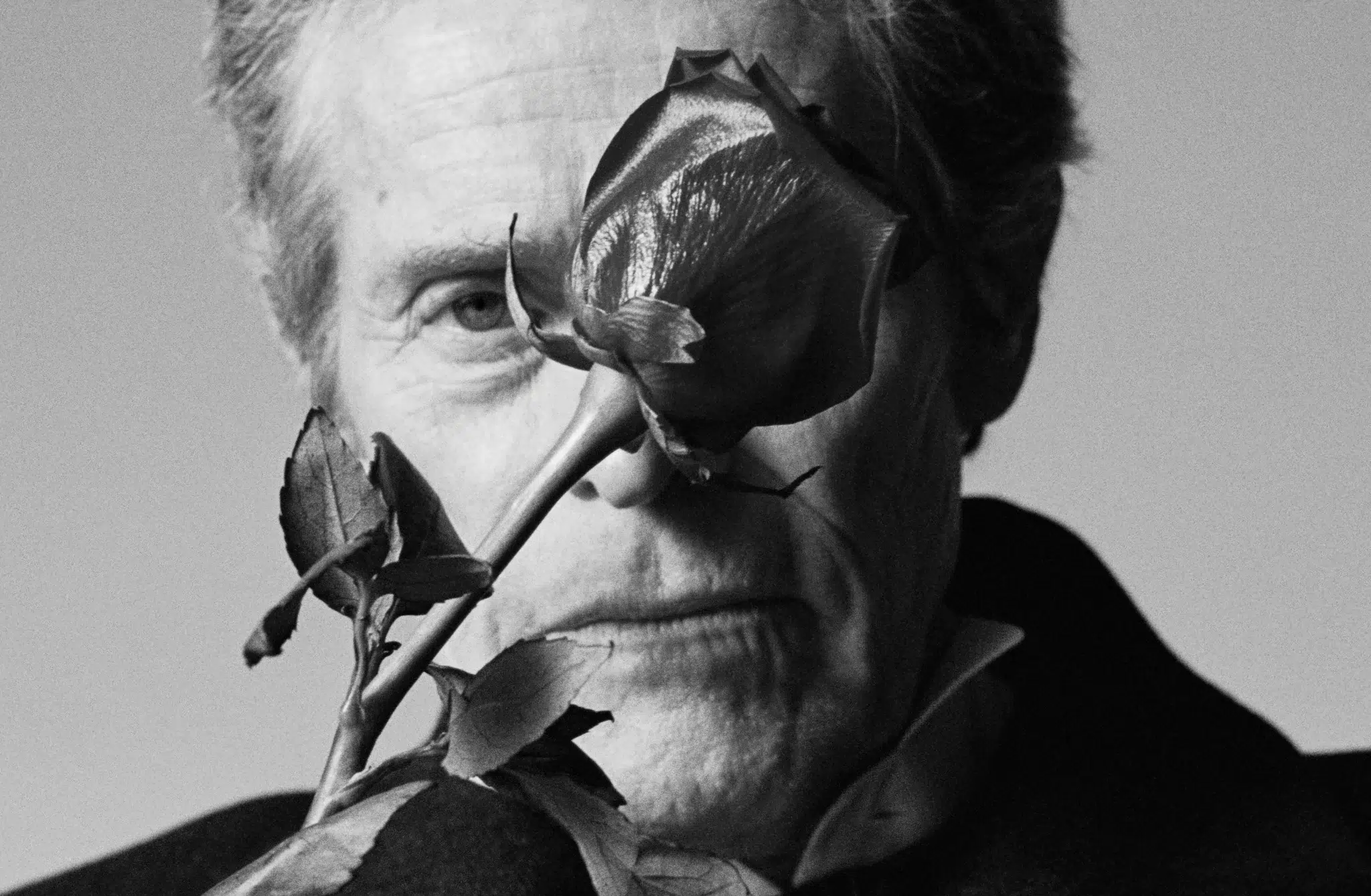
Unlike some of his peers, Dafoe resists literalism or over-research. Case in point: Pasolini (2014) by Ferrara. The film depicts the final days of the great Italian filmmaker and writer Pier Paolo Pasolini before his murder in Ostia in 1975, and he remembers a cynical reaction in Italy: two Americans telling such an infamous story about a revered national artist. But distance was the point, he insists. “It was our Pasolini, our experience of coming up against that material. If you cast someone ’on the nose’, something dies. A gap should be there. It’s much better than reducing every scene to a fact,” Dafoe explains. “You know—Lars [von Trier] says a film should feel like a stone in your shoe.”
Ferrara, like Dafoe, moved from New York to Italy. Around 2004, Dafoe met Colagrande and began to live between Manhattan and Rome before the couple discovered the farm. At first, Dafoe was looking for something smaller, simpler. But then, “What the hell,” he says. “It felt right.”
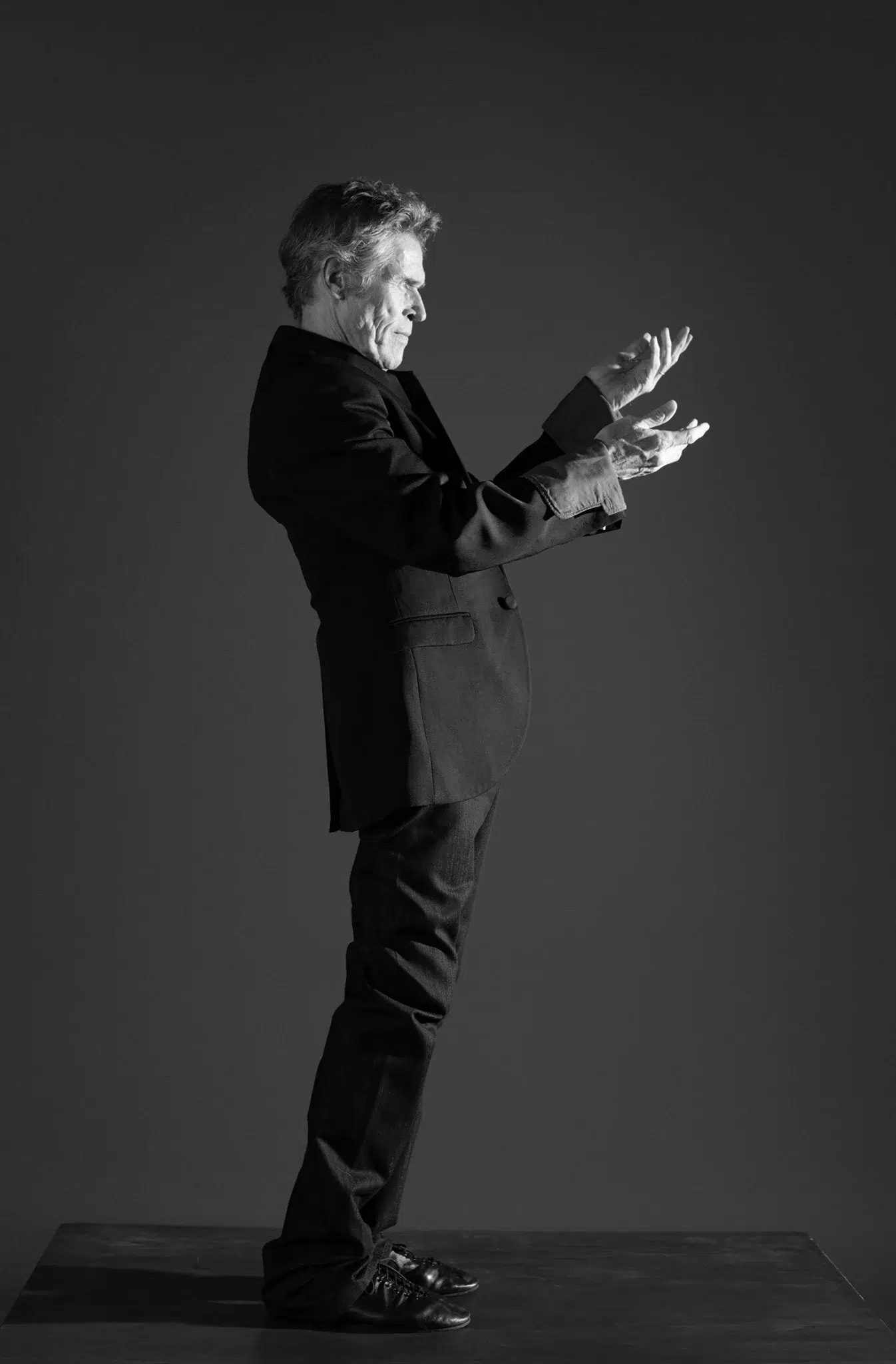
Willem Dafoe for A Rabbit’s Foot, by Daniel Sannwald, 2026. Willem wears Jacquemus La Veste Pisco with a Cartier Tank Cintrée watch.
In Rome, like in New York, he lived in a bohemian community, not too far from the Colosseum. Like New York, he recognises that the community has transformed or is no longer there. Dafoe does not come off as an overly sentimental man; rather, he admits how grateful he is for being a part of so many phases, in so many places, with so many people and projects. He seems too busy to sit with nostalgia, that addictive self-imposed squeeze that can get in the way of “duty” or “obligation”—two words Dafoe brings up often to describe his craft and life. Maybe that’s why he makes such a good farmer.
When he starts to become loose and personal—when his guard drops—he sometimes remembers who I am and why I am there. “You know, I was going to answer that question, but I remember that you’re a journalist,” he explains, apologetically after I pose something banal. I promise him he has nothing to worry about.
In any case, time is on Dafoe’s mind. Back in his office, he explains how he was responsible for a line in Late Fame—one that is true of how he lives: “I used to be the youngest in the room, now I’m the oldest,” he says. “So many people are gone, but I still feel like a young kid, even as I get put in the position of elder. I suppose I’ve got enough miles to be comfortable in that sometimes…”
A wide grin stretches across his face. “But if I’ve got anything, it’s energy. I’m a bunny rabbit.”
The bunny rabbit—although he compares himself more to his beloved greyhounds for their prominent ribcages (Dafoe is in trim shape)—has a commendable instinct for directors: whether it’s Sean Baker for The Florida Project (2017) or Oliver Stone, who gave him his first non-villain role in Platoon (1986). The result is repeat parts in these directors’ filmographies, sometimes as arresting cameos. Clearly, Dafoe is excellent to work with. “I like attaching myself to a director and becoming their creature,” he explains.
Even projects that have been slated by critics, such as action romp xXx: State of the Union (2005), feel even more interesting—or unexpectedly clever—with Dafoe’s casting in them. In the breadth of his colourful career, he seems to have tried to weave in a little bit of everything, stemming from a distaste for being pigeon-holed.
“I never wanted that kind of career,” he says. “I still do the smaller films because it means more experimentation and risks. The people making them want something specific, unlike some studio decision-makers who want you to repeat whatever commercially succeeded before.”
In 2024, in Marrakech, when we first spoke, Dafoe suggested that his experience with first- time director Olmo Schnabel on Pet Shop Days (2023) was a chance to guide a younger artist (Olmo Schnabel is the son of Dafoe’s longtime friend Julian Schnabel). Is the actor stepping into the role of a mentor?
There are plenty of videos on the internet showing Dafoe on stage, speaking to younger people about acting—mostly students. He is excellent at giving advice, and is unpretentious in a way that comes off surprising for a veteran actor trained in the avant-garde. He spells it out: “If I let go of my own agenda, I can take on a bigger, more energised one.”
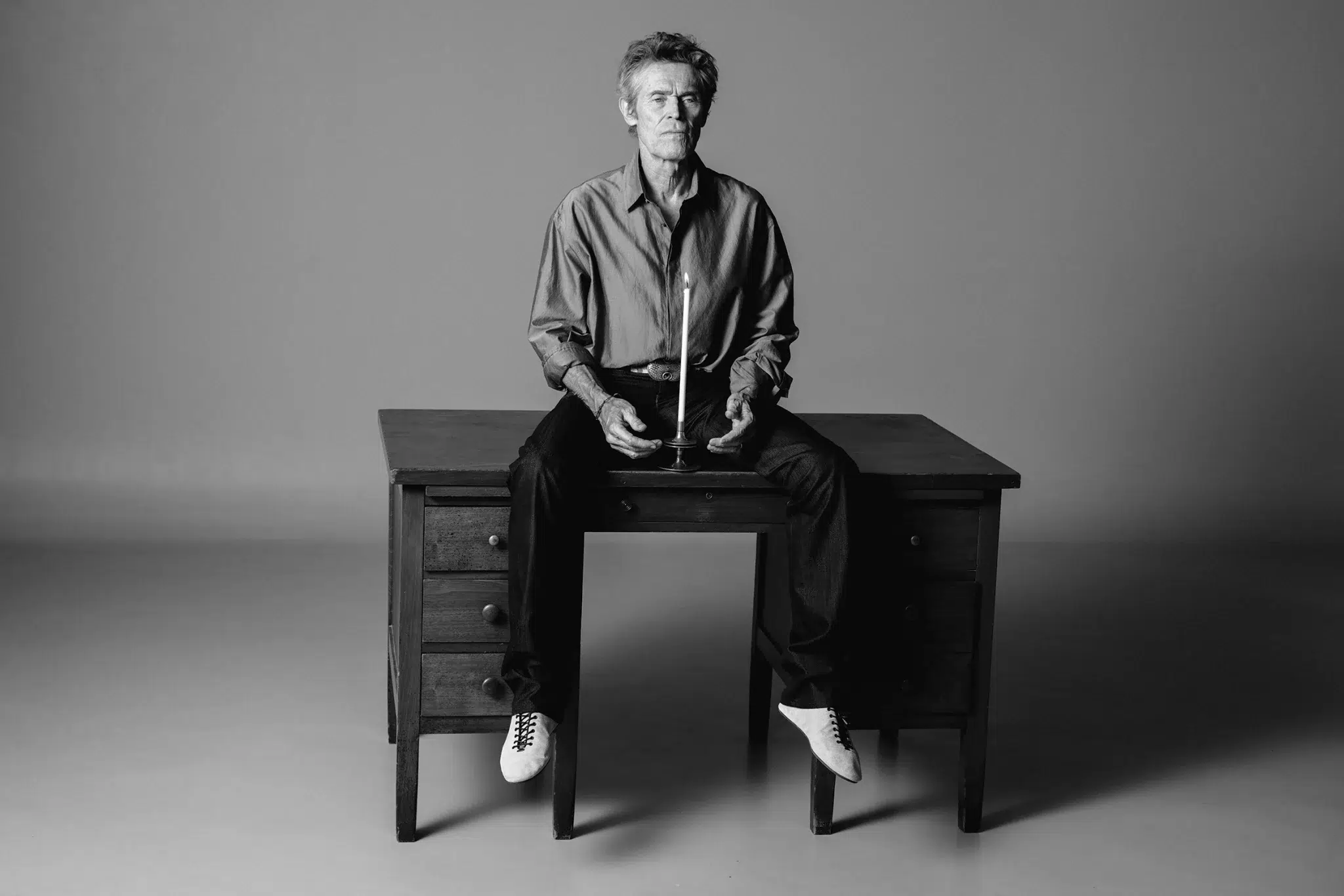
Willem Dafoe for A Rabbit’s Foot, by Daniel Sannwald, 2026. Willem wears Jacquemus La Chemise Simon shirt and Jacquemus greige Les Pantoufles loafers.
“The schedule is intense. But I wouldn’t want to be just a token cameo… If I let go of my own agenda, I can take on a bigger, more energised one.”
Willem Dafoe
Last year, he landed the role of theatre director of Venice Biennale Teatro. This huge responsibility means Dafoe is able to shape a programme around the playwrights and actors he finds most exciting. His debut line-up had mixed reviews; The Guardian described it as “nostalgic”— featuring a memorable work with the experimental Richard Foreman (someone Dafoe has admired since the Wooster Group days). “The first year was about bringing in people I respected and worked with—the safe choice because I could stand behind them,” he admits. The next year, he embarked on the concept of Alter Native: “It’s about altering your nature, the thing so deeply rooted in you, you don’t examine it. Learning from other cultures, moments when what is familiar enters into dialogue with you and becomes a catalyst for transformation.”
If that sounds a little highfalutin, in practice it was a success. Dafoe deliberately leaned into cultural diversity, since the Biennale’s usual pool of talent traditionally skews Italian. This year included people from Asia, Africa, and South America, “and they worked beautifully together. No prima donnas”. The line-up was generally acclaimed by critics, particularly Satoshi Miyagi’s Mugen Noh Othello, transplanted to Japan; or Davide Iodice’s sublime Premomoria, set in a retirement home. It reassured Dafoe’s instinct for talent.
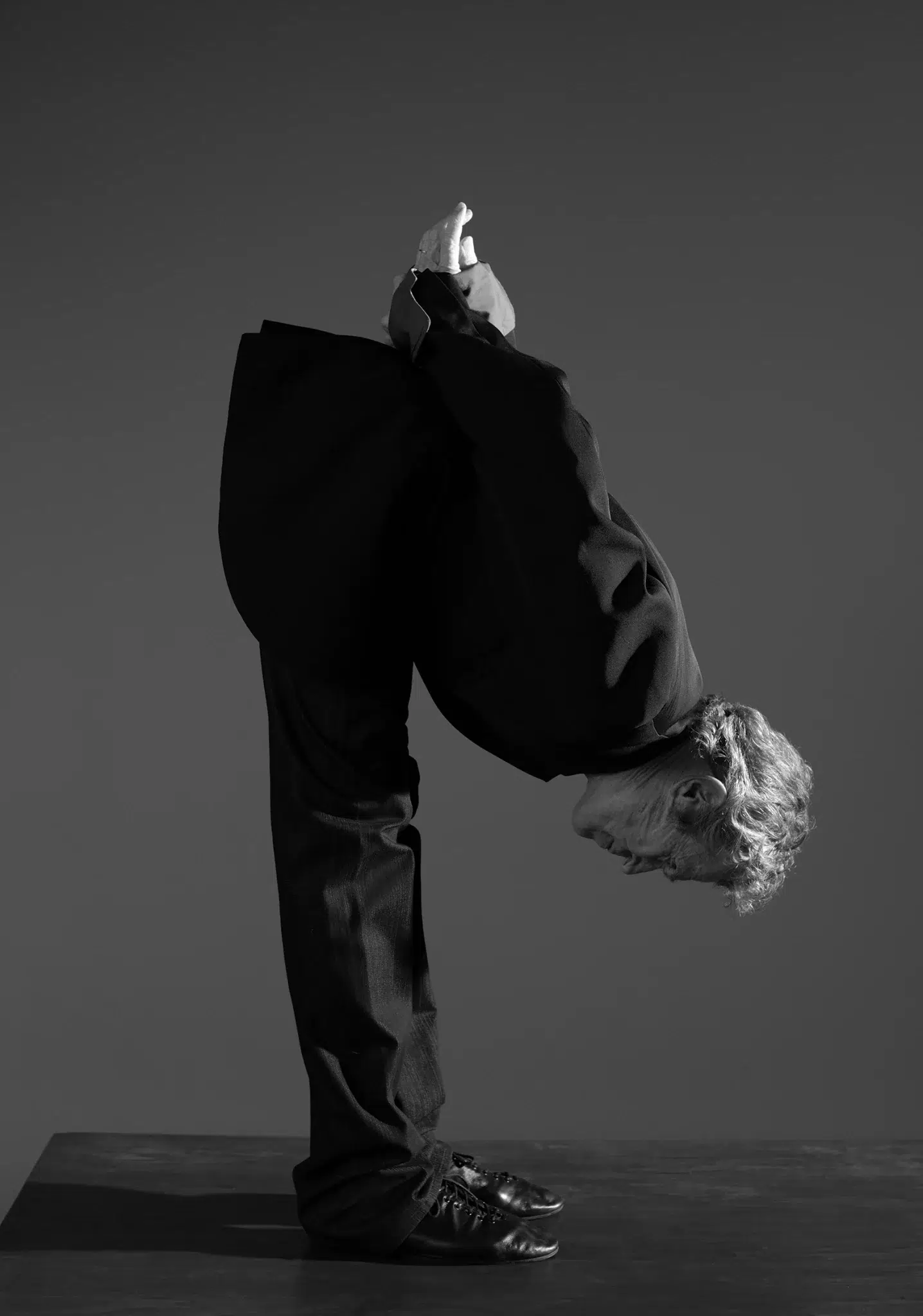
Willem Dafoe for A Rabbit’s Foot, by Daniel Sannwald, 2026. Willem wears Jacquemus La Veste Pisco and JacquemusLes Pantoufles loafers with a Cartier Tank Cintrée watch.
Today, the Biennale is an all-consuming project—another of his sacred obligations, he insists (he reviewed over 500 audition tapes before confirming the 11 participants): “The schedule is intense. But I wouldn’t want to be just a token cameo.” Through his rigorous work ethic, I realised that Dafoe was again serving something outside of himself, institutionalising the same philosophies that shaped him as a young actor with the Wooster Group—this time with decades of experience and success.
“It’s all about how it serves the community,” he explains, echoing LeCompte from all of those years ago. “I mean—look at megachurches. Theatre shouldn’t be an elitist thing. It has to tap into something that turns people on; we need to recapture a sense of wonder instead of a sense of self-recognition.”
He will always be a theatre actor at heart. Those sinewy, expressive stage muscles are the reason he continues to stand out on screen. At this point, the greyhounds, both as sinewy as their owner, begin to roll over and wag their tails.
He gets up to pet them. They’re hungry or hot. Or maybe they’re performing to get Dafoe’s attention. Either way, it works. One look at their eyes and his expression softens; a smile appears on his face and he forgets the work for a moment to take care of them. We step out into the humid afternoon and they follow us to the main house. Before lunch, we will head to greet the newborn alpaca.
Dafoe loosens again; he resumes his most pleasurable duty, one neither on stage or screen. And he is a natural at it. “You know, animals are hardwired to just do what they need to,” he says, finally. “That lines up with what I think about performing. Nature is where the truest expression comes from.”
CREDITS
Creative Director: Fatima Khan
Production Director: Anna Pierce
Photographer & Director: Daniel Sannwald
Director of Photography: Nicolai Niermann
Writer: Chris Cotonou
1st Photo Assistant: Antonio Perrone, 2nd Photo Assistant: Willy Cuylits
Video Support & Sound Operator: Luke Georgiades
Film Loader & Focus Puller: Davide Lonigro
Assistant Focus Puller: Giulia Cerro
Gaffer: Andrea Festugato
Set Designer: Edith di Monda
Set Assistants: Lucky Sturm, Polina Klovskaia, Chris Cotonou Stylist: Giulia Revolo
Stylist Assistant: Clara Zecchino
Stylist Coordinator: Lauren Southcott
Grooming: Elisa Zamparelli
Local Producer: Maurizio Santarelli of EUR Film
Production Assistant: Francesca Catricalà of EUR Film Production Assistant: Tigerlily Campbell-Smith
Studio: Il Portale Ostiense
(new line) Post Production
Executive Producer: Theo Gall
Line Producer: Carla Suissa
Editor: Benjamin Migozzi & Rojin Shafiei
Colorist: Arthur Paux
Post-Producer: Rojin Shafiei
Composer: Kidä
LOOK 1:
Vintage Kenzo shirt; Jacquemus La Veste Pisco; Gucci black cottonblend denim tailored trousers; vintage Bottega Veneta tie; Jacquemus black Les Pantoufles loafers; Falke socks; Cartier Tank Cintrèe watch, large moment, yellow gold, leather.
LOOK 2:
Bottega Veneta silk shirt; Cartier Tank Cintrèe watch, large moment, yellow gold, leather.
LOOK 3:
Shirt sourced from Theatre Archive; Jacquemus Le Pantalon Tuxedo trousers; Jacquemus black Les Pantoufles loafers; Falke socks; Cartier Tank Cintrèe watch, large moment, yellow gold, leather.
LOOK 4:
Dior tuxedo shirt; Gucci black denim tailored trousers; Jacquemus Le Manteau Tailleur coat; Jacquemus black Les Pantoufles loafers; Falke socks; vintage cravat from Archiviobruno; Cartier Juste un Clou pin, yellow gold and diamonds.
LOOK 5:
Jacquemus La Chemise Simon ML shirt; Gucci black cotton-blend denim tailored trousers; vintage belt from Archiviobruno; Jacquemus greige Les Pantoufles loafers; Falke socks.