

We talk to the legendary filmmaker about 30 years of Trainspotting and his Larry Lamb biopic Ink, which is opening the Venice Film Festival in competition this year.
“What do you really think about?”
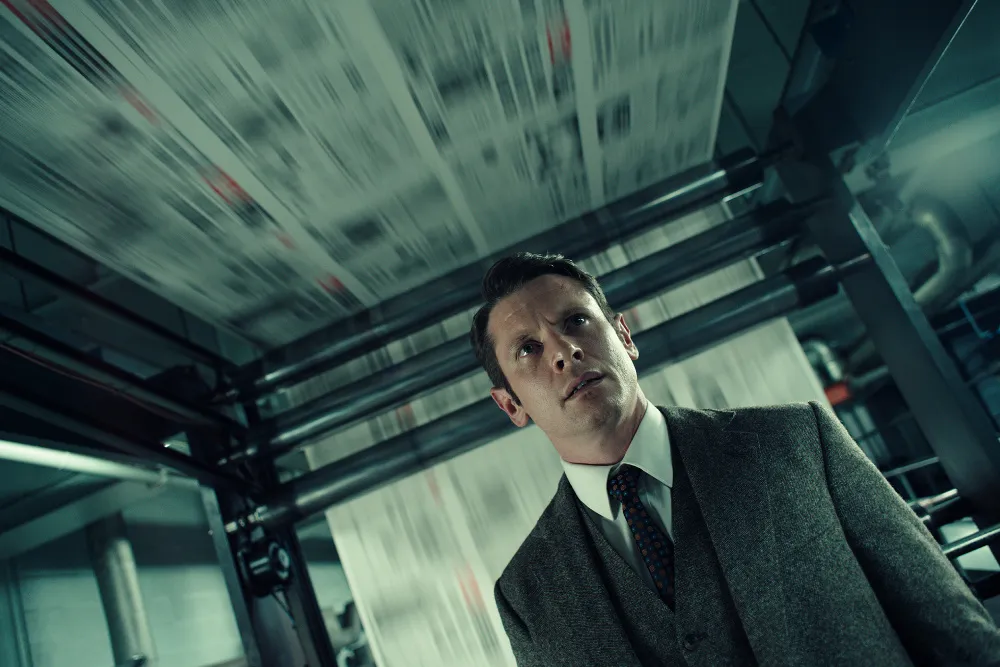
It’s the question newspaper editor Larry Lamb asks his editorial team—and the audience—in Danny Boyle’s Ink, the British filmmaker’s biopic about the underdog years of the infamously scandalous tabloid The Sun, which opens this year’s Venice Film Festival.
“I’m not sure it’s a Venice film,” Boyle says, speaking from his home in Mile End, London. “I’m certain it’s not a Venice opening film,” he adds, laughing. “But what do I know? It might backfire on us, but it’s a wonderful launching pad for a film that was a labour of love, which is a strange thing to say about a story about The Sun.”
It’s true that at first glance, Ink, a tremendously British film, may not scream Italian summer. But like all of the 69-year-old Northerner’s films—from the Oscar-winning Slumdog Millionaire (2008) and gritty zombie flick 28 Days Later (2002) to the sci-fi slasher Sunshine (2007) and the darkly funny drug odyssey Trainspotting (1996)—there’s a universality to the story of Rupert Murdoch (played by Guy Pearce), Lamb (Jack O’Connell), and the twisted, triumphant rise of Britain’s most sensationalist newspaper. Like Lamb asking the country to confess its darkest desires, Boyle’s films—pop-coded as they are—also invite us to explore our murkiest waters and confront whatever might be hiding beneath the surface. The difference, however, is that where Lamb finds monsters, Boyle has always found humanity.
In the following pages, we speak to Boyle about forcing audience complicity in Ink, Trainspotting at 30, and the career-long quest to outrun his peak.
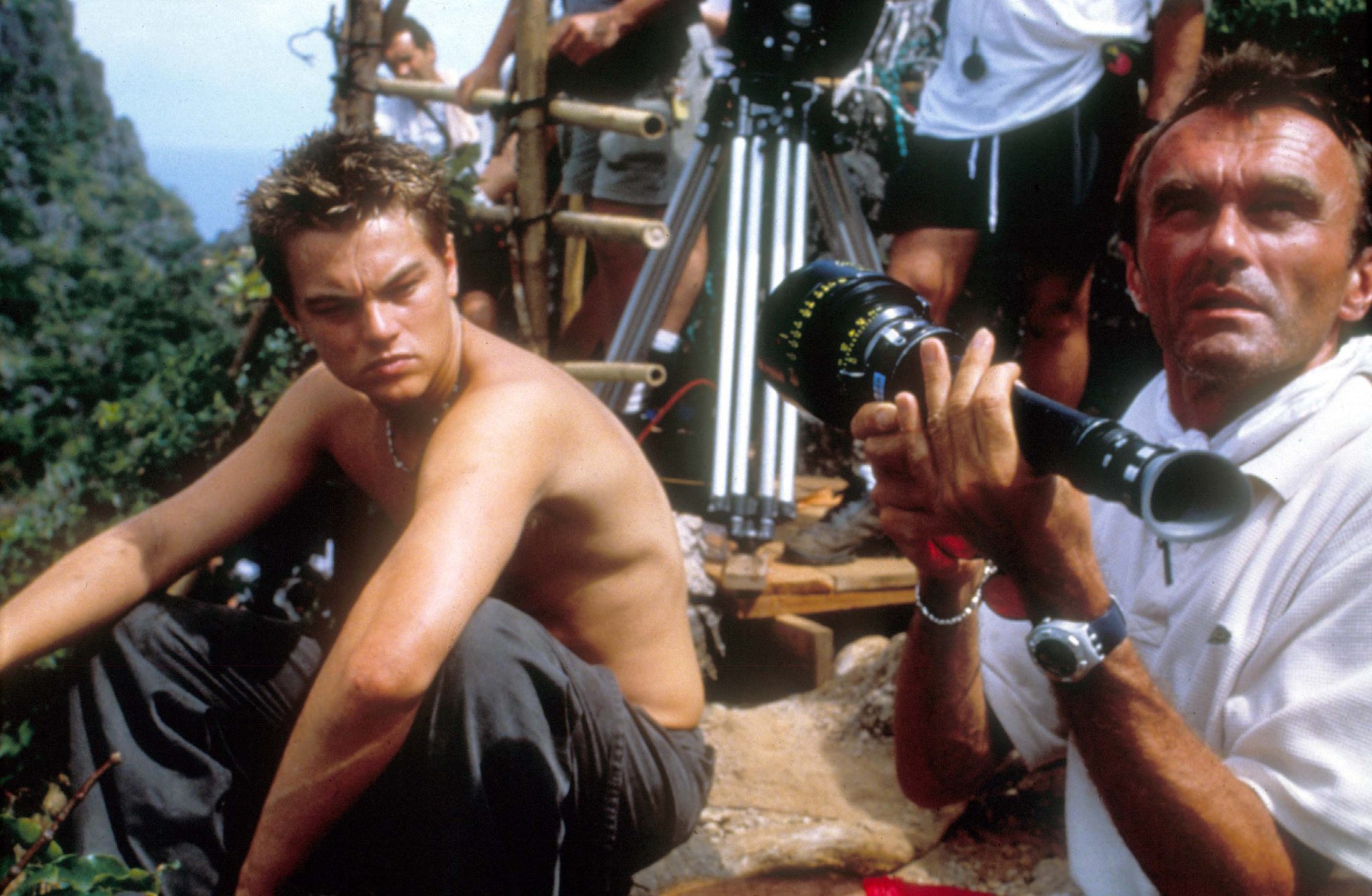

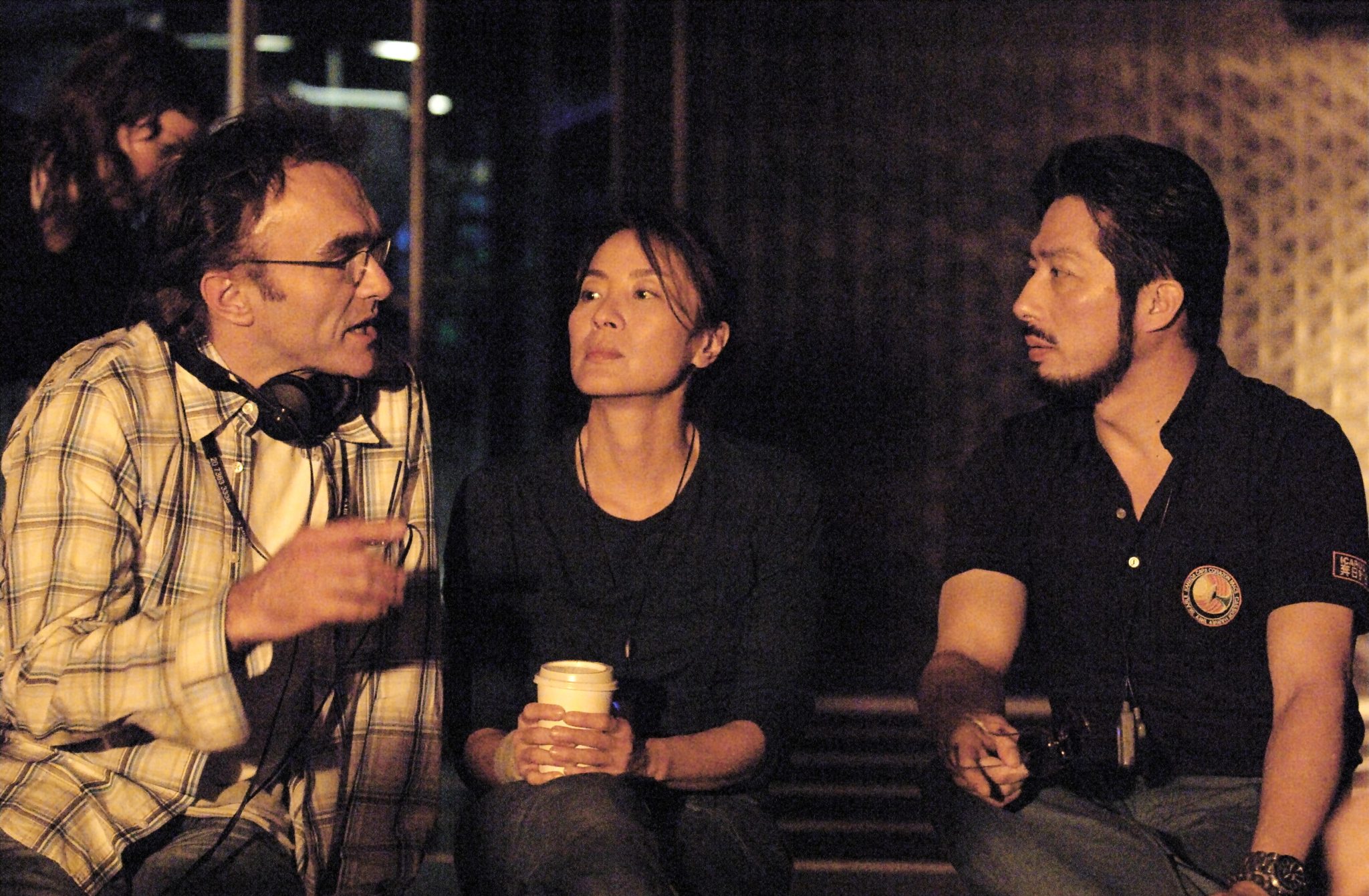


Luke Georgiades: After over three decades of filmmaking, does the idea of premiering at a festival like Venice—of putting a new film in front of audiences and critics for the first time—still come with the same nerves and excitement?
Danny Boyle: You’re older and wiser… Well, I don’t know about wiser, but you’re older anyway. We were lucky to get into Cannes with Trainspotting. I remember turning to the audience after the screening, as you have to do, and everybody says there was a standing ovation… I don’t remember a standing ovation. I remember them looking pretty perplexed about what they had just seen. Maybe that’ll happen at Venice as well.
LG: Has Ink been a hard sell?
DB: We found it very difficult to raise money. People were asking, “Well, why are you making a movie about The Sun?”. But they were just voices. I felt very strongly about it.
LG: I was also surprised, pleasantly, to see it announced as the opening film.
DB: It’s just so bloody British. James [Graham] is a wonderful writer because he investigates Britain so well, which is another reason why I’m not sure it’s a Venice film. I’ve become increasingly obsessed with trying to capture Britishness. It started off with the Scots in Trainspotting. I find it endlessly nourishing. I’ll make any sacrifice in order to keep doing that. They always asked me, “Why don’t you do these American movies?” Well, I just wouldn’t know what to say. When someone comes up to you, as they do when you’re the director, and asks you something like “What sort of car would this character drive?”—if it’s set in America, I would say, “I have absolutely no fucking idea what car he would drive”. But if it’s a Brit, the answer comes automatically: it’s a Rover 3000 [laughs].
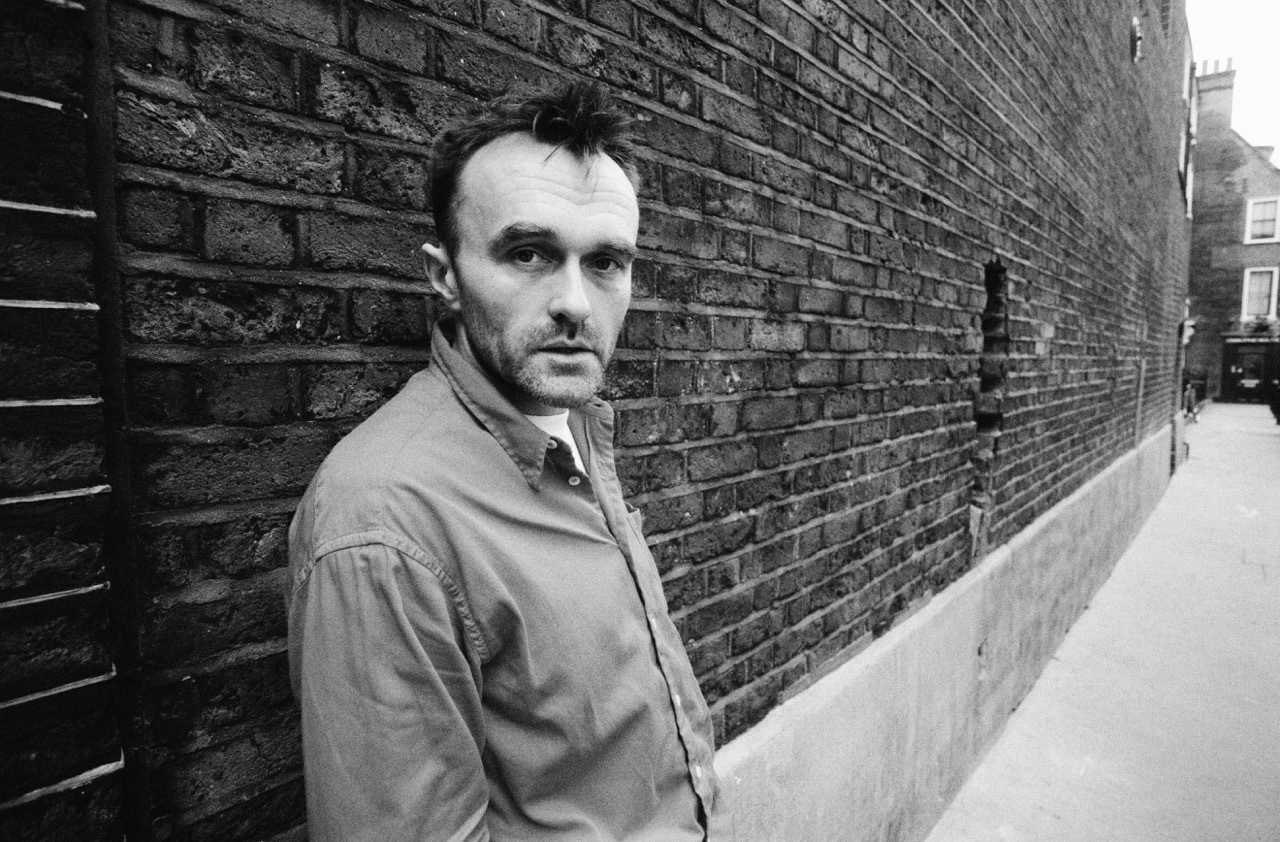
Danny Boyle in London, 1996. By Kevin Cummins.
LG: But there is a universality to the film that audiences might not realise until they watch it.
DB: One of the starting points was that I thought there was a thread from then to now. It’s very clear, and it spans my lifetime. I could just see that there was this connection from that time to where we are now, what we’ve become, and how we’ve got here. Even those who are younger than me can feel that a change has happened among us. We tend to shovel the responsibility for that on social media and “the machines”, but we’re ultimately responsible. And this film is inviting you to indulge in that complicity.
LG: This year Venice is premiering a movie out of competition that is almost completely generated by AI. It’s a documentary called Be Brave. At Tribeca this year there was a film about the protests in Iran that was completely AI generated. What’s your take on the floodgates starting to open for AI in filmmaking?
DB: There’s going to be data centers fucking everywhere, because all this stuff has got to be processed. The reality is that it’s a tool, regardless of what bandwagon you’re on. The really fundamental thing about it is: why does it matter what people my age think about AI? We can pontificate all we want. But it’s not going to matter. It’s about how our kids and their kids are going to deal with it, how they decide to use it: as a tool or as a much more central part of their lives. You’ve surely got to try and exploit what we can out of it, but there are also huge dangers with it. I went to see Jeanette Winterson talk once, and she said, “If we want to change the future, we’ve got to get girls to code. If we don’t, we’ll be lost.” I think that’s right. I think it’s alarming that there are so few women at the top of the tech companies wielding enormous, staggering influence right now—more influence than elected governments, or even blocs of nation states like the EU. They’re all run by blokes. If girls don’t want to code, we may well be lost.
LG: Did Ink always feel like an underdog story to you?
DB: When I watched the original play, I found that Larry Lamb didn’t really materialise on the stage. It was performed terrifically, but I remember thinking, “Wow, everybody here thinks this is Rupert’s play.” I disagreed. I thought it was Larry’s story. Rupert’s longstanding infamy tended to obscure the real heart of it, which is an underdog story about this guy from the North with a chip on his shoulder, fighting against all the odds. It’s hard to explain to people just how massive The Daily Mirror was back then. It was like Real Madrid—it was this monster thing, ubiquitous and never-ending, and it couldn’t be usurped. But Lamb was determined to. I related to that.
LG: The film also captures something more complicated about The Sun itself. However dark its legacy became, there was a period when it genuinely felt disruptive and exciting. Was that something you recognised?
DB: He’s dead now, but a filmmaker who was very influential on me was Alan Clarke. He was a wonderful filmmaker. I made a film with him in Northern Ireland called Elephant (1989). One day he saw me reading The Guardian, and he said, “What you reading that for?” [laughs]. I didn’t know what to say, because I looked up to Alan. Alan read The Sun. He said to me, “If you want to find out what you don’t already know, read The Sun.” I remember that vividly. I took that into this film as well.
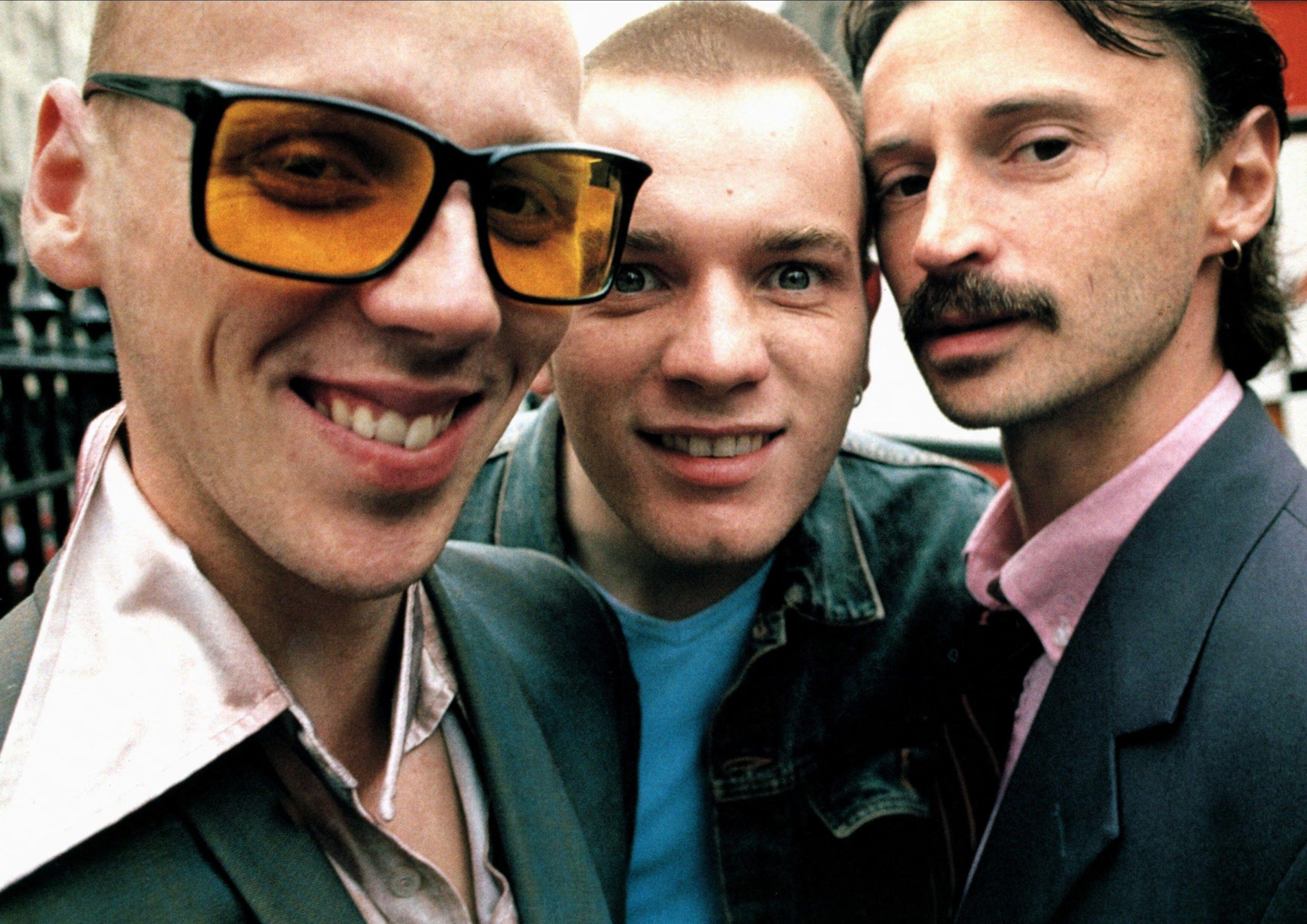
Ewan Bremner, Ewan McGregor, and Robert Carlyle in Trainspotting (1996).
LG: Filmmaking and tabloid journalism rely on some of the same instincts—they’re both about sensationalism, about shaping a narrative and manipulating an audience’s attention. This is the story about those things. How conscious were you of those parallels while making the film?
DB: There are so many similarities. The techniques, the manipulation, the complicity—it’s part of the appeal of both mediums. It’s liberating. You think, “Well, it’s good to have a laugh, isn’t it?” That’s The Sun’s appeal: “Come on, mate, where’s your sense of humour? Who’s not to love a pretty girl?”
On a film, you try to tap into that, and the actors are your way into it. They’re inhabiting that energy for you. They understand that process.
LG: Can it be demoralising at points to have the kind of career you’ve had and still struggle sometimes to get the funding to make the next project?
DB: No. It’s part of it. You’ve gotta go through that. We’re working on something at the moment that’s even harder to finance [laughs]. We just managed to get someone to cough up some money for it. It’s part of the joy of it. It helps with a film like this, because as part of the struggle to make the money, you’ve got to make the film seductive. In terms of Ink, that’s part of the complicity. You lure people in. You make them think, “This is fun, I like this, I want this—I’ll pay for this”, and then the narrative takes that extraordinary and completely true turn of events. We haven’t put “it’s a true story” on the film but it is, and it helps you justify the pleasures and joy you take in the first half of the story. It is an underdog story. It’s about fighting against the system. Rupert Murdoch loathed the British establishment—something which I admire him for, because I’m not a big fan of it myself. I can identify with him in that way.
LG: You’ve mentioned complicity a few times already. Is that something you still wrestle with as you continue to make films that interrogate complex, morally grey characters?
DB: It’s good to confront yourself with the fact that you’re responsible. In this particular instance, The Sun was a hugely popular paper. It changed the world. Not in an evangelical way, but in a monetary way. It generated so much cash for Murdoch that he was able to move into yet another media, in America. We have to acknowledge our complicity in that. We can’t stand on a moral high ground all the time, even if we think we’d like to. To what degree we’re complicit is ever-changing.
LG: Guy Pearce as Murdoch is one of the most fascinating performances in the movie.
DB: I wanted an Australian to play Rupert, and Guy came in with the confidence that he was playing one of his own. I wanted to root it in an absolutely truthful and sympathetic performance. We’ve tended to monsterise him in entertainment and politics, presumably with good cause. But my job is not to monsterise people, but to examine what brings them to our attention. Guy will tell his own story about how he went about it, but it’s a lovely performance that makes you rethink what you think you know about him.


LG: You once spoke about the theory that someone’s first film often ends up being their best. Have you ever felt in competition with yourself?
DB: [Laughs] Oh, yeah. When you make a film like Trainspotting, it haunts you forever. Following Slumdog was impossible too, but it was good because we were able to make a difficult-to-finance film after that. You get those chances when you make a hit. I’m sure that 28 Years Later (2025) helped us raise the capital that we did from StudioCanal. It’s bound to have an effect. In their secret meetings, they must think, “He must know something”. It’s a good competition because it encourages you not to repeat yourself. After Trainspotting, we did A Life Less Ordinary (1997), which was a huge flop. John [Hodge] and I watched it recently, and it’s quite good, we thought.
LG: How do you deal with a film that doesn’t land the way you hoped?
DB: I was very lucky that my first few films did very well, but it is tough when they don’t. It can knock you back—you really have to muster up the courage to get up and go again. But you learn that getting it hammered or lauded is just another phase of the filmmaking process—just as much as conceiving the idea, raising the money, shooting it, editing it, distributing it, and eventually talking about it with audiences and people like you.
LG: There’s also the potential for reappraisal. Sunshine did fine critically and not so great commercially, but is quite beloved by audiences now, and it’s turning 20 next year.
DB: Sunshine was a flop! Well, it wasn’t a flop here [England]; it was a flop in America. Tom Rothman, who is a lovely man, was the head of Fox at the time, and he was in despair when he watched Sunshine. He couldn’t believe that we would include such bleakness in the film, and I remember him despairing of that. Space movies are tough. I love when people come up to me and don’t just say, “I love Trainspotting”. People do tell me that Sunshine is one of their favourite films.
LG: What do you think has endured so deeply about Trainspotting that it is still being celebrated three decades later?
DB: You’ve gotta be honest: it’s the book. It changed everything for us. I remember reading it and thinking, “My God, this is like Ulysses. I really believed that. John very skillfully picks his way through the book, but there’s at least another film you could have made in there. Renton isn’t that much of a central character in it, even. It’s more of a gallery. You could have made a Robert Altman film out of Trainspotting. You could have made a Ken Loach film. And it’s the casting: Jonny Lee Miller, Ewan McGregor. That’s not me being modest. Sometimes you just have to hold your hands up. It was surprising that it was appealing because drugs were normally portrayed in a very simple way before then.
LG: Watching Ink, I thought a lot about Trainspotting, and about some of your other films. There’s a throughline there. Do you feel like a different filmmaker now than you were back then?
DB: The biggest thing you have to protect is a lack of self-consciousness. Self-consciousness makes risk less pure and more calculated. You should always take risks. I remember Jane Campion saying that filmmaking is just imagining you’re a kid. You’re just a kid in a sandbox, and you’re pretending that this is a dragon, and that he’s chasing this other dragon. It’s true. I’m still like that now. You’re also not trying to repeat yourself, which, based on what you’ve just told me, I clearly ended up doing anyway [laughs].
LG: There’s a famous moment in Trainspotting where Sick Boy talks about artists reaching their peak and then inevitably declining. Do you believe in that?
DB: Yes! It’s a speech of such truth, that speech. At one time, you’ve got it, and then you lose it, and you can never get it back again. But it’s OK. I’m in a branch of the industry which is to make films as appealing as possible but make them as individual as possible—not to follow absolute patterns, to dig up stuff that pushes the envelope a little bit. But the rhythm of my films is popular. I would always want my work to appeal to people rather than exclude them.
LG: You’ve been making successful films for over three decades now. Do you think you may be proving your own theory wrong?
DB: [Laughs] Trying to prove it wrong. You’ve gotta try. That’s the quest, isn’t it?