


Ryan Murphy’s take on Bret Easton Ellis’s novel seems to be missing the point. This may be why it works, says William Hosie.
‘This story is fictional,’ a banner reads at the outset of each episode of The Shards. ‘Any similarity to actual persons, living or dead, is purely coincidental.’ It is not far from the tactic pulled by James Blunt when he published his ‘non-memoir’ in 2023—and ensured, through plausible deniability, that all gossip served within the book could not amount to a lawsuit.
For the past three weeks, I have tuned into The Shards with glee. The show has just gone past its halfway point, with four episodes to go. Critics have largely mauled the series—yet it has reigned atop the Hulu streaming charts since airing earlier in August. I loved it and am loving it. You have until September 9th to catch up before the finale.
The primary critics of the series are superfans of the novel, published in 2023 by legendary novelist Bret Easton Ellis. What’s with all the plot changes, they have asked? The newly introduced characters who weren’t in the text? One of them, nicknamed ‘Really Rhonda’, suffers from Tourette syndrome. What would Ellis have thought? Um, actually, he’s an executive producer on this, so he probably signed it off?
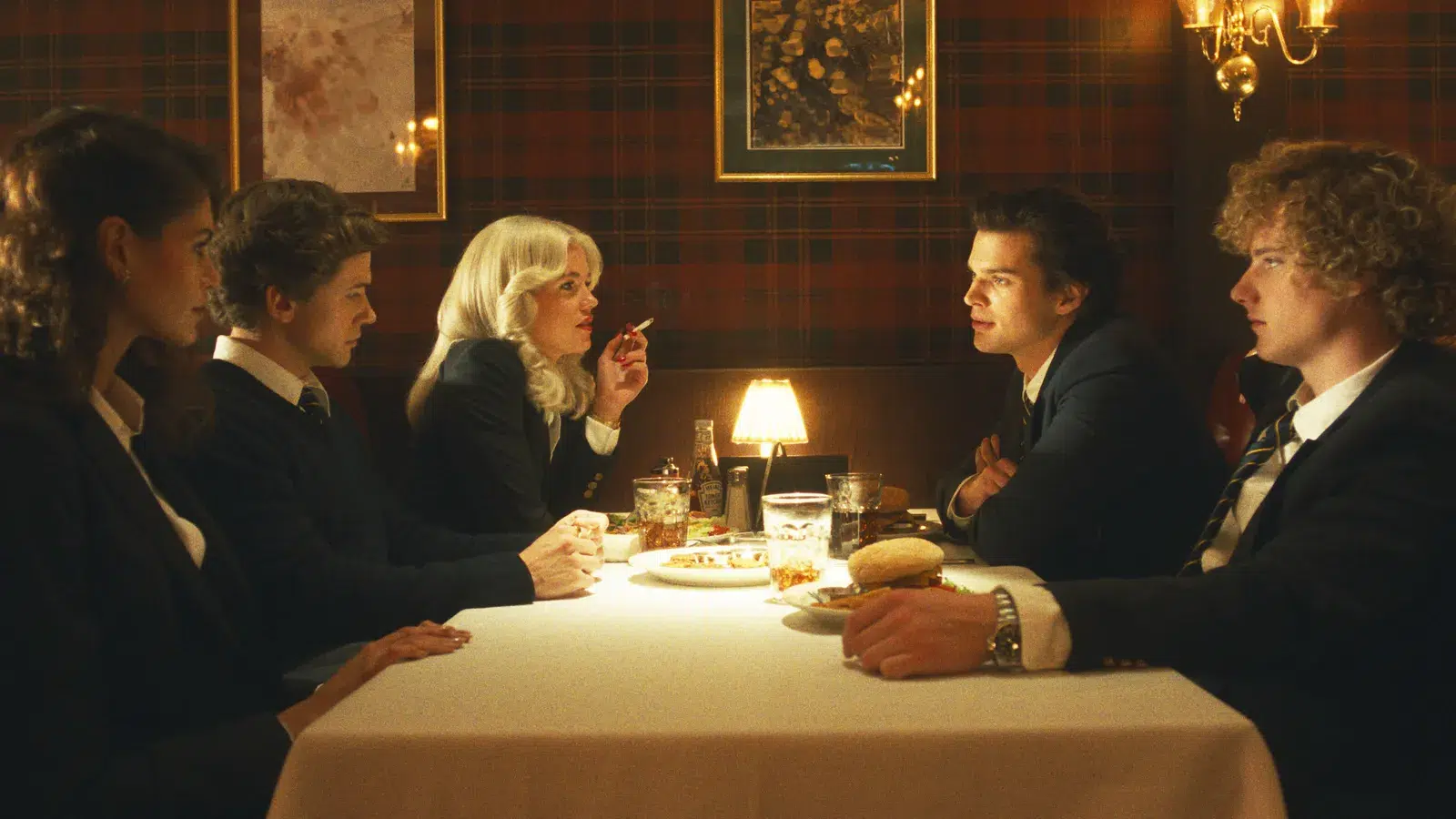
Still from FX’s The Shards. Directed by Ryan Murphy. Photo: FX.
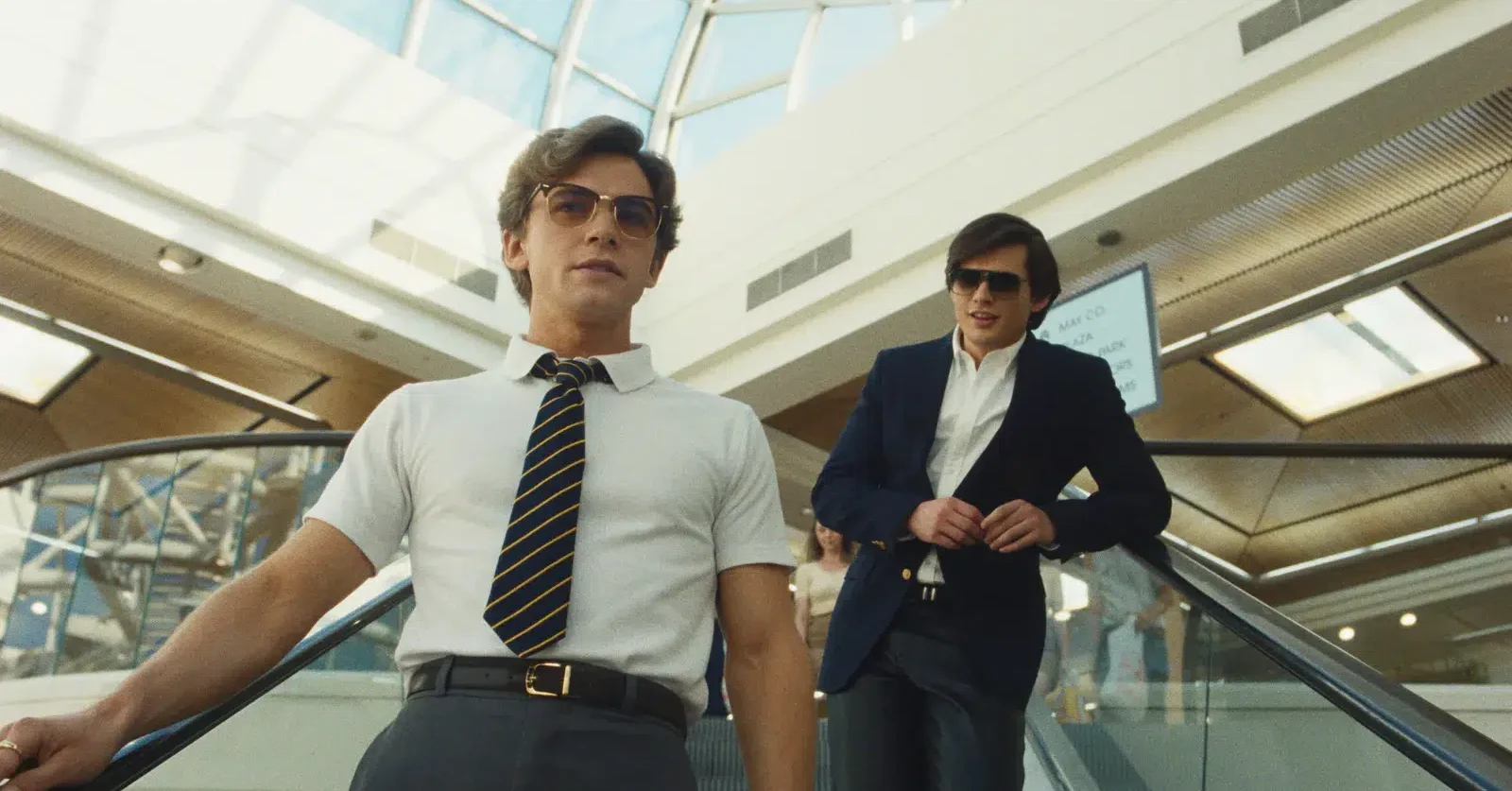
Anyway: the internet has views. I even overheard my next-door neighbours say it gave them nightmares. A recap, for those who haven’t seen the series or read the book (no spoilers): The Shards is an autofiction narrated by Bret Easton Ellis as he looks back on his final year at The Buckley—an elite school in Los Angeles—only with a serial killer, named the Trawler, on the loose. The Trawler targets mostly teenage girls and, occasionally, teenage boys, leaving cryptic voicemail messages and tapes for young Bret to find in which he hears the Trawler’s victims being force fed live fish, slugs, or similarly unappetising creatures. The intrigue is set in the early 1980s, meaning the clothes are still chic and not yet shoulder-padded while the soundtrack is a heady mixture of Blondie and The Police (and more anachronistically, Charli xcx henchman Troye Sivan). The most horror-adjacent scene of the series so far is set to the pulsating baseline of Stevie Nicks’s ‘Edge of Seventeen’.
The only change one might understandably take umbrage with is the absence of ‘ludes’; that is, quaaludes, one of the 1980s’s most popular sedatives. Ellis’s narrator spends most of the novel gobbling them up—so he says. Like all of Ellis’s novels (Less Than Zero, American Psycho…), the narrator—called Bret, for clarity—is unreliable. Without such a device, the entire thing would fall flat.
The ludes—which create a dreamlike state in their user—are vital to Bret’s unreliable framing. They frustrate his own attempts at uncovering the serial killer’s identity and getting a hold on his paranoia. They are absent from the series, which makes it harder for director Ryan Murphy to render Bret so untrustworthy. I wonder if that was always the plan.
Murphy knows he is no David Lynch. He cannot pull off the drug POV thing, nor does he try. The audience is not here for this: a lude-stricken plotline could hardly survive the Second Screen era that Murphy helped to create. What the audience is here for is sex. There is plenty in the novel, most of it uncomfortably erotic (I say uncomfortably because the protagonist is only a teenager and having very adult sex, in ways readers will understand all too well). There is less of it in the series, and when it does occur, it is mostly funny.
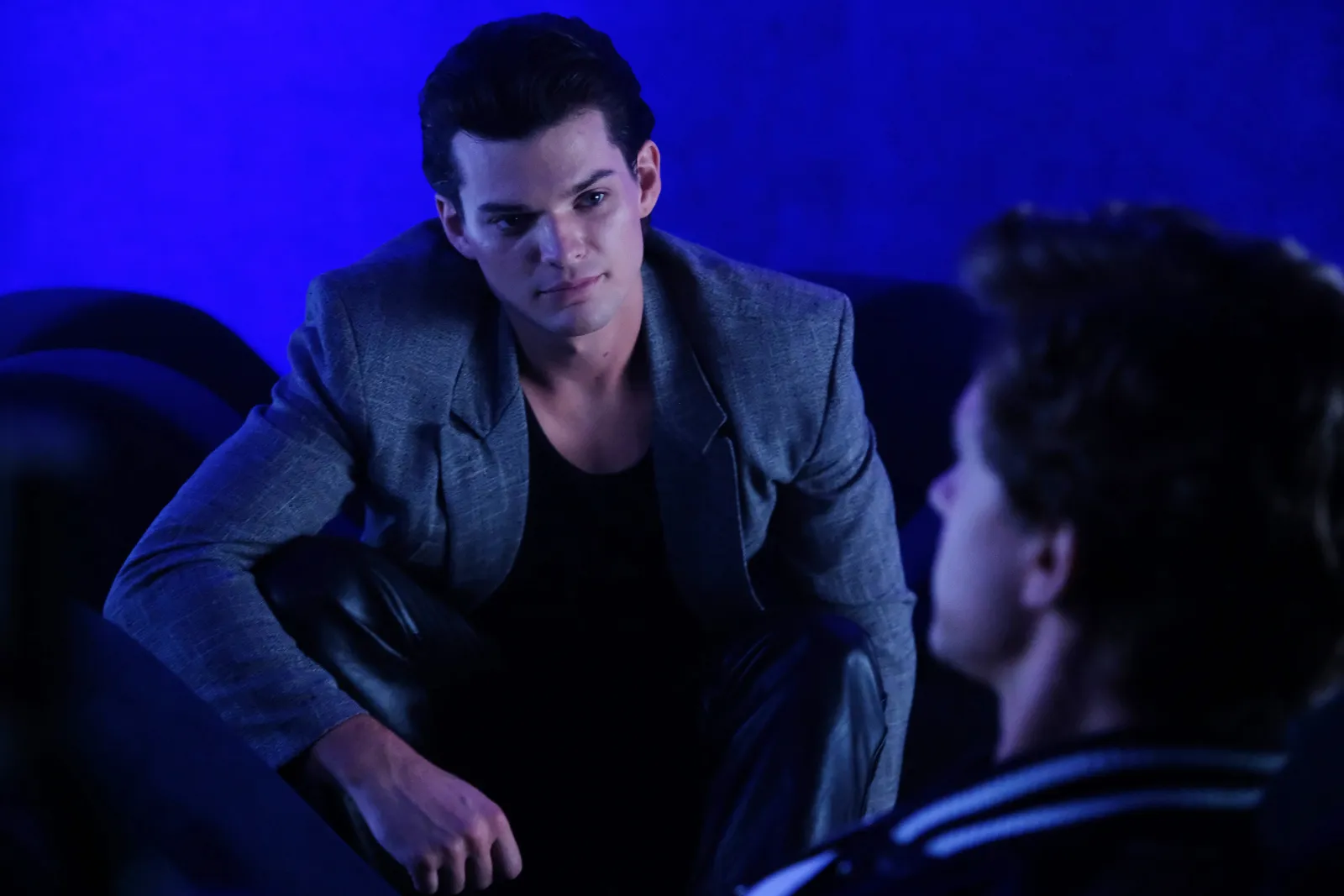
Still from FX’s The Shards. Directed by Ryan Murphy. Photo: FX.
This, again, breaks with Ellisian tradition. Teenage sex is truly, reliably funny. It is awkward, unerotic and bland—even when it’s a secret. (This story contains both infidelities and segments of gay sex.) So yes, FX’s The Shards misses the point of Ellis’s novel on several occasions. Yet it may be all the better for it. Television, particularly when it is by Murphy, holds a mirror up to our culture of artifice far better than an admittedly formidable novel that is trying (Lord knows it’s trying) to seduce. The fact that it’s set in the 1980s should not detract from the purpose of this and all modern entertainment: this f***ing show is about us.
It is about our rampant consumerism, our passive acceptance of the dead and the disappeared, our naive belief that this could never really happen to us, and our lust for all that is tall, shiny and new. Casting Kaia Gerber in her first major role to date (she plays Susan Reynolds, the student body president and it girl of her school) is so on the nose, it hurts (oh, but the pain is exquisite). It is also about control.
Young Bret seeks to master the narrative; his sexual urges; other people’s perceptions; his prose. He yearns to write like Joan Didion—‘with restraint, economy and total control’—yet his loose grip on reality is at odds with his desire to manipulate it. It could be the ludes. It could also be teen spirit. Perhaps because Ellis wrote the novel in his fifties, he never seems fully able to relinquish the control which his character aspires towards. Young Bret, whose parents are never seen because they are in Europe for seemingly the entirety of his senior year, yearns to be an adult. Adult Bret lets him, but Murphy does not. The director doesn’t need the ludes to bring out a shifty persona in Bret: an insecure and overprivileged teenager will already do that on their own.
Still from FX’s The Shards. Directed by Ryan Murphy. Photo: FX.

“The fact that it’s set in the 1980s should not detract from the purpose of this and all modern entertainment: this f***ing show is about us.”
Bret and his gang, after all, are not just any group of seniors: they are seniors who wear Gucci loafers, live in the annexes of their parents’ Hollywood pads and drive Pontiacs and Porsches to school. Even the typewriter Bret uses to draft his novel (an early take on Less Than Zero) has a Gucci band affixed to the bottom to avoid ink splatters.
Murphy’s show fails to take Ellis’s novel with the seriousness which its prose demands of the reader. It leans, instead, into the absurdity, the silliness, the ‘Really Rhonda’ of it all. The acting is sometimes laughably bad, just as all teenagers are bad actors, still growing into the postures and imitations that they will one day master. This, I daresay, is what The Shards is really all about.