

In the latest instalment of Hotel Notes, Ramzi De Coster turns to Alain Resnais’s Last Year in Marienbad, a classic of the French Nouvelle Vague which follows two potential former lovers as they try to work out whether they met the year before at a similar resort. Set inside a labyrinthine luxury hotel of mirrors, marble staircases, shadowy corridors, and meticulously sculpted gardens, the film’s architecture becomes a fitting landscape for a story about the fragility of memory.
A long time ago, between semesters, during a forgettable week deep in summer—the kind where you can hardly tell yesterday from today or tomorrow—I passed the time by watching anything and everything I could get my hands on in the pirate video stores of Istanbul. I started with the “Greats,” and then moved onto the newly released, but when I exhausted the films I could name by heart, I moved onto anything else I could find lining the shelves of display-only DVD cases. You would point at a movie and the person working in the store disappeared, only to re-emerge with a burned DVDs with the film’s title written in blue marker; or you would sit down at a desk and the clerk pulled out a plastic bag full of DVDs wrapped in plastic, chiming in to point out the good from the bad as you flipped through the stack of movies like a deck of cards.
Some of the films I watched were in fact good and others were in fact bad. That much was always inevitable. But there was one film I watched that summer—the most beautifully shot of them all—that moved me in neither direction but kept me sitting still, late at night when the city fell not quite silent, transfixed and bewildered at what I’d seen, trying to piece together a verdict on a film that either way, good or bad, was blatantly not what it pretended to be about.
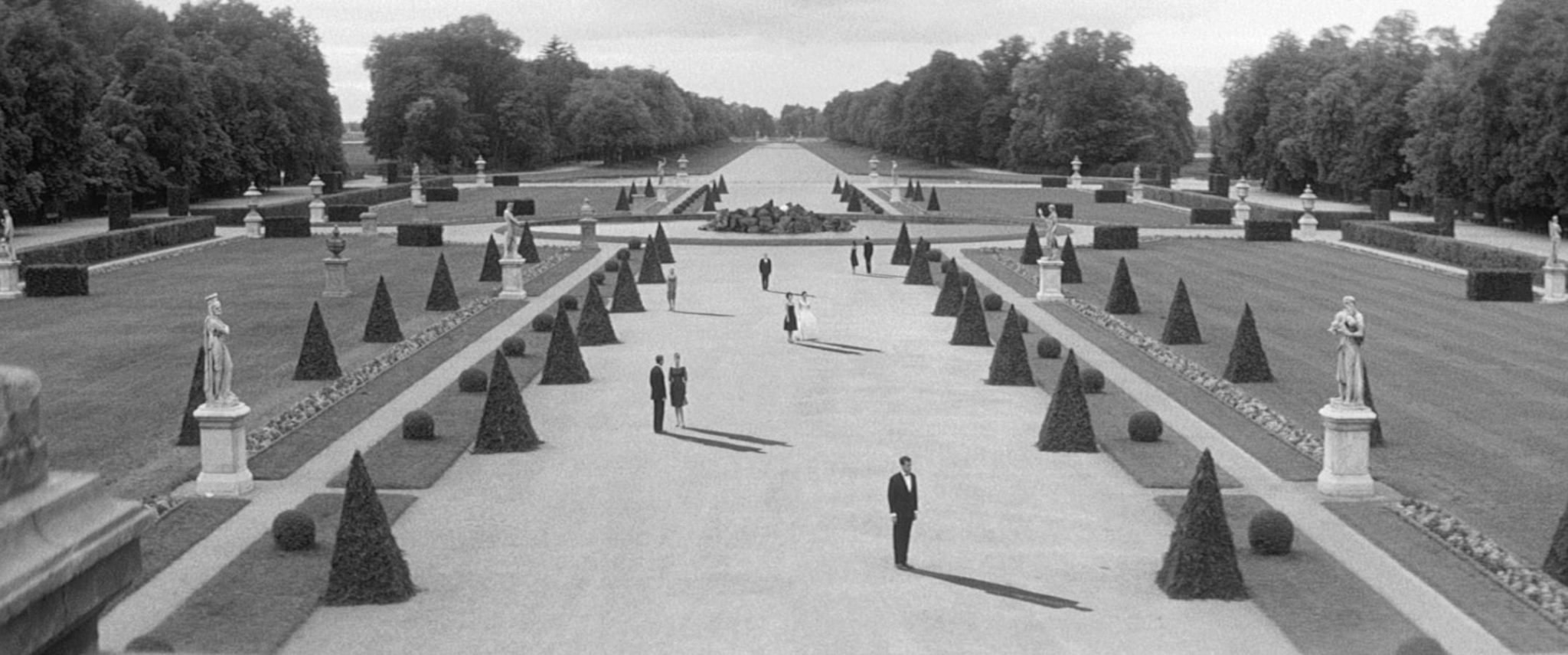
Alain Resnais’s Last Year in Marienbad (1961)
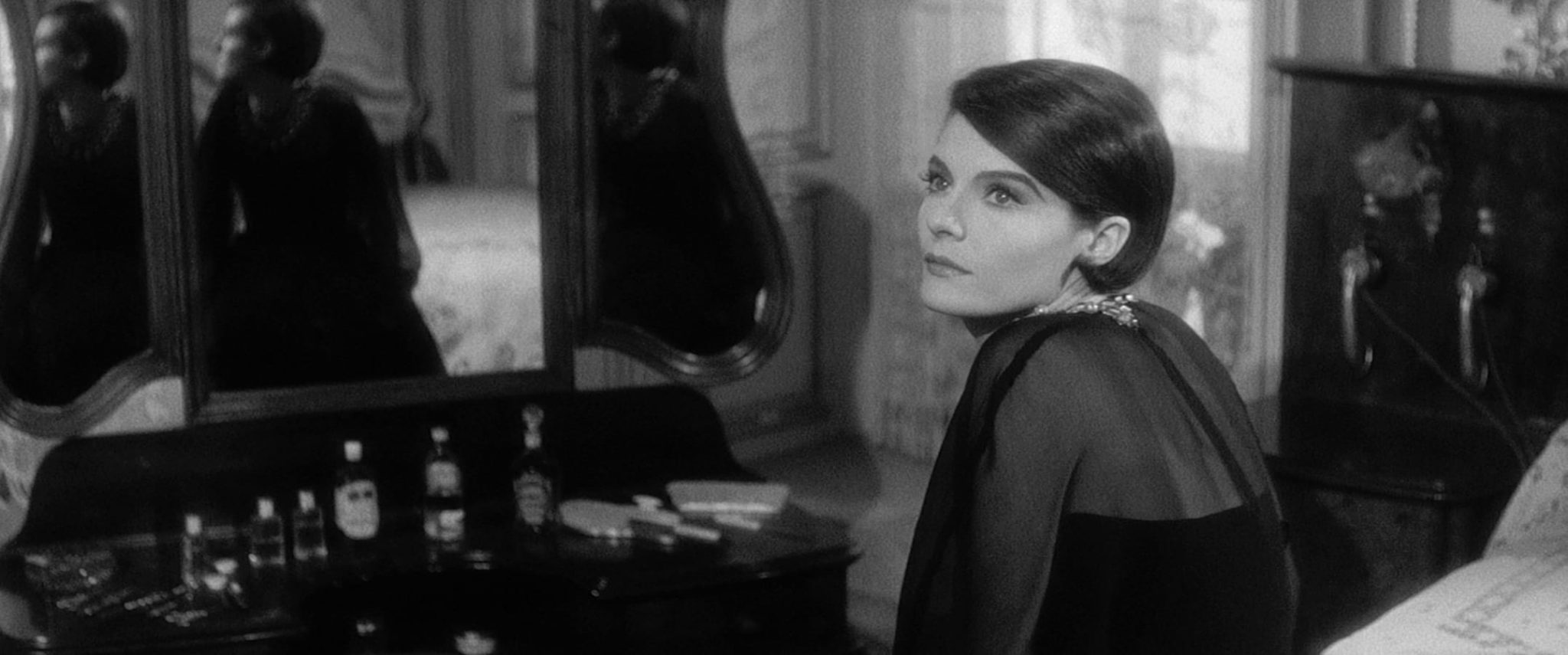
Alain Resnais’s Last Year in Marienbad (1961) polarizes audiences. (Yet love it or hate it, even its detractors note the beauty of Sacha Vierney’s cinematography). The film takes place in an unnamed hotel where two unnamed characters, potentially former lovers (played by Delphine Seyrig and Giorgio Albertazzi), try to work out whether they met the year before at a similar resort in Marienbad, or not, and whether they’ve found themselves together a year later by design, or not. No amount of description can truly capture the setting and how it’s rendered. Resnais’s film is set in a palace turned luxury hotel, of wide marble staircases where heels echo, where the halls are long and maze-like and the walls are made of mirrors. Everything is brass and shadow and dim light in the film’s hotel, and the long gardens of hedges and shrubs cut into shapes like symbols go on and on forever.
Last Year in Marienbad is the kind of film that demands debate and difference over its meaning. The premise is fairly simple, though. A man runs into a woman he believes he had an affair with a year before, at Marienbad. But in this hotel she insists, with the same commitment, that no such thing ever took place. In the unfolding scenes, they negotiate over and fight for the truth of their own memories. Yes, there’s a peripheral love triangle and murder scene and the insinuation that perhaps all is simply a dream, but the film is essentially uninterested in plot. Proof of this can arguably be found in the fact that even the characters were not given names but letters in the screenplay and are unnamed in the film itself.
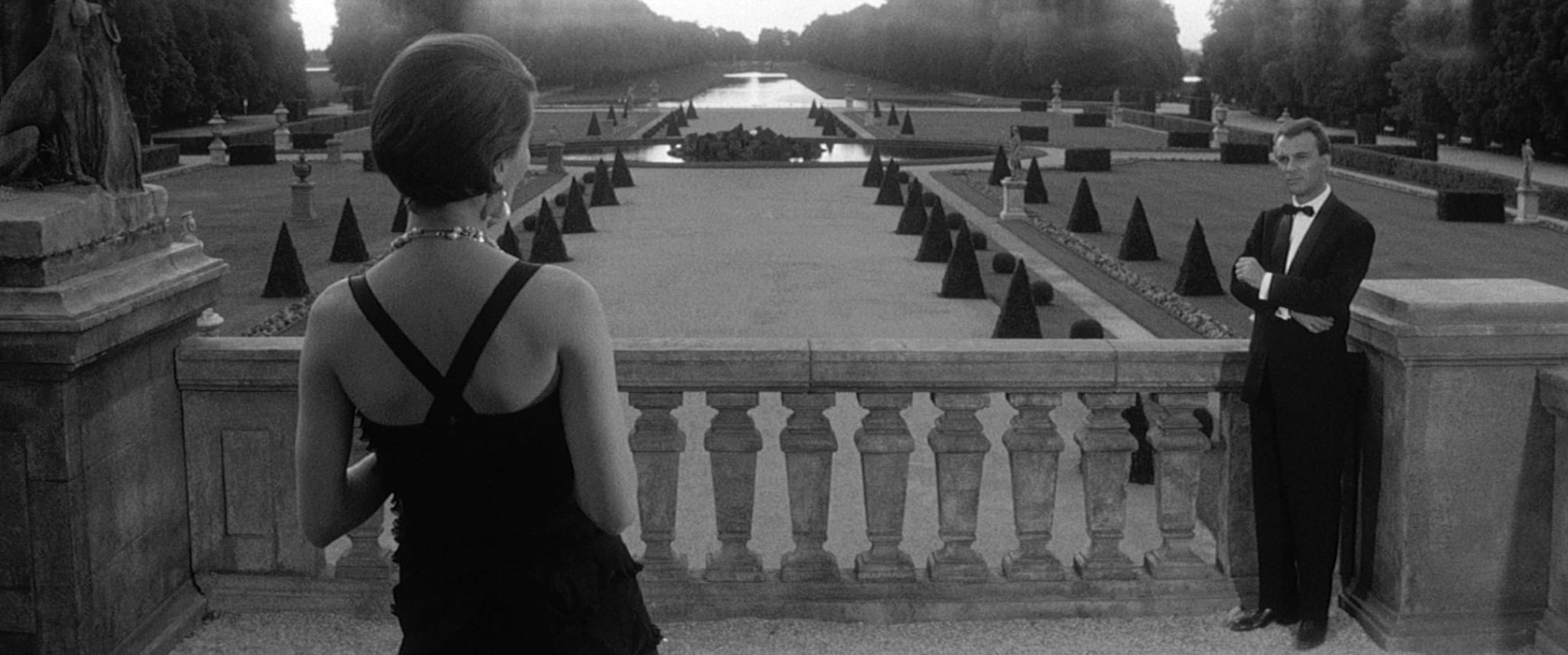
Alain Resnais’s Last Year in Marienbad (1961)
What Last Year in Marienbad is really interested in is the mind, and Resnais appropriately uses a baroque hotel full of things and people yet emptiness to put its intricacies on screen. That we wonder at various times whether the narrative itself is happening given the surrealism of the setting, which feels ethereal and dreamlike and orchestrated to the extent that people sometimes freeze, suddenly and randomly, like moving images turned to stills, is exactly the point. In one scene, the man or “X” in the screenplay, looks up at the woman also known as “A,” looking down at him and casting a perfect shadow of herself on the wall, and says: “I’ve waited for you a long time.” “In your dreams,” she quips back, but those three words are full of meaning. He can’t convince her of what is real, and she can’t make him see that he’s dreaming.
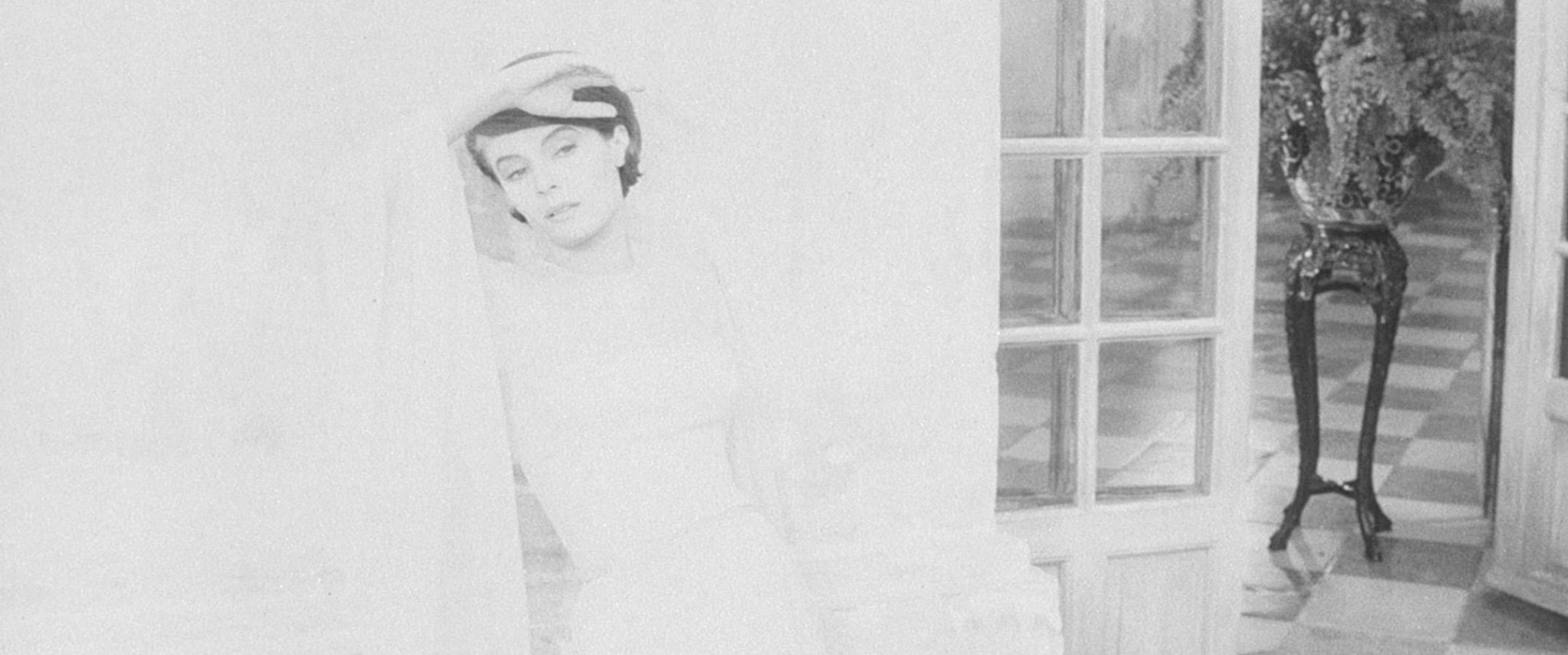
Alain Resnais’s Last Year in Marienbad (1961)

What Last Year in Marienbad is really interested in is the mind, and Resnais appropriately uses a baroque hotel full of things and people yet emptiness to put its intricacies on screen.
Ramzi De Coster
Last Year in Marienbad has been called boring, pretentious, shallow, confusing, and more. Maybe it is all those things. Maybe it isn’t. Either way, what I remember being impacted by most all those years ago, when I first watched it, was the overwhelming sense that in the film’s drawing rooms and gardens, memory was being interrogated on film in a way that matched the way it can be questioned in life. That the characters can’t tell you what did and didn’t happen in a hotel that looks both real and surreal is its brilliance.
The film mimics the agony of not knowing whether our memories are reliable or not, whether things happened as we remember them, or not. And are hotels—familiar and unfamiliar—the perfect metaphor for that kind of cerebral struggle? Resnais and Vierney are undeniably hypnotized by their own filming locations. The camera moves through the hotel longingly, fixating on chandeliers that look like Rorschach shapes silhouetted against the domed ceilings, that reflect in the mirrors below them and throw light on the ornate designs sculpted into the hotel’s stone, turning in every direction. Maybe it has nothing to do with being suspended temporally in a hotel, where every stay has a start and end date, but with being lost in all those rooms and hallways and on its grounds. Before you’ve discovered where everything is, sometimes you can’t tell anything apart.