

Style has always been at the heart of an actor’s image. But one hard-wearing fabric—textured enough to be felt on screen—has been left out of the spotlight. Here we observe the history of corduroy on camera.
Almost since its inception, cinema has played an outsized role in how men perceive clothing and teach themselves to dress. Almost a century after Hollywood’s Golden Age began, stars including Fred Astaire, Gary Cooper, and Cary Grant remain key references in bespoke tailoring, and their less- buttoned-up successors—Robert Redford, Steve McQueen, and Paul Newman, to name a few—have become the secular saints of American weekend-wear.
But for all the ink (and Instagram mood boards) spilled over these leading men, there’s a key supporting actor who’s been left out. This player has never been nominated for an Academy Award, has not received a standing ovation at Cannes, and doesn’t even have an IMDb page. As upsetting as this writer finds it, he must admit it’s logical, as our snubbed subject is not a sentient human but rather a 100% cotton fabric: corduroy, to be precise.
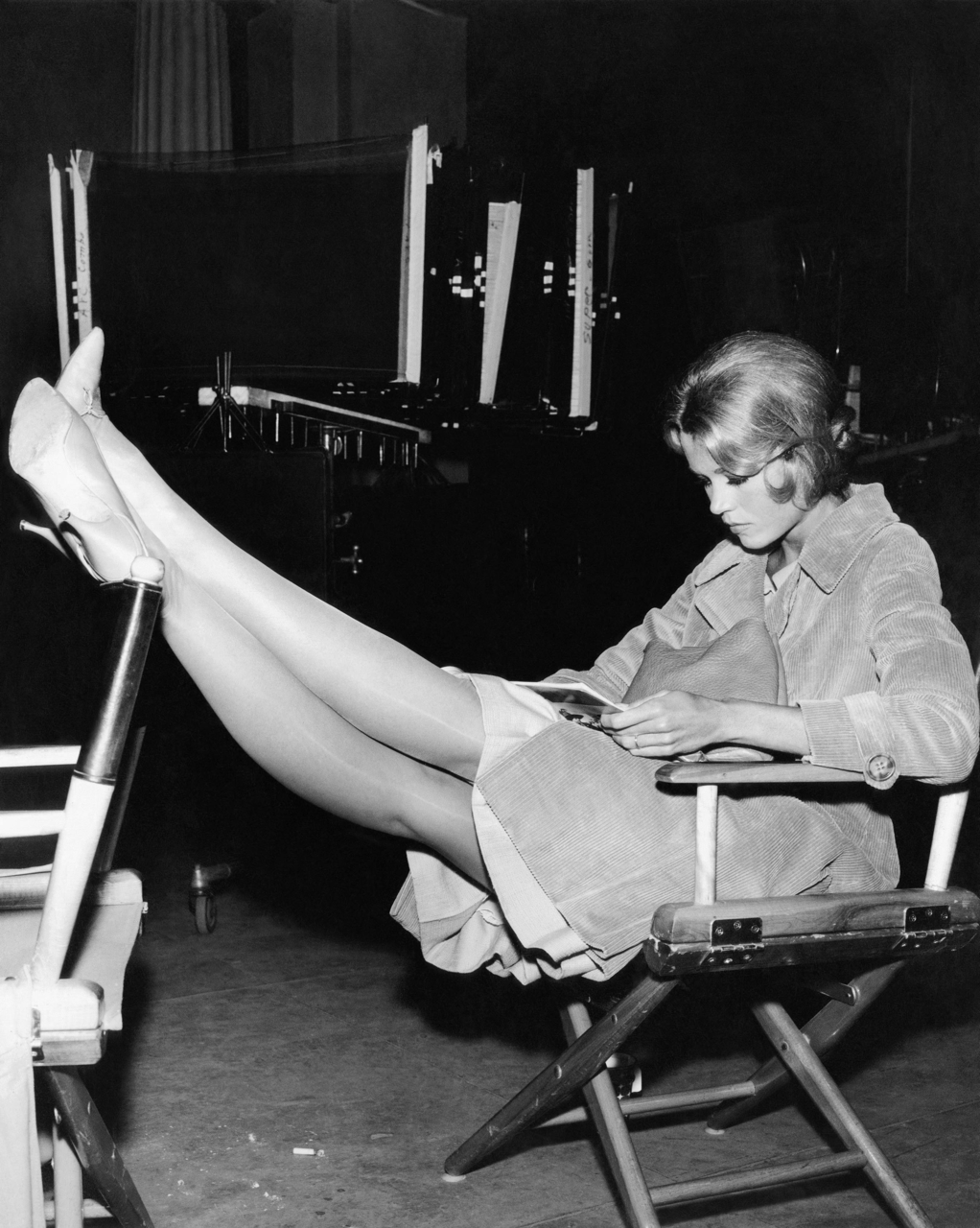
Jane Fonda relaxing on set of The Chase (1966).
Instantly recognisable by the raised ridges known as “wales”, corduroy is a humble, hard-wearing textile popularised during England’s Industrial Revolution as a working-man’s fabric. Later, and particularly in the United States, it became coded as academic and erudite; the sport coat of choice (possibly with elbow patches) for pipe-smoking professors too busy translating Greek to put much thought into getting dressed up. And so it took its place in the popular imagination as an incorruptible cloth worn by the hard-working and hard-thinking, the textural opposite of the shiny sharkskin suits preferred by ad men, lawyers, politicians, and other fallen if lucrative professions.
But the paradox of corduroy is that for all its yeomen associations, it’s quite visually distinctive. The weaving process that creates its wales also results in a slight sheen and softness that has earned it the nickname “poor man’s velvet”, and said wales—particularly when they are on the wider side—have a way of leaping off the screen and embedding themselves in the mind’s eye. As we shall see, corduroy has been richly deployed to characterise a film’s subject at first sight, by both leaning into the fabric’s traditional associations and subverting them.


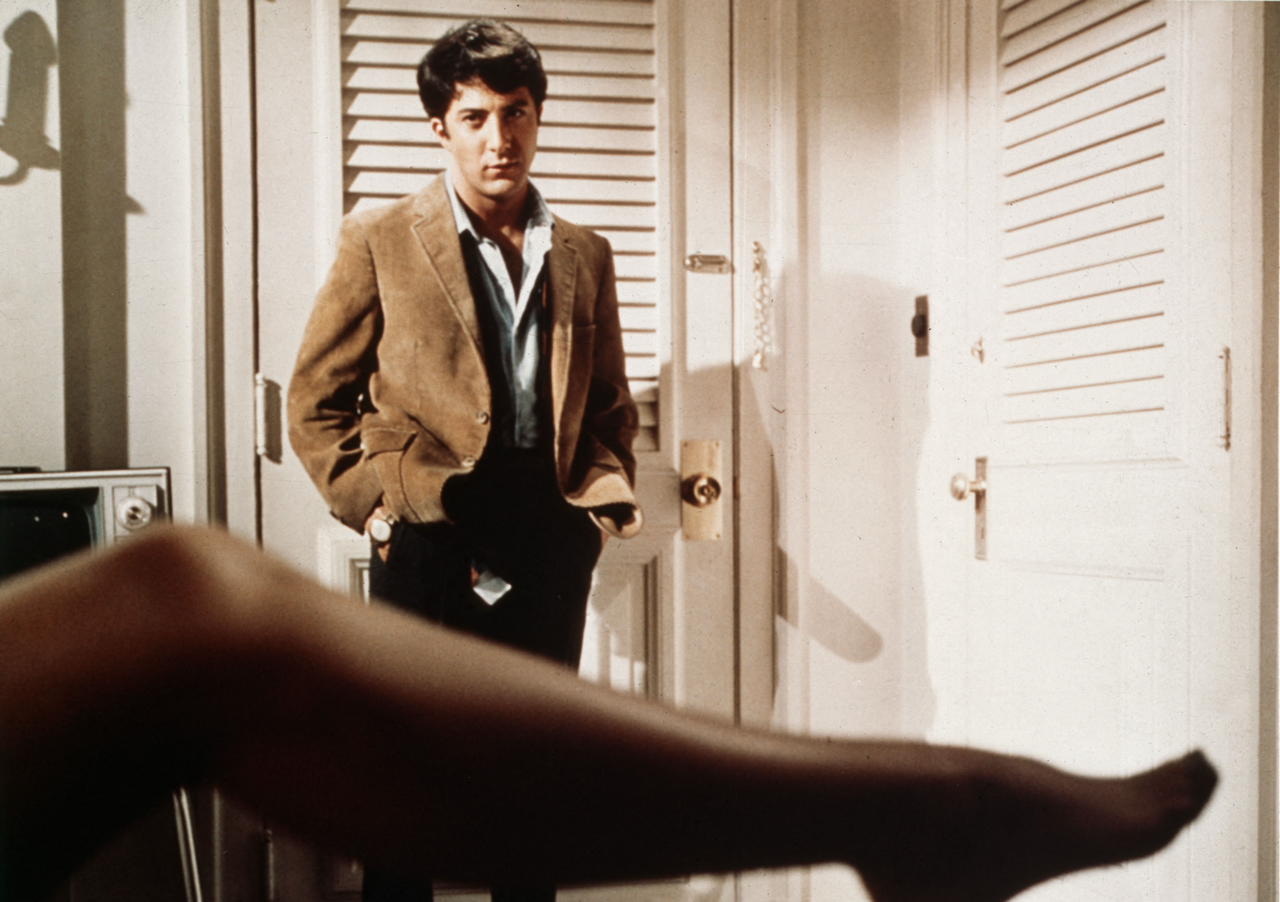
In The Graduate (1967), Dustin Hoffman’s meekly innocent Benjamin Braddock sports a wardrobe of Ivy style staples including a blue blazer and herringbone tweed jacket whose cropped lengths and narrow lapels emphasise the character’s status as an overgrown schoolboy (and help conceal that the 30-year-old Hoffman was playing a recent college graduate). But its most famous piece of tailoring is the fawn-coloured corduroy sport coat Braddock slips into—and, subsequently, out of—while being seduced by Anne Bancroft’s Mrs Robinson in a hotel room. Indeed, the decidedly unsexy jacket with its boxy patch-flapped pockets is juxtaposed with the symbol of sex itself, Robinson’s outstretched and stocking-covered leg, in the still that’s become the film’s enduring image.
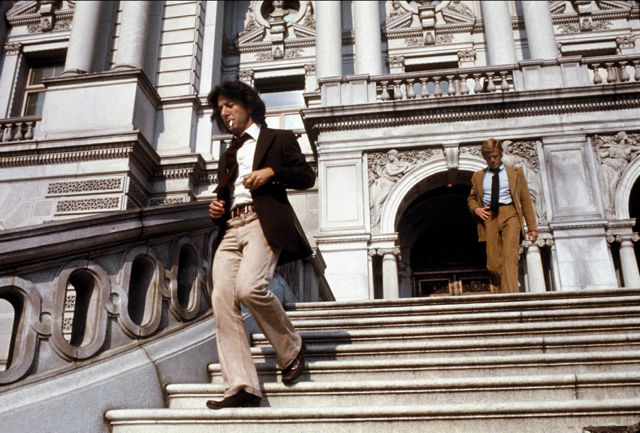
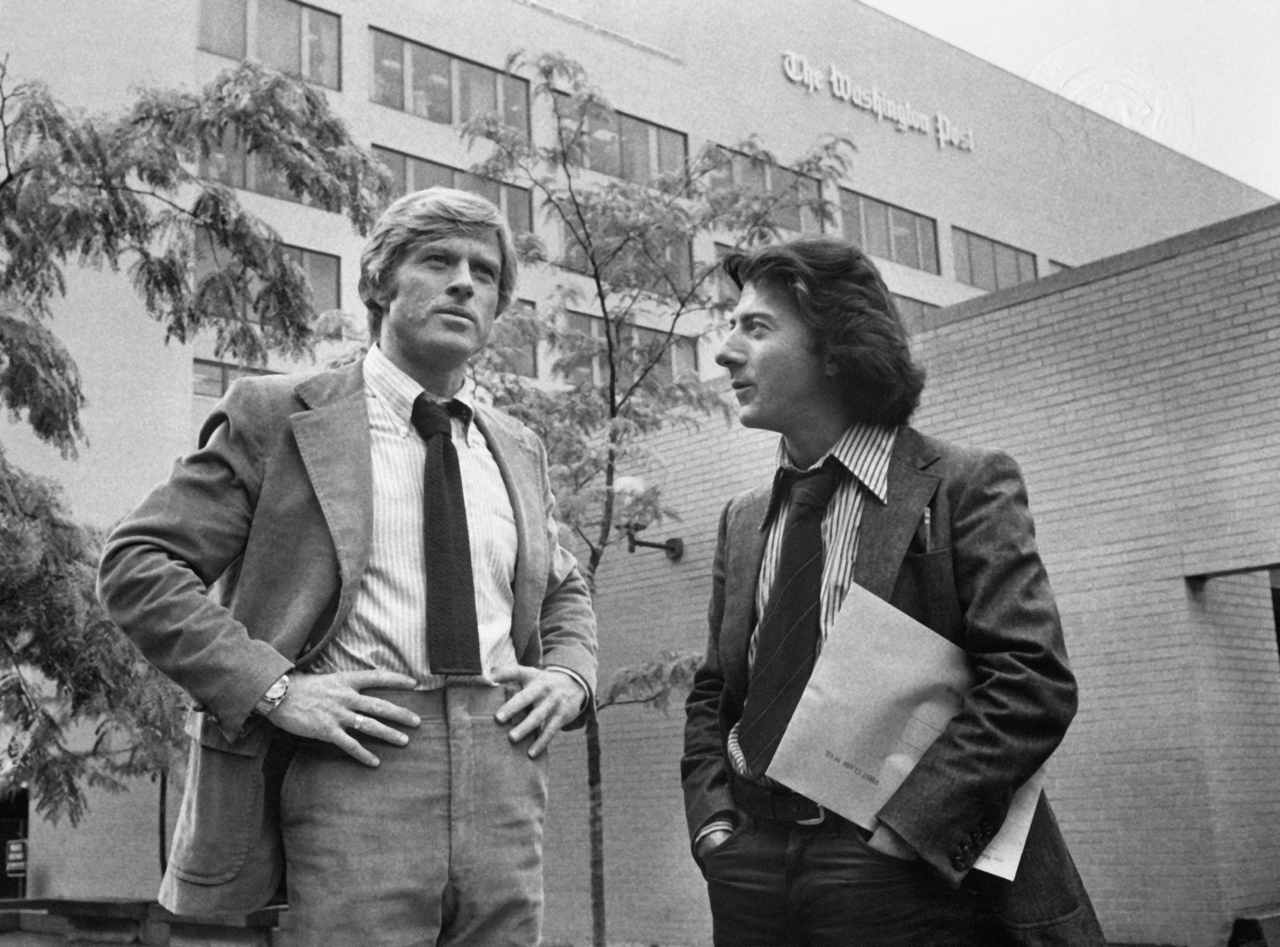
Corduroy as purity also seems to be the play in All the President’s Men (1976), throughout which Robert Redford plays journalist Bob Woodward in a similarly coloured corduroy suit, sometimes broken up as a jacket. This being the 1970s, it features eye-catchingly wide lapels, but casual details such as its patch- flap pockets and leather “football” buttons, as well as its perpetually rumpled state, drive home that Woodward is a young and broke cub reporter untainted by the money and skullduggery coursing through the fetid swamp that is Watergate-era Washington DC.
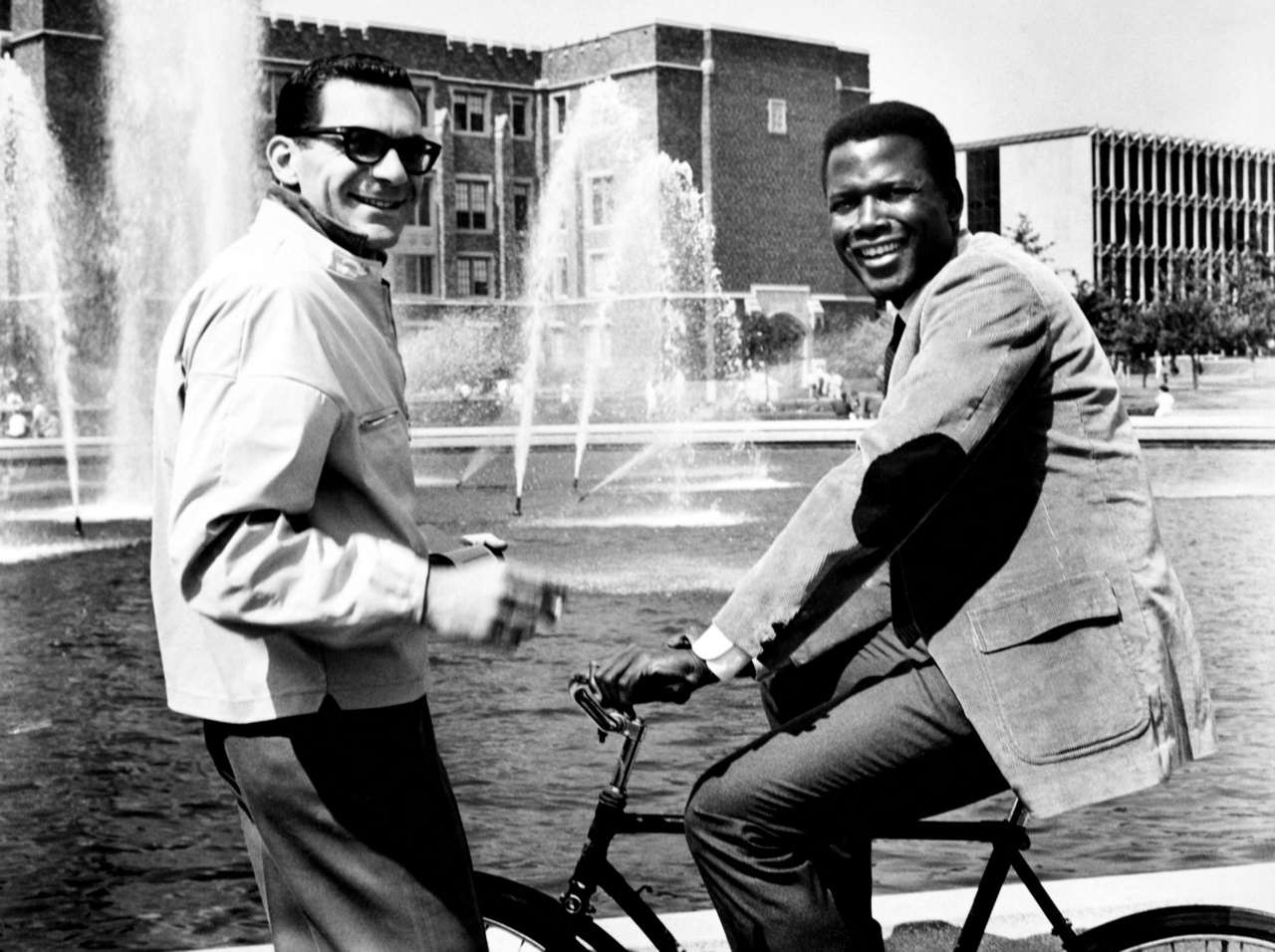
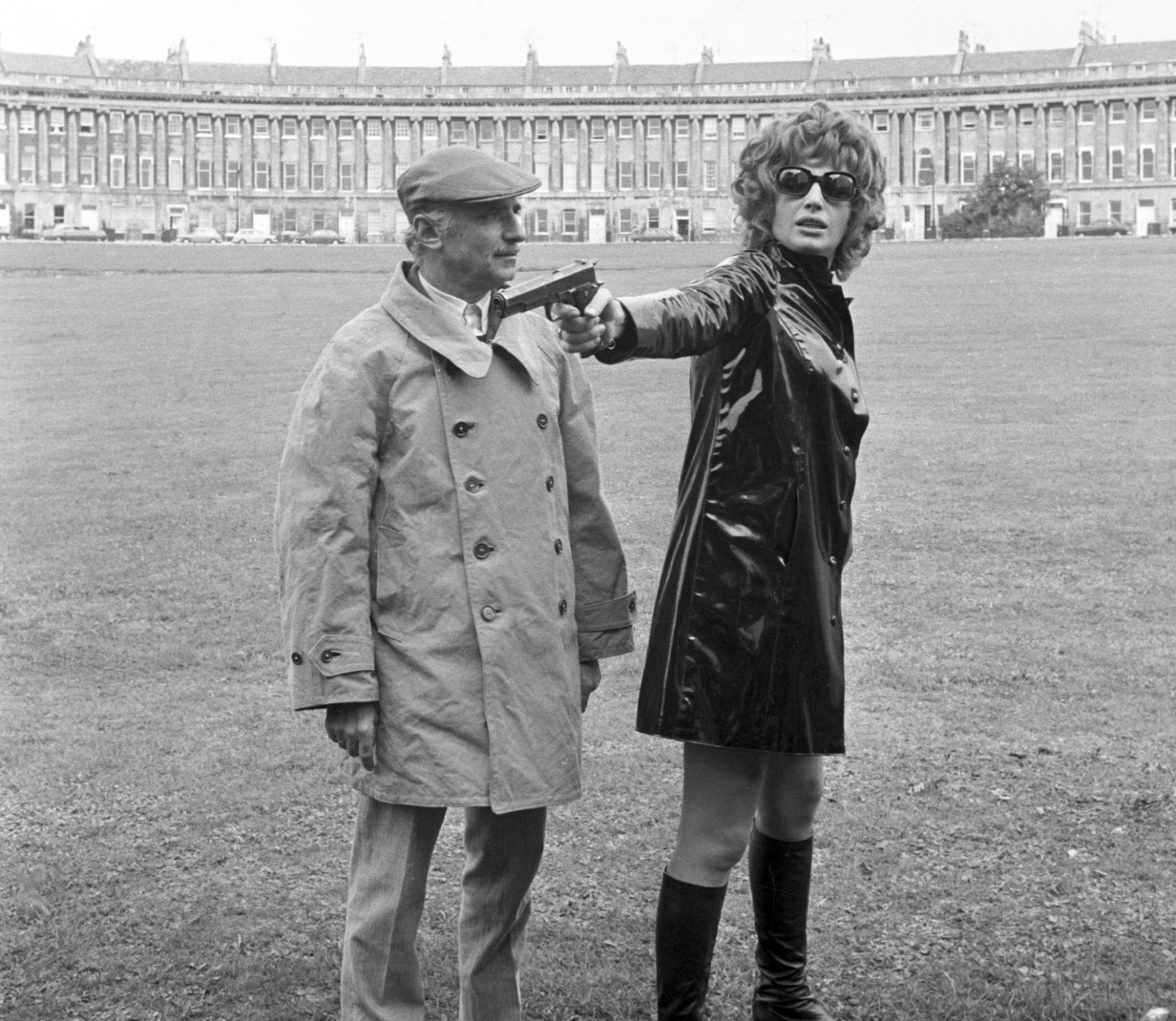
Sidney Poitier wears cords during the production of The Slender Thread (1965).
In one of the film’s earlier moments, we see Woodward confront Markham, a lawyer for the Watergate burglars, in a courtroom while the latter delivers slippery legalisms clad in a sharply tailored grey three-piece. Woodward’s wardrobe is also at odds with the aristocratic, if supportive, executive editor of the paper, Ben Bradlee, a Boston Brahmin who Jason Robards plays in blue-blooded attire including Gucci bit loafers and full black tie.
If corduroy could communicate a saintly quality about the uncorrupted, it could also do the opposite and serve as the proverbial sheep’s clothing. This heel turn came in The Talented Mr Ripley (1999), in which the titular character played by Matt Damon is seen wearing a sand-coloured corduroy jacket at the start of his misadventures. Aside from capturing Ripley’s humble background, its oversized cut—the boxy shoulders extend over his own, and the sleeves nearly graze his knuckles—reinforce his status as an awkward fish out of water among Dickie Greenleaf’s moneyed friends in Italy—an insecurity that Philip Seymour Hoffman’s cruel Freddie Miles seizes on with a mocking comment to Greenleaf (“A corduroy jacket in Italy?”).
Unsurprisingly, it’s one of the first things Ripley abandons while beginning to claim Greenleaf’s identify for his own, first by dancing around in the latter’s black-tie ensemble when he believes he is alone, and later by having a bespoke jacket made up with the deceased Greenleaf’s allowance.
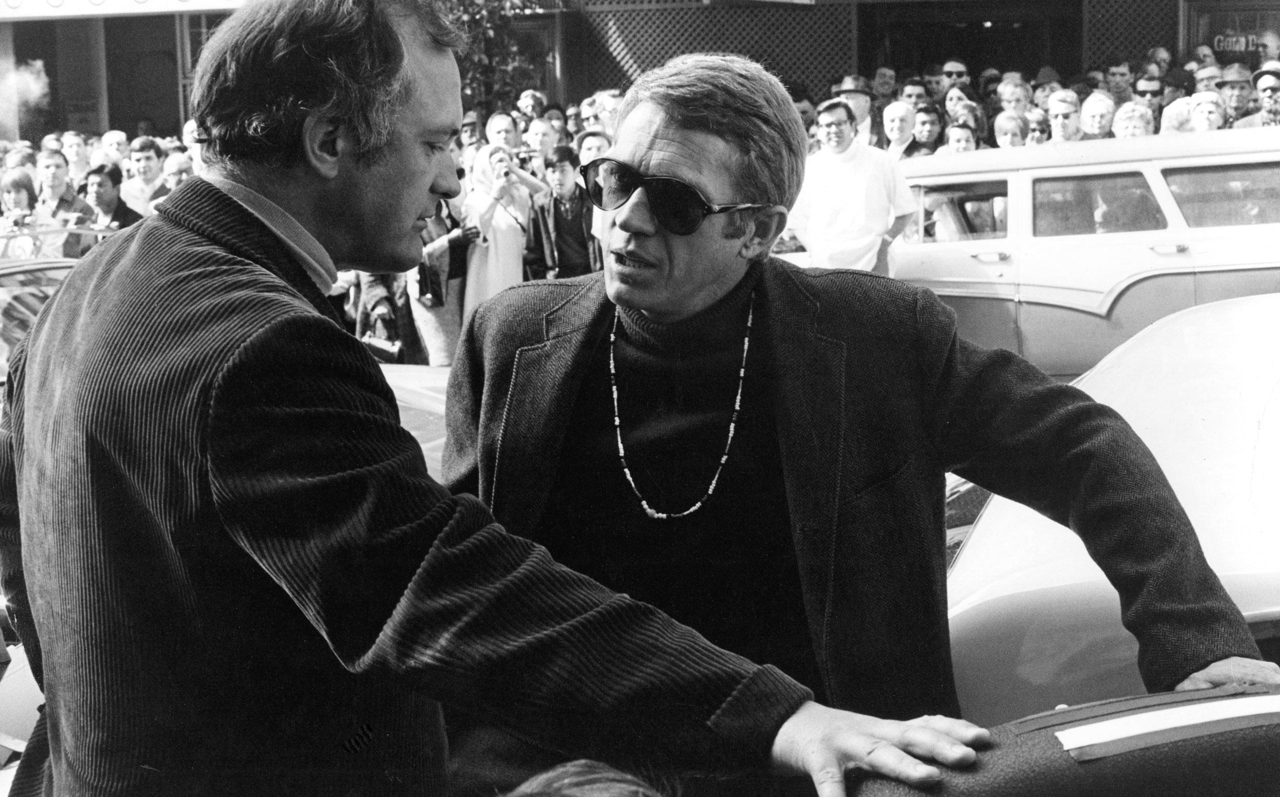
Yates sports a stylish cord jacket beside Steve McQueen on the set of Bullitt (1968).

“If there’s a practical style lesson to be gleaned from all this, it’s that corduroy—whether worn by an innocent, a wolf in sheep’s clothing, or an actual fox—is anything but dull.”
In a reversal of this dynamic, the cloth is both rakish and worn by a hero in The Fantastic Mr Fox (2009), and the film’s director, Wes Anderson, is a noted wearer of corduroy suits. In its opening scene, the titular character attempts a daring raid on a farmer’s hens while wearing a corduroy suit whose sharp cut, peaked lapels, and double-breasted silhouette is a high contrast to the baggy jackets worn by our previously mentioned heroes and anti-hero. When Fox, now a father, retires from pilfering poultry to pen a little-read newspaper column, he similarly drops the suit in favour of a much plainer-appearing gabardine two-piece in a dull, dishwater shade with a nerdy short-sleeved shirt and repp tie. The get-up only reappears when the depressed Fox rediscovers his inner wild animal and resumes his raiding ways.
If there’s a practical style lesson to be gleaned from all this, it’s that corduroy—whether worn by an innocent, a wolf in sheep’s clothing, or an actual fox—is anything but dull. It’s a cloth with character, rich in both texture and connotations; a striking sight on the silver screen and the sidewalk. And at a time when both the cinematic and sartorial worlds are awash in algorithmic same-ness, a bit of character goes a long way.