

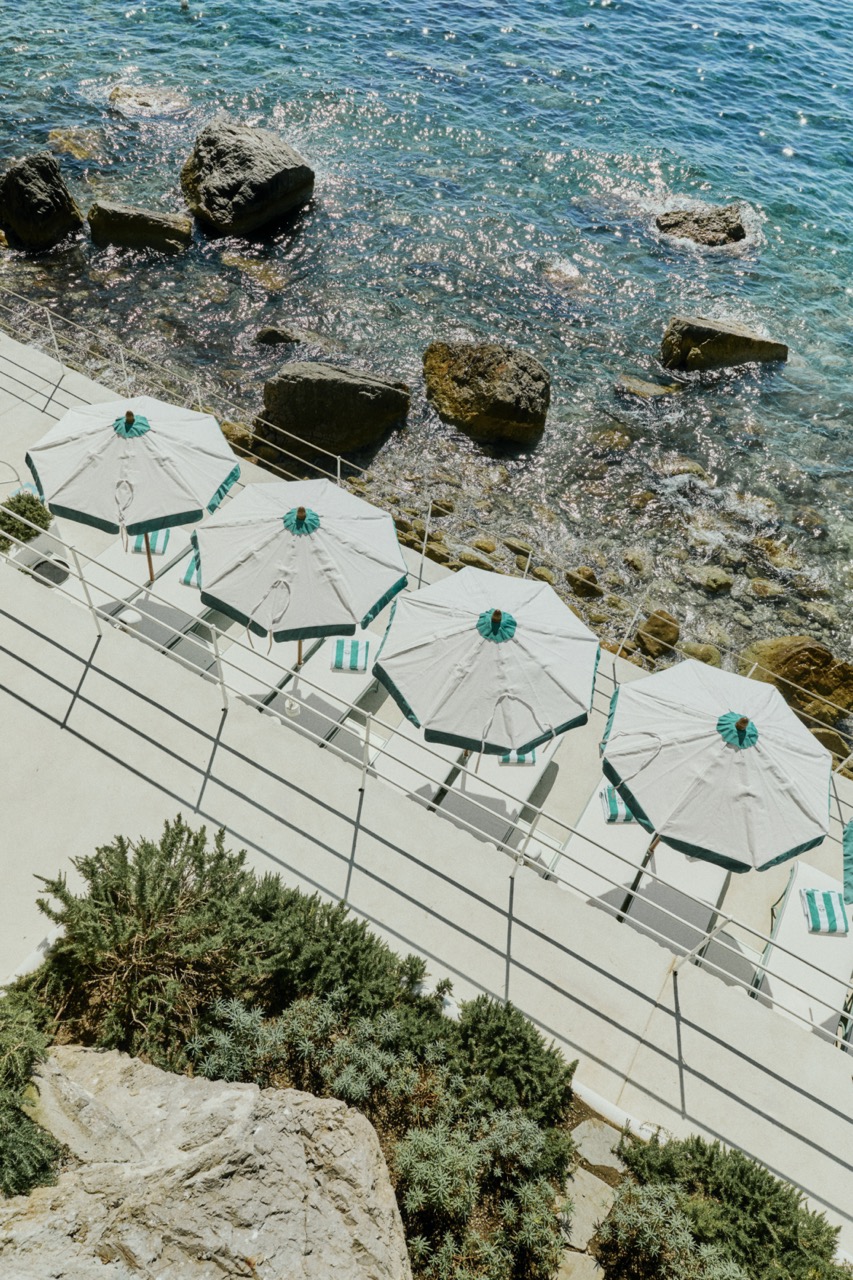
Perched between Positano and Capri in the sleepy village of Nerano, the Sersale family’s follow-up to the iconic Le Sirenuse hotel is a beach club and restaurant that is pure dolce vita.
“There was never really any question,” say Antonio and Carla Sersale, recalling the first time they stood on the site that would become Le Sirenuse Mare. “It was, quite simply, the perfect spot.”
Looking at the beach club, restaurant and boutique today—an immaculate vision of Amalfi Coast glamour—it’s hard to visualise the neglected site they encountered. Yet perched along the picturesque Marina del Cantone near Nerano, a sleepy town between Positano and Capri, the family could feel it’s potential. “It was already a spot where generations of travellers would come for lunch,” they explain. “The site was extraordinary—a beautiful, expansive cliff with completely unobstructed views. The sea was pristine and wild.”
Rather than compete with this landscape, they decided to instead let nature take centre stage. Working with the architect Annarita Aversa of Architetti Artigiani Anonimi, they imagined “a restaurant that would be almost entirely outdoors,” while the landscape designer Paolo Pejrone was enlisted for the gardens. “We were all standing on a derelict concrete tennis court with a plastic table on which we had laid out the plans.” Pejrone quietly took a pencil and drew twelve circles. “Those circles marked the places where we planted the Aleppo pines, which have since become one of the most beautiful and defining elements of Le Sirenuse Mare.”
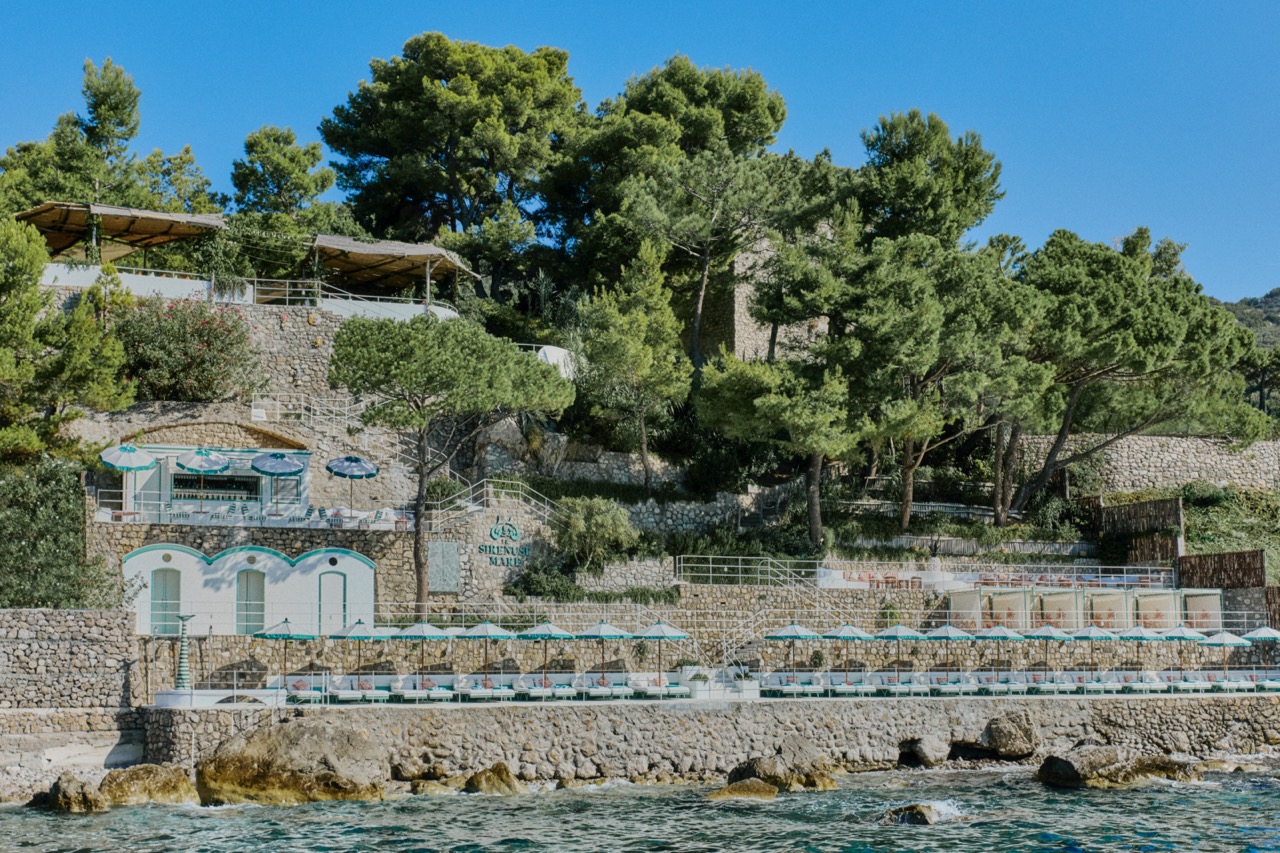


The stakes for beauty were high when it came to creating Le Sirenuse Mare, the family’s first follow up to the original Le Sirenuse hotel in Positano, roughly 25km up the coast. Founded by the Sersale family in 1951, Le Sirenuse’s red-fronted façade is now synonymous with the Amalfi Coast itself. Writing about the hotel in a 1953 essay for Harper’s Bazaar, John Steinbeck describes “an old family house converted into a first class hotel, spotless and cool.” While in peak season Positano is now more tourist heavy than in Steinbeck’s day, Nerano offers definitive respite from the maddening crowds and a free boat shuttles hotel guests to the beach club throughout the day.
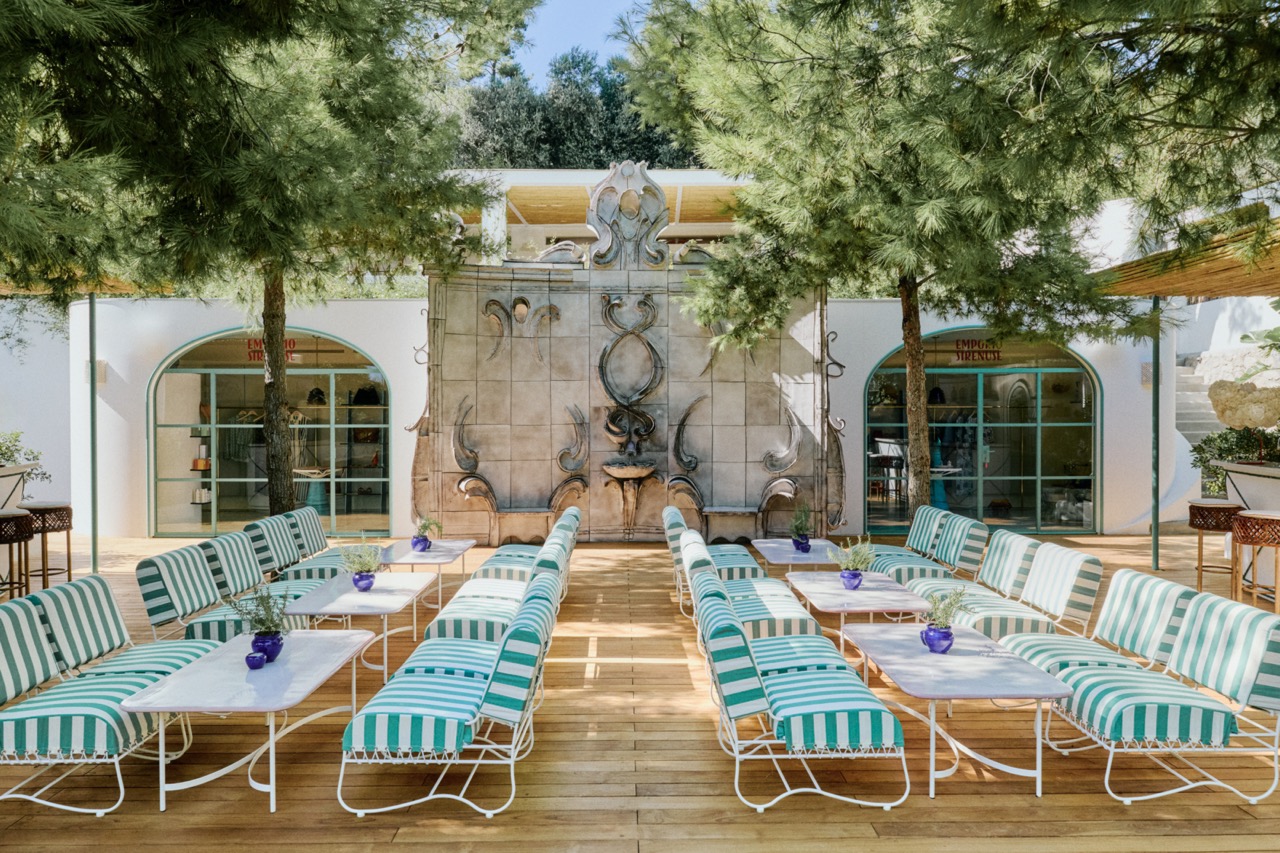
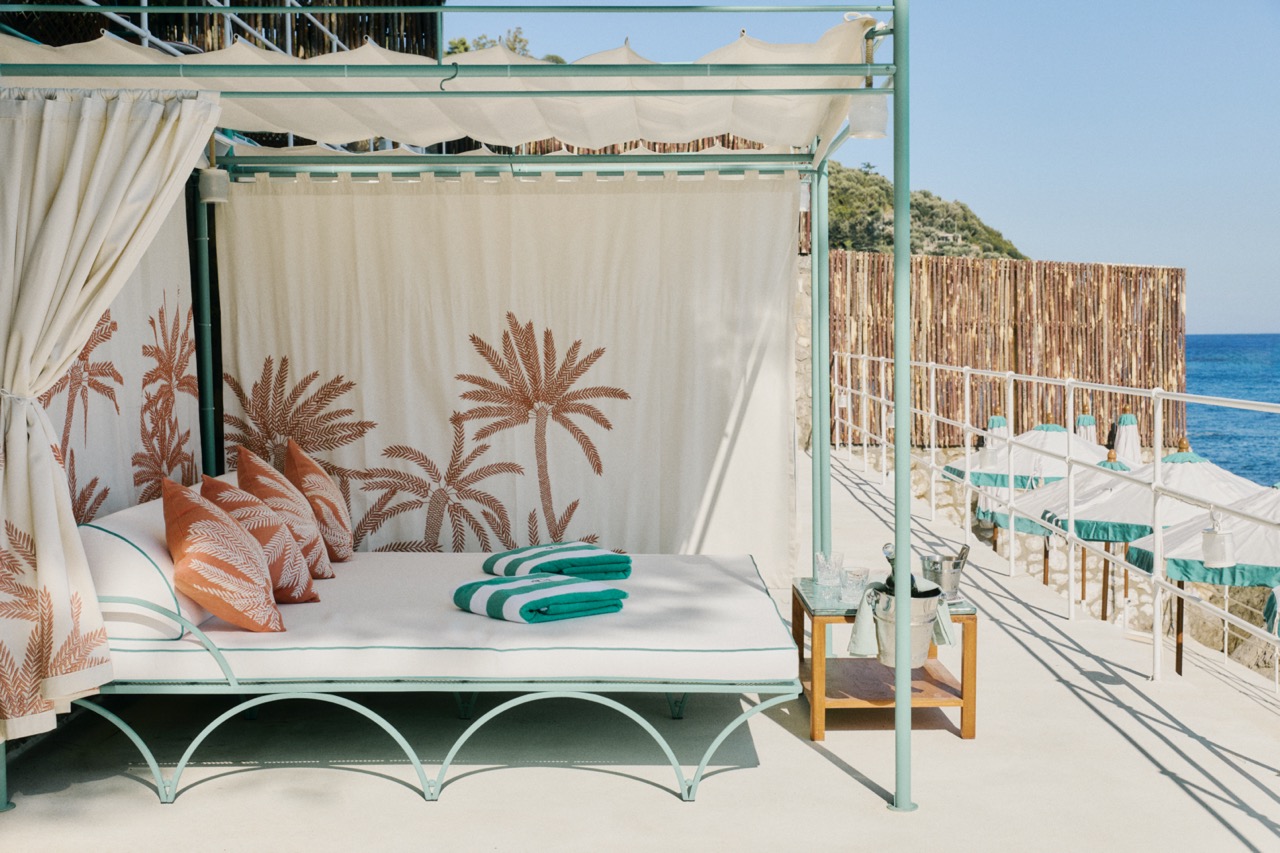
The design of Le Sirenuse—a combination of contemporary and historic—was shaped over generations. “The hotel is an eclectic and complex place, shaped by 75 years of carefully curated interiors, where art, furniture and objects from different periods coexist.” Nerano was approached with the same spirit, yet it feels undeniably modern. Its stripy green sunbeds—more typical beachclub staples—are complimented with contemporary art and design such as a sweeping fountain ceramic by Giuseppe Ducrot and a bronze pineapple by Rose Wylie, which Antonio fell in love with during Frieze London. Later the artist gave her name to the bar and her whimsical drawings have been incorporated onto the menu and drinks coasters.
Featured elsewhere are Lucio Liguori’s ceramics from Vietri, Dominique Masullo’s sculptural suns, Alba Clemente’s extraordinary tiled staircase and Bosco Sodi’s olive grove totem, which all found their place at Le Sirenuse effortlessly. “Each work was selected because it had a natural connection to the space, to us, or to the artists and craftspeople with whom we have built relationships over the years.”
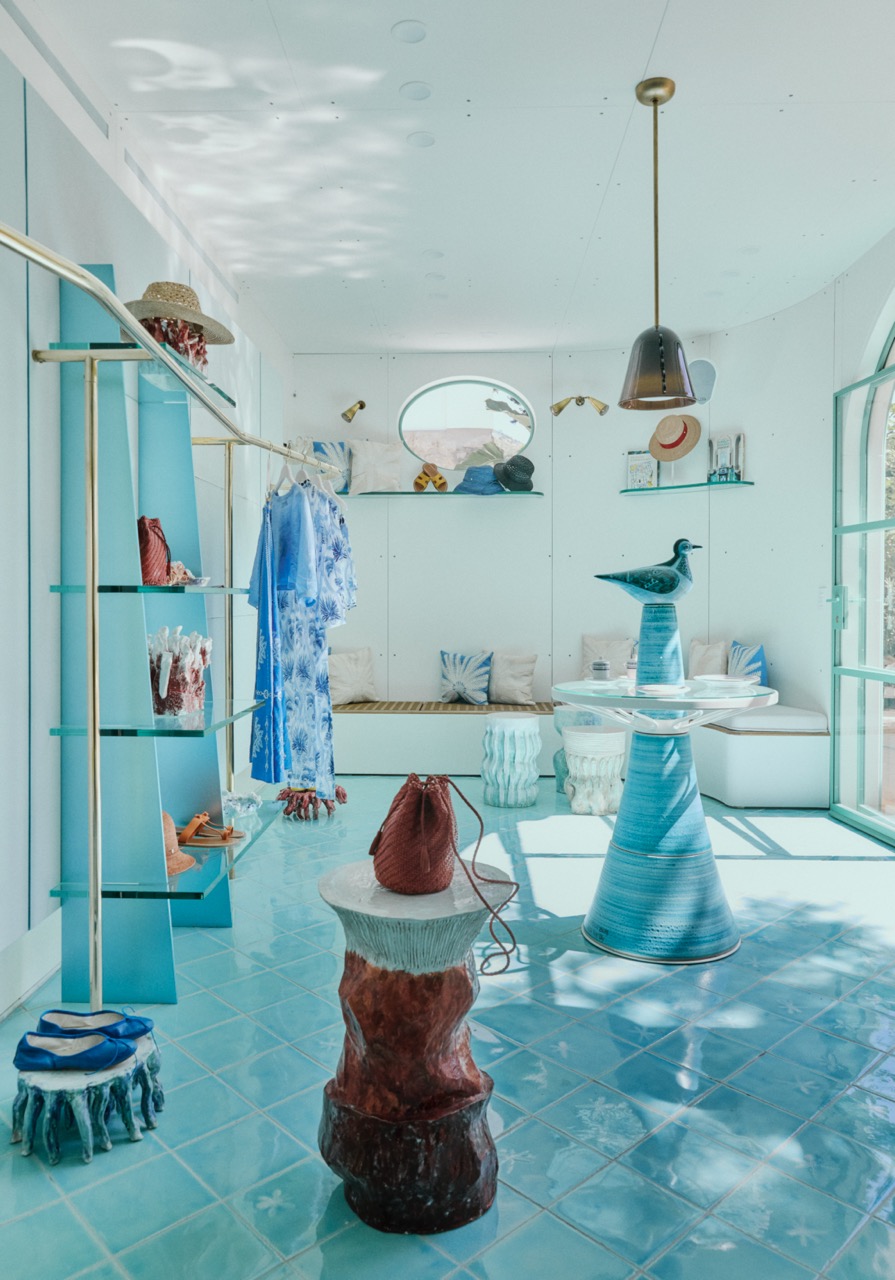
Emporio Sirenuse.
Photo: Brechenmacher & Baumann
The emphasis on craftsmanship continues inside the new Emporio Sirenuse store — the first outside Positano, after it was founded as an extension of the hotel in 2013. For the owner’s son Francesco Sersale, who heads up the label, the new space had to do more than sell clothes. “It had to express the whole world of the brand rather than simply sell it,” he says.
Working with designer Anne-Sophie Rosseel, the aquamarine boutique includes floating glass shelves, undulating brass rails and yacht-inspired cabinetry framing ready-to-wear, ceramics and homeware. “What we wanted was a space that feels less like a shop and more like stepping into the imagination of the brand: elevated, tactile, a little surreal, and completely of the Mediterranean,” says Francesco.
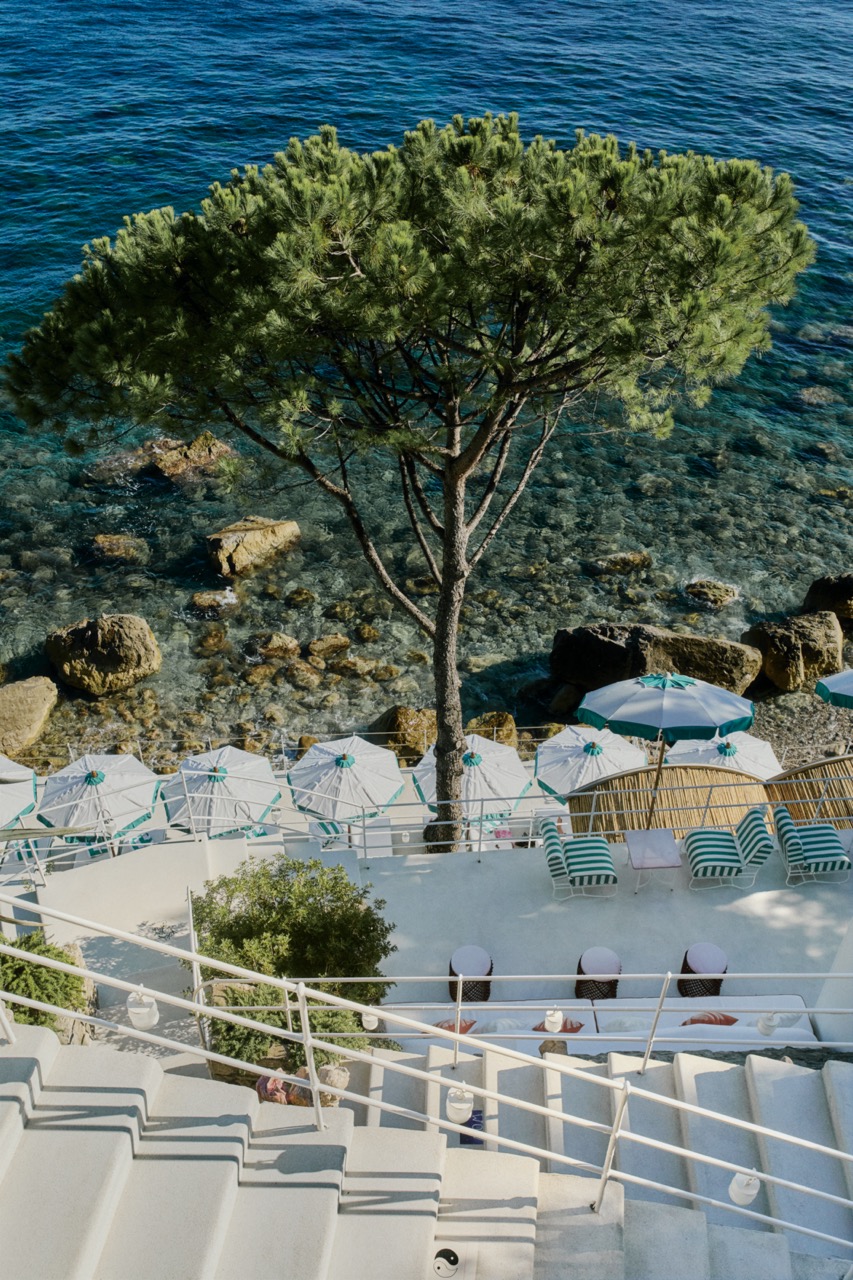
Photo: Brechenmacher & Baumann
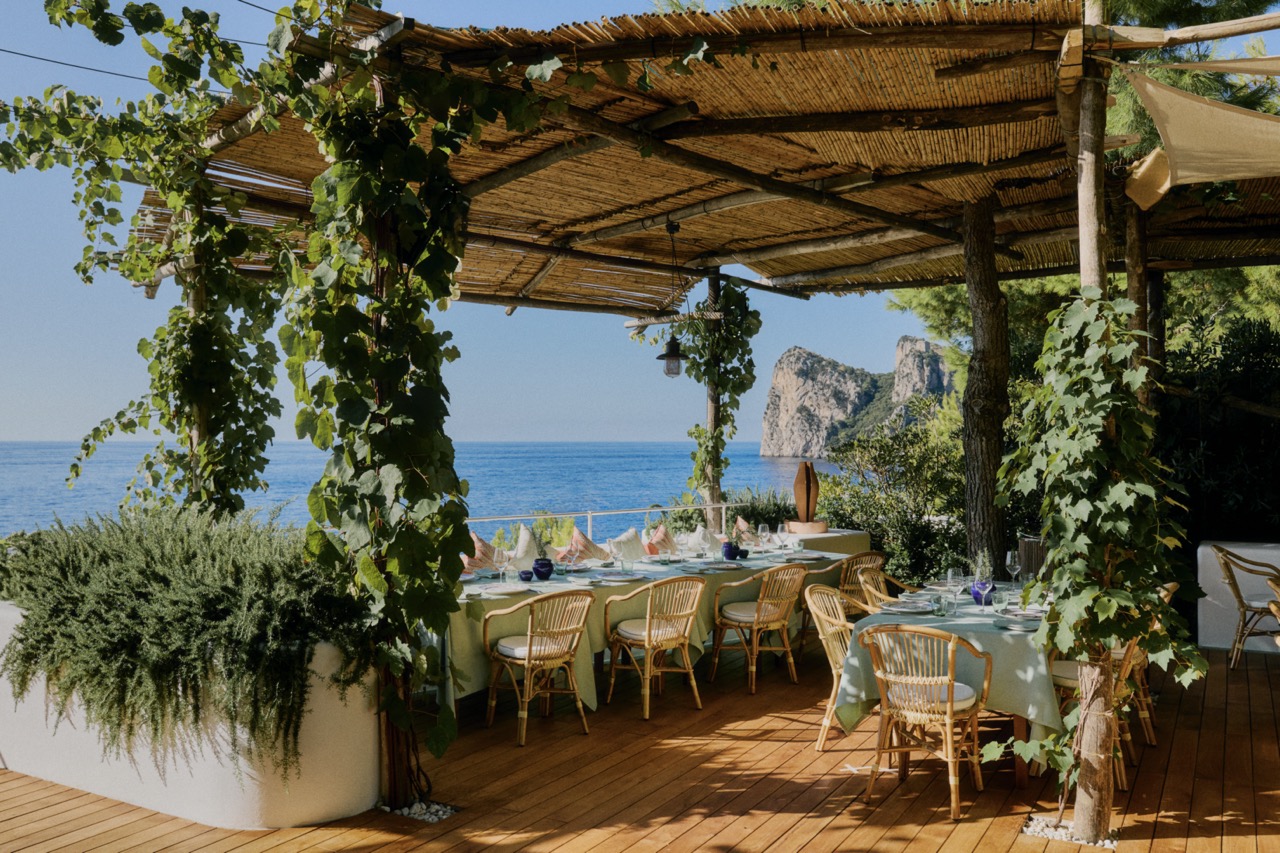
The cuisine’s Mediterranean spirit is even more immediate. Executive Chef Gennaro Russo and Chef Francesco De Simone have created a menu that Aldo Sersale describes as “distinctly Campanian”. “In Italy, we talk about chilometro zero: sourcing ingredients as close as possible to where they are served,” he says. “With the exception of a few special products, such as caviar, our produce is hyper-local.”
Even the signature pasta alla Nerano—a local dish, invented down the road at Ristorante Maria Grazia which consists of spaghetti and Zucchini—is approached with restraint. “We have enormous respect for the original, so we never wanted simply to compete with it,” Aldo explains. Instead, De Simone has created “a lighter, more contemporary interpretation” using local caciotta, courgettes, their flowers, raw red prawns and a prawn extract emulsified with olive oil, preserving the generosity of the classic while making it, he says, “more suited to a long seaside lunch.”
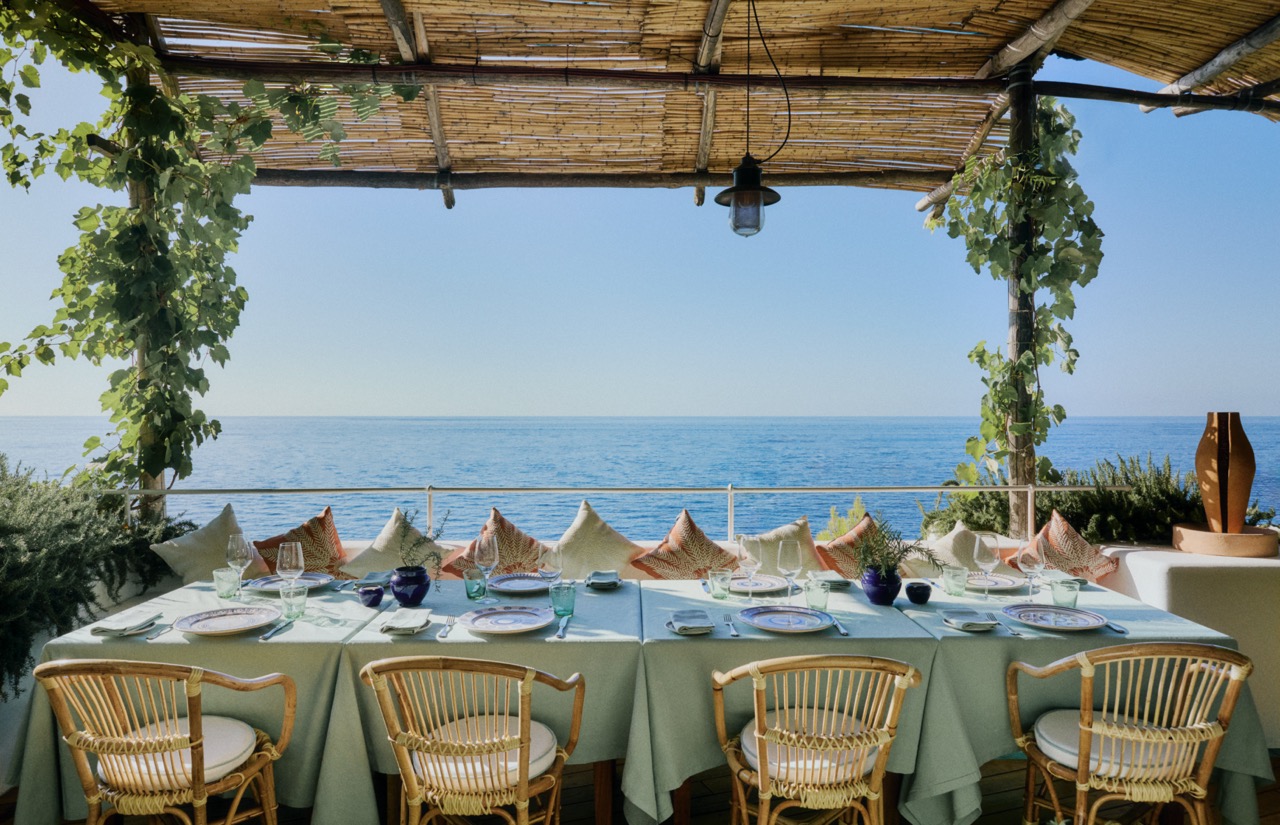
Photo: Brechenmacher & Baumann
Beyond the restaurant, homemade granitas, cakes and ice creams fill the dessert bar, while Rose’s Bar serves citrus-driven cocktails inspired by Alba Clemente’s Steps to the Sea. Yet for all the attention paid to art, architecture and gastronomy, the Sersales insist the ambition is surprisingly simple. “Above all,” Antonio and Carla say, “we want our visitors to feel at peace. We want them to enjoy the day, relax completely and feel at home.”