

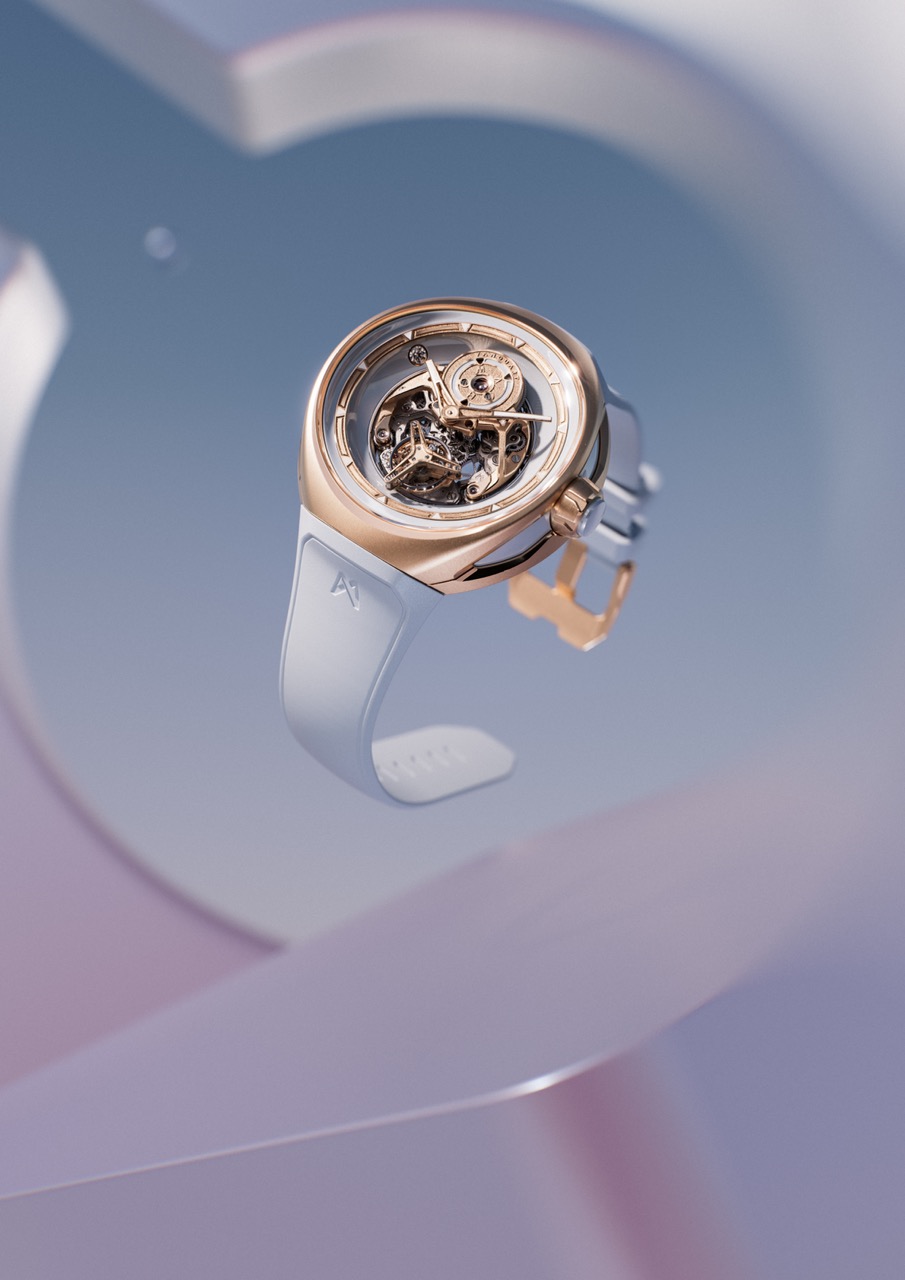
Two years after the launch of the Orb—one of the most talked-about watches in contemporary haute horlogerie—Vanguart has returned with a the new Orb Pink Ceramic Titanium and Orb Blue Ceramic Rose Gold.
There is a moment in every great science-fiction film when the impossible suddenly becomes familiar. The spaceship lands in a suburban driveway. The future slips quietly into everyday life. Swiss independent watchmaker Vanguart has achieved something similar with its latest release.
Two years after the launch of the Orb—one of the most talked-about watches in contemporary haute horlogerie—Vanguart has returned with a pair of new editions that soften the watch’s radical edge without sacrificing its ambition. The new Orb Pink Ceramic Titanium and Orb Blue Ceramic Rose Gold retain the original’s extraordinary mechanical architecture while introducing flashes of pastel ceramic that make the design feel unexpectedly wearable.
That matters because the Orb was never conceived as an ordinary luxury watch. When it debuted in 2024, it became the world’s first flying tourbillon wristwatch to feature a selector allowing its owner to switch between automatic and manual winding modes at will. It was a genuinely novel complication, transforming the simple act of winding a watch into something more philosophical: a question of control, participation and time itself.
The result looked less like a traditional Swiss watch than a prop from a Denis Villeneuve film: a sculptural vortex of titanium, bridges and moving components spiralling towards a mesmerising flying tourbillon. Unsurprisingly, it quickly found admirers beyond the traditional watch world. Basketball icon Michael Jordan has been photographed wearing the Orb, helping elevate Vanguart from cult independent watchmaker to one of the most closely watched names in contemporary horology. Its appeal speaks to a broader cultural shift in which collectors, creatives and entertainers are increasingly drawn to independent makers producing objects with a distinctive point of view rather than familiar luxury status symbols.
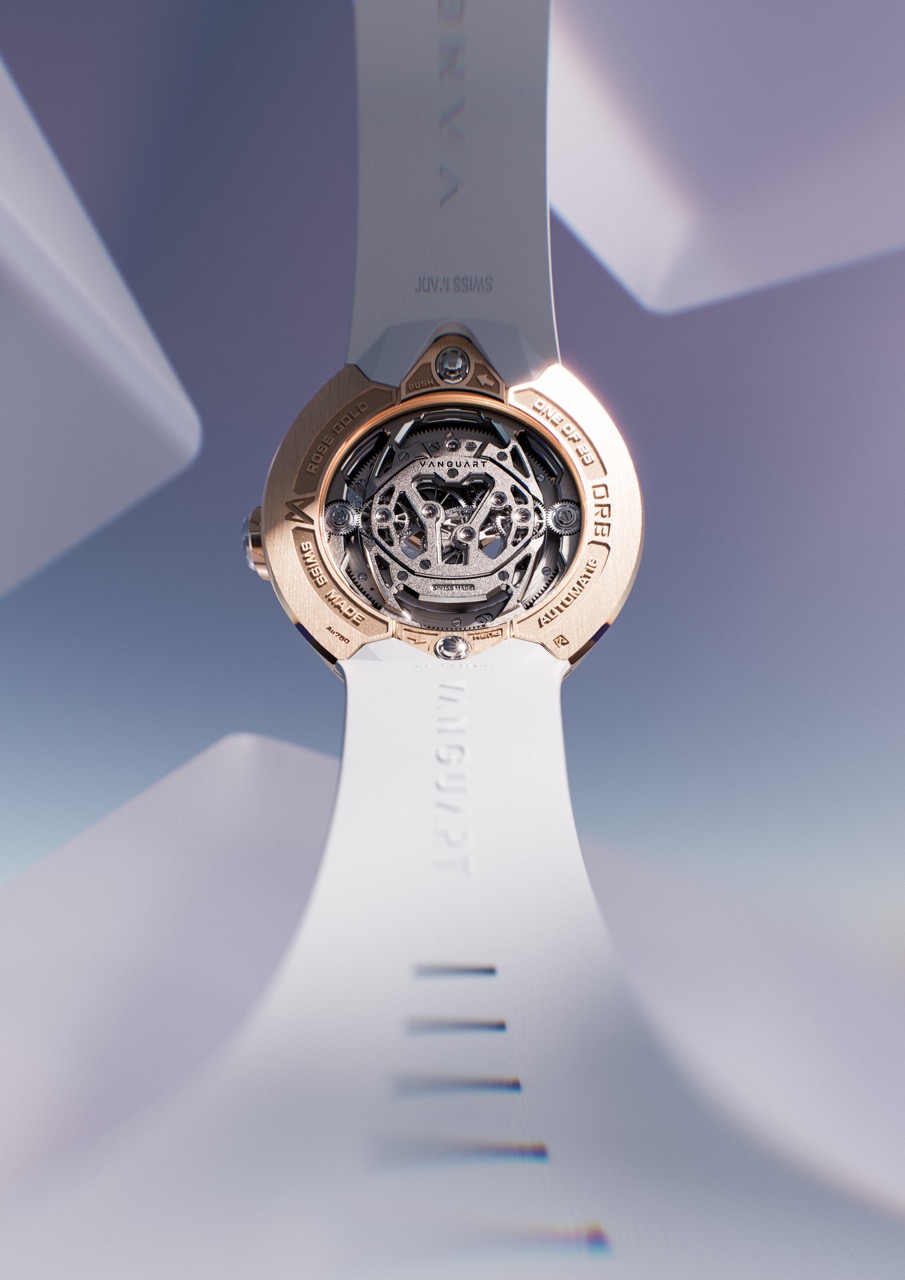
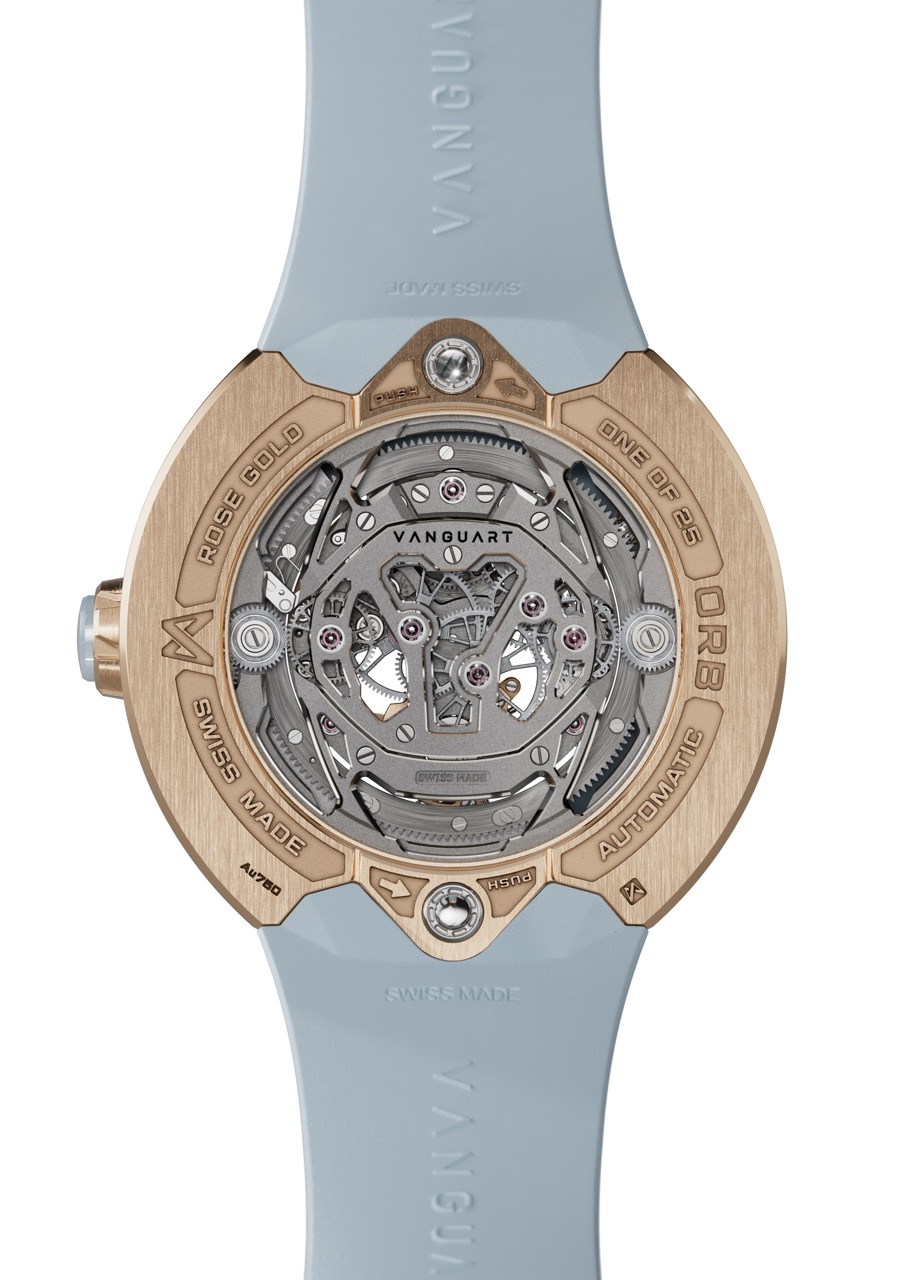
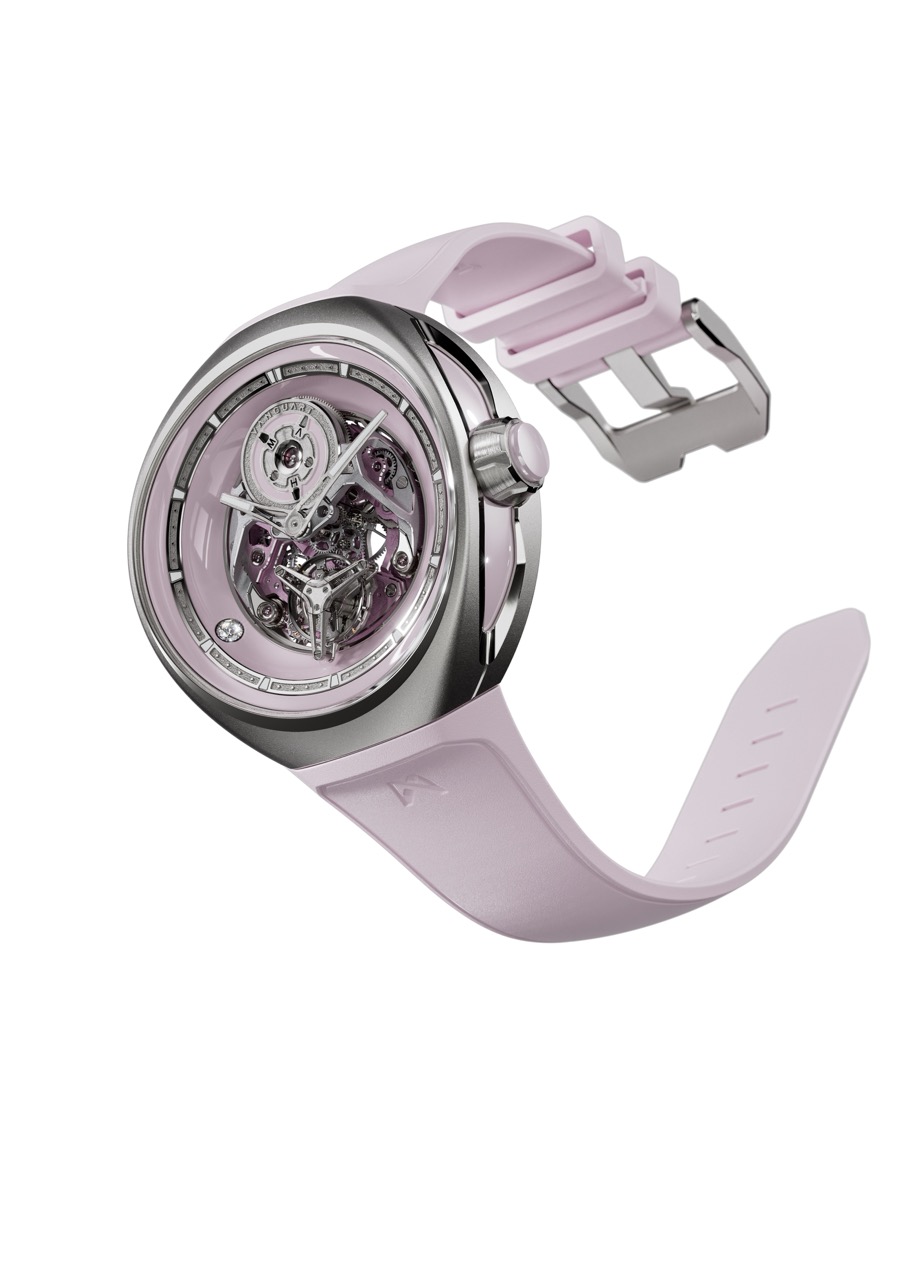
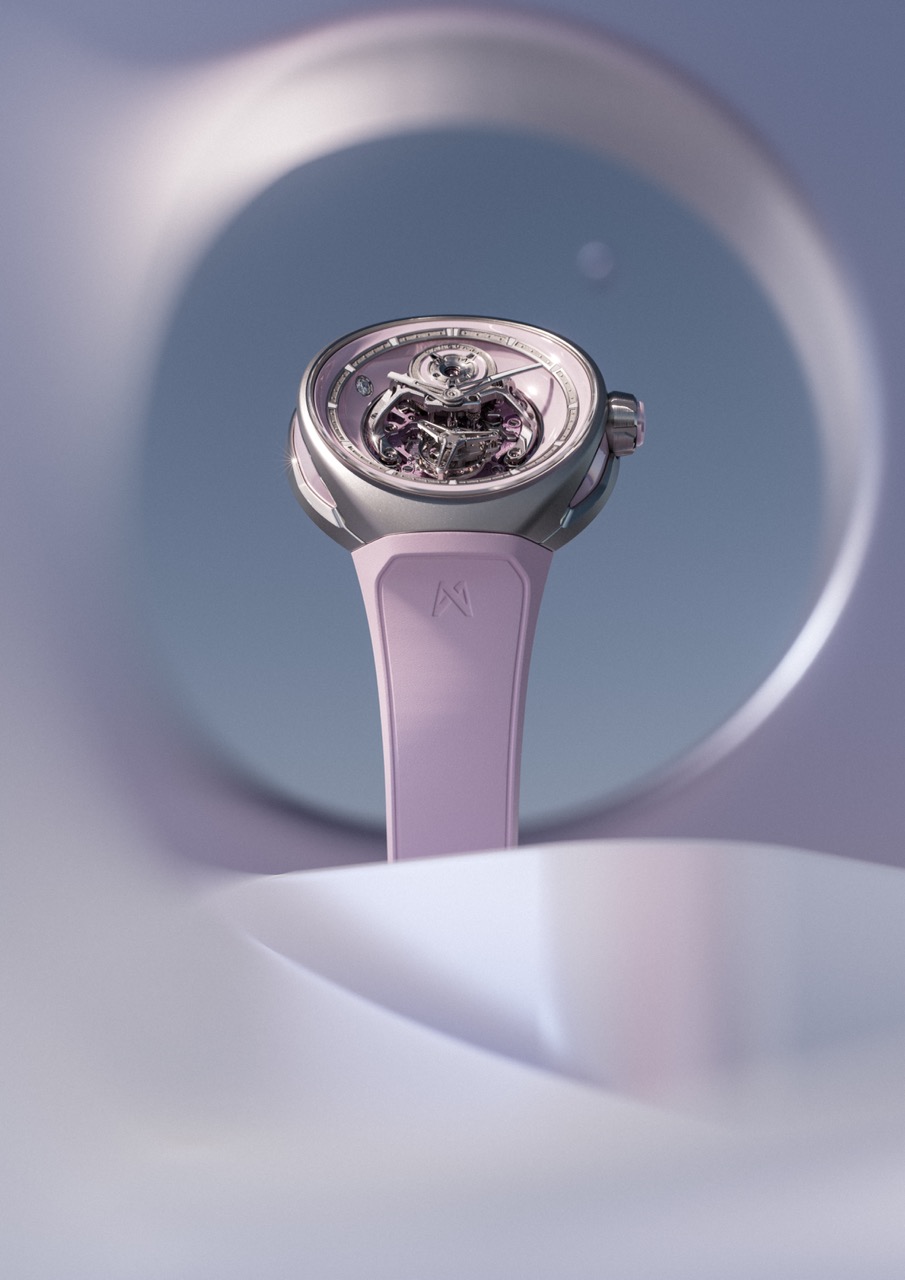
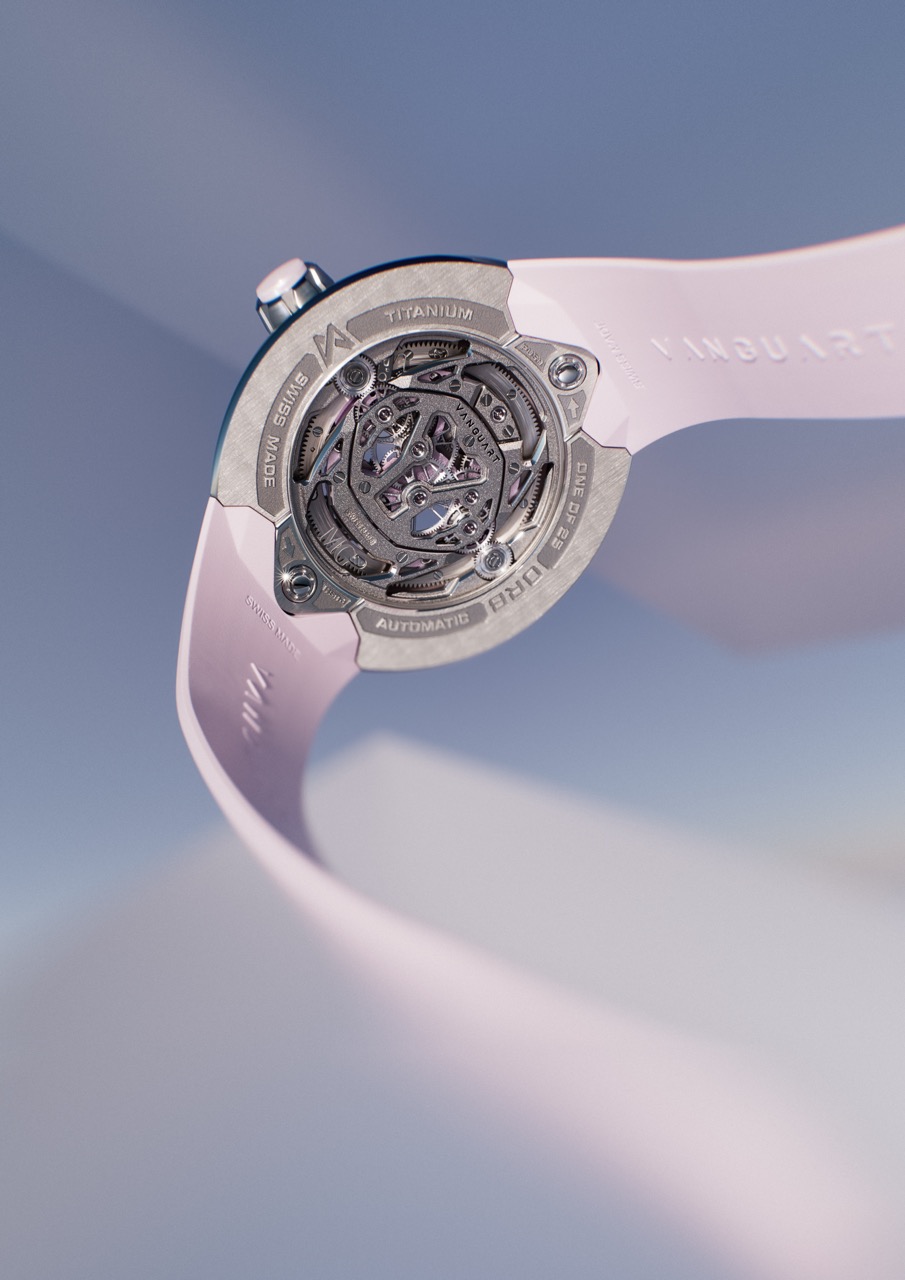


For all its visual drama, the Orb was always designed with practicality in mind. The watch measures 41mm across and just 10.5mm thick, remarkably slim considering the complexity of the movement within. A curved caseback follows the contours of the wrist, giving it an ergonomic feel more akin to a contemporary sports watch than a high-complication showpiece.
The introduction of ceramic presented Vanguart with a fresh challenge. Although the material has become increasingly popular in luxury watchmaking thanks to its resistance to scratches and fading, ceramic is notoriously difficult to shape and finish. Integrating it into the Orb’s fluid, sculptural case required more than a year of research and development.
The resulting material appears on the case flanks and crown pusher, where it delivers vivid colour, tactile contrast and impressive durability. The soft pink and blue hues alter the character of the watch considerably. Where the original Orb felt almost aggressively futuristic, these new editions introduce warmth and accessibility. The effect is not unlike seeing an experimental concept car transformed into something destined for the road.
Inside, however, the mechanical spectacle remains intact. The curved rehaut and signature oscillating mass are colour-matched to the ceramic components through a specialised micro-painting process inspired by automotive finishing techniques. Beneath them sits a flying tourbillon beating at 21,600 vibrations per hour, supported by a movement composed of 395 individual components and offering a 60-hour power reserve.
The Orb’s signature selector mechanism remains the centrepiece. Through a pusher integrated into the crown, owners can switch between manual winding, automatic winding and time-setting modes. In automatic mode, the watch’s dramatic oscillating mass spins freely, catching the light from a brilliant-cut diamond mounted at its centre. In manual mode, the rotor is locked in place, transforming the visual character of the movement entirely.
Vanguart has also refined the finishing. Hand-polished bevels, sand-blasted surfaces and intricate mirror-finishing create dramatic contrasts throughout the movement. Enhanced luminous markers and skeletonised hands improve legibility without diminishing the visual complexity beneath.
Like any good independent watchmaker, Vanguart is keeping production tightly controlled. Just 25 examples of each model will be produced, reinforcing the sense that these are objects intended for a small but passionate audience.
The original Orb succeeded because it reimagined one of watchmaking’s oldest complications through a thoroughly contemporary lens. It took centuries of tradition and gave it the atmosphere of speculative fiction. With these new ceramic editions, Vanguart has done something perhaps even more difficult: it has made the future feel wearable.
Continue Reading