

Meredith Whittaker is president of the Signal Foundation. Signal is the world’s most widely used truly private messaging platform: non-profit, free to use, no ads. It also collects close to no information on its users. Beyond the Signal app, billions more people use its encryption protocols via so-called competitors such as WhatsApp (which uses Signal’s technology narrowly and selectively, offering much more limited privacy)…
Nevertheless, Signal stands among these giants for single-handedly creating and maintaining a communication infrastructure, ensuring the human right to private communication across the world, especially in authoritarian states. It is used by journalists, whistleblowers, militaries, boardrooms, activists, and everyone who recognises how precious their freedom of speech is, and how easily it can be used against them. As president, Whittaker works to keep Signal alive and thriving. Were it to disappear, this trusted platform, with a vast network on which people depend daily in life-or-death situations, could not be easily replaced. It is both fundamental rights-preserving infrastructure, and a tangible example of tech that is built without dependence on surveillance and for a unique moral purpose. Whittaker is both an insider and an outlier. She holds a unique place in the echelon of those who are, at this point, running our world.
Despite her pointed affinity for privacy, I’ve spent the past two years dogging Whittaker to allow me to make a documentary with her, which we began this fall, when I dropped in on her in Paris. An evening over her home-made shiitake soup led to two weeks of following after her with my camera. Both of us are from Los Angeles, and I recognise her sincere respect for art and glamour: an Angeleno understanding that it takes working people with all their various talents to make the world glimmer-that the glimmer comes from the work.
Whittaker rarely has the opportunity to express her thoughts on those topics, so I called in on her to see if she had a moment to talk about AI, art, and even God. This is the result of that conversation.
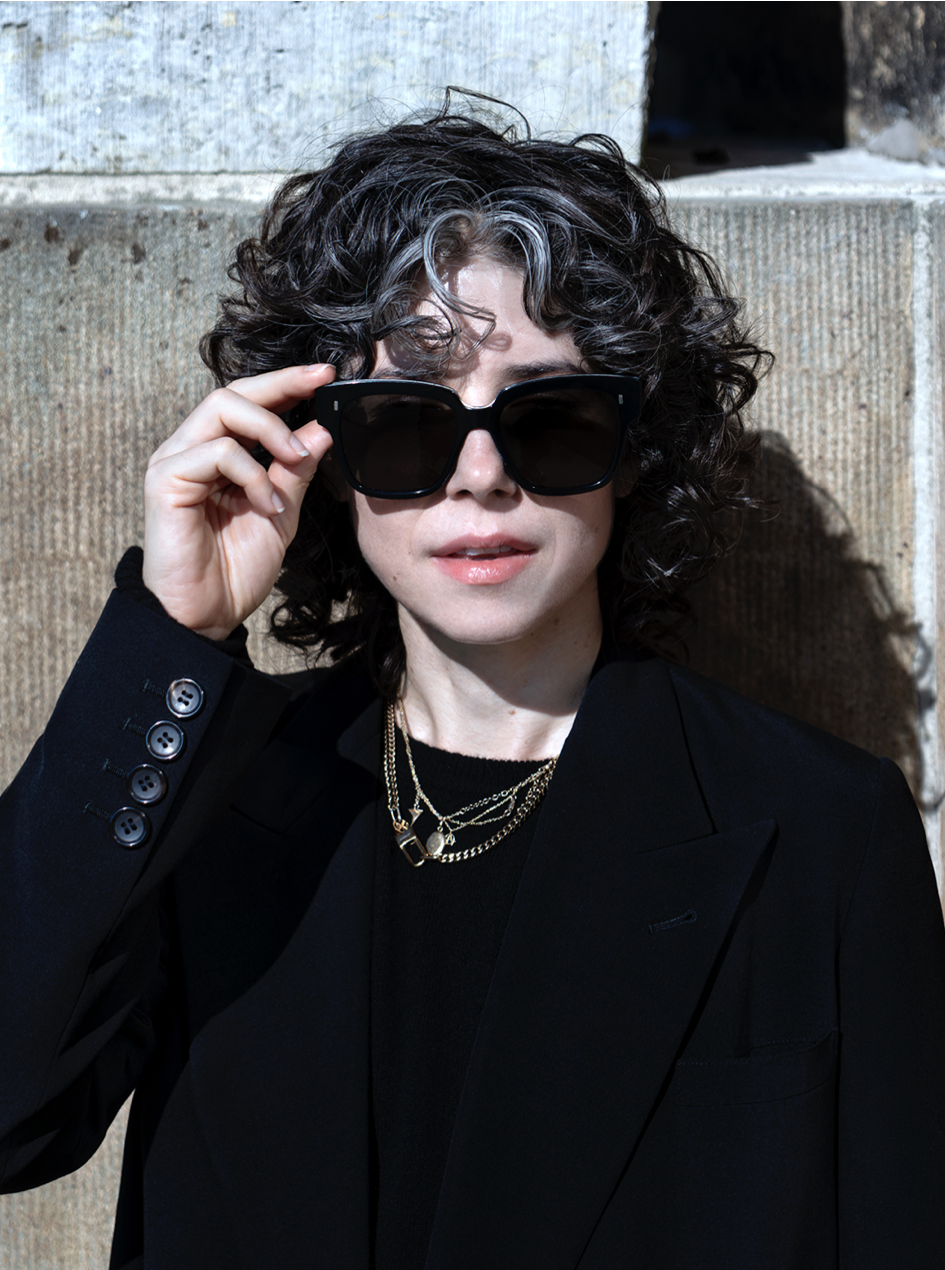
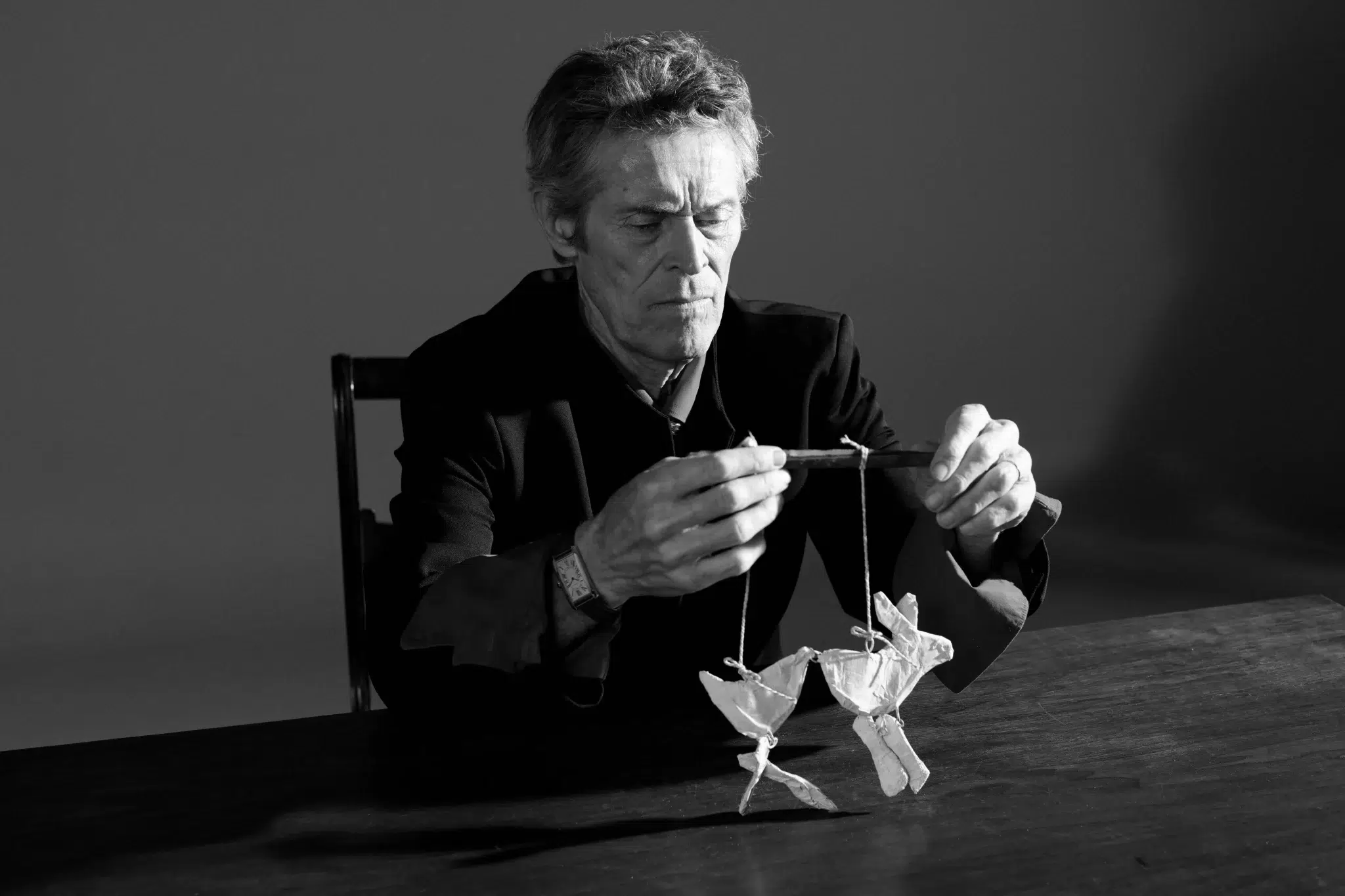
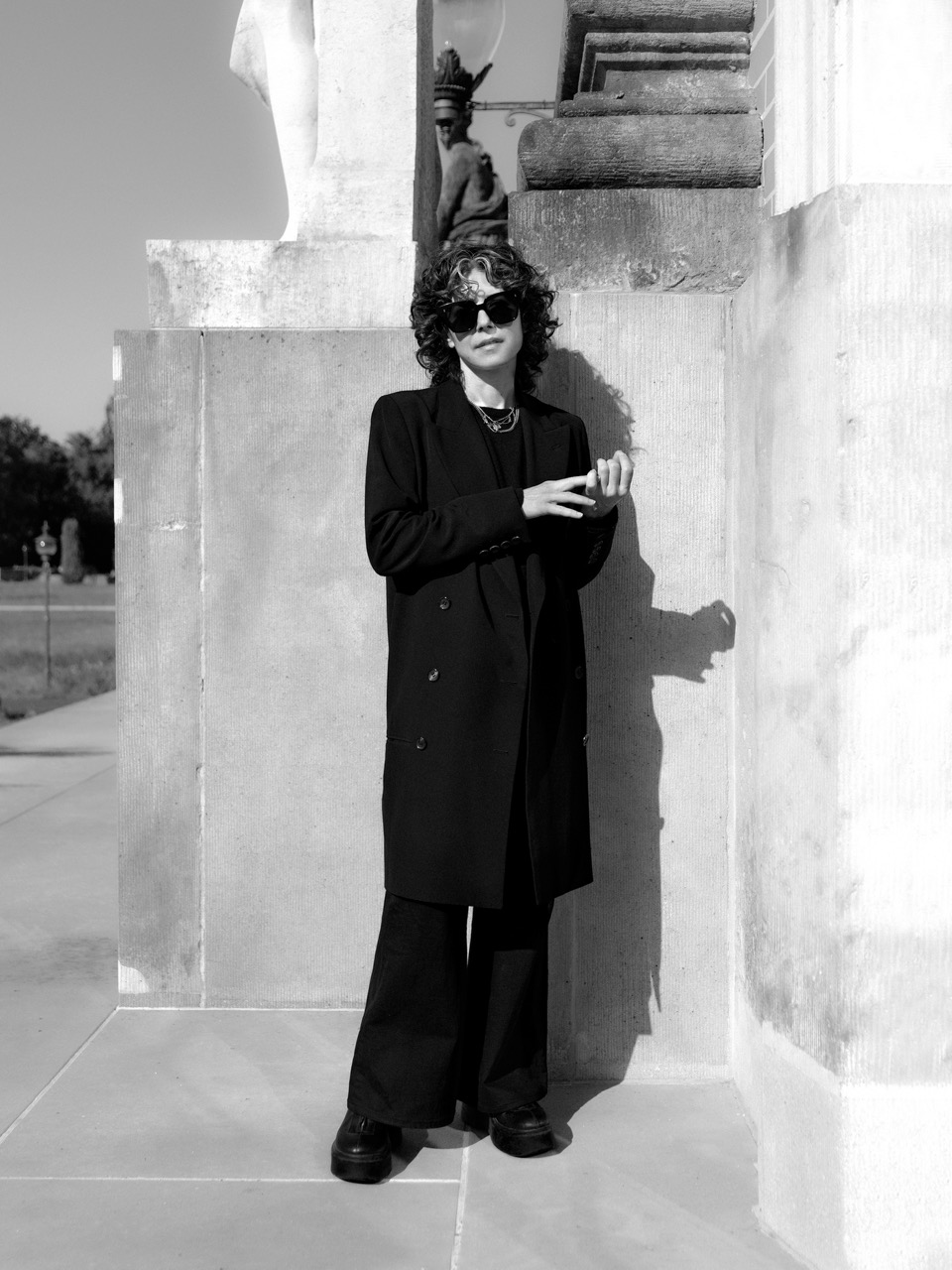
Meredith Whittaker. Portrait by Florian Hetz
Meredith Whittaker: I’ve spent the weekend falling in love in Paris in spring and you’re waking me up from the dreamscape.
Chiara Towne: I’ve spent the weekend with a fever. Maybe the combination will lead us to some ecstatic conclusions.
MW: Or at least maybe our collective fogginess could transcend the intellectual barriers that otherwise would have constrained our thinking to the rote and literal. Maybe. We shall see!
CT: Let’s start this sci-fi-themed chat with the idea of artificial general / intelligence [AGI, a theoretical stage in which an Al system matches or exceeds the cognitive abilities of humans. The tech industry has never produced a precise definition]. Skynet [in the Terminator series (1984-2019)], ‘I’m afraid I can’t do that Dave,” [HAL 9000 in 2001: A Space Odyssey, (1968)], etc. Why do you think the concept of a potentially evil super-intelligence is so attractive to people?
MW: Mocking a genuine belief in conscious Al is counterproductive —indeed mocking genuine belief of any kind is anti-social and counterproductive. Part of what we are seeing, in my view, is a quasi-religious belief taking shape in the absence of codified religion, a way of making sense of the vastness beyond the final answer to the final”why?” I see no evidence of organised human life that hasn’t found a way to engage with the infinite unknowability and wonder of life. It’s a deep human need
So we can respect that, or at least let it be. The problem is that its object-the object of awe and wonder, this god-like Al system-is, at a material and political economic level, vastly centralising power in the hands of a few actors across manifold axes of life and activity. And these systems-the Al systems yoked to the vast platforms and infrastructures controlled by large tech companies-are not godheads. They’re not conscious by any definition we might want to apply. We can debate , Y, Z about them, but they’re built on huge amount of human labour, paid and not, data —alway: partial, always a rough proxy for teeming life – and expensive extensive physical infrastructure.
While I’m not going to tuck with people’s sincere beliefs, I do think it’s dangerous to be muddying this kind of awe and supplication with proprietary technologies that are ordering and reordering our world on behalf of a handful of shareholder-driven companies and the governments these companies ride for. God-like capabilities is an incredible story with which to claim the right to organise us in our world. In other words, some of the largest and most powerful institutions in human history, which are largely jurisdictioned in the US (with China being the other pole), are claiming a kind of godlike role in our life, sometimes explicitly through these Al figureheads popping off, like, “We think it is more intelligent than humans, a capacity we’ve never witnessed before, behold, weep…”
These stories effectively ask us to defer to these systems, the same way attributing godlike qualities to your local bishop underwrites social control, and a lot of abuse that is very difficult to check.

I’m not blowing smoke—that’s a belief core to mybeing, and I see the consequences of the disavowalof art all around me. I came out of arts and I went into tech because I needed money out of college. I think we need to defend art in a very fucking serious way.
Meredith Whittaker
CT: The bishop metaphor goes a long way if we consider the history of clergy keeping town records, being authorised to report antigovernment trends to their superiors, etc. It brings to mind people’s intimate queries to ChatGPT, etc, in which OpenAl could, of course, report that intimate information back to whoever-governments, data brokers, Microsoft… On the theme of surveillance, I’m wondering what comes to your mind about the effect mass surveillance has on original artworks and creativity.
MW: Well, the data collected and schematised by the Al companies, which are also the massive platform monopolies, is constructed first to answer questions useful to increase profit and growth. It isn’t “ours” and it’s not “about us” in any meaningful sense – this is important. Because, nonetheless, it’s being laundered through Al’s large statistical models, creating shadow-versions of ourselves and our world and our relationships. And this is being naturalised-via things such as the AGI godhead narrative -as not only a good way to see the world, but the only objective way to understand it. And if that becomes the only way we’re able to see and order and act on the world, we have foreclosed the opportunity for transformation. For creation, for knowing ourselves and each other on the level of interpersonal intimacy, on the levels that create bonds of love and community and solidarity. All of which are like… first-order conditions necessary to have any access to a good and full and rich life.
CT: That makes me want to ask you about originality. Let’s say the past 10 to 15 years in the culture industries, film especially, have been fixated on creative work that is a “sure thing”, that supposedly will have a pre-proven base of fans.
MW: The Paramount IP cartel presents Legally Blonde VII.
CT: This time she’s a redhead! Through this lens, that phenomenon seems not a little to do with the tech colonisation of Hollywood. Retrofitting their profit model on what is fundamentally a risk-based industry. That model didn’t work well, and now scared decision-makers appear to be trying to stop the bleeding by putting their mistaken decisions on repeat. Also a real masterclass that none of us wanted in the idea that the dumbing down of culture makes way for authoritarianism.
MW: If culture is not allowed to flow or breathe or move or grow, it’s dead. And that’s what authoritarian top-down control requires, right? That flow, that movement, that breath is what I refer to as transformation. I think a lot about transformation-that possibility of not being the same in the next moment, the risk of it, and the way life’s insistence on transformation, on being a process not a thing, poses an a priori threat to the status quo, and the people who are vested in their place within it and its preservation.
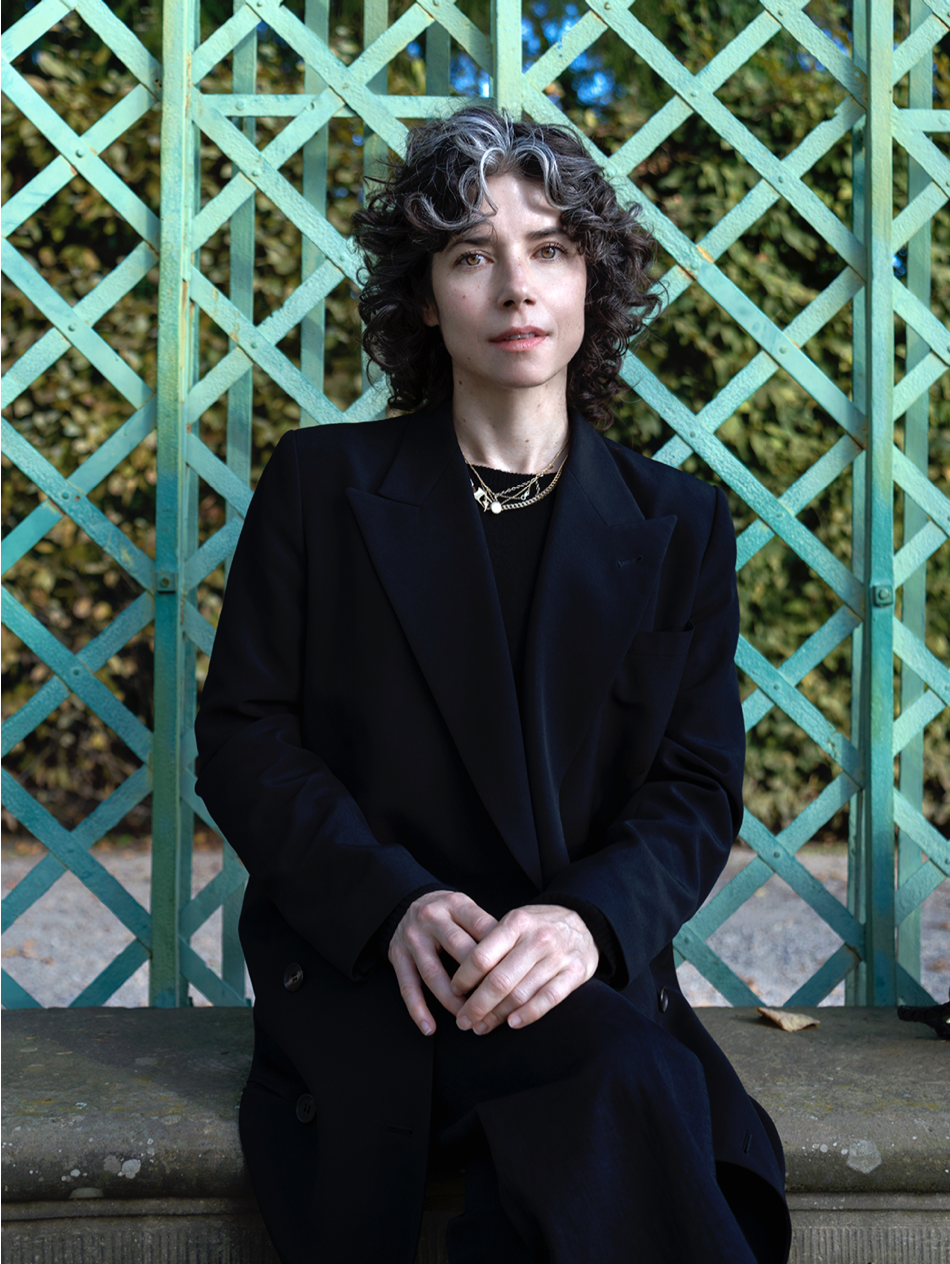
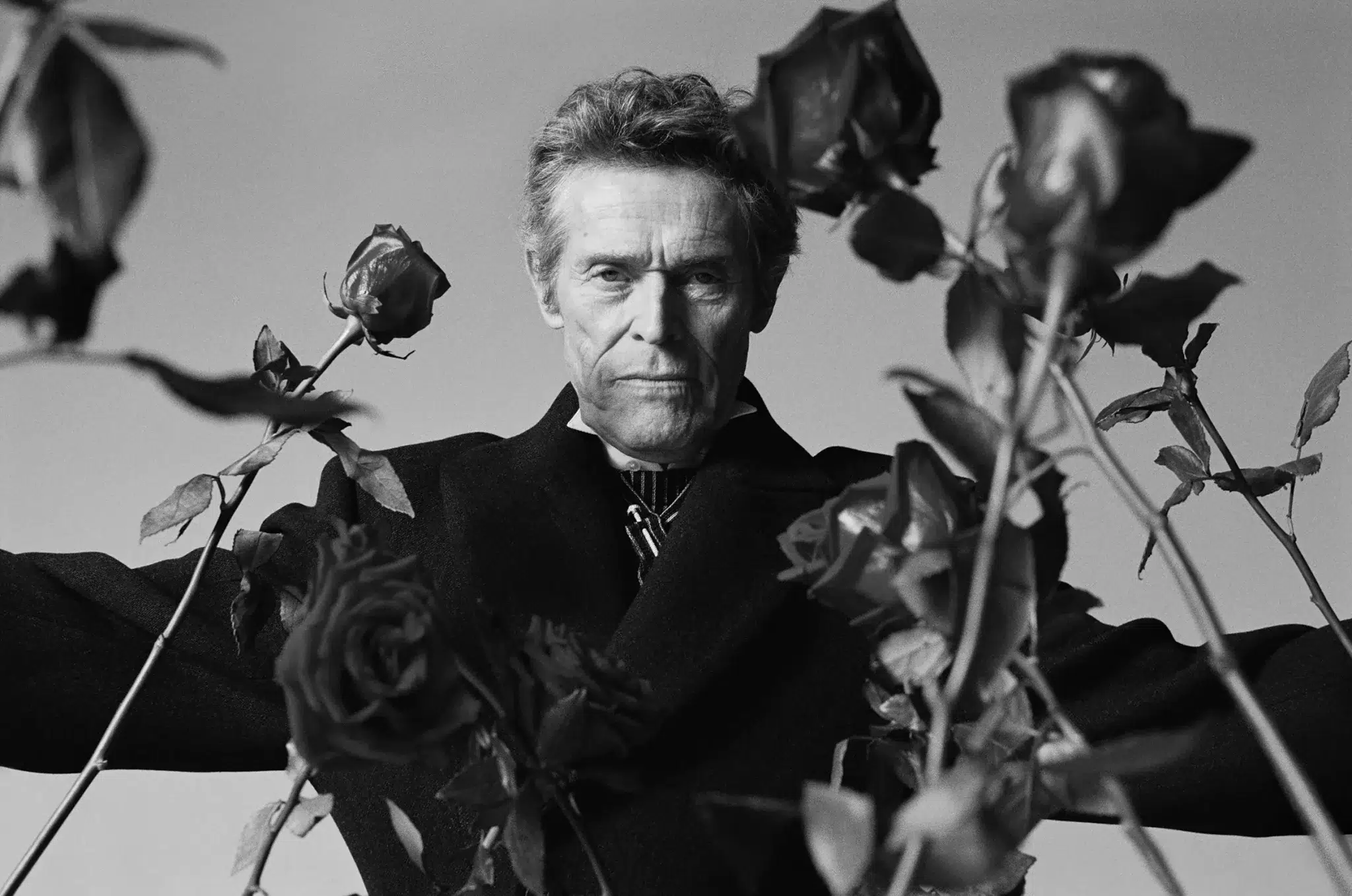
Meredith Whittaker. Portrait by Florian Hetz
CT: It’s why we think of authoritarians as fundamentally scared. When you take off their uniforms: scared men. Scared people.
MW: Oh, deeply. Deeply, deeply. We’re all scared, it’s scary, but some of us cope more elegantly.
CT: And the idea of authoritarianism being like a death cult [Umberto Eco] applies to what you’re saying. The permanence, the brittleness, the inability to change.
MW: If you can’t transform, you’re dead, right? Like flatly, literally, at the biological cellular level, at the seasonal growth and renewal level, at the level of eating and shitting and falling ill and recovering.
Locking everything in place, in a rigid brutalist artifice in service of preserving (or invoking) some one idealised state and society is a death cult, yes. So we need to look at the deployment of Al, the interpolation of technical infrastructures and mediated platforms across our core social and economic institutions, and the story of divinity we tell about these, as an incredibly powerful set of material and narrative tools that can be used to naturalise the locking into place. The static “way it is” in service of shaping and maintaining sclerotic authoritarian systems that aim to resist life’s necessary transformation.
CT: Why do we continue to need new, original art? I guess it’s only possible to know the impact-the transformative impact, let’s say, of The Godfather (1972); of these pieces that we think of as immortal-in retrospect. The impact that certain pieces of Renaissance art have had on Europe, whatever it is. If we can loosely agree that art reflects us back to ourselves and each other, an individual artist can parallel the data creator. Collecting data about her own experience, sorting it out, reflecting it back. Then when those works resonate, we internalise them and are influenced by them to such a degree that we can no longer separate them from ourselves. So you’re asking us to consider to whom we cede the authority to tell us about ourselves?
MW: I’m thinking with you… Yes, it’s the authority to define us. Who gets to tell our story? Who gets to say, “This is that, see?” Even if it’s not always precise. A new piece of art or a novel experimental approach that reveals something, shapes common sense, intuition, etc.
CT: So this addiction to the “sure thing”, to a formula in American pop culture, came from greed, essentially. It didn’t come from the people, it came from the corporations. And it cleared the way to declare that a computer can make a movie as good as Francis Ford Coppola and his collaborators.
MW: If I do nothing else in the world, I want to defend artas a deadly serious existential requirement for human flourishing and the possibility of a liveable future. I’m not blowing smoke—that’s a belief core to mybeing, and I see the consequences of the disavowalof art all around me. I came out of arts and I went into tech because I needed money out of college. I think we need to defend art in a very fucking serious way. As a vehicle, and a practice of the type of transformation we’re going to die without in the face of so many looming and existential terrors. How do we take what exists, our shared semiotic systems, the scraps of waste and excess around us, and create something that helps us understand where the cracks and the paths forward are? This is what creative practice does. All of this, and for all the talk, if nothing else, Chiara, I just want to die having sided with the people I love. And I love the artists and the weirdos; those are my people.
If I do nothing else in the world, I want to defend artas a deadly serious existential requirement for human flourishing and the possibility of a liveable future.
Meredith Whittaker
CT: Word. On that note, is there something you would like to tell artists-writers, musicians, filmmakers—in this moment? Let’s say, words of encouragement you might have for those who feel despairing right now?
MW: I do not want to sell anything flimsy to people I respect as much as real artists. The words of encouragement I have are like, Yeah, you’re right. You are being attacked. There’s a wholesale attack on honest and original and fearless art. A lot of people are terrified, and if you’re one of them you’re not wrong. We’re facing a wall of real existential crises. And this is happening in the context of a mask-off authoritarian moment in which celebrating vice has become a tedious and heartbreaking flex.
So, yes, my dear and special friends, you are being attacked, because they always fucking come for those who are capable of revealing and transforming the world. They always do. They try to kill the poets. Poets are dangerous not because the poets are going to raise an army, but because they reveal the cracks beyond the literal semantic systems; they reveal the lies and the jokes behind the pomp and opportunities for other ways of doing it. They are alchemists of transformative potential, refusing to be locked in place by a narrative or an algorithm. So there’s a method behind the attack, there’s a reason. And that reason, turned over, shows us exactly why we need real art and artists now more than ever.