“They made jewellery out of bullets”: Lukas Dhont on his triumphant queer war film Coward



Get unlimited access to all our articles for just £3.50 per month, with an introductory offer of just £1 for the first month!
SUBSCRIBE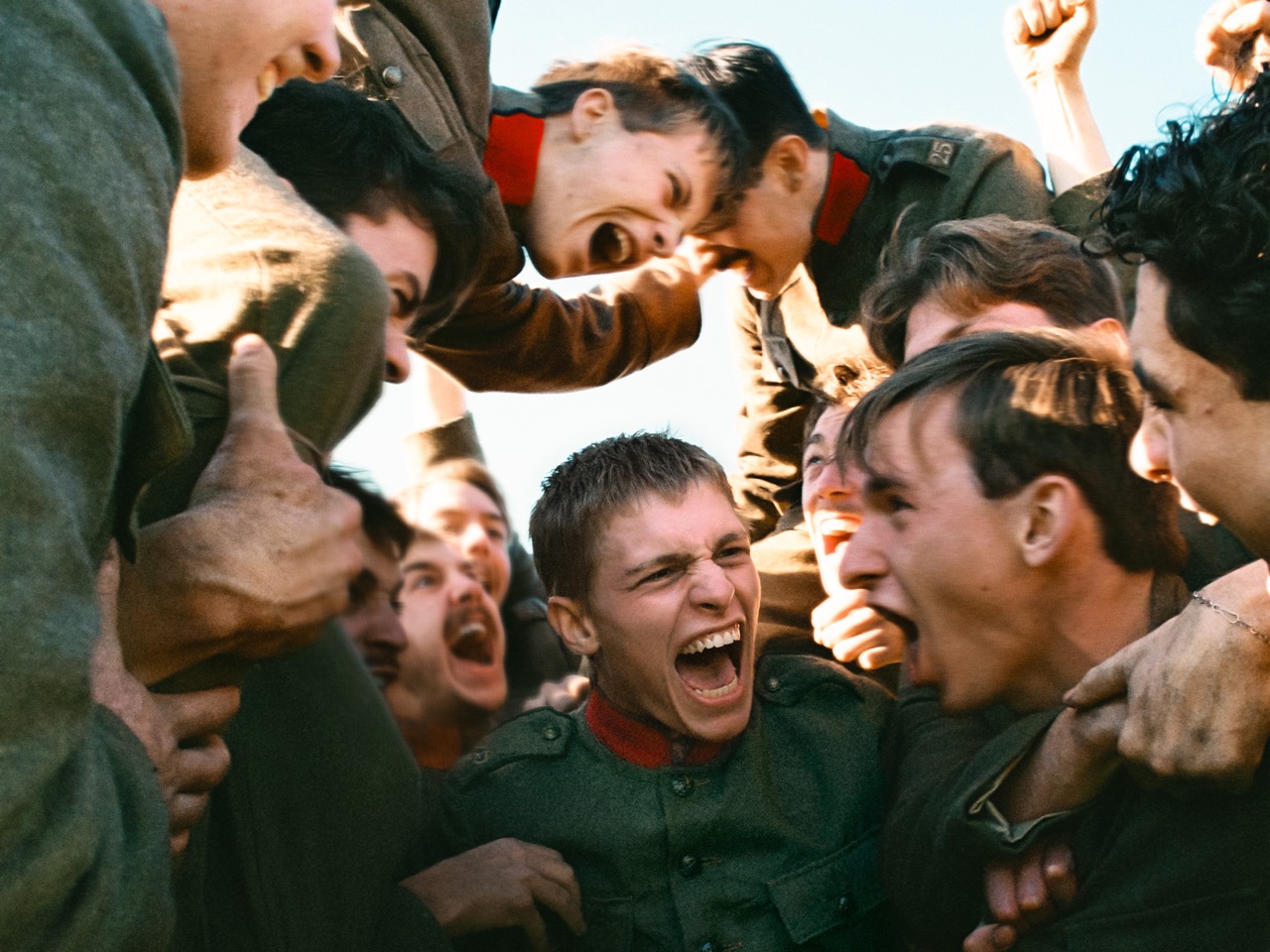
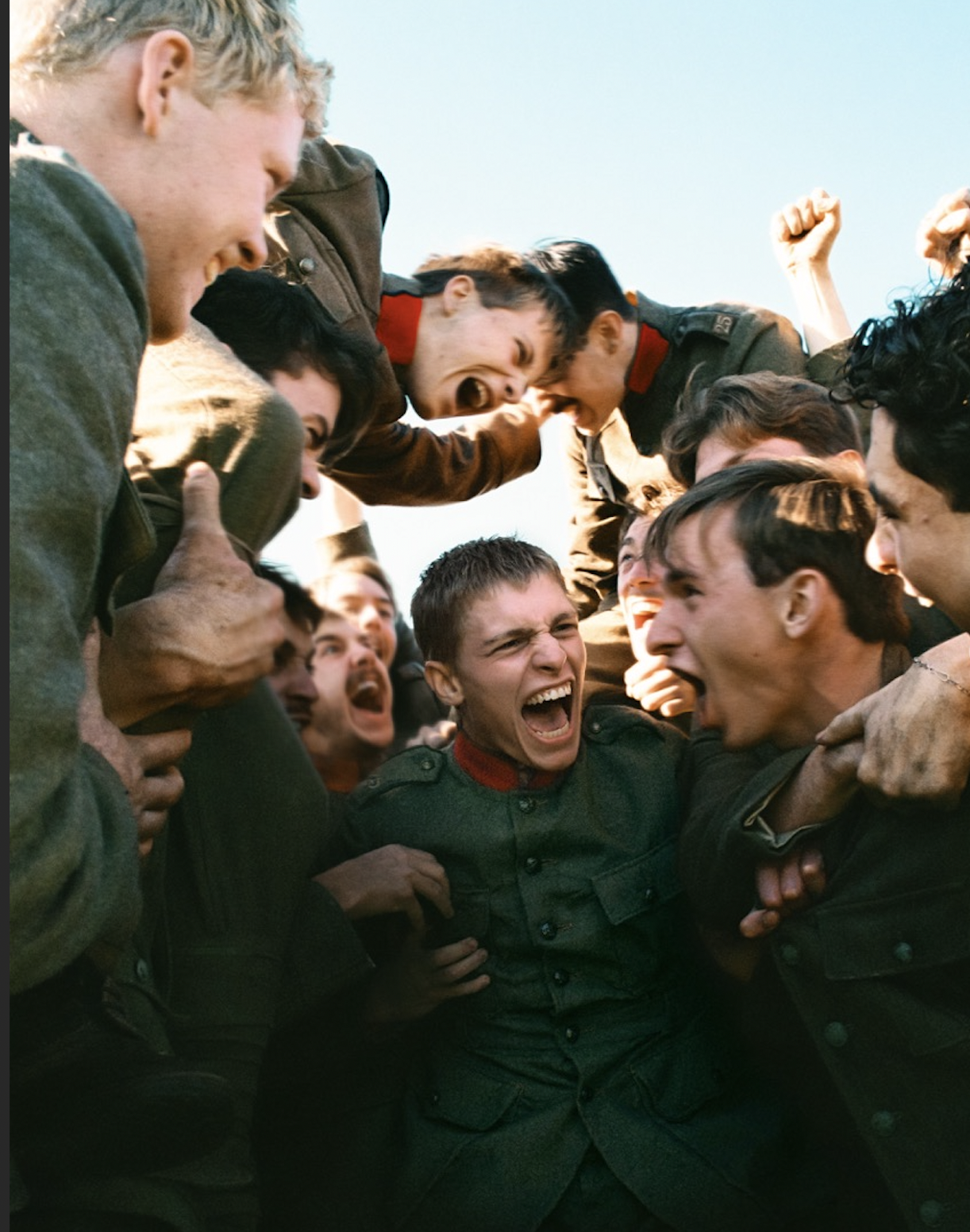
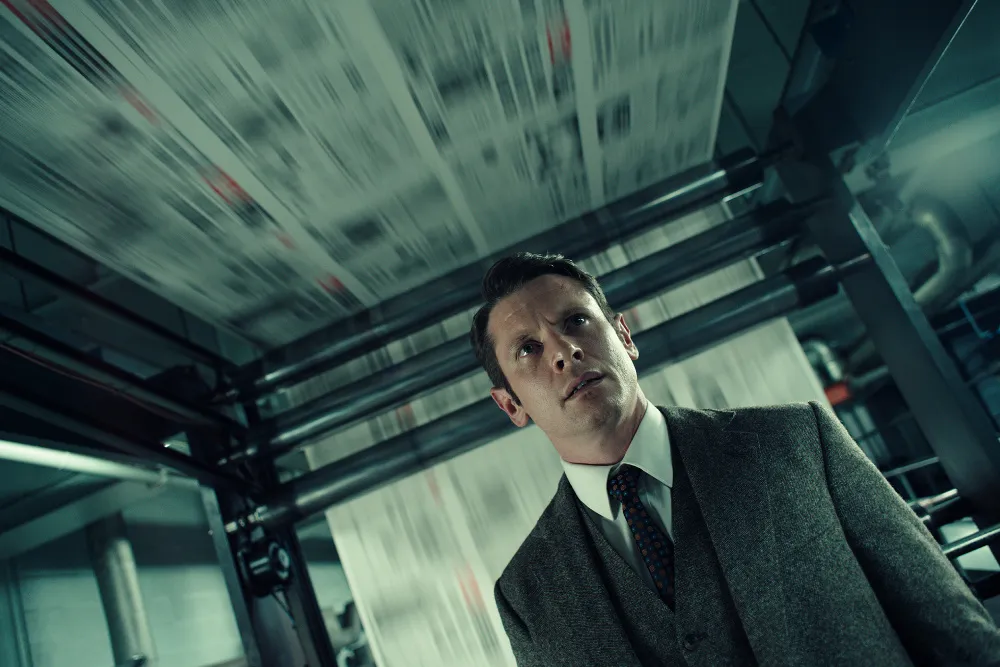
Growing up in Flanders, Belgium, for director Lukas Dhont, the First World War was intimately present in his life from a young age. So, it makes sense that for his third film, Coward, which premiered in competition at the 2026 Cannes Film Festival, he has returned to this terrain. Following up Girl (2018), about a child struggling with gender identity and Close (2022) which explored the tragic aftermath when the friendship of two young boys is marked out as queer by their peers, Coward sets its scene amongst men in the trenches. Its protagonist is the quiet Pierre (Emmanuel Macchia), a farmer who meets the flamboyant Francis (Valentin Campagne) a tailor who leads the battalion’s theatre troupe (an idea based on an archive of photographs Dhont came across). As they start a romantic relationship, the war provides an unlikely sanctuary for their sexuality, whilst also allowing them to stop fighting as they travel around to entertain. Captured with Dhont’s trademark tender, sensitive and sun-flecked gaze, Coward becomes a vehicle for exploring societal notions of bravery, then and now. “I think this film is for the men who fought as well as those who resisted and said no in a time where that wasn’t necessarily an option,” says Dhont.
We caught up with the director in Cannes a few days before the premiere to discuss the film’s inspirations, slippery ideas of courage and why being a director means always searching for beauty.
How do you feel about premiering this film at Cannes?
I mean, it’s lovely to be able to make films and then show them in such a big way. It’s wonderful. But it’s also very fragile because when you work on and nourish a desire for 4 years, you grow it and you pass it on, and then the desire becomes a community of desire because everyone starts to work on it with as much passion. I think it’s incredible—it feels to me like an incredibly vulnerable act of sharing something that you worked on so passionately. For people to see and react to it, it’s a part of what we do. I mean, people—we love things, we don’t love things. It’s just a part of that culture. It’s frightening. But that’s also why it’s really exciting.
All of your films (Girl, Close, Coward) have one-word titles, why do you think that is?
Our titles have always been companions to the pieces. And what I like about them is that they are, at first glance, very simple words. But those very simple words have been incredibly complicated to some people. Close was very much about the difficulty for these young boys to express that closeness. In this case, coward is a word that has a lot of charge on it for many people. We live in a society where courage or cowardice, at least for men, has been defined based on abilities to harm or to kill or to protect. And I think throughout centuries young men have been sent off to fight, or kill or hunt, and have done it in many cases out of the fear of being labelled a coward. It depends on the time of period. It’s a very complex word, and, and I just wanted to ask the question, because I hope that the film is more a question than a statement of like, what have we decided is cowardly and what have we decided is heroic? It’s also about courage. There are young people who throughout time have not done what people have obliged them to do, have found other ways, have expressed their fear, have gotten away and in many cases they were treated very violently. Some of them escaped and were never found again. And I think this film is for the men who fought as well as those who resisted and said no in a time where that wasn’t necessarily an option.
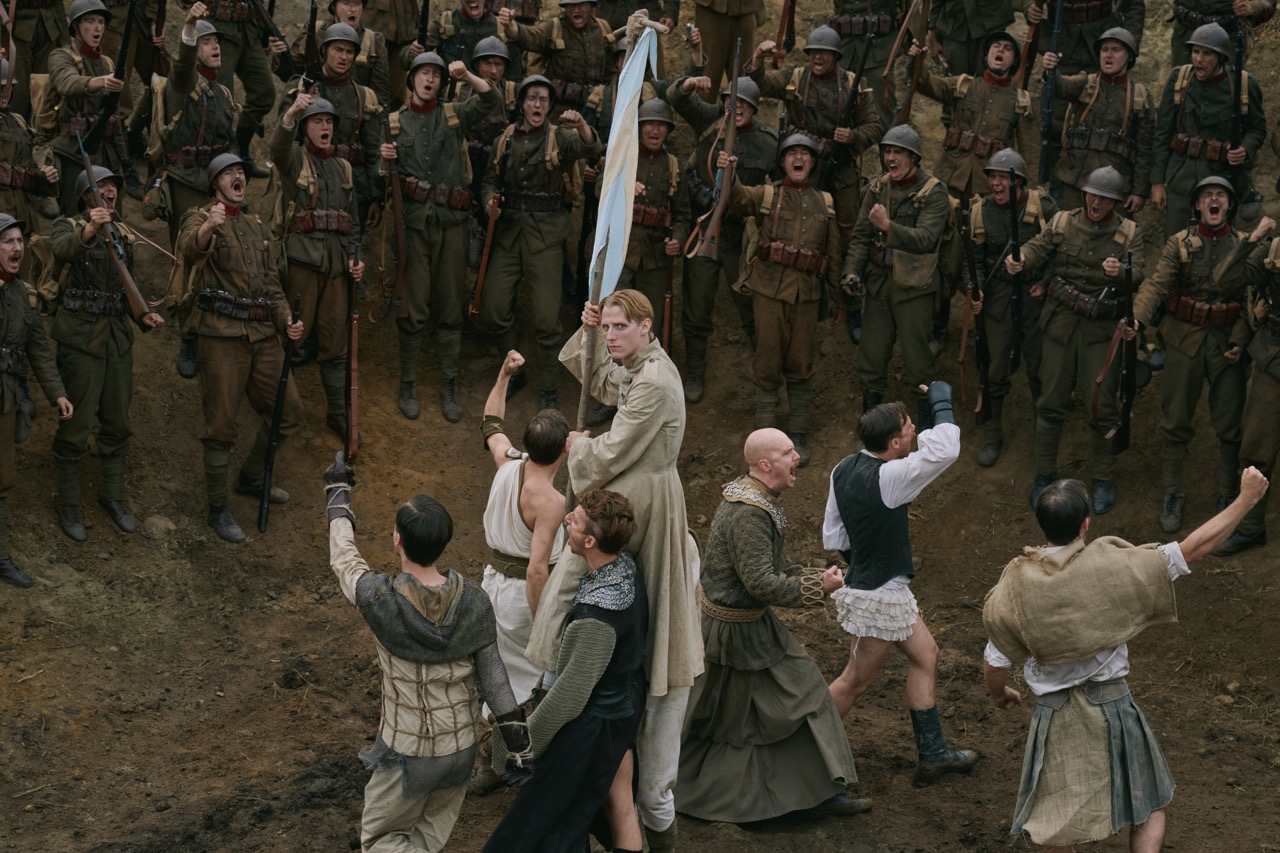
Lukas Dhont, Coward, 2026
And when did the idea for Coward walk into your head? Of course, being Belgian, and being in that landscape must have been influential, but when did the story come to you?
First of all, the First World War is very much part of my present. My partner is from the seaside, from West Flanders near the Somme, and every time I drive there, I pass cemeteries where young men are buried. I see them every week, so they’ve become part of my consciousness. Growing up, we also learned a lot about the war in school, so it feels embedded in our DNA.
I remember a moment on Belgian television around 2022, during the elections, when a politician visited a school. A student asked how likely it was that military service might become obligatory again. The politician turned the question around and asked who would defend Belgium if it were attacked. Every young man raised his hand, even the one who had clearly asked his question out of fear. For me, that moment was a sort of realization that still today—I mean, and now women also, go and fight for their country—but still today we expect and have accepted that young lives are sacrificed for this bigger purpose, which is often tied to power in some way. And that was really striking to me, and that was a moment where this whole idea of cowardice and this fear of being labelled a coward came into my mind.
Was their specific story based on any kind of history or reality?
Something that inspired me was a series of black and white photographs where I saw this group of young men performing a theatre show right behind the front lines during the First World War. And I was really drawn to those images because through all the years in school, I had heard so much of the First World War, but never had I heard about these men who were creating a play together. And when I did some research about it and when I dove into this, I discovered that throughout centuries in every army. Men, while they have been waiting at war, have created together, have transformed everything that was given to them and made something out of it. They built a stage out of munition boxes. They used sandbags and they made them into skirts. They made jewellery out of bullets. And that idea of transforming the genre of the war film, for me, you know, subverting these codes that we know was important.
Something interesting is the season that you choose. Because even if you show the atrocities of the war, it’s a place that sometimes feels like they are in a summer camp. Did you do it on purpose?
Yes, because our imagination of the war, which is very much designed by movies. In movies, the war is often shaped in a very one-dimensional, cruel dark colour palette of brown and khaki. While the war also went on while it was summer and while there was colour and there was light and there was sun, that didn’t necessarily make it less horrifying. I mean, it’s sometimes even more horrifying to smell the flowers and the dead bodies at the same time. It can be an incredibly cruel contrast. So I just wanted to find ways to step away from the imagination of war that’s been created before, and bring in light to this genre.
“I mean, it’s sometimes even more horrifying to smell the flowers and the dead bodies at the same time… I just wanted to find ways to step away from the imagination of war that’s been created before, and bring in light to this genre.”
I liked the reference to Chariots of Fire – were there other references you had in mind while making this?
Yeah, I love that. There were a few films that were really instrumental to me. One is La Grande Illusion by Jean Renoir. What I love about it is how it explores war and the construction of the enemy without relying on violence, since it’s set in a prison camp. There’s even a scene where soldiers put on a show and cross-dress. I first saw it when I was about 18, and it always felt remarkably human. There are moments of tenderness, like men washing each other’s feet, that are incredibly moving.
I was also inspired by Fear and Desire by Stanley Kubrick, which is set during a war but never names the conflict. It avoids clear sides, focusing instead on the condition of war itself rather than a specific historical moment, which I found very clever. I also really admire the work of Céline Sciamma, especially how in Portrait of a Lady on Fire she creates a very modern story within a historical setting.
For this film, I was also deeply inspired by the Belgian painter James Ensor. His work combines the macabre with a kind of carnival atmosphere with skeletons and masks alongside vivid colors, parades, dancing, and celebration. That contrast really influenced how I saw the film as a whole: like one long procession, a parade unfolding beside an ever-present sense of death.
This is your third feature–what for you, is the ultimate meaning of being a director?
Well, I think for me, being a director means being a creator and choosing to keep searching for desire and beauty, even when I’m down or when the world feels heavy. We live in a time where creating and directing is a privilege. When you look at photos of those men, they worked in the most horrible conditions, and yet they still created. I’m privileged to do it in very different circumstances, even if the world around me can feel incredibly gloomy at times. So being a director is about trying to create something for someone. In the end, filmmaking is about connecting with an audience member I may never meet, and there’s something deeply spiritual in that for me.