

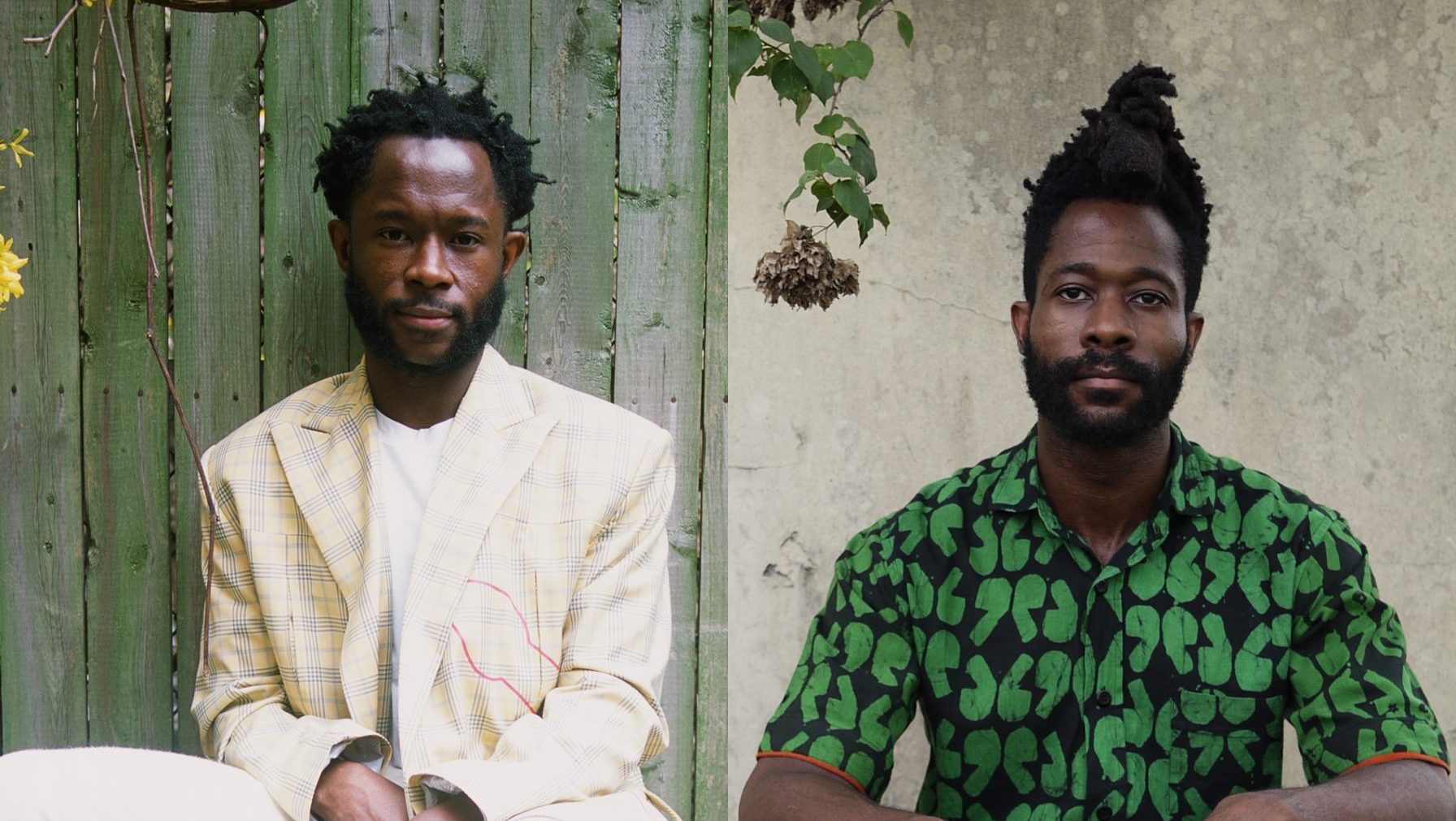
Andy Hazel speaks to Nigerian brothers and filmmakers Chuko and Arie Esiri about their ambitious new adaptation of Virginia Woolf’s Mrs. Dalloway, a standout from the Cannes Film Festival this year.
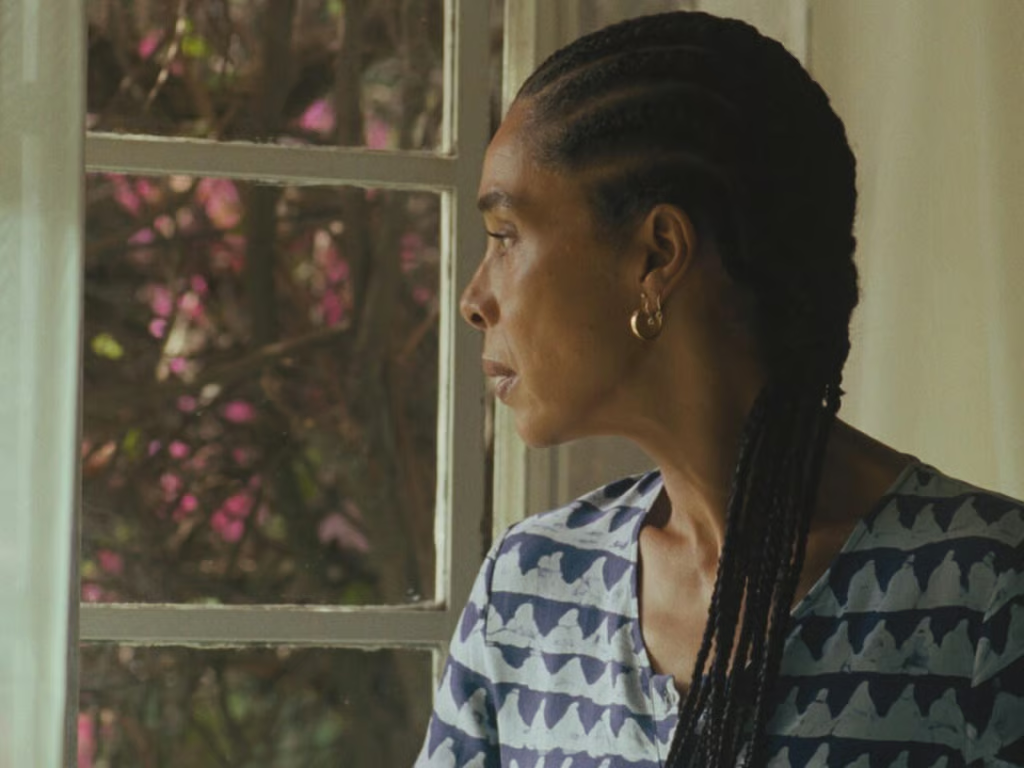
At Cannes, where films arrive burdened by hype, financing deals and the faintly desperate hope of cultural immortality, it was oddly moving to encounter a movie so preoccupied with memory, regret and longing. Clarissa, the second feature from Nigerian brothers Chuko and Arie Esiri, is an adaptation of Virginia Woolf’s Mrs. Dalloway transplanted from postwar London to contemporary Lagos. Like the book, the film takes place over a single day as Clarissa prepares for a party. While the day progresses, the Esiris allow her memories to spool across decades of Nigerian history as Clarissa, played by Sophie Okonedo, is visited by old friends and former lovers.
For Chuko Esiri, the connection to Woolf’s novel has been lifelong. “It’s a book I love,” he says. “When I first read it as a teenager, I felt it, but I didn’t understand it. I hadn’t lived enough to relate to a middle-aged woman throwing a party.” Rereading it in his late twenties, Chuko began recognising himself and the people around him inside Woolf’s characters. “You see pieces of yourselves, you see pieces of your parents, you see pieces of your friends,” he says. “And all of that was just so evident to me in the book. The emotion is the same. That was the guiding light. It was like, ‘Well, how does she feel? How does Peter feel? How do these characters feel? Where are they in their lives?’ I think once you have that, the rest is simple, it’s just following your characters through the day. The book gives you the structure.”
Clarissa emerged during the pandemic, while Chuko was living in Lagos with his mother. “There’s a thing about African parents being very conservative and never wanting to share great disappointments,” he explained. “It was amidst these conversations with my mother that the idea of these characters became more and more vivid.”
Meanwhile Arie, living in New York, was reading Mrs. Dalloway for the first time. The brothers, who grew up partly in Abraka, a lush town in southern Nigeria that appears prominently in the film, found themselves thinking about how the novel’s use of memory and emotional repression could map onto contemporary Nigerian life. “There is also something about the way society was in 1920s Britain that feels true to contemporary Nigeria,” Arie says. Echoing this, Chuko adds that what is most appealing is the tension between public composure and private yearning. “Clarissa’s the sun in this universe,” Chuko says of the film’s heroine. “Peter’s one of the planets revolving around her.”
“There’s a thing about African parents being very conservative and never wanting to share great disappointments. It was amidst these conversations with my mother that the idea of these characters became more and more vivid.”
Chuko Esiri on conceiving Clarissa (2026)
Like Woolf’s novel, the film is structured around emotional absences as much as dramatic events. Peter, played by David Oyelowo, is still haunted by youthful love. Sally, played in younger years by Ayo Edebiri and later by Nikki Amuka-Bird, represents the possibility of a freer life Clarissa never allowed herself. In Woolf’s novel, her character of Septimus is an indictment of Britain’s treatment of World War One veterans. In Clarissa, his trauma is a direct line to Nigeria’s recent troubled past.
“His PTSD is a lot more violent in the book,” says Arie. “In the film, it’s something that’s carried underneath. This really beautiful passage in the book where Septimus sees birds and they’re singing an aria, which I would have loved to have happened. But we have to achieve a certain tone, and that wasn’t quite in line with what we were putting on screen.”
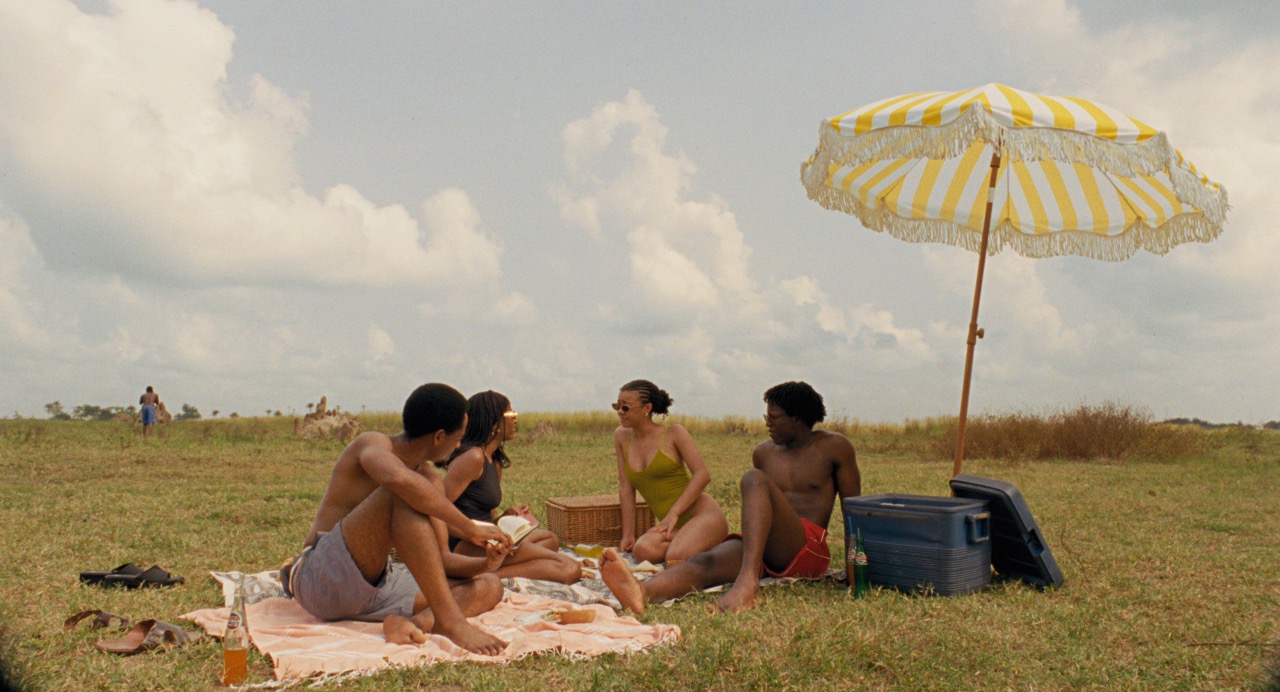
Arie described wanting to make something “more romantic” than their debut film, Eyimofe. “Wherever we were able to insert tenderness, that was something we really leaned into,” he explains. One of the film’s most moving relationships belongs to Septimus and Aisha, whose love persists despite his deteriorating mental state. Arie recalled seeing a Nigerian soldier gently dropping off a woman at a busy Lagos market. “It was striking to see the image of someone in uniform in public being so tender with another person,” he says. In Clarissa, tenderness becomes powerful when it occurs in encounters shaped by authority, repression or exhaustion.
Shot on 35mm by cinematographer Jonathan Bloom, the film has a tactile, nostalgic glow. Images from Woolf’s novel such as water, birds and flowers become motifs throughout the film. “I responded very much to prose and imagery,” he says. “Bougainvillea became the flower of the film.”
The adaptation process itself was long and bruising. Chuko began the screenplay in 2019 and completed it four years later. “Our Clarissa is a Nigerian Clarissa,” he says. “They are cousins. They’re not the same people.”
“I had a bunch of different titles before I settled on Clarissa,” he continues. ”It’s her story. When it comes to connecting that story to the public, oftentimes if you say you’ve made an African film or you make the film in Africa, it’s put in a box. But I think for us, we have very faithfully adapted a much-beloved novel by a much-beloved author, so it’s important to maintain those things that are not completely unfamiliar. I think all the characters, bar one, have the same names as in the book. Part of that is also there’s a simple translation there because Nigeria has a colonial history with Britain and Christian and Catholic history. So it wasn’t alien to have a character called Clarissa or Peter. Even Septimus, which is a very unusual name, it’s a Catholic name. Nigeria is one of the few places I’ve been to in the world where you’ll think of some random Catholic martyr from, like, the 16th century and there’s a Nigerian named after that Catholic martyr.”
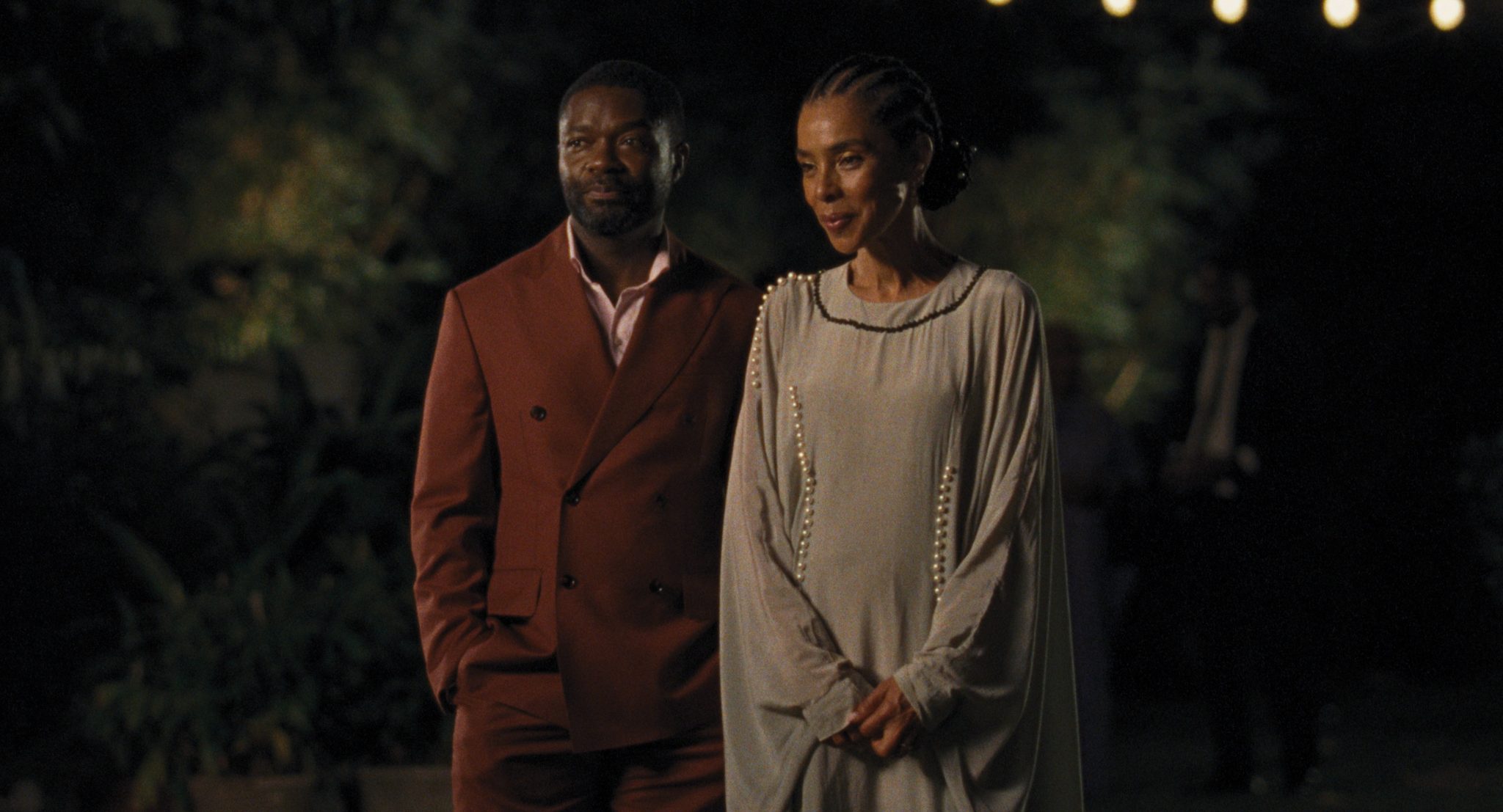
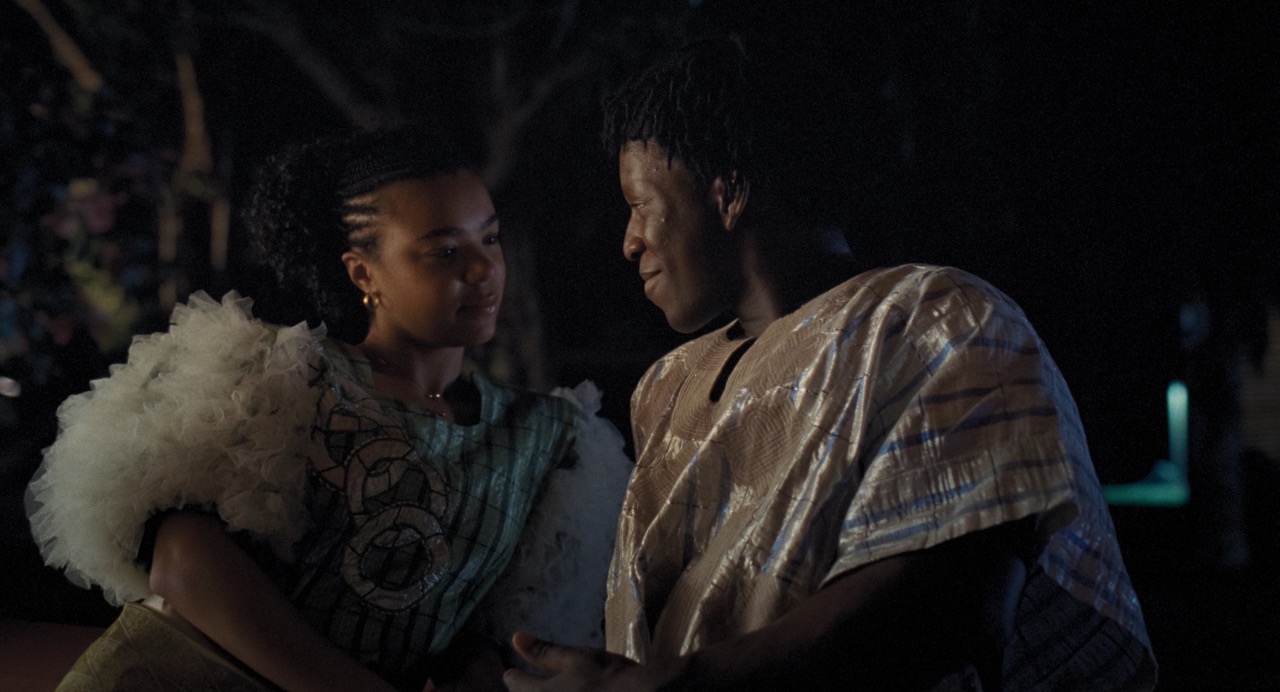
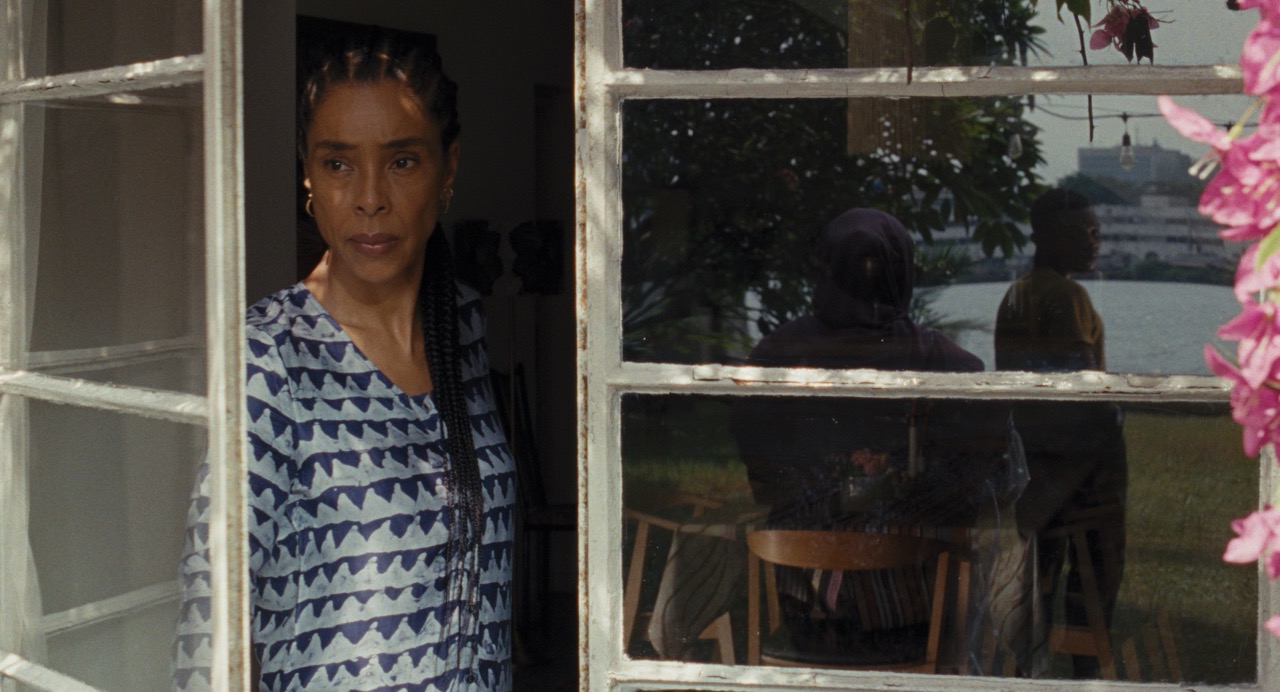


The casting reflects the film’s delicate balancing act between Britain and Nigeria. Sophie Okonedo, who shares the Esiris’ Nigerian heritage, was the first actor attached. “Very early on we said, she is the only person I could imagine,” says Arie. “We couldn’t think of anybody else that could play the role, which is a position I kind of really hate being in.” “Yeah,” Chuko chimes in, “Very anxious.”
Thankfully, Okonedo had seen Eyimofe and appreciated the brothers’ decision to cast her former drama school friend, Jude Akuwudike, in a lead role. Ayo Edebiri joined after contacting the brothers following that film’s release. She plays young Sally opposite India Amarteifio’s young Clarissa. With the pair attached, the project drew the attention of legendary casting director Nina Gold, which, as Chuko says, “completely opened the doors for us.”
“There was a unique challenge in casting each character twice – as an older person and a younger person,” says Chuko. “This is the thing Nina spoke of at the beginning – matching was the thing. There was not going to be any CGI de-aging, we needed to match.”
The Esiris are part of a small but growing wave of Nigerian filmmakers pushing beyond the industrial expectations associated with Nollywood. Clarissa, which premiered in Directors’ Fortnight, follows Akinola Davies Jr’s My Father’s Shadow as one of the few Nigerian productions to reach Cannes in recent years.
“The challenge of making a film in Nigeria is the same challenge as every other place,” says Chuko. “It’s financing. In other parts of the world, we would be a low budget film, but in Nigeria we’re big budget. I think why you don’t see more films like this is that there is a dearth of key crew. It’s not like there aren’t any great cinematographers or great production designers in Nigeria, it’s just that there’s three or four. In other parts of the world there’s dozens and dozens and dozens, and that gives you an opportunity to scale things. We’ve had three movies this size in the last year between this one, My Father’s Shadow and [Olive Nwosu’s] Lady. The next generation of filmmakers here at Cannes are doing pictures at La Fabrique and we had filmmakers at Locarno Open Doors. So, there’s a groundswell. In the next five or ten years it’ll hopefully be quite common.”
Toward the end of our conversation, I mention that the first reviews of Clarissa had been released earlier that morning. “Have you read them?” I ask. The brothers instantly freeze. “No, we have not,” Chuko says carefully. What critics seemed to be responding to, I suggest, was not simply the adaptation, but the emotional openness of the performances. “Wow,” Chuko says, pausing to nod thoughtfully. “The ambition wasn’t to make a copy. It was always to keep the spirit of the book alive.”
Continue Reading