

With overcooked performances by Adam Driver and Scarlett Johansson, its the villains of this New York-set crime-drama that really make it one to watch.
James Gray’s Paper Tiger is a gripping parable on brotherhood set during New York’s transition from the familiar Italian mafia to the vicious, new Russian mob.
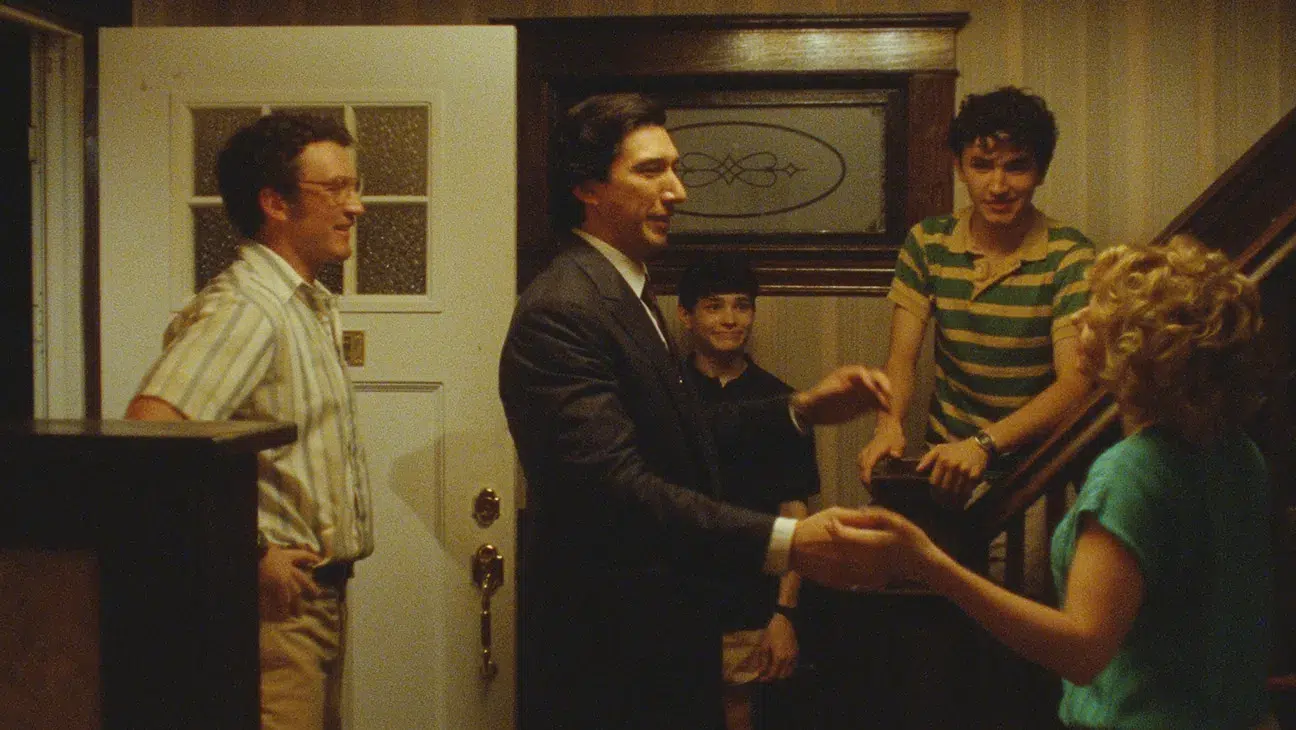
It’s set in the 1980s, between the boroughs of Queens and Brooklyn. Two brothers, riotously charming, wealthy ex-cop Gary (Adam Driver) and soft-spoken family man Irwin (Miles Teller) start an enterprise consulting Russian immigrants on their waterfront business. But one night Irwin sees something he shouldn’t have, with consequences that will rock his stable family life, not least his relationship with his wife Hester (Scarlett Johansson).
Gary calls the Russian mob “a paper tiger.” They’re nothing to be afraid of, he insists. These New Yorkers have seen it all before. But the film’s biggest thrills come from showing us, through fantastic grounded and sinister performances by the Russian cast, just how sharp those tigers’ claws are, and how they can destabilise the city. Two sequences in particular could work in a straight-up horror movie; a midnight house invasion had me peering through my fingers. The climax, in tall grass on the outskirts of the city, is Gray showing us just how masterful he is as a filmmaker. The entire theatre was captivated.

At its best, Paper Tiger delivers tension through implication—especially early on, as Gary wanders through dilapidated dock yards, into empty Russian restaurants, and concrete stairways to meet with corrupt police officers. The atmosphere is sublime. And when we’re trusted to remain in the dark (both literally and figuratively), Paper Tiger is an excellent film that almost steers into the understated territory of a mystery-thriller.
Paper Tiger needs those moments because they tone down Driver’s—and sometimes Johannson’s—performances, which can feel overcooked. In Driver’s case, he has a heavy task: the slick, wiseguy who seemingly everyone can’t get enough of, and who is not only wealthy, but is a judo practitioner, can do magic tricks and play the piano like his fingers caught fire. It’s not sure if Gray intended this to be a little over-the-top, especially when next to Teller’s placid Irwin (it might have been nice to have identified another weak point in Gary’s character, as Paper Tiger focused on his arc). I also wonder if it would’ve been more believable had the actors switched roles—while Driver has the bigger physical presence, Teller is more effortlessly charismatic. He can play the mensch.
The villains, then, are what give the film its necessary reality check. And villains they are. Victor Ptak’s Simeon Bogoyavich is a scene stealer. The moment his icy glare and large moustache appear on-screen it’s obvious who the boss is, and as with We Own the Night, The Immigrant, or The Yards, Gray appears to be having more fun drifting into the city’s grimy underbelly than Irwin’s domestic life, where he is keen to enforce his familiar themes of brotherhood and family loyalty (especially through Irwin’s own two sons). At its best, Paper Tiger delivers tension through implication—especially early on, as Gary wanders through dilapidated dock yards, into empty Russian restaurants, and concrete stairways to meet with corrupt police officers. The atmosphere is sublime. And when we’re trusted to remain in the dark (both literally and figuratively), Paper Tiger is an excellent film that almost steers into the understated territory of a mystery-thriller. There are masterful scenes of violent retribution that will remind audiences of the best of classic “Gangster” cinema, and the story is entertaining enough to win a broad crowd of fans, like myself, who feel deprived of the genre.