


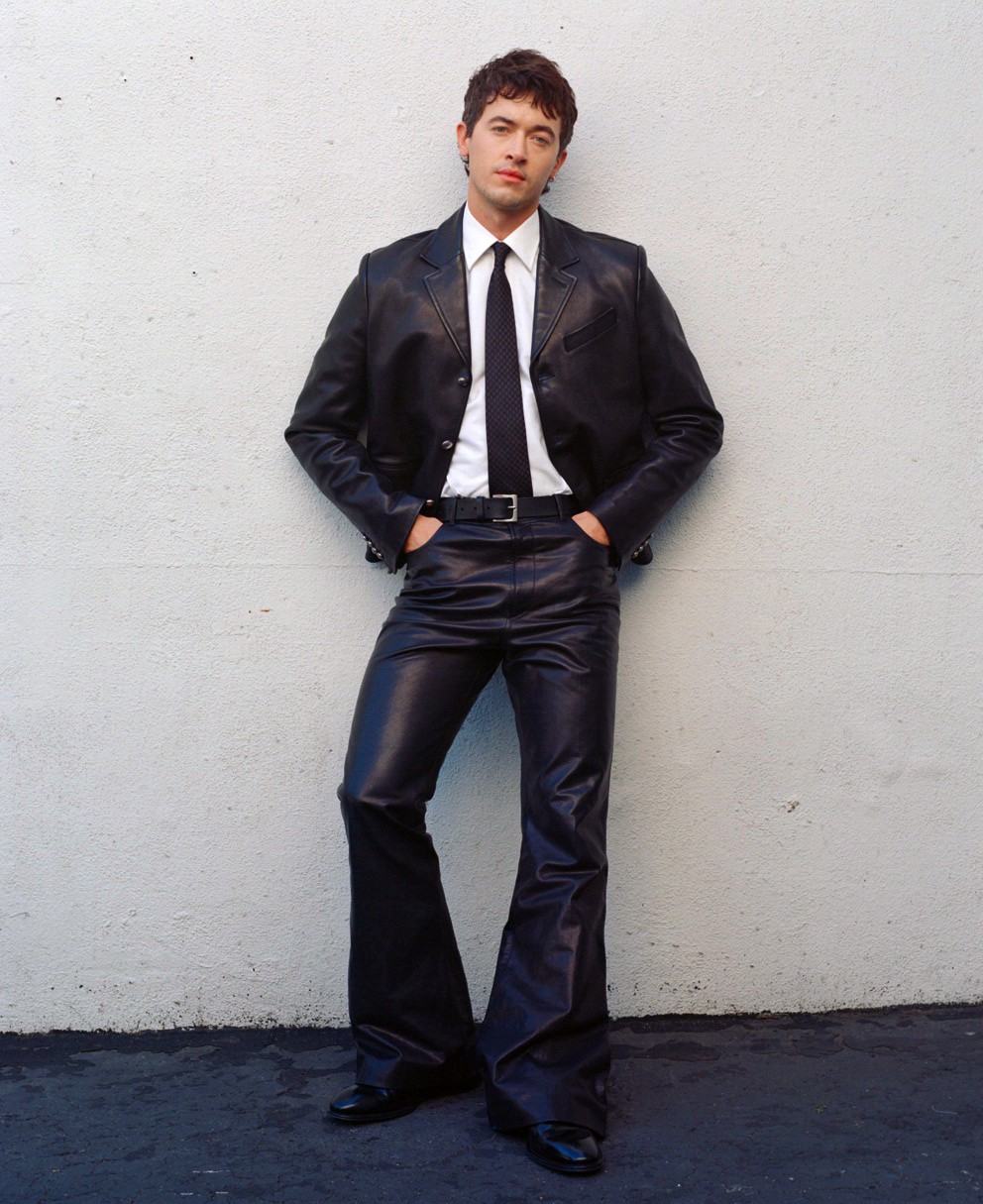
At the Groucho, a member’s club in Soho, Tom Blyth orders a coffee and looks around the room. “You know, this is where me and Cal McMau spoke about Wasteman,” the actor tells me. Blyth, originally from Nottingham, is tipped to be the next major British actor. He’s endlessly busy, floating between projects that challenge him foremost. This is a conversation with Blyth as Wasteman continues showing what he’s made of.
Chris Cotonou: You’ve just worked with Claire Denis, who has a very particular reputation among cinephiles. What was that experience actually like from the inside?
TB: Claire’s very tender with her actors. She understands how delicate that dance between actor and director can be. I think she genuinely loves that collaboration—she loves seeing what you bring back to her.
She’s not prescriptive at all. Some directors will map out every beat and tell you exactly what they want. Claire’s more like, “This is the thing… now go away and show me what it is.” She doesn’t always know precisely what she wants until she sees it. So she guides the process in this open, exploratory way, but there’s still a very deliberate hand on the wheel. You’ll try something, and she’ll go, “I love that, keep that,” or, “No, that’s not it, don’t do that again.”
So you feel both totally free and very clearly directed. It feels like a dance, and you really feel like you’re in collaboration with her.
CC: Is that the kind of environment you’ve realised you work best in?
TB: Yeah, I loved it. I really did. But she’s also not afraid to scold you, which can be brutal in the moment. You do sometimes feel like you’re being told off in school.
At the same time, it’s Claire Denis—she’s made all these brilliant films. High Life, Stars at Noon, even going back to Beau Travail and beyond. So you trust that harshness, because it comes from someone who deeply cares about the work. She’s a beautiful human being, very particular, maybe not always easily understood—but you don’t have to understand her fully. You just have to get on board for the ride.
CC: You mentioned in the room that you’re now “chasing filmmakers” as much as scripts. How do you actually choose projects at this stage?
TB: For me, the script always comes first. You can work with the greatest filmmaker on earth, but if it’s not on the page, there’s only so much you can do.
Recently, I had this wild experience where a legendary, dream filmmaker of mine sent me a script. Someone I’d always fantasized about working with. And I read it and just went, “Oh no… this one’s not it.” I had to turn it down.
It felt almost ungrateful—especially because for the first 10, 15 years of your career, you’re just trying to get any work at all. You never really believe you’ll have consistent work for the rest of your life. So to be in a position where a legend sends you something and you say no… it’s mind-blowing. But again, if it’s not on the page, it’s not worth doing, because then you’re stuck selling something you don’t believe in.



CC: You’ve talked about the pain of promoting work you’re not proud of. Has that become a real factor in your choices?
TB: Absolutely. Early on, you do jobs because you need to pay the bills or you’re just thrilled to act professionally. I’ve done projects I’m not proud of artistically, but I’m still glad I did them, because I was cutting my teeth.
Now I care much more about the quality of the work—and the aftermath. Press tours taught me a lot. There’s a huge difference between sitting in an interview and genuinely being proud of what you’re talking about versus having to fake enthusiasm for something that didn’t turn out well, or that betrayed what you all thought you were making.
That’s a horrible feeling. You’re trying to sell something you don’t believe in, and it’s just… deadening. So now, I try to picture myself on the press tour. Do I want this in my body of work? Do I want to be answering questions about this for months? That’s become a real part of the decision-making.
CC: On the other end of that spectrum is Wasteman, which you clearly feel deeply connected to. How do you feel about that film now?
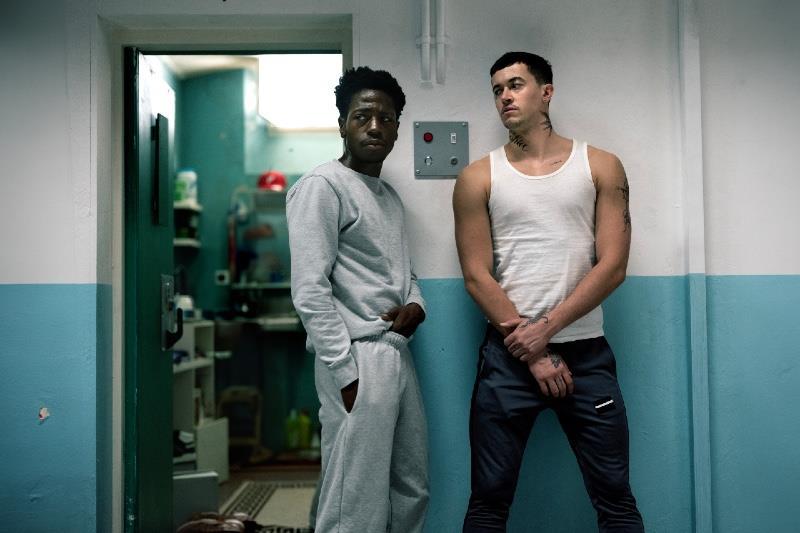
TB: I love it. I really do. It’s the most fun I’ve had acting on screen. There was a sense of liberation in that performance.
Cal [the director] basically gave me permission to go as far as I wanted. His whole thing was, “Go there. If it’s too big, I’ll rein you in, but don’t rein yourself in.” With David Johnson—who’s now one of my best mates—Cal would say, “Go hard on him. Make it hard for him to be in the room. I want to see his discomfort.”
You can feel that in the film. I’m bouncing off the walls, and David’s character is visibly uncomfortable. That tension is the engine of the movie. And as an actor, it felt like being given permission to unleash something I’d been rounding off in myself for years.
CC: Dee is a pretty extreme character, and feels very unlike you on the surface. Where did that come from?
TB: Weirdly, he’s not as far from me as people might think—especially me as a teenager. I grew up in Nottingham and it was rough at times. We were always running amok, pushing boundaries in ways that, looking back, were probably quite toxic. I never ended up in prison, but I was surrounded by people who absolutely could have.
There are at least four or five people I know from that time that I quietly based Dee on. So there was a real catharsis in tapping into that world again. It’s like there’s a bit of a beast in all of us. I’ve spent years trying to sand down my edges and fit into spaces I didn’t naturally fit into—New York, drama school, “professional actor” life.
So when a director turns around and says, “Unleash the beast. Stick out like a sore thumb,” it’s weirdly liberating. The hardest part isn’t finding that energy—it’s giving yourself permission to go there.
CC: You also made a physical transformation for Wasteman, but not in the usual “Hollywood ripped” way. How did you approach that?
TB: I only had three weeks between finishing Plain Clothes and starting Wasteman. No time, no Hollywood trainer, and the project was wedged between two others, so I couldn’t shave my head or do anything drastic. So I thought, “Okay, if Dee’s locked in a cell three-quarters of the day, what would he actually be doing to keep in shape?” That led to this prison-style regimen: push-ups, pull-ups, dips, all bodyweight stuff, every day.
Diet-wise, I went the opposite of the superhero route. I ate like someone living off bulk-made prison food—salty burgers, heavy bolognese, dense protein, lots of grease and salt. It gave me this slightly bloated, solid mass look. We realized it was way more truthful than being shredded. The Hollywood version of that guy is ripped; the real version drinks beer and eats whatever’s put in front of him.
CC: You studied at Juilliard, which people associate with “serious” acting—but not necessarily Method. What did your training give you that shows up in performances like Dee or Lucas in Plain Clothes?
TB: Juilliard’s not a Method school at all. It’s a theatre training program—very physical, very vocal, very text-based. What I thrived on there was the physical and vocal transformation side of things. Any time I get to change my body, my voice, my rhythm, I light up. It’s like shedding skin and putting on a new one.
The “method” thing is interesting. Daniel Day-Lewis said something once that really helped me: that what he does is basically sustained make-believe, trying to access that childlike part of the imagination where pretending is effortless. The method’s got this reputation now because some people have turned it into a PR stunt—staying in character for months and terrorising crew members.
I actually like the sport of stepping over a line into character when they call “action” and stepping back out when they call “cut.” That’s the game for me. On Plain Clothes, that line just got blurry. Lucas is in such a state of disarray and self-doubt that I found myself carrying that confusion home. Suddenly I was sleeping three, four hours a night, full of his thoughts. I wasn’t trying to be method, but he followed me home anyway.
CC: Did that experience change how you protect yourself going into the next roles?
TB: Yeah, it taught me that sometimes you don’t get to decide how deep it goes. With Plain Clothes, then Wasteman, then Watch Dogs back-to-back, I didn’t really have the luxury of pausing and “decompressing.” I just had to jump into the next thing.
It showed me how adaptable we actually are. Humans can jump before they’re ready and still land on their feet. So now I try to respect that adaptability, but I’m also more aware of the mental toll. It’s another reason I did a rom-com afterwards—I needed something lighter. I needed to see what it felt like to exist in a world where the stakes were more about love than life or death.
CC: That rom-com—where you play Alex, a kind of ideal “everyman”—seems like a big shift from Dee or Lucas. Was that uncomfortable in its own way?
TB: Honestly, the uncomfortable part was playing an everyman. Alex is reliable, solid, maybe a bit square. Emily Henry, who wrote the book, said he’s basically the embodiment of all the qualities young women hope to find in a man.
Coming off Wasteman and Watch Dogs, I’d be on set going, “Okay, but what are his real stakes? Who has he secretly killed?” And the director would say, “The stakes are just love.” It took me a while to adjust to that.
At first, I found him a bit boring compared to these spiky, damaged characters I’d just played. But eventually, I really enjoyed it. It was nice to play someone who wasn’t on the edge of collapse or violence. Still, by the end of the shoot, I knew: Wasteman is my North Star. That’s the space I’m most excited by—the tough, crunchy roles where there’s a real human cost.
CC: You and David Johnson have incredible chemistry in Wasteman. How important is genuine off-screen friendship to that kind of on-screen relationship?
TB: It helps a lot. It’s not essential—you can do great work with people you’re not close to—but when the trust is there, you can go further.
In Wasteman, I’m constantly needling David’s character, pushing him, making it uncomfortable. If I didn’t trust David and he didn’t trust me, I’d probably pull my punches. You don’t want to genuinely upset someone you barely know.
Because we’re friends, I knew that after a take where I’d really gone at him, we could both laugh, hug, whatever. You dare to go the extra mile when you know the person opposite you is solid and you’re both chasing the same thing. It felt like rehearsing a play, which makes sense—we both come from theatre training.
CC: You speak a lot about rhythm, almost like a musician. Where does that sensibility come from?
TB: At drama school in New York, there was a jazz department down the hall. We did this amazing exercise in scene study: we’d perform a rehearsed scene while jazz musicians improvised next to us.
The teacher would say, “Improvise within the script the way they’re improvising within the music.” So your pauses would shift depending on when the bass dropped out, or how the trumpet line bent. It was about feeling the rhythm of the scene in a live, elastic way.
That’s stayed with me. When a scene is working, it feels like music—sometimes smooth and melodic, sometimes disjointed and syncopated because that’s what the moment needs. You can feel when somebody comes in and “ruins the rhythm” by adding something that doesn’t belong. That’s why, when the writing is good, I’m very reluctant to embellish too much. If you start putting your own riffs everywhere, you can throw the whole composition off.
CC: You clearly have a strong instinct for narrative and character psychology. Is writing your own material part of the long-term plan?
TB: Yeah, definitely. Different times in my life, I’ve written bits and pieces, and I’ve always enjoyed it. Even writing a long, thoughtful email to someone—I genuinely like that process of shaping something that flows and feels honest.
I’d love to write and direct at some point, and to produce my own stuff. I fantasize about disappearing somewhere for a month just to write. But I’m also kind of “fizzy” as a person—constantly bubbling, restless. If I sit still too long, I start climbing the walls.
So for now, it’s about carving out windows to write while still acting. But yes, putting some of these characters and ideas onto the page myself is very much on the horizon.
CC: You were recently nominated for a BIFA for Wasteman. How much do awards matter to you?
TB: Growing up, watching award shows, you can’t help but think, “That’s when you’ve made it.” You see your heroes go up on stage, and you dream about being in that room one day.
So when the BIFA nomination happened, it meant a lot. It was the first proper, major award recognition I’ve had, and it came from people who used to be my heroes and are now my peers. That sense of, “We see what you did, and we think it’s worthy of being in this conversation,” is incredibly validating.
But I’m also wary of putting too much weight on it. If you don’t win, you’re crushed; if you do win, you can start chasing that high instead of the work. So I let myself enjoy it, but I try to hold it with a fistful of salt. Awards are nice. They’re a cherry on top. But the real thing—the only thing that matters long term—is getting to keep acting and keep getting better.
CC: Finally, after Wasteman, Plain Clothes, Watch Dogs, People We Meet on Vacation, Claire Denis… What do you actually want next?
TB: I want to work with great, daring directors who’ll push me and challenge me. There are a couple of films I’ve been attached to for a while that I hope will come together soon, and I’m reading a lot, trying to be patient and not just jump at the first thing.
I’m drawn to roles where the human toll is high, where the writing’s fierce and confident, and where I feel a bit scared to say yes. That fear is usually a good sign. If I can keep chasing parts like Wasteman—the ones that stretch me and keep me honest—then I’ll feel like I’m on the right track.