

As various campaigns and editorials highlight the cultural capital of the attractive intellectual, books writer Jess White asks how the virtues of beauty and intelligence came to be so insidiously connected.
Every Friday evening, I write my newsletter in which I discuss what I have been reading that week. I have done this almost every week for the last four years and in that time it has taken on a life of its own; I have 2,000 weekly readers and it has featured in The Observer as one of the ‘best’ Substacks on the platform. I spend about an hour writing it, mulling over the one or two (sometimes three) novels that I’ve read in the past seven days. I have a rule that as soon as it is finished and sent off, I turn my laptop off and do something else instead of aimlessly clicking about on the internet. The screen goes black and I can see myself in its dim reflection—usually, I’ve never looked worse.
That’s an exaggeration, but it is true that I never look my best at this point in the week. I have usually done a shift at my desk job during the day, so I’m visibly frazzled with oily skin and hair that has been pushed to and fro all day. My mascara will have flaked and there will, at most, be a ghost of lipliner left on me. I’ll also be sitting like a prawn. This was similarly the case when I wrote my book and when I was researching and writing my PhD; what I looked like was of less concern than getting at least 1,000 words down on a page. It’s also true of when I read, which I mostly do at the end of the day—again, sitting like a prawn.
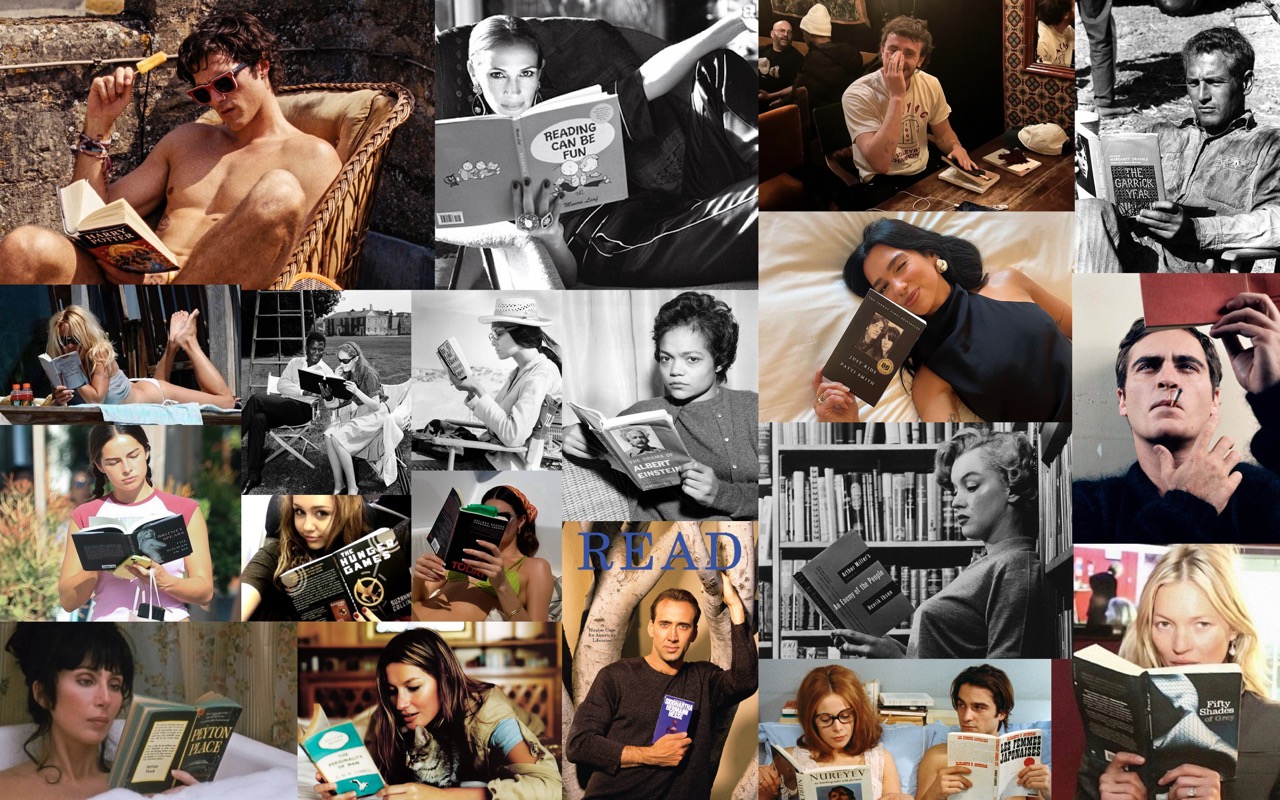
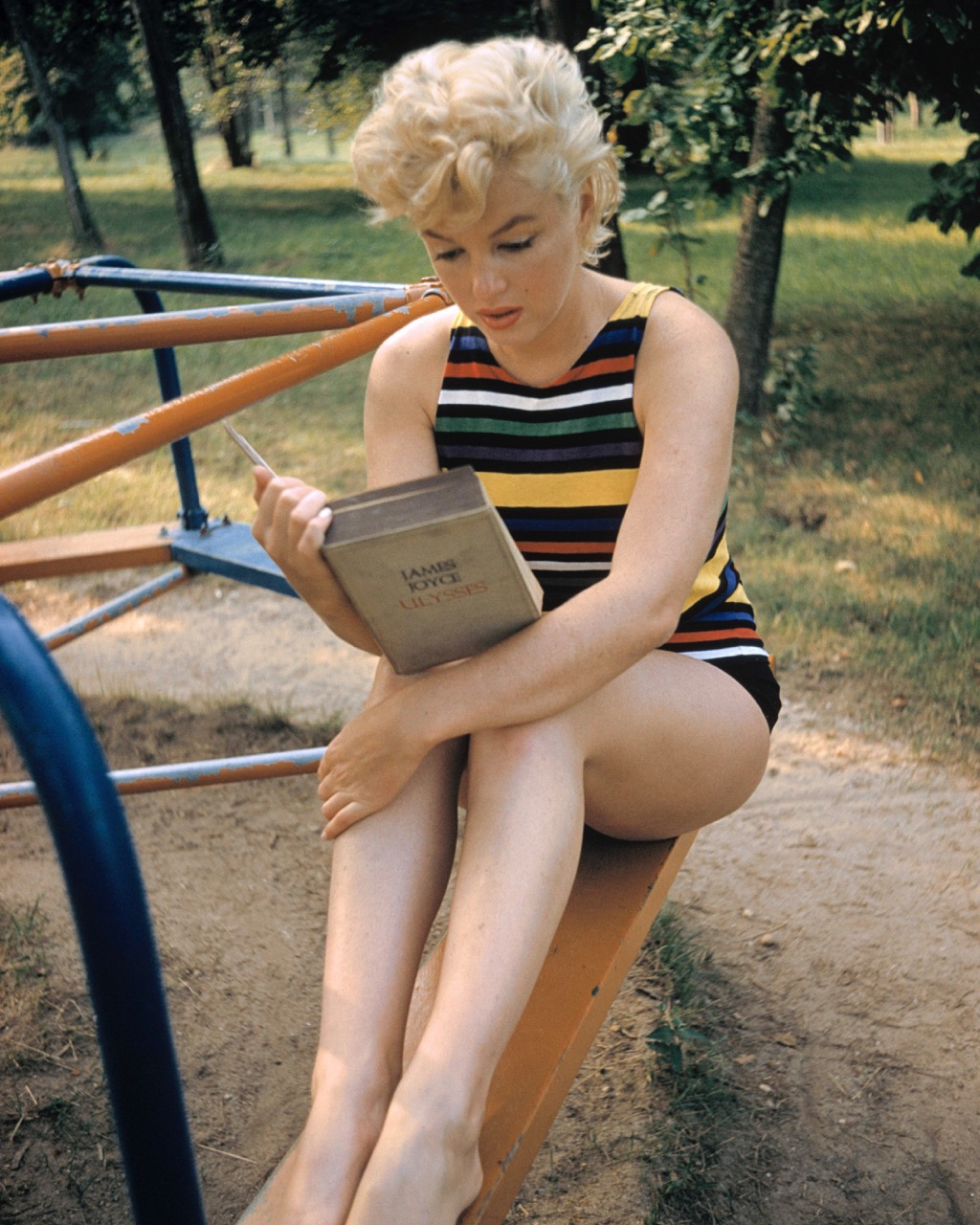
A compilation of ‘hot’ celebrity readers—fictional and real
It seems divorced from reality, therefore, to go online and see a cultural conversation that centres on the figure of the hot, young writer and reader. Last week i-D magazine published a feature on The Whitney Review of New Writing, a literary magazine founded by writer Whitney Mallett. Both the article’s tagline and the Instagram post that promotes it insist that the magazine’s contributors are ‘the hot literati reshaping criticism’, and the first line of the article asks of us, ‘What happens when a group of hot, smart people come together? The Whitney Review of New Writing!’. The accompanying photos of these contributors reaffirm that yes, everyone involved is very hot.
To be fair to Mallett, she comes across well in the interview itself, in which she sets out her aim of highlighting and reviewing oddball literature that might otherwise get sidelined by bigger publications. The issue is not The Whitney Review itself, but the insistence by outlets like i-D that it is worth our time because the people involved in it are attractive. We are not invited to think of people with oily skin writing around their non-literary jobs; instead they are positioned as mesmeric symbols of an unattainable lifestyle that involves sitting around in restaurants talking about experimental literature.
This is not an isolated incident. The same week, in what is a slightly strange and disjointed move, Book of the Month released the campaign ‘Nobody Reads Anymore’, in which they challenge the claim that Gen Z are forgoing books for their phones. They chart a 100-year history of older generations believing that younger people barely read despite evidence to the contrary , and alongside this, they have a photo campaign consisting of young writers, actors, musicians and influencers, including Diana Silvers, Jack Edwards, India Ennenga and Clara Perlmutter holding books with the organisation’s name embossed on them. These photos have been posted on social media and on physical posters in American cities with the caption ‘Nobody Reads Anymore.’ They are highly stylised and everyone is very attractive.

As with everything these days, reading is positioned as something that we can buy into if we have the right look and take the right pictures.
Jess White
The attractiveness is the point. While many of these people are accomplished and probably do enjoy books, we are meant to squeal with delight that such lovely-looking and familiar figures do something as normal as reading. But even that could be missed by an onlooker passing one of these posters in the street, as the only clear indication that this is a reading campaign and not a fashion campaign is in evidence in the captions that accompany them on Instagram. The campaign does instead feel like an excuse to imply that reading and writing are part of an aesthetically-pleasing and elevated lifestyle that we too, as mere mortals, can work towards. As with everything these days, reading is positioned as something that we can buy into if we have the right look and take the right pictures.
Symeon Brown, author of Get Rich or Lie Trying (a book about influencer economies), agrees that there is a concerning trend here. He tells me that he is ‘as sceptical as the next writer on how public virtues or important social rituals like reading all end up as commodified algorithm fodder’, which seems to be what is happening in the Book of the Month campaign. He makes a good point, however, that ‘reading is in decline and the real economy is merciless to young people especially those with literary ambition. Everybody is looking for an angle to sell.’

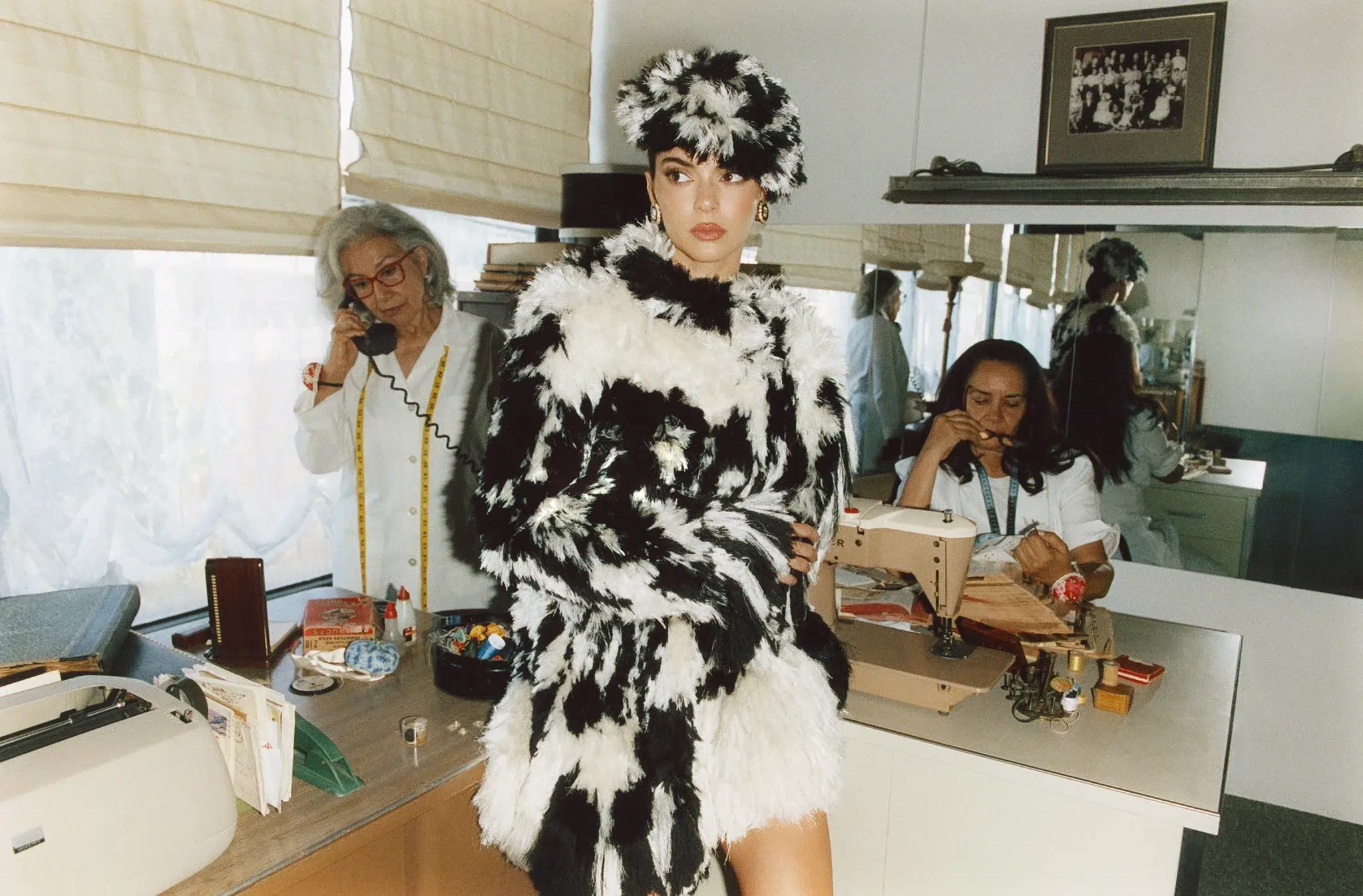
Kendall Jenner reads Joan Didion on the beach, 2024
And reading does help with selling an image, as is evident in the almost unbelievable amount of book clubs set up by celebrities. Dua Lipa, Kaia Gerber, Emma Roberts, Reese Witherspoon and the OG celebrity book club runner Oprah have all benefitted from promoting and talking about books. In their setting up of these clubs, most of which are carried out online, we are invited to think of them as intelligent and well-read as well as wealthy, beautiful and talented. While it is admirable that these celebrities read so widely (Dua Lipa especially so), and while these book clubs benefit authors hugely in the promotion their books receive, I can’t help but feel sceptical that the people in our culture who sustain and promote standards of thinness and facial perfection also want to insist that they are absolutely and definitely doing the reading as well. They are the ultimate hot readers.
The fashion industry is also following suit, with brands like Miu Miu using books as part of their overall brand. For the past two years, Miu Miu has produced a ‘ Summer Reads’ campaign, in which they put on events in places such as Osaka and Paris, where they promote their own editions of novels like The Inseparables by Simone de Beauvoir. Summer Reads is described by the brand as ‘an activation curated by Miu Miu, designed to enrich contemporary thought and community life through the power of the written word.’ The promotional material, of course, features models wearing Miu Miu and holding the books. De Beauvoir, one of the authors who is chosen to enrich contemporary thought, once stated “I am not at all interested in clothes…I have so many other things to think about.” The dissonance between selling reading as part of a curated lifestyle and what the authors of those books actually believed speaks for itself. Elsewhere in the fashion industry, Dior (under the new direction of Jonathan Anderson) has produced a line of literature-adjacent bags that feature cover designs from books such as Truman Capote’s In Cold Blood and Bram Stoker’s Dracula. Truthfully, I find these bags delightful, but I am still conflicted about the overall messaging in the fashion, celebrity and influencer realms that intellectualism is an aesthetic outlet for consumerism and beauty.
It does go against the point of much literature, social theory and art that the people who are writing and reading should be ‘hot’, or that their attractiveness should be a selling point for the things that they create.
Jess White
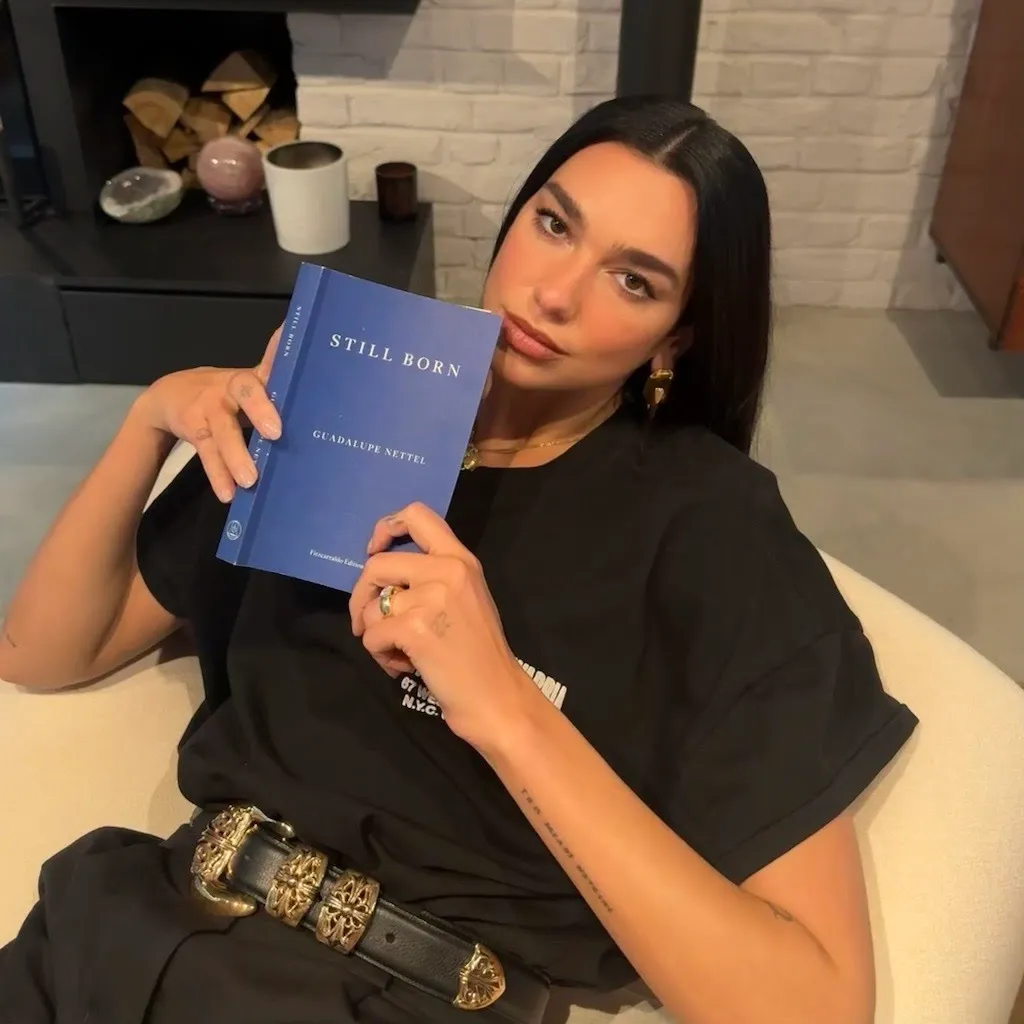
Dua Lipa posing with a title by Fitzcarraldo for her Service95 book club in 2025
To ensure that I wasn’t alone in these scepticisms, I asked some writer friends their opinions. Many of them agreed that it was an embarrassing concept that invited hurtful criticism if they themselves were to self-describe as a ‘hot writer’, or if they were thought of as contributing to a culture of it. Eliza Clark, the author of Boy Parts, Penance and She’s Always Hungry drolly comments that “I would never call myself a hot writer because I would never openly invite people to call me chopped like that.” Another writer of fiction (who wishes to remain anonymous) confesses that they have had to stop themselves from “playing into” the hot writer trope, but then feeling resentment that they may have failed at being hot enough, so that they might be described as such.
Sarah Manavis, freelance writer and author of the upcoming book Tell Me About Myself sums up my own feelings when she tells me, “not to sound like a millennial feminist or whatever, but I really think that we’ve got to stop caring what writers and artists look like.” It does go against the point of much literature, social theory and art that the people who are writing and reading should be ‘hot’, or that their attractiveness should be a selling point for the things that they create. While there are authors and figures who have self-described as a ‘hot writer’, the insistence that this is a distinct subculture largely comes from outside of the writers and readers themselves by those who benefit from selling literature as part of a lifestyle that can be packaged and sold.
I am a writer and a reader, and (on good days) I don’t think that I am that unattractive, but it would feel odd for me to use the latter as a selling point of the former. Writing and reading, for me, is not something that I feel empowers me aesthetically, because I usually look very bad when I am doing it.
Jess White writes a weekly books newsletter you can find here.