

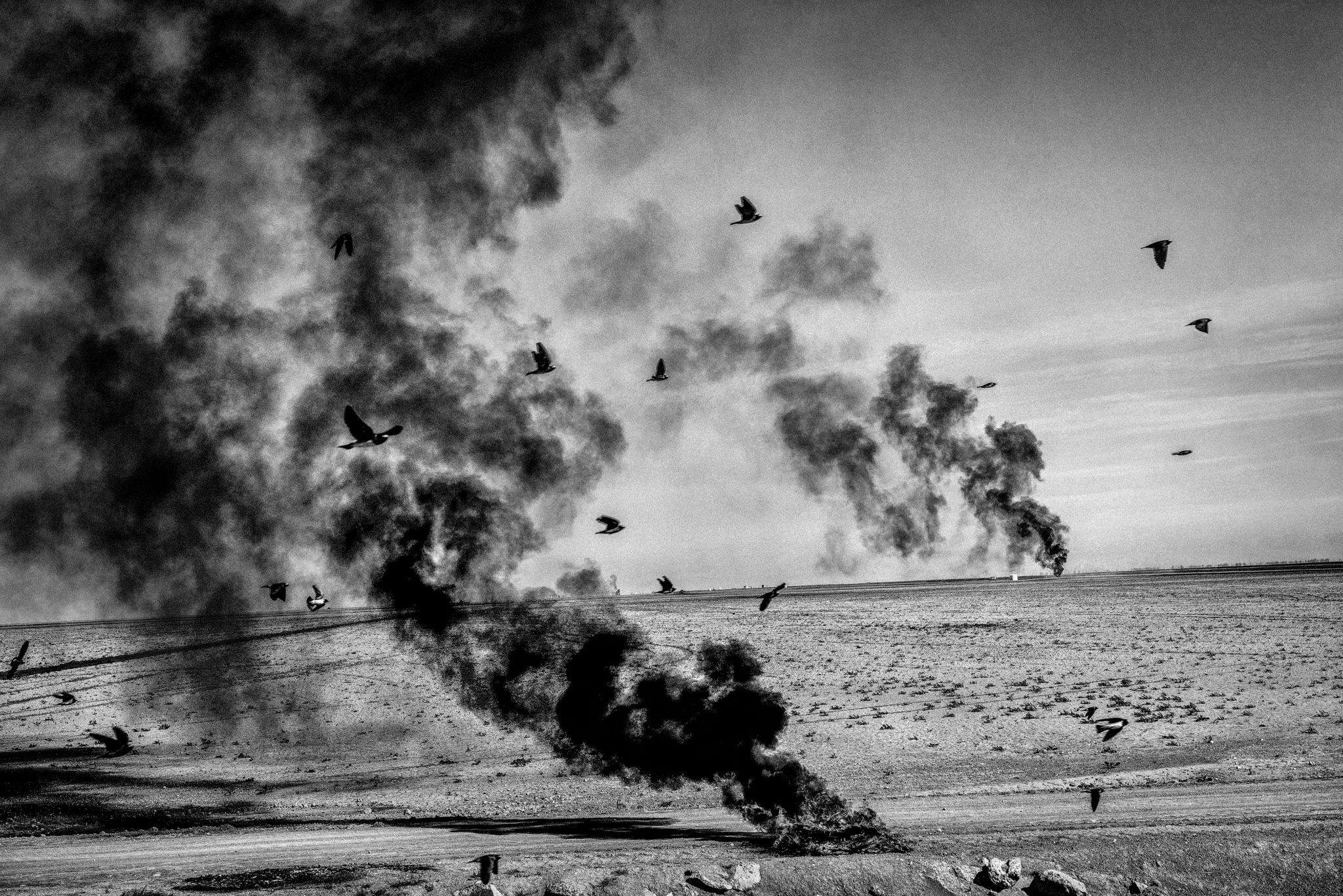
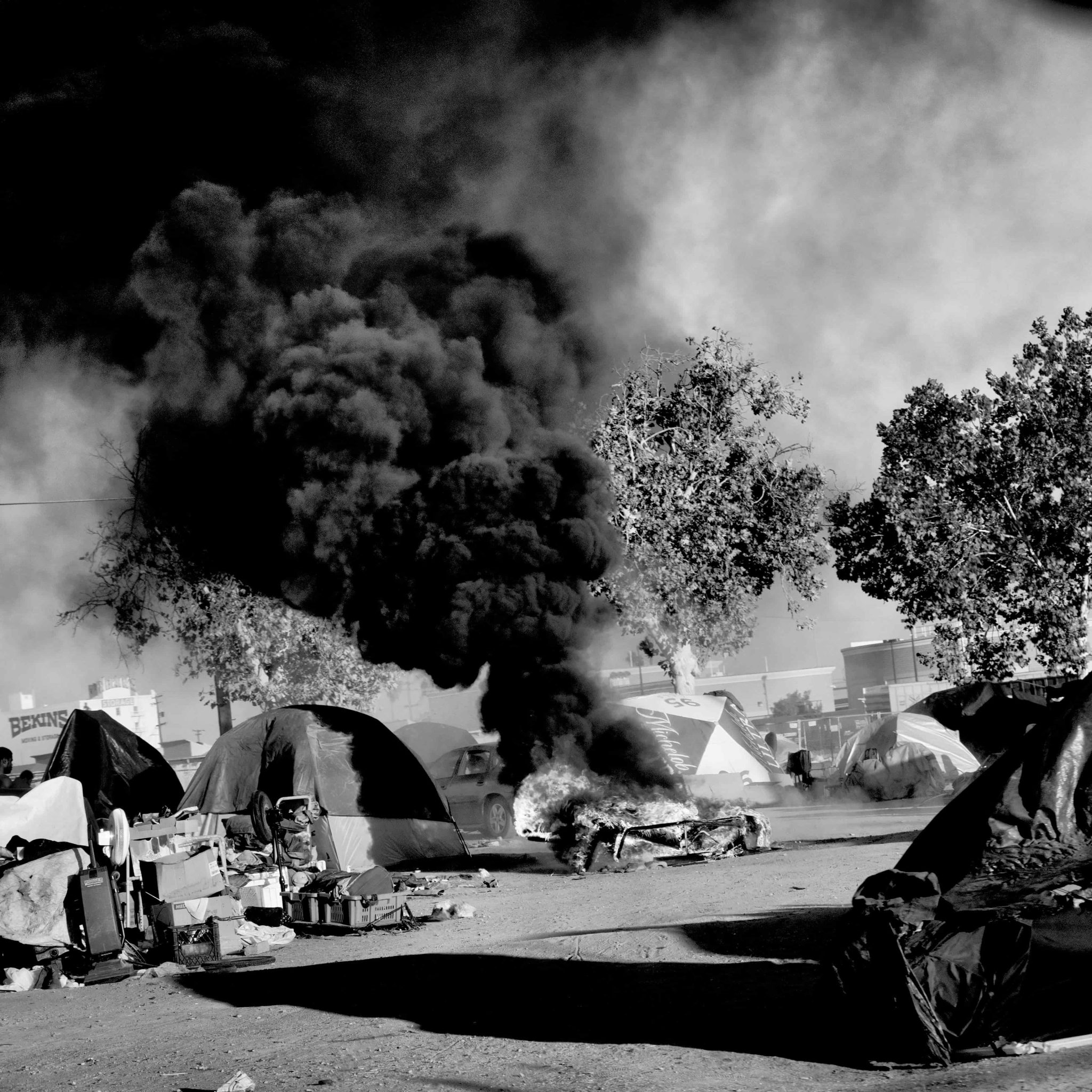
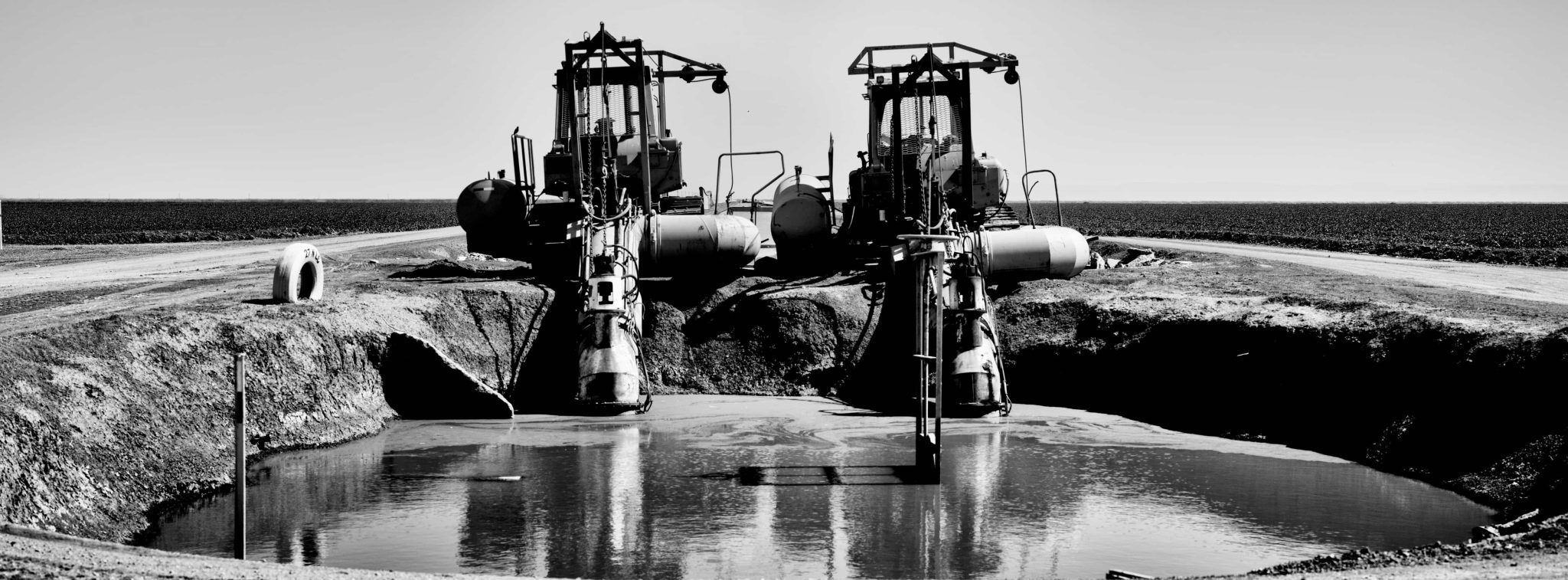
Matt Black photographs California from the inside out. Not the postcard state of palm trees and endless sunshine; he shows the lived-in area of farm towns, deserts, city edges, and forgotten roads. In projects such as American Geography (2014–21), for example, he maps the state as both a physical place and a social condition: a landscape formed by power, extraction, and labour as much as by sunlight and myth.
Black also repeatedly documents California’s Central Valley, inland towns, and overlooked areas. What is so striking is how he creates a comprehensive portrait of a state shaped by cycles of growth, decline, and resilience. His works serve as chapters in an ongoing study of how wealth and scarcity intersect, how landscapes reflect policy and history, and how people adapt to environments, sometimes not intended for them.
More than anything, Black’s portrayal of California reveals the realities underlying its popular image. Knowing him personally, I’ve watched how he works deliberately and with personal commitment, avoiding spectacle and simplistic moral judgments. In the brief series of questions that follow, Black talks about the myths that have shaped his home state’s image, what it is like to revisit the same places over many years, and the patient approach needed to build a thoughtful photography practice. His work shows that photographing a place over decades is not just about recording change, but also about facing what stays the same. And that, more than anything, is why he remains one of California’s most powerful visual truthsayers.
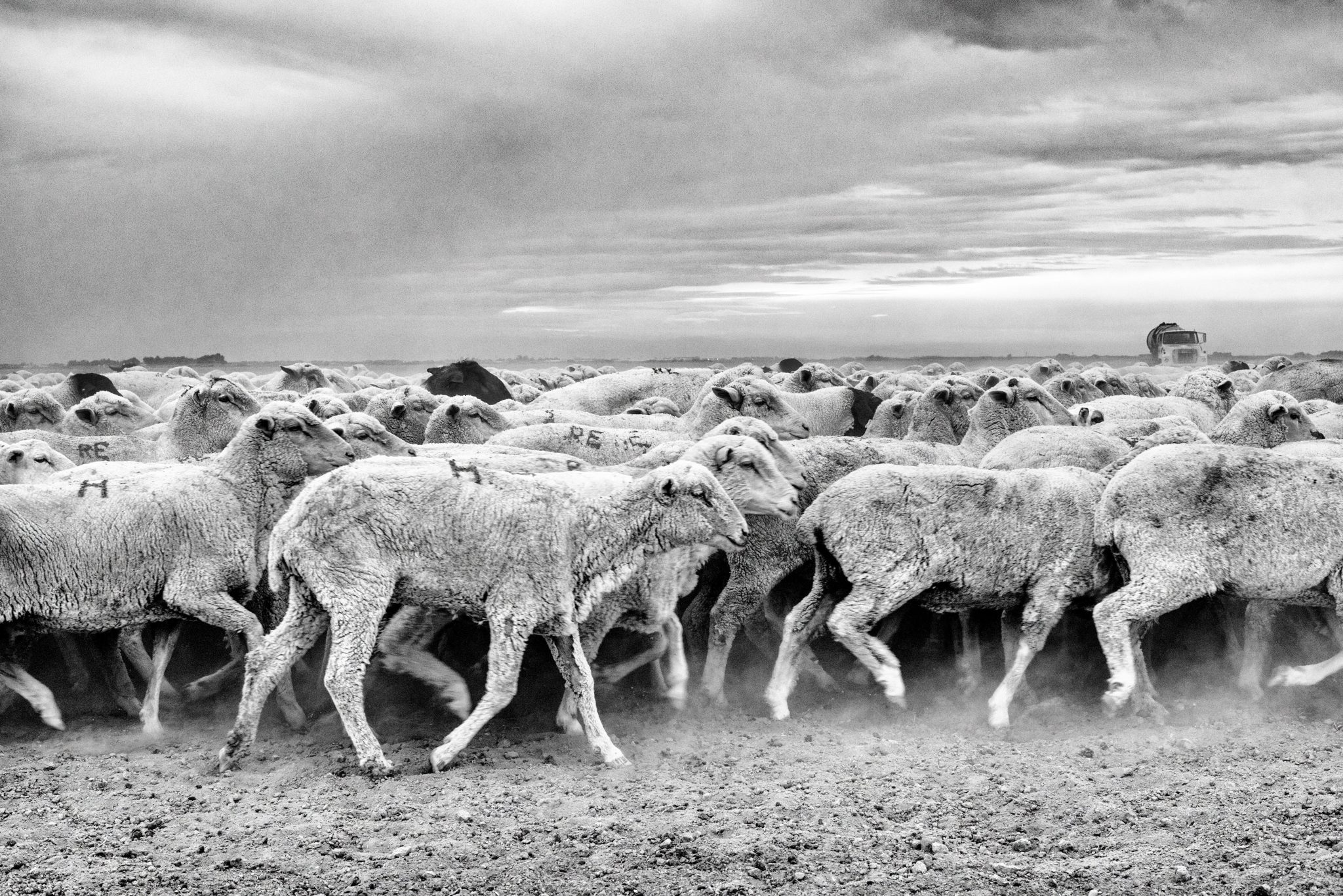
Sheep in a denuded wheat field. Mendota, California, 2014. By Matt Black.

“My work has been about a certain kind of place. Being ‘poor’ is certainly a marker and an indicator, but it’s also one among many. It’s the psychology behind it and how these social structures are enforced that’s important, and the mythologies we’ve made to explain it all.”
Matt Black
Your work often dismantles the idea of California as a land of abundance; the golden land out west. When did you first realise that the version of the state you were seeing didn’t match the one sold to the world?
You just have to turn on the TV or open the internet and the romanticised version of California is virtually all you see. When you are coming at it from the experience of life and living, the cracks begin to appear quickly. It is a land of abundance, yes, it is a land of intense beauty, but it has also been terribly exploited.
You’ve spent decades photographing the same places many people pass through without noticing. How has staying rooted in California shaped your way of seeing, compared to photographers who move constantly?
Being the kind of photographer who is just constantly moving just wasn’t for me. You can only see the obvious and, to me, good photographs must go deeper and be rooted in something more—to emerge out of a certain reality. I need to feel a connection to what I am seeing or photographs just don’t happen. And you can’t comment on what you don’t know—or you shouldn’t.
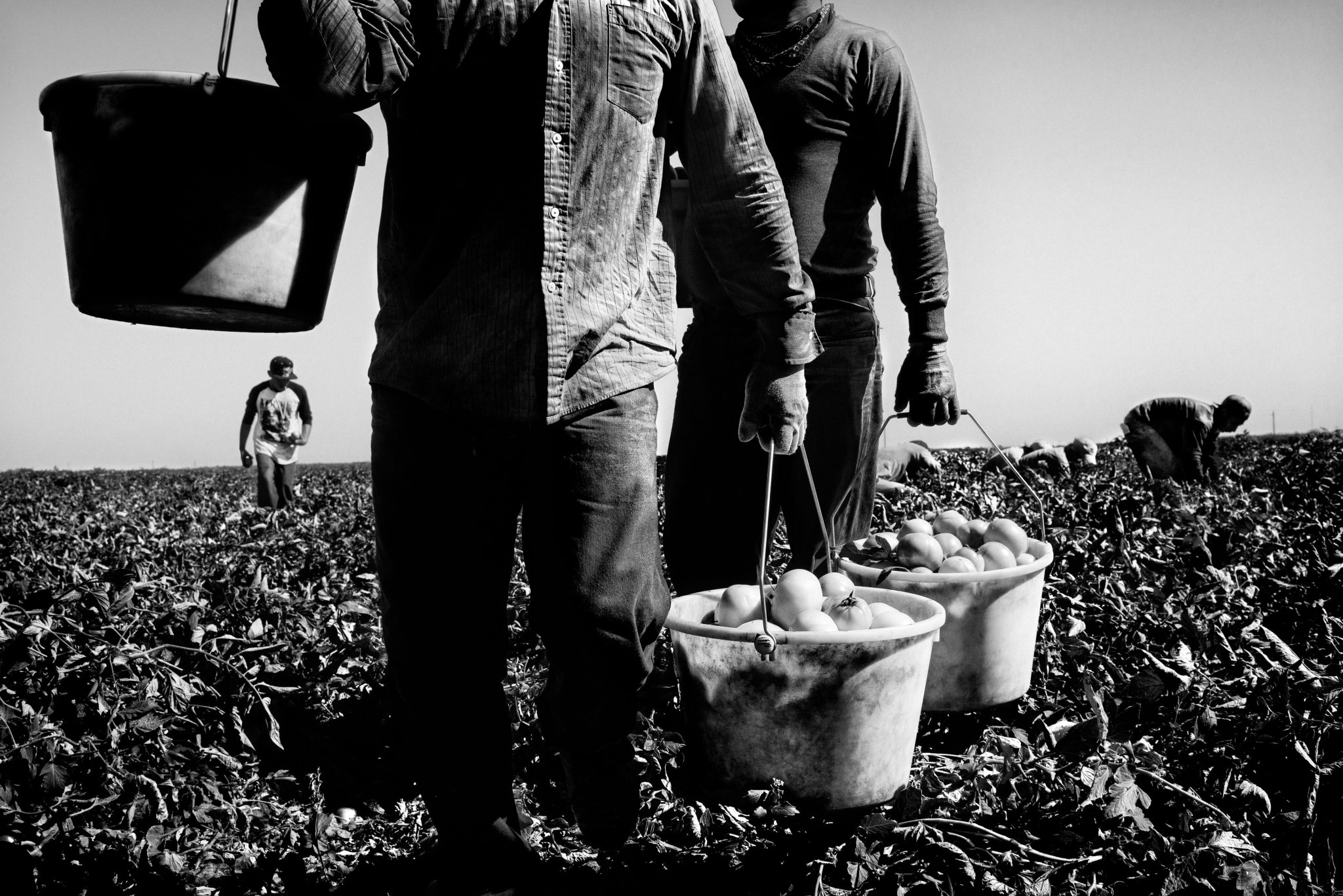
Tomato harvest. Firebaugh, California, 2014. By Matt Black.
“The ethics of photography are pretty straightforward for me. My personal rules are to be honest, never take a photograph you can’t stand behind, and never show something that isn’t true. I’m not saying these are the only rules, but these are the principles.”
Matt Black
Much of your work focuses on poverty and invisibility without sentimentality. How do you negotiate the ethical line between bearing witness and aestheticising hardship?
I’m not sure it’s about poverty actually, in that sense. My work has been about a certain kind of place. Being “poor” is certainly a marker and an indicator, but it’s also one among many. It’s the psychology behind it and how these social structures are enforced that’s important, and the mythologies we’ve made to explain it all. Power and poverty are antipodes of the same material. It’s the social realities that spin off their axis, the stories and stigmas we carry around, that are worthy of attention. On aestheticising, it’s a word that is used often, but I’m not sure that is the best description for how photographs operate. Many photographs do that of course, but you can see it right away. It’s a cheapening of reality and a dumbing down of experience. Photography is a visual medium but it can communicate on many levels. It’s up to the photographer to make a language that’s right.
The ethics of photography are pretty straightforward for me. My personal rules are to be honest, never take a photograph you can’t stand behind, and never show something that isn’t true. I’m not saying these are the only rules, but these are the principles.
California has always been a laboratory for the future, economically, socially, environmentally. Do you see what you’ve documented as a warning, a record, or simply some personal reflections?
That’s one version. The other is persistent exploitation. I don’t say this glibly. I love the place intensely, but it breaks my heart more often than not to see what’s been done and how.
Your photographs are resistant to easy narratives. What do you hope a viewer takes away with them after viewing your work?
A photograph is something we react to immediately. A narrative is what comes after and is part of the human desire to categorise, to make a shorthand of the world so it’s easier to live. The whole point is to complicate that process and challenge it. Photographs can reveal the heart of some reality and we relate to them on a different level. It’s not a story. Our eyes process the world instantaneously and all day long, and photographs can approximate living in that way. That’s why photography is such a powerful medium.


Continue Reading