

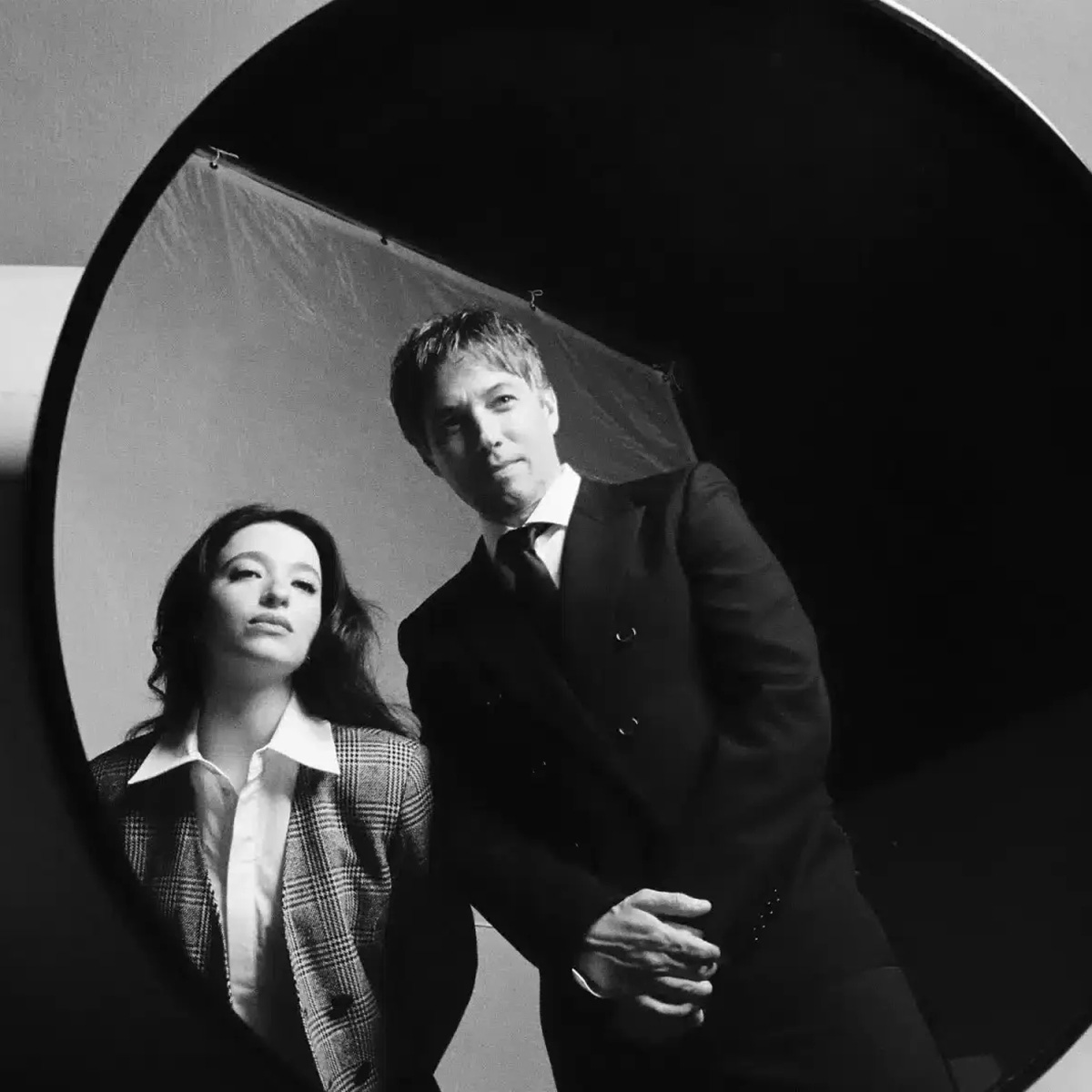

The British-born actress joins us in Los Angeles to discuss directing her first feature, writing stories off the beaten path, and how the power of saying no landed her a role in John Patton Ford’s How To Make a Killing.
From Game of Thrones and Iron Fist to The Matrix and Glass Onion, Jessica Henwick has spent much of the past decade scene-stealing across some of the biggest franchises in modern film and television. But away from the spectacle, she’s been steadily carving out a different lane—one defined less by scale and more by authorship.
The British-born actor, writer, and emerging director is currently in the process of financing her first feature film, a small independent project that, by her own admission, isn’t exactly the sort of script that tends to attract easy money. That tension, between the commercial machine she’s often worked inside and the stranger, more personal stories she wants to tell, sits at the centre of where Henwick finds herself now.
We joined Henwick in Los Angeles—where she’s promoting her new film, up-and-coming director John Patton Ford’s sophomore feature How To Make a Killing—to talk directing her upcoming first feature, writing stories off the beaten path, and how the power of saying no has defined her career thus far.
Luke Georgiades: Do you split your time between L.A. and London?
Jessica Henwick: I’m almost exclusively London but, you know, in this industry…yesterday I used the phrase “Man proposes, God disposes.” There’s literally no point in me making any hard and fast statements on that front. I’m here for a little bit of press. I’m trying to get some financing up and running on my directorial feature debut. It’s a small independent film, so I’m trying to see what avenues I have.
LG: What has that process been like for you?
JH: I finished the script in January, and I started sending it around. The response has been pretty incredible, but it’s a topic that isn’t super commercial. It’s edgy. The people and companies I’ve worked with who have read and loved it aren’t the companies that make these kinds of films. For me, it’s about trying to introduce myself to a much more independent crowd.
LG: You’ve been a part of so many big IP projects, do you find that goes a long way when you do want to pursue something a little more personal and intimate in scope?
JH: It helps, but I know that if I was turning in a script which was a family-friendly murder mystery I would be getting funding immediately. This is not the script that people thought I would turn in, especially considering how commercial my debut short Bus Girl was. A lot of people thought I would continue on that path. But even when I made Bus Girl, I remember thinking, should I be making this? Because it’s going to give people the wrong idea about the films that I’m interested in.
LG: What do you mean by that?
JH: Bus Girl is beautiful, but it is a very clean, easily digestible film. It’s not super challenging. I think that the stories I gravitate to as a storyteller are a little further off the beaten path.
LG: Is there a flip-side where this is an advantageous situation for you? Do you find it thrilling to surprise people?
JH: I love it. But it’s not how the industry works. They love to put you in a box. Once people have sampled you in some way, it’s a constant battle to keep people on their toes.
LG: I rewatched Bus Girl recently, which I think was a cool and pleasant surprise to a lot of your fans who had seen you in your franchise work. Have you had your eyes on that since the very beginning?
JH: I had wanted to direct for a long time, I had been writing professionally for a number of years and selling a lot of scripts that weren’t getting across the finish line with other directors involved. And I realised, okay, well, I love writing, but if I want to see it on screen I have to push myself. I probably should have made a short way before that, but I wanted it to be the right story. Then I realised that the search for perfection was crippling me and stopping me from doing anything, so when Xiaomi approached me about directing a film on one of their phones, I was able to narrow my focus down: it’s got to be a commercial story, it’s got to be accessible, it’s got to be under 15 minutes runtime. It all became very clear what I needed to do. I wrote Bus Girl in 20 minutes, and that’s what we shot.

Jessica Henwick in Los Angeles, 2026. Portrait by Luke Georgiades.
LG: Why did the writing come so easily?
JH: When I wrote it I didn’t think it was particularly personal. It was only while I was making it that I realised, oh, God, yes it is. Though the relationships that exist in the film don’t exist in my life, there are things in there that feel infused. The film industry and the food industry feel incredibly similar. A restaurant is a set. The kitchen staff are the crew. They’re selling a story. The lead character’s experience of that first day in the kitchen—and feeling both overwhelmed and like anything is possible, that this city is what she makes of it—is beat for beat how I felt my first day on a set at 16, after just moving to London.
LG: Do you find a lot of romance in London?
JH: London is so often shown to be grey, gritty, dirty, grimy, or there’s this other version that’s now being portrayed, which I also don’t recognise, which is the Gherkin, the glass skyscrapers, the glamour. For me, I wanted to portray something more hopeful, which is the word I would use to describe London in the Spring and the Summer. It’s the most hopeful place. There’s such electricity in the streets, and you never see that in film.
LG: How did that experience of being in the director’s chair change how you saw filmmaking going forward?
JH: The way I am on set now is a world away from how I was on set before. When I was just going to set as an actor, I felt a strong sense of ownership over the character. At times that would be difficult to navigate, especially when you’re working with a large IP when you have a panel of people making decisions and you’ve got your own ideas about what’s best for your character. I now know that the director is the only person that understands everything that is happening on set. It’s not like the director has become God to me, but I now defer to them as the final say on any decision. Before I would go and say, “I think it should be this”, but now I’m more likely to approach a director and ask them, “how do you see this scene playing out? What do you need from me to tell this story?” We are just the vessels for the director. It was a real identity shift.
LG: When did you fall in love with writing?
JH: I fell in love with writing before acting. When I was a kid I would write Harry Potter fan fiction, and then acting is just what took off first. But I always said I wanted to be a storyteller first and foremost. I came back to it as an adult as a response to the British industry, which was very minimising for my character type. I thought, I can complain about it or I can do something about it, so I started throwing all my energy into writing for women, ethnic minorities, women of a certain age—the stories which I felt weren’t being told.
LG: You quickly gained and have kept a steady momentum the whole way through your career so far, which is just over 15 years. What’s been the key to keeping that momentum in an industry like this?
JH: There’s a lot of power in saying no. It looks like I don’t, because I work so much, but the reality is that I’ve said no to a lot of things that other people have called me crazy for doing so, because on paper it’s guaranteed to be a hit and make me a lot of money. But my gut has never led me astray. It’s lame and freudian, but I think people know when they meet me that I’m never going to beg them for a project, and something about that makes them want me more. It’s not intentional, I’m not doing some sort of Jedi mind trick [laughs].
LG: Give me an example of that.
JH: With How to Make a Killing, I had a zoom with John Patton Ford, the director. The plan was that I would zoom him, and then there would be a chemistry read with Glen. During the call, we talked about life for an hour, then he said, “well, we should probably talk about the script”, and I went, “I just don’t know, dude, I don’t know if you’ve figured this character out” [laughs]. He was like, “really?”, and I said, “Yeah, I don’t know if she’s there yet, but I’m curious to see what you do with it.” It was my honest opinion, I wasn’t playing games. A week later, my agents reached out and said the chemistry read had been cancelled because they just wanted to offer me the role. That happens quite regularly. It seems manipulative, but it really isn’t. I’m really proud of where the character has ended up in the film.

“There’s a lot of power in saying no. It looks like I don’t say no, because I work so much, but the reality is that I’ve said no to a lot of things, and I’ve said no to a lot of things that other people have called me crazy for doing so, because on paper it’s guaranteed to be a hit and make me a lot of money. But my gut has never led me astray. It’s lame and freudian, but I think people know when they meet me that I’m never going to beg them for a project, and something about that makes them want me more. It’s not intentional, I’m not doing some sort of Jedi mind trick.”
Jessica Henwick
LG: How did you develop that self-assuredness?
JW: If I were in therapy right now, I would probably say I wanted it too bad when I was younger, and that scared people off. I started code-shifting as soon as I realised that. It’s a way of protecting yourself. If you reject them before they reject you then it won’t hurt when they turn you down. I remember when I got Game of Thrones, everyone was gassing me up. “That’s going to change your life, that’s so big.” Their comments were like water off a duck’s back. I refused to get excited, downplaying it so that anything that went well would be a pleasant surprise. I’m in a healthier place now where I can celebrate the wins and allow myself some excitement over my career.
LG: It’s rare that something that might begin as a destructive or defensive quality might turn into one of your greatest strengths.
JW: I know. But it’s sad that it’s so effective [laughs]. Like, wow, is it that simple? Do people just want what they can’t have?
LG: Tell me about finding your way into this role in How to Make a Killing. It’s quite cool that this is an up-and-coming director project, rather than the heavy IP work that you’ve been attached to in recent years.
JH: It’s similar to when I started writing. It’s a “put your money where your mouth is” mentality. For years I kept saying, oh, I never get to work on non-IP and independent projects. I want to work with women, women of colour, up and coming filmmakers. So it has been a conscious effort. John Patton Ford is so talented. I knew I’d be lucky to work with him. I did a film called The Roots Maneuvre by Raine Allen-Miller. This is her second film. She’s brilliant. Then I have a feature debut, with Jonathan Schey, called Everybody Wants to Fuck Me. The title’s going to change, but it’s going to be phenomenal.
LG: Was film a major part of your upbringing?
JH: It was very precious, because we weren’t flushed with cash growing up. I didn’t go to the cinema because it was too expensive, and we would get one VHS tape every couple of months, so it had to be the perfect choice. We would go to the supermarket and I would fawn over the blurbs and the special features in the video section because I knew that when the time came that my mum would let me buy one, I needed to be ready. My favourite film as a child was Labyrinth, the Jim Henson film. I hear they’re trying to remake it. Please don’t. Who could replace David Bowie? No one. But you know who they’d give it to? They’d give it to Timothée Chalamet. Then the Opera community would be up in arms [laughs].
LG: What triggers the creative bone in your body? To act is one thing, but, on top of that, to try your hand at directing and screenwriting suggests that you’re ultimately looking to be the architect of something bigger.
JH: My natural inclination is to live inside my brain. I always have a constant secondary dialogue with myself. Even as I’m doing this interview, there’s other shit going on in my brain. It’s annoying and I have to turn it off very consciously. But it allowed me to live in my own imagination—to immerse myself in world building from a young age. My mum tried grounding me once, she sent me to my room. An hour passed and she was like, she’s not crying? It doesn’t sound like she’s being punished? And she opened my door and I was there on the bed, kicking my feet with my book. It was ineffective. I loved being on my own, because I had the space to imagine. I would spend weeks revisiting memory palaces, fleshing out stories I was writing in my head. I can still remember the worlds that I built as a child.
LG: Are your parents creative?
JH: My mum is a very creative person. Her outlets are very organic to her. She paints. She makes art with strange things that she’s found. She’s always crafting, very much a visionary. My dad, growing up, had a real right brain job, but I always knew he would be a writer one day. He had that capability to create worlds inside him. When he retired, he started writing books. He’s an author now. When his dad died, he found a manuscript that his mum had written, unpublished. He posthumously published it for her. So, I’m actually three generations deep in writers. It’s in the blood.
How to Make a Killing is out now.