

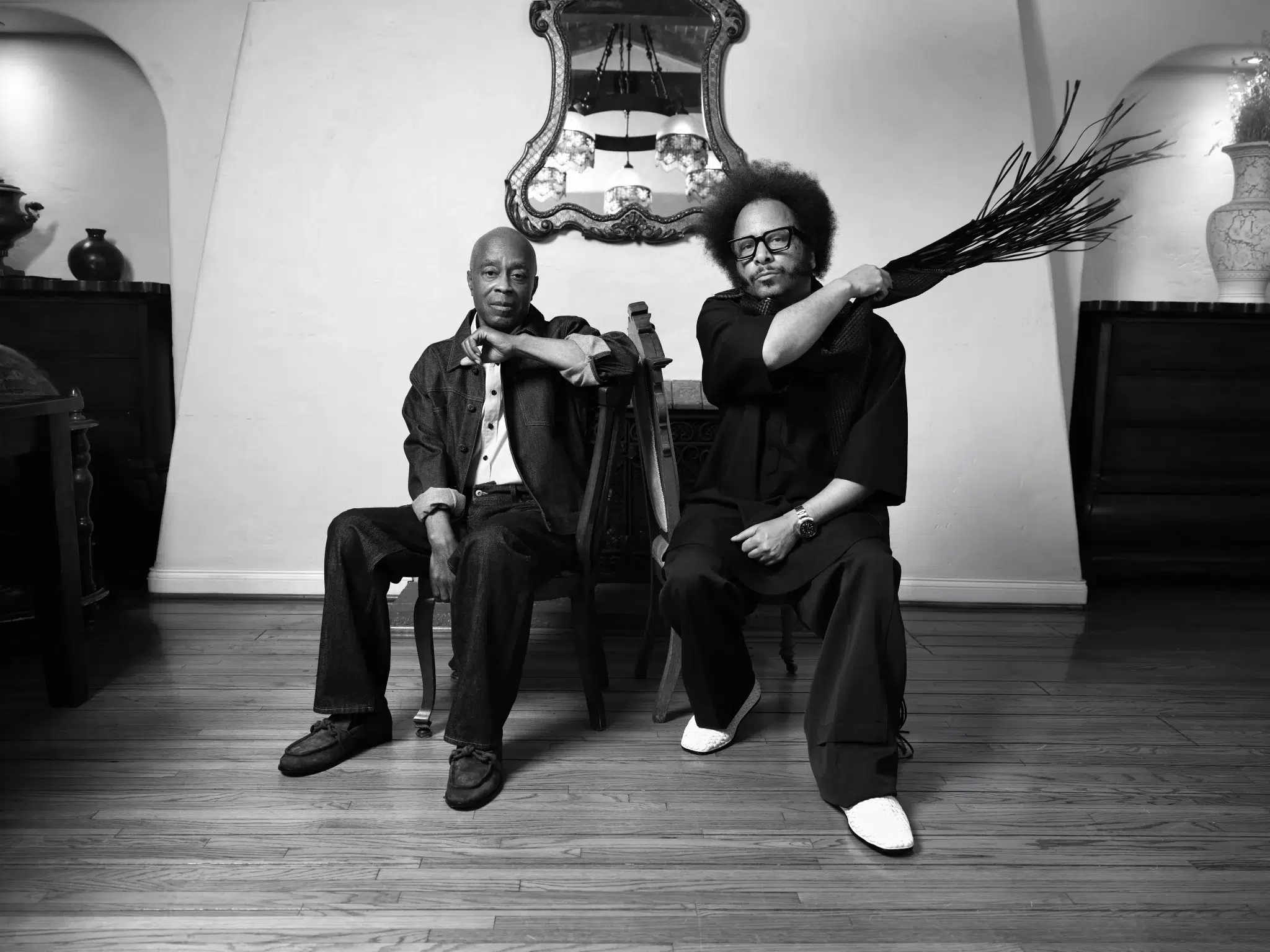
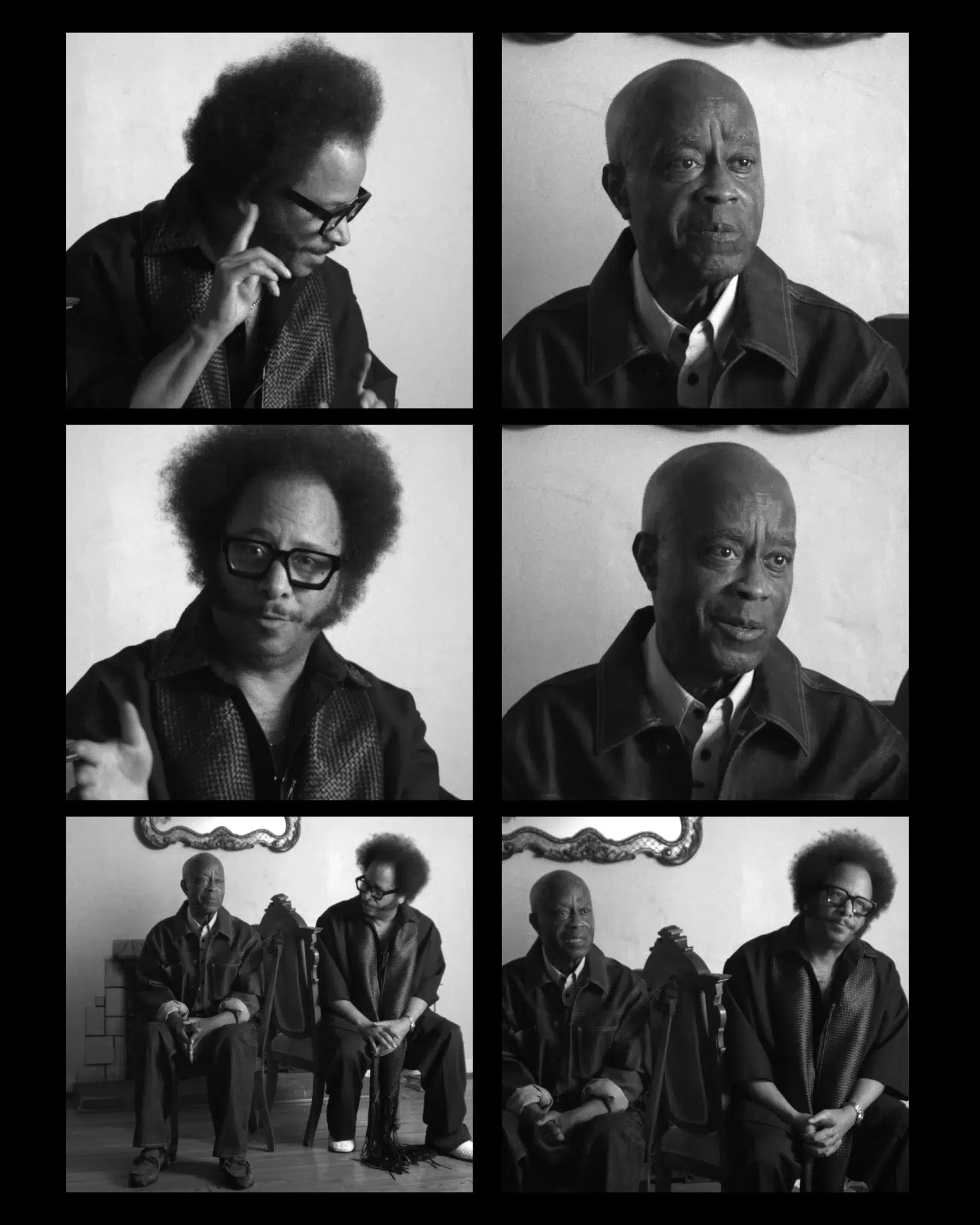
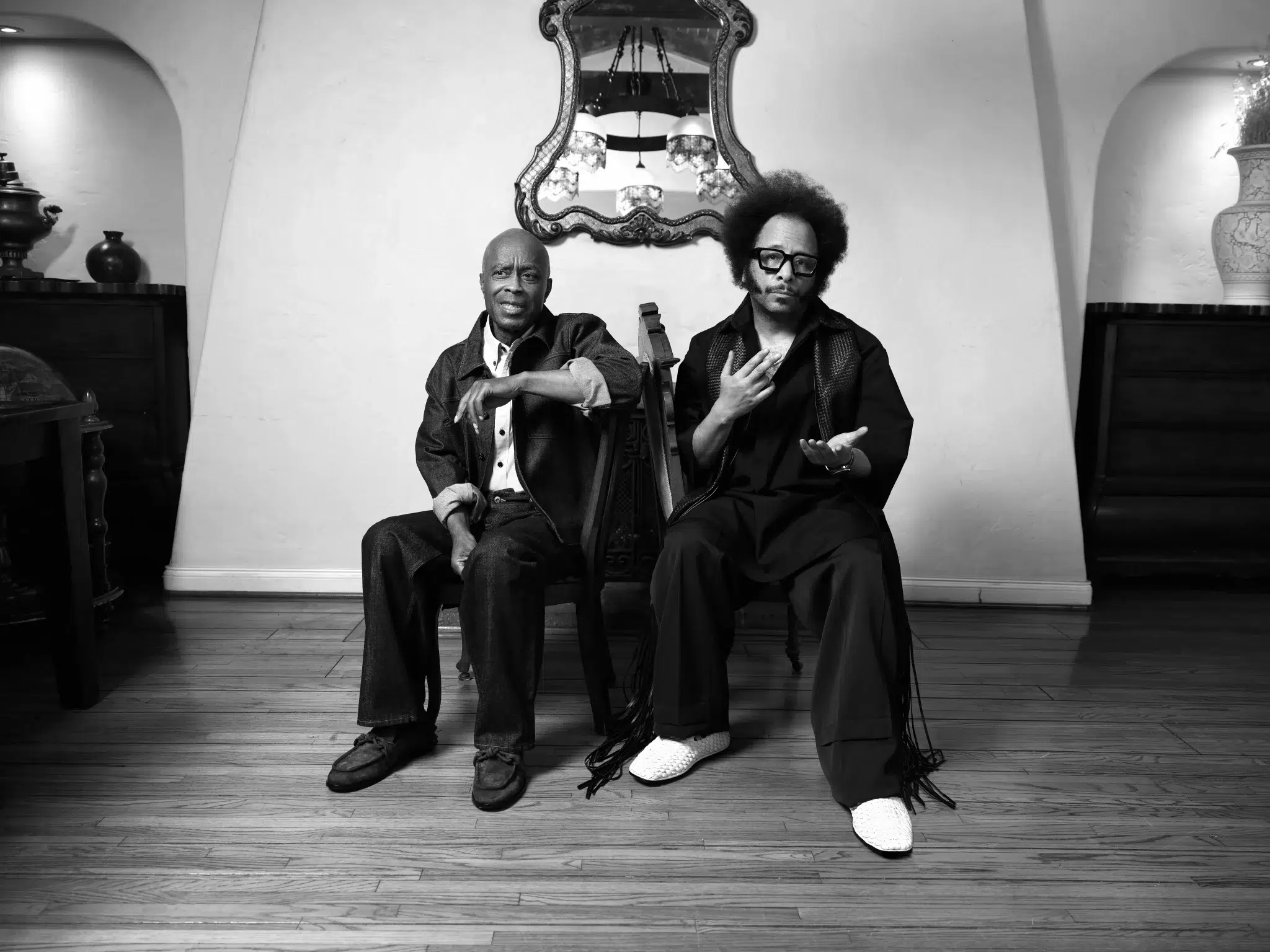
Two maestros of Black American cinema come together for the first time in a thrilling conversation on artistic spirit, moderated by creator and curator of the Black Film Archive Maya S. Cade.
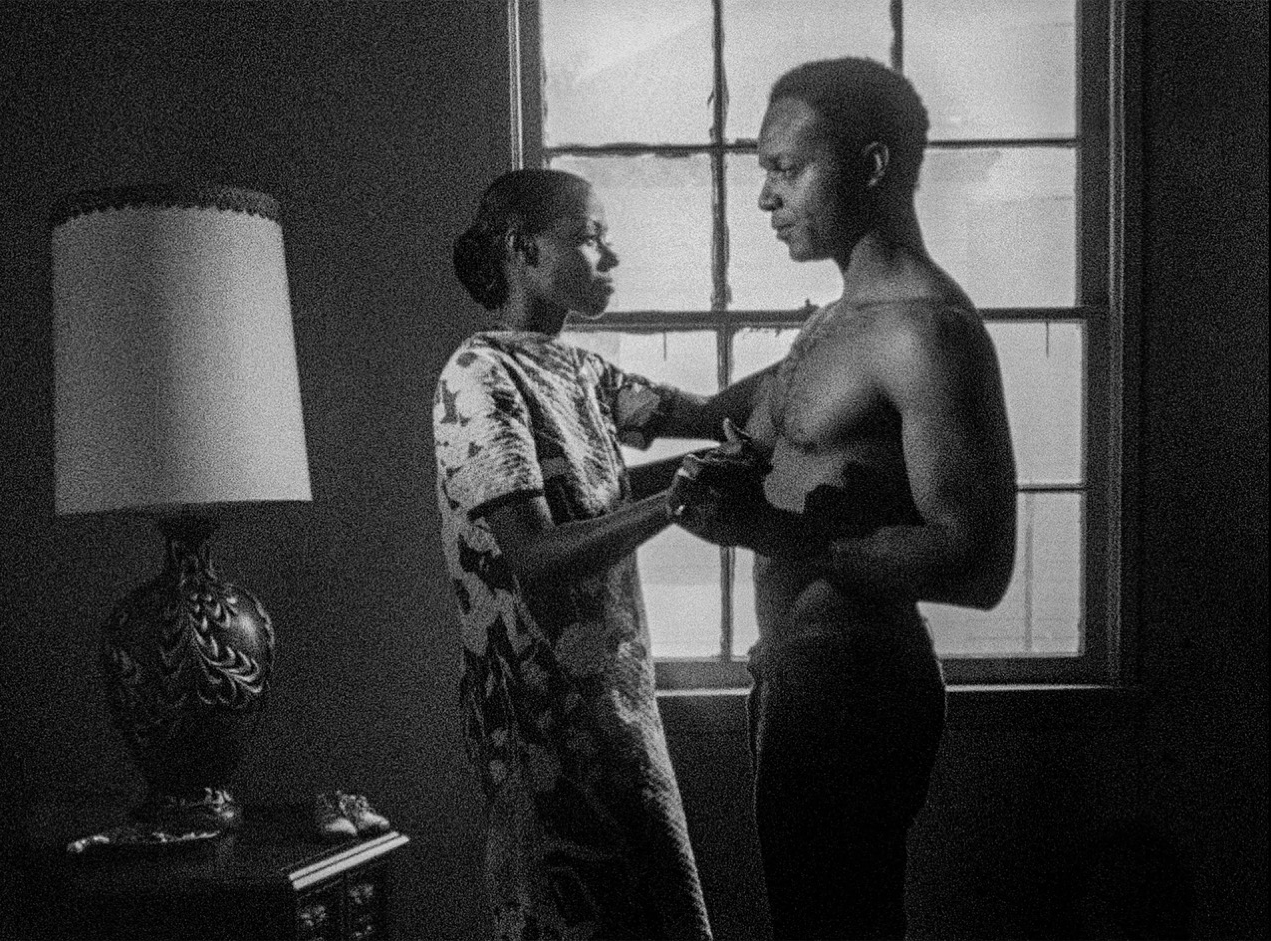
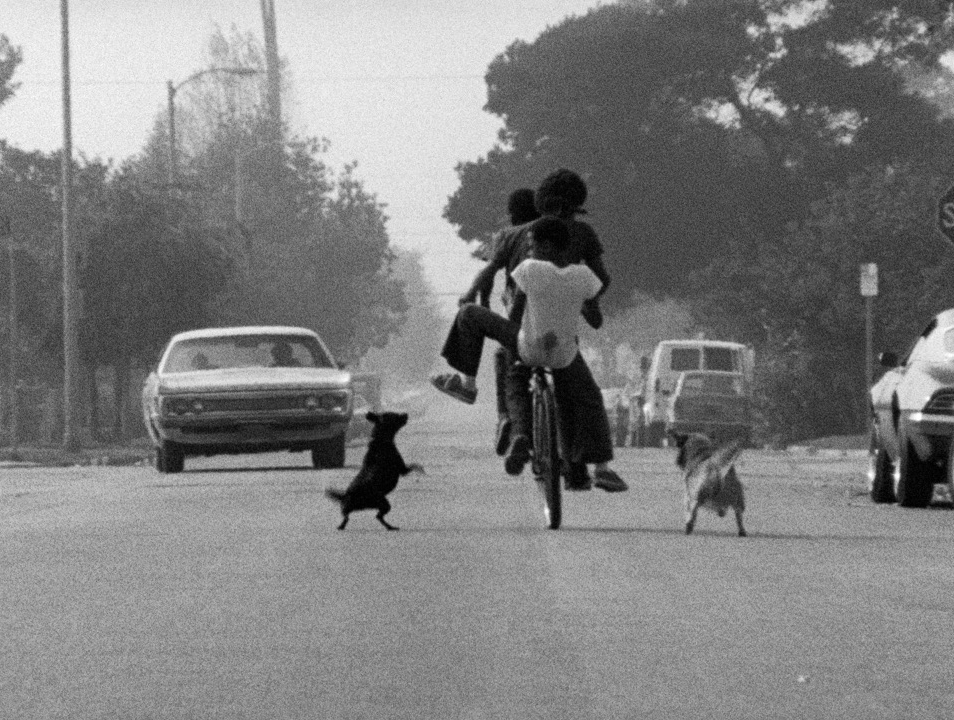
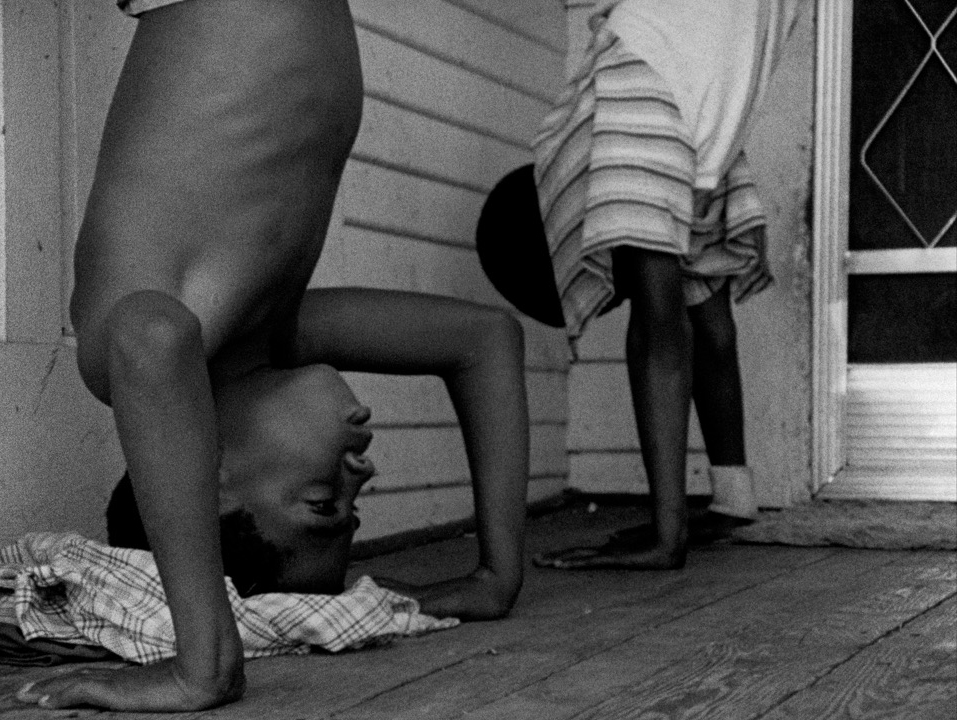
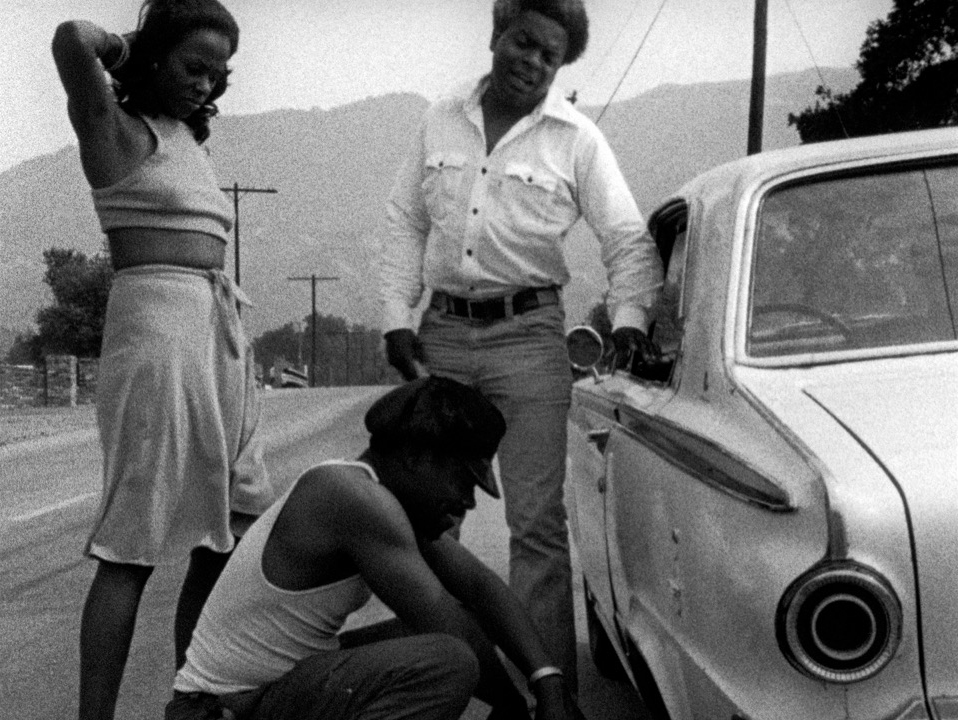
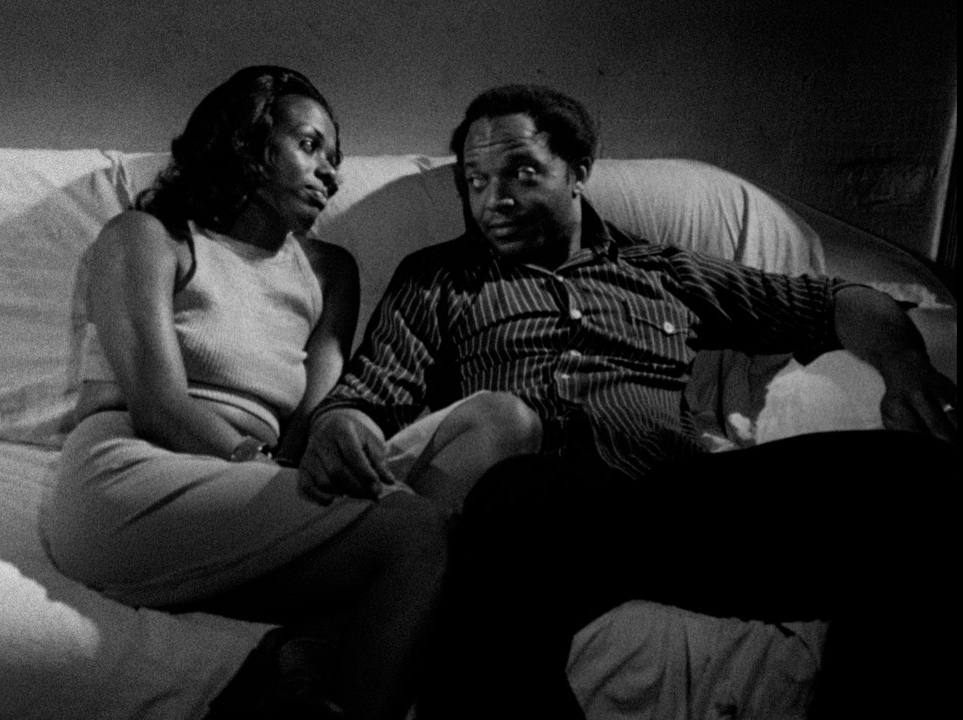
Aesthetic control of our image has been a foundational block of Black artistic creation since its genesis. Cinema’s power—especially in the hands of generational, award-winning filmmakers Charles Burnett and Boots Riley—is to use the camera as a weapon that renders a regenerative and interconnected fullness of Black imagery and humanity. The pioneering artists, aged 81 and 54 respectively, have created world-class artistic engines, Killer of Sheep (1978) and Sorry to Bother You (2018), which have cross-generationally reframed Black cinematic possibilities and independent filmmaking entirely.
The vitality of their artistic vision negates the expectations that Black artists must make peace with mediocrity or cheaply packaged sentiments. At the time of the interview, the two artists were preparing for monumental feats in their own life: I Love Boosters (2026), Riley’s cinematic follow up to Sorry to Bother You, will soon premiere at South by Southwest, while Burnett was heading to Berlin as a new restoration of My Brother’s Wedding (1983) has its world premiere at Berlinale. In conversation together for the first time, Burnett and Riley share how their upbringings inform their artistic spirit and how each person can harness the spirit for themselves.
As a chronicler of Black cinema, I cannot think of any conversation more urgent.
Maya Cade: Both of you did a lot of different kinds of work before filmmaking. What were some of your early jobs, and how did they shape your artistic vision?
Boots Riley: Man, I’ve had a lot of jobs. I delivered newspapers on my bike. I washed dishes at a Mexican restaurant called Taco Via. I passed out flyers for a pizza place. I worked retail at a spot called World of Pants. I was a cashier at Blondie’s Pizza. I built redwood decks. I did door‑to‑door sales, telephone sales. I printed text on prom champagne glasses. I worked at UPS. All of that did two big things for me. First, it gave me a drive. Once you’ve had a job like UPS, loading boxes, getting beat up every day on the line, it sets a baseline. Whatever happens in art—the stress, the setbacks—it rarely gets worse than being on that conveyor belt at 3 a.m. So when things get “bad” in filmmaking, I still know: it’s not UPS‑bad.
Second, it shaped how I relate to risk. As an adult, I’ve lived whole stretches of my life without having my finances fully together. I’ve already been broke, already squatting in a house, and I survived that. So I don’t have the same fear a lot of people do of, “What if this doesn’t work and I lose everything?” That affects how I create. I don’t move from the safe choice. I don’t think, “What’s going to protect my career?” I think, “What actually matters for this story? What’s the thing that could move people?” That’s true in my music and my films. I’m not trying to secure some comfortable middle ground—I’m trying to make the thing that feels necessary. The fear of the bottom doesn’t control me, because I’ve already been there.
Charles Burnett: I did a little bit of everything. I threw papers, shined shoes, and worked at a car wash. One of the more unusual things I did was placing bets at the racetrack for some of the men at the car wash. I had these big gaps of time because the guys had to stay at the lot with the cars, so I’d go down to Hollywood Park and place bets for them. They’d play things like Pick Six or Pick Nine. What I learned fast was that if you’re the one placing the bet, you never tell people what to bet on. You take the money, place exactly what they say, and bring the ticket back. Because if they lose, they’ll always blame you. I was just the messenger, but in their mind I was responsible.
What I took from all those spaces—the car wash, the betting windows, the track—was the humour and irony of how people behave under pressure. Working‑class folks just getting by for almost nothing, always with some scheme, some story, some tragedy. I’d watch the players at the track—their rituals, their superstition. There was a jockey named Toro, and one guy just walked up and down the rail cursing him, saying, “Don’t bet on that jockey.” The race starts, and Toro goes wire‑to‑wire and wins.
I loved going early in the morning to the track. Los Angeles fog would cover everything. You couldn’t see the horses, but you could hear them running—hooves pounding, breathing in the mist. Very atmospheric, very cinematic. That sound out of the fog made a strong impression on me. All of that gets inside you. You don’t always know exactly how it emerges in your work, but the rhythms, the humour, the double consciousness of people, the way they talk and scheme and dream—that goes straight into the characters and situations you create.
MC: You’ve both made landmark works of cinema, Killer of Sheep and Sorry to Bother You. Boots, how does it feel stepping into your second feature after such a widely celebrated debut?
BR: For me, it’s a little complicated because I’m a Virgo (2023) came in between. It’s not a feature, technically, but we shot and structured it in a way that felt like making a long film. It gave me the space to test ideas—especially with practical visual effects—that fed directly into I Love Boosters. So in my head it feels like I’m on my third big project, even though it’s my second feature. I’ll say this: Sorry to Bother You cost around $4 million and it did really well. That helped. When your first film makes a lot of money, you can walk into a room and say, “I’m one for one, let’s go,” and people listen differently. The question becomes less “Can he do it?” and more “What’s the budget?” At the same time, there’s pressure. People have expectations. They want to know if this one confirms that first film, or if you’re going to fall off. The fortunate thing is I’m not walking into this feeling shaky about the work. I honestly feel like I Love Boosters is my best work so far, better than Sorry to Bother You. If I didn’t feel that way, the pressure might crush me. So yeah, there’s weight. But I feel like I have the goods.
MC: Charles, you had something similar with Killer of Sheep and then My Brother’s Wedding. What does it mean now for you to bring that second feature to the 2026 Berlin Film Festival Forum for its restoration premiere?
CB: Killer of Sheep went to Berlin [in 1981] and won the critics’ prize. I didn’t expect that at all. You make something in your community on a small scale, and suddenly it’s playing in Europe with all these other films. That changes your sense of what’s possible. When My Brother’s Wedding heads to Berlin, it feels like a kind of conversation across time. You’re revisiting work you made earlier, correcting, restoring, reshaping it, while also trying to make new films. So there’s this dual motion—looking back and moving forwards.
What Berlin and the success of Killer of Sheep, really gave me was proof. In this industry, people are constantly telling you, “You can’t make this movie without me. You don’t know what you’re doing. We have to save your film.” You see it on set—producers or executives wanting to “fix” things, to put their stamp on your work, because they don’t believe your instincts.
I remember working with Weinstein’s company on The Glass Shield (1994). His assistant wanted to direct, and she had far less experience than anyone else there, but there was this sense from her that she knew better, that she should be shaping the film. At a certain point I had to say, “She has to leave the set. She’s not the director.” Once you’ve made a film that travels the world and holds up next to work by people with far more resources and experience, no one can convince you anymore that you can’t make a film. They can make your life difficult, they can block you from funding or distribution, but internally you’ve already settled something. You know you can do the work.
MS: It is often said, when two Black filmmakers get together, that the most radical thing a Black filmmaker can do is make a second film. Can you tell me how the labour of filmmaking changed from one film to the next?
BR: I started shooting Sorry to Bother You in 2017. In some ways, the basic labour of making films hasn’t changed—it’s still long days, a lot of coordination, a lot of problem‑solving. What really changed for me wasn’t time, but where and how we worked. Sorry to Bother You was all shot in Oakland. Those are my people, my streets. When you need extras, you’re calling your friends. You can talk to everyone directly—“You stand here, react like this”—because they’re not strangers. There’s a communal feel. You can get locations for free or cheap because folks are just excited there’s a movie being shot, and because they know you. With I’m a Virgo, we shot mainly in New Orleans and Oakland. With SAG rules, if these extras aren’t your friends, you can’t just go over and work with them however you want. You’re dealing with a more formal chain of communication. Also, we had different incentives and rebates. At one point on a project we had the California rebate, but we lost it because it took too long to get everything in place. All of that affects where and how you can shoot, which affects the everyday labour. And then there’s the timeline. It can look from the outside like, “You made one feature, disappeared for almost a decade, and now here’s another.” But from my side, it doesn’t feel like that. After Sorry to Bother You came out, I toured with it for almost six months into 2019. That’s labour—constant travel, screenings, Q&As. Then I’m prepping and shooting I’m a Virgo like a three‑and‑a‑half‑hour movie, not as little separate episodes. Then before that’s even out, I’m pushing to get I Love Boosters set up. So when you say, “It’s been almost 10 years between your first and second features,” I don’t really experience it that way. It feels more like one long, stretched production process with barely any breaks.
Q: Charles, what do you feel is your commitment to your audience as a filmmaker?
CB: Our job [is] to do something to encourage people to make films that really express who we are as people… We [are] responsible for the generation following us, how they get to respond, and so that’s what I did.
Q: Both of you make work that’s explicitly political, and explicitly about working‑class Black life. Boots, do you think audiences are ready for the kind of leftist, solution‑oriented art you’re presenting to them?
BR: I think they’ve been more ready than the media wants us to believe. When I was in high school in the 1980s, they got on the PA system and called me a communist. That didn’t make people afraid of me. It made a lot of them think, “Oh, the government doesn’t like this dude—that must be cool.” That was the “me” decade, supposedly apolitical, but that was my experience. Then after 9/11, my band had an album with the Twin Towers blowing up on the cover—which we’d done before the attacks. Afterward, we were on MTV‑sponsored tours, on Fox News, all that. My bandmates thought I was going to get shot if we went through the Midwest and the South, especially because I was stopping shows to speak openly against the bombing of Afghanistan. Not Iraq—Afghanistan, right after 9/11. Everywhere we went—Montana, Michigan, Florida, Texas—I’d stop the music, say my piece, and get thunderous applause. So much of the job with being in the media is to make you think you’re the most left person in any room, that everyone else is more conservative than you. But that’s not what I was feeling on the ground. Then you had Occupy, which was very radical in its language and its targets, happening in pretty much every town. You look at how people responded to Sorry to Bother You: the thing folks had trouble with wasn’t the politics—it was the horse dicks. That’s what got people. I heard story after story: “My Republican parents loved it.” Later, during the 2020 strikes and other workplace actions, I was getting dozens of messages from organisers saying, “We were trying to convince people that a strike was possible. It wasn’t landing. Then we screened Sorry to Bother You and that flipped the switch.” Workers would be texting, “Equi‑Sapiens, let’s be out,” and using the film as a reference point for real‑world action.
So for me, the question isn’t “Is the public ready?” I start from: the public already knows things are messed up. The public is more open than we’re told. The question I ask myself is: how do I move people emotionally towards imagining something they can do? Not “the” solution, but a solution—something that shifts them from “It’s all hopeless” to “Maybe we can try this.” That’s what I’m after.

“I don’t have a neat slogan or a blueprint for the next generation of black filmmakers. What I hope is that they make films that help their audiences understand who we are as people, as a community—and what we’ve been through. And that they don’t forget it.”
Charles Burnett


MS: Charles, what kinds of work do you hope the next generation of Black filmmakers create?
CB: I don’t have a neat slogan or a blueprint for them. What I hope is that they make films that help their audiences understand who we are—as people, as a community —and what we’ve been through. And that they don’t forget it. We have to be engaged. So many young people are sacrificed—to poverty, to violence, to neglect, to systems that don’t care whether they live or die. I remember when Emmett Till was killed. That was the end of my childhood innocence. That one image, his mother insisting people see what was done to him, travels across time. You see echoes of it in images that come later.
It’s hard to comprehend how cruel people will be, especially once you have children of your own. That’s where it stops you. When I was growing up, older men would tell you, “Stay in school,” but behind that was a sense of: here’s what’s important, here’s what’s at stake. I’d like to see filmmakers who carry that kind of responsibility, not in a didactic way, but as a deep awareness. Cinema is powerful. We’ve seen how a single image can transform how people see themselves and their history. I hope younger filmmakers use that power to engage, to challenge, to remember, and to care for the people who are most at risk of being forgotten.
MS: Boots, how are you feeling about the state of independent filmmaking as I Love Boosters heads to the world premiere at South by Southwest?
BR: Mostly I feel like I better finish [the film]. Beyond that, I’m excited because it feels like we’re at a moment where the infrastructure of cinema could change. I think we need a wave of micro‑cinemas: storefront theatres, maybe 30 seats, good projector, solid sound, in neighbourhoods. If you had, say, 100–200 of those loosely networked across the country, that’s a distribution channel. You could show older work, new independent films, politically engaged stuff, experimental pieces. You could pull from streaming between events, sure, but the point would be community—people gathering physically to watch and discuss. If you got up to 300, you’d have something that could reach a lot of people without going through the major chains or relying solely on the platforms. Not to be “competitive” in a corporate sense, but to be independent, self‑reliant. I think these places could double as community centres—meetings, organising, mutual aid, all of that. And they’d be a natural home for films like I Love Boosters and for the kind of Black cinema Charles and I are talking about—work that doesn’t always fit neatly into the existing market logic. So as the film rolls out, I’m not just thinking, “Will people like this?” I’m thinking, “Can this be part of building that kind of ecosystem?” That’s the future of cinema I’m interested in.
Shoot Credits
Creative Director: Fatima Khan
Photographer: Maddy Rotman
Production Director: Anna Pierce
DP & Editor: Bobby Pavlovsky
Video Producer: Luke Georgiades
Production Designer: Alice Jacobs
1st Assistant: Walker Lewis
Creative Assistant: Kitty Spicer
Stylist: Alexander Roth at Talome Agency
Stylist Assistant: Jessie May
Post Production: Alena Zolotnikova
Cover Title Treatment & Art Direction: Broad Peak Studio
Special Thanks: Bottega Veneta, Maya Cade
Full look by Bottega Veneta Summer 2026.