

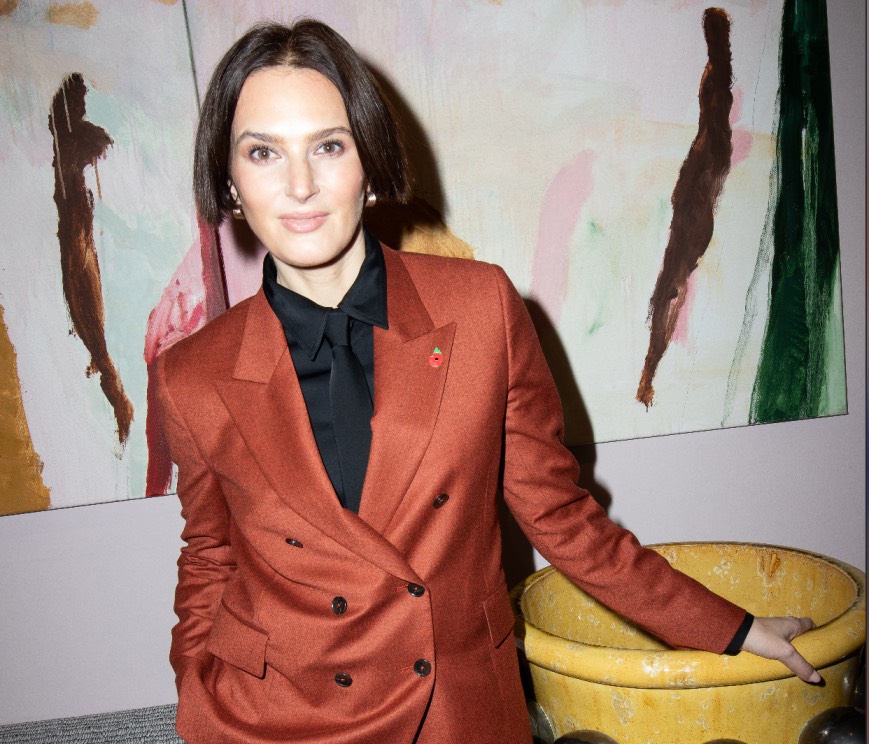
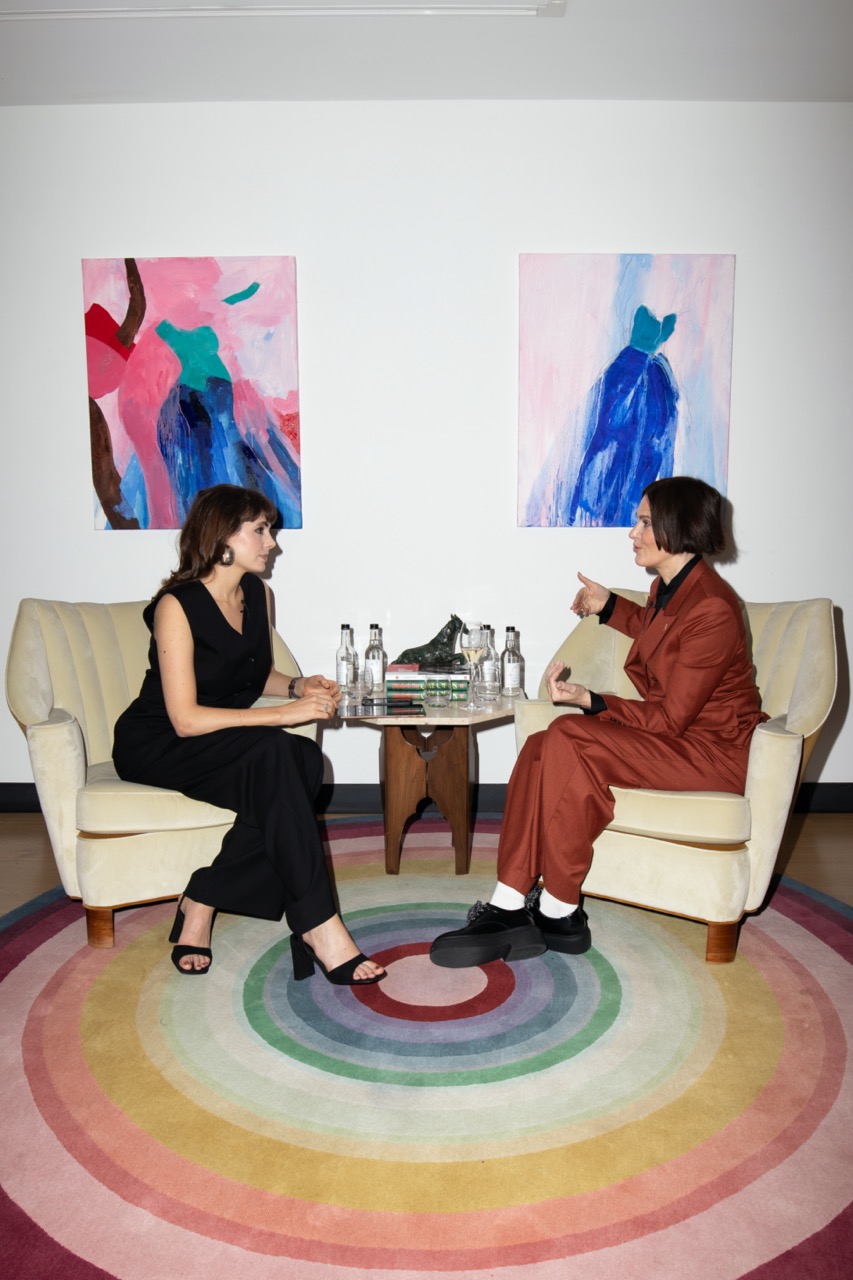
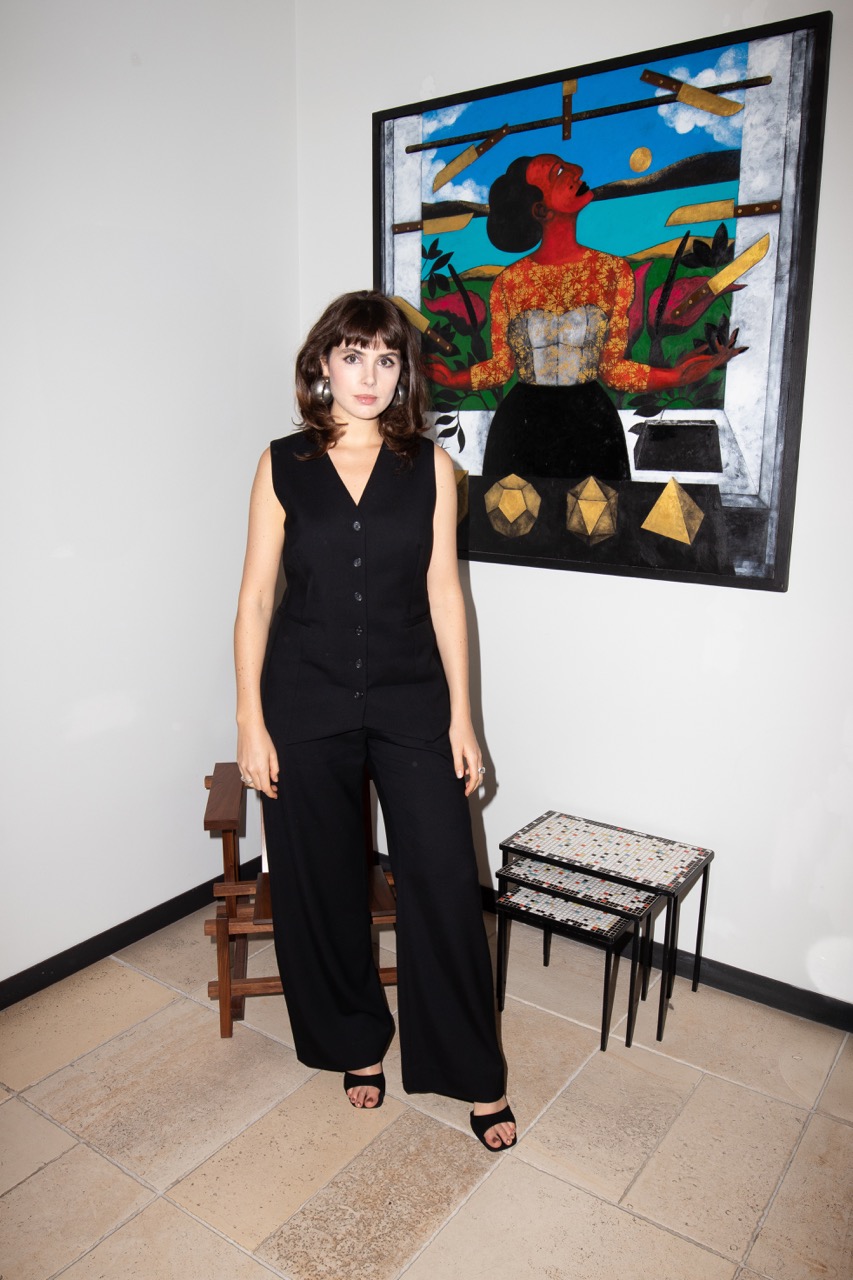
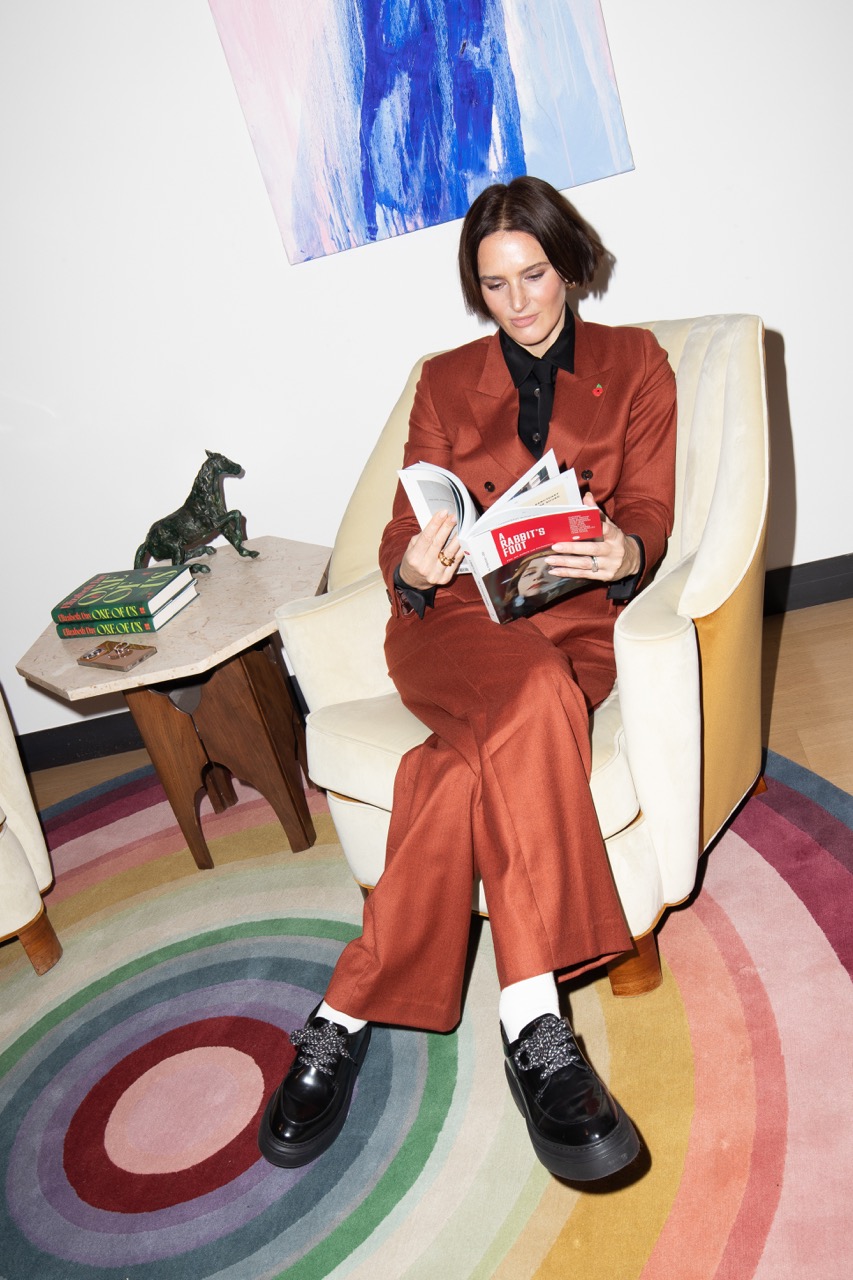
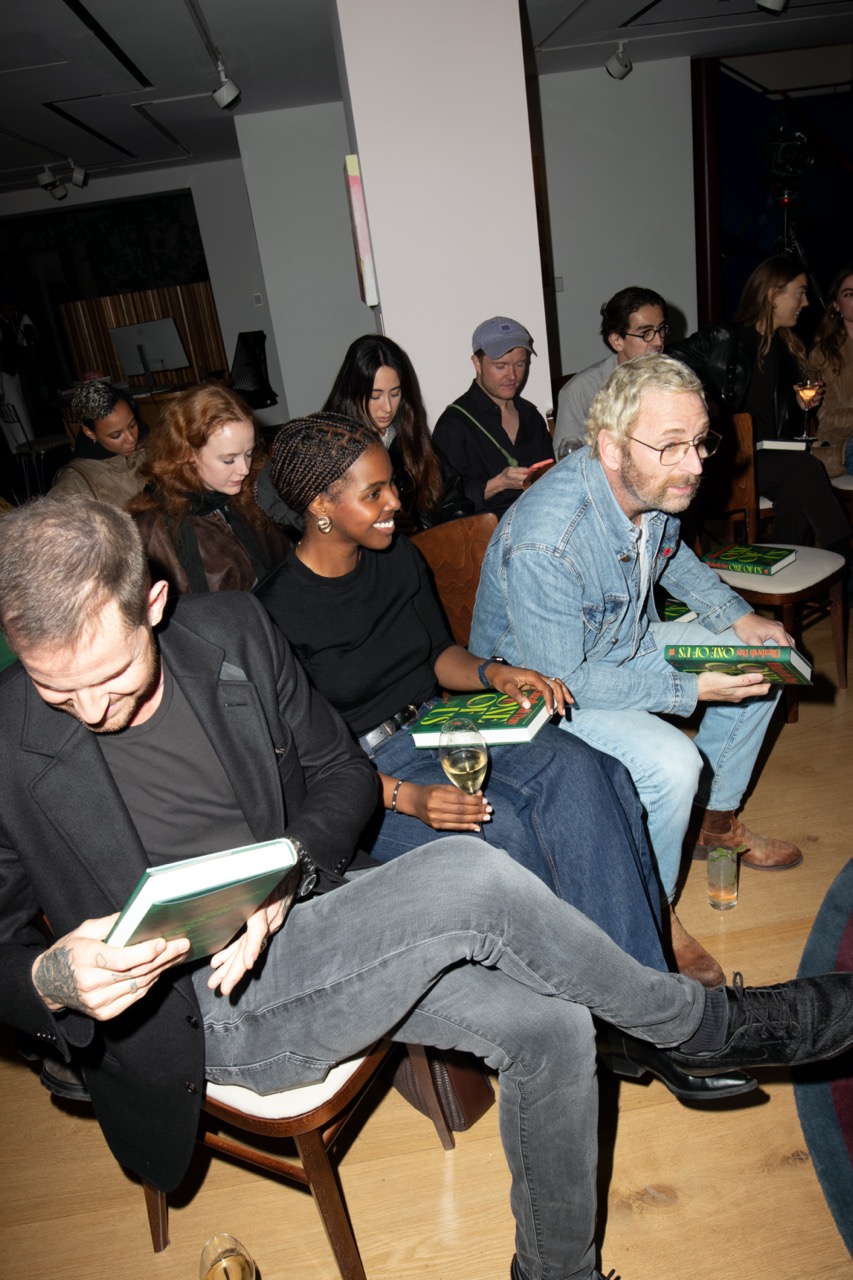
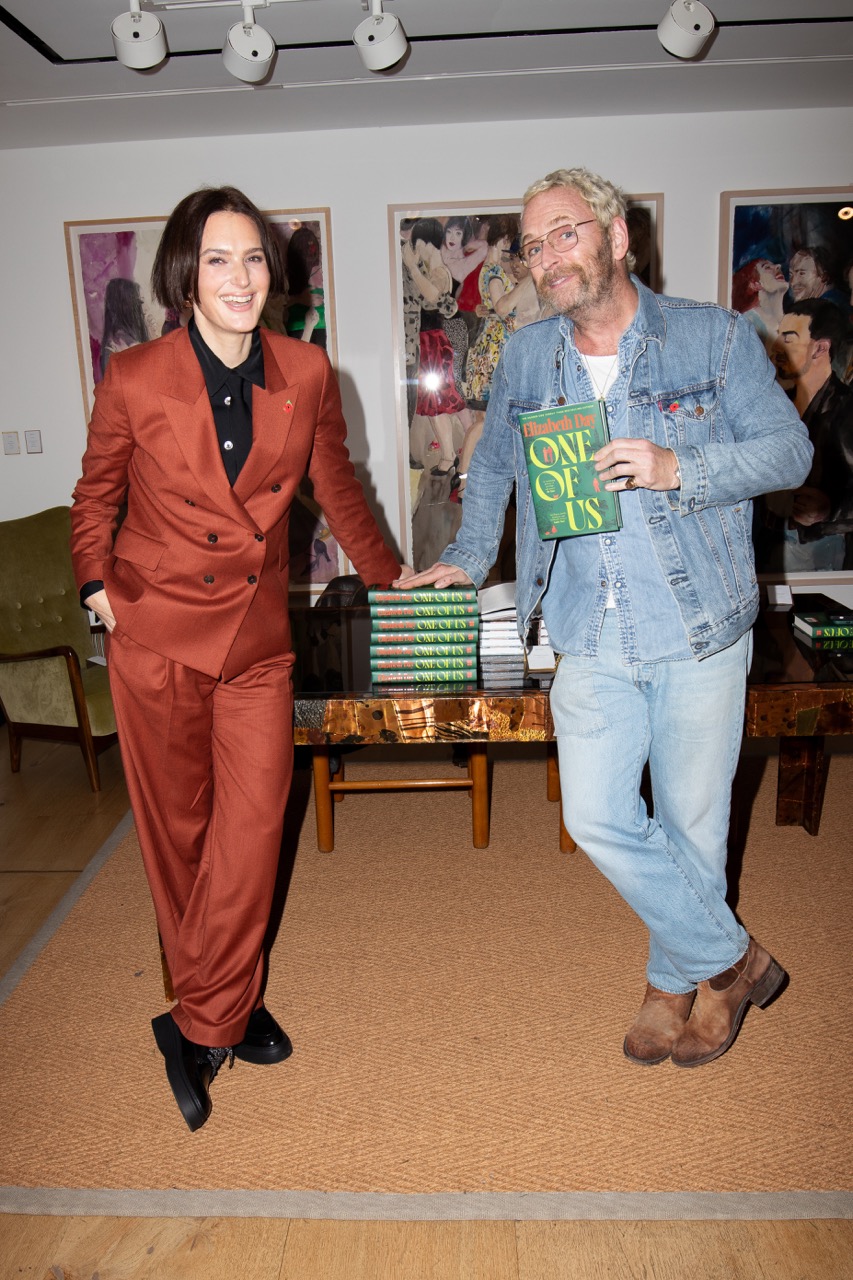
The podcast host and author Elizabeth Day (kitted out in her signature Failure/Success socks) sat down for a candid and laughter-filled discussion at Paul Smith’s Mayfair boutique. Photography by Charlie Pike.
Elizabeth Day is a journalist, novelist, broadcaster and podcast host. After growing up in Northern Ireland, she went on to read History at Queen’s College, Cambridge where she graduated with a Double First. Her debut novel Scissors, Paper, Stone won a Betty Trask Award in 2011 and to date, she has written 10 books, several of which have been Sunday Times Bestsellers.
With a very successful career, beauty and brains, Elizabeth Day is the woman who appears to have it all. But in 2018 she launched a podcast called How to Fail, where she interviews public figures, actors, artists and writers on how their failures have made them stronger. It became a chart-topper. Since then, she has interviewed over 400 A-listers from Pamela Anderson to Yuval Noah Harari.
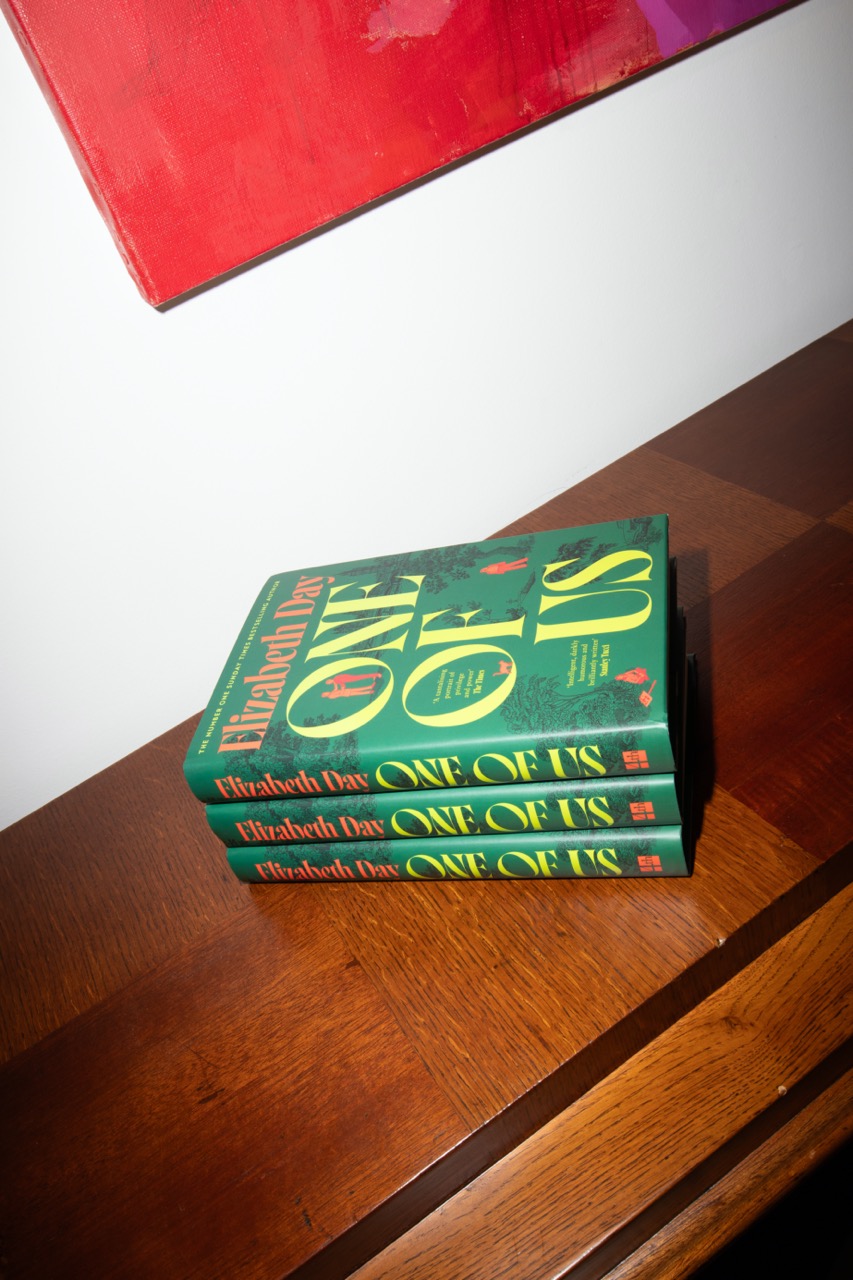
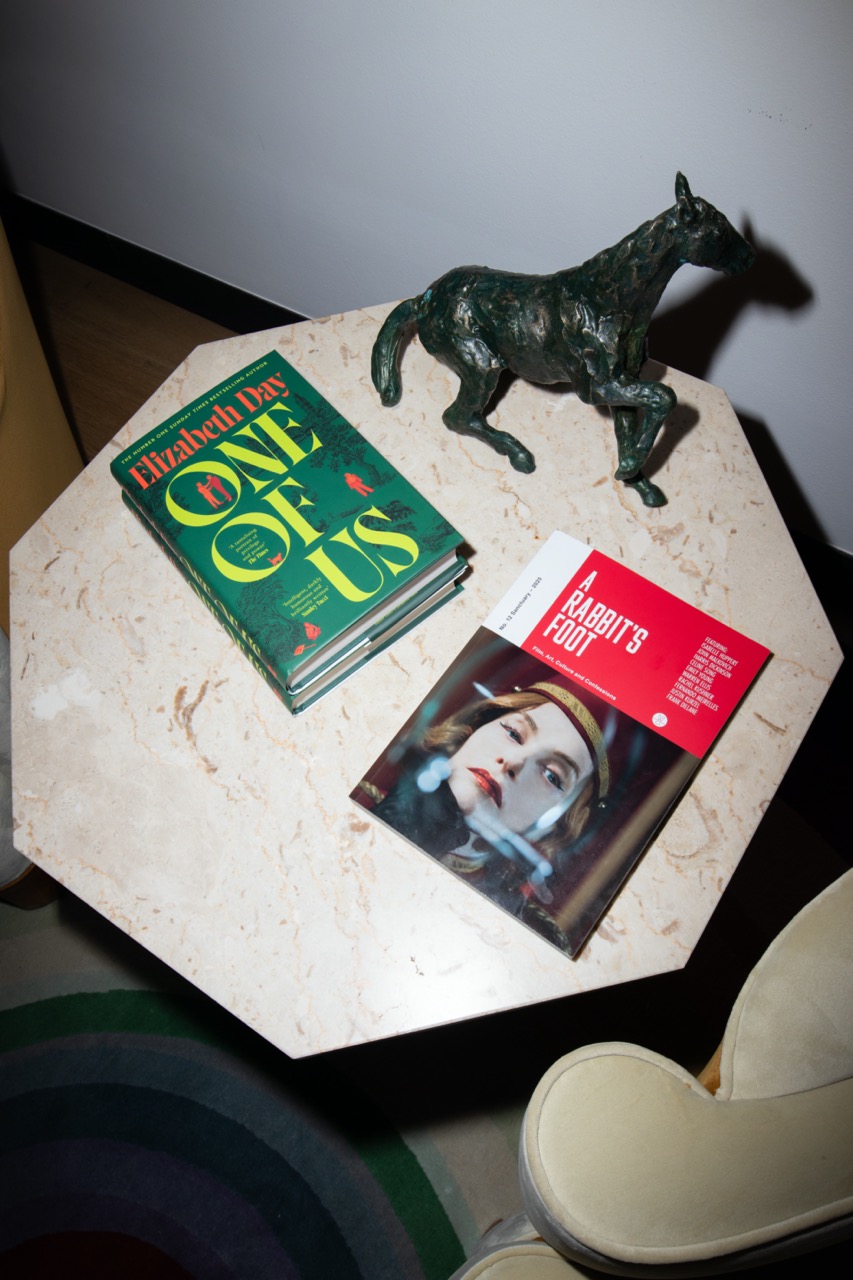
It’s been a busy autumn for Day: filming of The Party TV adaptation kicked off, the launch of her imprint Big Day and publication of her 6th novel, One of Us: a state of the nation political thriller.
GG: Your career as a writer feels inevitable. Is it true you learned how to read and write at the age of four?
ED: It sounds terribly precocious but my mother taught me to read and write before I went to school. Both of my parents are inveterate readers. Aged four, I knew I wanted to write books.
GG: You grew up in Northern Ireland?
ED: Yes and going to secondary school in Belfast in the early 1990s wasn’t a great time to have an English accent. I was bullied and left halfway through the year. I was ahead of myself academically so I thought ‘yay, six months of watching Neighbours!’ but my parents had other ideas. Aged 12, I was packed off to Novgorod to learn Russian. Books, Agatha Christie to be exact, saw me through. I used to mark each Agatha Christie out of 10 and give it a mini review. I admired their construction and deft characterisation.
GG: The idea of ‘the outsider’ is a theme both in your own life and in your latest novel One of Us…
ED: It sounds absurd me sitting here as a privileged, white, middle-class woman to say I felt like an outsider but contextually in Northern Ireland I never fitted in. I then won a scholarship to a boarding school in England and I was accepted because of my accent but I was new to England and its rules. All of that feeling went into the character of Martin Gilmour, who is really the main protagonist of One of Us.
GG: One of Us is the sequel to The Party. Can you explain the premise?
ED: The Party follows Martin as he goes to school and becomes obsessed with his aristo friend Ben Fitzmaurice and inveigles his way into his family. Something happens and Martin is left hell-bent on revenge. One of Us picks up 7 years on. Ben is on course to become the next Tory PM and Martin wants to bring him down.
GG: One of Us has five narrative perspectives. You have called this ‘polyphonic’. What inspired that?
ED: I am hugely inspired by cinema. Robert Altman’s Short Cuts [a 1993 adaptation of Raymond Carver’s short stories] weaves multi-narrative strands together. I love how they intersect unexpectedly.
GG: The characters in One of Us are: Martin, Serena, Cosima, Richard and Fliss…
ED: Yes, and the audiobook has five actors: Richard Armitage [Martin], Emilia Fox [Serena], Bella Maclean [Cosima], Oliver Chris and you, Genevieve Gaunt as Fliss!
GG: That was an exciting audiobook offer to receive… Where did the idea for the book come from?
ED: I was offered a free Austrian wellness clinic for a ‘yay, spa break!’ holiday. It turned out to be more of a ‘chew on a buckwheat cracker 15 times before swallowing kind of spa break’. No talking or phones or reading during meals. So I would sit there, chewing, staring out at a stunning Austrian lake. I started thinking about the plot of One of Us. By the end of a week I knew, more or less, what was going to happen to each character.
GG: You’ve been on an extensive press tour with the book. And you’ve worn some fabulous outfits… Do you work with a stylist?
ED: I work with the wonderful Annie Swain. Some people think that clothing is trivial. It’s anything but. Clothing changes the way you present yourself to the world. My stylist and I working on looks feels like therapy through clothes.
GG: There’s a moment in One of Us where Serena tries to put Fliss in a gold brocade trouser suit…
ED: ‘When Fliss examined herself in the mirror, she thought she looked like a doomed Eastern European dictator’.
GG: That line made me laugh out loud. You’ve actually designed clothes, right?
ED: Yes! I worked with a professional designer for the clothing brand called ALIGNE, run by women, for women. It was one of the most creatively satisfying moments of my life. And every single item I designed has pockets.
Speaking of pockets, can we talk about Paul Smith? This is such a beautiful moment for me. Paul Smith was the first ever designer to dress me for my How to Fail live shows in 2019. Paul Smith gifted me this extraordinary sample tuxedo and it made me feel so confident and I had POCKETS! And I was like ‘this is why men have worn suits for centuries like it makes sense your arms are free to do radical and powerful things…’ I’ve still got it. The suit is a one-off. Never went into production. I’m very grateful.
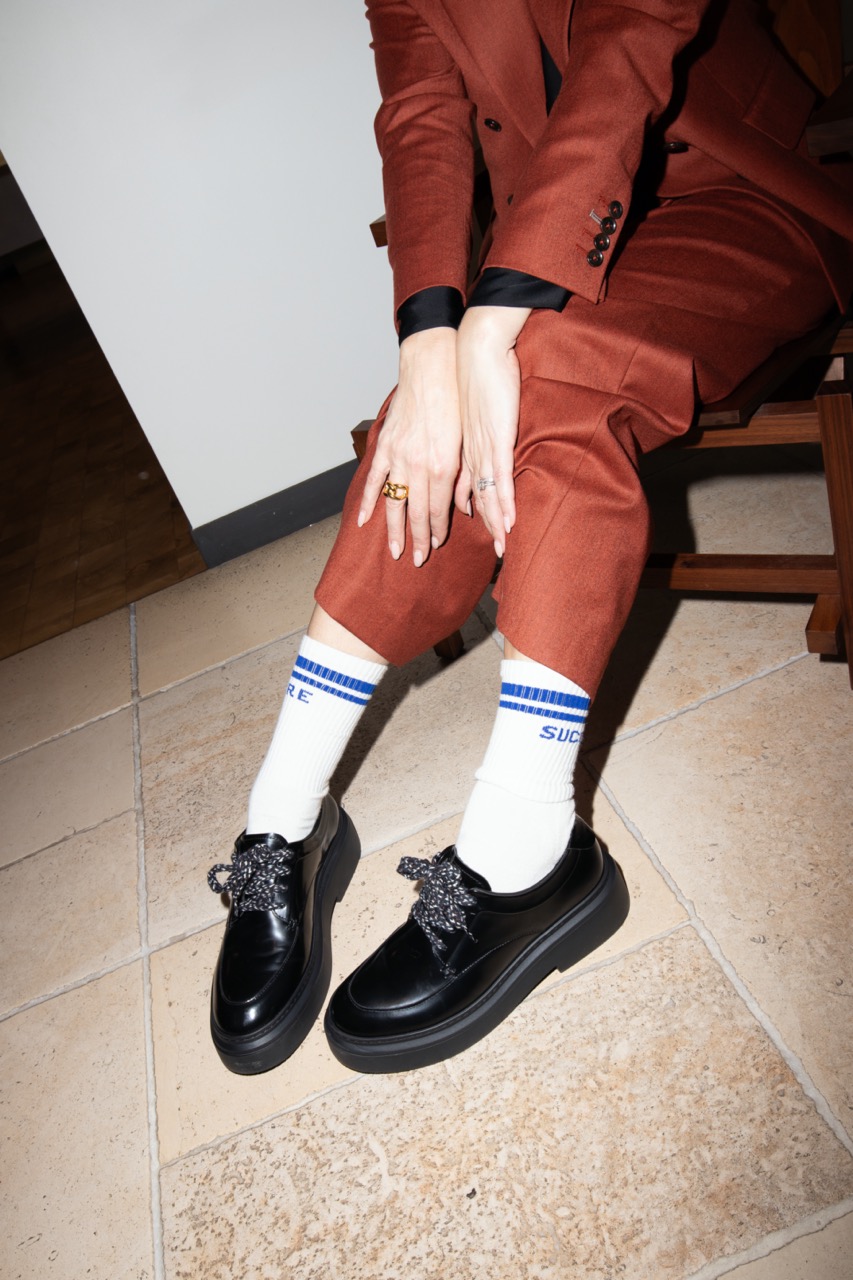


GG: This isn’t your first time designing something… You have your How to Fail merch. Show the audience your socks!
ED: These are my ‘FAILURE/SUCCESS’ socks worn at Genevieve’s request. One foot says ‘FAILURE’ and the other, ‘SUCCESS’. They’re called the ‘Duality Socks’ because as Truman Capote said, ‘failure is the condiment that gives success its flavor.’
GG: You mentioned Robert Altman… Top three favourite movies?
ED: The Talented Mr Ripley by Antony Minghella. Rear Window by Alfred Hitchcock. Grace Kelly’s wardrobe design is iconic. And then Phantom Thread by Paul Thomas Anderson.
GG: You are an experienced journalist. Who’s been the trickiest person to interview?
ED: Paulo Coelho was pretty awful. He said: ‘I was on a flight and lit a cigarette and the air stewardess said it wasn’t allowed. I replied ‘My soul wants to smoke a cigarette’ and she said ‘it’s illegal on flights…’ He, Paulo, said ‘They marched me off the flight and I had to smoke my cigarette on the tarmac and then I got back on the flight and it was delayed and it was very inconvenient to me.’ Maybe he was in a bad mood but I felt he had all the spirituality of a broken kettle.
GG: Have you changed as a journalist?
ED: This Coelho story does belong to an earlier phase of my career when I think I was guilty of trying to be noticed as a feature writer. I was meaner than I should have been and I really deeply regret that. But it’s all a learning curve. Now, if a guest on How to Fail is more guarded it’s my job to make them feel safe enough to be vulnerable and open-hearted. As Sir David Frost said, ‘you catch more flies with honey than with vinegar’.
GG: You are now happily married. Did you have to kiss a lot of frogs?
ED: Absolutely. I found myself single, age 39, staring down the barrel of my 40s trying to date strategically. One man was extremely keen very early on. On our third date, he came round to my flat and buzzed and said ‘I need you to help me up with something’ and when we carried it up the stairs and unrolled it: it was a camp bed. He said ‘I find your mattress incredibly uncomfortable’. We had sex and then he just kind of rolled off onto his camp bed like a sort of faithful hound. I thought ‘well, it’s good that I’m with someone who knows his lower back needs…’ But in the middle of the night I sat bolt upright and thought ‘this man cannot be my boyfriend’. The next day I said ‘I’m really sorry. It’s not you, it’s me.’ And he said, ‘Well, don’t change your mind in six months, because by then your ovaries will have dried up and I won’t be interested anymore.’ I wrote about it in How to Fail under a pseudonym. And he emailed me to say ‘If I had a book, I would write my version of events.’ And my response to that internally was, ‘well, you don’t have a book.’
GG: Your dating commandments… #6: All failure is data acquisition.
ED: True. Particularly with dating. I had six months of dating rejection. It was an opportunity to self-reflect. I made a spin-off called How to Date – 8 episodes with Mel Schilling, the dating coach from Married at First Sight.
GG: How did you meet your husband, Justin?
ED: I was going through this dating hellscape and I thought: I’m going to move to LA full time. I booked my flights and that evening I had a date with a guy from a new app called Hinge. Over text he seemed slightly odd, texting me every day, wanting to meet up which seemed really odd to me because I was so used to emotional fuck-wittage and it felt very un-chic of him to be so present. So I thought, I’ll just get this date out of the way and then I’ll get on with my fabulous new life. I walked into this hotel bar at 5pm and my life changed.
GG: Did you cancel that one-way ticket to LA?
ED: Three months into dating I said to him ‘I’ve got this one-way ticket’ and I wanted him to step in and say ‘of course you can’t go’ but he didn’t, he said ‘that’s tricky… that’s a decision I can’t make for you.’ So I took the flight. But I made it a month-long trip and in that month I wrote the book How to Fail.
GG: Did your Failosophy idea of anti-perfectionism allow this love affair to blossom?
ED: With Justin I changed the upper age limit on the app which always makes him sound like he’s 95, but he’s only four years older than I am. There was immediate chemistry but we’d both been divorced and bruised by past relationships. And he has three kids so he had to be really cautious about things. Also it took us a while to get used to each other’s communication styles. He doesn’t like texting, the weirdo! He would call me and I’d be like, ‘why are you calling me when you could just as easily text me a mini essay?’ But you’re so right: that whole investigation into failure made me more tolerant of flaws, primarily my own.
GG: What’s Elizabeth Day’s poison of choice?
ED: A dirty vodka martini, extra dirty and extra briny. My first date with my husband was at one of those mad hotel bars where they call themselves ‘mixologists’ and there’s like a 45 page menu which is like ‘carrot and mushroom tequila presented with a shrimp foam’.
GG: Where do you like to write?
ED: When I started writing books, I had a full-time job at The Observer so I didn’t have a writer’s turret where I could emote. I would write in cafés, on trains and on planes. I found I enjoyed being around the murmur of other people. Lockdown changed that so I found this YouTube video which is like 9 hours of coffee shop sounds. After lockdown I found cafés too loud so I would listen to the café white noise in the real café… I recently bought myself a little cottage with the money that I’d set aside for fertility treatment. And the first thing I did was to get a desk built under the stairs and painted an Yves Klein blue just like the stairs here at Paul Smith, Mayfair. The colour inspires me.
GG: Any advice for when you’re feeling terrible in the moment?
ED: Definitely. Failure makes us feel so isolated. You need to have compassion for yourself and you don’t have to bounce back immediately. My self-perceived failure to have children is something that will be with me for the rest of my life and feeling that sadness is also part of being human. It might simply teach you that you are strong enough to survive it and that in itself is an extraordinary thing.
GG: If you could have a skill or feature from a legend what would it be?
ED: It would be silly to say Cindy Crawford’s beauty because I try not to compare myself which is a fool’s errand because it’s also how we understand who we are… If I could write like Tom Wolfe, who wrote The Bonfire of the Vanities, I’d be extremely happy.

Elizabeth Day. Photography by Charlie Pike.
GG: What are you working on next?
ED: I’m writing a new novel set in LA. And very excitingly The Party is being adapted for TV and they have started filming. I’ve been texting today to see if I can be an extra in one of the scenes.
GG: Who is in the TV adaptation?
ED: Luke Evans (Martin Gilmour), Tom Cullen (Ben Fitzmaurice), Joanna Scanlan (Martin’s mum Sylvia), Lindsay Duncan and Douglas Hodge (Lady and Lord Fitzmaurice) and Lydia Leonard (Serena). It’s adapted by Sarah Solemani, who also plays Lucy.
GG: You just launched your first imprint Big Day… Can you reveal your imprint’s first title?
ED: I’m extremely lucky that I get to do it in collaboration with my publishers, Forth Estate and my editor, Michelle Kane, who is a powerhouse. Our first title is a debut novel by Rebecca Coxon called Inconceivable. It tells the story of her doing a DNA test and finding out that her father was not her biological parent and follows her journey as a woman who struggles with fertility. It’s beautifully written, profound and illuminating.
GG: Your surname is great for titles. Daylight Productions, Big Day…
ED: And my memoir? Day by Day…