

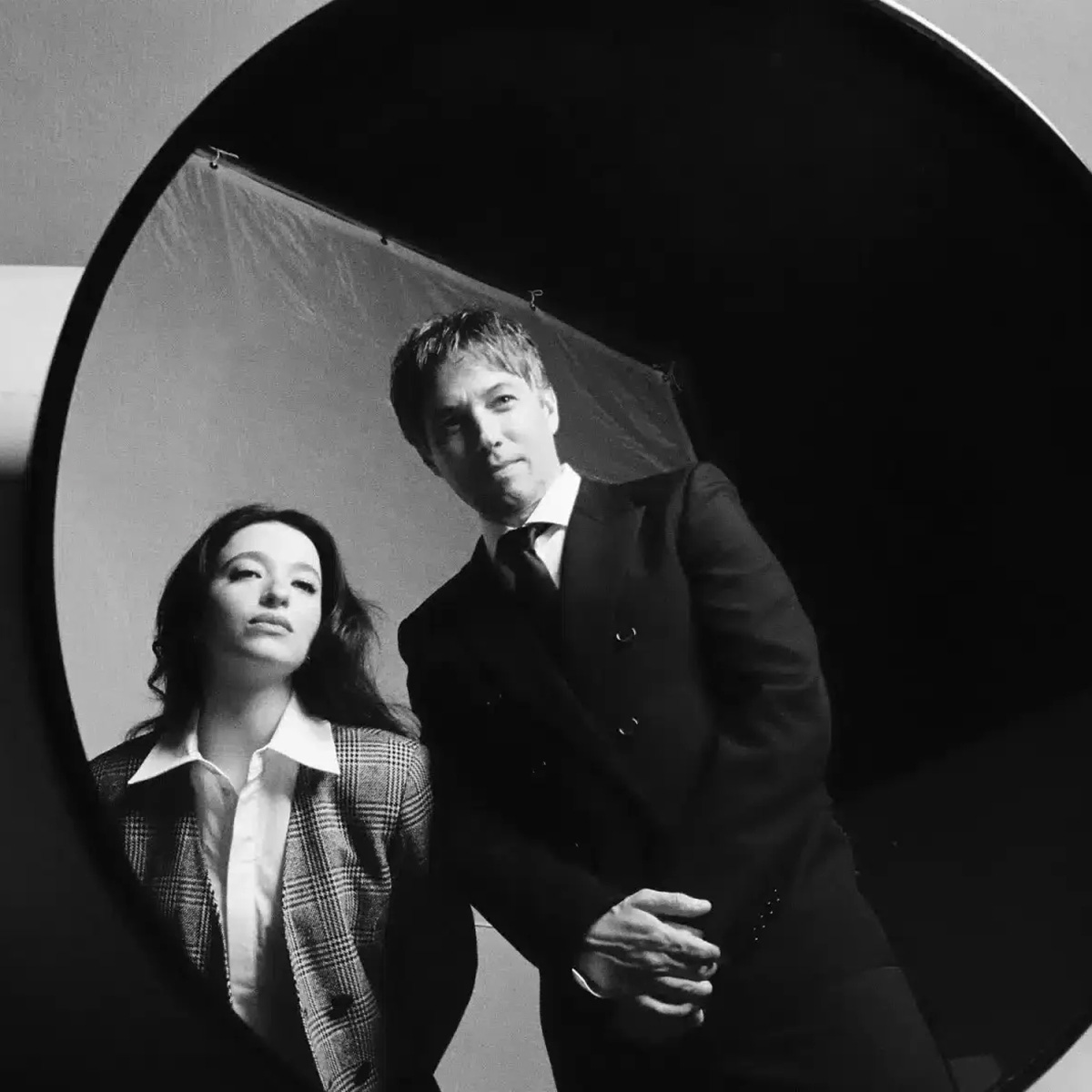
For multi-academy award winning costume designer Ruth E. Carter (Do The Right Thing, Malcolm X, Love & Basketball, Black Panther, and many more) costume design is a storytelling language of its own. In Ryan Coogler’s 2025 phenomenon Sinners, she builds a world where every detail carries the weight of survival, beauty, and legacy—garments that reveal not only who characters are, but what they’ve endured.
During our conversation over Zoom, Carter describes her process on Sinners as “a spiritual testimony”, shaped by personal memory, historical research and a deep understanding for the lives behind the clothing. She speaks of her grandmother in a velvet dress on a modest porch—proof, she says, of the dignity clothing can hold. That perspective guided her approach to the film: clothing as scripture, as a way of saying “we are here.”
Below, in her own words, the acclaimed costume designer offers a closer look at the inspiration, process, and meticulous craft behind her work on Sinners.
ON SINNERS AS SPIRITUAL TESTIMONY
It was like a spiritual testimony. It’s kind of how we document our existence. The beauty and the dignity—the innovation. The garments aren’t just clothing, they have a lot of meaning. They tell the story of the person, how they’ve lived, how they’ve struggled. Fabrics are important for sharecroppers, how they show their dignity by dressing themselves in a juke joint. If you have that one garment that you’ve made and it sits there waiting for the opportunity to dress up. It might be the only thing you have.
So I just felt like the clothing said: we are here, we matter. The clothing became scripture. I now look back at my own family history and have pictures of my grandmother sitting on her porch in a velvet dress. They wanted to take a picture, so they went out on the porch because the light was better outside. I often looked at that dress and thought, she’s in a velvet dress, but then she’s standing on a very modest porch. It’s not elaborate. It told the story of her and of the dignity that they still embodied, even though they had nothing. This whole story is about making something out of nothing. Creating the blues is like a story of survival.
ON REFERENCES FOR SINNERS
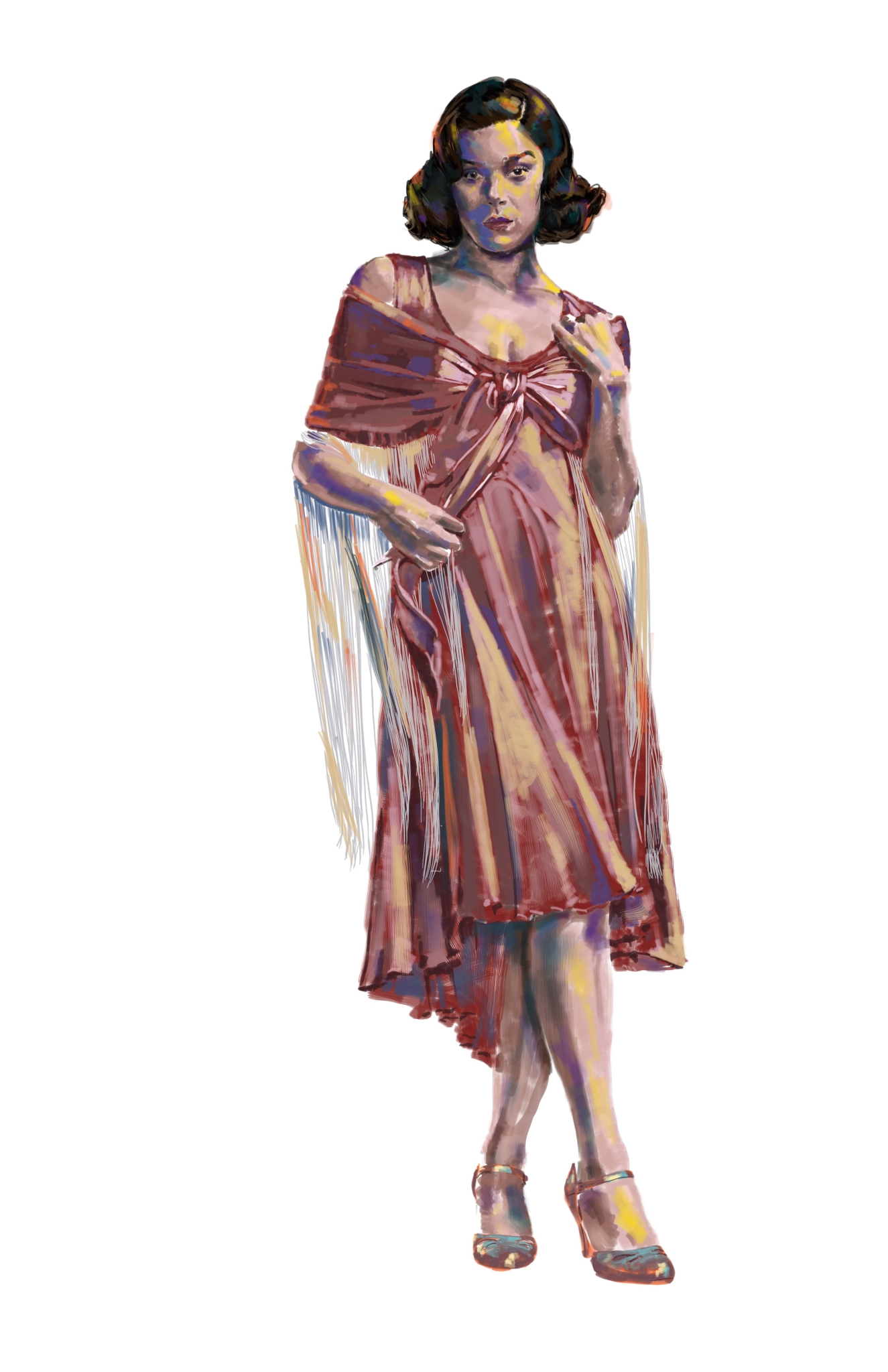
We looked at Udora Well T’s photographs, when she went around the South and took pictures of people on farms and in plantations. Through those images you get to know the people in town who were shopping in 1931. It also highlights that fashion doesn’t evolve evenly, so I could bring in a red dress that maybe was given to a young girl from the late twenties, which was a popular style at the time. My knowledge of fashion history allowed me to tell the story of the past and the present. You kind of become a historian.
ON THE JUMPING OFF POINT
It starts with the first conversation that you have after you read the script—in this case, with Ryan. I got to understand this was a story that is very personal to him. This is a story that we all really want to tell about the blues. Then there is this layer of horror that metaphorically brings the story together visually, to give the richness of the people within the context of Jim Crow and the blues.
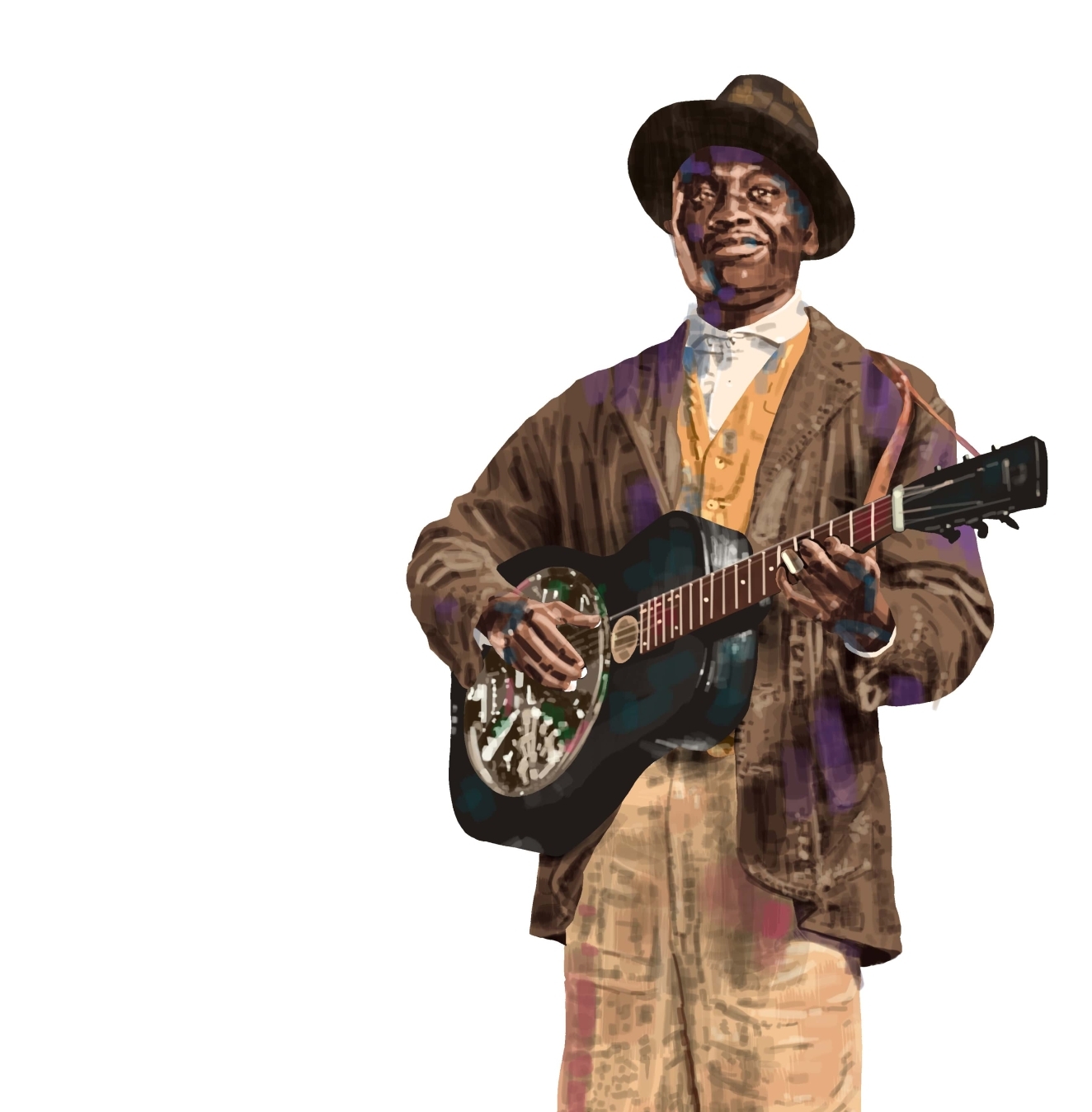
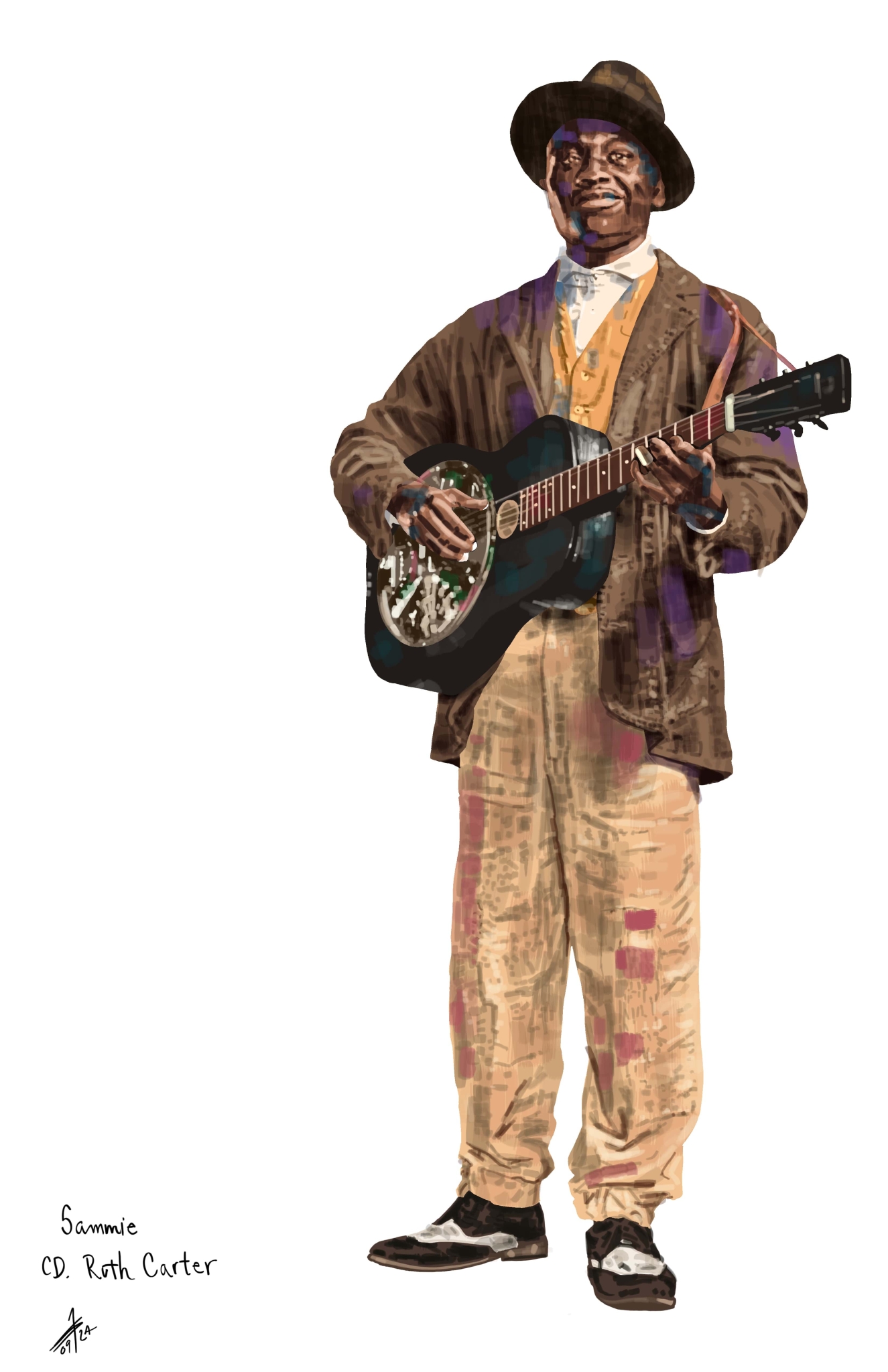
I always felt like this was more of a story of the times than it was the vampire piece. I focused there and looked at images of old blues players, and got into how they like to dress because they traveled around from plantation to plantation, some big, some small, and they played around in the South. It was the story of the South. And then I start listening to the music too, and the words. It just reminded me of old poetry—James Baldwin—reading old poetry or reading testaments from the WPA, where people could not read or write. So when you read their words, it’s broken, yet this beautiful music is a part of how they communicate. So I listened to the stories that the music was telling.


ON FABRIFICATION
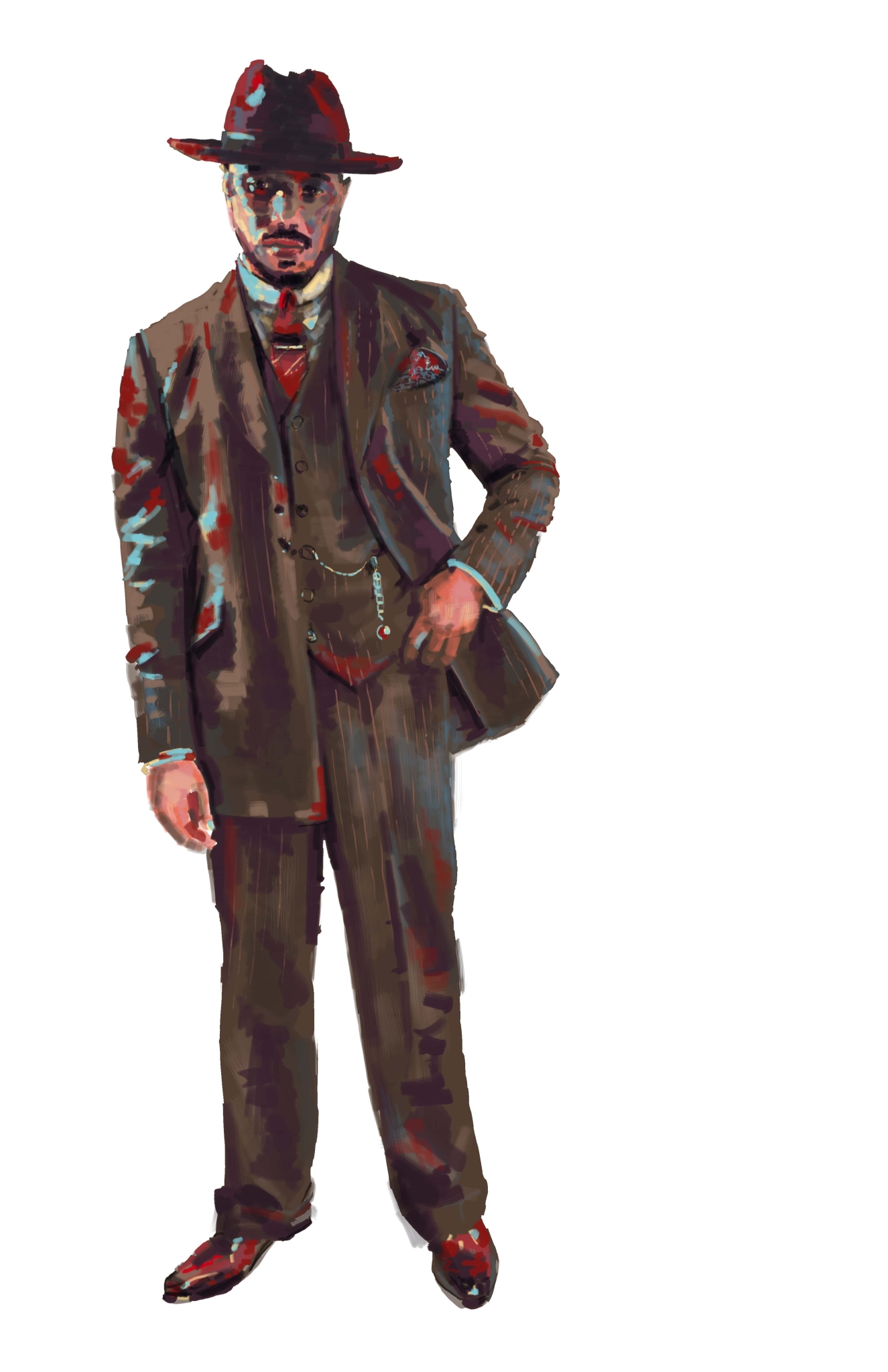
You look at some of these old blues players and you see how the wear and tear on their clothes is evident. The weight of their clothes, the wools. There’s no changing your clothes for summer. So I started to understand fabrication. Fabrication becomes very important to telling the story. I looked at a lot of the Chicago mobsters during the prohibition and how they were dumping the liquor, kegs of it, into the street, and standing around and taking photographs. I saw how rumpled their clothes might have been, but how they still projected such character. I brought a lot of that into my collection of fabrics.
ON DESIGNING THE ERA
I thought about the great migration of African Americans.Most of the time the women still had their work shoes on, but I wanted the juke joint to reflect the migration. This was really the onset where hundreds of thousands of people wanted to flee Jim Crow South. So what did that look like at the train station?
I told props that none of the black people should have purses. They should definitely not have big leather luggage. They would wrap their parcels with twine and rope and somebody’s got their chickens they’re taking with them in a box. I mean, let’s just show how much of an emergency this was to get to move out and that this juke joint could actually display how many different types of people could be there. Not only the sharecroppers from the neighboring plantations, but maybe Smoke and Stack’s friends from Chicago came down on the train. Maybe, you know, the women who were interested in a swanky new place came down, like Perline, who said, “hey, I walked here.” Where did she walk from?
ON DESINGING HOODOO
Annie had so many layers and all of it kind of revolved around her hoodoo practice. People probably don’t realize that feathers were a big part of her look. In hoodoo feathers mean so many different things. She had a little feather headband, that was something that was popular in the late 20s that I kind of felt like also gave us a sense of time and place and transition. She had her little feather head breast, she had an ostrich feather in her hair, and she continued to wear her belt and her mojo back because it was her armor and her way of protecting. So although she put on her velvet dress to dress up for the juke joint, she remembered to keep those spiritual anchors that she wears when we first meet her.
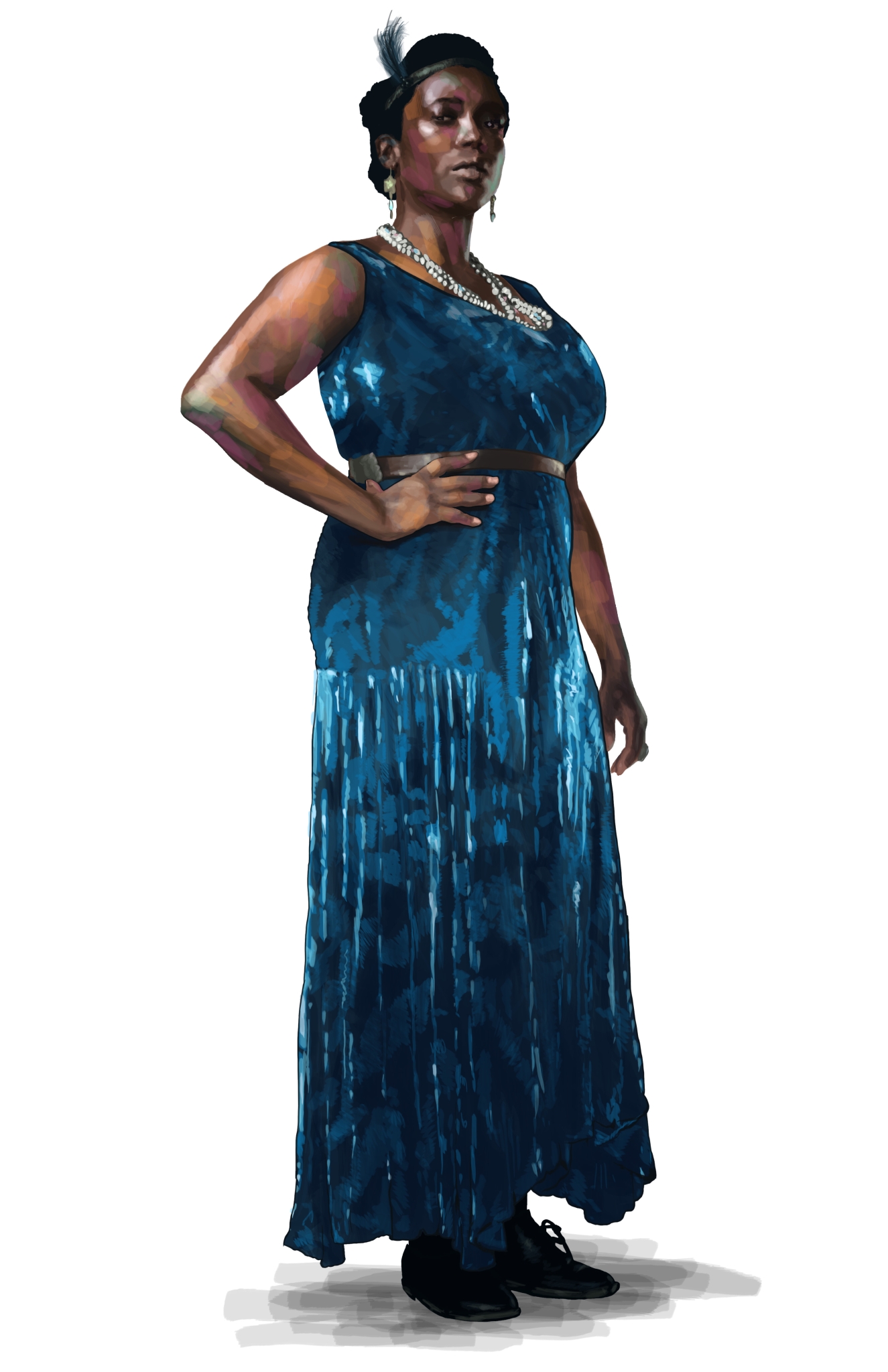
Costume designs for Sinners (2025). By Ruth E. Carter.
ON THE ‘I LIED TO YOU’ SCENE
We were nervous. How are we going to accomplish all of these things? There were 20 or more different visual elements that were in the background and some were in the foreground. I just took one element at a time.
The Zwali dancer was exciting. We didn’t know how we were going to actually build that costume so that the dancer could actually move his legs so quickly and not move his head. He had this apparatus underneath the headdress that was like a helmet. There was a lot of building in this movie. When we looked for accessories for the DJ, the Kangles we could get, but the old school jersey that he wears we had to make in order to get the colour right and for it to feel like it’s from the 80s and not from the present time. Then you walk through and you see a lot of the traditional—you also see a Memphis Juker, and he had certain requirements for dancing.
So we went through the process of fitting and curating all of these looks. I would go to the set with tripods when we were working on the stage. Makeup needed to come by and have a discussion about what the hair would be. We would have these little impromptu meetings because we were shooting this film so quickly. We didn’t sit down and have formal Zooms or we didn’t get together in conference after we started shooting. We had to talk to each other on set and collaborate on set. It was highly visual. They needed to see all of the things that I was planning.