

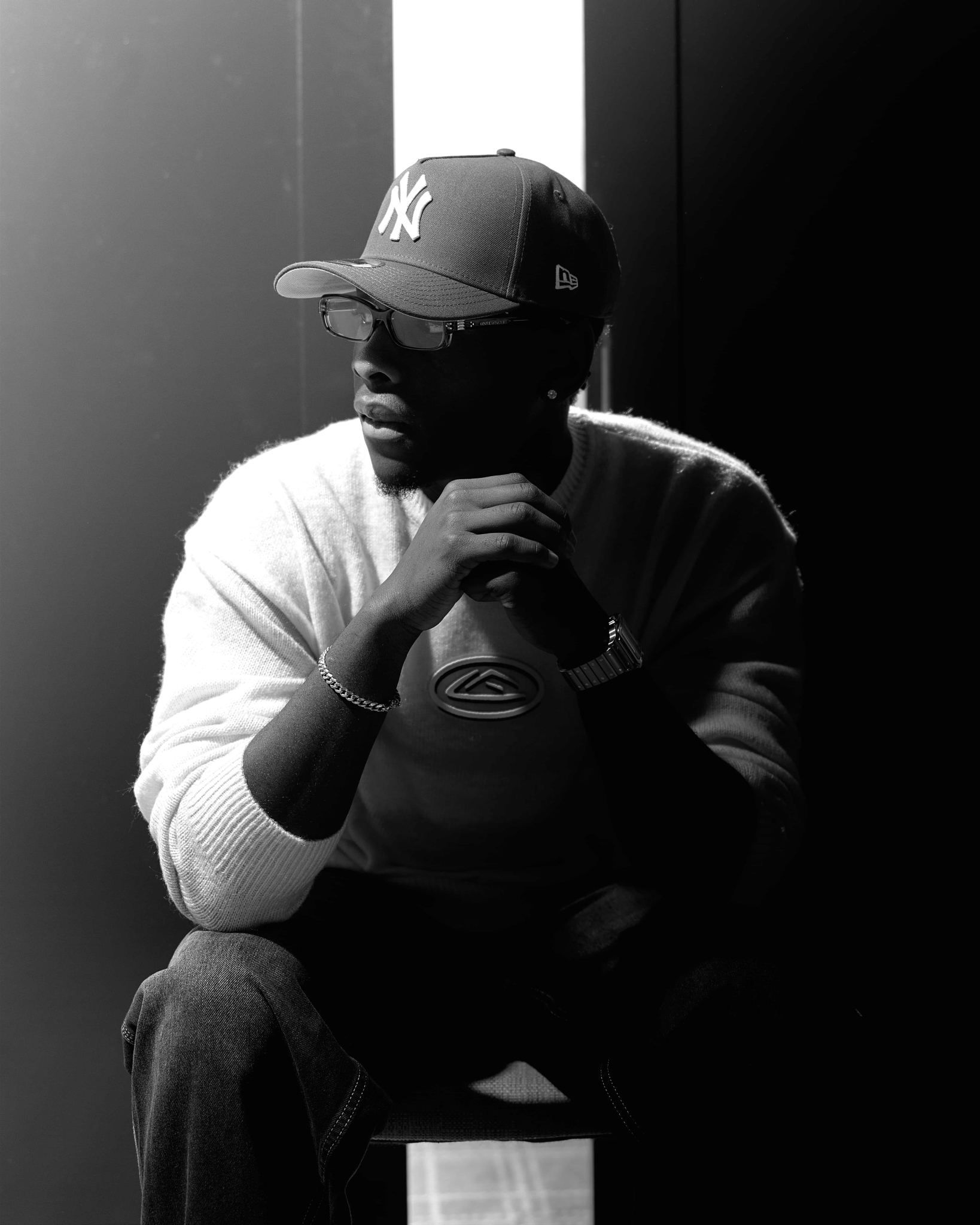
We joined the breakout star of Ryan Coogler’s smash-hit Sinners to discuss the church, the blues and the pursuit of greatness.
At 3 years old, Miles Caton sang his first song. It was Sam Cooke’s A Change Is Gonna Come. A year later, he performed at his grandfather’s church—his first time in front of an audience. By 11, he had written his first song, and by 16 he was on the road, supporting RnB singer H.E.R on a world tour that saw them opening for Coldplay at Wembley Stadium. At 17, he was cast in the starring role in Ryan Coogler’s pop culture phenomenon Sinners, a Jim Crow-era vampire flick that sees Caton, in his acting debut, don the role of a bright-eyed preacher’s son with his eyes set on becoming a great musician. Today, at 20, the actor-singer extraordinaire has just earned himself his first Grammy nomination for his musical work in the film.
Against all odds, Caton isn’t phased.
“I always thought that it would happen, but you never know when,” he says, talking to me at the Rosewood Hotel in London, where he’s been celebrating Sinner’s return to IMAX screens with cast-mate Michael B. Jordan and director Ryan Coogler. The tour is more like a victory lap—the film has, to date, grossed $367,000,000 worldwide. “Now that it’s happening, I’m just trying to be present. I’m just trying to live in it.”
For Brooklyn native Caton, the world stage has always felt within reach. “I always had that feeling that I was destined for greatness.” He says, lightly shifting his New York Yankees cap to rest just above his eyes. “Early on I learned how to sacrifice doing certain things in service of the dream. My aspirations started with music, but quickly became about entertainment. I was the family clown growing up. It’s always been my thing. I’m just trying to make people smile.”
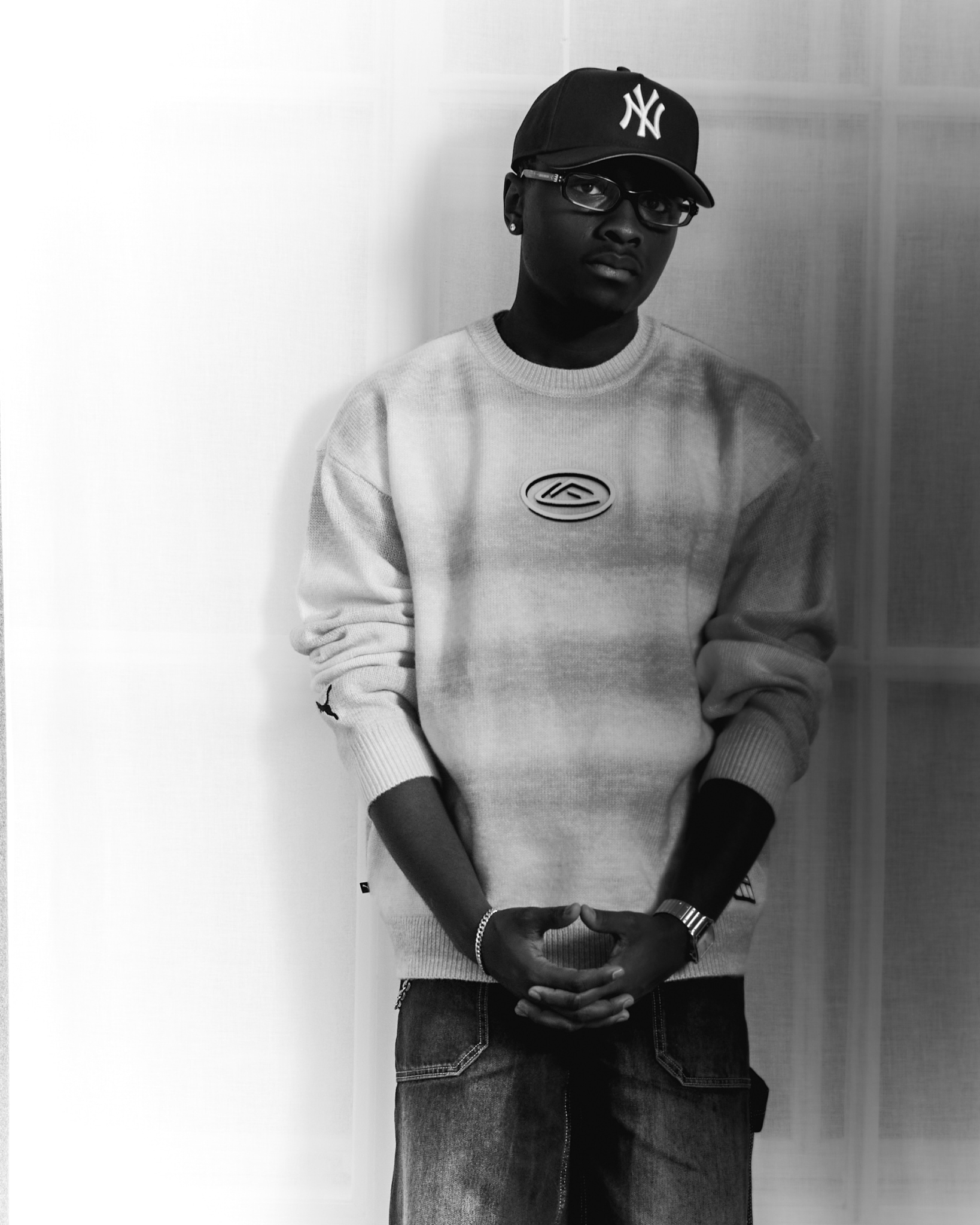
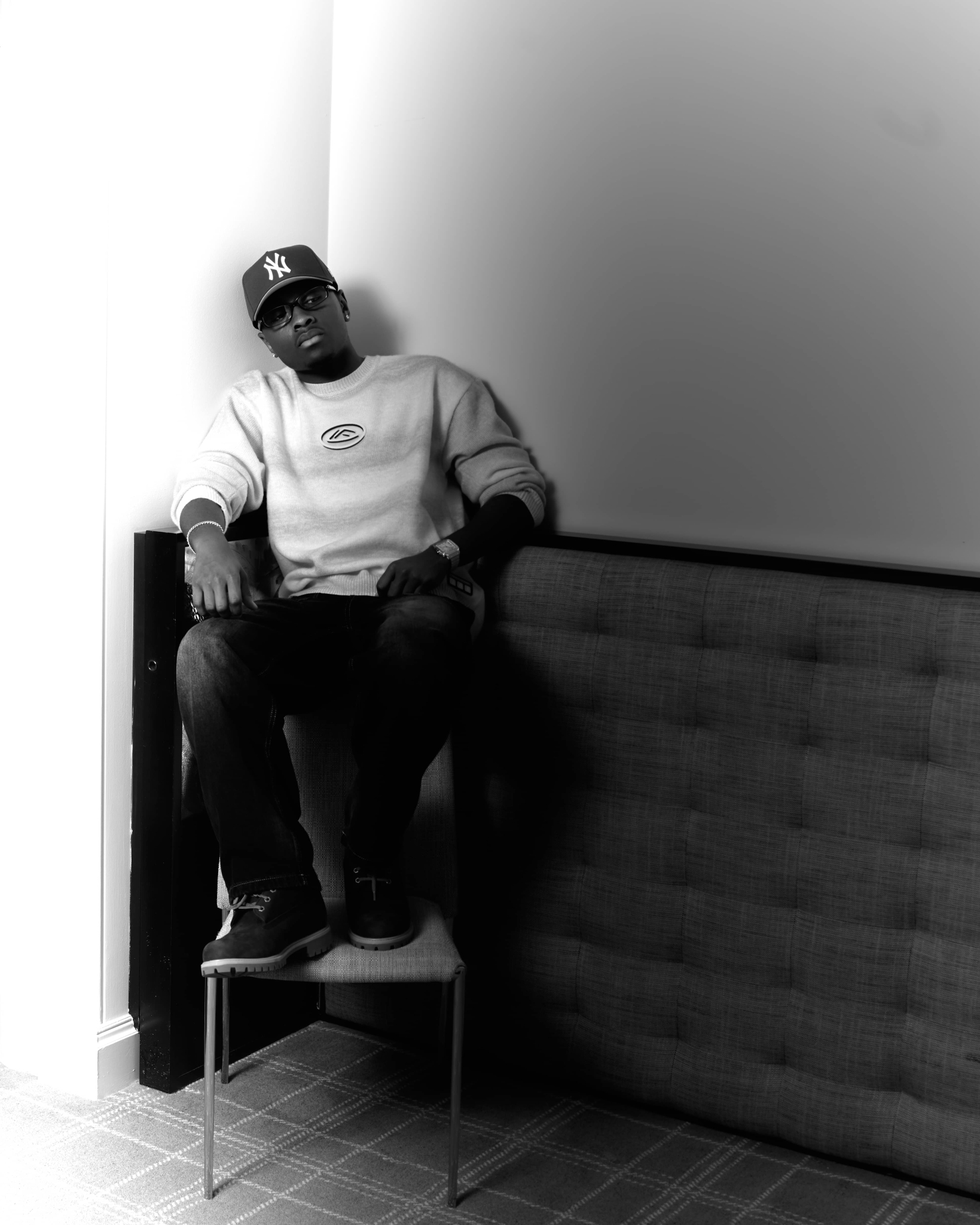
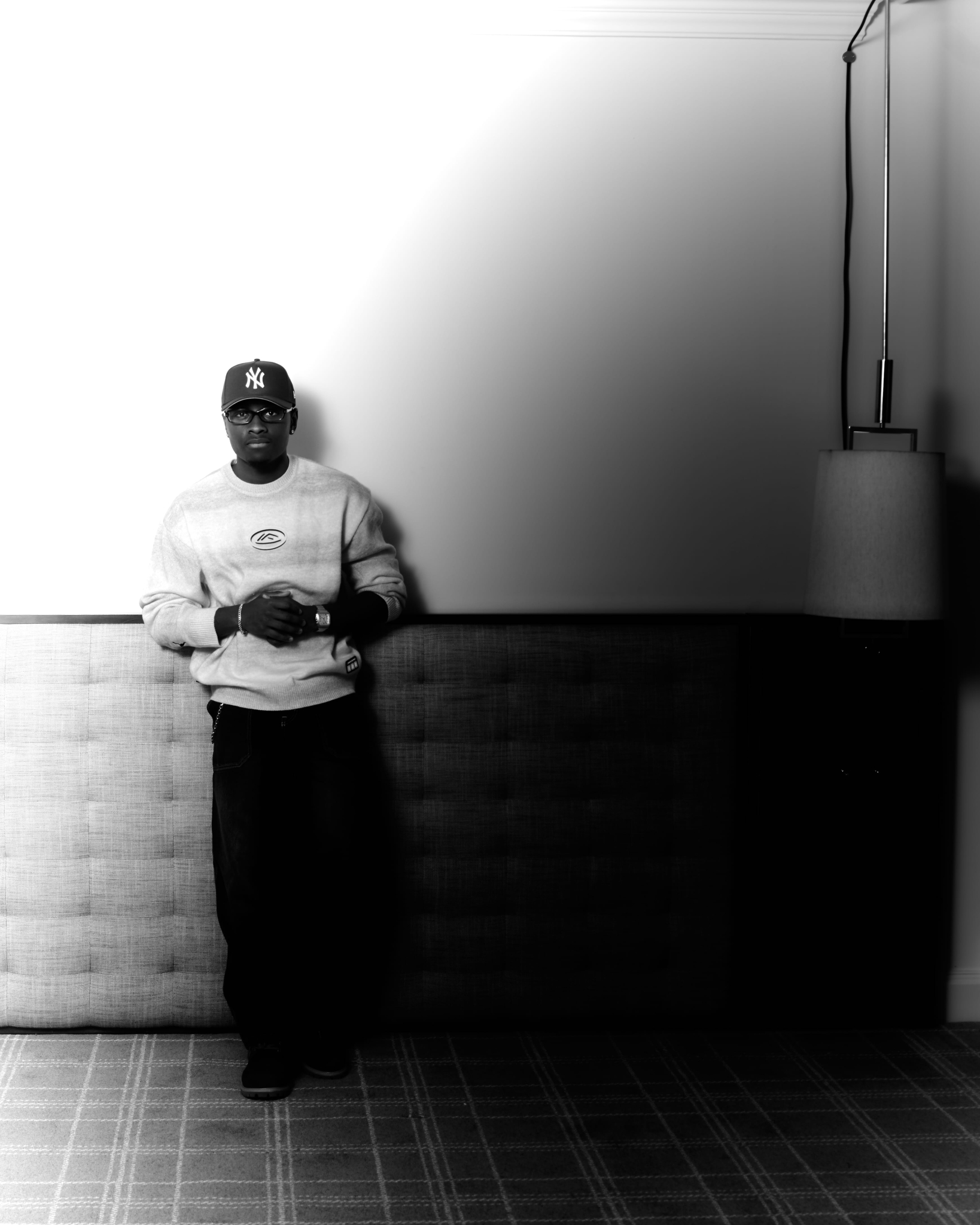


Caton’s first brush with fame came early on, appearing in the music video for the title track of the Jay-Z album 4:44 in 2017. The legendary rapper, a fellow Brooklynite, reached out to the then-10 year-old Caton after seeing a viral clip of him singing Nina Simone’s Feelin’ Good in the backseat of his mother’s car. “I was humming in the car with my mom. She heard me and handed me a phone, and told me to record myself singing. We posted it on my IG page and went to bed. I woke up the next morning and it had blown up…Jay’s team called a week later. It was crazy, especially being from New York like Jay.”
But music was in Caton’s stars long before Jay-Z gave him his first major look—and before H.E.R., whom Caton gratefully credits as one of his most faithful industry mentors, invited him to join her on her world tour. For Caton, music is a religion unto itself, and it runs through his blood. “I started in the church.” He says. “My mom [Timiney Figueroa] is a gospel singer, my aunt [Anaysha Figueroa-Cooper] and grandmother [Lady Doreen Figueroa] are gospel singers. My grandfather is a pastor. The first time I performed in front of an audience was in his church, singing A Change is Gonna Come at 4 years-old. At home, we’d listen to Whitney Houston, a lot of young Michael Jackson. Donny Hathaway. Luther Vandross. I always had music in my life. It’s something that’s a part of me.”
It’s not long into our conversation before Caton starts nerding out about the blues. “Back in the day they would break off glass bottle caps,” he beams, explaining the history behind the “blues slide”, a guitar playing technique that, in simple terms, makes the blues the blues. “They would shave them down and put them on their fingers to play, and it would make this whining sound. Like somebody was singing.” Caton didn’t know how to play the acoustic guitar, let alone a blues song, before being hired to play Sammie “Preacher Boy” Moore—who is undoubtedly the heart of Sinners—but quickly picked up the intricacies of the instrument and the genre after a few sessions with Philadelphia-based guitarist Randy Bowland. “I had to work on building strength on my fingers in order to endure the blues. I would get callouses on my fingers. It was conditioning work. I locked in on that.”

“I always had that feeling that I was destined for greatness. Early on I learned how to sacrifice doing certain things in service of the dream. I was the family clown growing up. It’s always been my thing. I’m just trying to make people smile.”
Miles Caton
But it was the voice that really sold Coogler on Caton’s ability to bring the blues to Sinners, a movie that establishes the idea of music as a spiritual bridge between past, present and future generations. When casting, the director had one essential specification in mind for the actor that would play Sammie: he had to be a young man with the voice of an old soul.
Enter, Caton, whose soulful croon feels like it has been echoing through time long before him and will be echoing long into the future—a voice so full of emotion that you almost feel like it could span time and space itself. AKA: the perfect voice for Sammie, who, like Caton, comes from the church and dreams of achieving musical greatness. “It starts with the music.” Caton says of the power of his voice. “If you don’t believe what you’re singing, the audience won’t believe it. When you believe it, it shows up on you like a presence. It comes from a true place.”
Caton’s vocal chops are sprinkled throughout Sinners’ soundtrack (produced by the visionary Ludwig Gorransson), but they’re on full display on I Lied To You, a mind-bending blues song that, in the movie, sees Sammie (quite literally) burn the house down, uniting past and future generations of black music in the process. It’s the best scene in the movie, the best movie scene of the year, and Caton is at the heart of it all. “That scene is a reminder of how important music is to what we’re going through now.” He says. “A lot of music coming out now doesn’t come from a place of care—It’s often in service of a trend, and people don’t really care what they’re saying as long as it sounds good. Back then, these people were oppressed, they had so many stories to tell, and music was their way of expressing that.”
The real gem of the soundtrack, though, is Last Time (I Saw the Sun), a moving duet by Caton and Alice Smith and co-written by Caton alongside Smith and Gorransson. On the track, which plays over the film’s end-credits, Caton parallels Sammie’s journey in the film with his own, singing, “All my life, I’ve been waitin’ / for a day like today / So I’ll live like it’s the last time / For a long time, at the wrong time / With the right time, is it my time? / If I’m dreamin’, please don’t wake me up.”
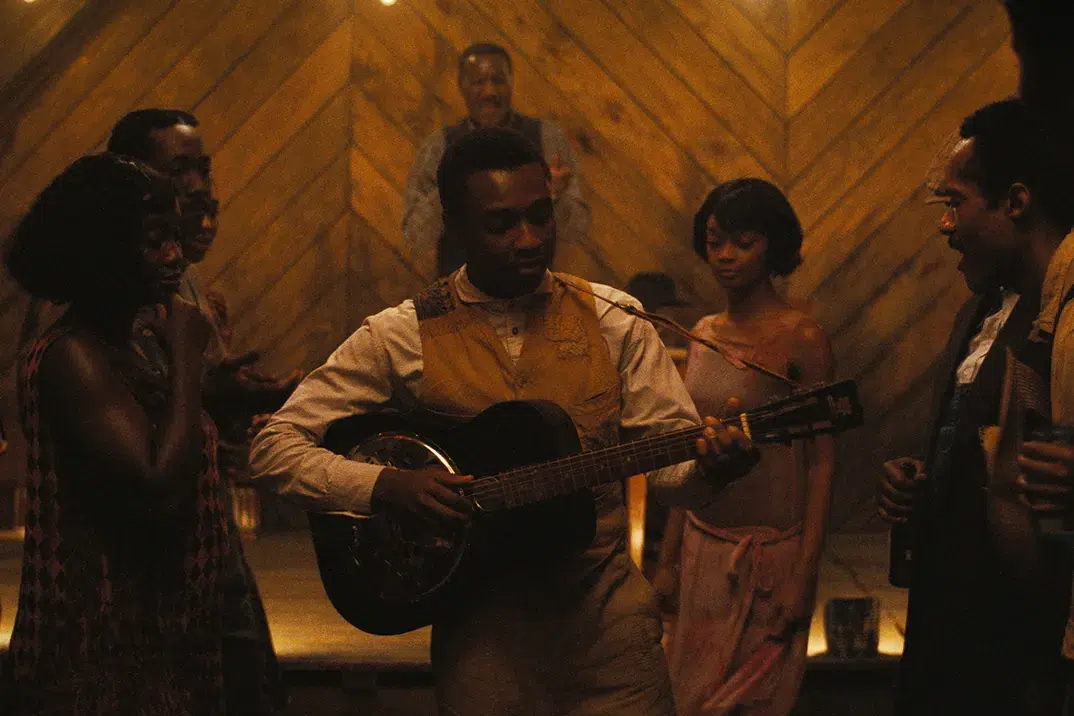
“I had to work on building strength on my fingers in order to endure the blues for Sinners. I would get callouses on my fingers. It was conditioning work. I locked in on that.”
Miles Caton
Despite his voice containing the kind of world-worn wisdom that most singers with double Caton’s life-experience couldn’t boast, everything else about the entertainer emanates a fresh youthfulness fitting of his 20 years of age. He talks about his experiences in the film and music industry maturely but with the excitement of someone ready to embrace his moment. His groundedness is clearly a by-product of the tight-nit support system he surrounds himself with—a video on his YouTube prior to Sinners’ release documents a private screening he held at his local AMC for close friends and family, which featured testaments on Miles’ talent and character from his siblings, mother, aunt and grandmother. “Ryan [Coogler] told me to get on top of my team.” Caton says, reflecting on how he hopes to approach his journey going forward. “You can’t do this type of career alone. You have to have a team of people you can trust, who understand your vision, who understand who you are and where you’re trying to go.”
More than any other debut performer this year, it seems clear that Miles Caton is here to stay. It remains to be seen if the next iteration of his stardom will manifest on screen or on stage (though he teases an upcoming EP, reportedly dropping in 2026), but there’s a certainty that Caton is ready for anything that destiny throws his way. “I want to build a legacy of creativity, fun and originality.” He says. “I want to perform in stadiums. I want to do more movies. I don’t feel nervous, I feel excited. I just trace it back to those moments of performing when I was a kid—that passion, that feeling of pursuing something. I want to continue on that path.”