In The Chronology of Water, Kristen Stewart turns trauma into form




Get unlimited access to all our articles for just £3.50 per month, with an introductory offer of just £1 for the first month!
SUBSCRIBEKristen Stewart’s directorial debut is decidedly anti-Hollywood, translating Lidia Yuknavitch’s 2011 memoir with a unique cinematic language that reflects the temporality and textures of female pain.
Releasing this February, Kristen Stewart’s directorial debut adapts Lidia Yuknavitch’s 2011 memoir The Chronology of Water for cinema. The film preserves the book’s fractured, bodily approach, which follows memory’s elliptical movement rather than imposing narrative order. It deals with childhood sexual abuse, addiction, and the death of an infant daughter without punishing its audience and leaving them with something liveable rather than resolved.
Mirroring the book’s interior shape, the film dispenses with familiar tropes of bravery and rawness that so often flatten women’s stories especially those shaped by incest. Rather than isolating abuse as a single explanatory trauma or aestheticizing it as endurance, Stewart lets it register obliquely, through sensation, fragmentation, and repetition. Spanning the 1970s and 1980s, the film follows Lidia from a brutal Pacific Northwest childhood to competitive swimmer, drifting young adult, and writer, moving through volatile relationships, bodily risk, and a gradual reckoning with how desire and self-destructive patterns have shaped her life. What emerges is not a biopic but an expansive story that belongs, as Stewart has said, to anyone “open and bleeding”. Approached not as retelling but as an immersive enactment, stripped of guardrails, Stewart preserves Yuknavitch’s refusal to make lived events orderly or consoling.
Stewart spent eight years trying to bring this material to the screen. Hollywood resisted, likely because the source material’s radical structure defied the narrative habits the mainstream industry relies on: no tidy arcs, no resolution, no reassurance. It took the intervention of Charles Gillibert, producer for CG Cinéma International, to get the film off the ground on a lean European budget. Shot in Latvia and Malta, Stewart assembled a cast that includes Imogen Poots (who plays Lidia) and Thora Birch, as well as Earl Cave, Susannah Flood, Kim Gordon, and Jim Belushi—performers willing to inhabit a story that moves through memory and trauma rather than conventional plot. Her crew, from cinematographer Corey C. Waters to editor Olivia Neegaard-Holm, shared a commitment to the material’s textured intelligence, helping Stewart shape the film into experiential cinema. The process echoes Yuknavitch’s own literary ethos: resourceful, collaborative—shaped through her ongoing workshops, mentorships, and dialogue with other artists—and resistant to polish for its own sake.


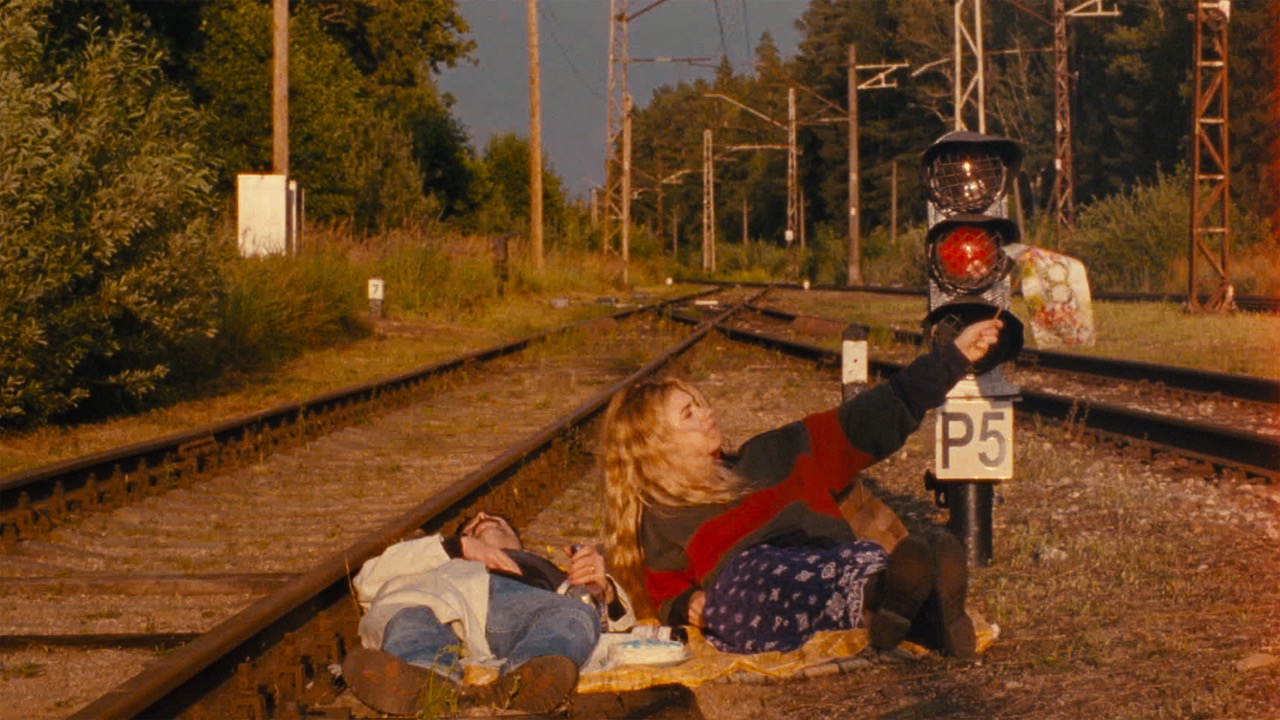
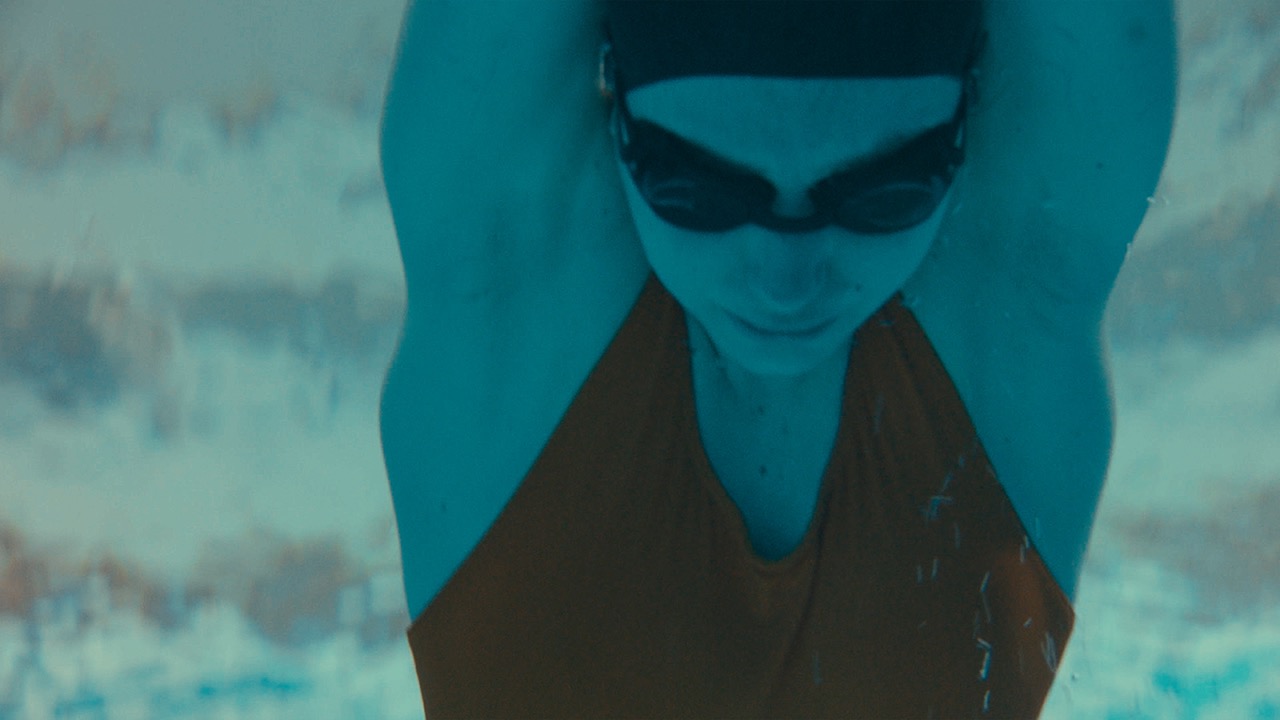


Stewart’s vision was guided by a principle she articulated at Cannes: the material had to retain its unsparing intimacy and force. Speaking at the 2025 Cannes Film Festival with the French cultural journalist Augustin Trapenard, Stewart described her attachment to the project in blunt, unsentimental terms. “Because being a woman is a really violent experience,” she said, “even if you don’t have the extreme experience that we depict in the film or that Lidia endured.” What mattered, she continued, was the possibility of taking “really ugly things,” metabolizing them, and putting something back into the world “that you can live with—something that actually has joy.” She went on to describe women as “walking secrets,” pointing to the ways violence is woven into everyday imagery, narratives, and structures women absorb daily.
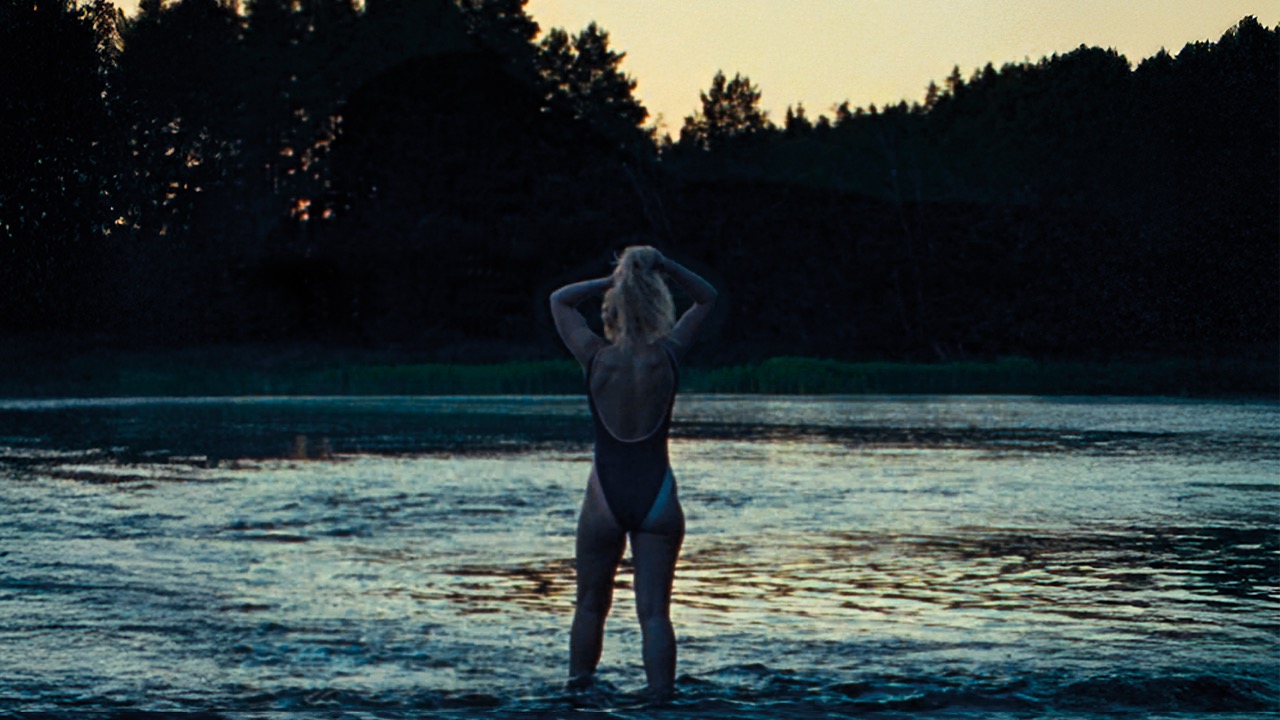
Shot on 16mm, Stewart translates Yuknavitch’s work as an unstable archive of memory and self-formation, its grainy frames giving weight. Stewart told Chris O’Falt, the host of Toolkit podcast, that choosing film allowed her to “take pictures so I could rip them up like it’s a photo album,” adding, “That informed the whole visual encapsulation of not what something looks like on the outside, but what it feels like to remember everything.” The approach also renders neurological experience visible, with synapses firing, dividing, and looping back on themselves. This approach pushes the film away from a commercial adaptation toward a more tactile and intimate way of telling a story.
Thora Birch, who plays Yuknavitch’s sister, has described the project as punk-rock art house. Rolling Stone likened its sensibility to the early work of Gus Van Sant. Both comparisons are true. Birch’s first day of shooting coincided with the film’s opening at the hospital where Lidia gives birth to a stillborn baby girl. Afterwards, Poots kneels in the shower, her blood pooling and flowing across the white tiles toward the drain, reddened-jelly-like clots clinging to the grout before releasing. The sequence confronts the emotional tone—flickering, alive and compressed within the fractured, pulsing sense of time lodged in a traumatic memory.
When I first read The Chronology of Water, still drowning in my own past, I missed Yuknavitch’s academic rigor entirely. I saw only the life raft, not the architecture beneath it. She earned a Ph.D. at the University of Oregon and studied with Ken Kesey, author of One Flew Over the Cuckoo’s Nest, in the late nineteen-eighties. Had her father not intervened, she might have attended any number of elite institutions such as Brown, Notre Dame, Cornell, Purdue or Columbia on scholarship. The achievement of The Chronology of Water lies in how fully it threads these identities together: the athlete, the scholar, the teacher, the survivor.
“What emerges is not a biopic but an expansive story that belongs, as Stewart has said, to anyone ‘open and bleeding.’”
I have twice interviewed Lidia and once shared an informal meal with her in a small group. We exchanged a few quiet words, acknowledging a shared history without naming it. I recently returned to her work, this time listening to the audiobook. Fifteen years on, after processing my own challenges, I returned to her words and found the book clarified in a new light. What once registered primarily as survival now resonates on a craft and intellectual level. Lidia is a master storyteller—deliberate in form, incisive in thought, and insisting not only on the right to tell such stories, but on their capacity to evolve.
Stewart understood that Yuknavitch’s work deserved an audience of every gender. As she has said in a 2018 interview in Digital Spy, “Gender is a bit of a myth… everyone’s individual relationship with gender is totally theirs to define,” emphasizing the film’s reach beyond conventional assumptions about who is meant to see women’s stories. In conversation with Christine Radish for Collider, she called the project “an opportunity to make a movie about every girl.” She added: “Our systems were designed to alienate us and keep us quiet. Whether or not you’ve experienced the horrors of certain trespass or abuse, aspects of the film are particular to Lidia, but at its core, it’s an invitation to know yourself, to listen to your inner voice, and to survive.” Actor Jim Belushi, who plays Ken Kesey in the film, reflected on Stewart’s approach while preparing for a challenging scene with the father character: “Kristen really held what happened to this girl in the story. She understood it.” The film does more than translate Yuknavitch’s experience; it redistributes it across bodies, labor, institutions, and time, creating space for damage to be acknowledged and lived with rather than sealed off or resolved. What happened is no longer anecdotal. It is structural.
In the book, Yuknavitch recounts a question that lingers—one I carry with me as well: Did the things in your story actually happen? Memory resists proof. The film answers, not with certainty, but with form. Shot on 16mm, its graininess and movement let the image swim alongside memory’s nonlinear drift, giving physical shape to experience while resisting sequence or summary. Watching it, I felt for the first time that a culture was being asked not to look away. The difficult events of a life do not vanish—they can be shaped, shared, held long enough to become livable.
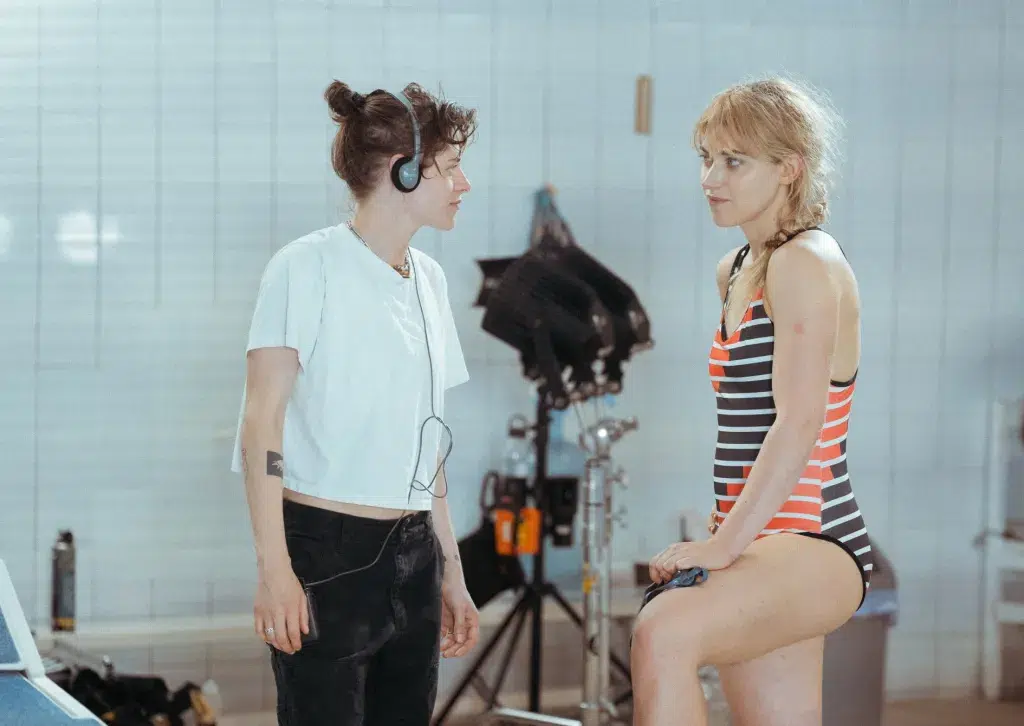
“Because being a woman is a really violent experience… even if you don’t have the extreme experience that we depict in the film or that Lidia endured.”
Lidia Yuknavitch has lived many lives—athletic, domestic, philosophical, and artistic. As of this first draft of writing, I do not know whether she has seen the film. When I left the theater, what stayed with me was not resolution but recognition: something once carried alone had finally been met, opened, and allowed to breathe. Not closure, but release. A story one can live with and brought vividly to life by Stewart’s refusal to be dissuaded.
Addendum. By the second draft of this writing, on January 16, 2026, in Portland, after the viewing of The Chronology of Water, a Q&A with Kristen Stewart, Lidia Yuknavitch, and others was held at Living Room Theaters. The coverage from that conversation was live and not recorded. That feels right. There are brief snippets and slim social media posts from attendees, but most meaningful was an Instagram post from Yuknavitch herself.
i just had the greatest art experience of my weird life.
i mean the ZENITH of art experiences.
no, not a publication. not any fancy
award. not a big bag of money, or fame,
or attention.
just me with my witch dawgs and soul
sisters Janice and Ravyn and a squad of
brilliant, fearless, Valkyrie women in a
private screening of The Chronology of
Water.
so yeah. i finally saw it. i’m glad it was
now. with Kristen and all those spitfires
in the room.
a film dreamed of, conceived, brought
to vision by the singularly perfect
Kristen Stewart, in the face of all those
No’s, in the face of fuck.
the ZENITH for me is witnessing the art
of others when you yourself try to make
art into a portal. It’s my reason for being
—that
art begets other art, unstoppably,
unapologetically.
i sobbed, i laughed my ass off, I ground
my teeth, i shouted you motherfucker,
ate a little paper (what. i’m still me), i
swooned, i cheered, i saw miraculous
strength in girls on screen bloom from
violence and grief.
when the credits finished rolling i just
shouted FUCK.
there is not a man on the planet who
could have directed this film. the image
intensities. the patterns. the forms. the
accumulations. the repetitions. the
juxtapositions. the recursions. the
sounds. the environments. the waves of
story.
there is only Kristen Stewart and
Imogen Poots taking the dare.
I’m for them. All of them. Try to stop
them. I dare you. Won’t happen. They
are insurgent.
Yuknavitch’s Instagram post frames survival not as an endpoint, but as the beginning of transmission, where art—serving as collective witnessing—becomes a portal not toward resolution, but toward continuation, a truth I felt keenly while experiencing the film. In this spirit, Jim Belushi’s line, “Nobody is big enough to hold what happens to us,” which anchored his performance of Ken Kesey, carries the weight of the film. It is a realization that grief exceeds comprehension, and that forgiveness may begin there. In one scene, Kesey’s arm lingers too long around Yuknavitch’s shoulders. We brace for harm. Instead, he pulls away and says, simply, “You can write, girl.”
Cinema resists silence. What has long been treated as women’s private pain—absorbed, endured, survived—becomes, through film, a public fact. It’s watchable not because the trauma is softened or mediated, but because it punctuates what is often silenced. Delivered unflinchingly, the film insists on being seen, felt, and reckoned with. Stewart’s act of translating The Chronology of Water into cinema decisively elevates the material from niche word-of-mouth book to public reckoning.
The Chronology of Water is in cinemas from 6th February