

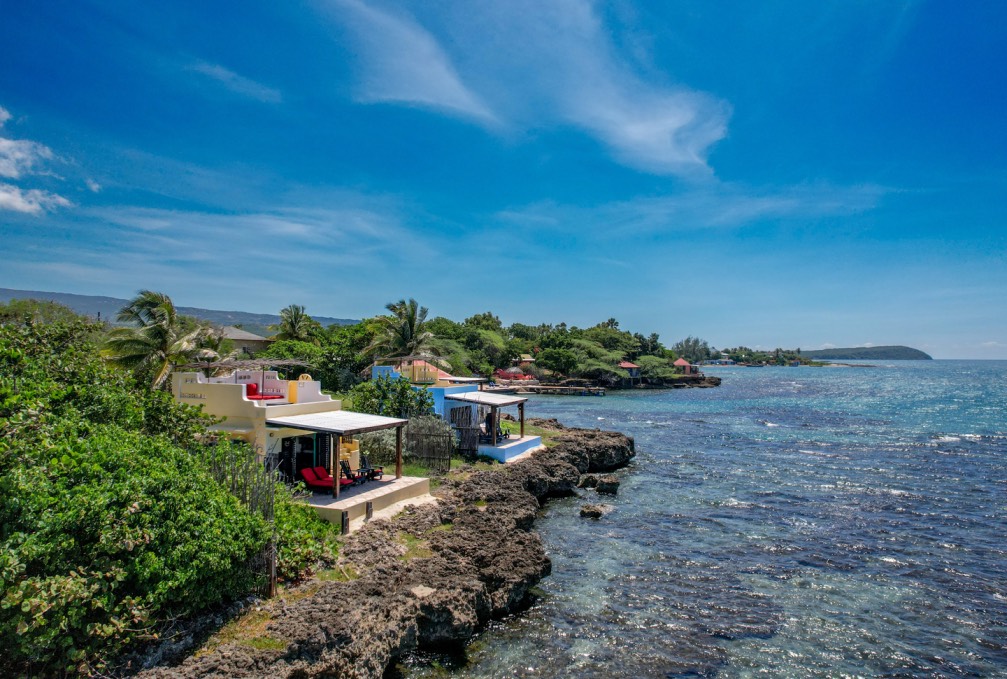
Jakes in Treasure Beach has been described by visiting writers as an invitation into Sally Henzell’s imagination. And from the moment you arrive at the pink entrance with flowers spilling overhead, you feel that you’re stepping into something special—a rare invitation to rest, retreat, and be inspired.
Tucked along Jamaica’s rugged south coast, Jakes is a boutique hotel far from the all-inclusives of Negril or Montego Bay. But in its own way, it’s a kind of “all-inclusive”, not in luxury but in spirit. A place that welcomes writers, musicians, filmmakers, and creatives of every kind. You’re greeted by books, local art, and playful signage that invites you to pause, laugh, and look around.
Built by Sally Henzell in 1993, Jakes began as a Spanish-wall cottage in a quiet fishing village and slowly expanded, room by room and tree by tree, into a cultural sanctuary. It’s not just a place to stay, but a world shaped by creativity, community, and the art of slowing down. Oceanfront cottages face the sea. Mornings are quiet, almost reverent. The silence is intentional. There’s space here to pause and just be.
Jakes is a place for creative collision and stillness. It doesn’t ask guests to consume the island, but to engage with it.
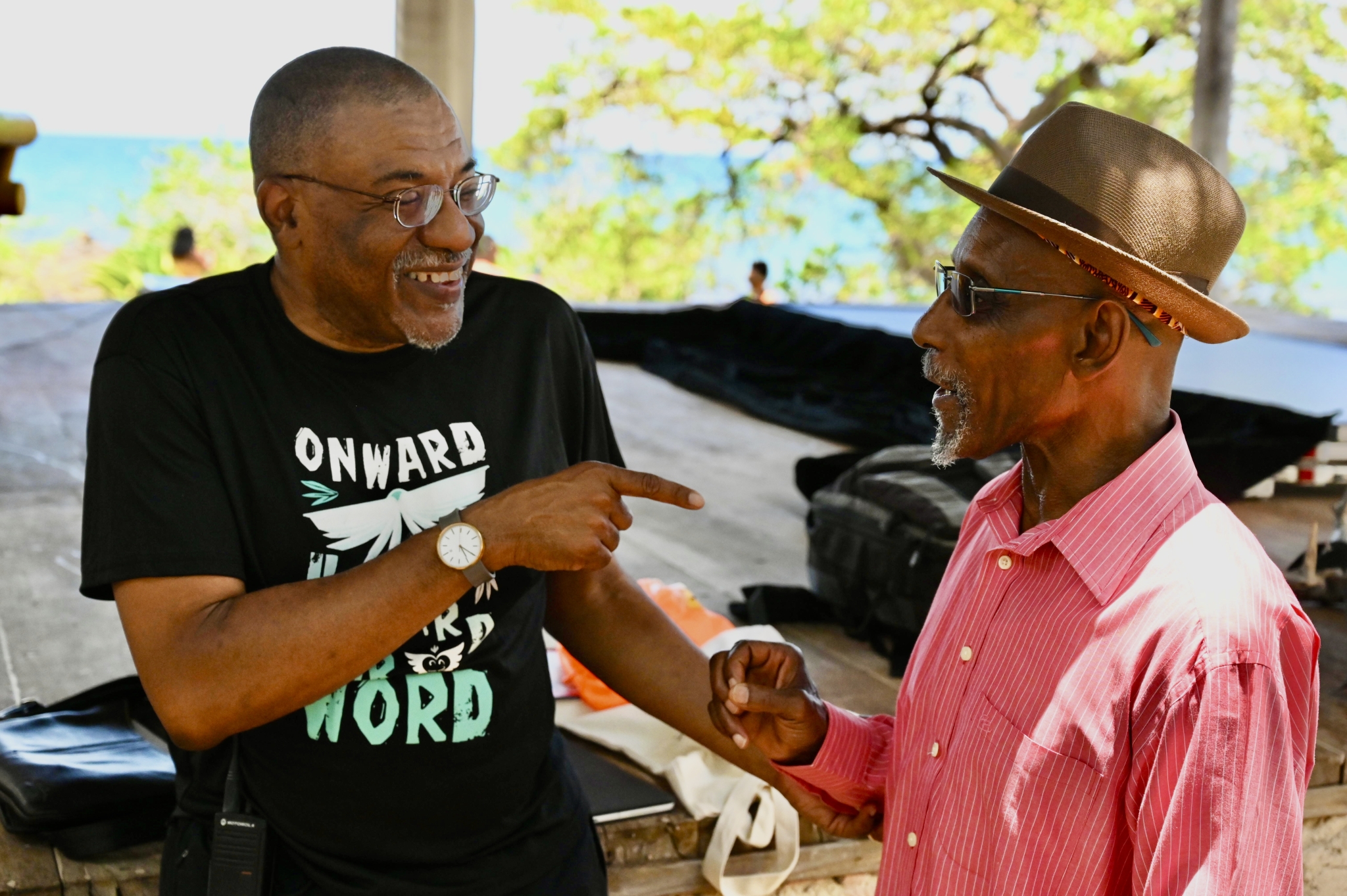
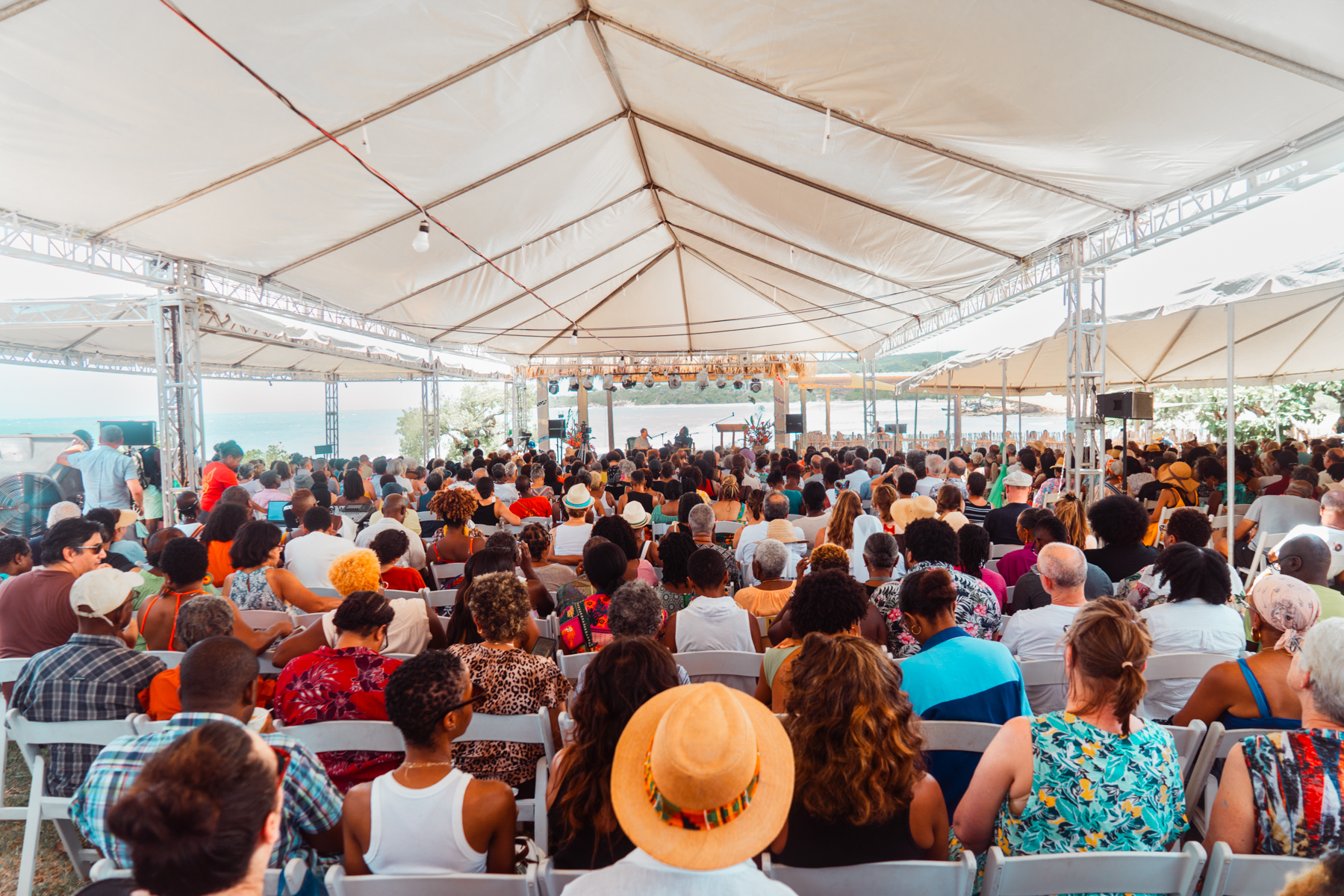
It’s also the spiritual home of the Calabash Literary Festival, co-founded in 2001 by Sally Henzell’s daughter, Justine Henzell, alongside Kwame Dawes and Colin Channer. Every two years, the sleepy village of Treasure Beach transforms into a gathering ground for poets, novelists, musicians, and dreamers from around the world. From Marlon James to Salman Rushdie, Zadie Smith to Jamaica Kincaid, the names are legendary but the atmosphere remains grounded, warm, and deeply rooted in Jamaican culture.
There are no VIP sections. No velvet ropes. Just a stage by the sea and stories. The festival is free and as Justine Henzell puts it, “Passion is the only price of entry.”
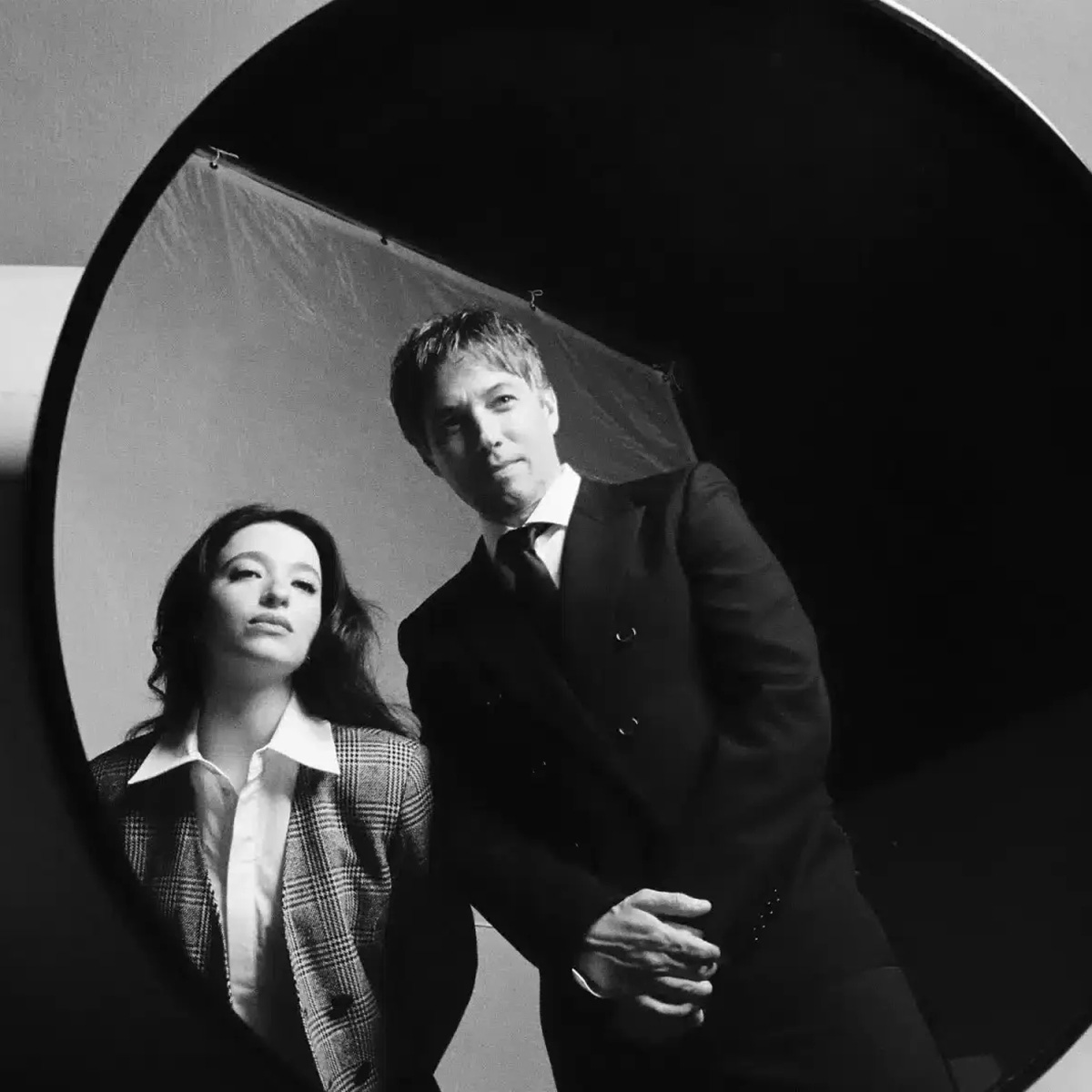
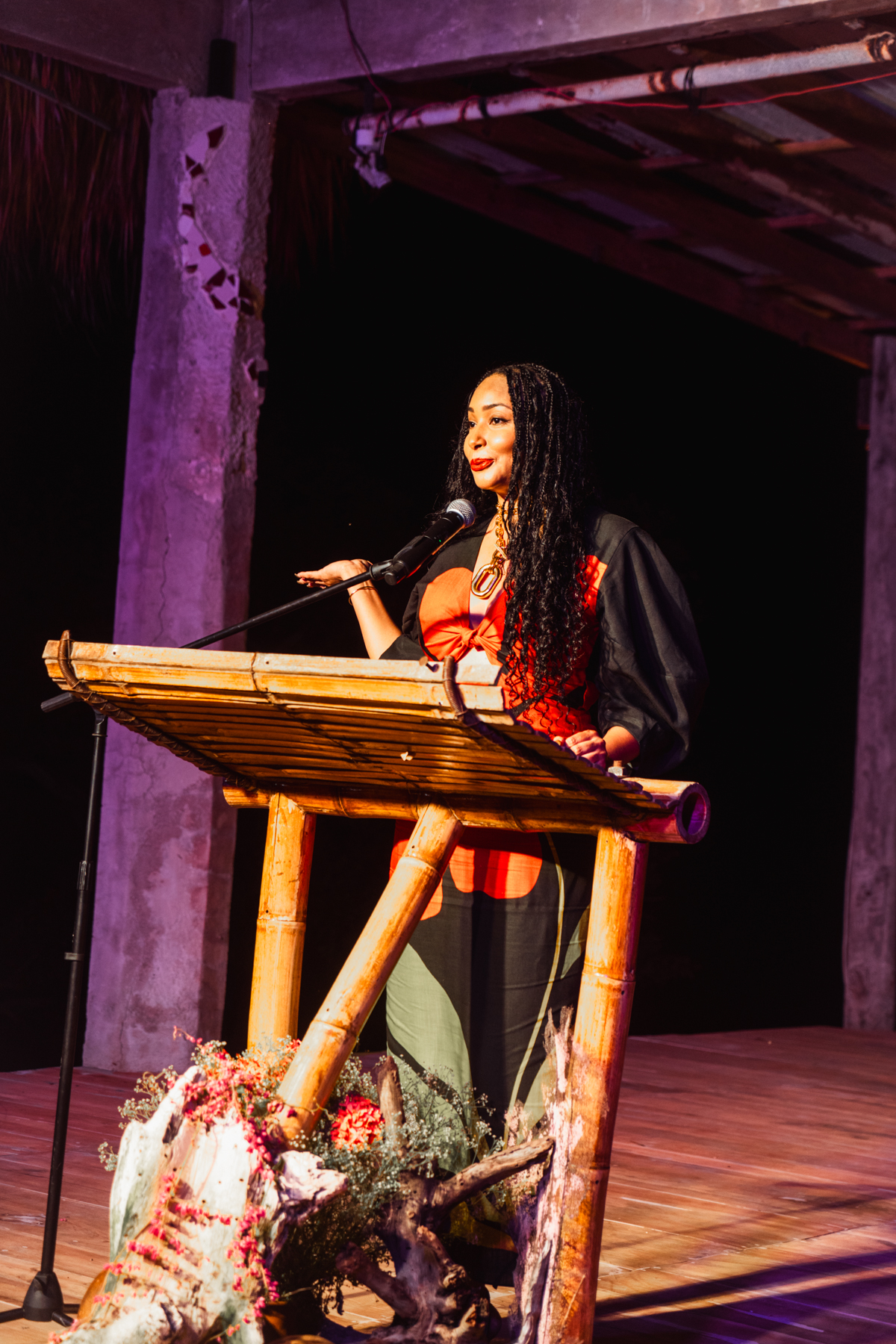
We sat down with Justine to discuss her bi-annual Calabash International Literary Festival.
Lauren Southcott: What does the idea of “sanctuary” mean to you?
Justine Henzell:Jamaica is very much a sanctuary, but it’s also a launching pad. It’s this fascinating contradiction. A Jamaican historian says everyone in Jamaica was either pushed or pulled. The original Taino population was small and the horror of the slave trade resulted in the largest forced migration to the island. Indentured labour from China and India added to the peoples that came under duress. Historically, other people came here to gather their strength: the Irish escaping famine, Jews fleeing persecution, Christians from the Middle East. Jamaica offered refuge from persecution. And I think that legacy lives on in our creative spirit. It’s not just about retreat. It’s about finding the strength to step forward. To tell your story and launch it into the world.
LS: Describe your sanctuary in Jamaica.
JH: It has to be Treasure Beach. It has to be waking up at Jakes, in one of the rooms by the sea, completely immersed in nature. There’s no man-made sound unless you create it. We have a silent policy in the mornings so you just hear the sea, the wind, the birds. That kind of silence is so rare now. It really restores your soul. I feel so blessed to have been born on this island, and to be able to wake up here.
LS: You co-founded Calabash Literary Festival in 2001. What was your vision then and how has it evolved?
JH: Kwame Dawes, Colin Channer, and I started Calabash with the goal of creating a world-class literary festival in Jamaica. We each brought something different. The fact that it’s set in a rural fishing village, which is not your typical literary hub, became its strength. People assumed we’d only showcase Jamaican writers, but our criteria was simple: if your work is of a certain standard, you’re welcome. And what that did was elevate Jamaican writers in turn. Marlon James, for example, said that he wouldn’t be where he is today without Calabash. His first publisher came through the festival.
LS: How do Jakes and Calabash connect?
JH: They’re completely symbiotic. Calabash couldn’t exist without Jakes. The environment and that feeling are essential to the experience. Chris Abani once said, “When you stay at Jakes, you’re privileged to live in Sally’s [Henzell] imagination.” That line has stayed with me. He captured something I’d never been able to put into words.
LS: What does the legacy of The Harder They Come mean now, 50 years on?
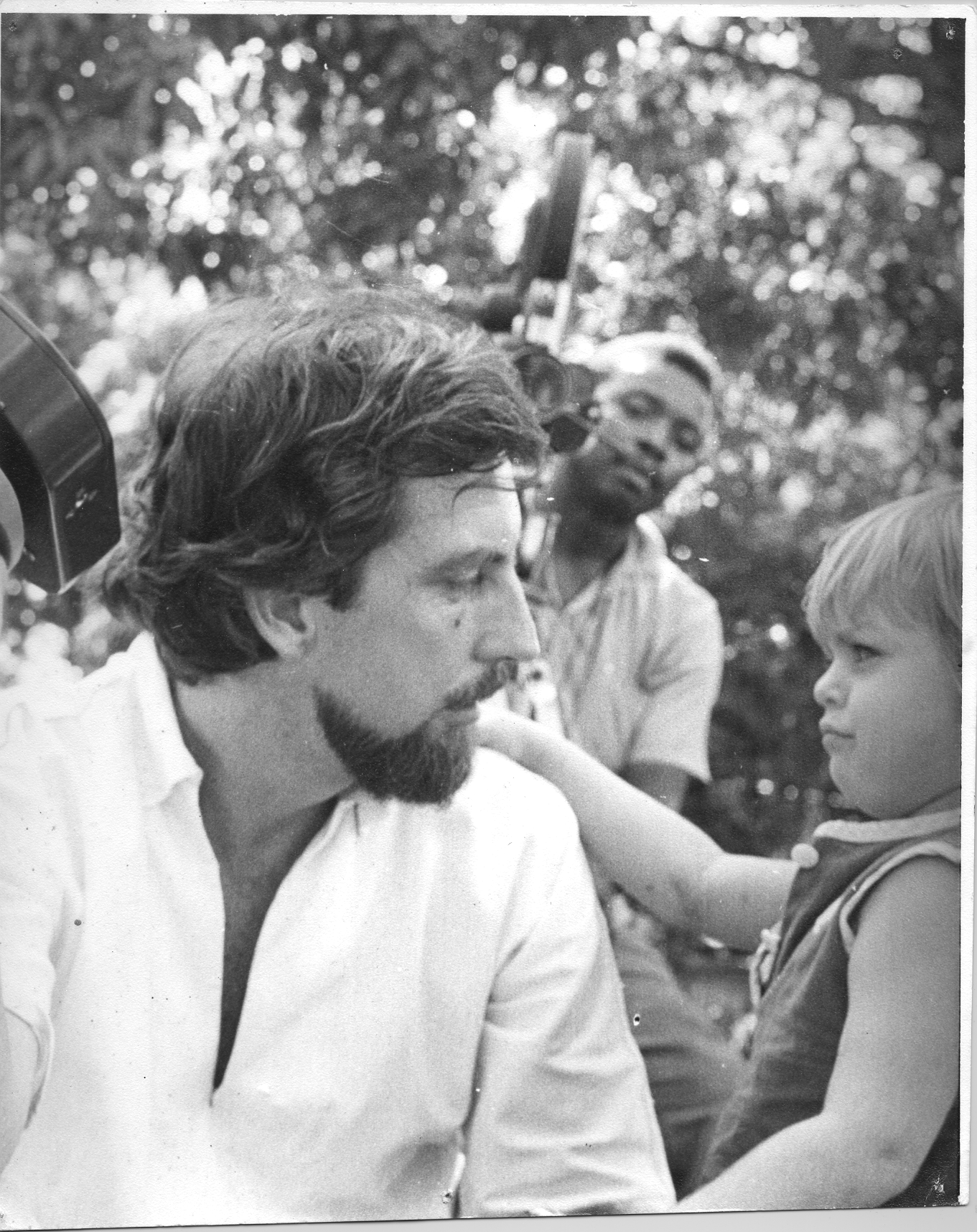
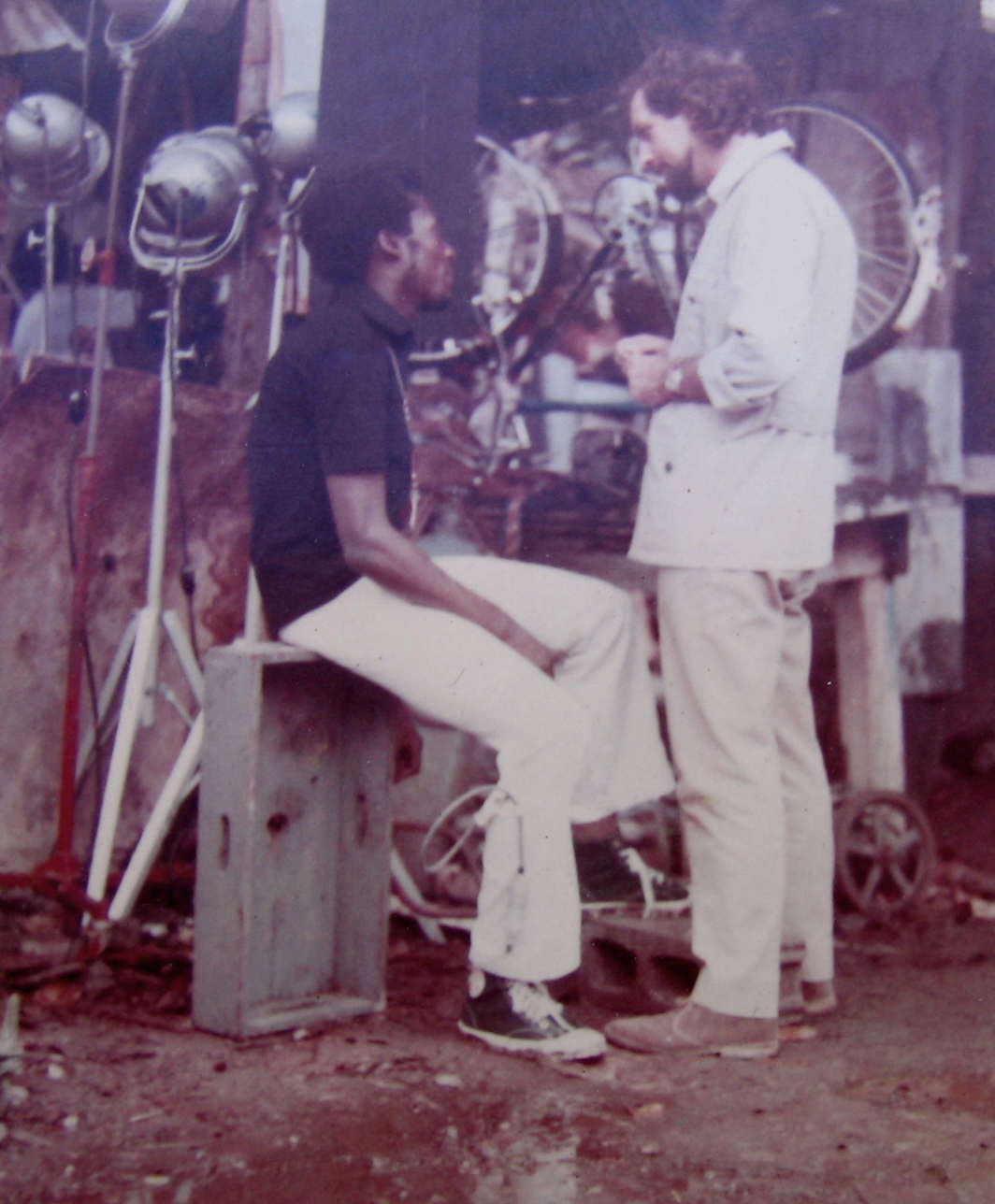
JH: You can only have a first once and The Harder They Come (1972) was Jamaica’s first feature film, directed by my father, Perry Henzell.
Fifty years later, I wanted to ask: can one great piece of art inspire more great art? The answer was yes. We commissioned poetry, visual art, music remixes, and even launched a stage musical. This year we’re opening a music hall exhibition in London.
I’m not precious about keeping the legacy unchanged. I want it to evolve. That’s the legacy—not a monument, but a living thing that sparks more creativity, more voices, more stories.
LS: What excites you about the future of Jamaican storytelling?
JH: We’ve only scratched the surface. I’m looking for rom-coms. I’m looking for family dramas. We’ve done The Harder They Come and the gritty, rebellious films that followed, and that’s great, but that’s not all we are. We haven’t even begun to tap into our folklore, our oral traditions, our comedy, our sci-fi. So something like Get Millie Black (2024), written by Marlon James for HBO, or Inheritance, directed by Storm Saulter for Sky TV, are major steps. Not just because they’re international, but because they’re made by Jamaicans, from the inside. Our talent is being seen. And finally, our stories are being told from our own perspective.




LS: What does the legacy of The Harder They Come mean now, 50 years on?
JH: You can only have a first once and The Harder They Come (1972) was Jamaica’s first feature film, directed by my father, Perry Henzell. Fifty years later, I wanted to ask: can one great piece of art inspire more great art? The answer was yes. We commissioned poetry, visual art, music remixes, and even launched a stage musical. I’m not precious about keeping the legacy unchanged. I want it to evolve. That’s the legacy—not a monument, but a living thing that sparks more creativity, more voices, more stories.
LS: What excites you about the future of Jamaican storytelling?
JH: We’ve only scratched the surface. I’m looking for rom-coms. I’m looking for family dramas. We’ve done The Harder They Come and the gritty, rebellious films that followed, and that’s great, but that’s not all we are. We haven’t even begun to tap into our folklore, our oral traditions, our comedy, our sci-fi. So something like Get Millie Black (2024), written by Marlon James for HBO, or Inheritance, directed by Storm Saulter for Sky TV, are major steps. Not just because they’re international, but because they’re made by Jamaicans, from the inside. Our talent is being seen. And finally, our stories are being told from our own perspective.