

A Rabbit’s Foot’s deputy editor Chris Cotonou spends forty-eight hours on Belmond’s dreamlike Venice-Simplon-Orient-Express.
It was full-steam ahead until the Bergen Pass. Here, in a narrow strait between mountains and forests, as we crossed into Switzerland, the November snow softly blanketed the Venice-Simplon-Orient-Express. A respite before our journey carried onwards to Paris.
This was the first time in about four hours I’d left the train. My cabin steward Gregor — smart in his blue uniform and cap — helped the residents of Compartment B into the fresh air. We had all barely met, except for the odd “hello” en-route to the bar or dinner carts. It’s a funny way to travel, by sleeper train; there’s a sense of being on a group holiday with strangers. And yet theVenice-Simplon-Orient-Express is, by its fame and by its private luxuries (thanks to Belmond), a way of escaping the real world altogether into one of total fantasy. Its most notorious association, of course, is a fictitious one: Agatha Christie’s Murder on the Orient Express.
“Murder? That won’t happen until after dinner,” joked Gregor. While we were messing around in the snow, he had brought some savoury petit fours to our private cabins accompanied by a pot of tea from Mariage Freres. Leisure was the name of the game on the Venice-Simplon-Orient-Express. I had wanted for nothing since we departed Venice eleven-am sharp that morning, passing by lagoons, industrial Northern Italian towns, and finally entering the Dolomites. In 2026, a new Italian route will be unveiled, bringing fortunate guests to the Amalfi Coast, via Pompeii.
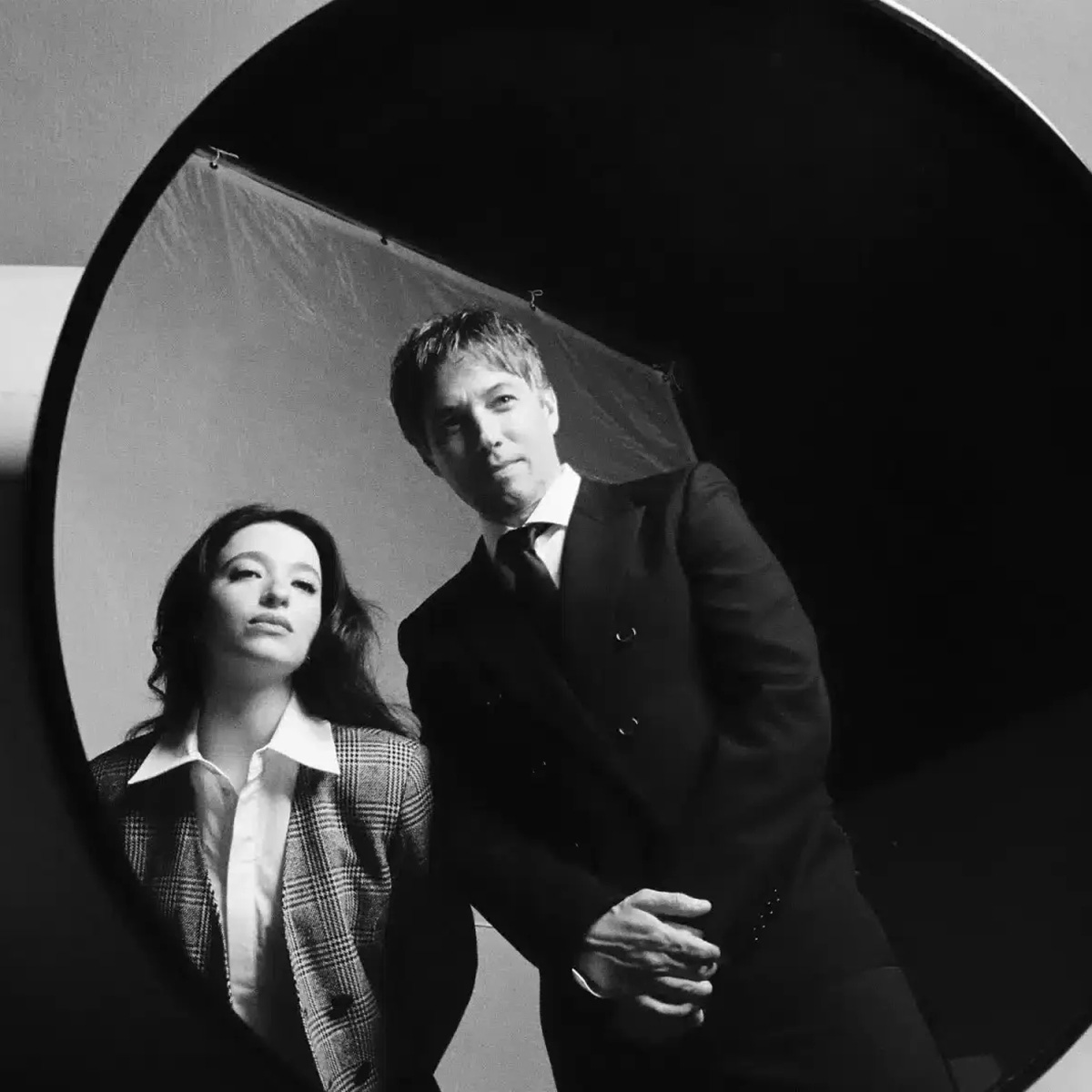
I had been invited on the train to watch the talented Aliocha Schneider perform as part of a new series by Belmond called Voyages en Musique, which ran briefly between September and November last year and may return again next autumn. Contemporary French artists were on other services but I was particularly keen to see Aliocha, who is known for his romantic poetic melodies.




It happened that Aliocha was two cabins down from my own. His girlfriend, the pop star Charlotte Cardin, was staying with him.
“I’m very excited,” he beamed to me, as we hugged the sides of the carriage’s corridor. I was heading to the bar cart before lunch so I could drop off postcards in the train’s own letter box. Each cabin supplies stationary, writing paper with the VSOE watermark. I can’t think of anywhere more thrilling to receive mail from — perhaps that post office on Mount Fuji.
“I still cannot believe I’m on the VSOE, and performing here too,” he shrugged before returning to his room. And nor could I. This sense of disbelief continued all the way to Paris, and then even days after back home in London. It was a dream journey, on most peoples’ bucket-lists, which more than lived up to expectations; appropriately old-world, with a sense of theatre that quietly demanded we all play into its tropes. I wore tailored trousers and sports coats throughout the day. No trainers. No jeans. And by dinner time, I had my best black tie ready. All of us on the train were reading the same memo—whether it was the four French brothers, the American newlyweds, the eccentric lone Scotsman, or Aliocha’s trendy crew, the cosmopolitan elegance of Christie’s book seemed to come alive at all hours in our dress and manners, thanks to my equally-committed travelling companions. But also because of the wonderful staff.
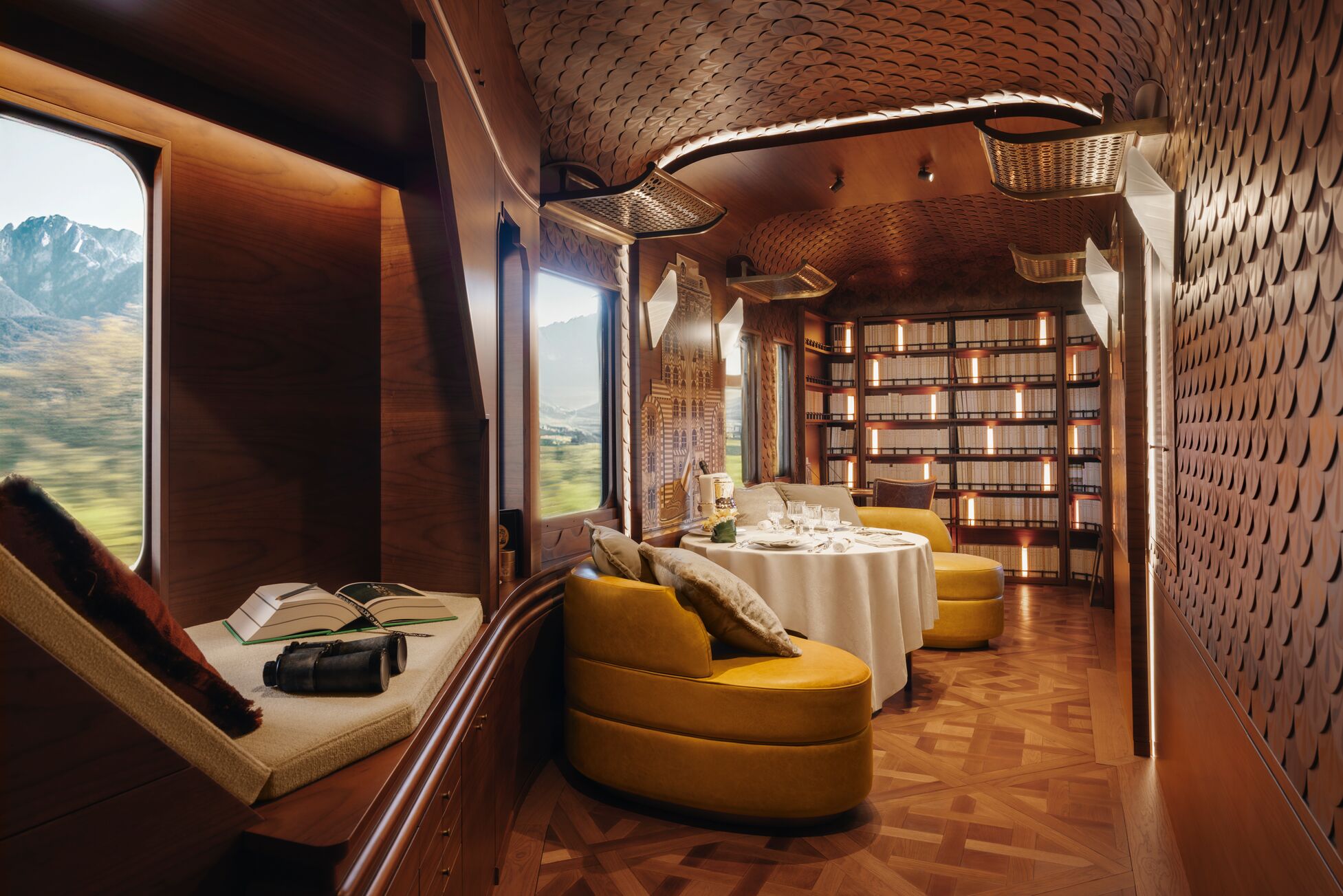
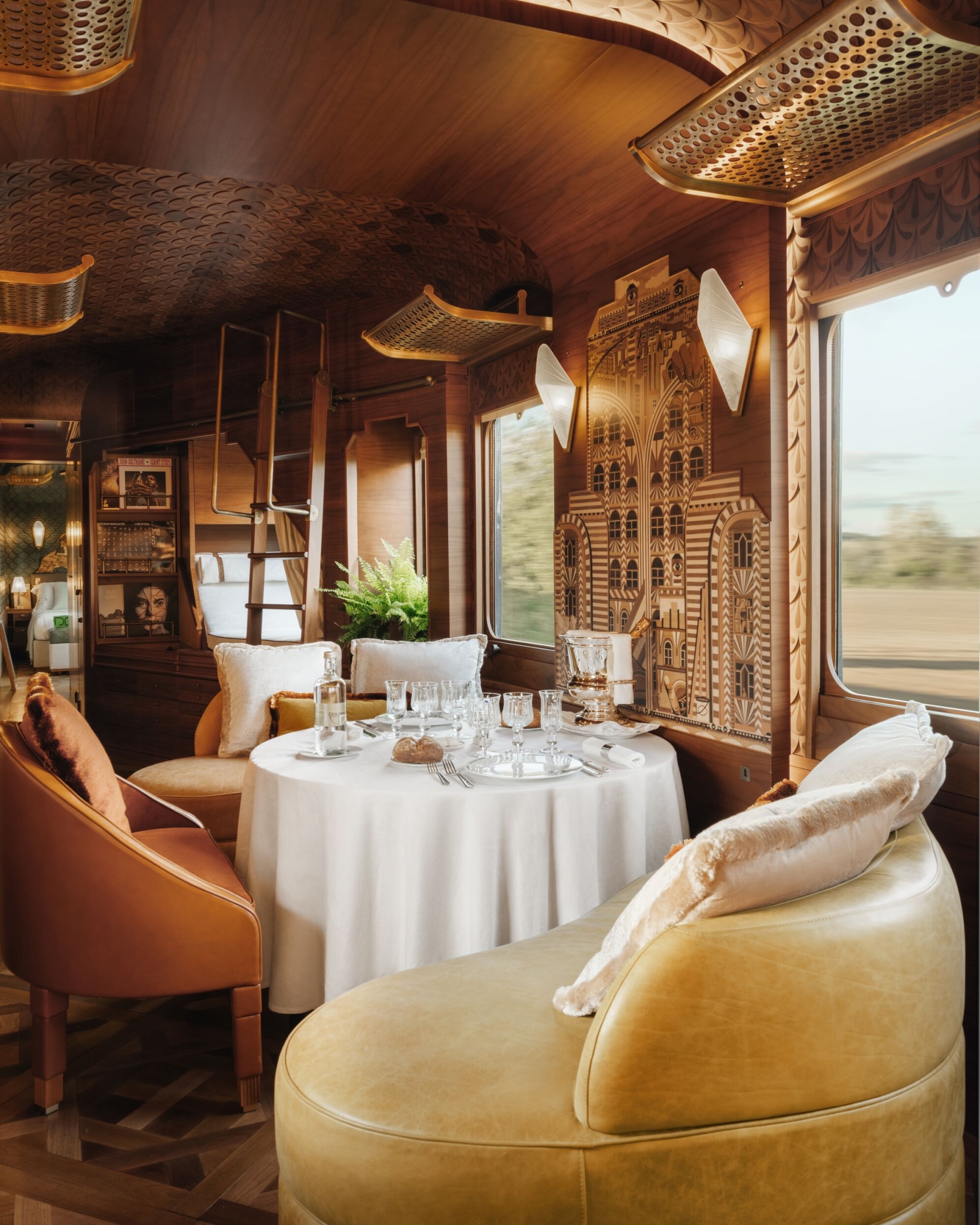
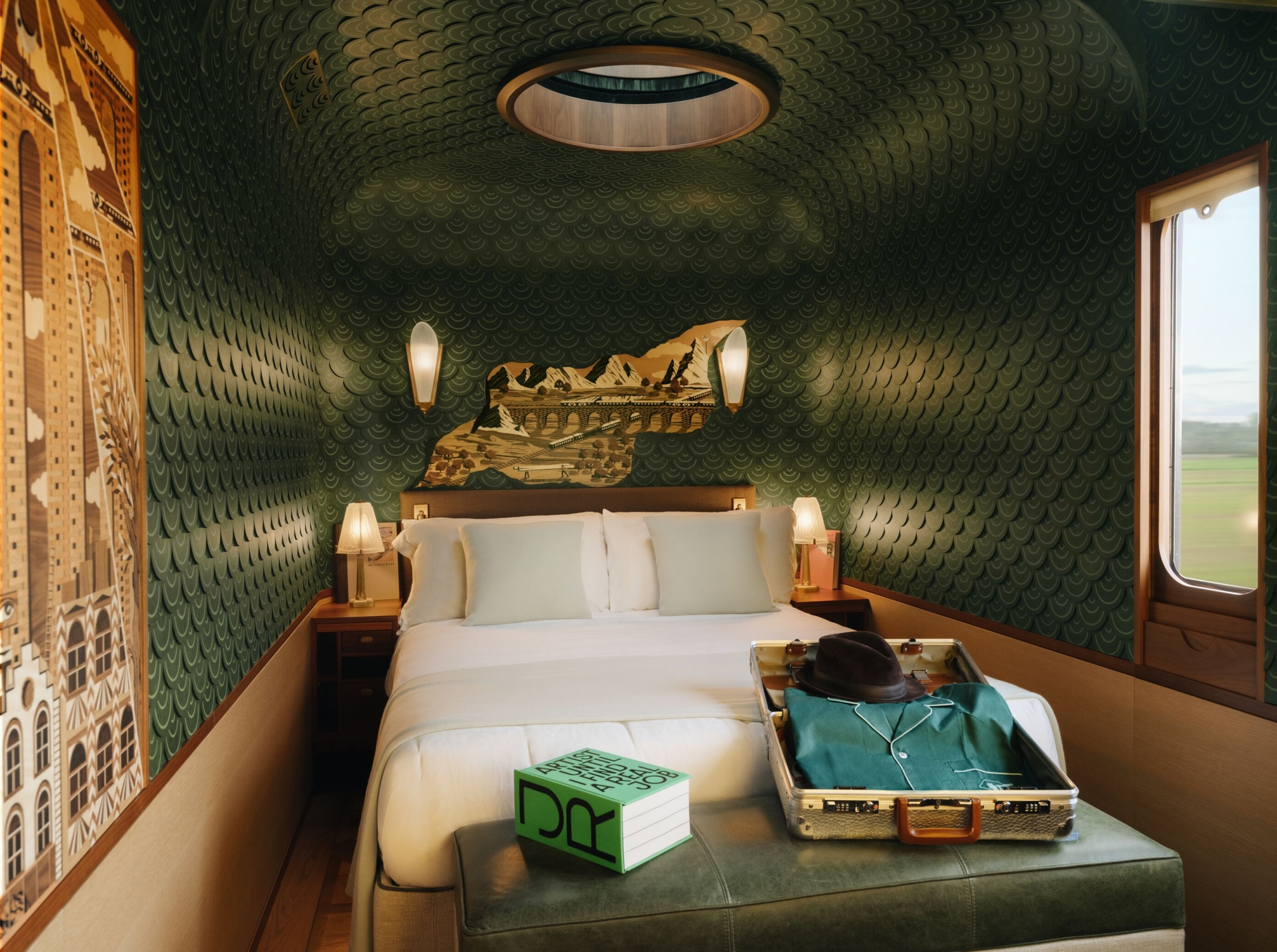
Much of that has to do with Belmond’s dedication to the Venice-Simplon-Orient-Express’s history. Each carriage dates back to the 1920s and 1930s, and is meticulously restored, telling its own story through unique carpets, compartments, and patterns on the walls (one design is emulated on our night gowns). The coal burners remain at the front of every carriage, with Gregor and his colleagues attending to them for heating. There are magical nooks and crannies, like in an old house and I wandered back and forth repeatedly to inspect them.
The first dinner cart still has the original, beautiful floral motifs on the walls, only slightly faded away. This was explained to me by Marco the maitre ‘d (and my dining companion that evening) while lunching on rich, delicious French haute cuisine that – appropriately again – felt plucked from an Escoffier picture book. Saffron sauces over white fish, avocado starters with grapefruit, and chocolate delights, including an edible model of the train. The kitchen itself is a real sight. How on earth does all this incredible grub get made in a space so narrow? The chef, wearing a towering toque blanche, invited me to have a look around. “You must be svelte to work on this train,” monsieur said. “Otherwise you won’t be able to move.”
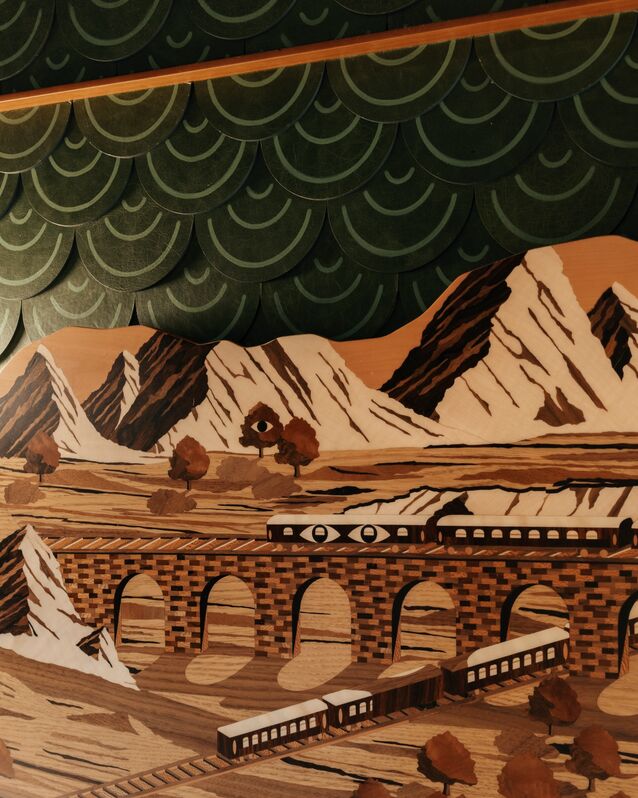
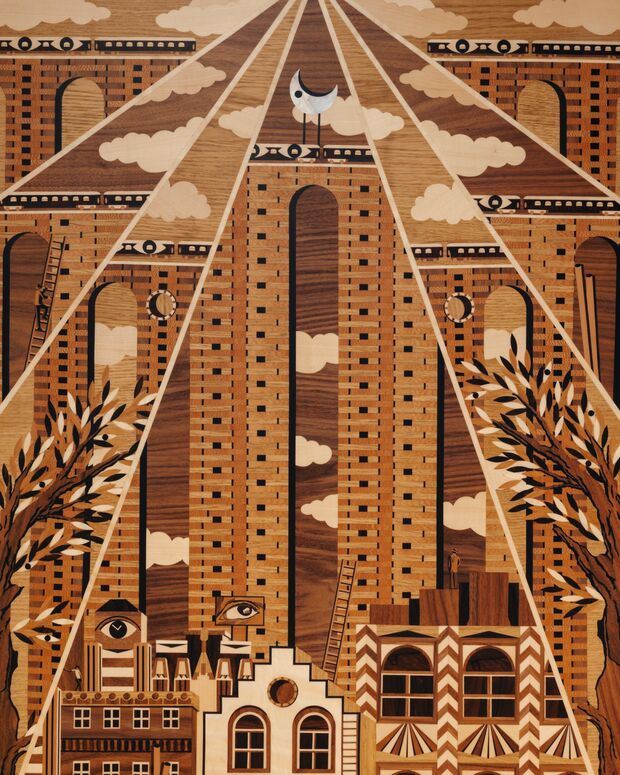
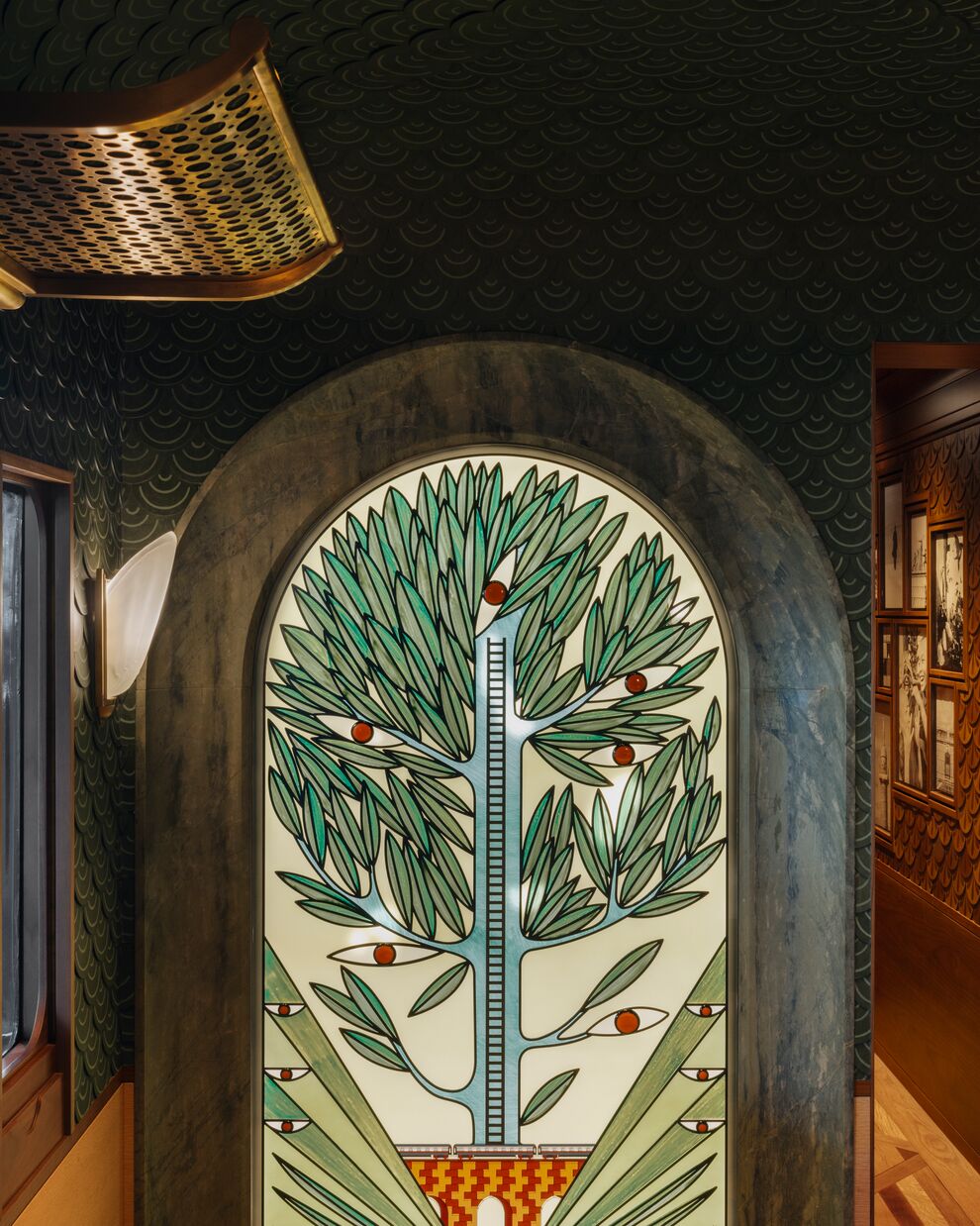
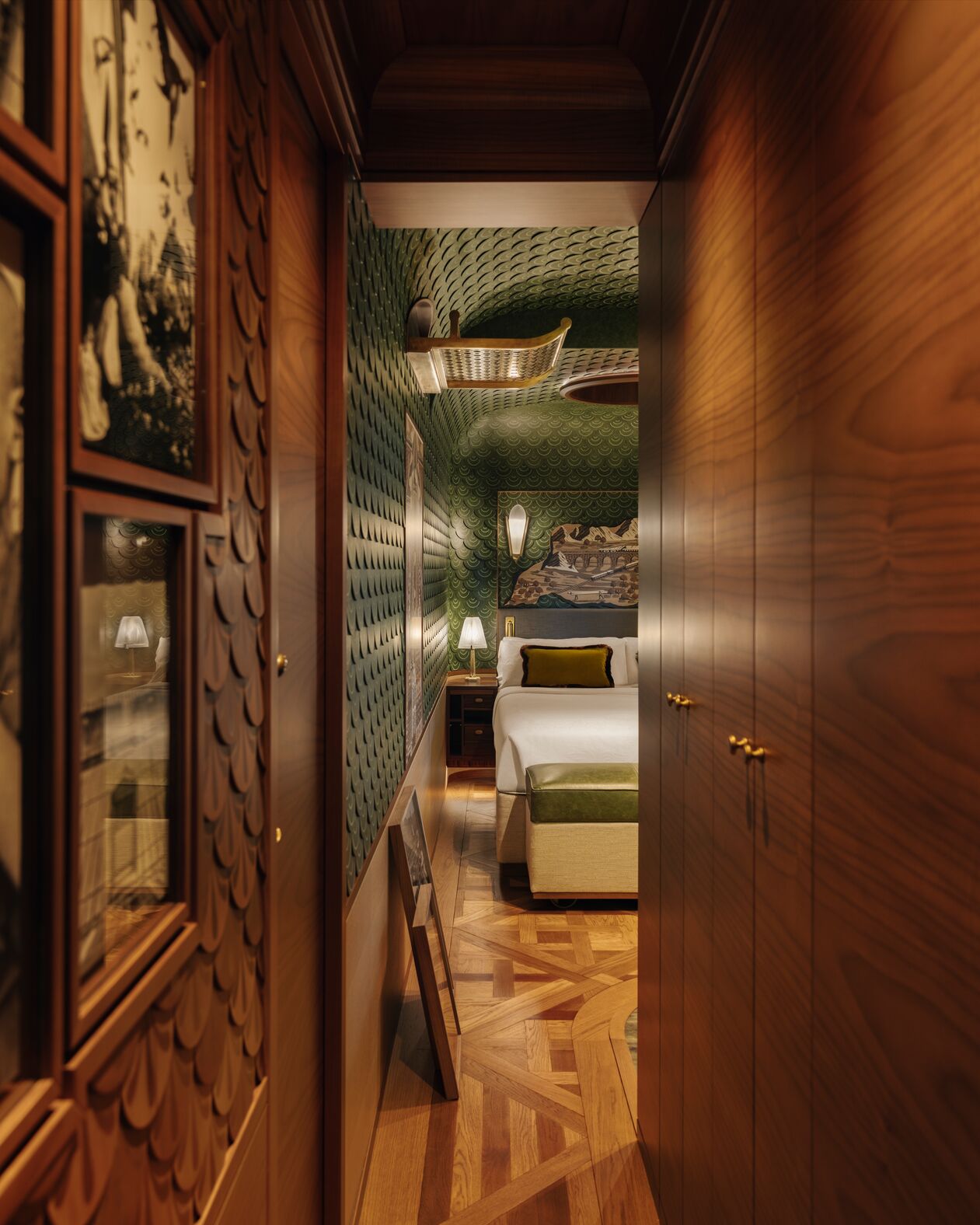
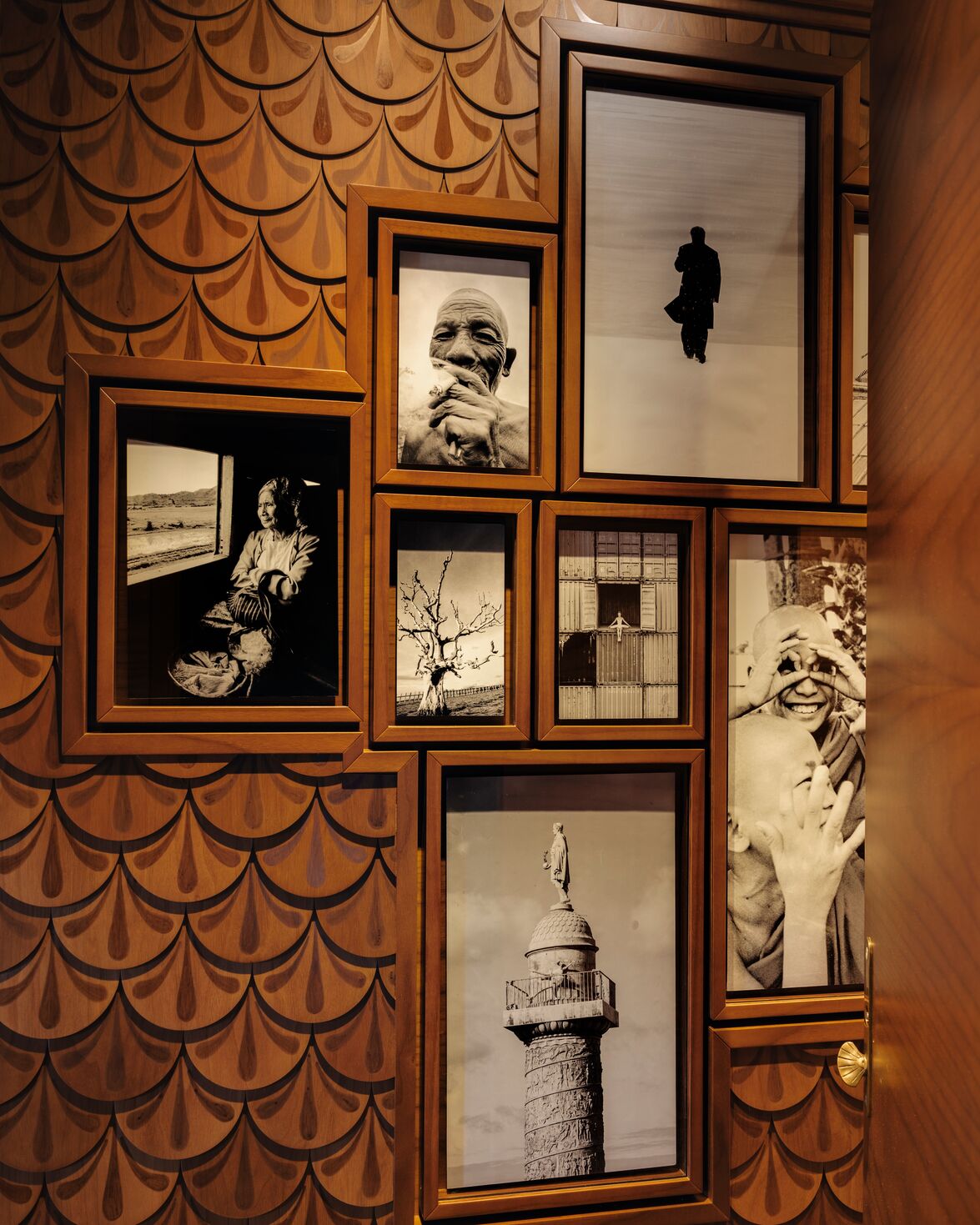
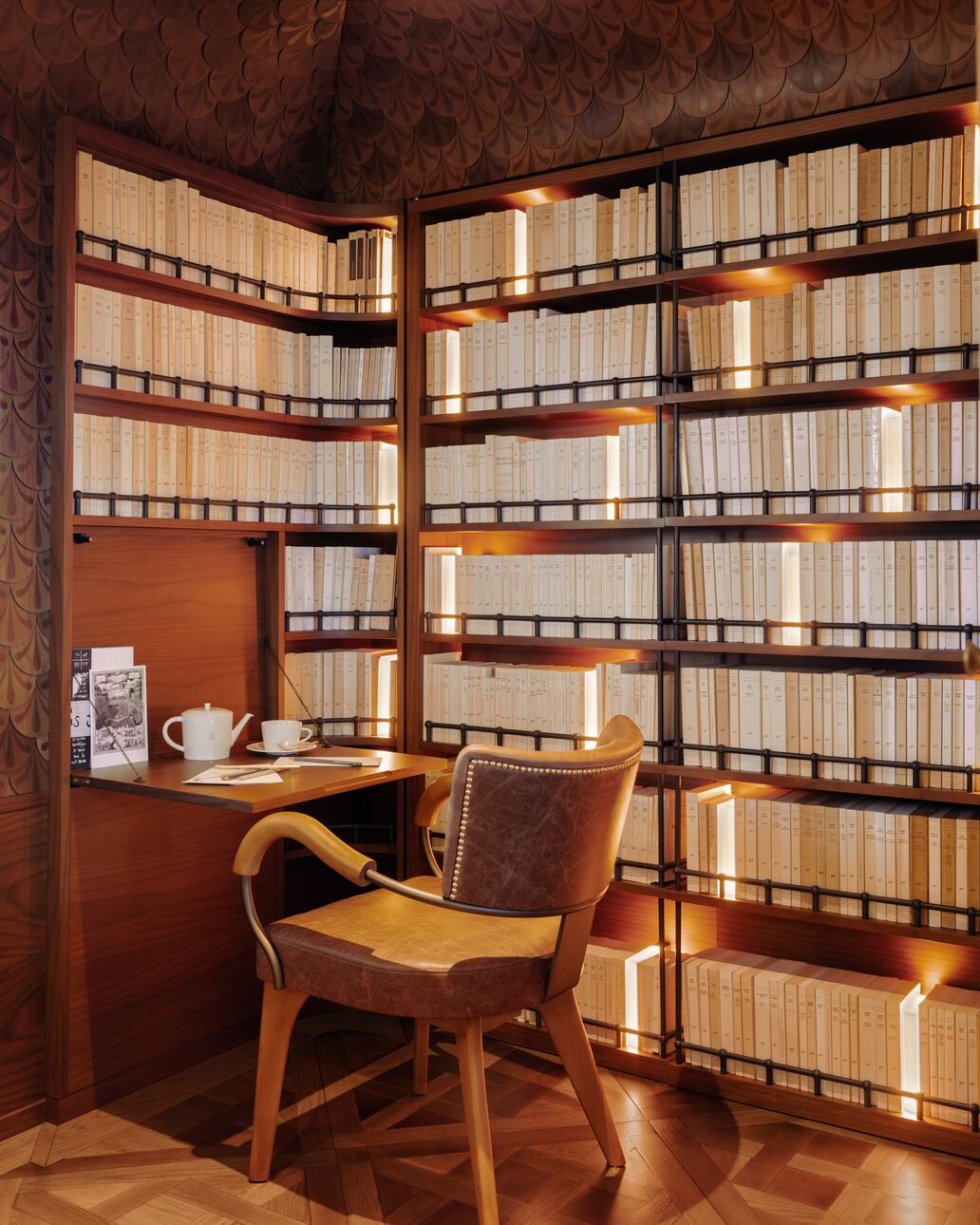
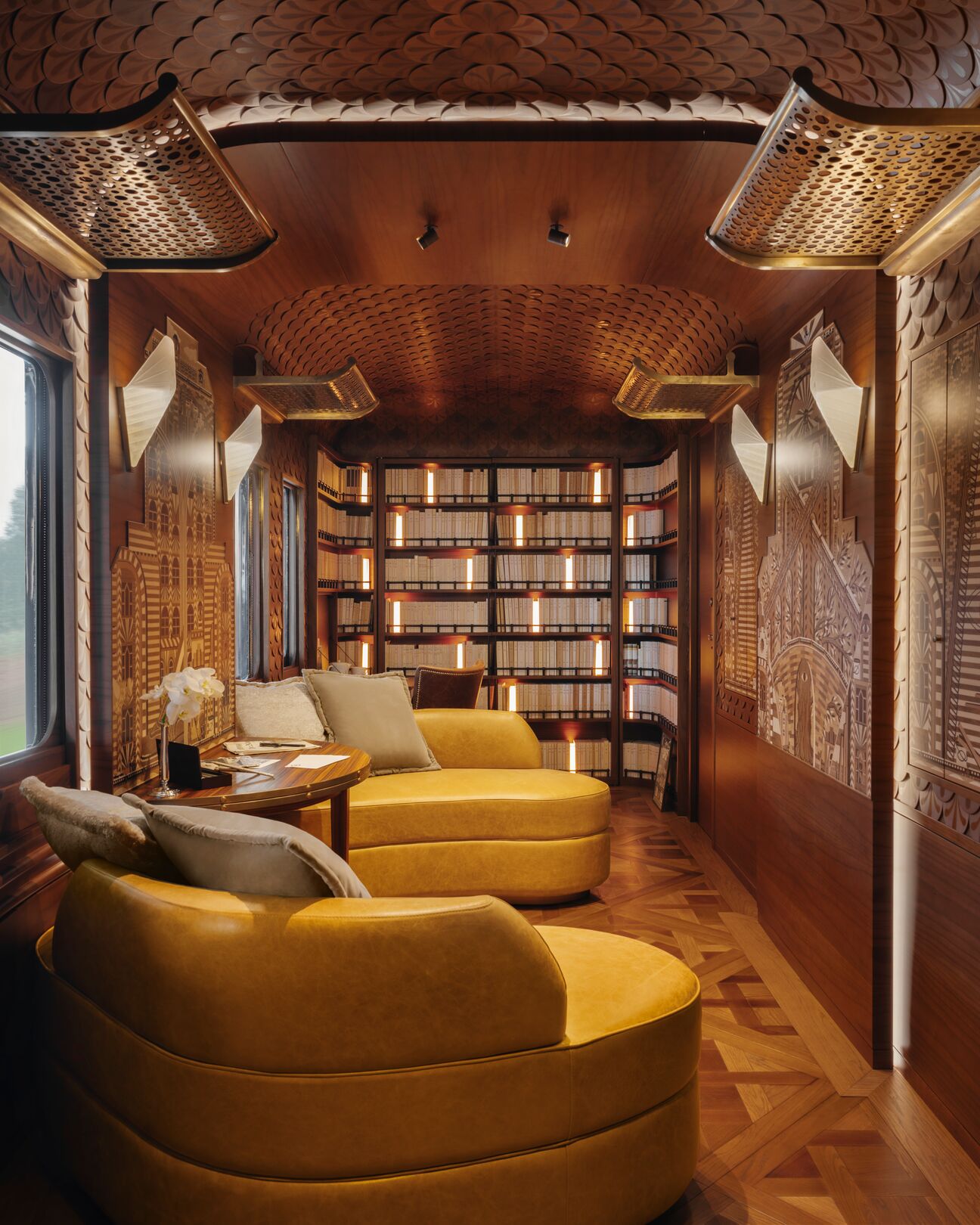
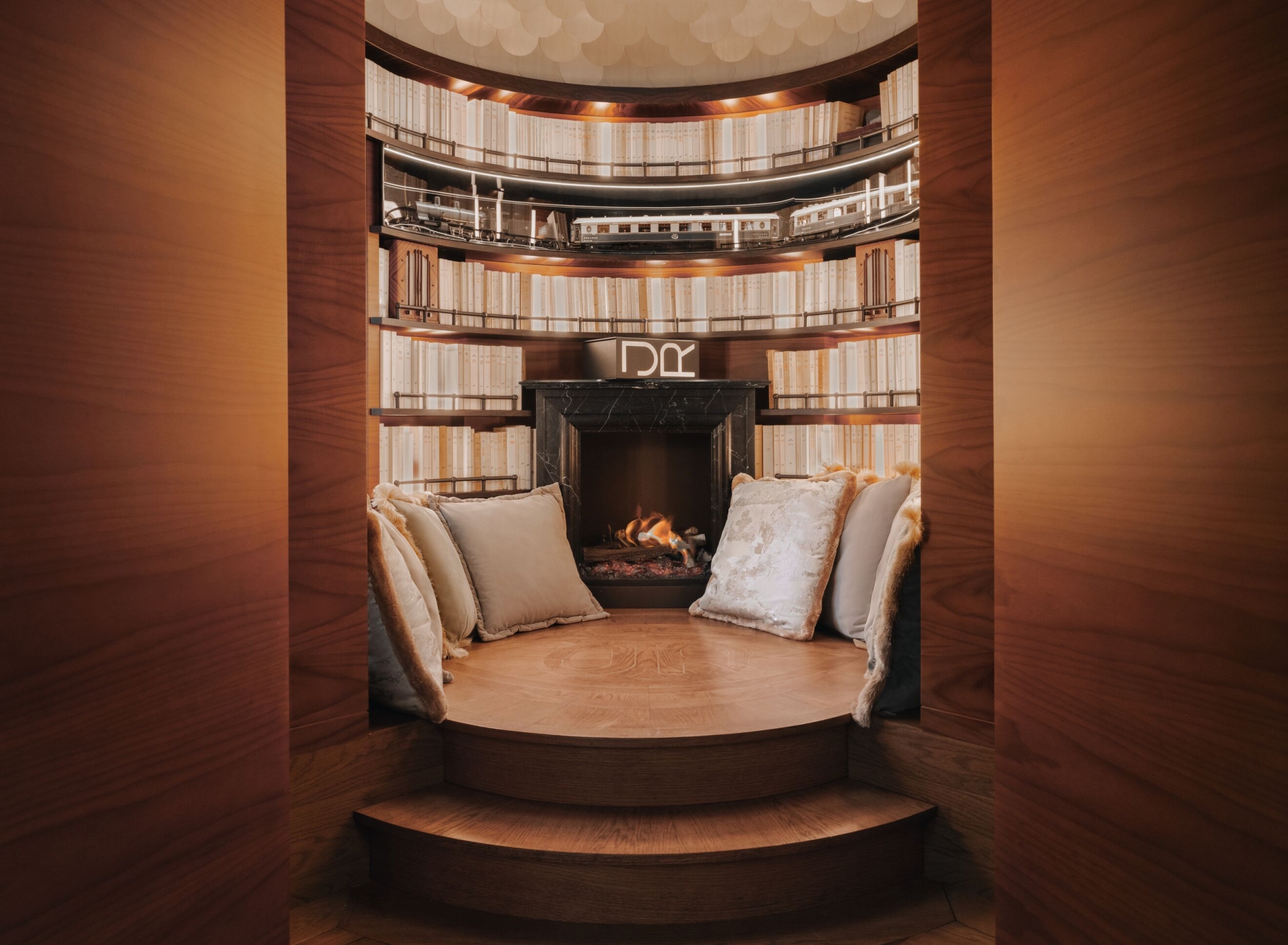
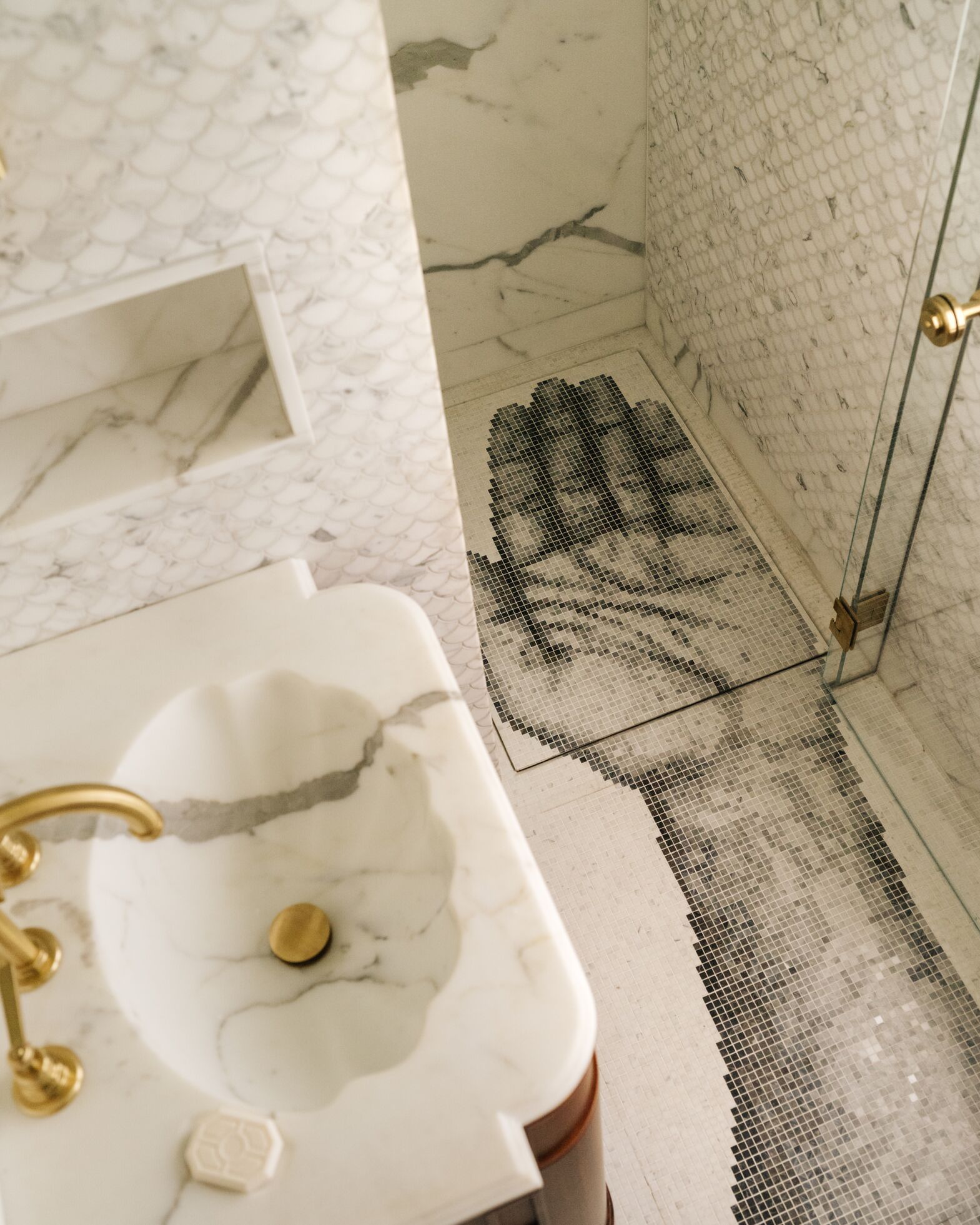
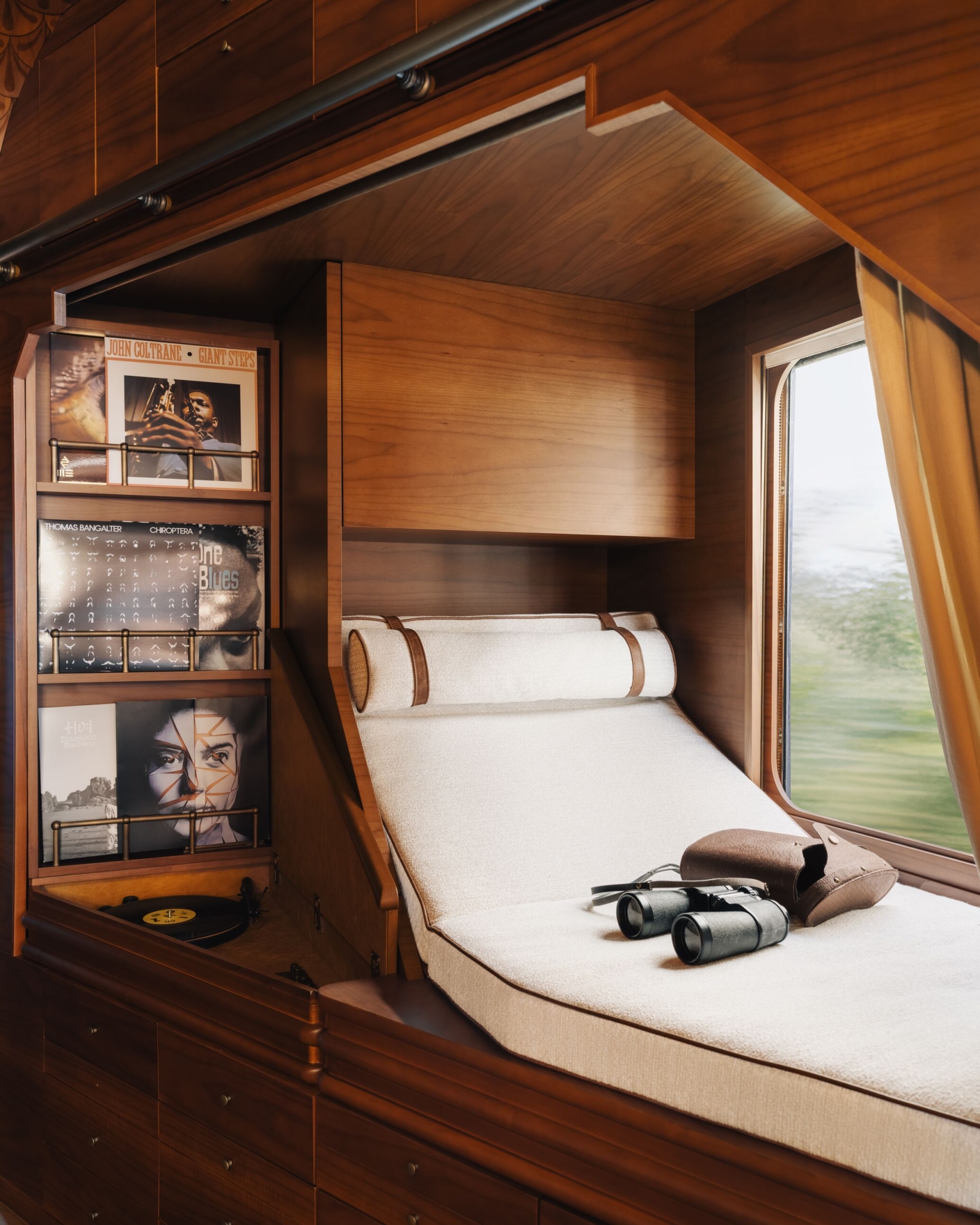
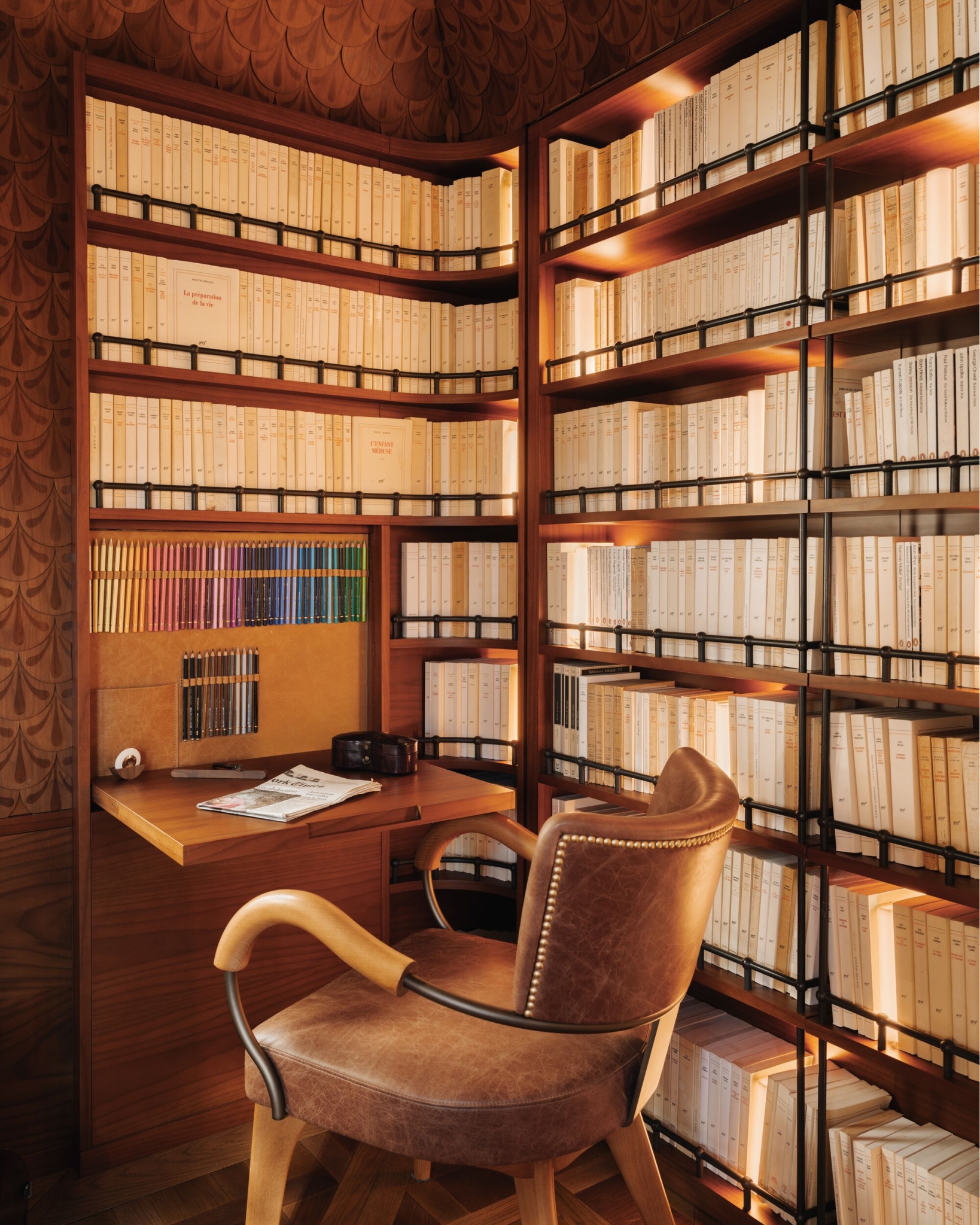
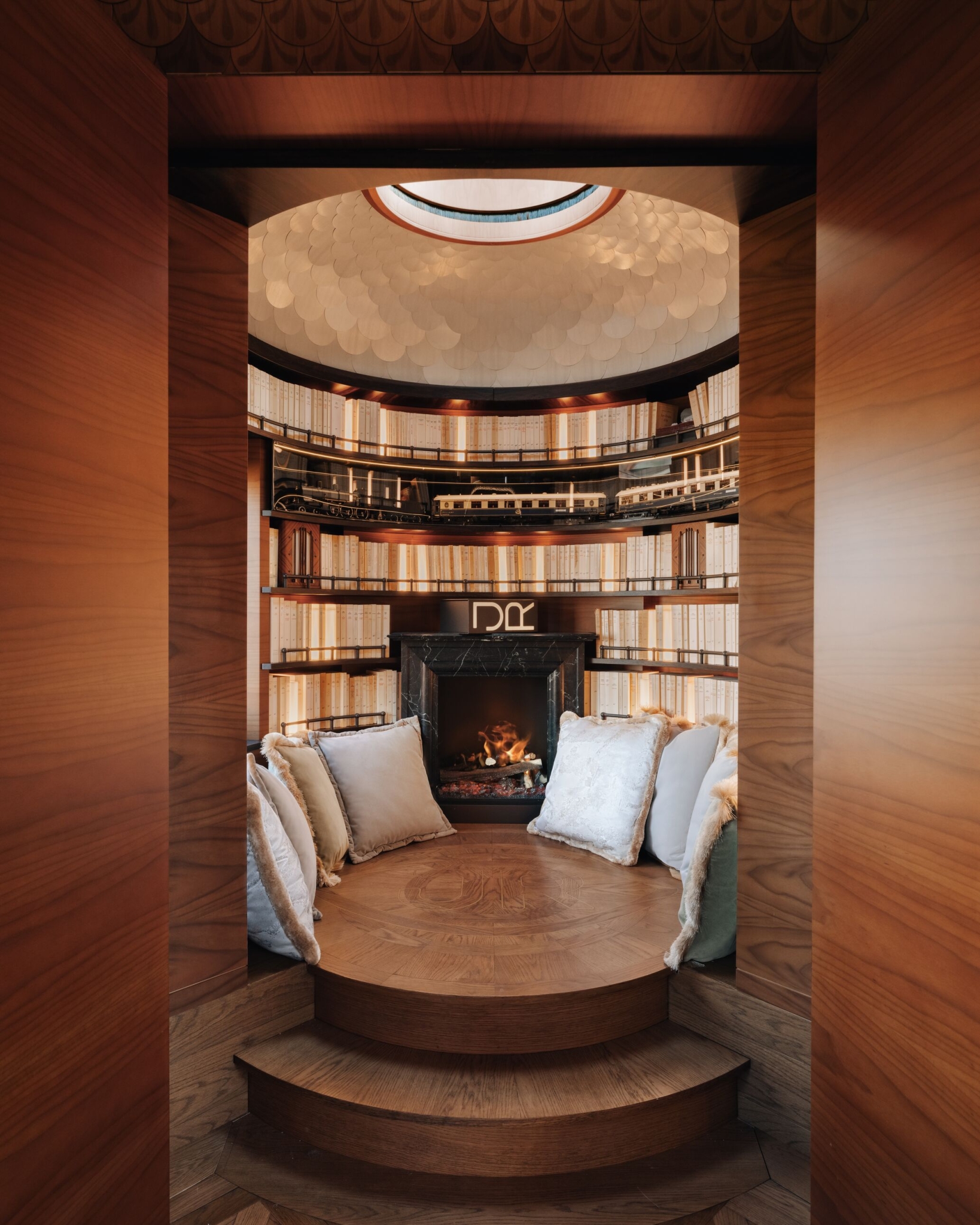
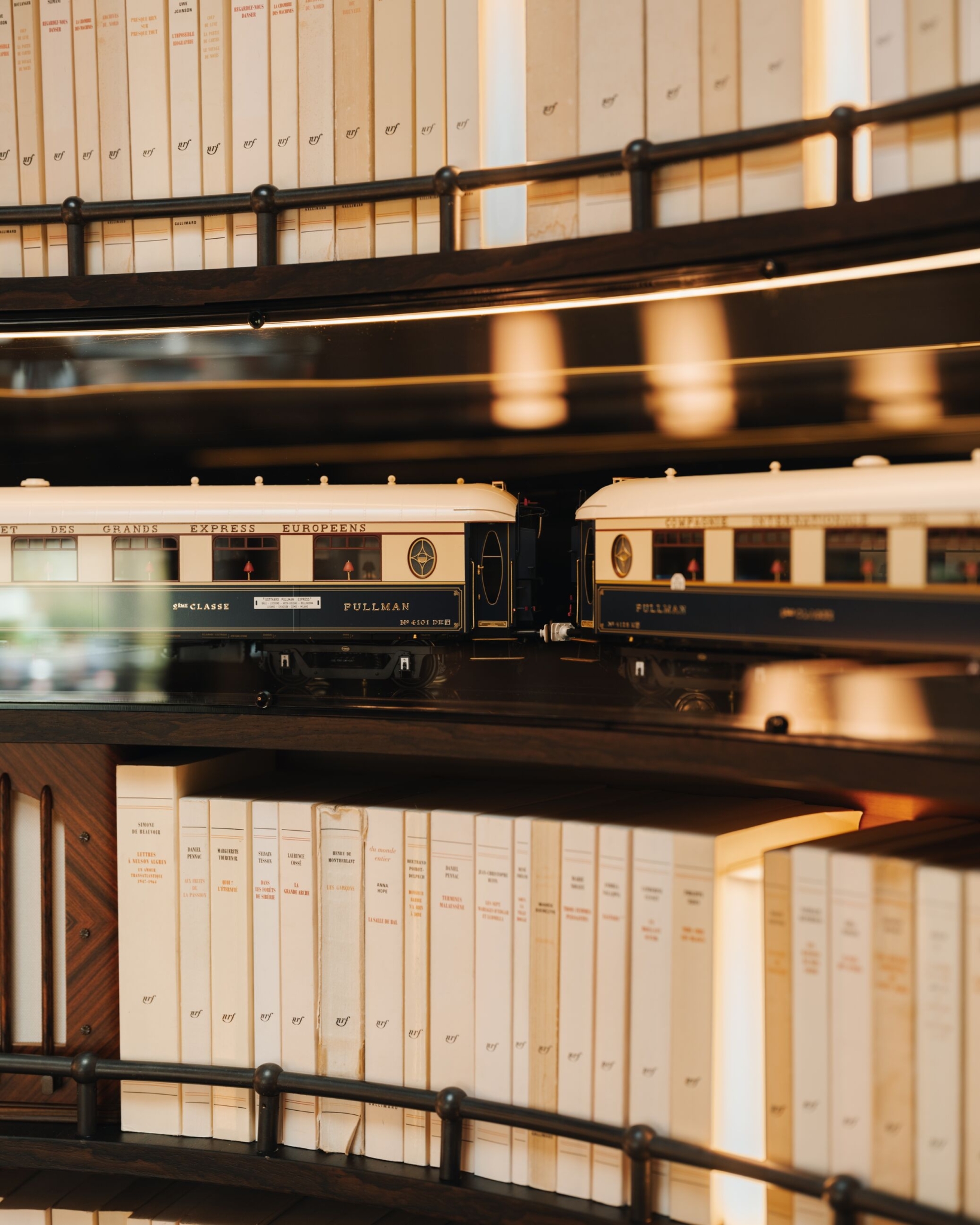
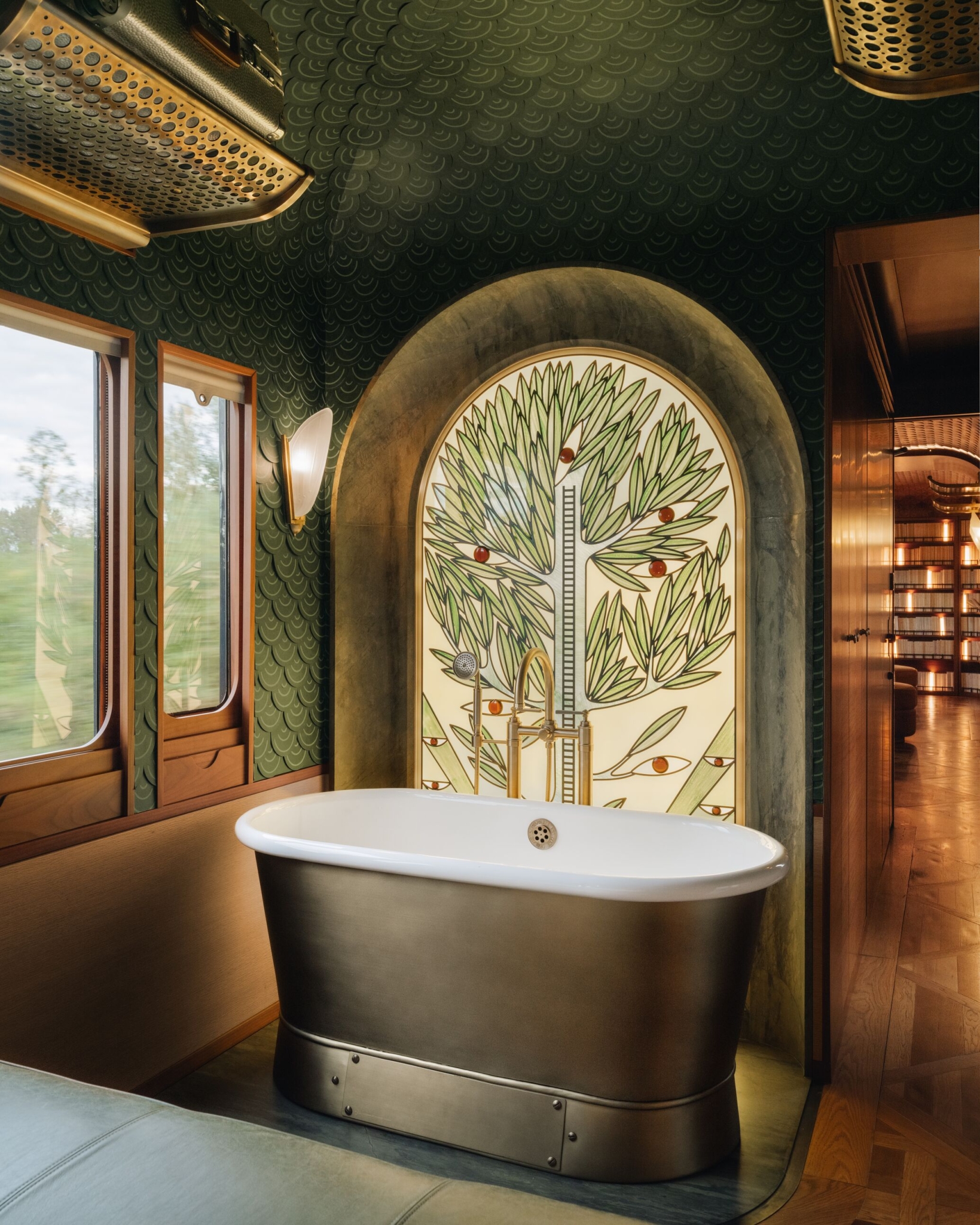
But the biggest surprise was saved that afternoon. The train’s manager insisted I come with him to the furthest carriage. “This is L’Observatoire,” he explained, instructing me inside. And on pushing the lacquer wall, it opened into a suite that made me audibly gawp. Designed by the artist JR, L’Observatoire has been described as an “apartment in motion” and it genuinely feels like somewhere fit to be lived in. There is a groovy 1970s atmosphere, with plush rugs, a lounge bed beside a vinyl record player and a study corner desk by a bookcase stuffed with Gallimard editions and personalised stationery from Faber Castell. The bedroom features a bathtub in front of a magnificent stained glass structure. Above the bed itself is a remote-controlled oculus – in homage to JR’s photography – that reveals the starlit sky; a feature that is undoubtedly its crowning jewel. Or so I believed.
The manager ushered me to the bookcase. “Push it,” he grinned (at this point, his mischievous excitement reminded me a little of Gene Wilder’s Willy Wonka). It opened into a circular hideaway with books, cushions on the floor, and vintage models of the Venice-Simplon-Orient-Express. Further, he said “there’s a puzzle in this room, and if the guest can figure it out, they receive a prize.” More mysteries on the Venice-Simplon-Orient-Express.
I happened to sign-off the final copy-proofs of Issue 13 on the train; then, reading through our cover star Charli xcx’s essay on its final leg. This was a satisfying way to pass the time, with the world pressing on from my cabin window. Then dinner. And after Aliocha’s performance in the bar, followed by a well-made Negroni, I returned to my compartment to find that Gregor had prepared my bedding. We were drifting through Switzerland and into Lichtenstein. I had never been to Lichtenstein but I can say for certain I slept through it with real ease. My eyes opened in France. “Breakfast is at L’Orient,” said Marco, after rapping on the door around nine. He ripped off a ticket. I sat on the bed. It’s a shame the train didn’t press on to London; I could’ve done with another night.
I could’ve done an entire week on the train, truth told.
And then at breakfast, aware of each second until Saint-Lazare, I thought, why couldn’t the world be a little bit more like the Venice-Simplon-Orient-Express? More polite, more organised, happily communal, with just two directions — ahead or behind – to worry about. Fantasy is reality here.
Before disembarking at Paris, on its coldest day in years, I was given a gift by Gregor that had something of a Christmassy warmth to it – a box with a VSOE pen and a little handwritten note. “Now you know the magic of the Venice-Simplon-Orient-Express, it will stay with you forever,” the steward wrote.
A few weeks on, I’ve yet to shake that magic off.
Continue Reading