

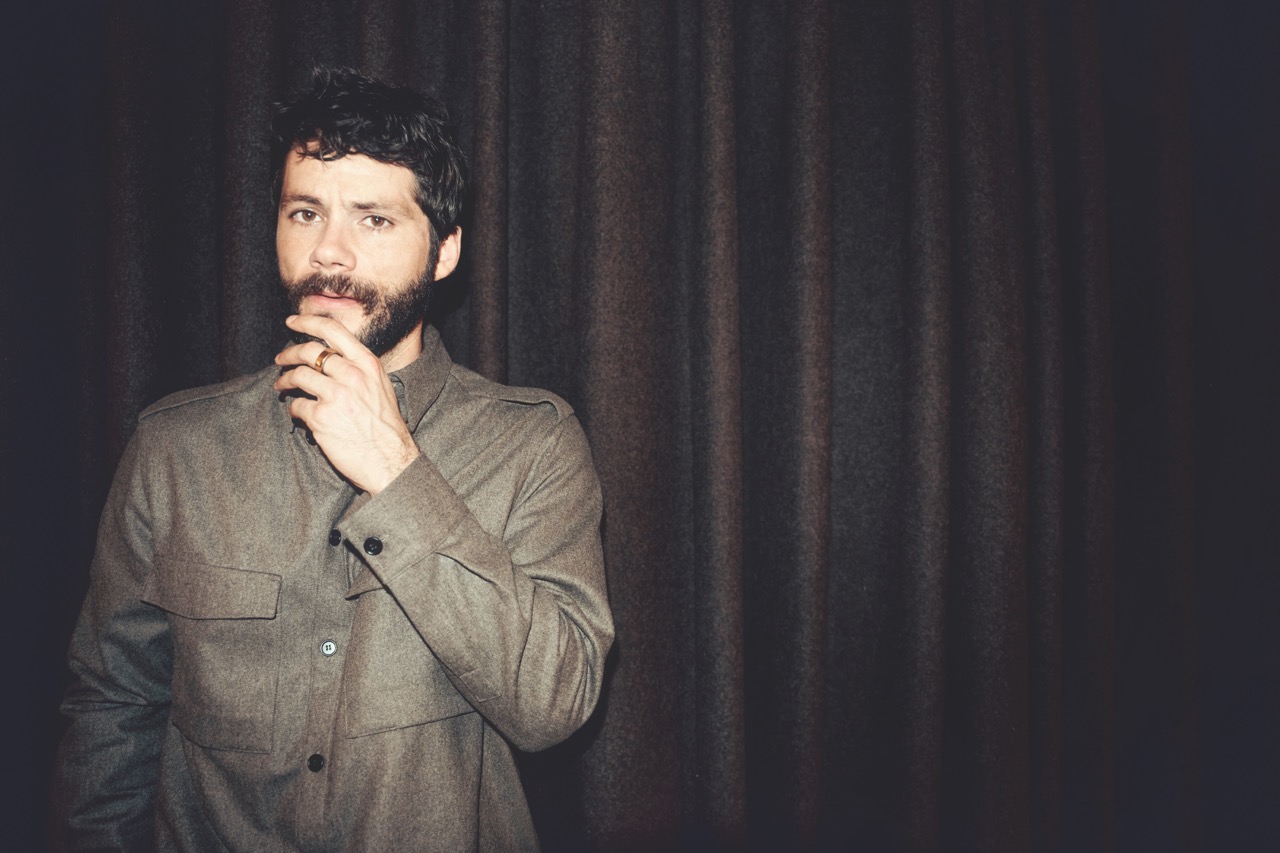
Twinless and Send Help star Dylan O’Brien discusses working with Sam Raimi, surviving jungle-set combat with Rachel McAdams, and the value of sticking to his gut.
Dylan O’Brien doesn’t shy away from the idea of being difficult—at least onscreen. In Send Help, Sam Raimi’s ferociously entertaining survival thriller, the former Teen Wolf and The Maze Runner actor gets off on the wrong foot with the audience from the jump, playing Bradley Preston, a chauvinistic corporate boss who finds himself plane-wrecked on a desert island alongside his long-suffering employee (Rachel McAdams). Preston is prickly, smug, emotionally opaque, and seemingly beyond redemption—a character utterly engineered for antagonism. It’s a risky proposition, one that studios traditionally get skittish about.
O’Brien, on the other hand, doubled down. He wanted the character to start as unlikeable as possible, asking Raimi to trust that he had the acting chops to turn audience perception to his favour, in much the same way Preston must do with McAdams’ Linda Liddle, who he soon realises is his key to survival on the island.
That instinctive resistance to sanding off rough edges has become a defining feature of O’Brien’s recent run. Send Help arrives alongside Twinless, a scrappy indie comedy that survived years of rejection before finally reaching audiences and earning O’Brien a Spirit Award nomination. On paper, they’re radically different films—one a mid-budget, R-rated studio genre picture, the other a lowkey and low-budget indie—but they share a throughline: both hinge on O’Brien’s knack for trusting his gut over everything else.
We sat down with O’Brien to discuss working with Raimi on Send Help, surviving jungle-set combat with Rachel McAdams, and the value of sticking to his gut.
Luke Georgiades: Your character keeps us guessing throughout the entirety of Send Help. How did that affect how you approached the role?
Dylan O’ Brien: That was so much of the fun and the challenge of the movie. You’re swinging all over the place and you want to earn each of those shifts. There were early conversations about my being too unlikeable at the beginning and that being a concern. I had to literally clasp my hands together and promise Sam [Raimi] that I could achieve both empathy and unlikeability—I begged him to trust me. I needed to start as far into unlikeability as possible, because I felt that it would flatten the arc otherwise. That’s so much of what makes the movie fun. I knew if we pulled it off, that would make the movie special.
LG: It’s great that Sam trusted your opinion, because that choice really makes the movie.
DOB: It’s a testament to him as a person and a filmmaker. There’s a reason he’s had such a long and eclectic career, because he doesn’t have that ego block. It would make no sense—he literally would not have been able to achieve this success and body of work if that had gotten in his own way. He is the filmmaker he is because he’s open and adaptive and the biggest fan of all of his departments. He’s beautiful in that way. He stays in awe of what film can do. Even having the confidence to have that conversation with him was bred from the space that he and Rachel [McAdams] had already curated.
LG: You’ve been a Raimi fan since childhood. Give me your OG Spider-Man trilogy ranking.
DOB: I go one, two, three. I know some people like the second one more than the first, but look what that first one spawned. Look what came afterwards. It doesn’t always get the credit for what it started. The Marvel Universe was always going to become this machine, but before that, this was the first time I had seen anything that had both the fantastical heightened feel that I was enjoying from cartoons at 10 years-old, but it was live-action. I was talking to Sam about Willem Dafoe’s glider, which was done practically. Nowadays that’s an automatic CGI paintjob. The level of craftsmanship that was on display in that movie is mind-blowing.


LG: Most actors say they find empathy in every character they play. What was your process with this character, whose initial assholery and potential redemption is, in a sense, weaponised against the audience.
DOB: I hold a lot of forgiveness for people. I don’t think people are born bad. I think we’re all coloured in by our environment, our experiences, our influences that are so impactful early on in our lives. Sure, he was privileged, his life was distorted by the things that were handed to him. But I did buy into the idea that he had been hardened by his trauma, and actually did have a degree of self awareness about. He’s an idiot but he’s not unintelligent. It’s such a layered antagonist, so much so that he’s able to sway into being the protagonist. During the campfire scene, I truly saw that as an honest moment of reflection from him and a brief-but-true moment of connection between them, rather than a moment of weaponisation. It’s not until the end of that scene that he begins to diagnose the situation as potentially a red alert.
LG: Tell me about filming the scene where you and Rachel are just taking chunks out of each other in the jungle?
DOB: It was tough fight choreography. There’s not a single punch thrown in that fight. And fist fights are really easy to stage—there’s no contact, it’s more like a dance. This was challenging because the nature of the fight is that it’s so visceral and sloppy and eye-gougy…they’ve turned into animals at this point. It’s all instinct. It’s all primal. So by nature it was difficult to fake a lot of that stuff. We would actually have to make contact with each other. Rachel McAdams would come up behind my shoulder and spit bites of chewed up plum mixed with fake blood at me. It was awesome.”
LG: Both Send Help and Twinless have come along during the same window—one is a lowkey indie comedy, one is a mid-budget studio film, but both see you pushing your boundaries as an actor in interesting ways. Do you feel like those films are part of the same chapter of your journey?
DOB: It’s rare and lucky enough after your initial breakthrough to operate in any era with any degree of choice. I don’t think it’s necessarily new, it’s been going on for nine or ten years since the Teen Wolf and The Maze Runner films ended. Those were my first foray into the industry. These two projects now both check boxes on the things that excite me—that I think, whether I’m involved or not—deserve to be made. Send Help—this mid budget, r-rated original genre picture—in a studio space, is a relic. I was thrilled to even see something like this be greenlit, let alone be invited to be a part of it. It was such a fuck-yes. To have the studio so behind it? It’s a unicorn job. It’s in direct contrast to having just seen how hard it is out there for independent film. It’s hard to get movies out there nowadays.
LG: Congratulations on the spirit nomination for Twinless.
DOB: Thanks, man. Some of these awards shows go by, and you don’t even realise, and you find out and go, “oh, I guess we didn’t get any nominations for that thing we did”, and keep it moving. But this was a lovely, thrilling surprise. A nomination like this has always been a dream of mine. Twinless is a special, fresh-feeling piece, helmed by a filmmaker with a really unique fingerprint. Acting in the film was one of the best privileges of my life. It remains one of the best scripts I have ever read.
LG: When you make a film like Twinless—one you believe in wholeheartedly, even if the powers that be don’t—is it especially gratifying to see it resonate so strongly with audiences?
DOB: At the end of the day, it’s great the movie’s out there and people are receiving it. We almost never got this movie made. Passed on by over a hundred financiers over the course of four or five years. It was a miracle to get it to the start line. There’s a sense of what could have been if the studios had backed it from the beginning, and throughout marketing, and there always will be. But that’s how it goes. That’s the business. Ultimately, the end-game is shelf life. We always knew the movie could and would stand on its own two feet. It taught me a big lesson about sticking with my gut feeling.
Twinless and Send Help is in UK & Irish cinemas now. For cinemas visit: https://bit.ly/m/twinlessfilm