Searching for Frankenstein: Guillermo del Toro on making a masterpiece




Get unlimited access to all our articles for just £3.50 per month, with an introductory offer of just £1 for the first month!
SUBSCRIBEOver coffee and croissants in Paris, Guillermo del Toro speaks about Frankenstein, fear, and why monsters often reveal more humanity than humans ever could.
It is a quiet early morning in Paris when I arrive at the café where Guillermo del Toro offered to meet me. Waiters sip their coffee while exchanging banter about the latest soccer results. When he arrives, they greet him by name (“Misteur del Toro!”), and him by theirs, before leading us to his table. “The usual?” they ask, and he nods. I order a coffee, which arrives alongside his cappuccino, sunny-side-up eggs, and a croissant. Not a man for traditions, he dips the croissant in his egg yolk as we start speaking. To my queries about recording and, after nearly an hour, about asking more questions, he warmly answers, “Yes, my friend.” He only stopped the interview to go back to bed: it was 9am in Paris, but midnight in Los Angeles, where he had just arrived from. We spoke about his career and inspirations, from H.P. Lovecraft to Mary Shelley and Jack Arnold; his love for monsters; the recurring themes of childhood and death; and the way his movies mix comedy, horror, and melodrama. All of these shape and permeate his Frankenstein, which released on Netflix on November 7.
A Rabbit’s Foot
We are meeting in Paris, where you have a house, but you mostly live in Los Angeles and you were born in Mexico. Where do you feel most at home?
Guillermo del Toro
When my dad was kidnapped for ransom in 1997-98 [James Cameron actually helped pay toward this], I lost my home. I haven’t felt entirely at home anywhere since. I feel happy in Paris, Toronto, Los Angeles, but it’s only partial. I cannot get back the feeling of belonging to the country where I was born.
A Rabbit’s Foot
I heard you have a Sunday ritual of inviting friends over to your home to paint monster figurines in your kitchen. Can you tell us more about that?
Guillermo del Toro
It started about five years ago, with a couple of my close friends. Then I don’t know how people found out, who said something to who, but then it was three people and now it’s five. We cannot accommodate more because it’s a small kitchen. We all sit around the table and I make tortillas or quesadillas. With movies, you’re so used to living in a heightened place but sometimes you need to have something that returns you to earth.
A Rabbit’s Foot
Books always feature in your movies, where they have occult or magical powers. What’s your relationship to books in general?
Guillermo del Toro
Books are like talismans. I have lived all my life surrounded by them. When I was a kid, you couldn’t afford to go to the movies every day but you could read everyday. Nowadays, I still have a big library and I like to think that I’m surrounded by friends; that the books are people that I know and who shaped who I am.
A Rabbit’s Foot
Like Pinocchio (2022), Frankenstein is a book adaptation, and you have often mentioned Mary Shelley as a source of inspiration. How do you approach the adaptation process, with books being a non-visual media?
Guillermo del Toro
Because I am a very visual person, naturally, when I’m reading, I’m imagining. Sometimes I imagine things that are on the page; sometimes I imagine possibilities that are not. Some books, when you read them again and again, they become part of your DNA. Then, carefully, you add your voice to the music. The music is the music of the book, but your voice, and what you do with the lyrics, the arrangement, that’s the adaptation. It’s like Frank Sinatra singing My Way (1969) and not worrying about the original French song (Comme d’Habitude by Claude François, 1967). He makes it his. It’s not an act of arrogance, but an act of gifting: you think your voice can add something to the music, otherwise you wouldn’t be tackling it. You never never sing something that means so much to you if you’re not serious about it. It’s not karaoke—you are actually trying to reinvent yourself through the song and the song through yourself.
A Rabbit’s Foot
Another important writer is H.P Lovecraft. References to his work appear in Hellboy and in your Netflix series Cabinet of Curiosities, and you have a long-term project of adapting the author’s At the Mountains of Madness novella. What inspires you about his work
Guillermo del Toro
Being afraid of everything, which he was—he was very attuned with abnormal emotions, like Edgar Allan Poe could be before him. Lovecraft was a misanthrope, a phobic, a man who was very ill-adapted to what we call normalcy. I find it very interesting that he registered the animosity of the cosmos. It’s a very existential and embarrassing thought: that man is insignificant, that we are insects in a giant cosmic picnic, living off the leftovers of very cruel masters who are not there any more.
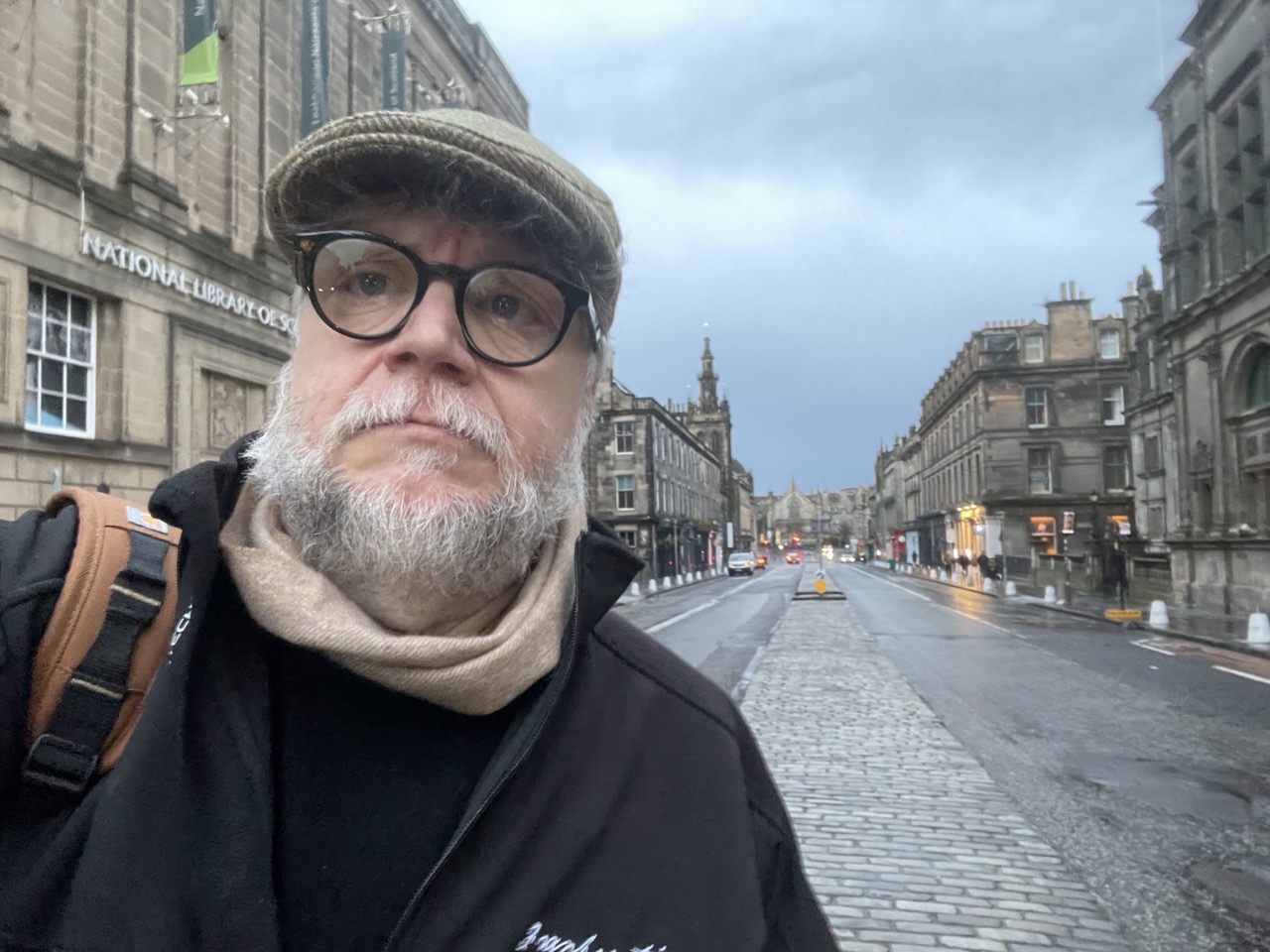
Guillermo del Toro sent us some personal selfies from Scotland.
A Rabbit’s Foot
I have always thought Lovecraft was impossible to adapt because his horror often relies on uniquely literary devices.
Guillermo del Toro
Lovecraft uses adjectives like ‘leering’ or ‘obscene’, and an adjective is nothing without the reader. If I tell you “the shambling horror stepped through the threshold leering with mad beckoning eyes”, you imagine something much stronger than any guy in make-up.
A Rabbit’s Foot
The visuals are always more disappointing.
Guillermo del Toro
Of course, because adjectives are open, they mean something but something different for every person. Movies are objective: it’s a thing, in front of a lens, lived in a certain way. That makes Lovecraft very hard to adapt.
A Rabbit’s Foot
Junji Ito has mentioned you as a source of inspiration. Would you consider adapting one of his manga stories?
Guillermo del Toro
It would be very hard, because manga has a specific set of expressions for characters: the beads of sweat, the trembling eyes, et cetera. There is a certain horror that Ito inherits from Hideshi Hino and other manga artists who did horror before him and which is very hard to transmit exactly. It is very Japanese. The sensibility in which I read it is Western and I’m scared by the fact that he joins reality with the impossible; that there’s always a moment in his books where something breaks and destroys everything with it.
A Rabbit’s Foot
A constant theme in your movies is how humanity and monstrosity are not entirely separated—that one is not born a monster, but becomes one. How do you conceive of the relationship between humanity and monstrosity?
Guillermo del Toro
They are inseparable. We all become monstrous in some way or another when we allow things, when we don’t have the courage, the empathy, the fortitude to be human. Being human is not easy, and in my movies I try to show the monsters as very essential, meaning their essence is very pure. Humans don’t have a pure essence: we are heroes and villains, good guys and bad guys, depending on the time of the day. Monsters surprise you, and are more relatable. It’s easier for me to feel like a monster than to feel like Superman. I do not understand heroes, they are more fictional than monsters, because everybody is monstrous at some point.
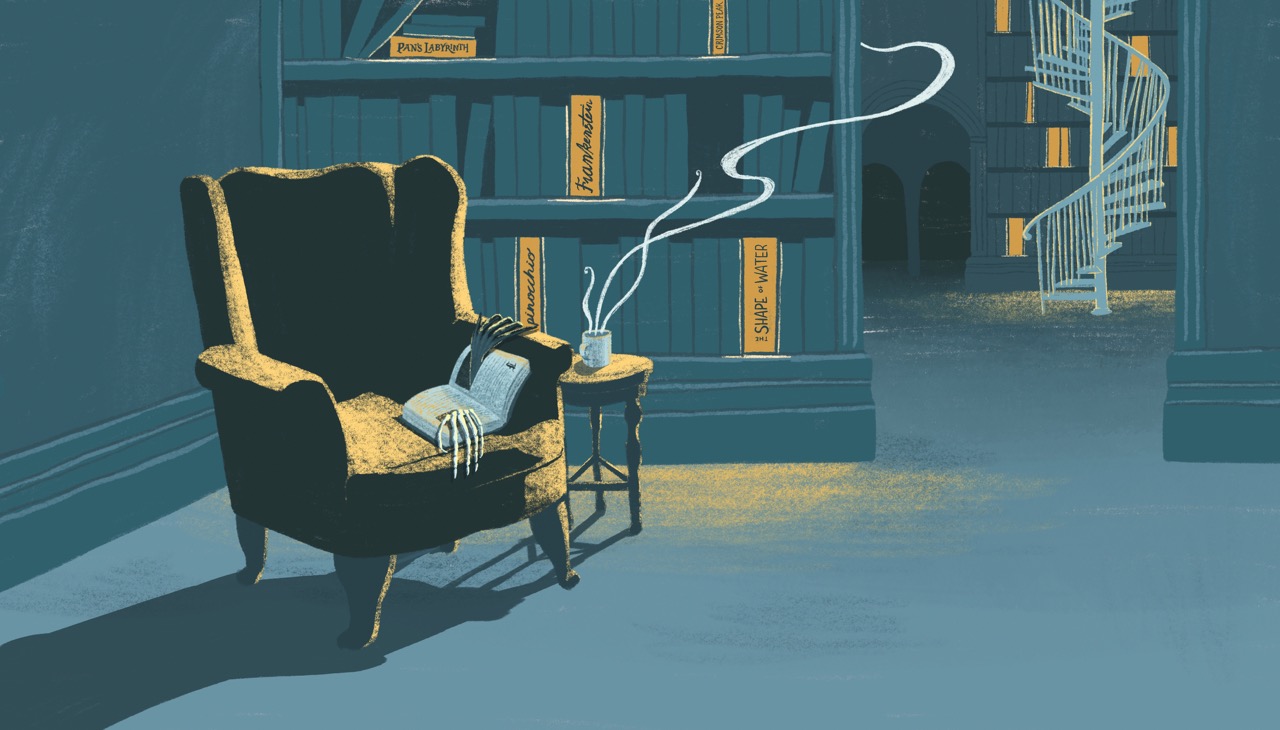
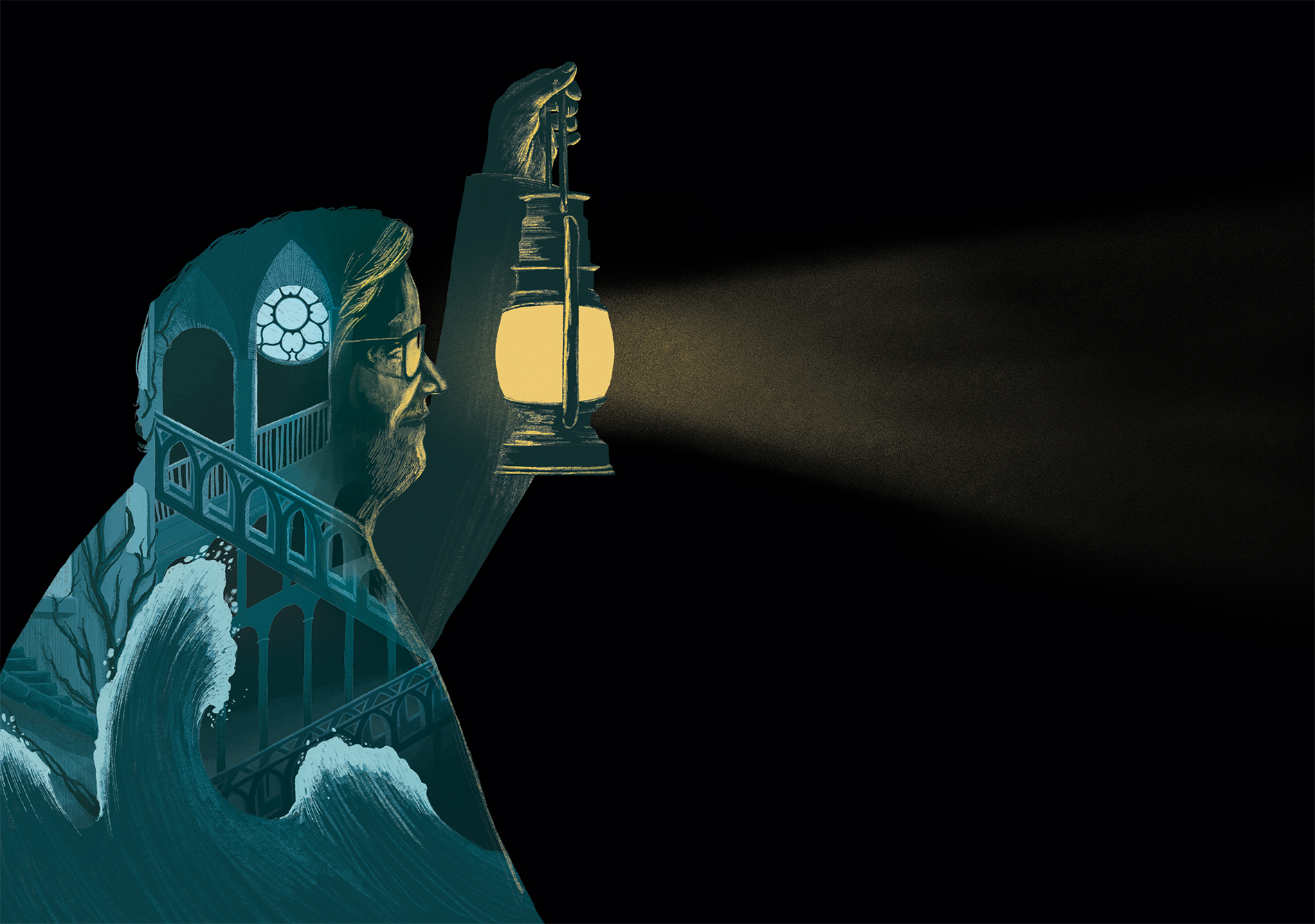
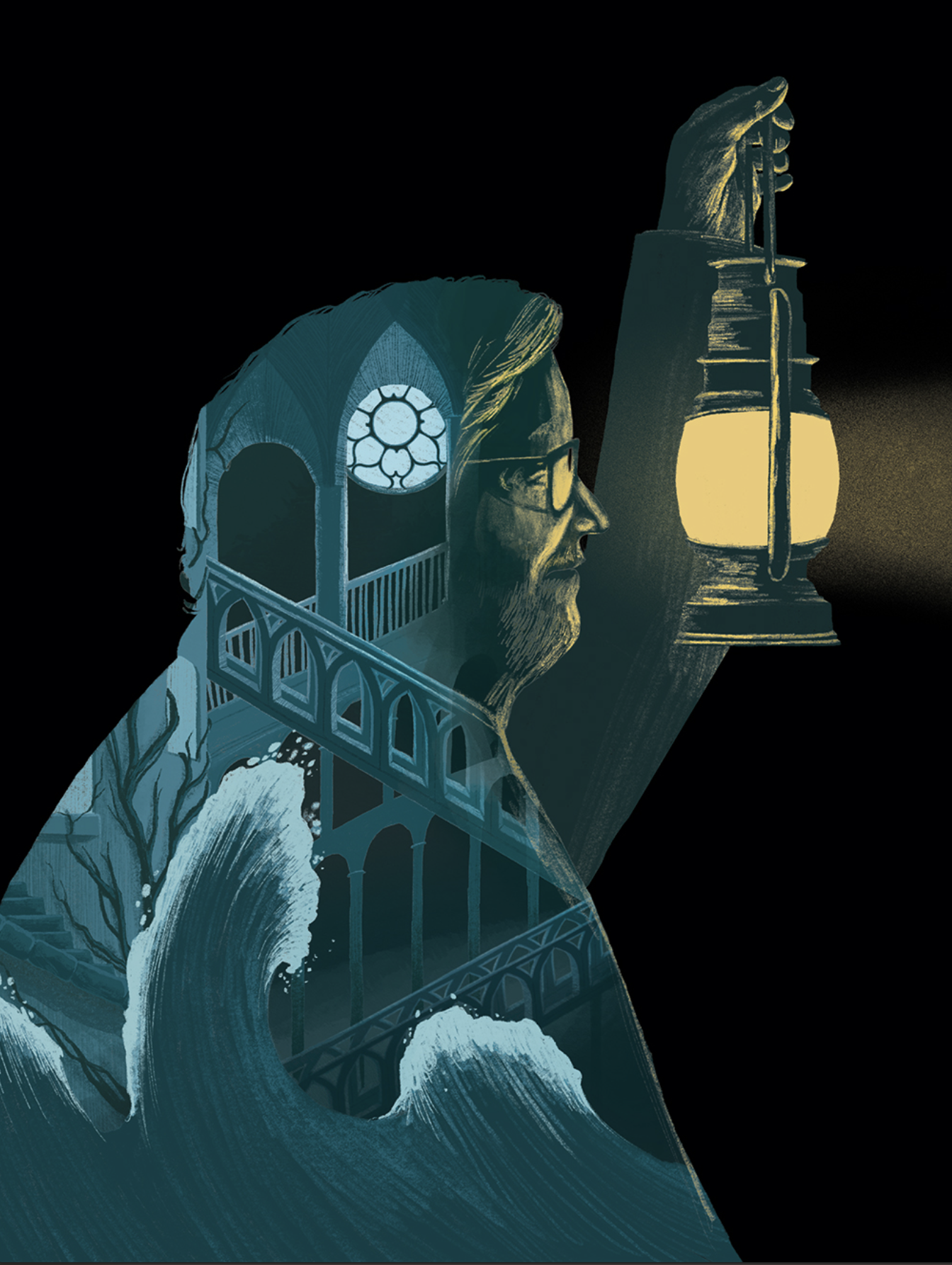
Guillermo’s Library (2025). By Ciara Sansom.
A Rabbit’s Foot
In The Shape of Water (2017), you have most explicitly given a political meaning to this theme, showing how people can be subjected to processes in which they are framed as monsters because of their bodies being deemed abnormal, their race, gender, or sexual orientation. Is this something you would like to continue exploring?
Guillermo del Toro
Yes. I think that Pan’s Labyrinth (2006), The Shape of Water, Pinocchio, and Frankenstein all talk about how much rage and destruction comes from ‘normal’ society. Look at the world right now: the people that are ‘the holders of the normal’ find reasons to make other humans not humans, to lie about their nature, to be able to destroy them. I have a huge problem causing pain or disappointing people and I think that it’s a very human quality. When people cause harm, no matter what the reason is, I find it horrible. Most of the time, the reasons that are invoked are very altruistic: country, religion, God, family.
A Rabbit’s Foot
Pinocchio does not want his father to be in pain.
Guillermo del Toro
For me, Pinocchio, Jesus Christ, the creature of Frankenstein, are the three sides of God.
A Rabbit’s Foot
There’s this word, ‘freak’, which comes up a lot in your movies and has been used to speak about humans. You use it with a more tender meaning.
Guillermo del Toro
I have never met anyone who isn’t a freak—I haven’t. And yet a lot of people take great pride in considering themselves as the norm, although I wouldn’t say they are ‘normal’. Freaks have a way of looking at the ridiculous nature of human society, because they are the outsiders, looking in. You are not in the banquet getting drunk, but you’re outside the banquet looking through the window and, from there, everybody looks more silly.
A Rabbit’s Foot
Like when Pinocchio tries to act human, thus revealing that we, too, all play a role, perform normalcy.
Guillermo del Toro
When he says to the guy, “Who pulls your strings?” and, of course, we know that Mussolini does. There is a beauty in being lost a little, in losing certainty. Part of the process of thought, of becoming a person, is to get lost. Some people have no problem crossing a line, because they feel that they are on the right path. The thinking person wonders, and thinks about that line. Doubt is intelligence; certainty is, more often than not, stupidity.
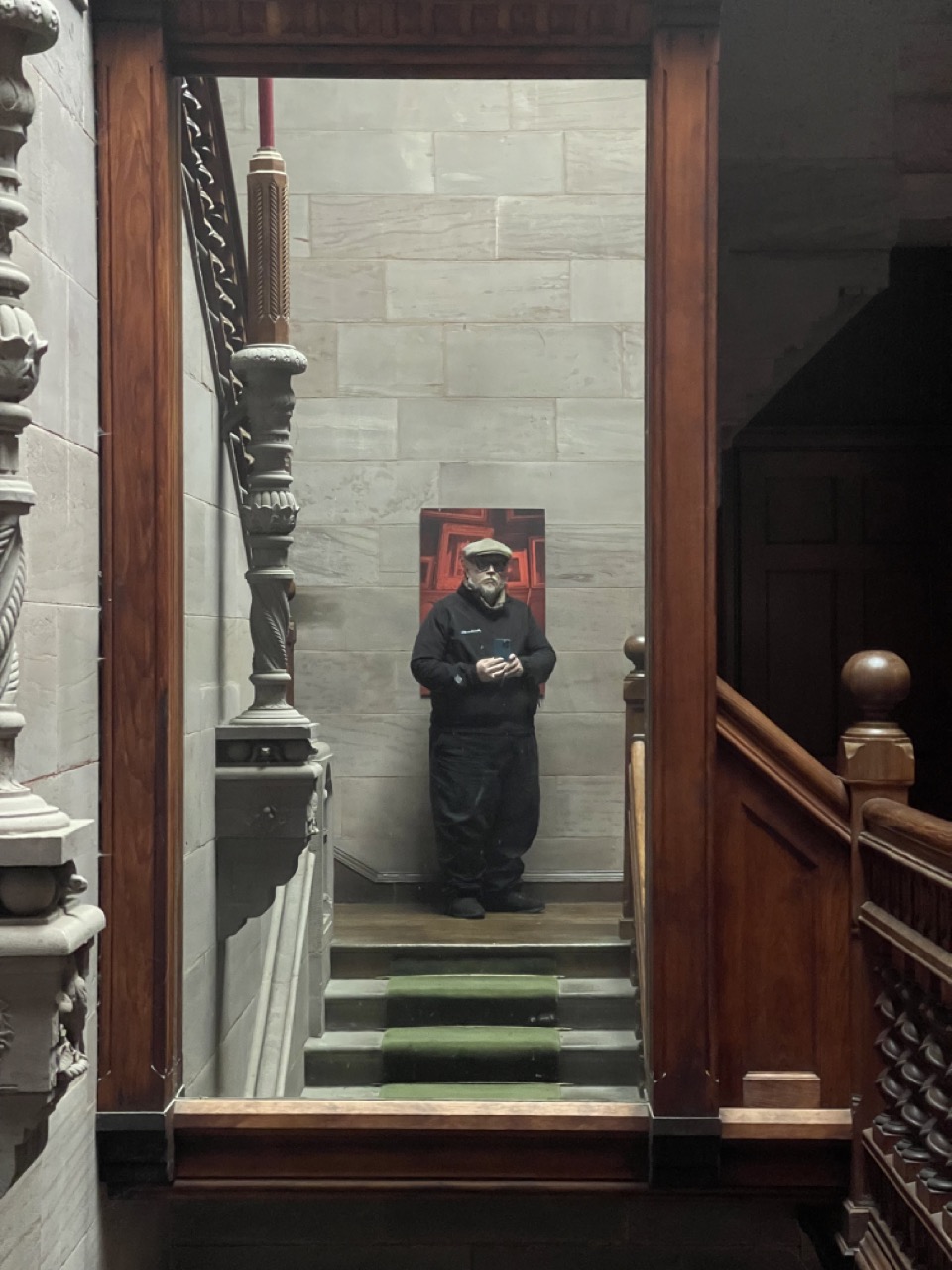
An unseen Guillermo del Toro mirror selfie, taken in Scotland.
It takes a lot of craft to make people believe that a monster is alive. In the same way that Lynch operates in a way that only he understands, there are filmmakers that are monster people and there are filmmakers that are not.
A Rabbit’s Foot
The ultimate certainty is death and in Cronos (1992) or Pinocchio, the moral of the movie is that one should not try to avoid it.
Guillermo del Toro
Pinocchio becomes a real boy when he accepts death. I am a big fan of death. I cannot think of a more horrifying thing than finding out you cannot die. That is the problem of Frankenstein: what would you do if you could not die? The myth of the vampire is horrible, because everything runs its course, has a flow, goes up or down: hatred, love, empathy. We have a lifespan of 60 to 80 years, more or less, but if you live for hundreds of years, if everybody that you love died and you stay, that is hell.
A Rabbit’s Foot
There is a short story by Jorge Luis Borges called The Immortal (1947), in which he writes about the misery of not being able to die.
Guillermo del Toro
Borges found great solace in two things: to be forgotten and to die. It is very Eastern. The notion of wabi-sabi in Japanese aesthetics and philosophy says that nothing lasts and nothing is perfect. It is beautiful, and I find great consolation in this. I like imperfection and the transitory nature of our stay here. Who lasts for long? Who wants to last for long? When we talk about the immortal artists, they are very few.
A Rabbit’s Foot
These artists last only because they keep being reinvented.
Guillermo del Toro
And reacquired. At some point they become canon, and canon is a little bit like dogma. It is impossible for me to read Carson McCullers, Mary Shelley, or Emily Brontë and not be blown away by the words they carried through. The rest of the time, most of the art that is created, including movies, goes away. Borges would be very pleased to be forgotten, I really believe it. There is beauty in that, in the fact that he was here, and affected some people and that the chain continues after he dies, even if he’s not here to acknowledge it. I am the son of many fathers and many mothers, and they wrote novels, they painted pictures, they directed films.
A Rabbit’s Foot
David Lynch, who died recently, also made movies about monsters. Is his filmography something that inspired you as well?
Guillermo del Toro
Yes, but he is so specific. The way he had of looking at the world is not something you can disassemble, he is of a piece. I can study the way that De Palma moves a camera or a master shot by John Schlesinger, but Lynch, I do not know what makes him what he is. It is just fully formed, I cannot break it down and I adore him for that. There is a movie that puzzles me: Zodiac (2007) by David Fincher. I cannot tell you what he did, how this movie is so full of dread. There’s no trick, it is essence. The hardest filmmaking is when the essence comes into the game. You can have craft, and you can be a master of the craft, but when the essence comes to play, those devices cannot be imitated nor be disassembled. They just work when that master touches them but it’s not a learnable skill.
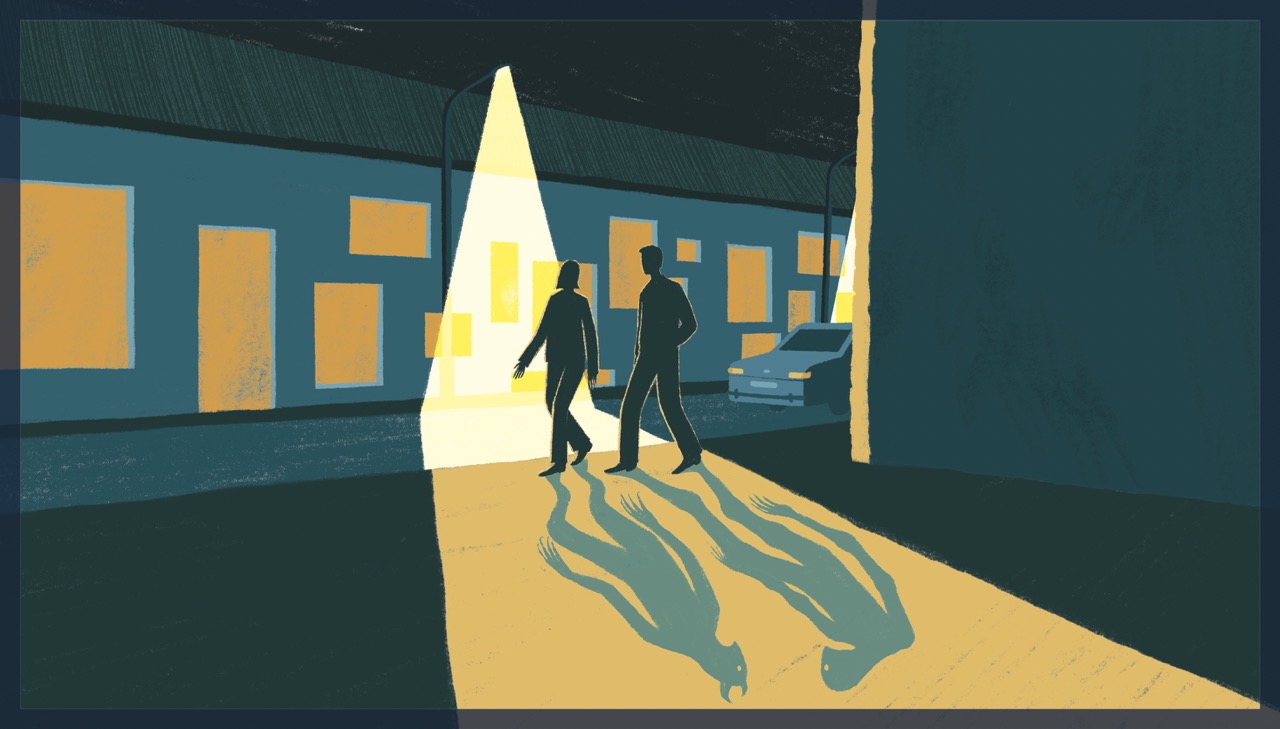
Easier to Feel Like a Monster (2025). By Ciara Sansom.
A Rabbit’s Foot
Another theme is childhood. Most of your movies, even the most horrific, feature children. Why is that?
Guillermo del Toro
I have always been interested in two things: old people and children, because they are both invisible. When people see an old person, they do not see the person that was. Inside that old person, like a Russian doll, there is a younger person, an even younger one, and a child. That’s the reason I wanted to do Pacific Rim (2013)—I wanted to show a giant robot piloted by a woman, but inside her is a scared little girl. That’s all of us. We are piloting these bodies, with our persona—a writer or a director—but inside that director, there is a seven-year-old kid still trying to figure out what everything is. That is the way I see what I do.
A Rabbit’s Foot
You mix genres a lot. In Hellboy, there’s a lot of comedy alongside horror.
Guillermo del Toro
It has melodrama too. I like to mix genres because Mexican movies were like that. You would have a masked wrestler fighting a monster, but he was a secret spy who was in love with a girl. But if anyone asks what is the main engine of my movies, it is melodrama. Not drama, melodrama. Meaning, you can access drama through melodrama, it is a manner of accumulation. I am inspired when I see the work of Frank Borzage, or the way Douglas Sirk can achieve a mythic tone and tackle larger subjects through the springs of melodrama.
A Rabbit’s Foot
People tell tales and create monsters in your movies, like Geppetto or Frankenstein. Do you identify more with them or with the monsters, as you said earlier?
Guillermo del Toro
Both. It takes a lot of craft to make people believe that a monster is alive. In the same way that Lynch operates in a way that only he understands, there are filmmakers that are monster people and there are filmmakers that are not. Among the Hammer movies, the only great filmmaker is Terence Fisher. All the others are good, but they’re not monster people. Then you have people who are great with creatures, such as Jack Arnold with Creature from the Black Lagoon (1954) and It Came from Outer Space (1953).
A Rabbit’s Foot
In a way, all of your movies have revolved around Frankenstein.
Guillermo del Toro
A hundred percent. It is hard for me to see beyond that, but I want to do something different.
A Rabbit’s Foot
More animation?
Guillermo del Toro
I want to do more animation for sure. You know, the movies you make are not the movies you want to make; they’re the movies they let you make. I do not have hundreds of millions, otherwise I would have done Frankenstein a while ago and I would have done At the Mountains of Madness when we prepared it. I have written or co-written 42 screenplays, but I have made 12 movies, so there are 30 movies I have not been able to make. But in them there are the two Hobbits— well, the three Hobbits.
A Rabbit’s Foot
Which you still haven’t seen?
Guillermo del Toro
I haven’t seen them, and there is no reason to. If it’s bad, it’s bad, and if it’s good, it’s worse.
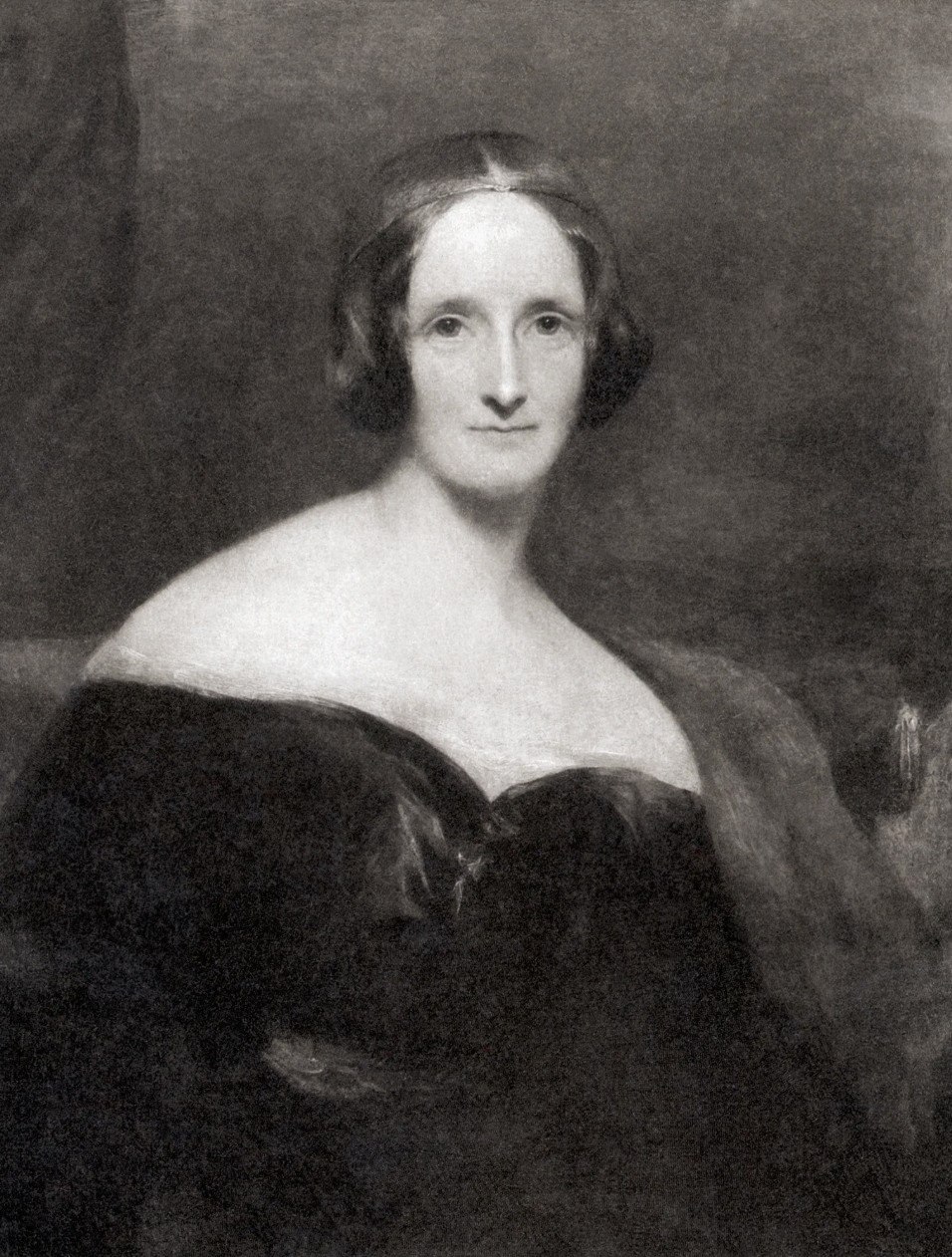
Mary Shelley, author of Frankenstein (1818).
Foot note
In Guillermo del Toro’s Frankenstein, Mia Goth plays two characters: Victor Frankenstein’s mother, Baroness Claire Frankenstein, and Elizabeth Harlander (Lavenza in Mary Shelley’s original novel), who develops an intimate yet unfulfilled affection for the Creature—a being who demands that his master create a female companion for him. In the 1935 film The Bride of Frankenstein (directed by James Whale), this hope is brought to life. The Bride—played by Elsa Lanchester and styled with lightning- streaked hair and red lips—has since become an iconic figure of horror. She is set to grace our screens again next year in Maggie Gyllenhaal’s anticipated remake, starring Jessie Buckley.