

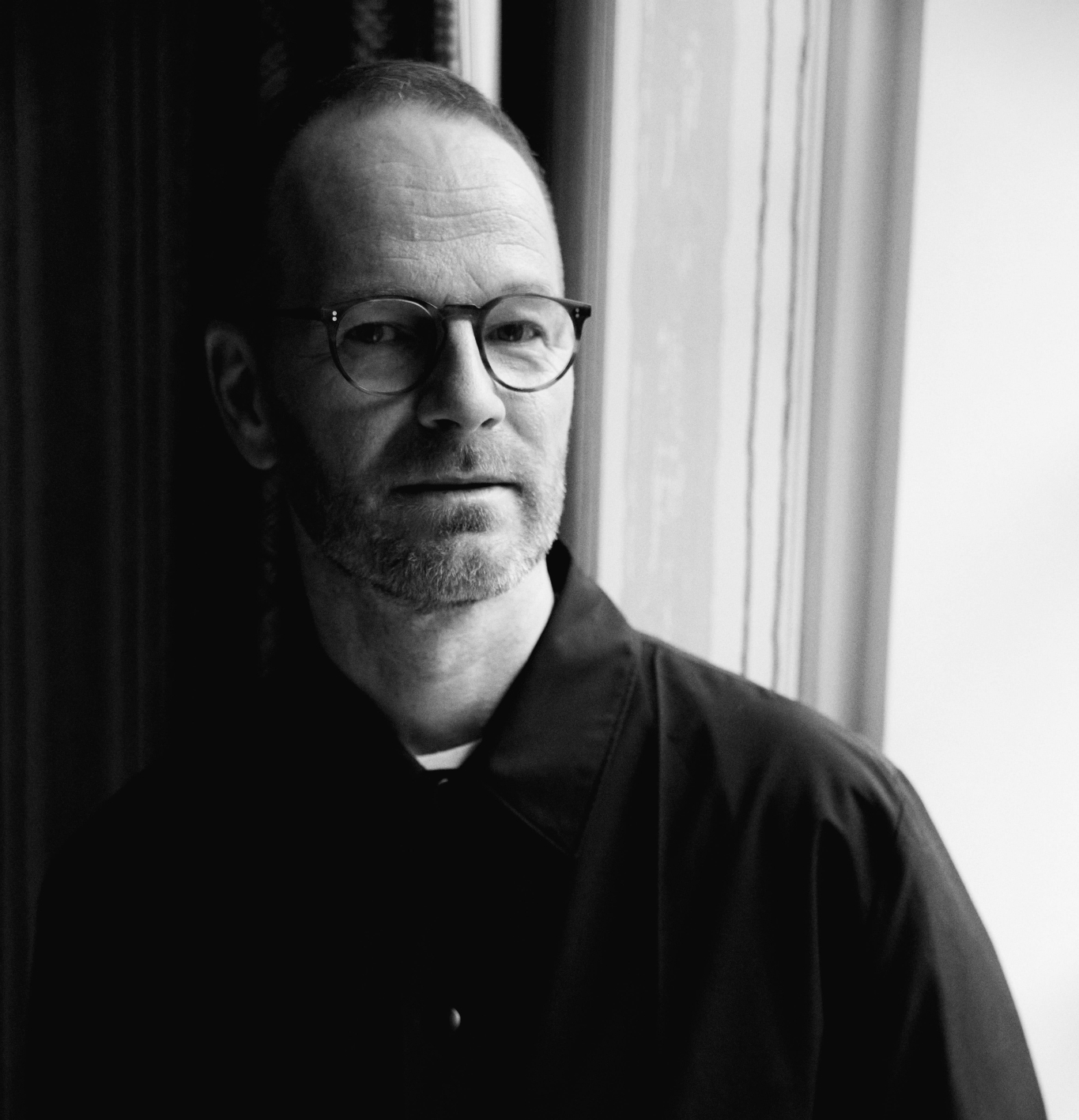
Ahead of his latest film Sentimental Value, Chris Cotonou met Joachim Trier in London to talk about his approach to his craft and why, in the end, they’re all really skate videos.
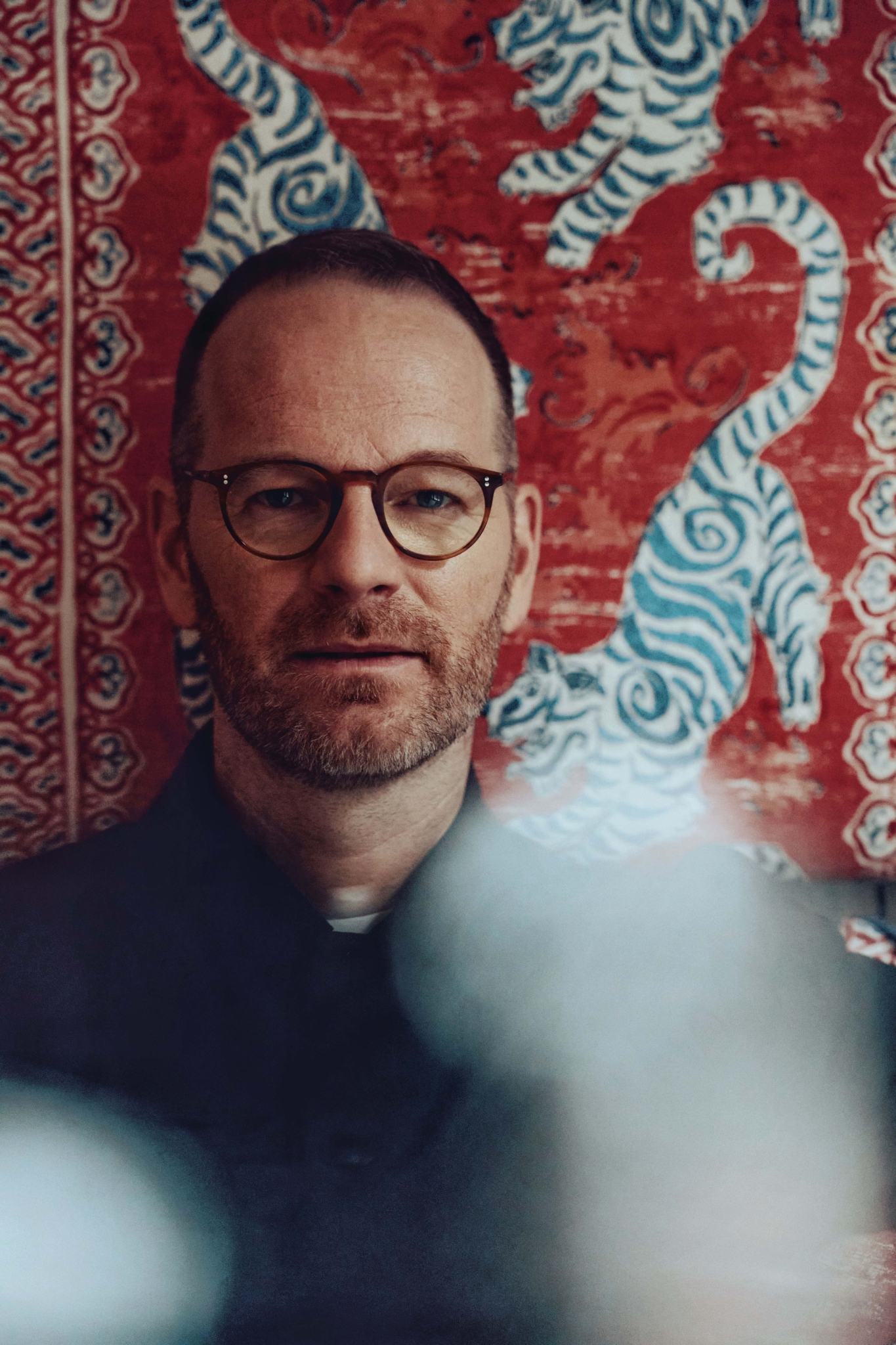
“Let’s do this differently. I don’t like how transactional interviews can be.” So says Joachim Trier, director of the Cannes Grand Prix-winning Sentimental Value (2025), while he has his photograph taken in a Soho hotel.
I’m lurking nearby, trying to get a temperature check before we start speaking. “What films have you enjoyed recently?” Trier asks, still being photographed. I bring up Peter Bogdanovich’s Singapore pimp drama Saint Jack (1979) and he responds with Claire Denis’s underrated Stars at Noon (2022), like playing a game of Letterboxd Top Trumps. These are the same fish-out-of-water stories that his own cinema nakedly explores—in Trier’s intimate way of telling them. Miro (Lovejoy Teplitzky) stops snapping. That’s better, he says. “Let’s start our conversation.”
Looking out over Wardour Street, Trier, originally from Norway, begins to reminisce about his days as a student at the prestigious National Film and Television School nearby. “Man… I remember walking up this street right here as a teenager with absolutely nothing,” he recalls, looking out of the fourth-storey window. Today, he acknowledges, he’s in a rather enviable position; a master director with audiences in both art-house circles and the mainstream. Pop singer Charli XCX famously declared a “Joachim Trier Summer” at her Coachella show. “I can’t take it for granted,” he grins. “You know, I’ve been a broke student with anxiety—not knowing if I’d ever make it.”
It’s a sensibility he’s carried since his first short, Procter (2002), which earned him critical attention. Over the following five years, he set to work on Reprise (2006) with his co-writer Eskil Vogt. It was the beginning of Trier’s influential Oslo Trilogy (2006-2021)—a series of films where the city itself is as prominent a character as those played by his regular frontman Anders Danielsen Lie. Each story focuses on an outcast.


Trier’s Oslo, like Godard’s Paris or Fellini’s Rome, is a world that feels almost definitive, forming an idea people have of the city: textured, melancholic. Sometimes the air is cold with isolation and loneliness, and at other times it is as warm as a crackling fireplace. With almost a decade between the second and third films, Oslo, August 31st followed in 2011, and in 2021The Worst Person in the World concluded the trilogy to international acclaim, making a star of his muse Renate Reinsve in the process. Sentimental Value would threaten to make it an anthology, but this is an ensemble drama instead. It is also the first to feature a Hollywood actor—in this case, Elle Fanning.
Trier never intended to romanticise Oslo, he explains, it is simply a consequence of “capturing the moment”—an ambition that he emphasises regularly in our conversation. “It’s different from nostalgia. How can I show someone from a different country—for example, you—how it is in the early morning, when the sun comes up on one particular corner of the city? It’s about the there and then.”
Trier’s approach goes back to his teenage years as a champion skateboarder, directing and producing his own skate films. (I also grew up buying skate DVDs and nearly broke my arm a couple of times trying to reenact them.) In the pursuit of the perfect moment, skater videos are human tales of improbable physical endeavour; tense, and then, when the trick lands, exhilarating—and often with superb editing. “All of my movies are still pretty much skate videos,” he grins. “What happens there is that you are waiting for an event. There is fear and euphoria. If I’m doing a kickflip down a set of stairs, I’m scared of falling. But the moment—again, the moment—I make it, I’m in ‘the pocket’ as you would say in music. The euphoria. You have to slam a few times before you achieve that. You have to encourage the guts.”
It took time for Trier to trust his instincts. “As a director, you have to be alive, on your feet,” he says. With writing, there’s contemplation before decision, he admits, but the director must follow their gut. “When everyone’s clapping at the end of the day, but I sense a mistake, I gotta be the guy to say, ‘Everyone get back to work’. Otherwise you’ll be in the edit six months later, like, ‘That’s not good—fuck’.”
Sentimental Value is about an acclaimed filmmaker Gustav Borg (an Oscar-gripping Stellan Skarsgård) as he returns to his family home in Oslo to visit his estranged daughters Nora (Renate Reinsve) and Agnes (Inga Ibsdotter Lilleaas). He wants Nora—a talented theatre actor—to star in his autobiographical film about his mother. It has to be Nora, Gustav insists. But she’s unwilling; still hurt by the past and his absence. “Borg is kind of an asshole. But this story is about learning that he is a wounded child too,” Trier adds. “Like all of my films, there is never an external antagonist. This is a me-against-myself story.”
I suggest that there might even be traces of Borg in Trier. He’s the hallmark Trier outsider: Swedish-born (Trier himself was born in Denmark and moved to Oslo as a child), turned world-famous Norwegian director. And is it any coincidence that Borg, like Trier, is written as the father of two daughters? “I’m writing out of anxiety,” he laughs. “And also digesting what I don’t want to become as a father.” There was a moment in rehearsals, he explains, when his eldest daughter was in her nursery theatre play. Trier, usually the last to leave the set, made the decision to be there instead. “I said to everyone on set, ‘I think I should leave now. I don’t want to be like Gustav Borg.’ So I did. I ran. She was playing a rabbit and I cried.”
In the film’s opening, Terry Callier’s entrancing song Dancing Girl (1973) introduces us to the house where Sentimental Value unfolds. “Each of us is born alone,” sings Callier. There are few scenes of people sitting around and talking, Trier tells me. This is not a chamber drama. That’s never been a big interest of his.
The second time we see the house is near the end. It is refurbished. The soul is gutted and replaced with gleaming kitchen worktops and flatpack furniture. Who could possibly love this house? Callier’s voice, soulfully croons: “Somewhere between time and space, we shall be free.”
“It is a structural reminder,” Trier says. “When we experimented with using the song, it felt right.” He mentions his editor and long-time friend Olivier Bugge Coutté, who he met aged 21 at film school in Denmark. They both studied together in London. “As a filmmaker, you know what you want intellectually,” he says. “So when you take chances, you surprise yourself. There’s something about that song and the images that sat correctly.”
Callier was a big discovery for Trier, he explains: “Aesthetically, I’m interested in elegant constructions that are quite meticulous.” (Trier, who DJs and collects records, opens up about his admiration for Charles Stepney, Callier’s producer, who also worked with Minnie Riperton. Trier is a huge Riperton fan.) The specific, cyclical way Dancing Girl is used in the film feels like it conceals the film’s secrets. The house becomes a space that is re-interpreted as the narrative continues. Like Callier’s song, it is an elegant construction. It appears meticulous. But the truth lurks beneath its facade. Initially, it is introduced to us as a faux warren of happy memories, but for Borg, it is where his greatest trauma occurred.

“Like all of my films, there is never an external antagonist. This is a me-against-myself story.”
Joachim Trier
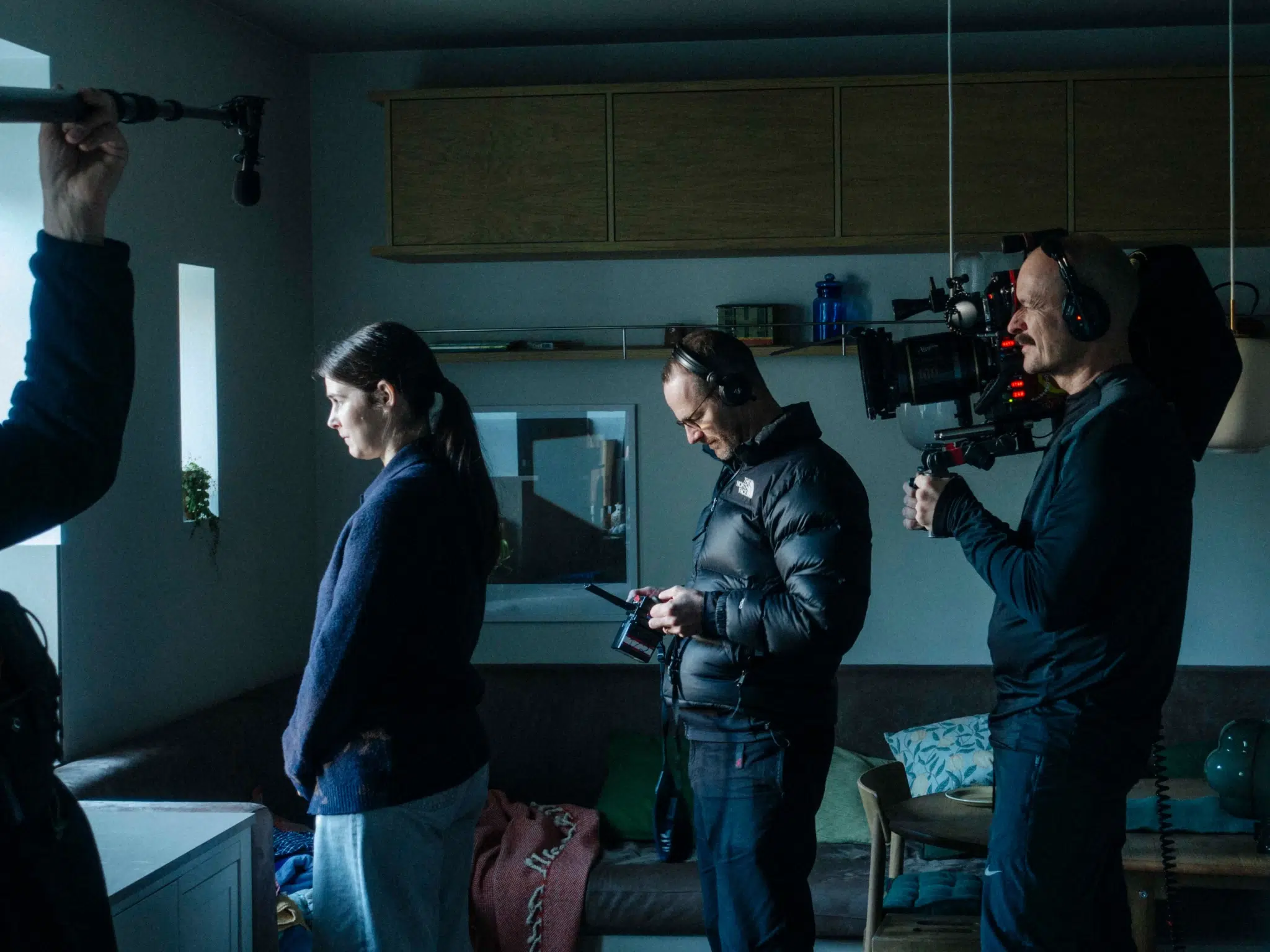
Jaochim Trier on the set of Sentimental Value (2025).
How did he get the family dynamic so right?
It begins with his recurring company of actors, many of whom he trusts and knows he can express himself through. “I make roles where I see them and where they can deal with something without me making a biographical reference to their lives,” he explains. For Reinsve and Lilleaas, Trier also encouraged private conversations and time alone. “Now they’re inseparable,” he grins. “And you see that on the screen. I only do pairings. I never do table reads. I need to see them have individual relationships. I structure rehearsals so the right cast members meet, have two days to think about each other, and even become curious about one another. Psychologically, they have space and time to develop the character.” It sounds planned, but this is an organic process Trier has honed after six films. It is why the most moving scenes don’t feel scripted—they appear lived.
In every scene Trier allows his actors to play out their emotions, even if it means failure. He’s not completely precious with the dialogue, as long as it doesn’t drift from his, and Vogt’s, themes. “With the actors, if something is against the grain or going wrong it could be dramatically interesting,” he explains. It’s skater video filmmaking again—all guts and glory. “I’m involved. I sit with a handheld monitor and try to feel the scene out. I’m observing the moment. Once in a while, I tell the actors, ‘Let it go’ and you feel them let loose. And then it hits…”
It can be surprising to hear Trier talk about risky filmmaking. Every one of his works spells out a disciplined approach. “It’s true that I construct and plan like an idiot. We video film everything for our plans, and then me and my AD team act things out. Then I rehearse with actors…” Trier’s natural impulsiveness begins with a solid foundation to flourish.
Borg represents another anxiety, Trier adds finally. “I worry about being thrown off the carousel later on in life.” It has never been about popularity, or pleasing others, he insists. “I’ve stayed hardcore. I do my thing, I didn’t take the Hollywood office. I stayed in Oslo,” he posits. He describes his next feature, which he’s already writing. “I nourish the adrenaline; I have to. Shit, I could fall on my ass any moment,” he says, raising one arm gently as if instructing an orchestra to reach its crescendo. “And that’s my life.”