

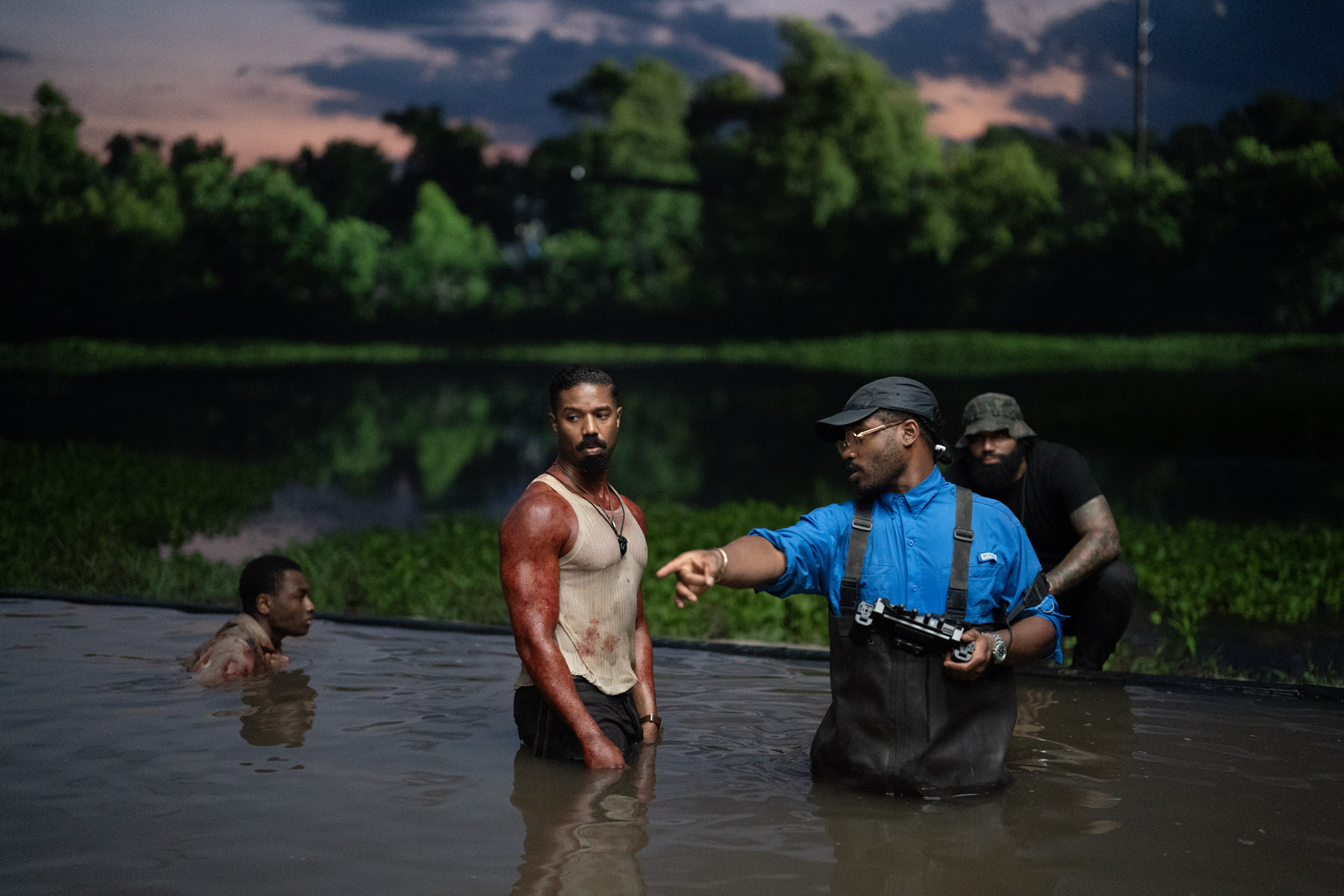
We sat down with superstar Michael B. Jordan to discuss glory vs growth, the spiritual impact of his role in Sinners, and sharing a name with the greatest basketball player of all time.
When I meet actor-director Michael B. Jordan—star of several of the most successful American blockbusters of the last decade—he is fawning over a fresh deck of Naruto playing cards.
“Check it out—that’s Rock Lee,” he explains, pointing to a bushy-browed anime character in a green jumpsuit. Rock Lee has a pair of marvellous nunchuks hanging from his waist. A famous lover of Japanese animation, Jordan observes the card with affection. “Someone just gave these to me.” He says. “I get random treats like this every once in a while. It’s cool. Everyone knows I love anime.”
Jordan, standing at 6-feet tall in a black long-sleeved tee and tactical vest, is on the tail-end of a long press day promoting the re-release of Sinners in IMAX theatres. The Jim Crow-set vampire epic—Jordan’s fifth collaboration with writer-director Ryan Coogler—has, since its initial release in April, become a pop culture phenomenon, astounding critics and audiences alike with its blockbuster originality and sheer attention to craft.
Jordan, meanwhile, has been hard at work in a film studio in London—deep in pre-production for his second directorial feature (in which he’ll also star): a remake of The Thomas Crowne Affair, which he describes as a movie that has been “brewing inside of him for the longest time.” Jordan is both saddened and grateful that, due to this, he missed much of Sinner’s initial pop-hysteria. “I kinda missed the wave this film made,” he reflects, casually kicking his chair back and forth on its hind-legs. “Because I wasn’t out in the world. I was under a rock. But, at the same time, because of that, I was fortunate enough to be able to sift through and just find the good stuff. I didn’t really get into any of the negative shit.”
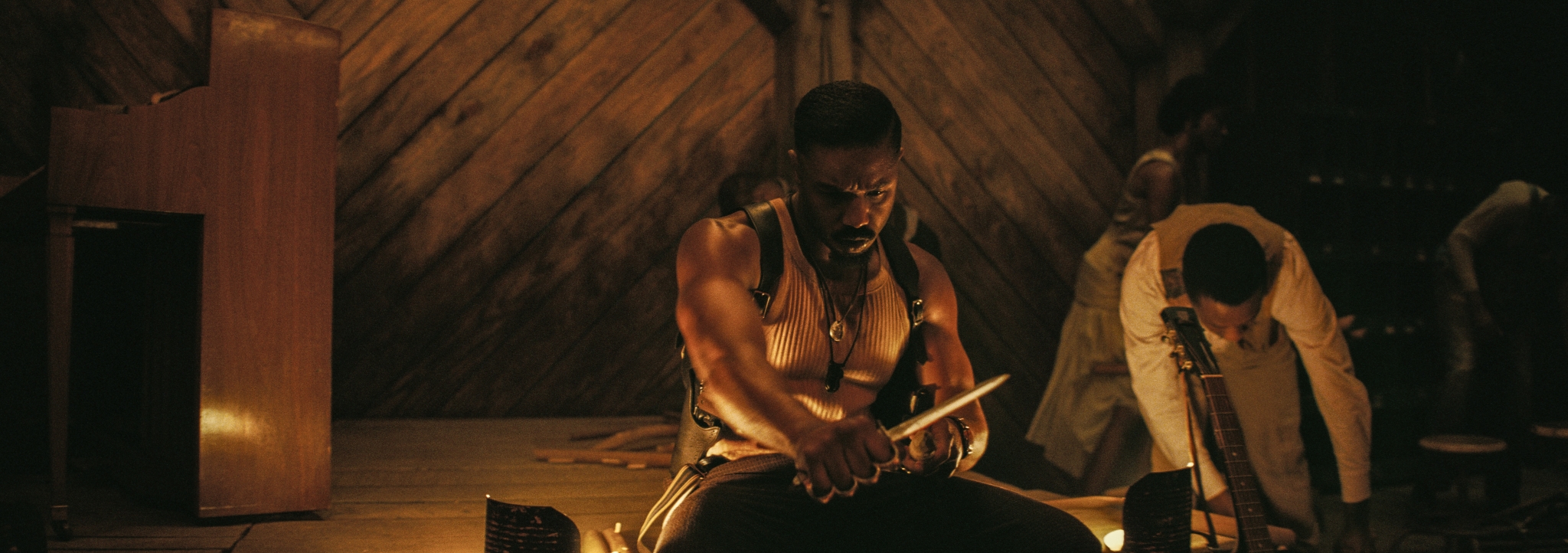
“There’s this healthy chip that has been on my shoulder for as long as I can remember, from the days when I would get teased about my name. I knew I had to be competitive at something, I had to be good—I had to be great—at something.”
Michael B. Jordan
The “negative shit” Jordan is referring to is the much-criticised downplaying of Sinner’s critical and commercial success by various media outlets when the film first hit cinemas. The bizarre media backlash began on 20th April, when Variety commented on the film’s opening weekend gross, tweeting: “Sinners has amassed $61 million in its global debut. It’s a great result for an original, R-rated horror film, yet the Warner Bros. release has a $90 million price tag before global marketing expenses, so profitability remains a ways away…” The take was followed by similar articles and sentiments by The New Yorker and The Business Insider. To date, the R-rated film has now reached a total of 367.9 million dollars and counting, trouncing its initial budget and, in the process, becoming one of the most discussed cultural events of the year. “Everybody has a different perspective on things.” Jordan says, coolly. “Everybody has a job to do. I try to take all that into consideration. But at the same time, I’m out of the way. I don’t pay attention to a lot of that stuff. Social media is a wild place [laughs].”
In Sinners, Jordan plays the tough-as-nails, stoic gangster Stack, and he also plays Smoke, Stack’s equally tough but playful identical twin brother. Together, the two are known as the “Smokestack Twins”, respected and feared amongst the residents of the plantation that they grew up in in Clarksdale, Mississippi. When the movie begins, the twins have just returned to Clarksdale after a seven year absence in Chicago—where rumours of their exploits as enforcers for Al Capone have already reached back home—and they’re getting ready for the opening of their brand new Juke joint.
The dual role is meticulous on a technical level, but also took a spiritual toll on Jordan. “You try to tap into the earliest memories of these people.” He says. “I’m playing characters that would have existed during my great grandmother’s lifespan. When you’re down there, there is a spiritual conjuring that exists—of walking on the same ground as your great grandmother and great uncles and aunts. It hit me that my ancestors were really out there picking cotton. There’s that part of it that adds a layer and texture to the performance and the world that makes it deeply spiritual for me.”
Right before meeting Jordan, I had spent an hour in the room next door interviewing Miles Caton, the spirited young breakthrough of Sinners, and Jordan’s co-star. In his eyes, Caton is a visionary in the making. “I call Miles a child prodigy,” he says. “It’s hard to believe this was his first film, first time, first self-tape, first audition, first everything. But he’s a professional. He has that curiosity, that desire to be great. I wanted to be there as a resource for him to answer and give him anything that I have available in my history that could help him connect the dots.” I ask him what the greatest lesson is that he could pass down to Miles. “Always be prepared enough to play,” he says, simply. “Don’t overdo it to the point where you have nothing left for the day, when you have to perform. It’s a lesson that you should learn early and quickly in your career. Not being able to do what you want in a scene because you’re overthinking is a tragedy.”
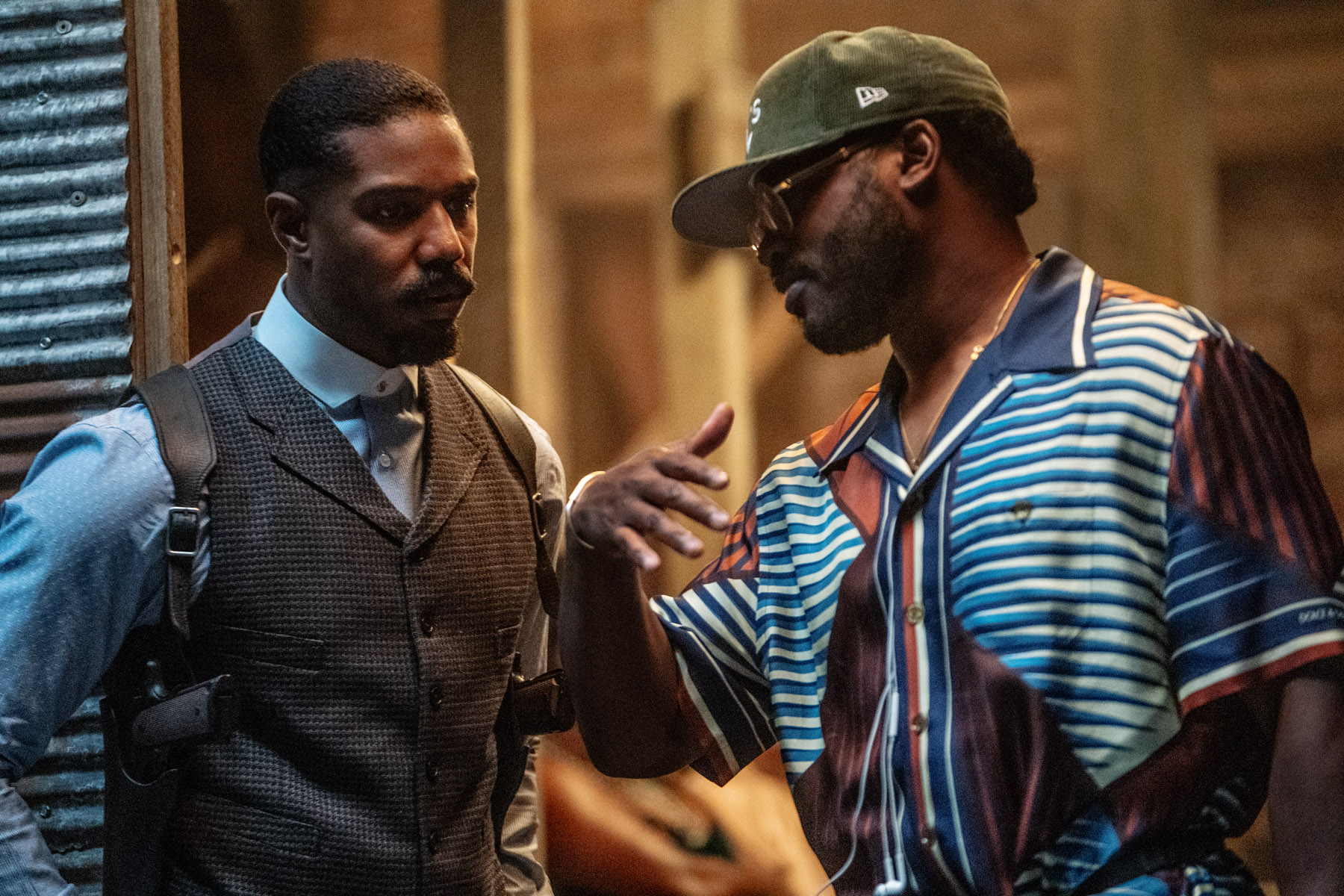
Michael B. Jordan and Ryan Coogler on the set of Sinners (2025).
It wasn’t so long ago since Jordan was in Caton’s position himself: a fresh-faced upstart in the infancy of his career. “Not that long ago?” He interjects, laughing. “That was a whole 25 years ago!”
His first big break came in 2002, when he played teen drug-pusher Wallace in The Wire. There he met his “big brothers”—the likes of Idris Elba, Wood Harris, Dominic West, JD Williams, and Andre Royals, amongst others, who became mentors-of-sorts to the young actor. “They were all there and encouraging. I didn’t have a lot of actor mentors when I started, but I picked them up along the way. For me, it was just about finding my way and along the way finding a bit of me.”
As a child, Jordan always felt hounded by the prospect of greatness. His middle name, Bacari, means “Noble Promise” in Swahili—but it was his other name that put the weight of the world on young Jordan’s shoulders. “The deck was stacked against me at an early age,” he laughs. “Before I had any real idea of who I wanted to be, I was already in the shadow of the most famous basketball player of all time. My dad’s name is Michael Jordan, too. So there’s this healthy chip that has been on my shoulder for as long as I can remember, from the days when I would get teased about my name. I knew I had to be competitive at something, I had to be good, I had to be great at something—those internal things you put on yourself when you’re ten years old. I thought, I’m gonna be compared with Michael Jordan for the rest of my life? Fuck that, I gotta figure this shit out! [Laughs].”
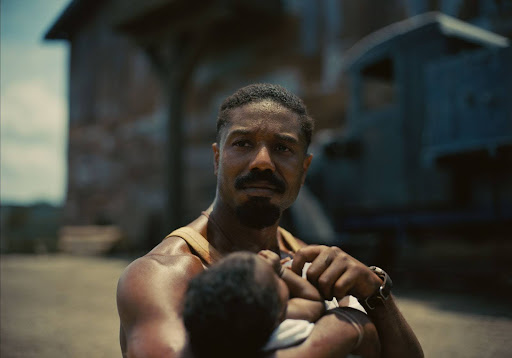
“You can’t dwell on trophies. Those kinds of accolades are so far out of your control. My performance is in my control. Everything else? if it’s on my cards, it’s on my cards. If it’s in my path, it’s in my path. I just gotta keep walking and doing my part.”
Michael B. Jordan
At 25, Jordan met director Ryan Coogler, who would provide the actor—fresh off a well-received performance in Josh Trank’s superhero flick and ensemble-piece Chronicle (2012)—with his first major lead role, in his own breakthrough directorial debut Fruitvale Station (2013). In the film, based on true events, Jordan plays Oscar Grant III, a young black teen, in the days leading up to his murder at the hands of a police officer at a train station in Oakland, California. The film won prizes at Sundance and Cannes, before going on to gross 17 million dollars against a 900,000 dollar budget—Jordan’s first hit.
“Fear of success. Survivor’s remorse. Imposter syndrome,” Jordan says, rattling off the many anxieties he faced as a young actor trying to touch greatness. “I’ve battled with all that growing up.” Despite this, the 38 year-old man sitting before me is a far cry from ‘imposter’, or, for that matter, anyone afraid of success at all. After years spent starring in some of the most lucrative films of the century (Black Panther, the Creed series), directing his own features (Creed III and the upcoming The Thomas Crowne Affair), appearing in TIME magazine’s most influential people of all time list (twice!), and starting his own production company (Outlier Society), Jordan is a man fearless.
“It’s always been about proving things to myself more than anything,” He says, when I point out that his role in Sinners has brought him closer to Oscar glory than ever before. Many actors—including industry peer Timothée Chalamet, who will no doubt be going head to head with Jordan at the Oscars this year for his performance in Marty Supreme—see the craft as a sport: it’s all about being the best. For Jordan, it’s a sport too. But for him, the sprint is all about beating your own time. Not about being the “greatest”, but about being great. “What are my limits?” He continues. “Where’s my ceiling at? How can I push myself to evolve and grow into the next version of myself? At one point I was only doing TV, and I was asking myself if I’ll ever be in movies. Then I did a movie, it was part of an ensemble, am I ever going to be a lead? Then I was a lead, now can I open up a film? Boom, I did that. There are benchmarks that I set for myself. The other stuff is nice. It’s an honour in a big way, but I don’t dwell on trophies. Those kinds of accolades are so far out of your control. My performance is in my control. Everything else? if it’s on my cards, it’s on my cards. If it’s in my path, it’s in my path. I just gotta keep walking and doing my part.”
Jordan’s humble nature is charming, infectious, and authentic. It’s a quality he credits to his parents, and one that has carried him through his journey through the film industry. “I have a firm belief and a very optimistic perspective. I was raised by my parents to be spiritually-minded, to be kind to people, to operate on principles. I always felt like what you give to the universe you get back. That’s been a practice of mine for as long as I’ve been alive. I always knew that good things would come as long as I did the work, stayed positive, and treated people well. That’s what it’s about.”
Not long before our conversation, the news emerged that Jordan was to be honoured by the American Cinematheque with an award and a retrospective: a season celebrating the career of Michael B. Jordan thus far. I congratulate Jordan, who grins bashfully. “I’m not great with compliments, or things of that nature” He says, before turning inward once more. “I haven’t even digested it. It’s a wild honour to be recognised and thought of. I’m not great with compliments, or things of that nature. But I’m grateful that the career that I’ve had has left an impact with people. That it means something to people. That means something to me.”