


The director and actor discuss their latest collaboration, a sumptuous adaptation of a lost conversation between Peter Hujar and Linda Rosencrantz in 1974.
In her non-fiction essay The Journalist and the Murderer (1989), the writer Janet Malcolm famously compared the journalistic interview to the psychoanalytic relation—rather than an expected wariness, the interviewee feels an innate sense of trust, cradled, childlike in a perceived safety, free to wax lyrical about their thoughts, memories and dreams.
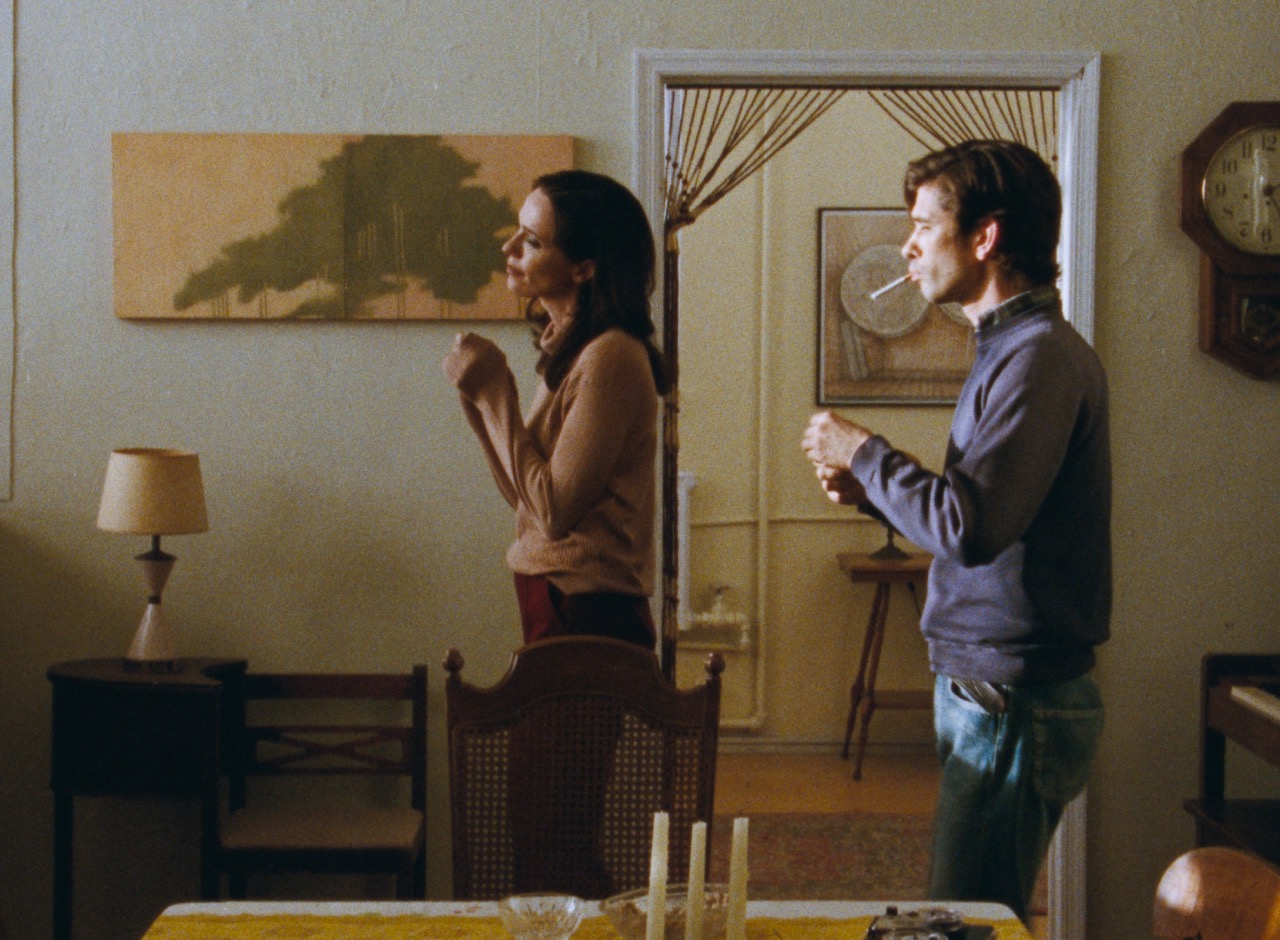
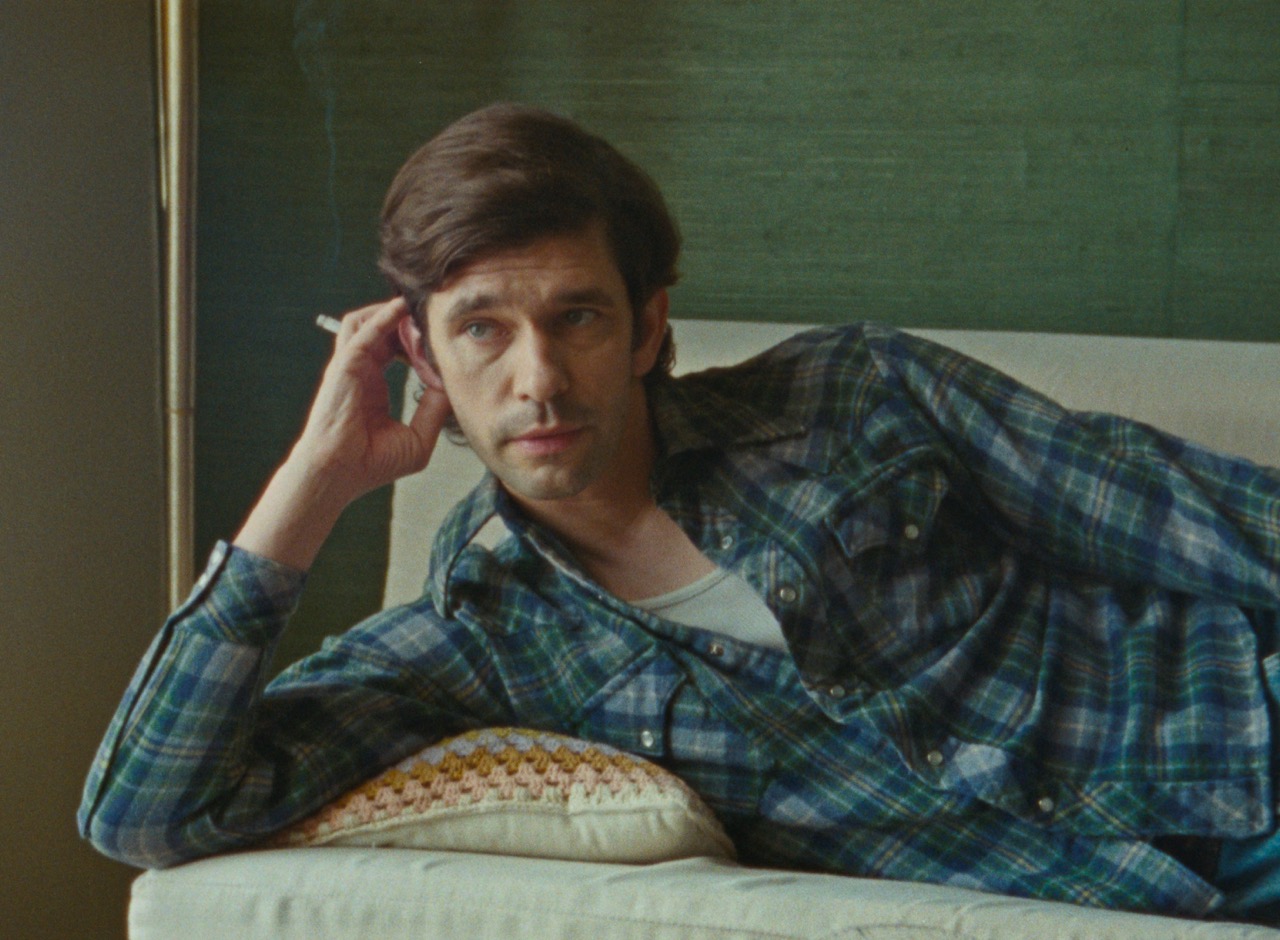
The simile came to my mind while watching Peter Hujar’s Day. The latest title from American indie director Ira Sachs, it is an adaptation of a 1974 text (republished in 2022) by writer Linda Rosencrantz, a part of a wider project in which she recorded artists in her New York circle to recount everything they did the day before. With Rebecca Hall as Rosencrantz and Ben Whishaw taking on the eponymous role of photographer Peter Hujar, over a luscious 76 minutes, Sachs reimagines their conversation. In Rosencrantz’s chic, sun-drenched uptown apartment, moving between the sofa and the kitchen to the bed and the balcony—from sitting and standing to supine—Peter Hujar recounts his day in crystalline detail. An editor from Elle arrives early (he then goes back to bed); he chats on the phone to Susan Sontag; he’s sent to photograph Allen Ginsberg; and spends a long evening in the darkroom. What would normally be moments to forget are drawn out by Hujar with elaborate, slightly neurotic precision (he calculates the right coat to wear downtown, determines how much he’ll be paid).
“But he’s not psychological,” clarifies Sachs, when I meet him with Whishaw in a London hotel in December. “You could say photographic, but it’s also extremely attentive.” The pair sat opposite me on a long couch, and I can’t help but notice the meta quality of our encounter. “Are you taping?” Sachs asks, as I set my devices down on the table, Rosencrantz’s tape recorder swapped for an iPhone. Peter Hujar’s Day is a mundane miracle—a document of daily life that reveals the multitudes of the photographer’s life and the world he inhabited, yet Sachs’ aim is not to transport us backwards, but into the present tense of performance, the gentle dance between interlocutors as the sun sets on Manhattan, and the film roll finishes with a fizzle.
For A Rabbit’s Foot, Sachs and Whishaw discuss finding depth in detail, Peter Hujar’s complexities as a character and the jazz of spoken words.
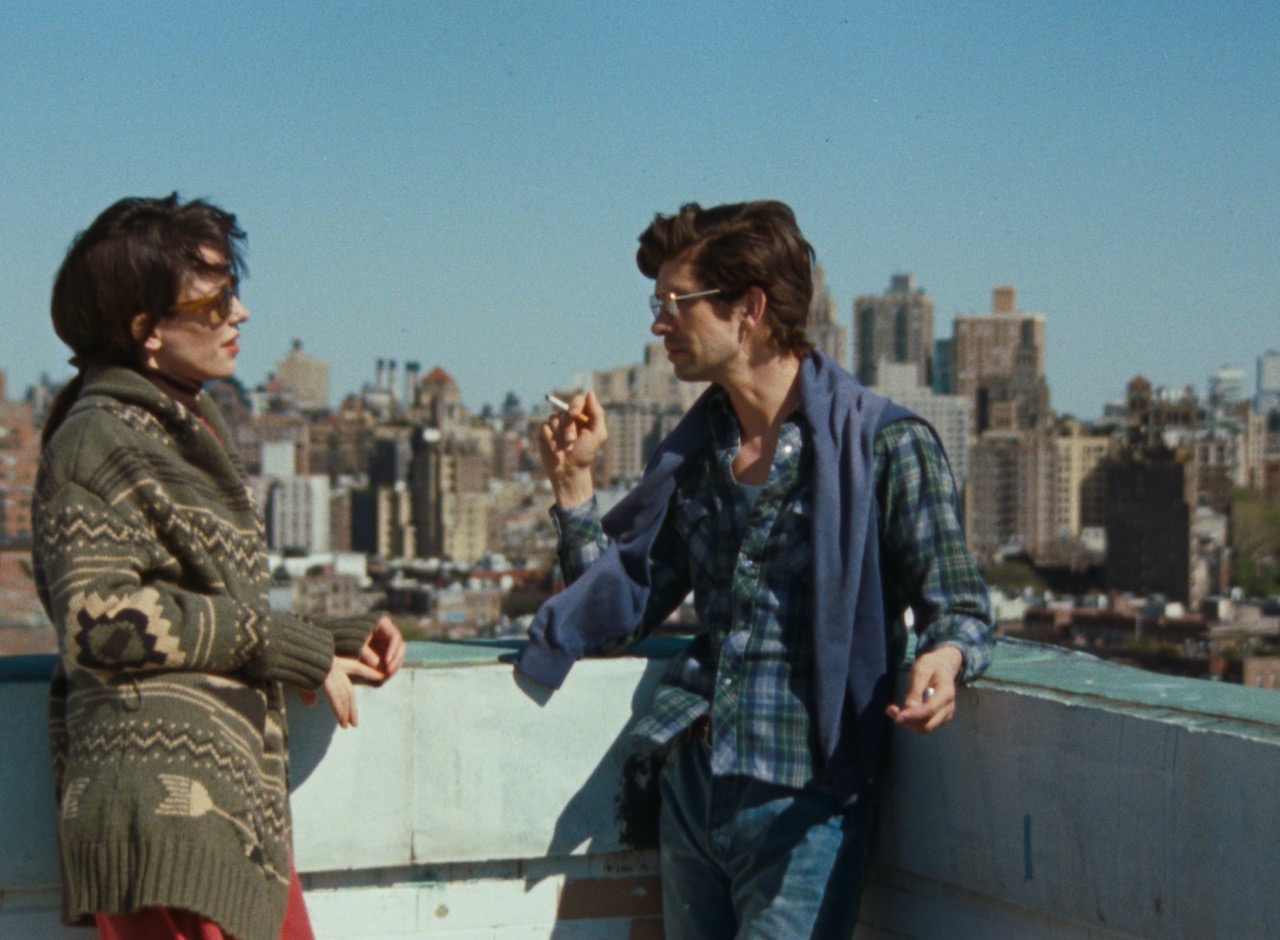
Rebecca Hall and Ben Whishaw in Peter Hujar’s Day (dir. Ira Sachs, 2025).
Kitty Grady: I wondered if, in preparation for making the film, either of you tried to recount your day as Peter Hujar does?
Ira Sachs: I definitely did not.
Ben Whishaw: Someone asked me to do it in an interview and I had the horrible realization that I am not a storyteller. I’m not a writer, I’m not the kind of artist that I thought, because I had just nothing to say. I was like ‘oh I think I made some chicken.’ There was nothing interesting about it. Although people sort of focus on the mundane nature of what Peter is talking about, it’s full of incidents and it’s incredibly vivid and very writerly in a way, for someone who is improvising, it’s extraordinary.
Ira Sachs: It’s really hard to pay attention to because it seems so effortless and it’s literally about daily life. But so is Proust. It’s hard to compare Peter Hujar’s Day, the text, to Proust, but he’s not psychological, except perhaps about himself, but he’s not analytical about himself. It’s actually more like Bloom than Proust, like Leopold Bloom [the protagonist of James Joyce’s Ulysses]. You could say it’s photographic, but it’s also extremely attentive.
Kitty Grady: I was interested in this idea of the invention of the everyday in the 1980s, and theorists using the everyday as a political praxis, this strategy of defiance in focusing on the minuscule.
Ira Sachs: The detail is where depth is discovered, and I think paying close attention is what I ask for in art and in novels and in memoir and cinema is the precision. There’s a wonderful film called the Hours and the Times, which someone should re-release, by Christopher Munch, made in 1991, about an imagined weekend between John Lennon and Brian Epstein that occurred in Barcelona. But there’s no evidence of what happened. And I watched it when we started making this, and actually Chris was the one who recommended a film that actually made this film possible for me: Jim McBride’s My Girlfriend’s Wedding. I had no idea how to shoot this film. That was maybe 6 weeks before we started shooting. And I thought it was a disaster waiting to happen. Seeing this one film that Jim McBride made about his girlfriend Clarissa gave me a visual language that opened the film up.
Kitty Grady: The word ‘precision’ is interesting. There’s also a kind of wandering quality to the film as well. How did you go about finding the rhythm?
Ira Sachs: I think precision can also rely on accidents. I think the two have to be encouraged. We structured the shooting of the film around light. I spent several weeks in the space with my cinematographer before we started shooting with two stand-in models and photographed them in different spaces in the apartment and on the terrace at different times of day. Looking at the sequence of those photographs gave me the visual design of the film. The schedule of the filming replicated it: we’ve got to be here at 6pm because the light is going to have this effect on the wall.
A couple scenes were quite choreographed—there’s a scene where Ben [as Peter Hujar] sits down and Rebecca gets a tape recorder and then Ben needs a cigarette and then she has to deliver him some food. That was like ballet. Now I look and there’s a bit of an Altman reference to it. And you could also say that’s what Rope, the Hitchcock film, does so well. It’s ballet. But there’s only one scene like that in the movie. In general I’d be saying ‘okay we’re gonna shoot here at 6 o’clock at night and you’re gonna be on the bed. Then there’s a lot of accidents.
Ben Whishaw in Peter Hujar’s Day (dir. Ira Sachs, 2025).
Kitty Grady: I was wondering if you looked at Peter Hujar’s photography when you were thinking about the choreography? Particularly Ben, I felt moments of his visual language in your performance.
Ben Whishaw: I definitely looked at a lot of his work and I loved his work anyway. I had seen a lot of it, but mostly because I just like looking at it. But maybe you absorb something. Lots of things weren’t conscious or deliberate. Ira and I don’t really rehearse—or we haven’t rehearsed on either of the things that we’ve done together. You’re not encouraging anyone to bring in something pre-planned. It’s very much this is the space and what comes up is what comes up and what occurs. There’s an aliveness to it.
Kitty Grady: How did the set, the interiors and physical space itself—which, as in Passages, is so painfully beautiful—affect the way you approached the performance?
Ben Whishaw: I’m so responsive to those things. I’m very responsive to space, the atmosphere, light, smell, anything. Those things are real things. And the more I act, the more I think it’s all about real things. It’s not about making things up, it’s about what’s actually going on between people and in a room. On both of our films those things were really rich. It’s a gift to work with someone like Ira who is giving you stuff to respond to and work with.
Kitty Grady: When I saw the film at the Berlinale, Ira, you spoke a bit about your relationship to psychoanalysis and how this comes through in the film. Do you mind expanding on that now?
Ira Sachs: I’ve done my time on the couch, so I feel that I’ve been trained to listen, and I consider my job as constructing images and movement. I’m not really just saying ‘go’, but creating a space where an actor feels observed, listened to, held, safe, and also free to discover the unknown. I think that would be parallel to an environment of an analyst. I think Linda [Rebecca Hall] serves for the film as a great and detailed listener.
This scenario is interesting in that respect. You’re a good journalist who is actually engaged in the conversation, but sometimes you get a bad journalist, I would use the word bad objectively—they don’t listen. I imagine it must be like that when you get a bad actor in a scene where literally they’re not listening and you’re like how can I continue? You have absolutely no connection to what I’m saying. I find it so repellent as an experience.
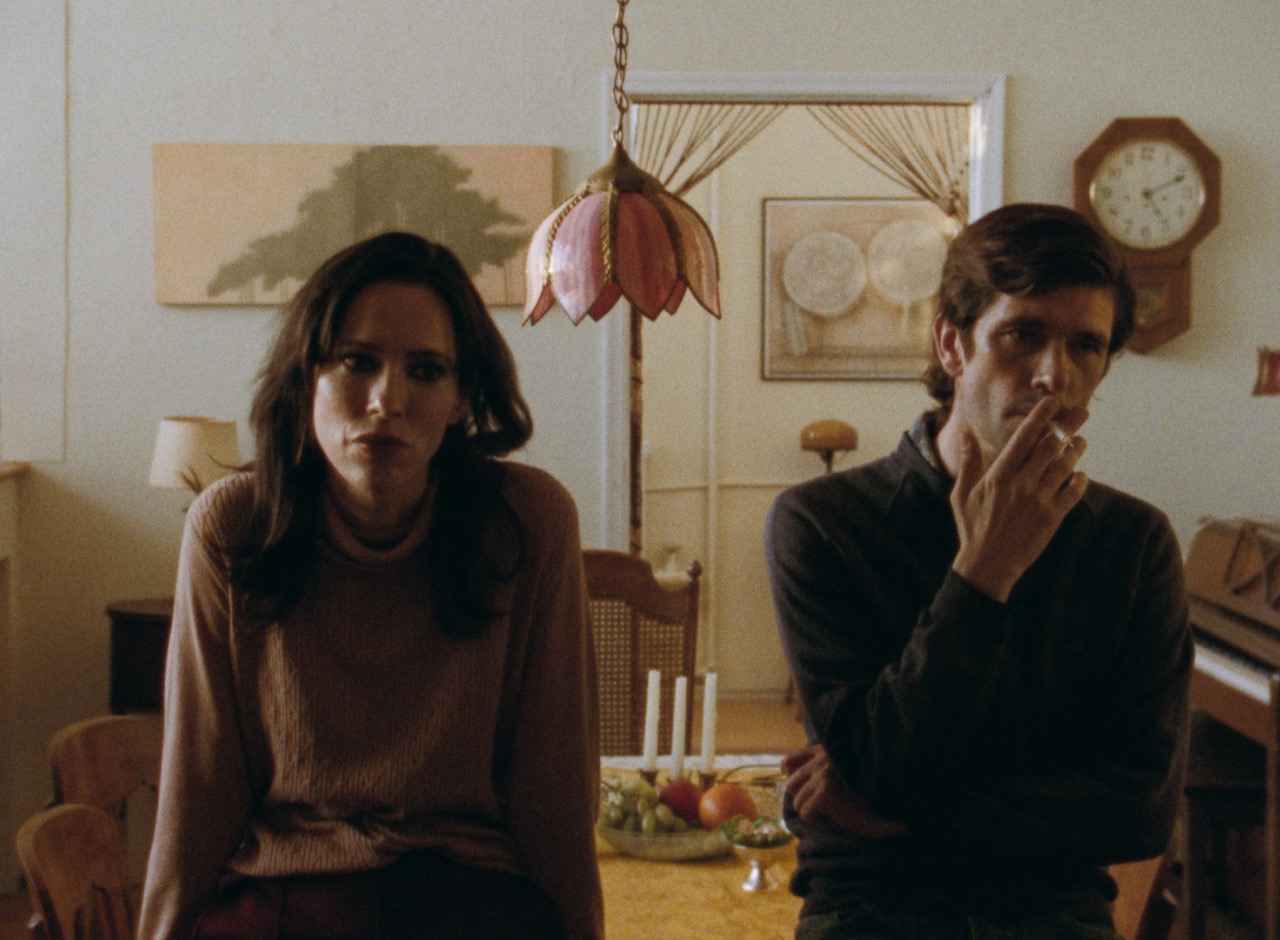
Rebecca Hall and Ben Whishaw in Peter Hujar’s Day (dir. Ira Sachs, 2025).
Kitty Grady: That’s interesting because Peter Hujar says that about Allen Ginsberg—they don’t have a connection so he can’t get a good shot of him.
Ira Sachs: I think it’s probably because of Allen Ginsberg’s narcissism—at least in that situation, it is grand enough that there isn’t room for two. I sense looking at that picture that his sense of self is too high.
Kitty Grady: It makes me think of the Janet Malcolm book The Journalist and the Murderer.
Ira Sachs: I wanted to make a movie about that book.
Kitty Grady: Oh my god, please make that movie. I guess it’s complicated because Linda and Peter are friends, but it’s still a kind of psychoanalytic relationship.
Ira Sachs: Have you read the Freud Archives? She’s one of those “read everything” people.
Kitty Grady: I will! I wanted to ask too about how in the film you make the tools of production plain—the end of film rolls, the sound of the recording… Why was it important to have that, rather than a more seamless texture?
Ira Sachs: If I had to overthink it, I think it would be a mistake. It was instinct. I don’t think it’s a film that plays with what is faddishly called ‘meta’. To me, there’s nothing really meta about it. It’s just a film about process: the process of taking a photograph, the process of a conversation, the process of making a film. As soon as Ben Whishaw and Rebecca Hall were cast as two Americans then you enter an area of theatricality that was new for me and I wanted to embrace that, and to some extent, say to the audience ‘I’m ahead of you’. I know this is fiction and I know we are shooting in 2024, it’s not 1974.
Kitty Grady: And for you Ben, did you listen to other recordings of Peter’s voice and try to capture it, was there much material around?
Ben Whishaw: There was one conversation which Ira found in the David Wojnarowicz archive. It’s a conversation between David and Peter. Peter doesn’t really like being interviewed, doesn’t really want to answer the questions. David does a lot of the talking to begin with, but eventually Peter sort of relaxes. It’s 20 minutes long, maybe less, but it’s wonderful. It’s such a bad recording and it’s muffled, but you still get so much information from him.
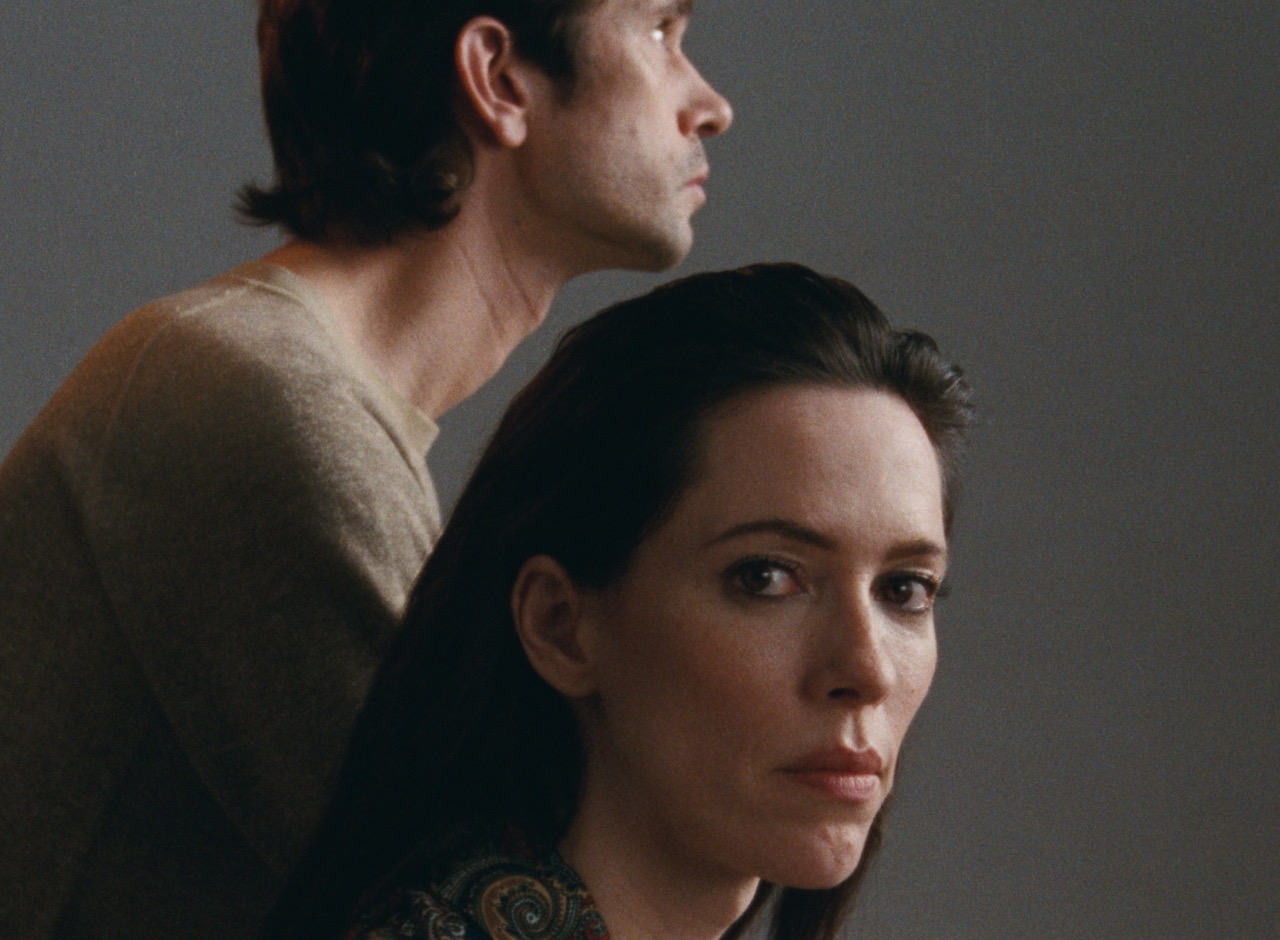
Rebecca Hall and Ben Whishaw in Peter Hujar’s Day (dir. Ira Sachs, 2025).
Kitty Grady: And how aware of his life and character were you before, you mentioned you are a fan of his photography?
Ben Whishaw: Quite a lot. But there isn’t a huge amount about him. A biography doesn’t exist at the moment although one is coming out soon. But there were things—essays and writing reflecting on Peter. Lots of people talk about his temper and his rages. But then Linda herself says she gets irritated by people focusing on that part of him because it was only a very small part. It just reminds you that everyone is complex. We are many people. It’s sort of absurd to say this person is this or this. With the performance, we weren’t trying to do imitation, I’m not good at that anyway. It was more about me and Rebecca and not him. [To Ira] Do you know what I mean?
Ira Sachs: I’m just listening to the jazz of spoken words. Because that’s something you mentioned, in undertaking the memorization of this text was that it became abstract the way language works. At one point you said ‘it’s like a grain’ but you didn’t say ‘of salt’. You skipped the end of that, but I knew what you were talking about. If you listened too much to how people speak it would drive you crazy because it’s a mess of language. But somehow Ben could evoke sense out of that mess.
Kitty Grady: In the same way, as a viewer what I liked is how you can let the conversation wash over you. It’s more about the kind of non-symbolic conversation between two bodies in a room
Ira Sachs: Well people say, does anyone know who all those people are? And nobody does, including Linda by the way. But are you familiar with the people in the Brothers Karamazov? It’s because the work evokes meaning that names become resonant. Because the actor has meaning, that they’re conveying through the symbols, which are words, it becomes a kind of universe, a cosmology that is quite complete. I think that’s Peter and Ben combined in equal measure. Because the text, as someone who has read it several times, doesn’t have that effect on me. It’s the text as realised through the performance.
Ben Whishaw: And also, surely the interesting thing is not who the person is. It’s about how Peter feels about that person or what they evoke in him or what. There’s a story. If I was talking to you about a bunch of people that I didn’t know, I would not be so interested in precisely who that person was, but in what you felt about them. I feel like when I’m listening to people, I often don’t really understand the surface of what they’re saying. I’m like, okay, sort of. But I get loads of other information. You know?
Kitty Grady: Well that’s the job of the therapist too, to read between the lines…. Was Linda involved in the making of the film?
Ira Sachs: I’ve been in conversation with Linda on a daily basis. I think this has been a delight for her, to have her work recognized, because this is her art form. The art form of using everyday language. She already did this with the book Talk, which came out in the 1960s. She said she didn’t write a book of this conversation because the others weren’t as interesting. I know maybe 10 people who are particularly interesting when they speak. This isn’t about the everyday. Exceptional doesn’t mean privileged—it just means something unusually great.
Peter Hujar’s Day is in cinemas now.