Charles Finch introduces Issue 13: Tomorrow



Get unlimited access to all our articles for just £3.50 per month, with an introductory offer of just £1 for the first month!
SUBSCRIBEOur Editor-in-Chief introduces issue 13—a celebration of the future featuring cover star Charli xcx.
I remain always an optimist. How could I not be, when surrounded by dynamic and talented young people who work with me on this magazine and platform—on filmmaking, at Finch & Partners, and in my restaurant-to-be Bar Finch? All the projects I embark on are, in fact, populated by energetic and enthusiastic young men and women who seem to flourish when trusted and supported. Their youth inspires me and, in light of the grim world we inhabit today, the young that I know and work with are, quite frankly, surprisingly positive and caring. They are open to ideas and, for the most part, on the right side of the argument, and this is a global assessment, not just one from London. They are uniformly environmentally conscious—by and large anti-war, and anti-tyranny of any sort, and they are open to all forms of art and entertainment. Of course, the older generation that I am part of does get frustrated by what we see as a lack of process and formation that the young seem to mistrust, and the lack of office-hour focus and attendance, and by their cultural acceptance of a “shaming” society that short cuts the judicial process. Unforgivable.
Us older folk are also frustrated and concerned by this generation’s acceptance of technology as a fast cut to knowledge. And the “get rich quick” epidemic, which seems to throw out the trusted paths of apprenticeship and slow learning, replacing it with ChatGPT… or any other device that brings an answer without a book being read or actually any studying. But, as they say, you can’t roll back the clock and what’s here is here to stay.
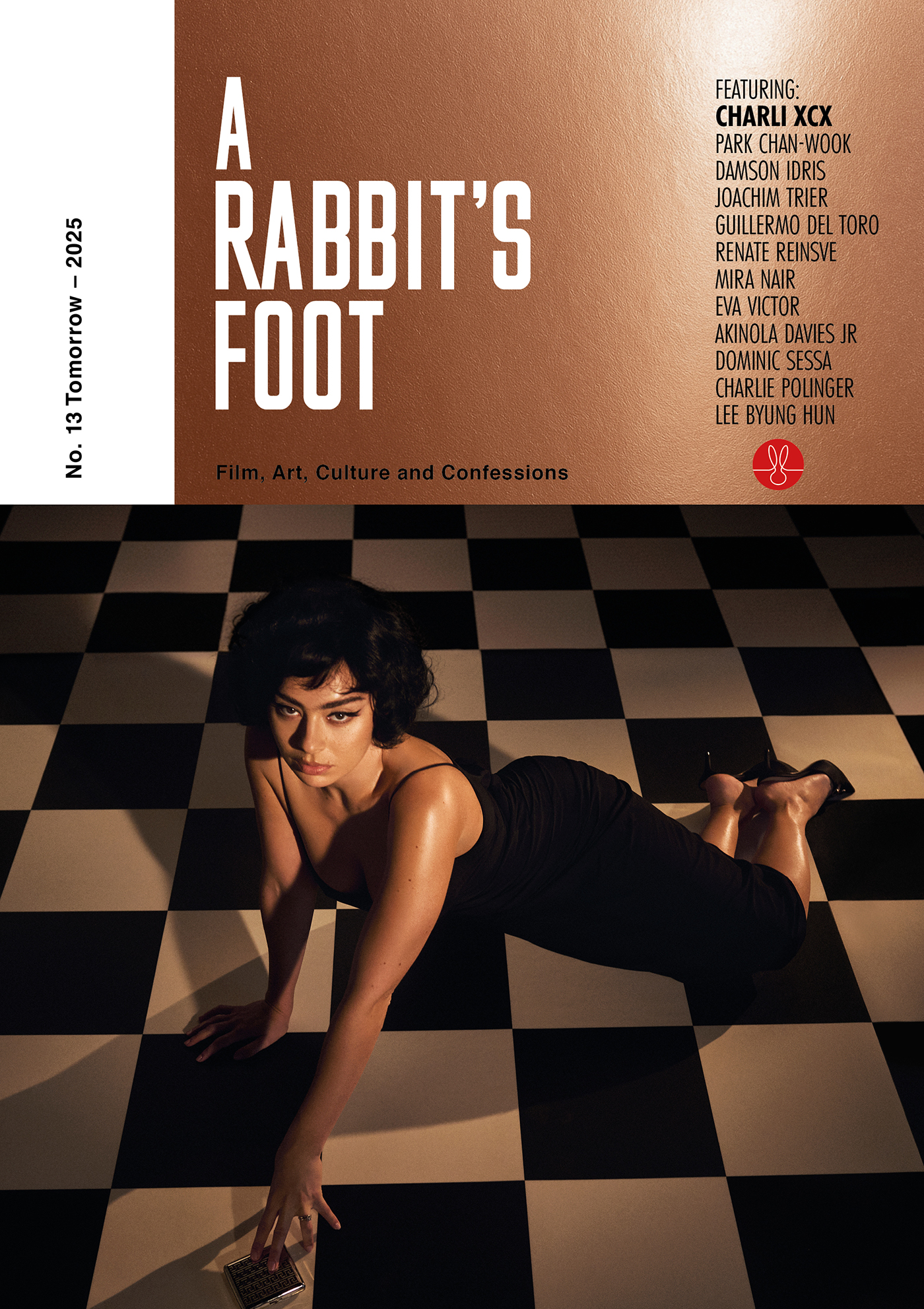
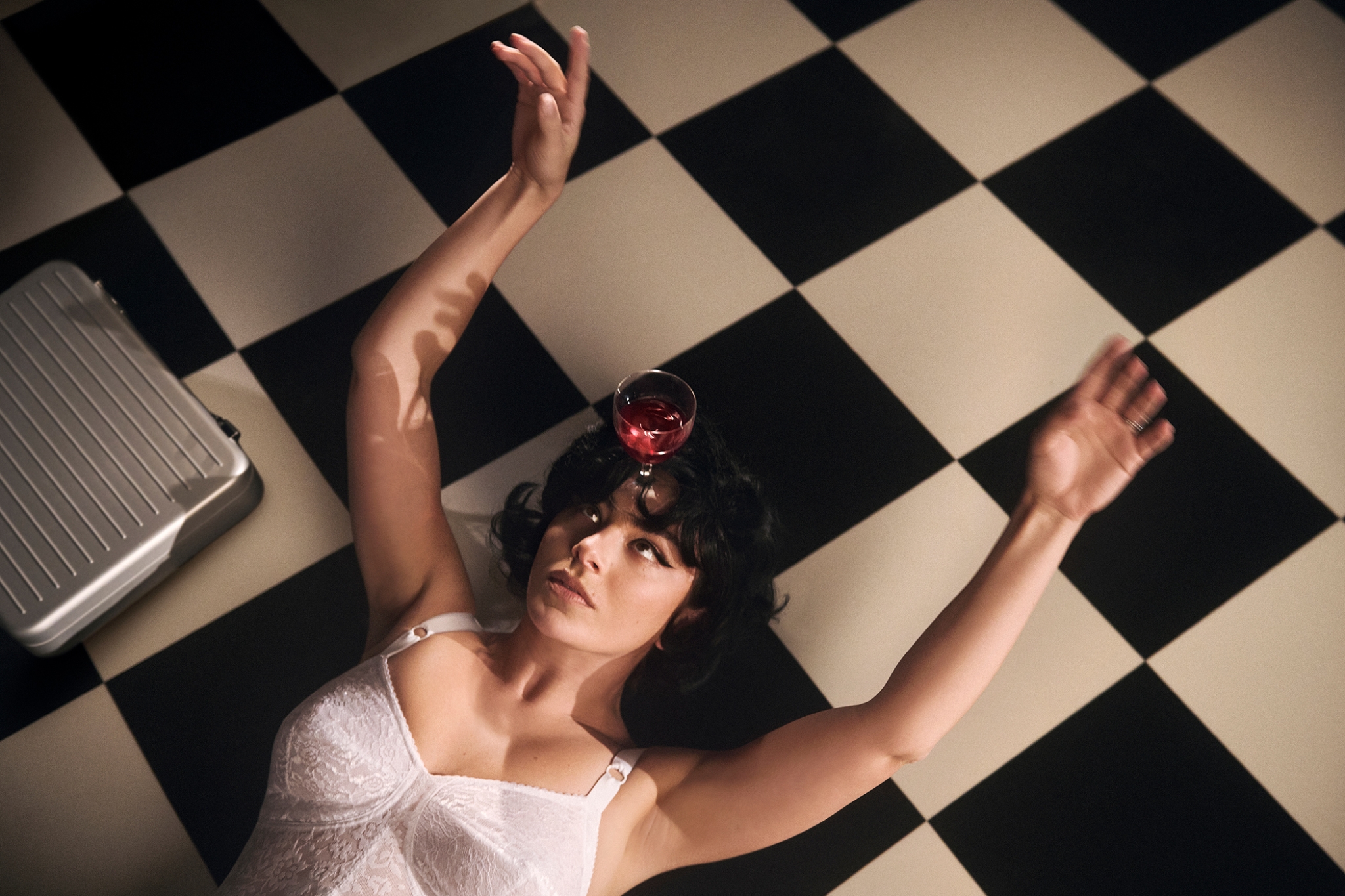
Cover for Issue 13 featuring Charli XCX. Photography by Hailey Benton Gates and Creative Direction by Fatima Khan.
We can, though, challenge the process of future learning and embrace and promote the power of true learning—artisanal work and the written word in book form as a path to knowledge that, while time-consuming, is earned and thus has greater value than what is plucked from the internet. In the long run we may be at the tail end of Homo sapiens—a short skip away from biochemistry in pre-birth engineering—in knowledge of bio-implants and all the other science-fiction advances the human race is being offered and will be replaced with. Is a ship that is rebuilt from scratch the same ship she was? Or is it that when every plant has been replaced, the ship’s hull made of paper—and the sails made of spider-web fabric, and the body of the boat no longer sits in the water but skims over the waves on a hydroplane? Is that the ship it was or is it no longer a ship at all? Well, I look forward to meeting my great grandchildren to find out.
In choosing the theme of this issue, I set my team the task of exploring new artists, filmmakers, and writers, and I hope we present a positive and uplifting journey for you all. We can’t mention all of the up-and-coming artists we want to but we have given, I believe, quite a good selection from all over the world and in many different disciplines.
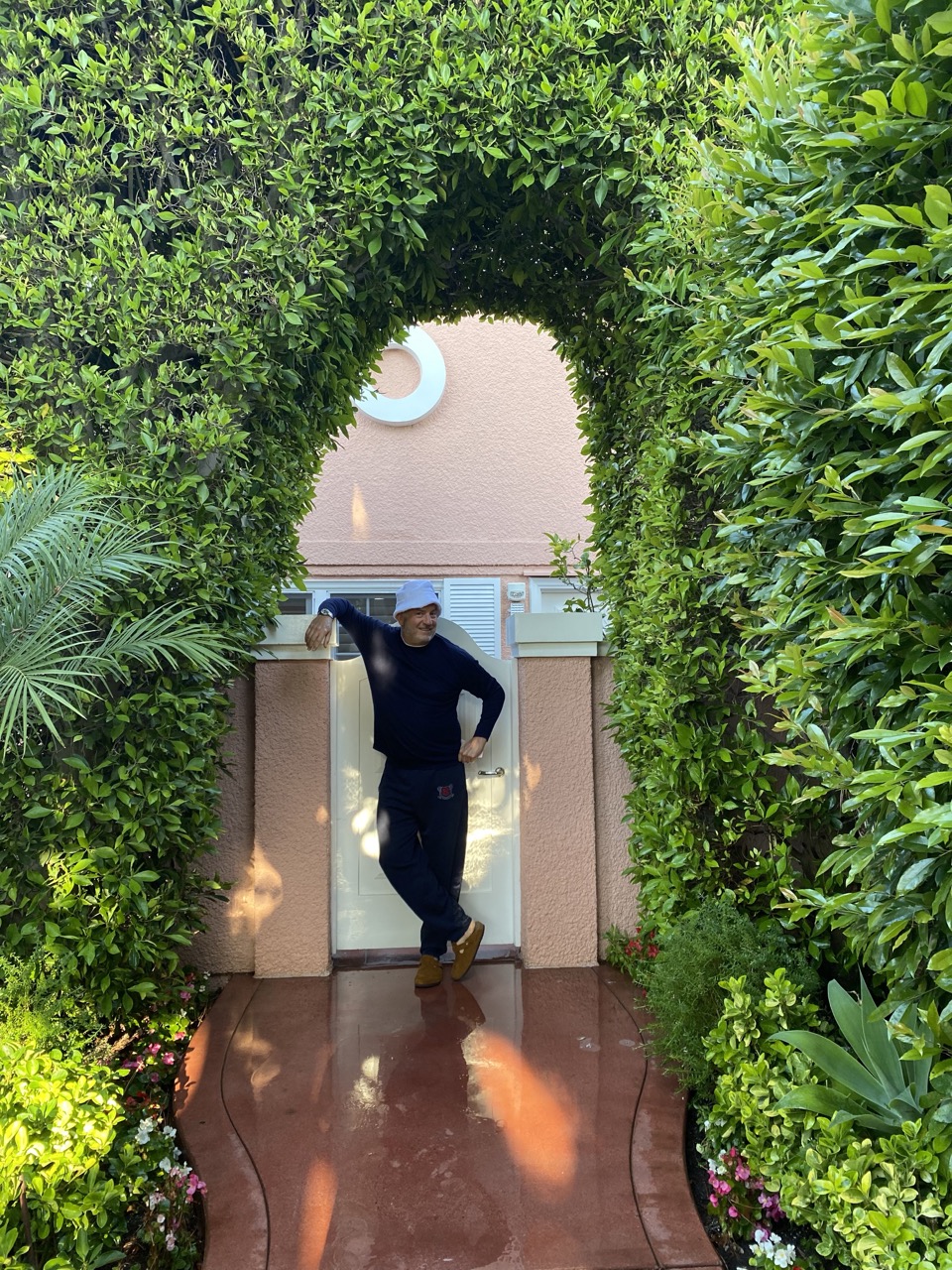
Charles outside bungalow 8A at The Beverly Hills Hotel, by Oona Ingle-Finch
We can, though, challenge the process of future learning and embrace and promote the power of true learning—artisanal work and the written word in book form as a path to knowledge that, while time-consuming, is earned and thus has greater value than what is plucked from the internet.
Welcome to ‘Tomorrow’, Issue 13 of A Rabbit’s Foot. In this issue we have chosen, as we always have, to celebrate some extraordinary filmmakers. Masters. In our pages you will find a great piece on Korean director Park Chan-wook by our features editor Luke Georgiades. Director Park, as he is called by his crew and team, deserves the reverence which is shown to him. He is a brave filmmaker, fascinated by the human condition, and his stories often explore the conflicting morality human beings must contend with. The humanity of his characters always shines through though, even in the complex and challenging worlds they must survive or perish in. This brilliant artist talks about life, his work process in film, and his new dark comedy No Other Choice, which sees him reunited with the wonderful actor Lee Byung Hun, who we also talk to in this issue. Chris Cotonou, our deputy editor, spends time with Joachim Trier, whose latest film, Sentimental Value, is a remarkable piece of work. The Danish-born Norwegian director stays true to his world and makes it our own. Perhaps his universality comes from his past as a skateboarder! “I‘ve stayed hardcore. I do my thing, I didn’t take the Hollywood office. I stayed in Oslo,” says Trier and the richer we are all for it.

Sydney Mead’s concept art for Blade Runner (1982).
Maxime Toscan du Plantier embarks on a wonderfully revealing interview with Guillermo del Toro. GDT is open in his process and as fascinating as his films. He is a filmmaker of superb craftsmanship, drawn always to the dichotomy of monster and saint. A paradox his films thrive on and can leave us breathless and delighted, both by the beauty of his work and the power of his imagination. From the Masters, we pass to Daria Challah, founder of Herbert Music channel. Daria reveals to us the musicians changing and testing the limits of classical music. Lucas Oakeley talks to us about the advent of the short story in a world nobody has much time in and shares a good list of new work to devour. Amelia Stevens writes a piece on futurism, the controvesial and, at first, optimistic movement started by Filippo Marinetti in 1909. What started as avant garde interpretations of poetry and art soon became overwhelmed by a fascination with speed, and later, architecture and the challenge of the status quo. Unfortunately, futurism can also lean quickly into the dark side—where individualism is seen as a weakness and shiny rockets and fast cars become more important than the human spirit. Sound familiar? You will also discover Thomas Heatherwick in Genevieve Gaunt’s interview. Heatherwick is a disrupter and adapter. From designing buildings to buses, he thinks big and without limit. Sam Murphy takes on Ayn Rand, the great futurist writer. He and I don’t see eye-to- eye on Ms Rand. I sort of concur with her that the future is made by singular talent and visionaries and not by the collective. She’s worth reading and forming your own opinions about. After all, The Fountainhead, Atlas Shrugged are—whatever Sam might think—masterpieces. Jonathan Romney studies HAL and our fascination with always seeing “TOMORROW” as a grim world. We celebrate actors breaking through, from Damson Idris to Renate Reinsve, Inga Ibsdotter Lilleaas, and Dominic Sessa, and there is, of course, more across all artistic mediums, including British painter Vanessa Garwood and Faye Wei Wei.
But what would a magazine be without its cover star? Chris Cotonou met Charli xcx in Los Angeles, where she lives. The cover, from the mind of our creative director Fatima Khan, is inspired by the great Italian actress Monica Vitti, who Charli herself described as “one of one.” To many audiences, the same can be said of Charli as a songwriter, and now, on her next chapter as an actor—moving with ease into the world of cinema. She also pens an original essay titled ’The Death of Cool’, which can only be found in these pages. For Chris, she was “a person with a dynamic way of seeing the world and creativity; restless and without doubt a movie star of tomorrow.”