

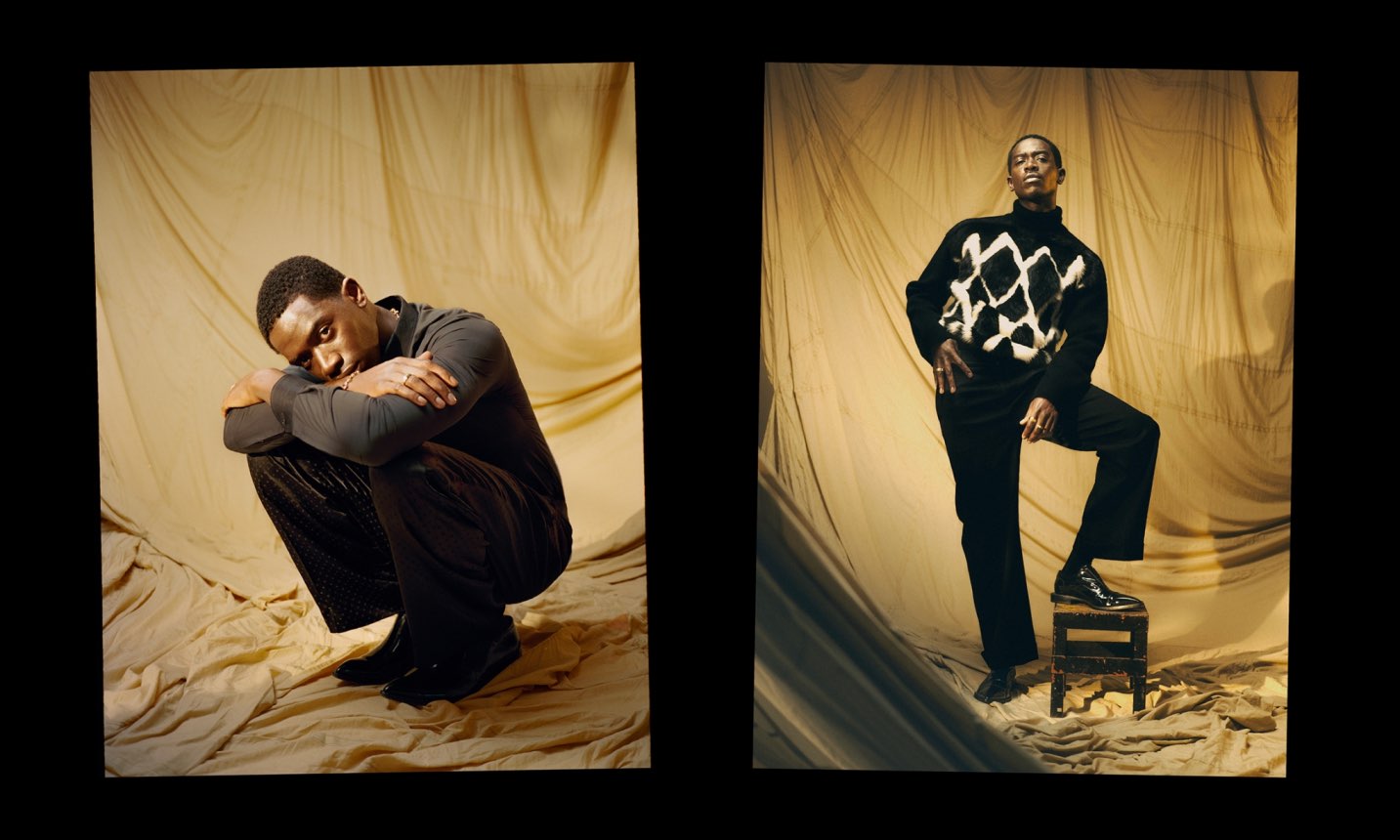
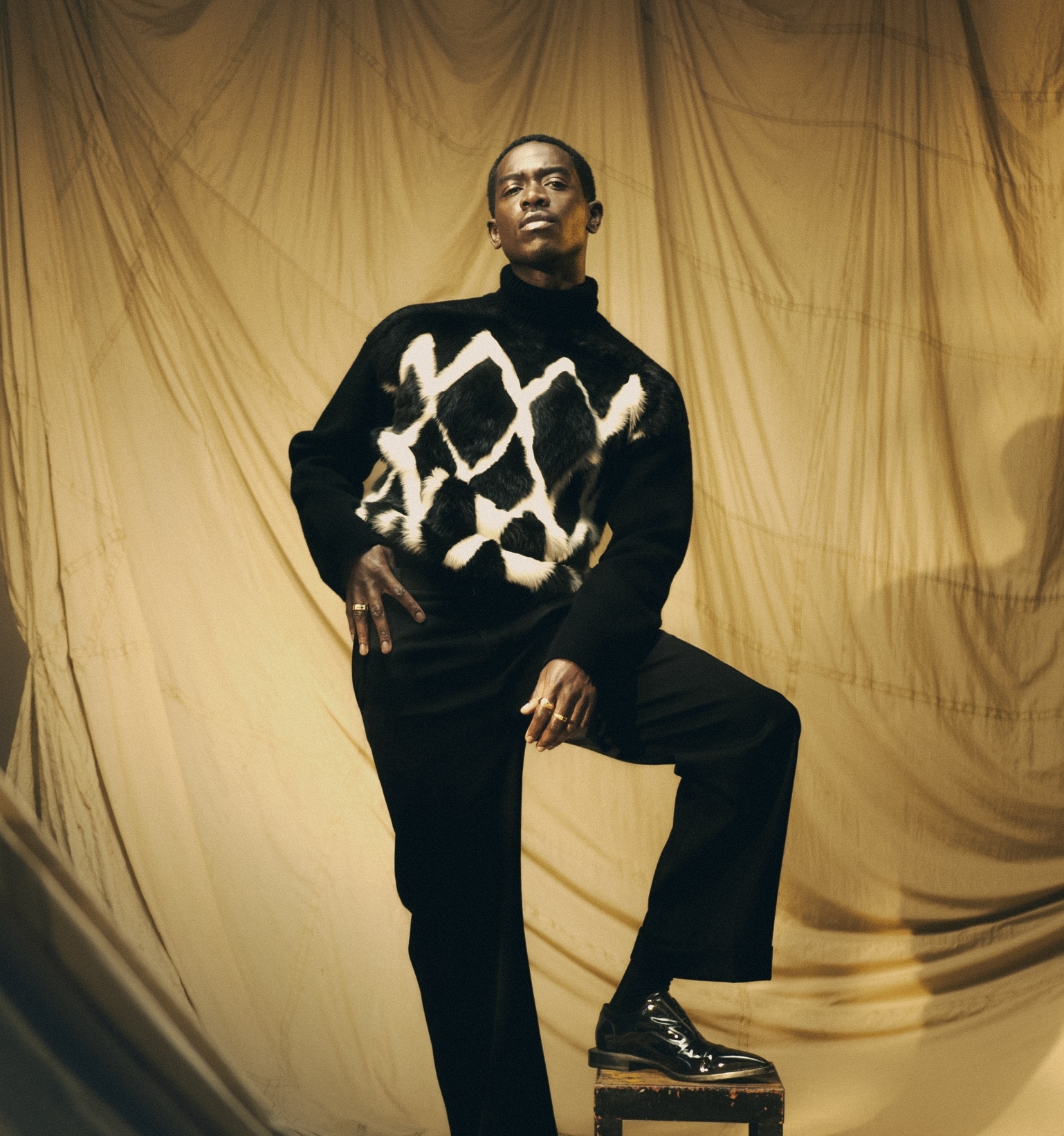
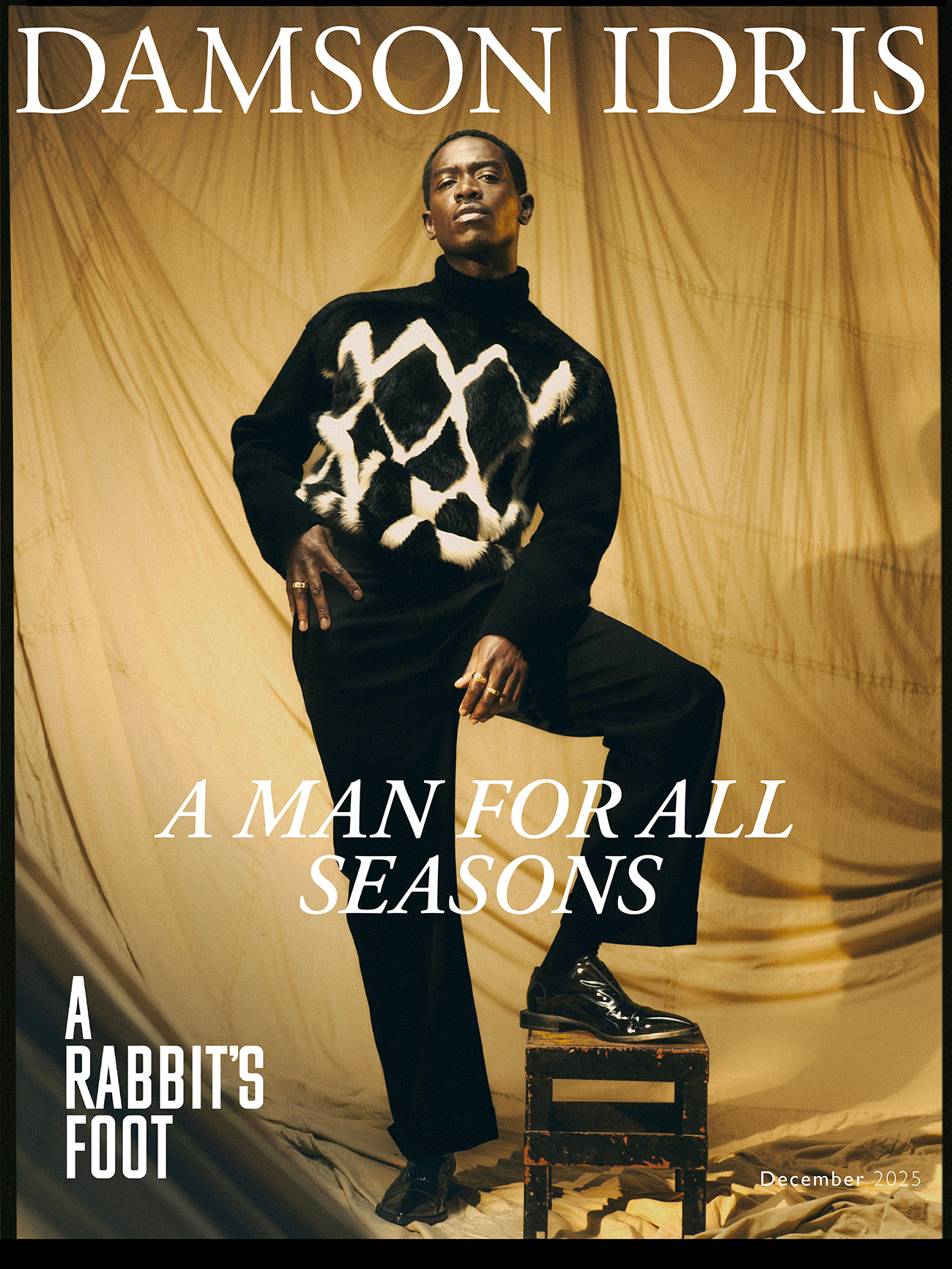
After his performance in F1, London-born actor our December digital cover star Damson Idris has the world at his feet. The question is, what comes next. With Chris Cotonou, he talks about family, taking risks, playing Miles Davis, and the launch of his jewellery house DIDRIS, inspired by his mother.
On a few occasions do you find yourself being in the presence of someone with proper “star power”. But on such occasions, it can only be described like a lightbulb moment. “Ah.. I get it,” I thought, when first meeting Damson Idris in West London. The 6”1 actor, who is British-Nigerian, stooped to greet me with a wide grin and a full-bodied “Hullo” that betrayed his cockney Peckham roots. Not too many words — not too few either — but a sense of charisma and authenticity reminiscent of his heroes: Marlon Brando and Denzel Washington. And wisdom, too. In our conversation, Idris expresses the key tenet of the successful star in the 21st century, a time when actors’ lives are on full-display: mystery. He doesn’t want to do it all, he says. Keep them guessing. “The projects have to mean something for me.”
Previously he was in sports drama F1, impressing audiences by holding his own against the brightest of all stars Brad Pitt. But there are more strings to Idris’s bow, unveiling DIDRIS last year, a jewellery brand that pays homage to his mother. “DIDRIS is about legacy,” he explains. “What I leave behind and what I do for my family.” Perhaps that’s the key, and why in conversation Idris is surprisingly more human and approachable than his star would make him seem.
We had a long and honest conversation, which flowed naturally through future projects, DIDRIS, Idris’s childhood in south London, and his most recent risks. But the whole time, one thing remained true: Damson Idris is one of the world’s next movie stars.
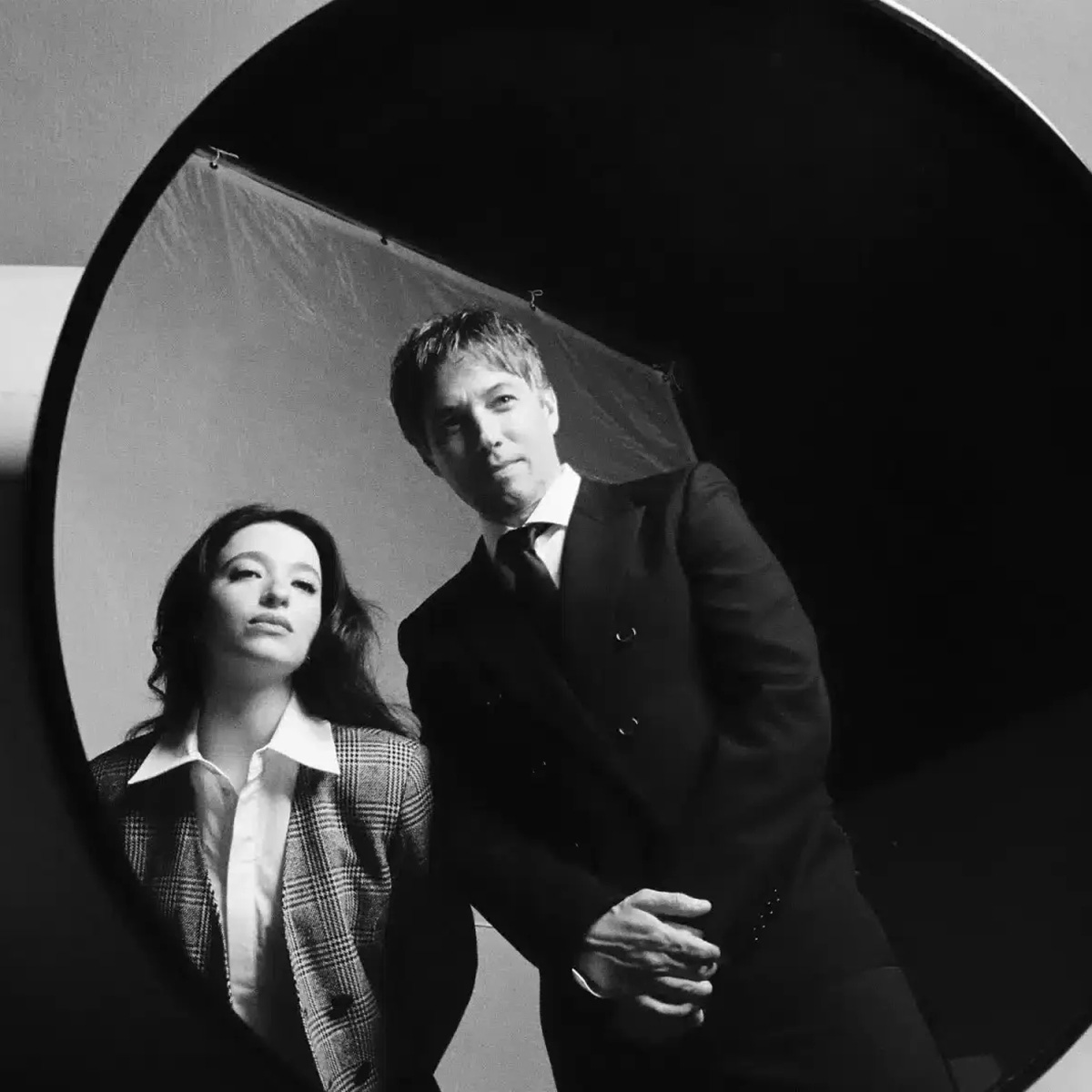
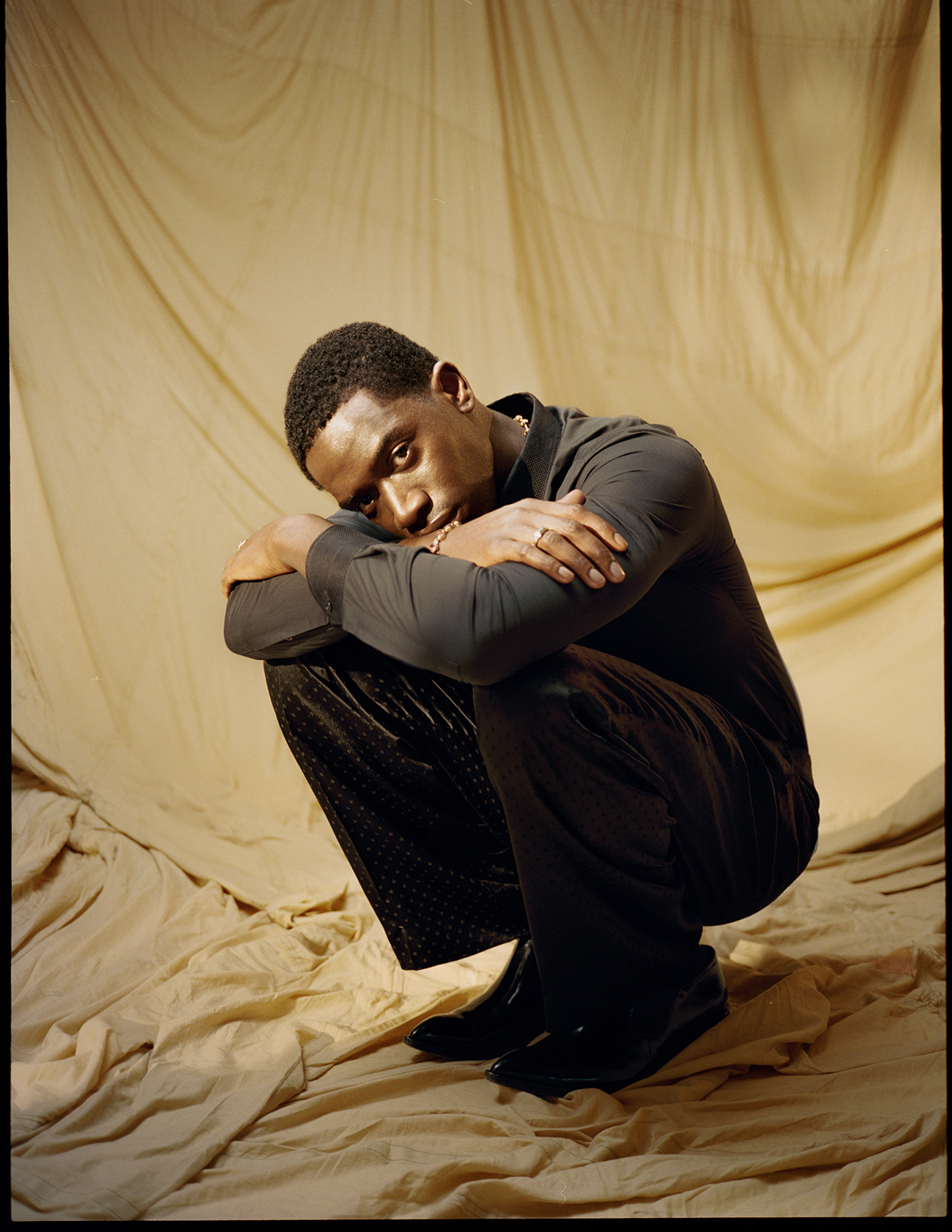
Damson Idris. London, 2025. By Laurence Hills.
Chris Cotonou: Where do you call home these days?
Damson Idris: I’m back and forth between Los Angeles and London. Films can be six-month shoots, and if I have time, I’m on smaller projects in a hotel here and there. So home is wherever I am.
CC: Do you think it’s necessary to stop and lay down roots to be able to progress in an acting career?
DI: I’m not giving anything any pressure. I hear a lot of veteran actors who speak of unhappiness, and that stems from pressure and a feeling of urgency. Me? I’m having fun. I’m also fortunate to have a big family and that’s always what matters. They cloud so much of the type of pressure my peers might experience.
CC: How does your family ground you?
DI: Well, they’re always with me, including on set. After our chat, I’ll visit my brother. He’s two hours away. He’s just had twins, so I’m Uncle Damson. It’s always someone’s birthday, always a reason to be with my family. They’re everything to me and are my secret weapon.
CC: How can you tell which type of stories are worth choosing?
DI: When I was younger, I just wanted to be seen and show everyone what I was capable of. Now I understand it’s important to only focus on projects I’m passionate about. I’m wise enough to know when to say no, and thank god that education arrived early. But it’s all motivated by a feeling. When I decided to play Joshua Pearson in F1 (2025), it’s because I wanted to work in the sports world and play an athlete. And when I wanted to work in Africa, I did Children of Blood and Bone (scheduled for 2027). And I’m feeling inspired by music, so I’m playing Miles Davis [Miles & Juliette, (release date TBC)]. Whatever I do is always defined by that feeling.
CC: It sounds like you have an obsessive personality.
DI: Yes. Everyone clowns on me because when I find a good restaurant, I go there every single day to eat. When I discover something I like, I cling to it. A lot of peoples’ heroes are actors, but I feel like my heroes are doing things differently to me. When I see people excel in their fields, it strangely inspires me to be the best I can in what I do and to learn about what they do, too.
CC: Do you ever go method? I’m curious to know whether you have a process.
DI: I try to stay in character throughout the shoot because it helps me. I’m borderline ADHD—it’s only when the camera’s rolling I’m able to be still [laughs]—so staying in character holds my focus, keeps me ready, and makes the scenes feel fresh. This began during Farming (2018), where I played a black skinhead, and it’s stuck with me since. But I admire actors who can show up and kill it. Maybe I’ll get to that level one day.




CC: Do you ever plan your career ahead, or take it as it comes?
DI: I’m about working with great people. I’m a sponge—I want to keep learning. When I went to Brunel University [in West London], I studied drama and TV there, and it was the theoretical side of acting and I was thinking of becoming a teacher. Then I started doing plays, recommended to me by a fellow student. From then, the ball was in my court.
But really, I wanted to get out of Peckham. I wanted to understand how I existed in the world beyond Rye Lane and the number 12 bus and Morley’s [a popular chicken shop chain]. It goes back to what you asked about my obsessive nature. Well, I have a compulsion to connect with people who are not from where I am from. That’s probably how I’m able to tune into different kinds of roles.
CC: As a young guy from Peckham—a tougher part of London—did you feel judged for your ambition to go into the arts?
DI: Definitely. I didn’t tell anyone, I just disappeared. We all wanted to be footballers as kids, and then after secondary school that dream fell apart for most of us. I eventually went to college in Richmond, where I took drama as one of my courses, and at that time, everyone I spoke to was meeting the person I wanted to portray myself as. They would ask me about Peckham, but I was trying to forget Peckham. I didn’t want to be defined by it. That’s changed now, of course.
CC: What did your family say when you told them your ambitions to become an actor?
DI: They’re supportive. The benefit of being the youngest of six is that you can learn from the experiences before you. My three older brothers would slap me around the head if I was being naughty; they have only wanted me to stay on track. I’ve always had an old soul because I was learning through their wisdom, along with my mother’s. My family has their heads screwed on. Regardless of my success, I’m still everyone’s baby brother.

“For me, the project was deeper than portraying Miles Davis. I wanted to exist in a romance. I wanted to play a role where I could be in love.”
Damson Idris
CC: Can you tell me a little about playing Miles Davis? The film depicts his ill-fated romance with the French singer Juliette Greco in Paris in 1949.
DI: As a lover of jazz, he’s someone I was excited to portray. But I first fell in love with jazz because of the saxophone—more specifically, in Afro Beats. As a Nigerian, I originally used to love hearing it on Fela Kuti’s records, and then I’d try to seek other instruments with that sound, like the trumpet. Very quickly, you find yourself at Miles Davis. And like Fela, his story is a very African story. It’s about trying to succeed in a system you can’t control. I related to that. You know, like Fela, Miles grew up privileged and he liked to admit that. But even as a famous artist, he still had to face what so many black people face.
For me, the project was deeper than portraying Miles Davis. I wanted to exist in a romance. I wanted to play a role where I could be in love. I related to Miles and Juliette’s story because I’m always on the road, meeting new people, falling for them, and then… having to say goodbye.
CC: Do you see yourself in more romantic lead roles?
DI: I just want to transform. My favourite actors are Marlon Brando, Daniel Day-Lewis, Denzel Washington, and Sidney Poitier. You know, these are guys who are different in each part and that’s what I strive for. When I finished playing Franklin in Snowfall (2017), I said: “I don’t want to be a drug dealer again.” I never want to be pigeonholed.
CC: I was just thinking how Kuti would be the ultimate biopic for someone of Nigerian heritage.
DI: Yeah, and he was a great human. He fought for something and hopefully that story is told one day.
CC: Tell me about your jewellery brand DIDRIS.
DI: It happened during lockdown. I realised that so many of my peers had their own ventures that existed outside of their art. When I was thinking about my own, my eyes immediately fell on my mother. She sacrificed so much for her children, and her dream was to design her own jewellery. As a younger woman, she would buy and sell gold between Nigeria and Europe, and she always recalls going to Hatton Garden to learn about diamonds and verifying pieces. She then moved the family to London and had to put her dreams behind her. Now I’m in a position to continue her dream and that’s DIDRIS. It’s become equally passionate to me because I’m in an endless creative state. With acting you have to wait for the moment to create, but with jewellery, I can conjure my imagination anytime through these rings and bracelets.
CC: You launched DIDRIS at the Met Gala.
DI: That was cool. A minute and thirty seconds to change between a suit and then put on a tux, hold a helmet, and when I ripped the outfit off, there was DIDRIS presented to the world. Between work, I use my free moments to work on the collections, including our ready-to-wear line. The brand is growing and my peers have begun wearing it too. It’s exciting to have something that maybe I can leave for my own children. Because above all, it’s a process of legacy.
CC: You’re brilliant at telling stories. Would you ever write a script next?
DI: I prefer to take it in and be a part of life. There’s a graveyard next to where we’re speaking [laughs] and that’s reminding me of the passage of time. It’s all about the journey, man. I’m happy that I’m able to inspire kids from South London, first and foremost, where I’m from, to follow their dreams.
CC: What was a risk you took recently?
DI: It was a mentality shift that happened before I started F1. I told myself that I was going to be open about what I stand for—speak up for the man I am, and the man I hope to be. It’s a risk because it’s easy to hide your beliefs and principles; when you’re in the limelight it’s simple to avoid trouble by not saying something, or the wrong thing. I’m learning to be a human being, and I’m letting people, audiences—you—know that I’m human. So many of my peers are being shot down because they’re not honest with themselves. Being my authentic self, for all to see, was a big risk.
CC: How do you unwind after a project?
DI: I’ll take a vacation after every part. But as soon as I get one-on-one time with Mum, that’s the thing that brings me back down to earth. She’s very proud. People tease me about being a mummy’s boy, and I’m like, yeah, I am a mummy’s boy. So what?
CC: Does she ever comment on all the attention from your female fans?
DI: Listen, you saw me with my bodyguards today… But my mum—that’s the real bodyguard [laughs].
Credits
Creative Director: Fatima Khan
Photographer: Laurence Hills
Executive Producer: Anna Pierce
Production Coordinator: Olivia Kenney
Videographer: Katya Ganfeld
Stylist: Karen Clarkson
Styling Assistant: Christiana Aloye
Grooming: Liz Taw
Production Designer: Alice Jacobs
Production Assistant: Isaac Ashley
Studio: Loft Studios
Creative Assistant: Kitty Spicer
Look 1: Lanvin faux fur sweater, black trousers, shoes. Pantherella socks.
Look 2: Tom Ford jacket, silk shirt, trousers and shoes.
Jewellery by DIDRIS.
Continue Reading