

The Indie auteur has spent a career making cult favourites such Drugstore Cowboy and My Private Idaho. On his days off, however, he would paint. A new book explores his adventures in art.
Before cinema, Gus Van Sant’s first love was painting. The director behind cult independent films like Drugstore Cowboy, My Own Private Idaho and Elephant, Van Sant attended Rhode Island School of Design in the 1970s, double majoring in painting and film for the first two years before devoting himself to film for the last two. “For me, making films is second nature,” says the American director. “Making paintings is more dependent on the work I put in.”
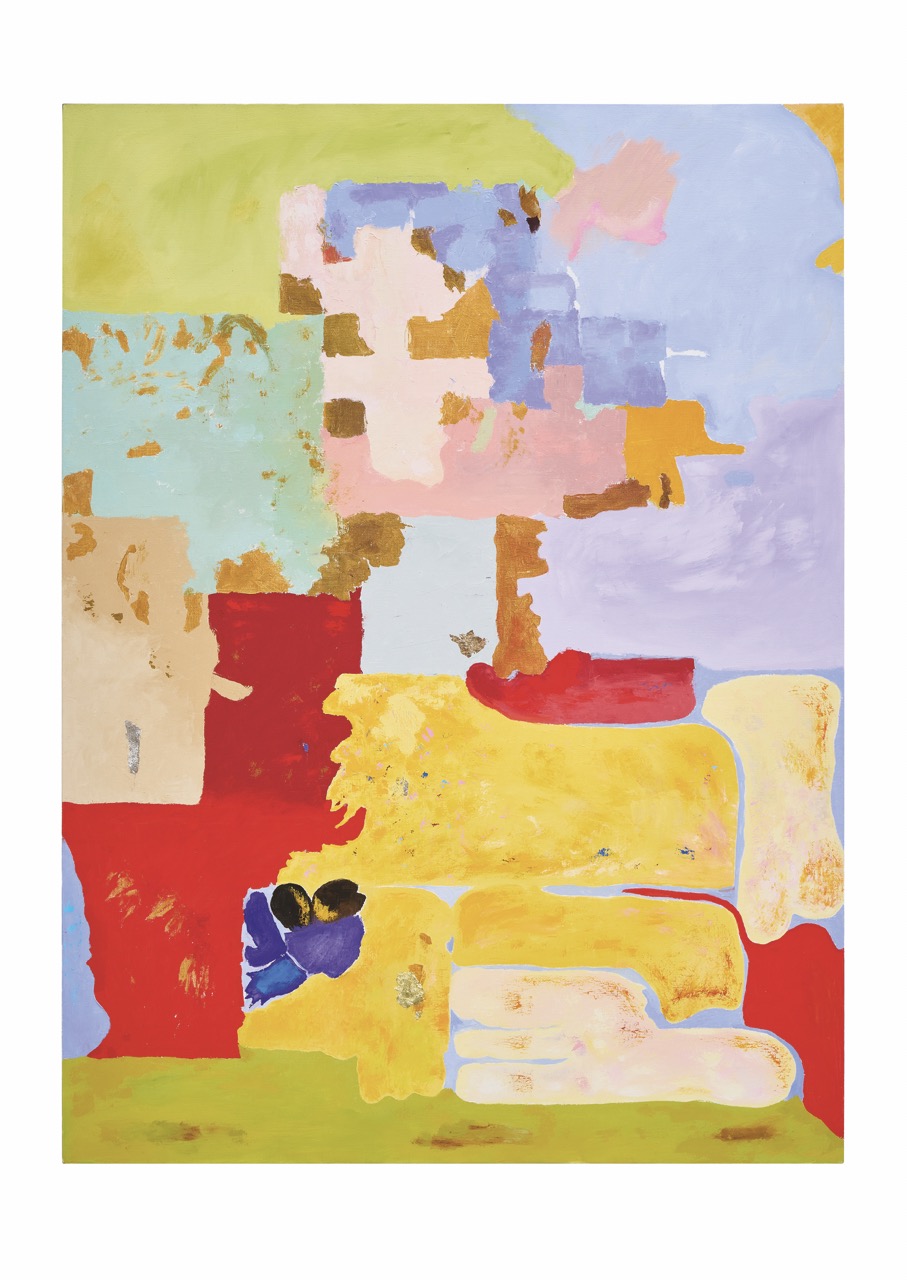
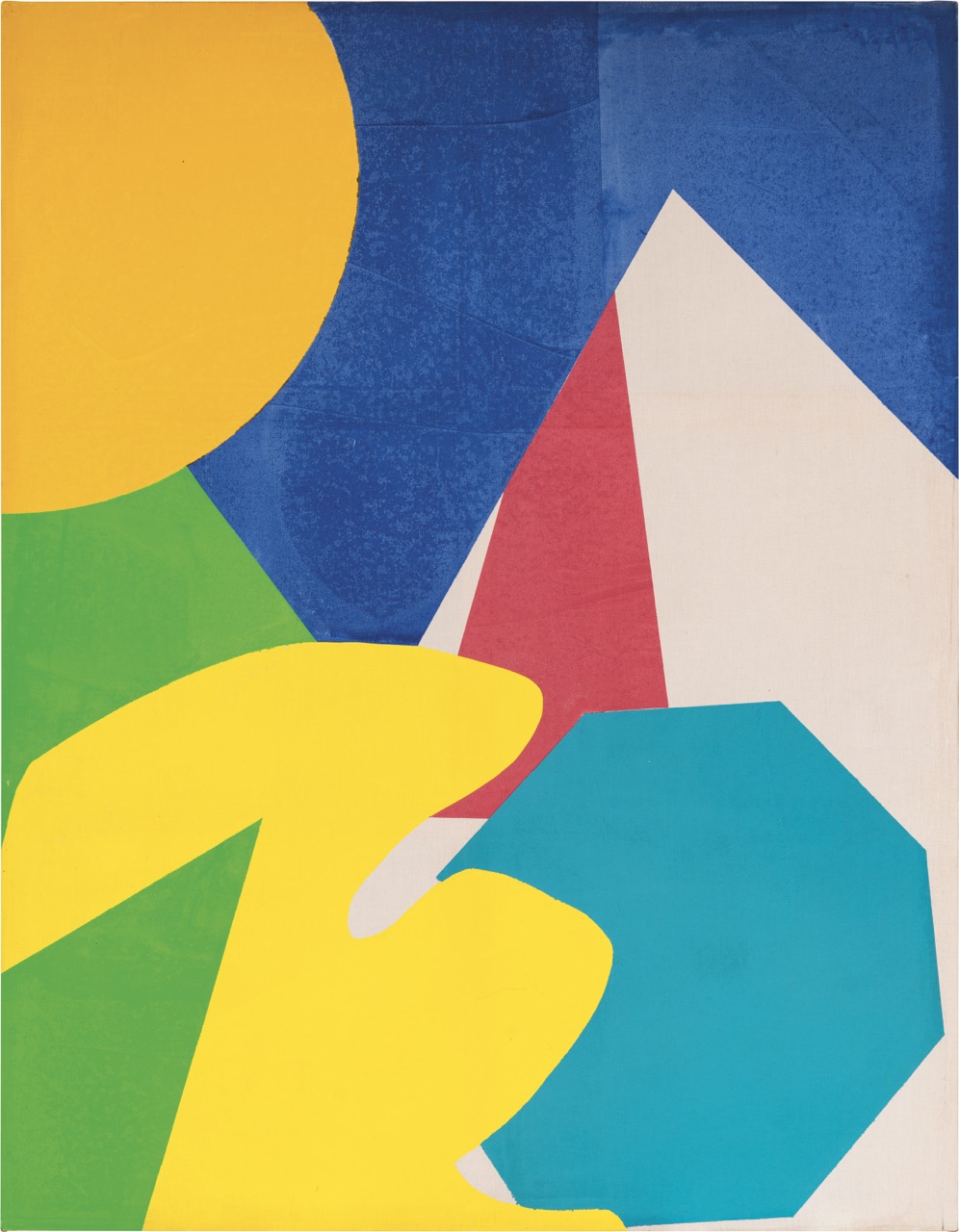
After being asked to create a series of paintings for a collaborative exhibition with James Franco at Gagosian’s Los Angeles outpost in 2011, Van Sant began dedicating more time to making art, working from his home studio in Los Feliz during breaks from shooting movies. Published by Blue Moon Press, Gus Van Sant: Paintings is the first book devoted to Van Sant’s artistic practice, offering an expansive and often surprising window into his creativity, which, despite the occasional thematic crossover, is markedly different from his work as a director.
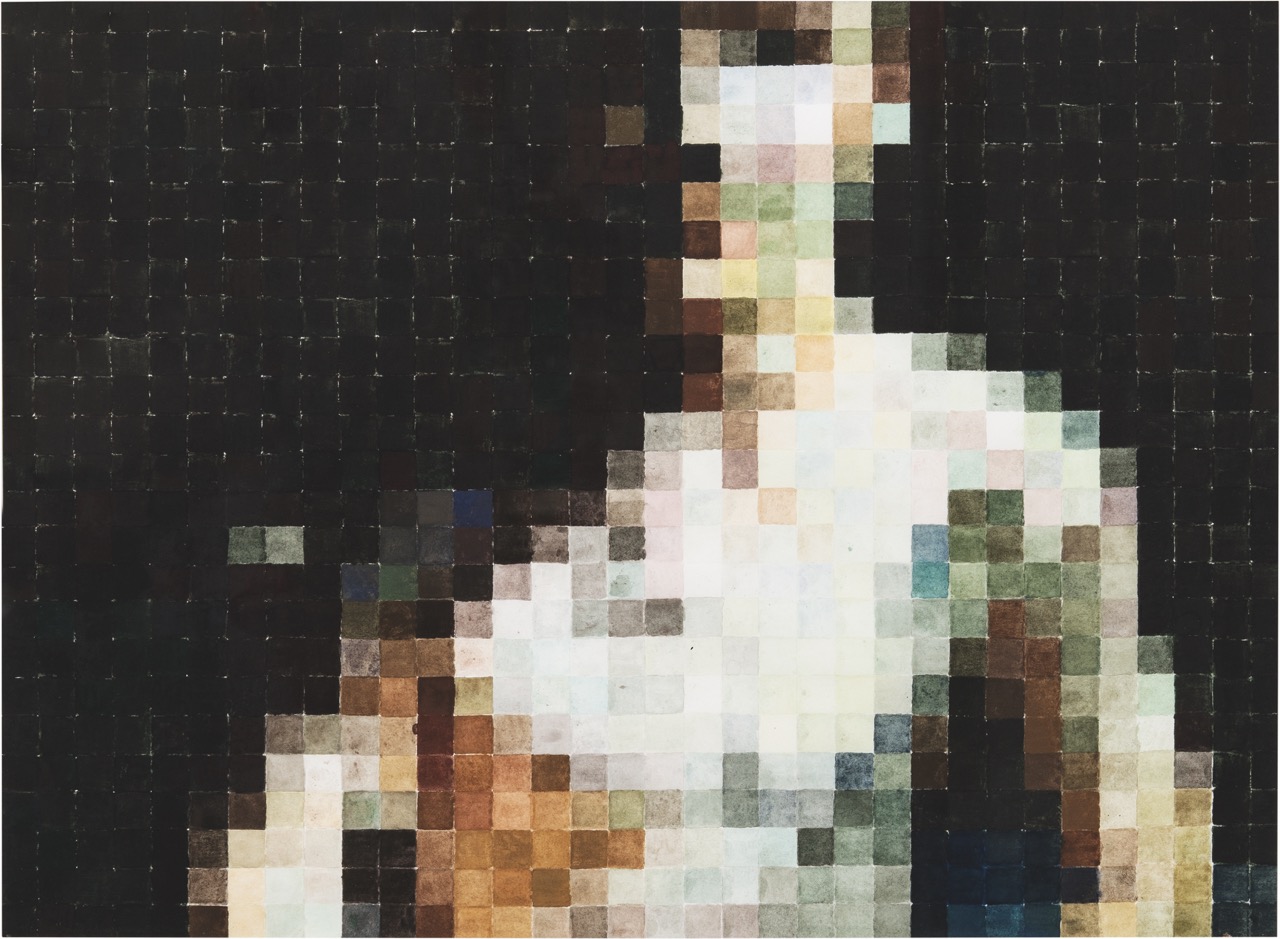
Flicking through the book, the vast scope of Van Sant’s artistic output becomes clear; there are dreamy watercolours of nude men on Hollywood Boulevard, pixelated abstractions of Leonardo da Vinci’s Mona Lisa, and paintings of well-known photographs of Ash Stymest and Luke Worrall, two streetcast male models who rose to prominence in the early 2010s after being photographed by Hedi Slimane, the French fashion designer with an eye for unconventional, dishevelled beauty (his androgynous muses are affectionately dubbed by the fashion crowd as “Hedi boys”). “Ash and Luke were like anti-models, which was interesting for me, since my preferred actor is usually, like, not an actor,” says Van Sant, 73, speaking over Zoom from his home in Los Angeles. “The preference is to find a new face, and they represented that in the modelling world. And I thought the photographs were really elegant and beautiful.”
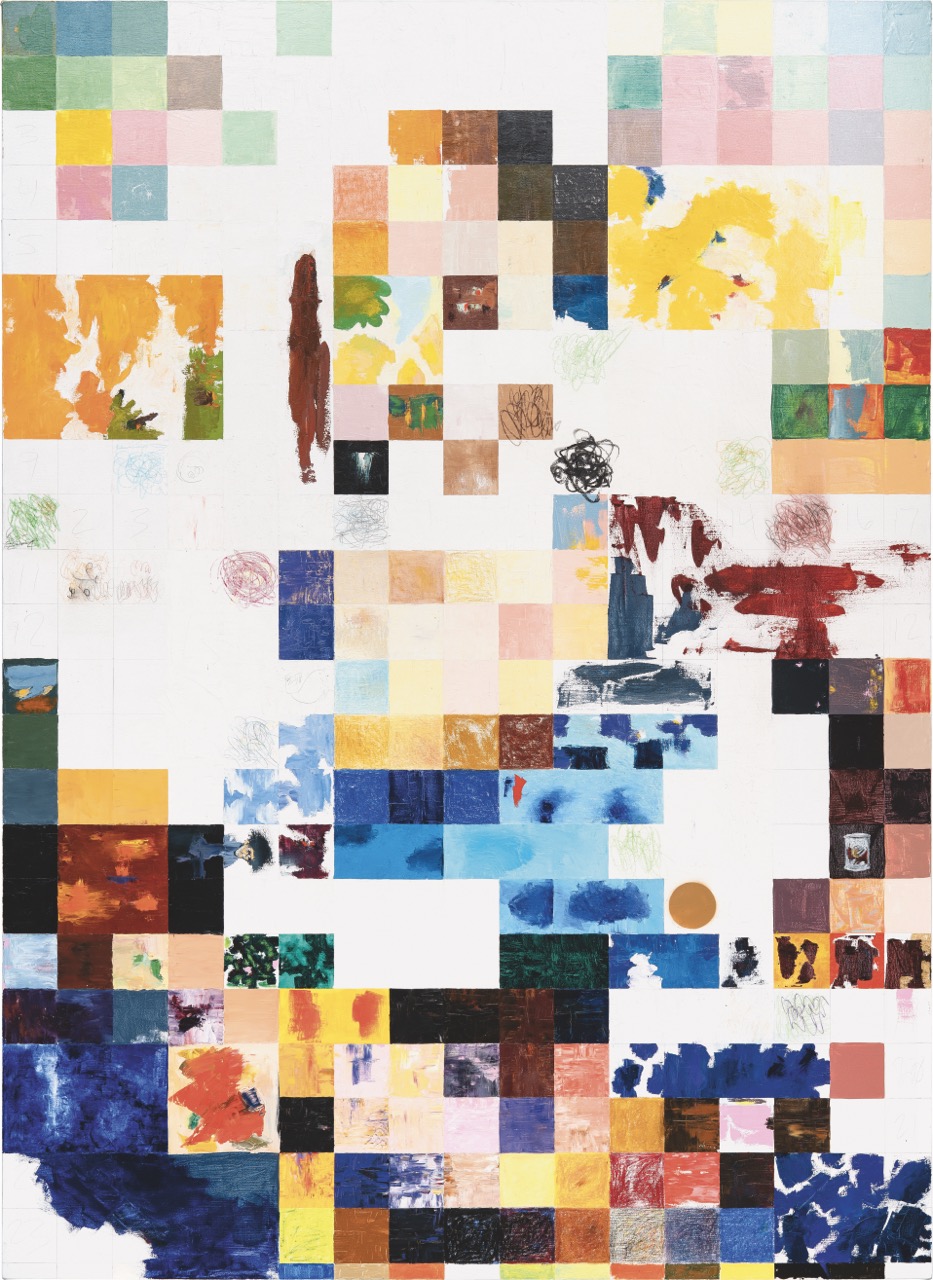
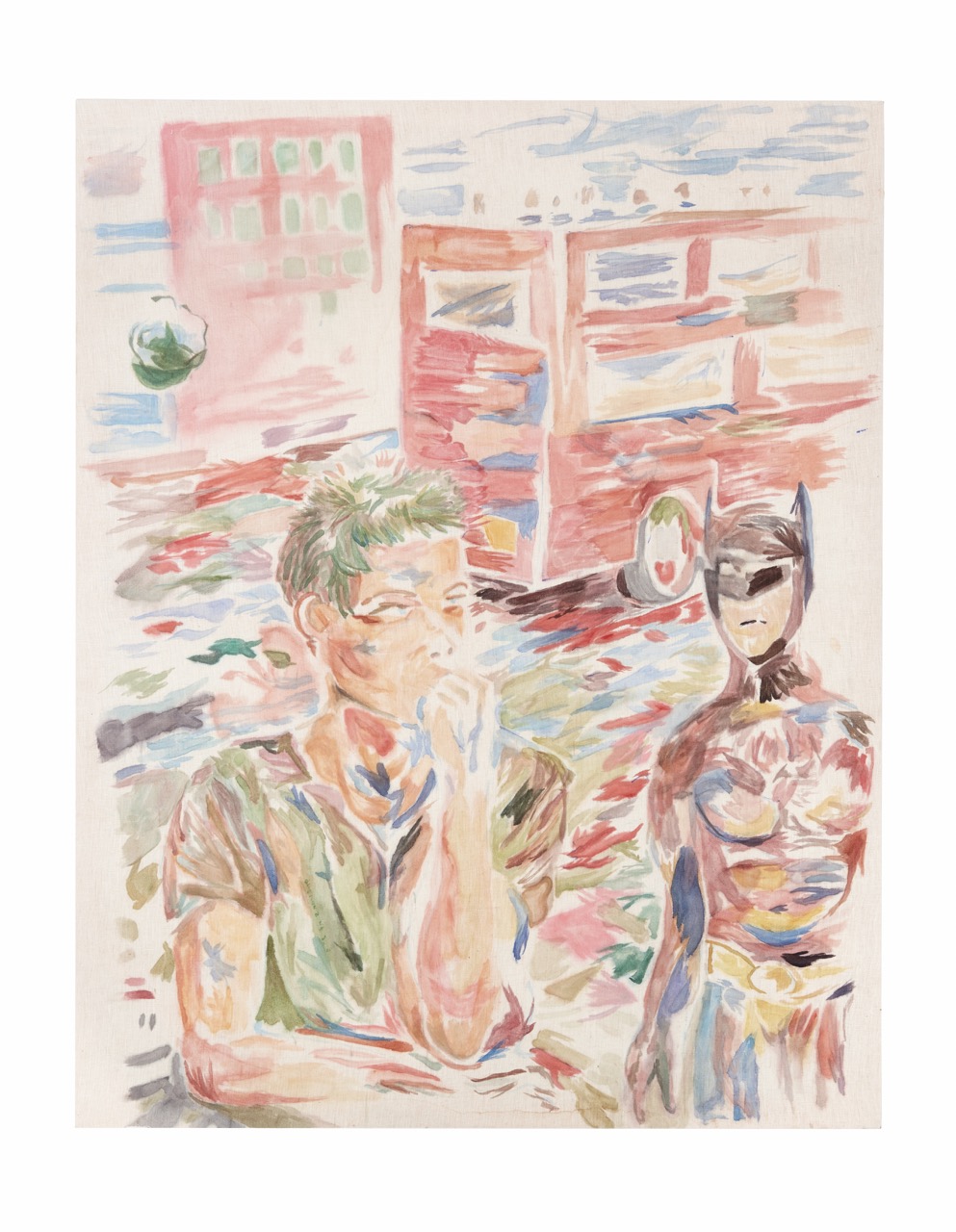
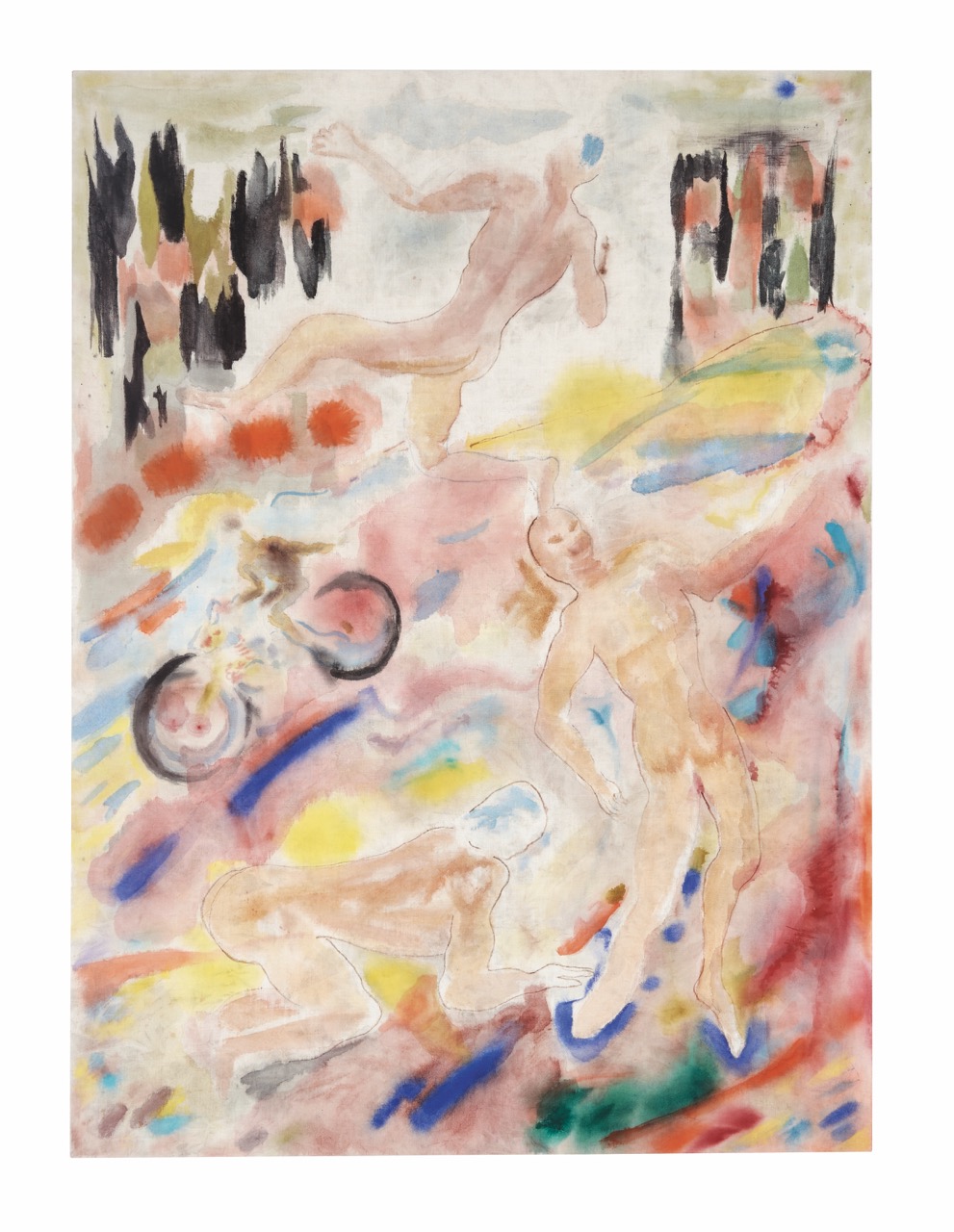
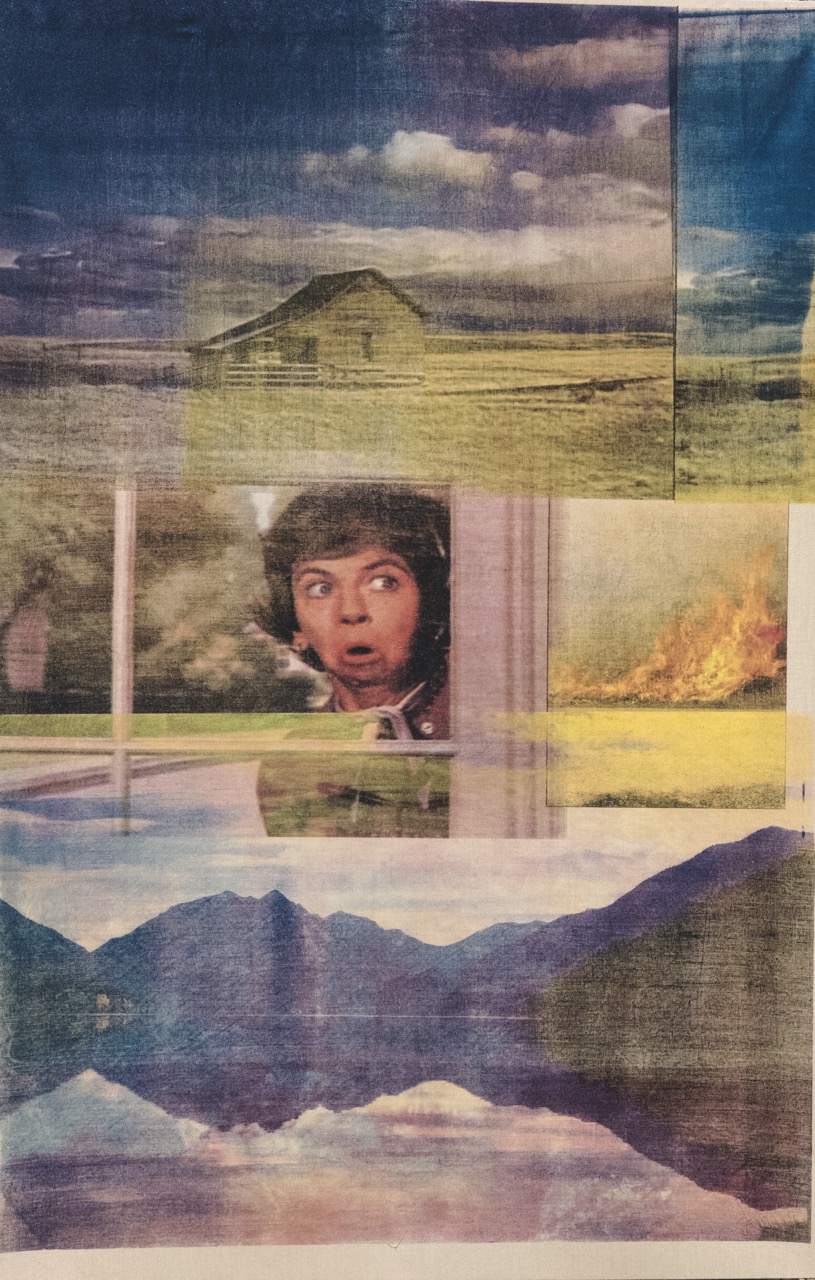
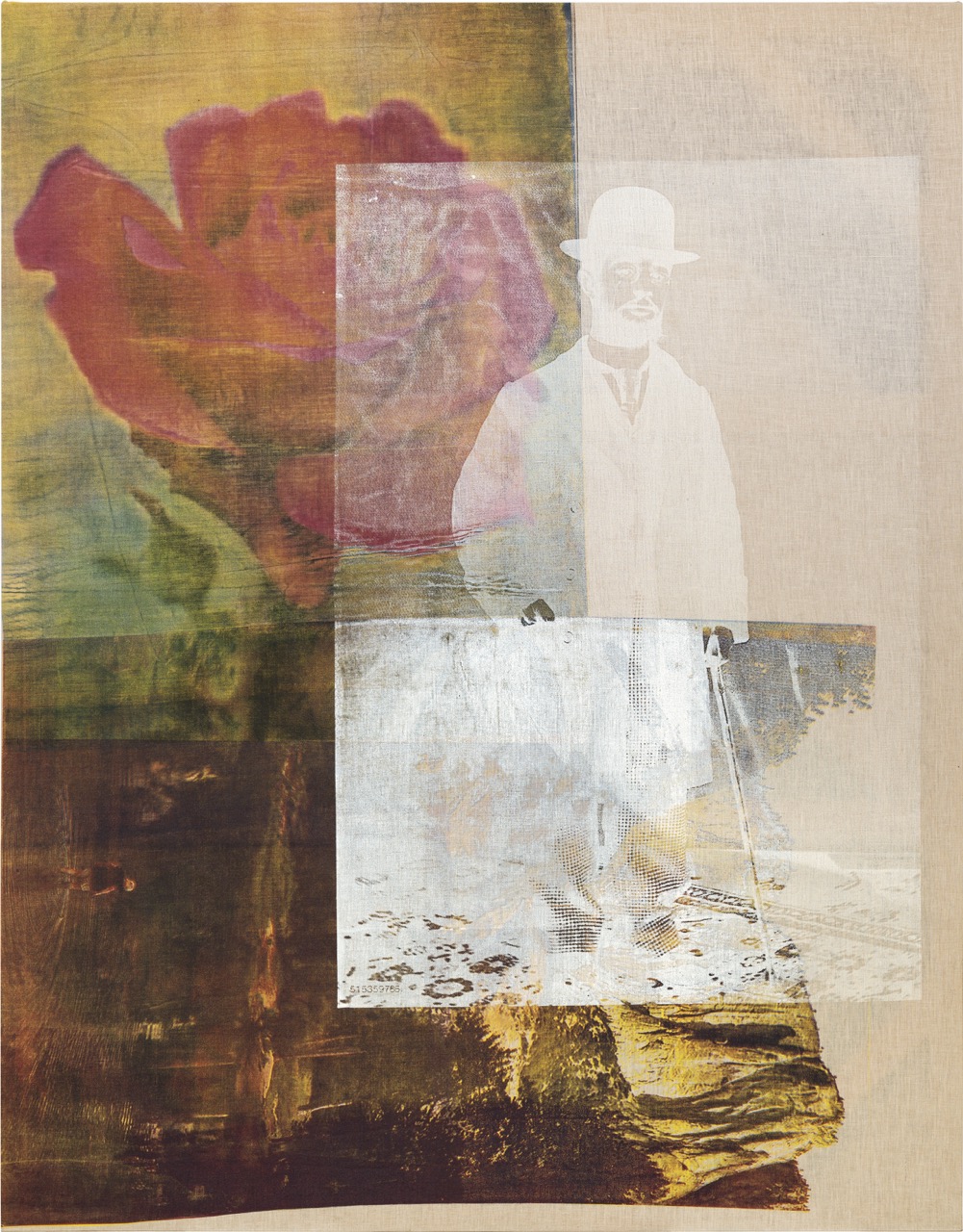
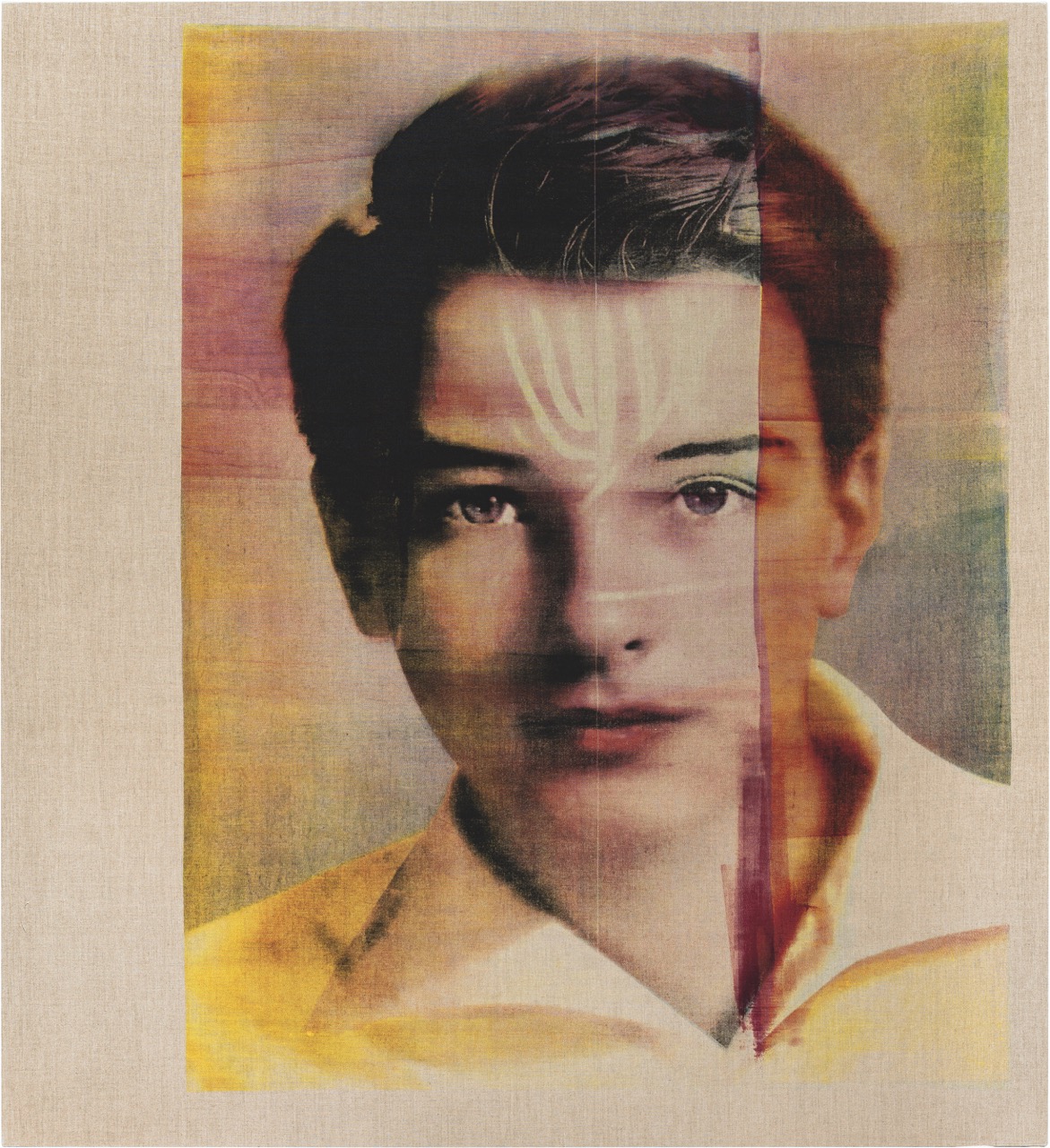


The characters in Van Sant’s filmography are often referred to as “lost boys”: vulnerable, marginalised (and often queer) young men drifting aimlessly through society (they include River Phoenix as a narcoleptic street hustler in My Own Private Idaho, Matt Dillon as a nomadic drug addict robbing pharmacies in Drugstore Cowboy, and Matt Damon and Casey Affleck as two young men who literally get lost in the desert in Gerry). This archetypal “lost boy” appears in Van Sant’s artwork too, in a silkscreened photograph of a young Montgomery Clift, a prominent actor in 1950s Hollywood. “Montgomery Clift was a character who had so much going on in his eyes and face and physicality,” says Van Sant in an interview from the book. “It’s almost like you could just sit there and watch him do nothing… There also seemed to be a lot of pain within him. He was gay and kept this hidden because of his stardom.”
As in his films, Van Sant’s depictions of youthful beauty and innocence are overlaid with images of violence and destruction; the book’s cover, a silkscreened photograph of two shirtless young men at an anti-Trump rally in Portland, and the photo of Clift, are paired with recurring images of blazing fires, nuclear mushroom clouds, and a man pressing the tip of a knife blade into his bare torso. In contrasting images of beauty with images of desolation, Van Sant only heightens these young men’s sense of vulnerability and isolation. It’s a device he’s used before to startling effect in his 2002 film Gerry, where the gradual physical deterioration of Matt Damon and Casey Affleck’s starving, dehydrated characters is backdropped by the dramatic painterly landscapes of the surrounding desert.
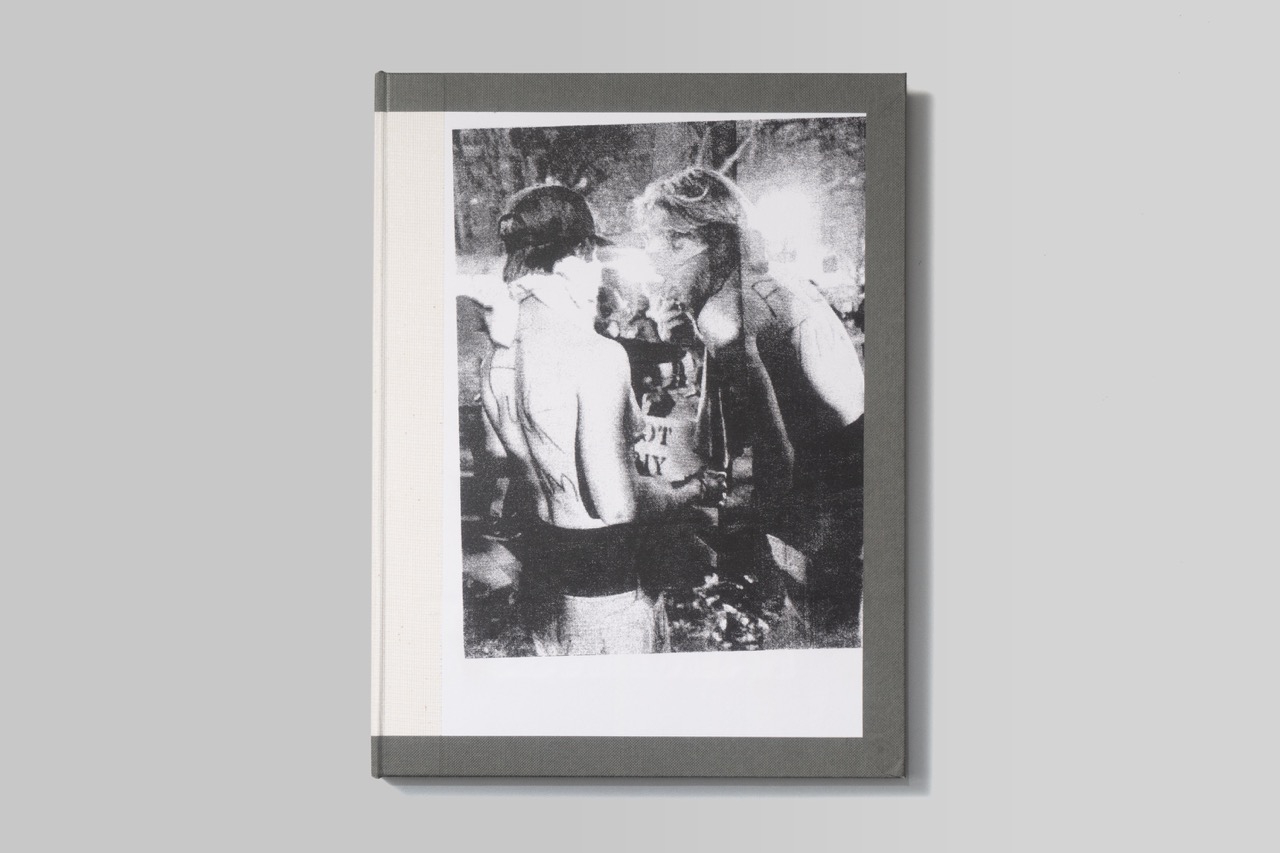
Cover for Gus Van Sant, Paintings, published by Blue Moon Press, 2026
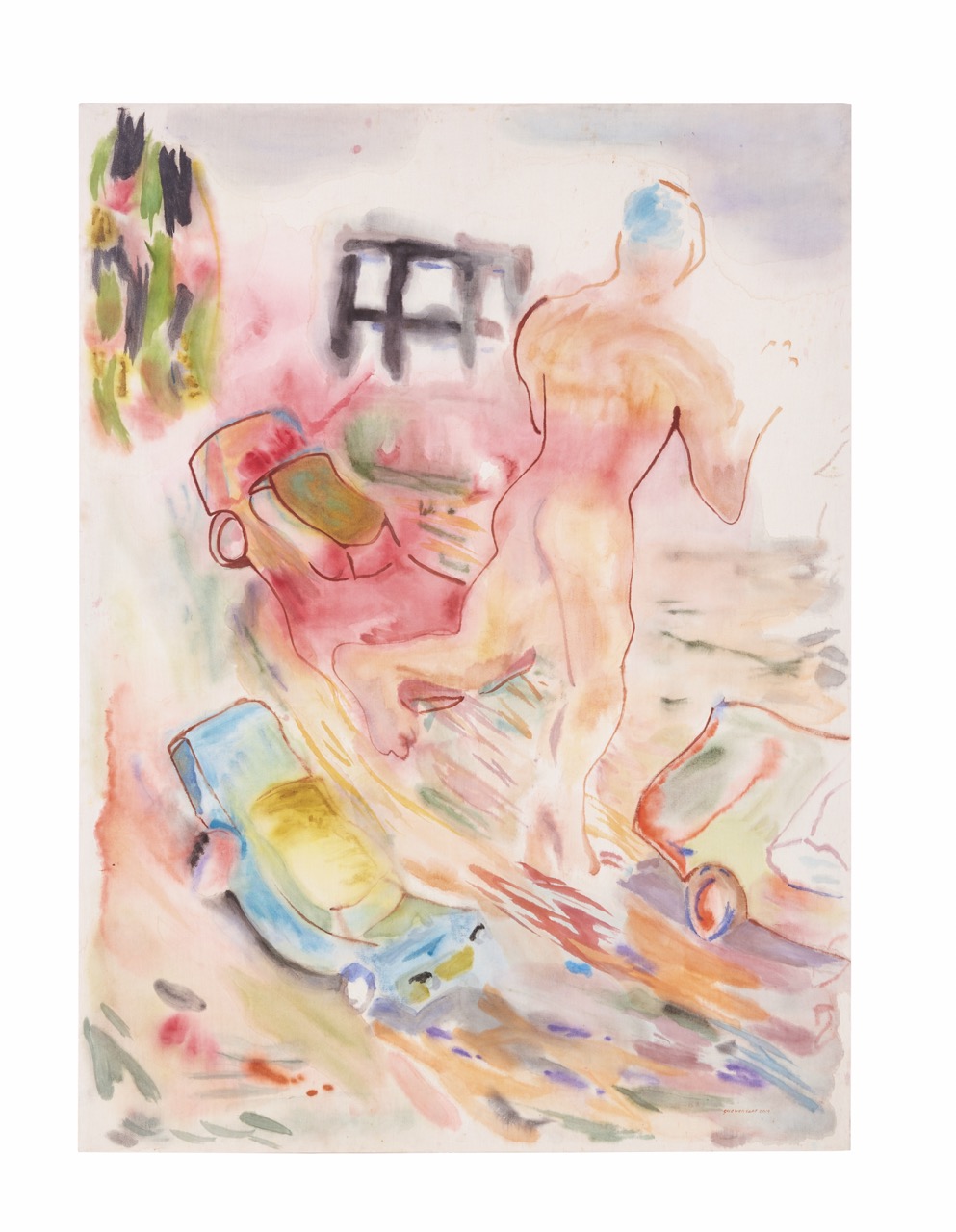
The most obvious “lost boys” in Van Sant’s artistic oeuvre appear in his softly toned, expressive watercolours of naked men ambling up and down Hollywood Boulevard, a place where Van Sant has lived for most of his life. “Hollywood Boulevard has changed a lot, but it still has the same carnival flavour,” he says. “A lot of people just got off the bus from Kansas, and they want to be movie stars. Sometimes they turn into Brad Pitt, sometimes they don’t. And the ones who don’t are still walking up and down the street, waiting to be discovered.”
Van Sant often works with found and iconic imagery, particularly in his pixelated Mona Lisa works and screenprinted photographs of the Taj Mahal. “The Mona Lisa is one of the paintings whose exposure is its main importance,” says Van Sant in the book. “I was trying to paint an image where the subject was blurred by exposure, overexposure.” Throughout our conversation, he throws out references to Robert Rauschenberg, Andy Warhol and Marcel Duchamp, recalling an early assignment at Rhode Island School of Design where his teacher asked students to find their own “readymade”—an artist concept wherein artists repurpose ordinary, everyday objects—and make work from it. In 1998, Van Sant took the notion of the readymade to absurd and comic new heights, confounding critics with his painstaking shot-for-shot remake of Alfred Hitchcock’s Psycho. “Hollywood was very busy making remakes, but they would always change them and make them have happy endings,” Van Sant says. “During those meetings, I was like, ‘Why don’t we try to redo a film but not change it?’”

“I like making art and directing equally… But with painting, you’re freed in the sense that there’re not a lot of people around. It’s just you and the work.”
Gus Van Sant
The British artist David Hockney once referred to Van Sant as a “Sunday painter”—a term for an amateur artist who paints in their spare time for fun. “I don’t know if he actually meant, like, I’m someone who paints on Sundays, not as their main job,” says Van Sant, laughing. “It’s true, it’s not my main job. So it was very accurate but distressing in the sense of, ‘Oh, I’m not really a serious painter. I’m a Sunday painter.’” But with the release of Gus Van Sant: Paintings, it’s clear that art is more than just a hobby for the director. Just like filmmaking, it is a lifelong vocation, an alternative—and perhaps more liberating—creative outlet for one of the world’s most influential living directors. “I like making art and directing equally,” he says. “But with painting, you’re freed in the sense that there’re not a lot of people around. It’s just you and the work.”
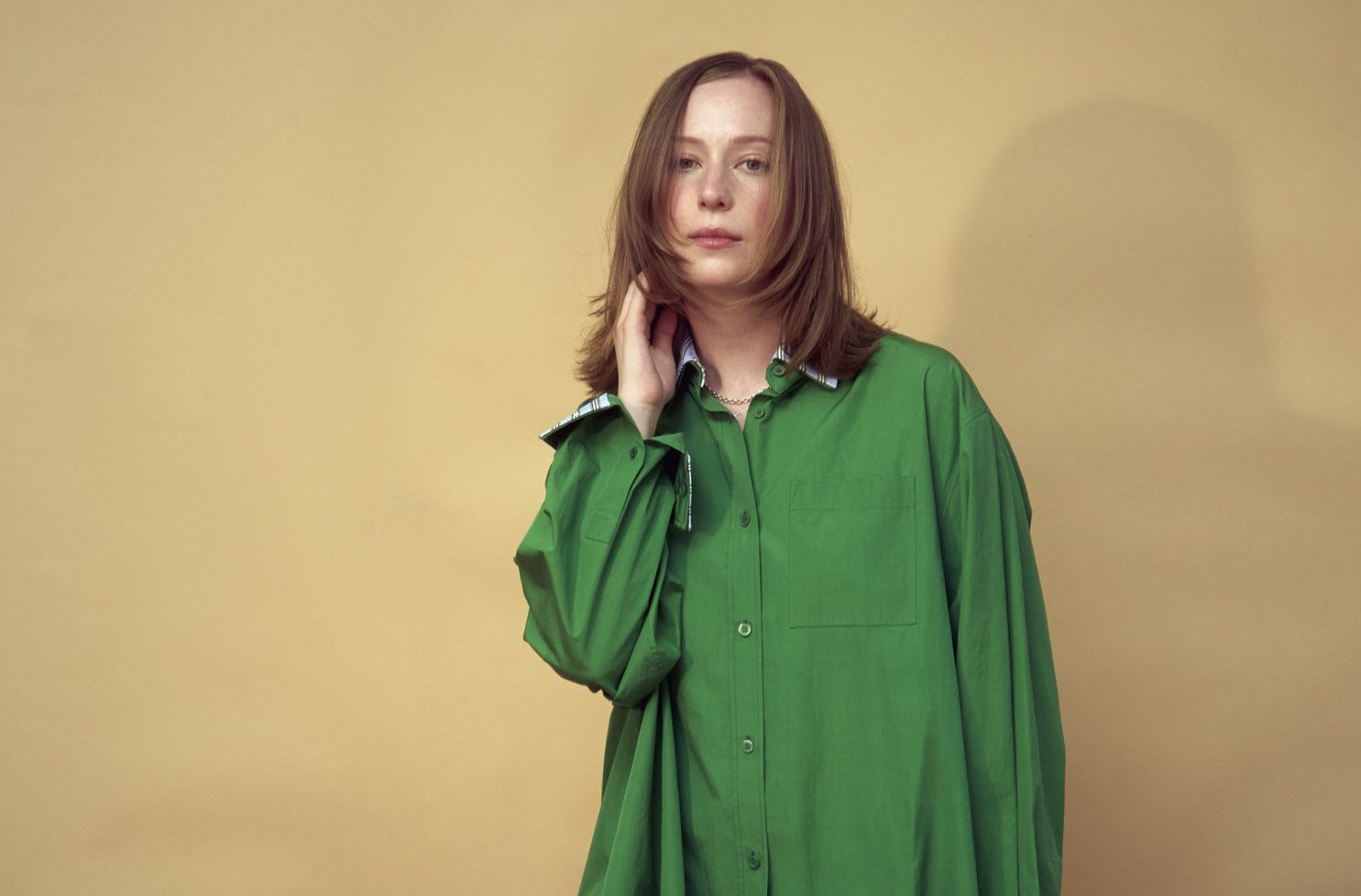
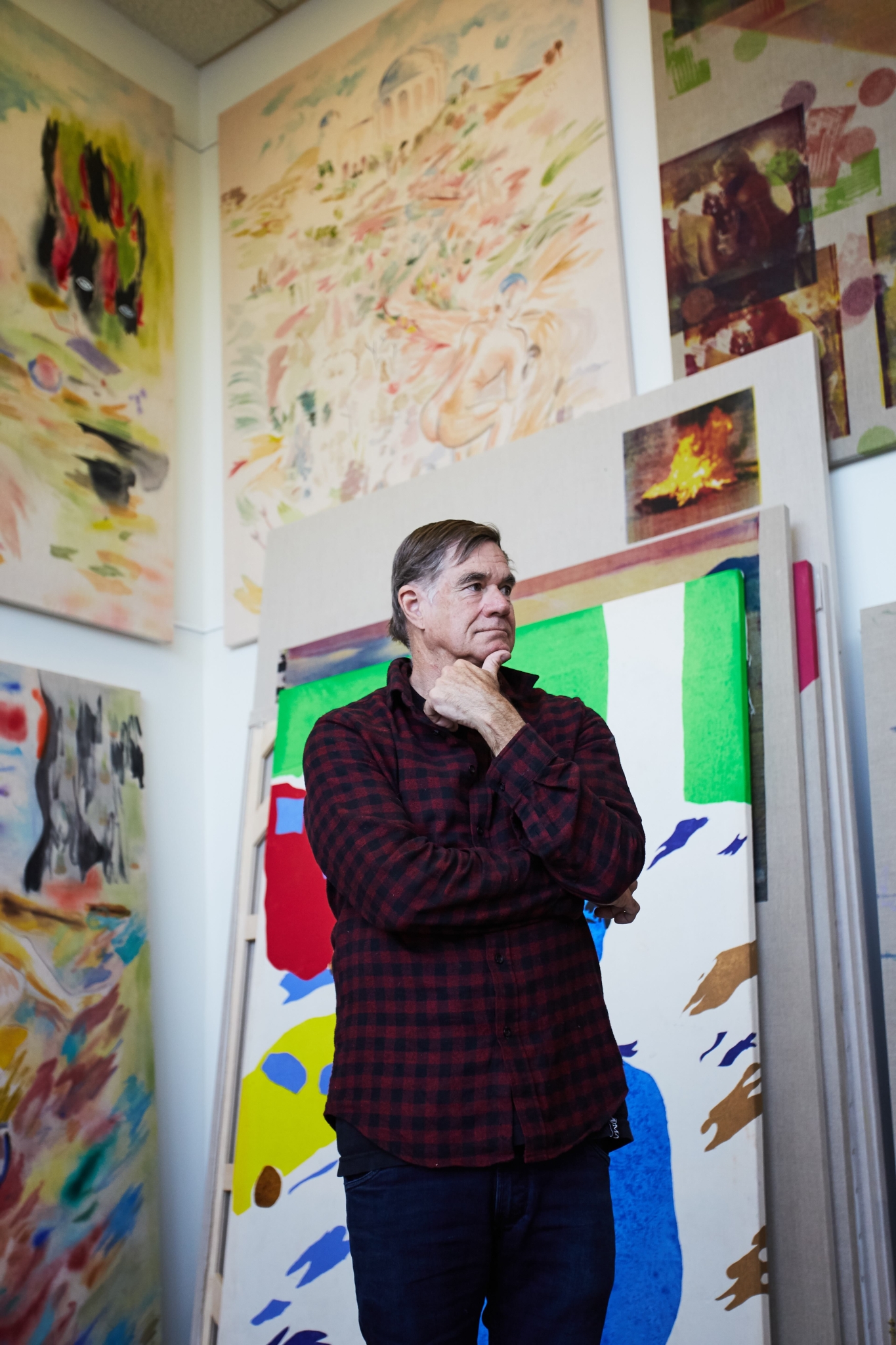
Gus Van Sant, Paintings is published by Blue Moon Press now. Main portrait by Curtis Buchanan.
Continue Reading