

For decades, sci-fi films have shaped our expectations of the future. Today, in the age of HAL’s descendants, those futures have become eerily familiar—and strangely obsolete.
Is futurism passé? Have we tired of cinema’s future visions, finding it ever harder to detect any truly startling newness in them? Or is it just that, over its long history, science fiction on film has been so successful in predicting real-world Things To Come that we have reached a point of exhaustion—a sense that it is no longer possible to predict a future worth imagining? “I’ve seen things you people wouldn’t believe,” said Rutger Hauer’s replicant in Blade Runner, back in 1982; four decades on, in an age of CGI image inflation, we’ve seen any number of once inconceivable things, believed them for a moment, then wearily moved on.
In recent years, future cinema has been strongly fixated not on the once alluring idea of the shiny and new—the aesthetic of steel, chrome, and gleaming rocketry—but rather on images of rust and desolation. Take this year’s Netflix film by the Russo brothers, The Electric State; it depicts a world in which robots are an outlawed class, rebelling against their demeaned status as slaves and commercial shills in an exhausted America that resembles one vast, dispirited rust belt. Adapted from Simon Stålenhag’s graphic novel, the mediocre The Electric State is a film more intriguing in theory than in practice: despite its reported $320m budget, it is likely to leave little imprint on the wider cultural imagination, not least because it feels so manifestly like the nth iteration of the wan imaginative fatigue that today seems hard-wired into film’s futuristic visions.
Even an inveterate optimist like Steven Spielberg envisioned a world of obsolescence and desolation when he inherited a project from Stanley Kubrick, whose original ideas for AI Spielberg brought to fruition in 2001: in it, a future world’s most sophisticated, characterful android creations have become scrap for recycling—or survive as walking detritus, or as sex workers wearily cycling through their glitched satisfaction software.


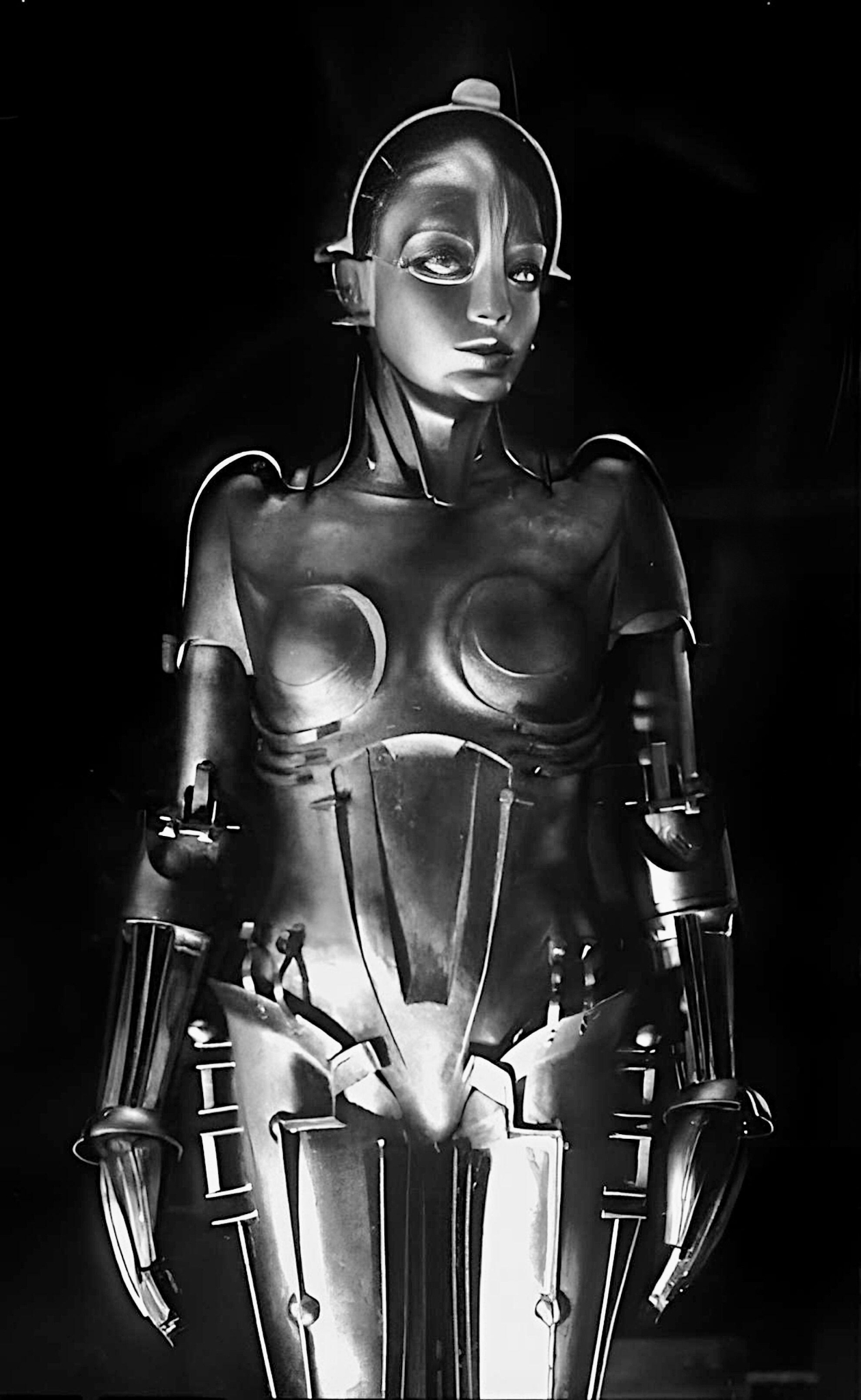
An old saw has it that nothing dates like the future—which is why futurist films always speak first and foremost of the era in which they were made. Fritz Lang’s Metropolis (1927)—still among the most visionary of all crystal-gazing movies—may be looking into a then-distant future in its imagining of artificial life (inventor Rotwang’s robot woman, played by Brigitte Helm) and in its depiction of an unbridgeable divide between overclass and underclass (its city speaks disturbingly of today’s Dubai, or Los Angeles in the age of billionaires and gig-economy slavery). But it is also a film of its time, emerging specifically from the imagination of Weimar Germany—the orgiastic crowd caperings around Helm bespeaking Jazz Age party culture rather than quasi-religious cultism in an era to come.
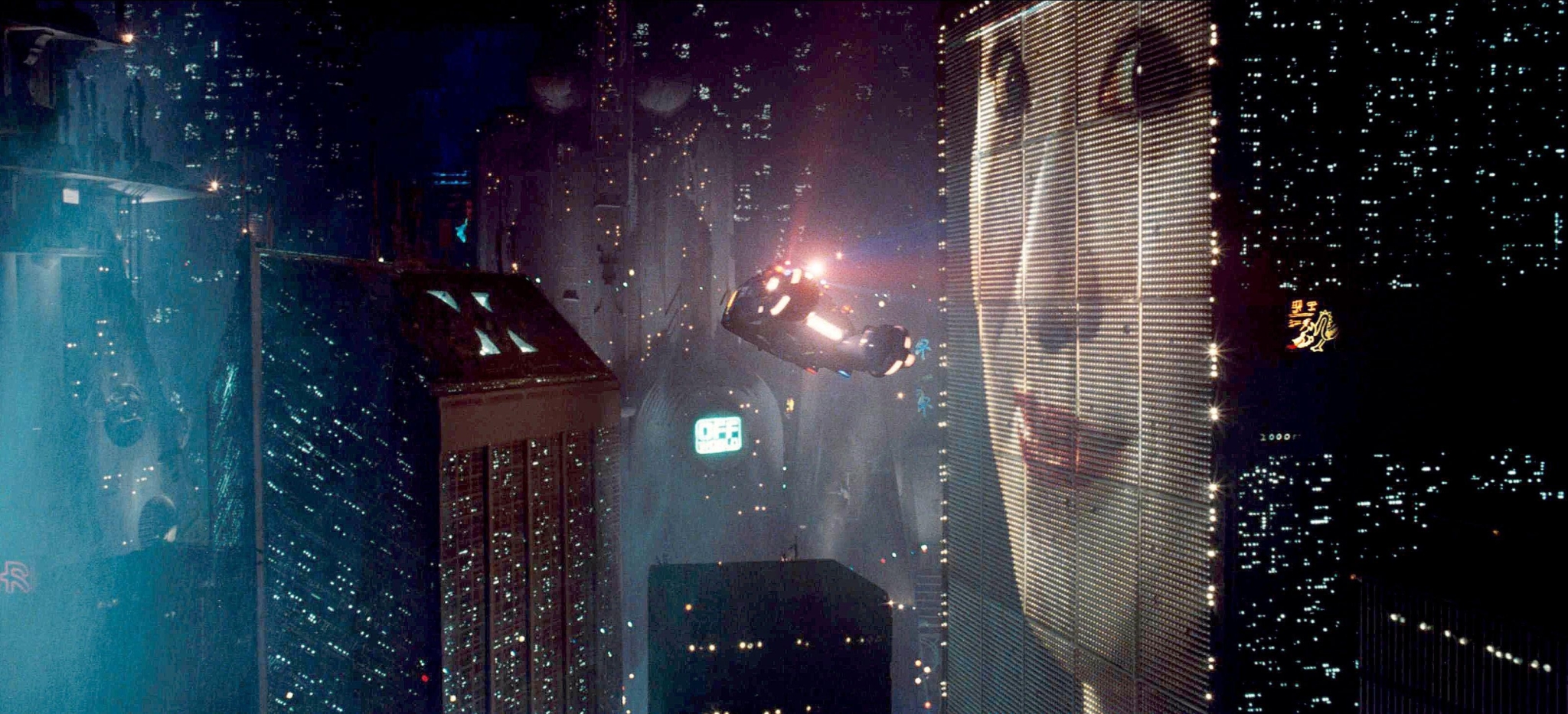
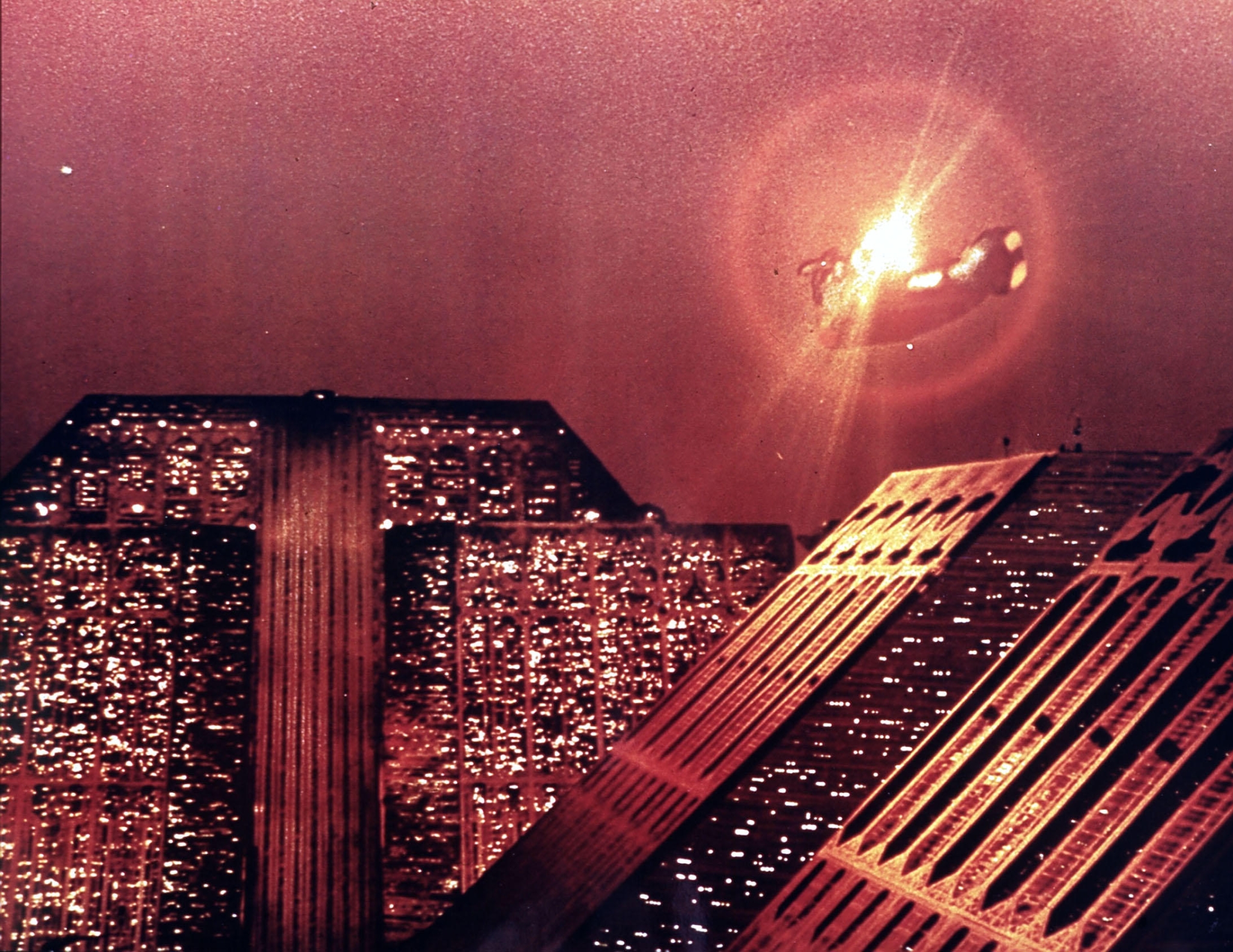
We habitually scan futuristic films for signs of obsolescence; even value them for those signs. Blade Runner still stands as a remarkably vivid evocation of future cities in an Asian-influenced West, but the film’s special poignancy today lies in the fact that so many of the companies whose logos blaze over Ridley Scott’s future metropolis—PanAm, Bell Telephone—have gone out of business since the film was made. Scott’s skyscapes now betoken a distant past as much as the Broadway theatre marquees in a Busby Berkeley musical of the 1930s.
Where cinema has most converged with reality is in the matter of AI, a technology currently developing faster—and in more complex and more concerning ways—than cinema’s imagination can keep up with. We have already reached the point at which individuals are ready to project their emotions and libidinal urges onto artificial quasi-entities, even if these manifest only as voice or text. In Spike Jonze’s Her (2013), a man falls in love with his laptop’s operating system, which speaks in the husky tones of Scarlett Johansson; we now routinely read of people taking refuge from the human world by forming serious friendships or romantic attachments with AI entities, or accepting life advice from their textual exchanges with ChatGPT. In only 12 years since Her, speculative fancy has become everyday psychopathology.
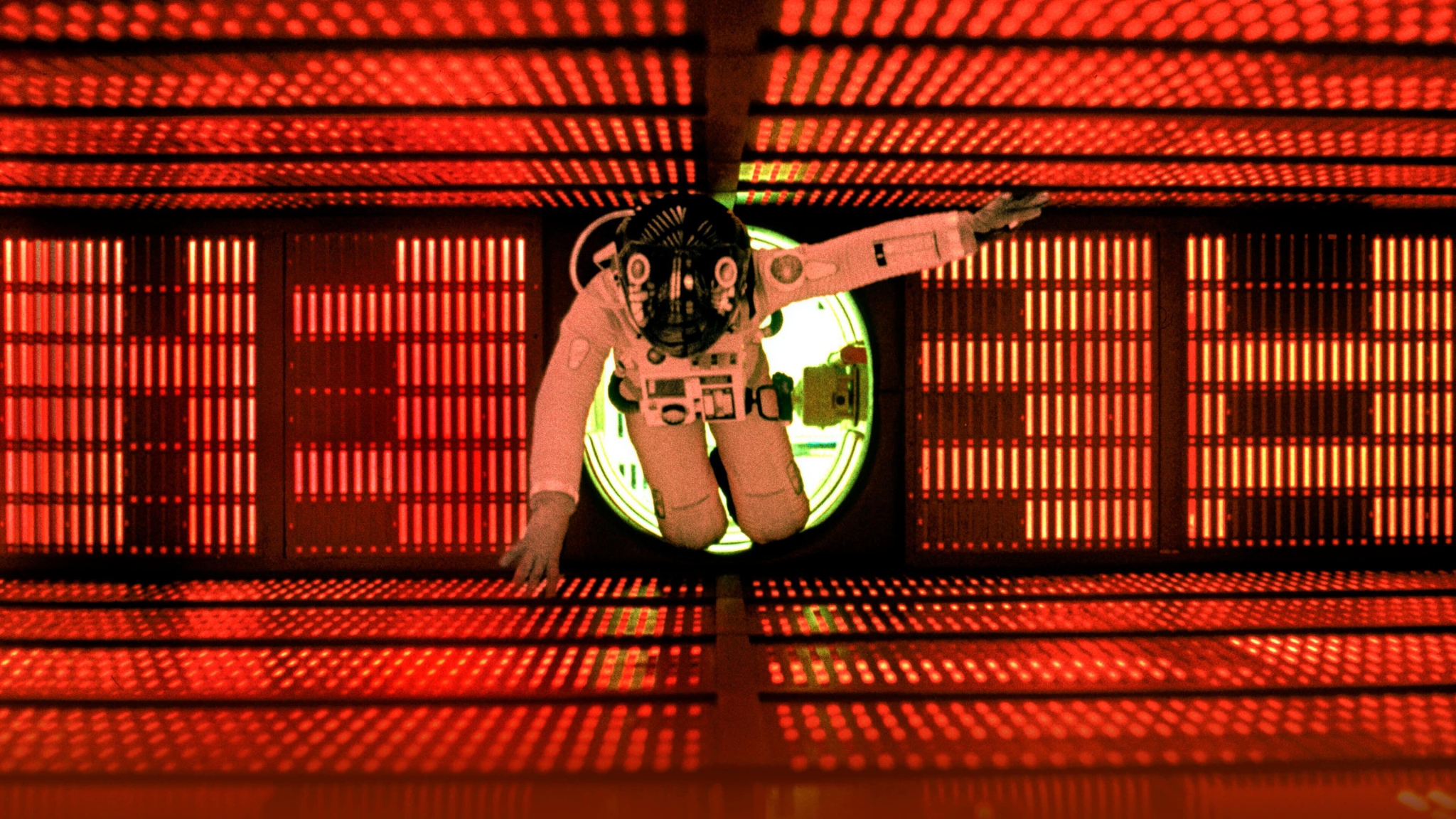
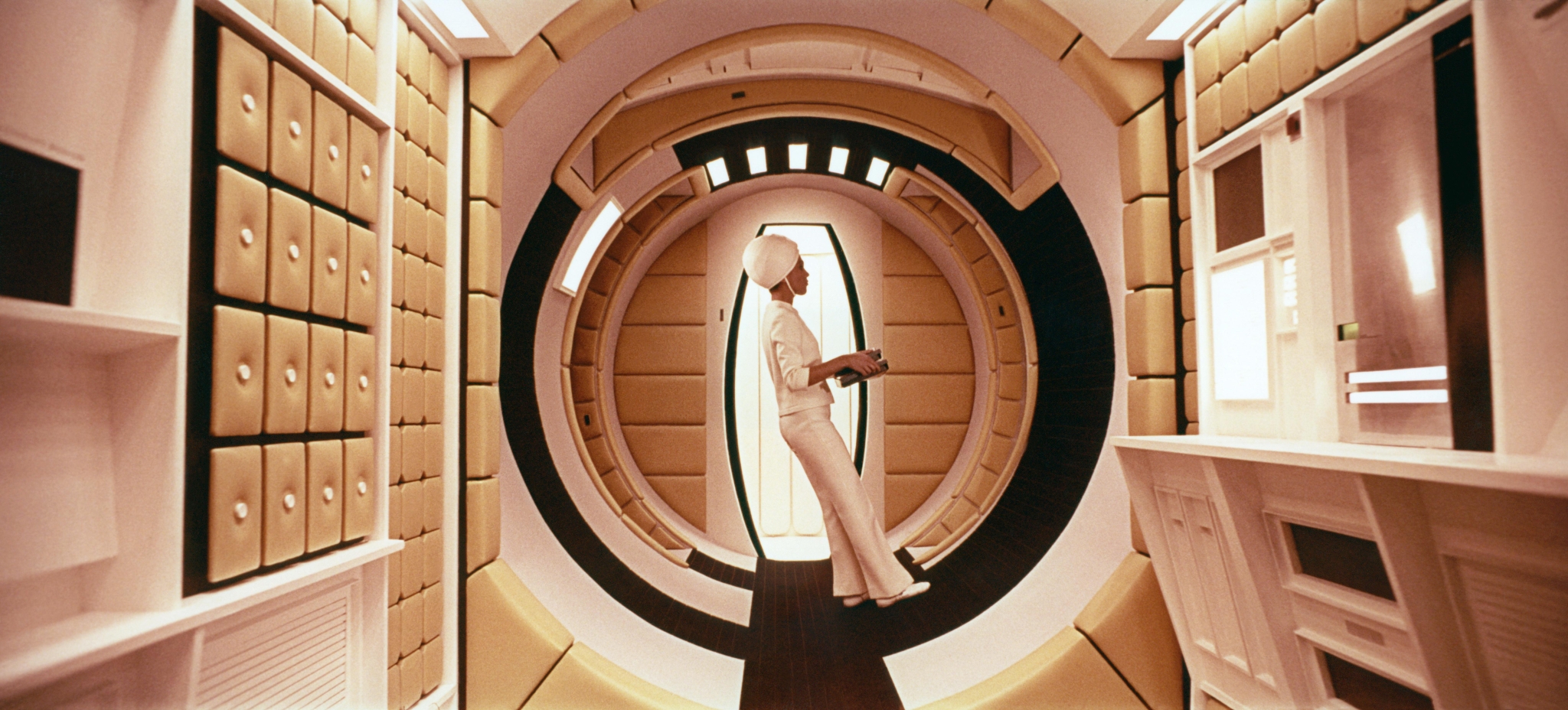
It seems an age since imaginative visions of the future truly struck audiences with unironic immediacy, seeming to bring the fantastic into the range of the attainable real. Kubrick’s depictions of commercial space travel in 2001: A Space Odyssey (1968) were among the last visions that merged the marvellous and the mundane in a way that seemed to offer a plausibly brochure-like blueprint for things to come. But the futurism of 2001 was at the same time compellingly underwritten by the idea of a past, of eternal return, and of entropy —its closing act’s astronaut hero finally experiencing old age and death, before the distant future is succeeded by a mystical image of a return to origins and new birth, as the embryonic Star Child fills the screen.
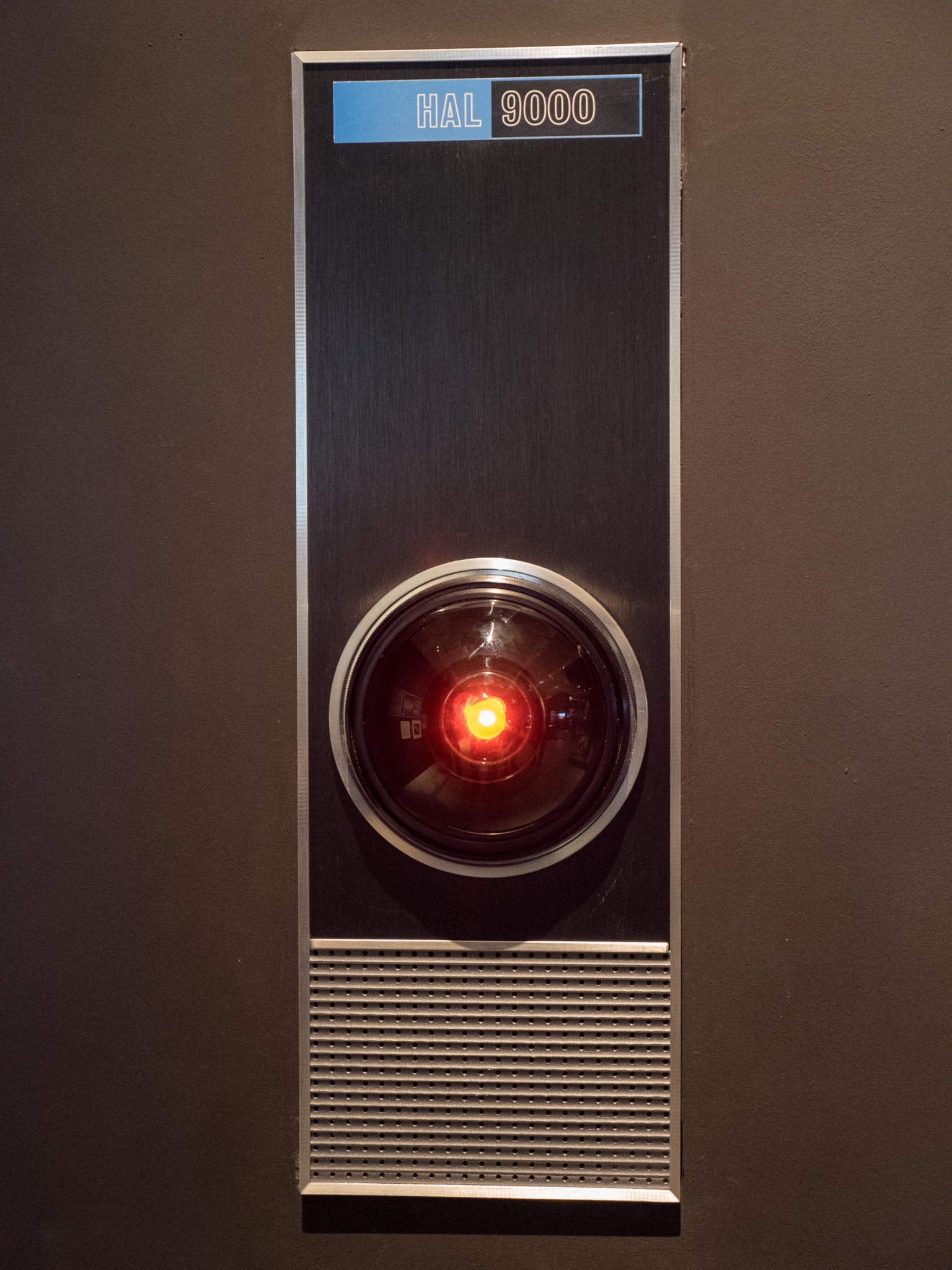
Kubrick’s HAL 9000 computer is still considered cinema’s most plausible precursor of super-intelligent machine life. But if HAL captures our imagination so powerfully, it is because it too is subject to quasi-human mortality, eventually winding down in a scene of agonising pathos (where the dying HAL cycles through a decelerating rendition of Daisy, Daisy, today’s upgraded version would surely have to speed-scroll through the entire Spotify repertoire before even slowing down slightly).
The cinema of wonder cannot apparently rely on our accepting imaginary futures without some firm rooting in a remembered past. After all, the mythos that, for the widest audience, embodies the very spirit of cinematic futurism is set “a long time ago”—the very DNA of the Star Wars (from 1977) cycle being a recoding of Hollywood Westerns, samurai epics, and Errol Flynn swashbucklers. It’s the same nostalgic impulse that underlines the continuing attempts to make belated sequels to 1982’s Tron, a film in which the early stirrings of computer imagery signalled a brief if primitive moment of radiant possibility, before the eventual flattening of imagination brought about by subsequent decades of CGI as a default technology.
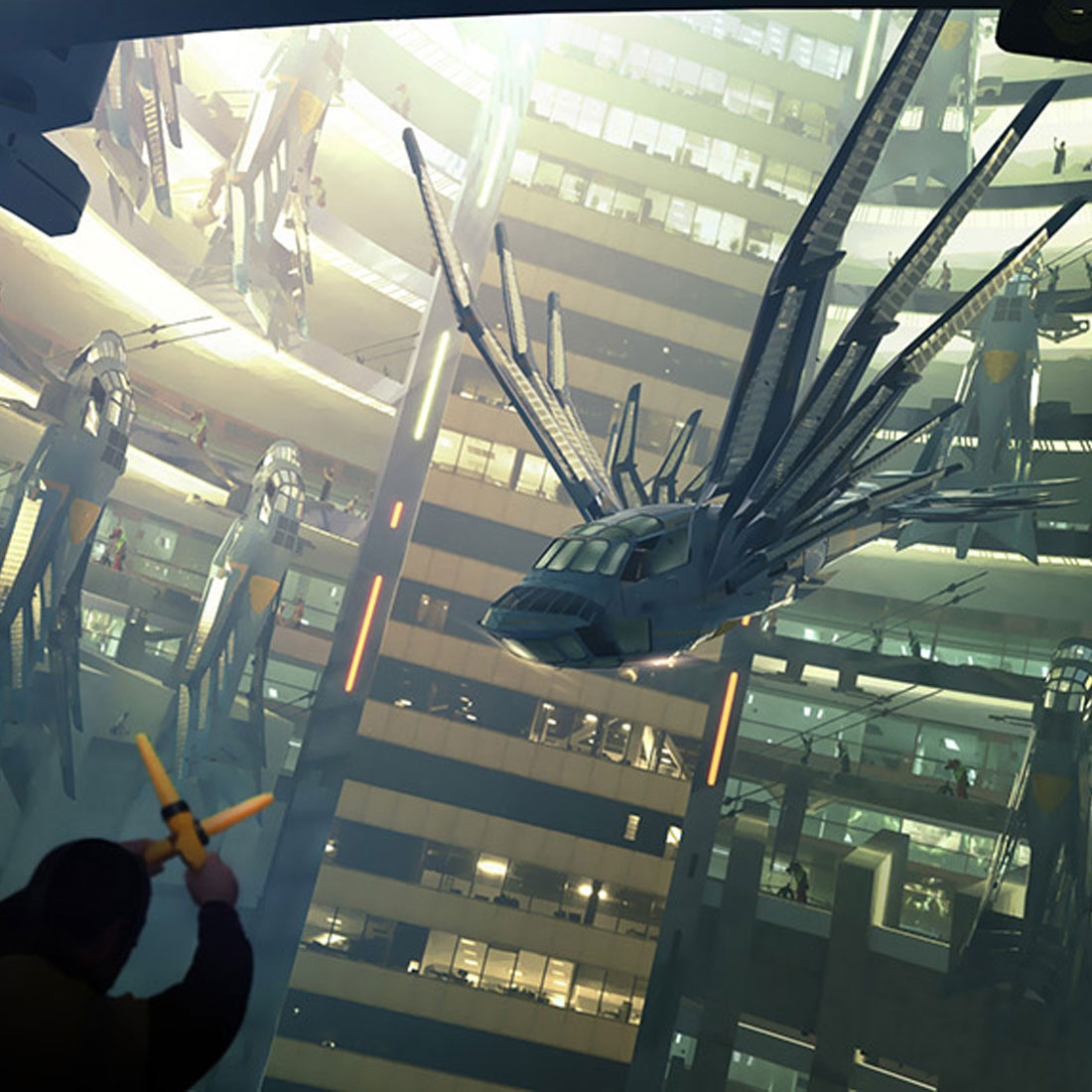
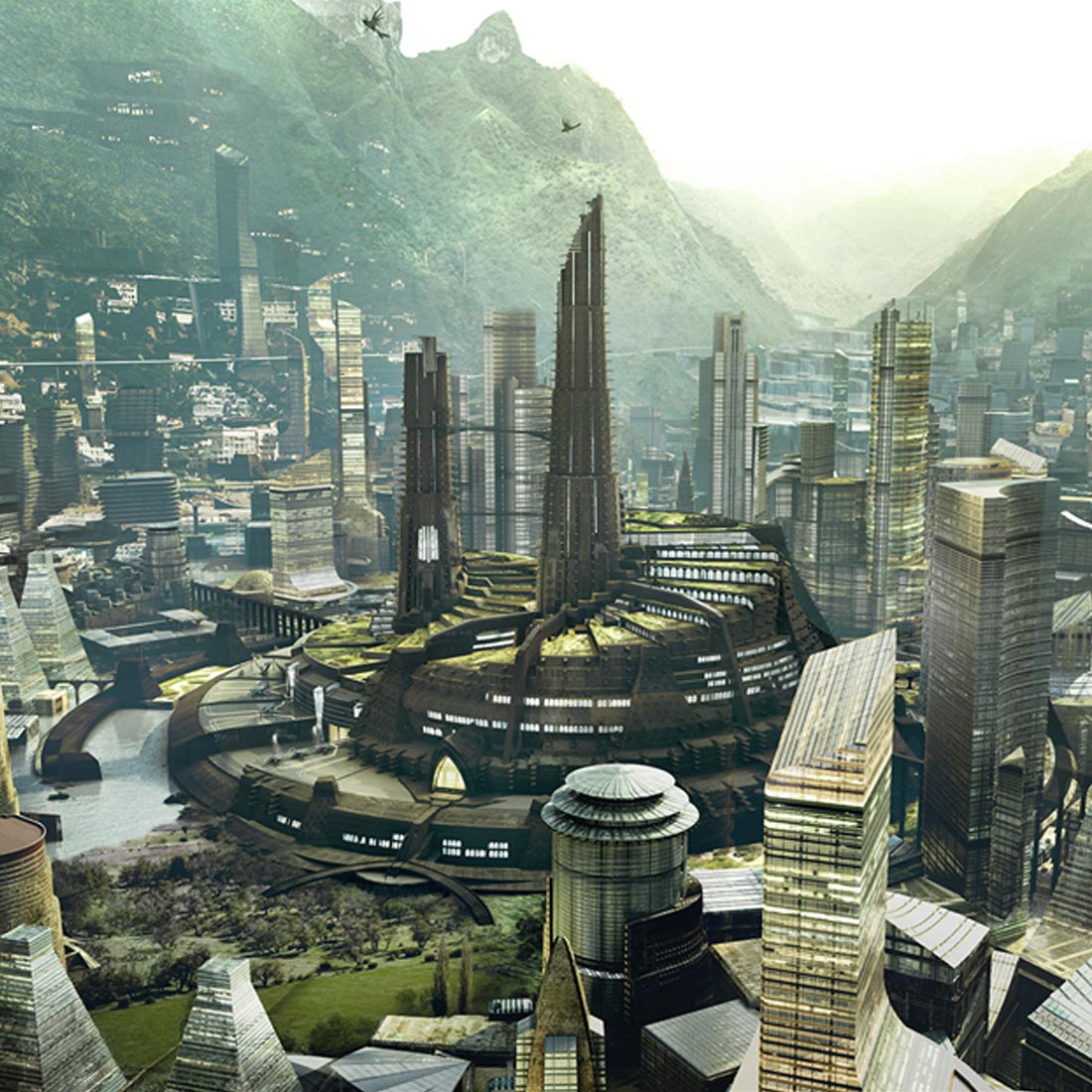
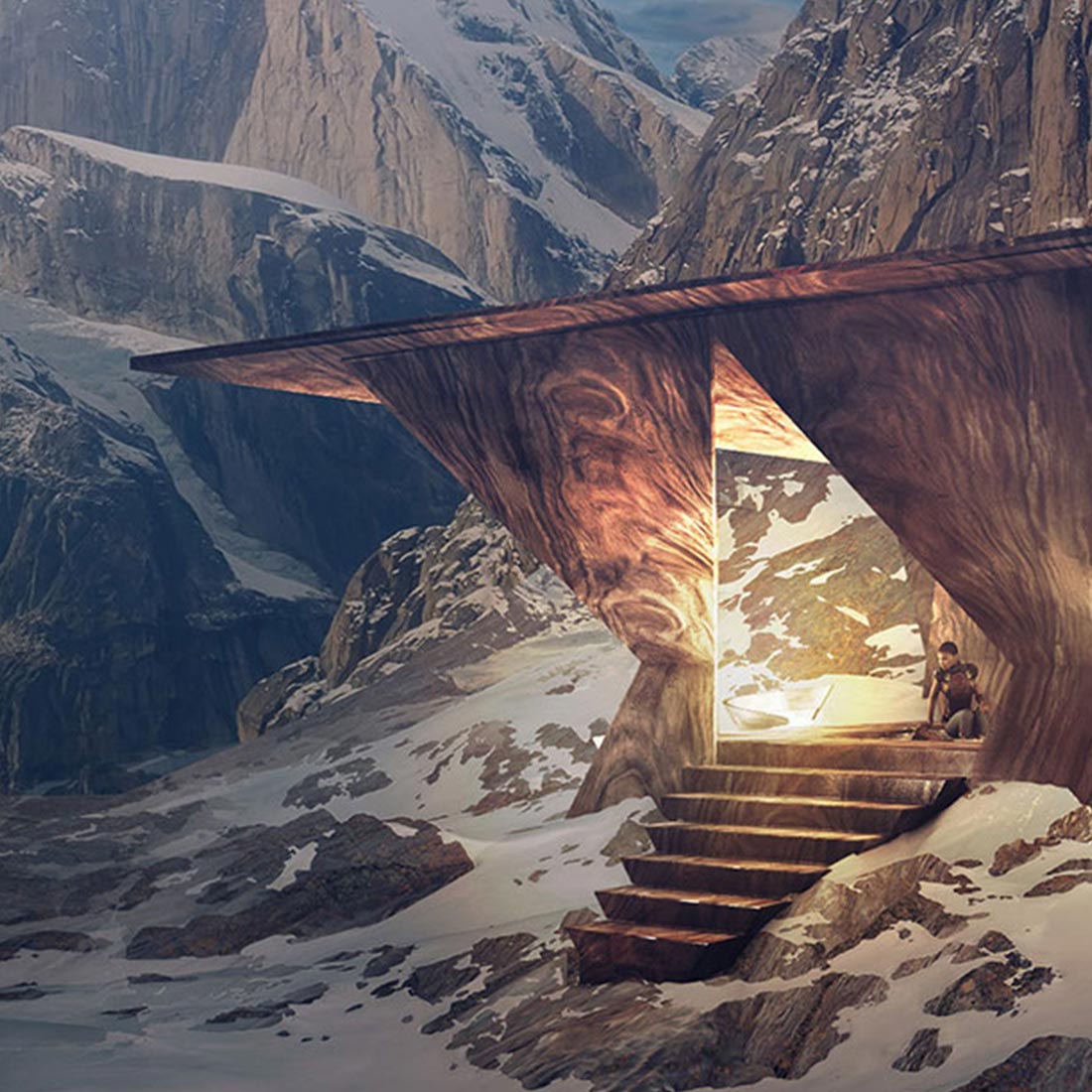
As with the most vivid moments of the Star Wars series, the inventions that can still stir our imagination are often those that are most purely about design—specifically, architecture. Mere space travel now seems exhausted as a generator of dream and aspiration, both in cinema and in the real world (unless you’re Elon Musk). In James Gray’s Ad Astra (2019), travel to the stars registers as little more transcendent than a long-haul trip to reconnect with your errant dad.
Architecture, conversely, is where imaginative possibility remains unrestrained, even utopian. Visions of architectural utopia may now have to be implanted in narratives whose thrust is itself dystopian, but futuristic wonder still holds sway in the exceptionally complex design of buildings and spaces that could not viably exist (structurally or economically) in the real world. Take the vast hangars and arenas of Denis Villeneuve’s Dune (2021), or the various superhero or villain HQs of the Marvel and DC series. The most imposing of these architectural fantasias don’t strictly belong to the future: the most gasp-inducing dream-architecture in recent cinema is the parallel-dimension urbanism revealed at the end of Jeff Nichols’ 2016 Spielbergian fantasy Midnight Special, a very brief vision that induces the shock of the possible new as vividly as 2001 did in its day.
It’s in such vistas that some utopianism still occasionally emerges. There is certainly a utopia being presented—and a very politically charged one—in the Black Panther films’ (from 2018) Afro-futurist autonomous zone of Wakanda, a domain as magical (and as fragile) in its way as the Emerald City of Oz.
By and large, however, utopias do not work in film, or do not fascinate us quite enough. They intrigue us when, by their nature, they are vulnerable, threatened by collapse or corruption (like 2036’s new age era of peace in William Cameron Menzies’ 1936 film Things To Come). Instead, we continue to feed our nervous hunger for the very worst of nightmares: for the dystopias and desolations peopled by Terminators, RoboCops, and their Rotwangian creators. Brad Bird’s Tomorrowland (2015), surely because of its very utopianism and positivity, failed to capture the public imagination—while musing self-reflexively on why visions like its own didn’t find favour. Hugh Laurie’s inventor character even commented openly on dystopia as an addictive drug: “It can be enjoyed as video games, as TV shows, books, movies—the entire world wholeheartedly embraced the apocalypse, and sprinted towards it with gleeful abandon.”
Gleeful abandon—or habitual consumerist indolence? Oddly, the most desolate vision of humanity’s future comes in a mainstream children’s animation, Pixar’s eco-fantasy WALL-E (2008). The film’s robot hero patrols the waste dumps of an Earth reduced by reckless over-consumption to a vast rubbish tip, while humans have become obese, indolent astro-couch potatoes, hooked on endless, uncritical ingestion of whatever is on their screens. WALL-E reads as a prediction of the streaming age that was around the corner. It wouldn’t come as a surprise if its sad, blasé humans were watching the next Tron sequel but one, or The Electric State 7.