

Following breakout roles in Emerald Fennell’s Saltburn and popstar Oliver in Alex Russell’s noirish Lurker, the London-born actor is getting his flowers. As he is nominated for a BAFTA EE Rising Star Award, Madekwe—our February digital cover star—speaks to Hanna Flint about his background at the BRIT school, diversity in casting and what his mum will be wearing to the ceremony this Sunday.
When Archie Madekwe goes to the cinema, he wants to feel transported. He wants to feel challenged. He wants to feel uncomfortable. He wants to feel alive. That emphatic appreciation of the arts was nourished early on in life, growing up in South London. The actor’s father–a plumber by trade, a film fan at heart–and his fitness instructor mother would rent videos from their local Blockbuster every weekend and take him on trips to see various plays and movies. He vividly recalls seeing Black Swan (2010) on the big screen with his dad, where his eyes flooded with tears as the climactic ending crescendoed into white.
“We just sat in silence as the credits rolled,” he tells me on a rainy afternoon in Shoreditch at a studio where A Rabbit’s Foot is shooting with the star. In an hour, he’ll be heading back to his East London home to get suited and booted for the premiere of Wuthering Heights. Right now, he’s in a faded T-shirt and jeans, grinning as he leans back into the memory of that formative cinema trip. “That moment has stayed with me because it did something to both us and the whole audience. I remember thinking, how amazing it is that you can watch a film, and it can move you to the point where you’re frozen in your seat—there are no words, but we all shared that experience.”
Fifteen years later, the 31-year-old is committed to that same cathartic feeling. Whether it be in Ari Aster’s visceral folk horror Midsommar (2019), Emerald Fennell’s pitch black class comedy Saltburn (2023) or most recently Lurker, Alex Russell’s suffocating portrait of fan obsession and modern celebrity, Madekwe is choosing roles that confront both himself and the audience–especially when it comes to “seeing characters that look like me in spaces that we don’t typically see them.”
As a biracial actor of Nigerian, Swiss and English descent, Madekwe has long been cognisant of how race influences casting. When studying at both the BRIT School and the London Academy of Music and Dramatic Art, Madekwe has spoken of how he was duly informed that he looked too “urban,” the baritone timbre of his South London accent too “street,” for the likes of Shakespeare and Chekhov.
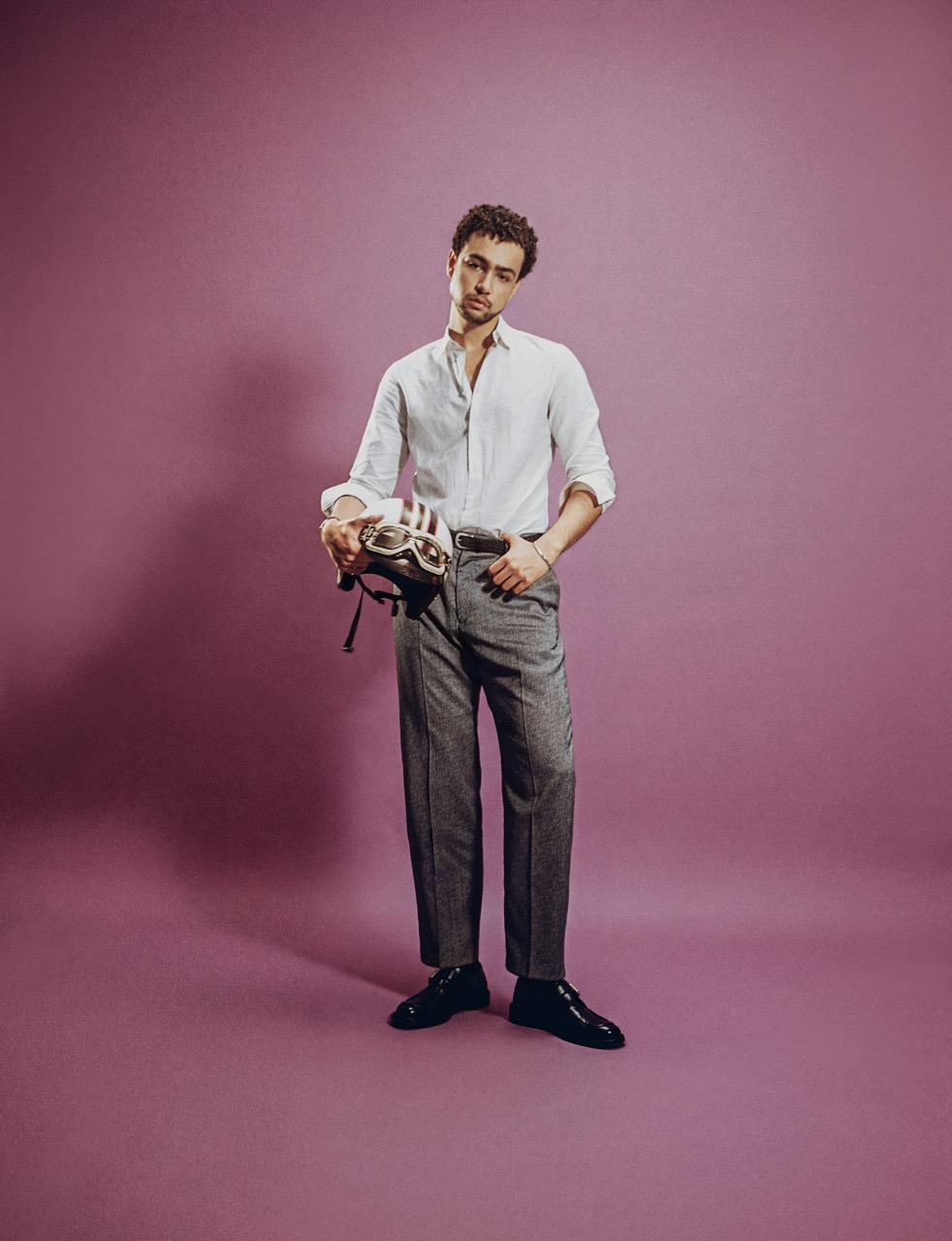
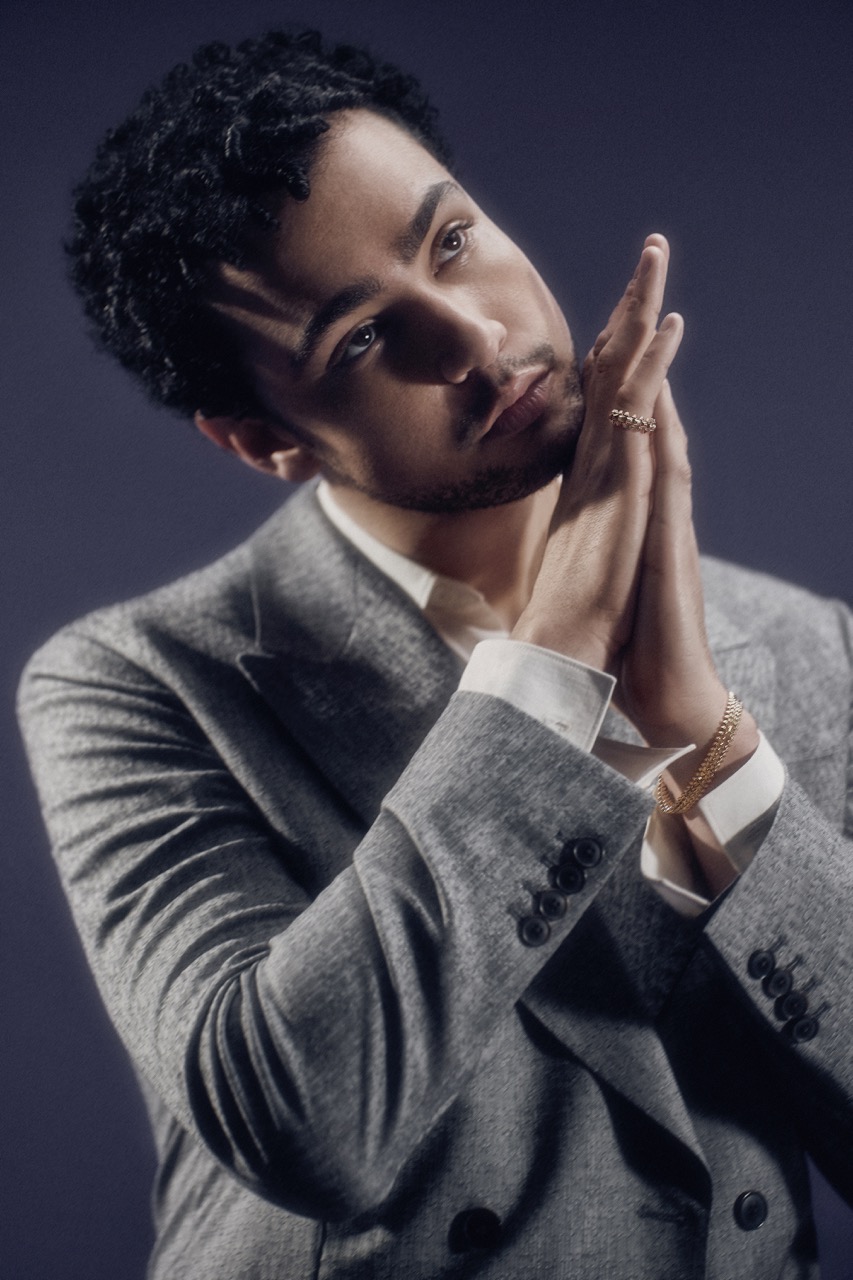


Still, Madekwe values his time at the BRIT school and is supportive of the next generation. He did a Q&A with students the morning of the shoot and celebrated the achievements of fellow alumni FKA Twigs, Lola Young, Olivia Dean and RAYE at the Grammys a few days earlier. He himself has earned a BAFTA Rising Star nomination at the upcoming awards ceremony. Together, they prove artists of colour can garner universal appeal by being unapologetically themselves, where their race doesn’t have to be the sole focus of their art or the stories they tell. A point that Madekwe is passionate about when choosing his roles. “Can they just be heartbroken? Can they have just lost their job?” he asks, with the fervour of an actor who knows too often that they can’t. “We all experience heartbreak and love and fear and happiness and joy and firsts.”
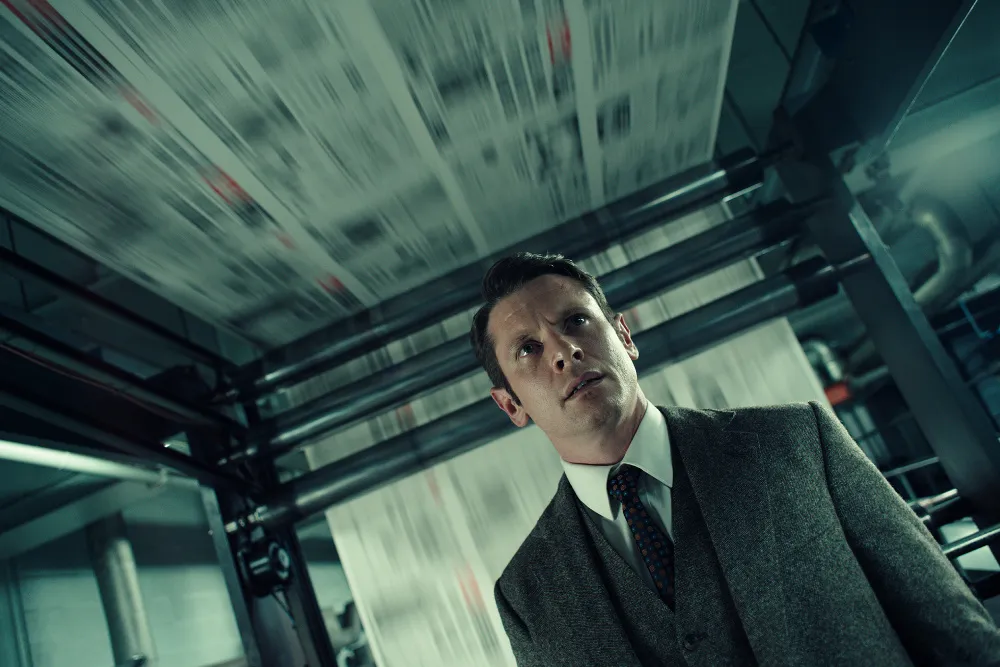
With films like Teen Spirit (2018) and Gran Turismo (2023), plus his latest crime thriller series Steal, in which Madekwe plays a trade processor at a pension management fund embroiled in an armed heist, the actor has relished exploring characters where the central conflict isn’t linked to heritage. Yet he does value colour-conscious casting, whereby a role is shaped to the actor portraying it. “I’ve worked with lots of directors who have been so open to collaboration and made it so I’m not scared to bring my full self to these characters,” he tells me. “It can be something as small as he should be wearing a headscarf in a scene when he goes to bed. It’s a subtle and easy tweak to make that person’s life feel richer and actually more relatable on screen.”
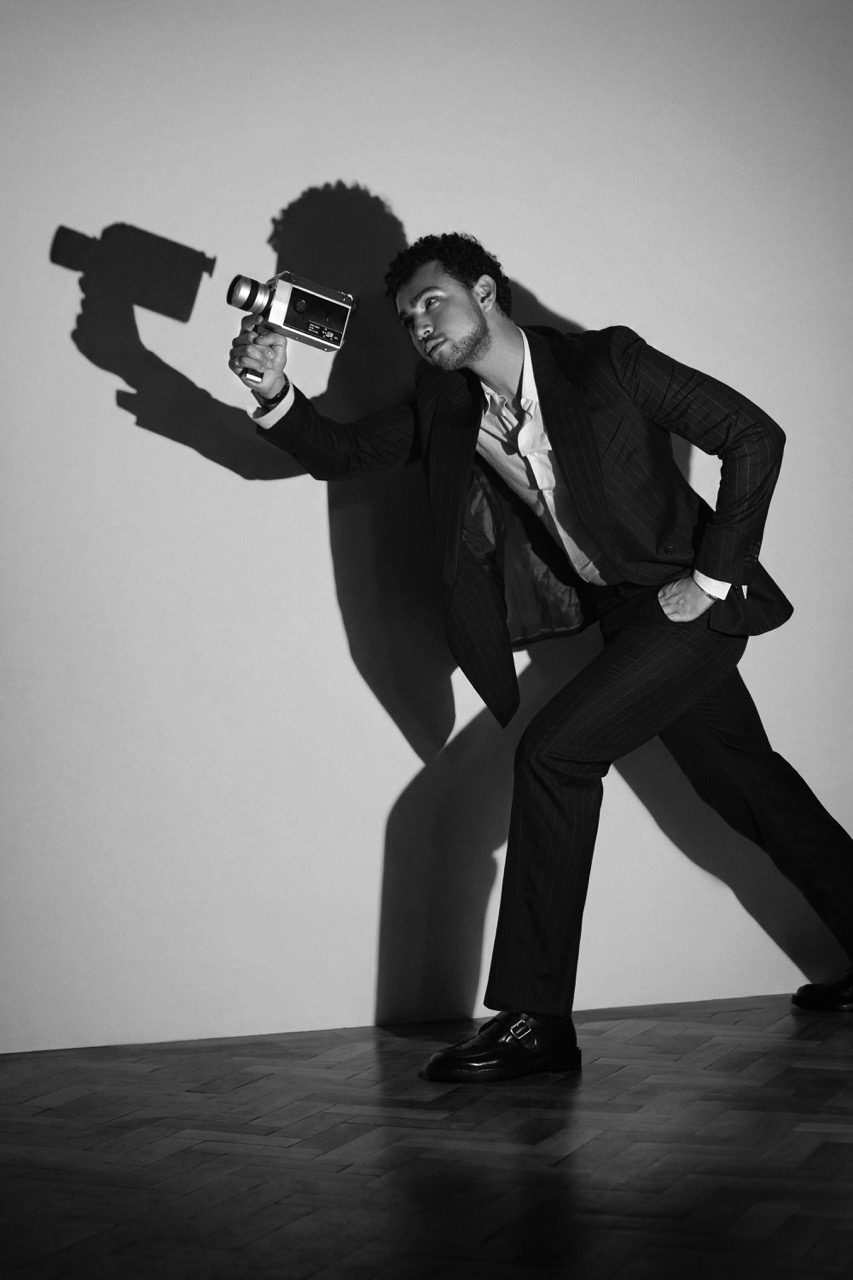
Archie Madekwe. London, February 2026. Archie is wearing a Tank Louis Cartier watch, a Clash de Cartier ring and Clash de Cartier bracelet and a Paul Smith Navy pinstripe suit with cotton shirt and leather shoes.
Madekwe’s breakthrough came with his role in Saltburn as Farleigh, a mixed-race cousin of Jacob Elordi’s elitist lead, and an antagonistic character precariously negotiating the upper echelons of a white family estate. “She’s a person of colour and has been so great at finding interesting ways of telling stories with people from everywhere in the world,” he says of casting director Kharmel Cochrane, noting her conversation with Fennell about the casting of the film’s footmen. “They became people of colour, and that added so much to the wider questions of Farleigh–his way of looking inward and projecting.”
I mention an underlying racial tension I observed in Lurker, a sharply tuned film in which Madekwe plays Oliver, a musical artist on the precipice of superstardom, but whose inner circle is infiltrated by Matthew (Théodore Pellerin), a parasitic fan seeking obsessive control over the star. I point to the history of black artists having their careers puppeteered by white men. He takes a moment to consider this.
“That’s such an interesting way to look at it, but to be honest, I wasn’t thinking about that,” he answers. “Partly because Oliver’s in a place in his career where he is so new, and we were telling Oliver’s story just before that [puppeteering] started to happen.”
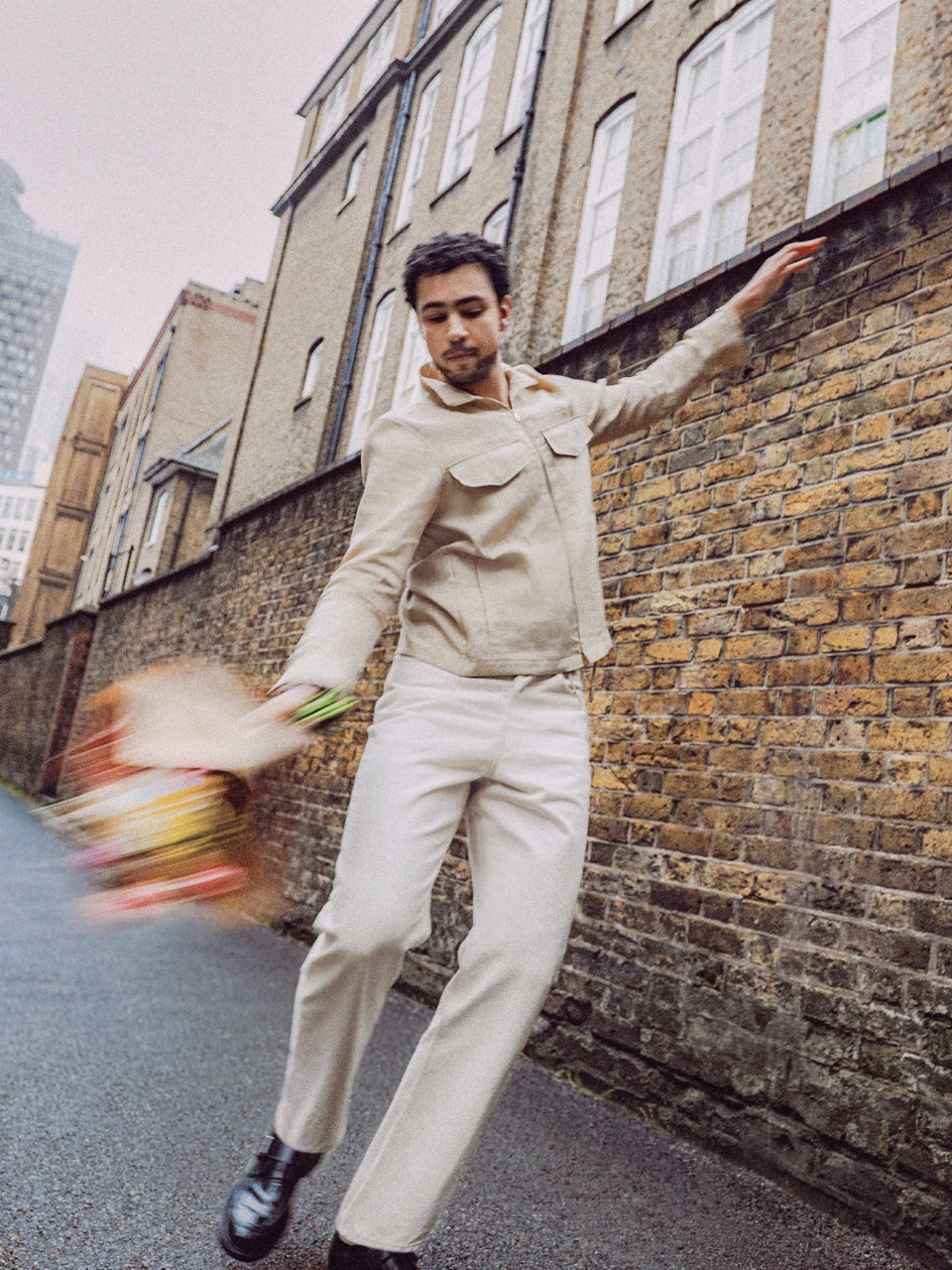
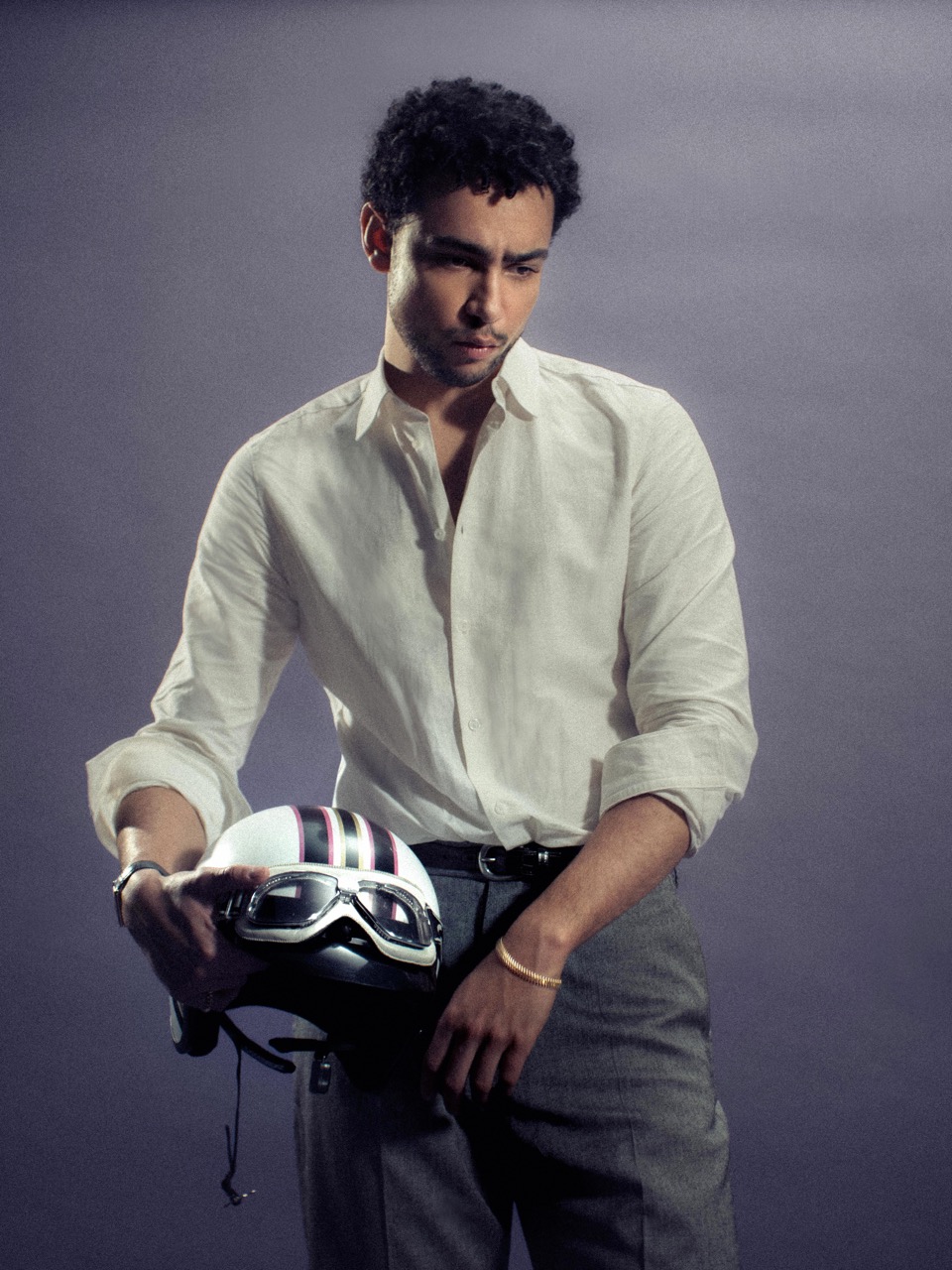
Archie Madekwe. London, February 2026. Archie is wearing a Paul Smith cream linen zip jacket and denim jeans, with a Tank Louis Cartier watch and Clash de Cartier ring and Clash de Cartier bracelet.
Brimming with the psychosexual tension of films such as Single White Female (1992) and The Talented Mr Ripley (1999) but attuned to the contemporary pop culture lens of Ingrid Goes West (2017), Madekwe and Pellerin exude a disquieting chemistry, where the push and pull of power simmers with foreboding realism. “The relationship between Matthew and Oliver is dark,” he says. “Oliver is fighting to stay afloat, and we’re seeing him in a dangerous place, working out this weird intersection of: Do I want to be famous? Do I want to make good art? How do both of those things intersect, and do I want to keep this person around if it means I get those things?”
One might glean some overlap between the creative choices of Oliver and Madekwe, who has had to make smart choices about his career trajectory. He’s had to say ‘no’ to a lot of offers to play dark-skinned American historical figures: “I would never want to play those parts, I’d be setting myself up—it’s absolute crucifixion.” He’s also had to delete a few reviews from his Letterboxd account after a follow from Charli XCX put avid users of the platform in his direction. “They were screenshotting my reviews real quick, because I was really giving reviews,” he laughs. “I was like, Okay, time to think—no more fun.”

“We’re not afraid to show the bumps and the bruises and the grey areas.”
Archie Madekwe – on British cinema
No more fun on Letterboxd, maybe, but there’s tons more to be had in Madekwe’s future. He’ll soon start shooting in his hometown for Bijan Sheibani’s feature debut, The Arrival, playing long-lost brothers with Kingsley Ben-Adir. “We’re not afraid to show the bumps and the bruises and the grey areas,” Madekwe, who hints to developing his own projects, says of British Cinema. “I remember watching [Steve McQueen’s] Hunger, and Shame and a lot of Andrea Arnold and feeling we’re not afraid to look at what’s happening around us and say, ‘this story’s worth telling.’”
First, however, there’s the BAFTAs, where he’ll be competing against Robert Aramayo, Miles Caton, Chase Infiniti and Posy Sterling for the Rising Star title of 2026. “It’s beyond words,” he says of the nomination, but whether he wins or loses is less of a concern than his mum having a good time. “I get a text probably every 10 minutes about what she’s gonna wear,” he laughs. “It’s a very surreal time for everybody. When I was younger, I was dictating to my parents what I was going to do, auditioning for the BRIT School, the National Youth Theatre. This was not the world that I grew up in, but they just supported me throughout, so it’s a special thing for them to see it happening.”
No matter what goes down on February 22nd, one thing is for sure: Madekwe is a star on the rise—and he’s ready for even more close-ups.
Steal is available to watch now.
www.eebafta-risingstarvote.co.uk
Full credits
Grooming: Nadia Altinbas
Videography: Alex Stenhouse
Video editor: Alice Wade
Extra videography: Luke Georgiades
Production: Lauren Southcott
Creative Assistant: Kitty Spicer
Styling assistant: Samela Gjozi
Runner: Tigerlily Campell Smith
Title treatment: Broadpeak Studio
Continue Reading