

Chloe Zhao’s moving drama Hamnet has been wrongly labelled ‘emotionally manipulative’ says our columnist. And anyway, what if we could all do with a good weep?
Doesn’t everyone love a good cry? A mix of built-up frustration, anger, guilt and all the gritty nastiness of everyday burdens being released en masse. Crying is especially helpful when death is all around us. It’s on the 8 o’clock news, where we witness an unjust act committed somewhere far away or a murder right down your street. It’s cathartic and allows for a regulation of the burdens kept deep within. When I need to cry, I listen to LCD Soundsystem’s Someone Great, a haunting recount of James Murphy’s deceased therapist. It’s not just music that allows me this act of self-purification; film and television has this ability too. In 2020, a year chock full of death, I wasn’t able to cry until I made myself watch—and rewatch—Jacques Demy’s The Umbrellas of Cherbourg. Like clockwork, every time I get to the ending where Guy and Geneviève stand in his snowfallen petrol station, lying to one another about their true feelings, I feel a stinging prick at the back of my eyes, and then come the floods.
I haven’t always been a fan of a tactical cry. As a teenager, I was appalled by the number of YA novels and fanfiction recommended for how quickly they would make me sob. John Green’s The Fault in Our Stars was the main target of my disdain. I rendered it manipulative and cruel, a fiction designed only to pull at your heartstrings and compress your tear ducts into submission. It’s about teenagers with cancer, and those same teenagers falling in love. During a viewing with childhood friends, they all, one by one, fell into a rhythmic chorus of hysterical sobbing. I looked around, confused as to why they were all feeling something I wasn’t. I had, like most people, an uncomfortable relationship with cancer: my grandfather had died from it two years prior. And yet, I felt nothing. So I did what any other fifteen-year-old would do, and I pretended to cry. Slightly sociopathic, looking back, but what I recognise now, outside of my childish desire to fit in, is that crying can allow us to open up about our deepest fears and vulnerabilities.
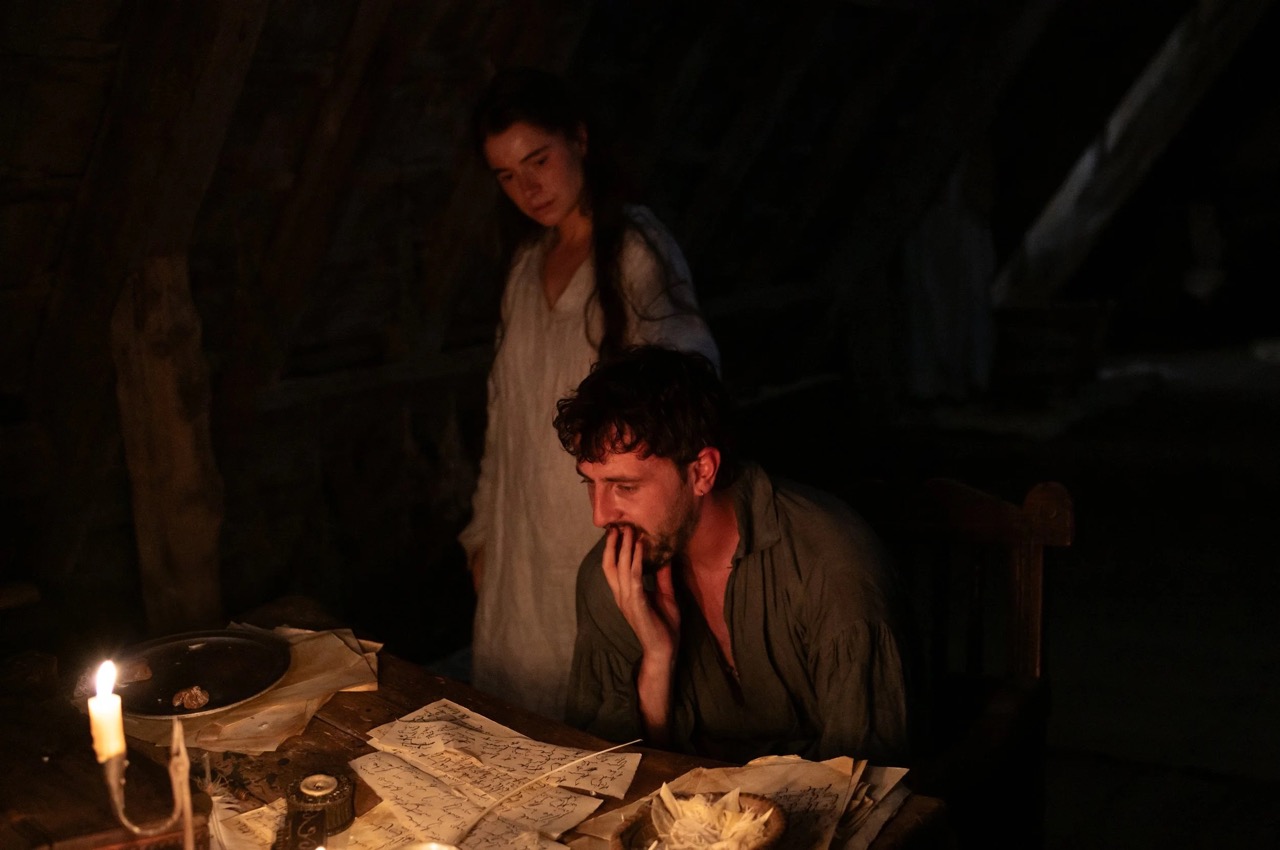
Still from Hamnet, directed by Chloé Zhao. Photography by Agata Grzybowska.
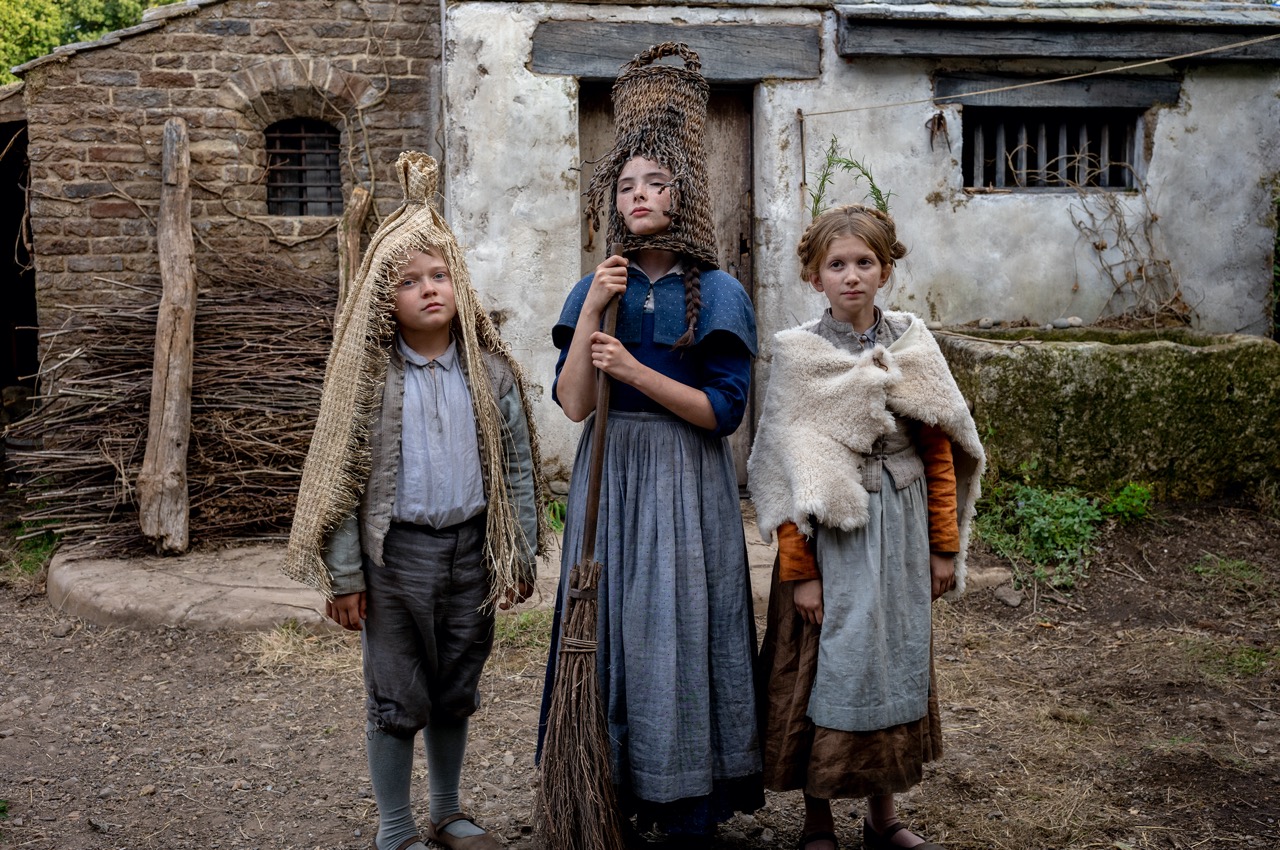
Hamnet presents a similar complication. Chloé Zhao’s take on Maggie O’Farrell’s reimagining of the family life of William Shakespeare and the untimely death of a child is as sad as it comes. When Agnes (Jessie Buckley) meets Will (Paul Mescal), the two find themselves drawn to each other by a magnetic or mystical force. Their union is quick and passionate, with Will finding himself enthralled by Agnes’s free-spirited nature. This is starkly contrasted by his inability to let go and fall headfirst into his writing, a byproduct of his abusive father’s near-constant judgment. To save himself from a growing sense of ennui, Will moves to London and finds a home for his plays, leaving Agnes in Stratford with their three children, Susanna, Judith and the film’s namesake, Hamnet.
Some critics have accused Hamnet of being ‘trauma’ or ‘grief’ porn. In literature, the trend of misery memoirs and misery lit has long inspired debates over whether a book that engages with trauma for trauma’s sake, inflicting harm onto its characters, makes for compelling writing. More importantly, what does it say about readers who seek out books for such catharsis? A similar phenomenon exists in film: adaptations of misery lit such as My Sister’s Keeper and Precious. All intend to tug at heartstrings and stir complex feelings without any effort to build in the deserved gratification of crying. Identical claims have been made against Hamnet, suggesting that the film’s emotional high points manipulate viewers into crying or, as the Independent described it, a “blunt spade designed to whack you over the head until you weep from the pain.”
Still from Hamnet, directed by Chloé Zhao. Photography by Agata Grzybowska
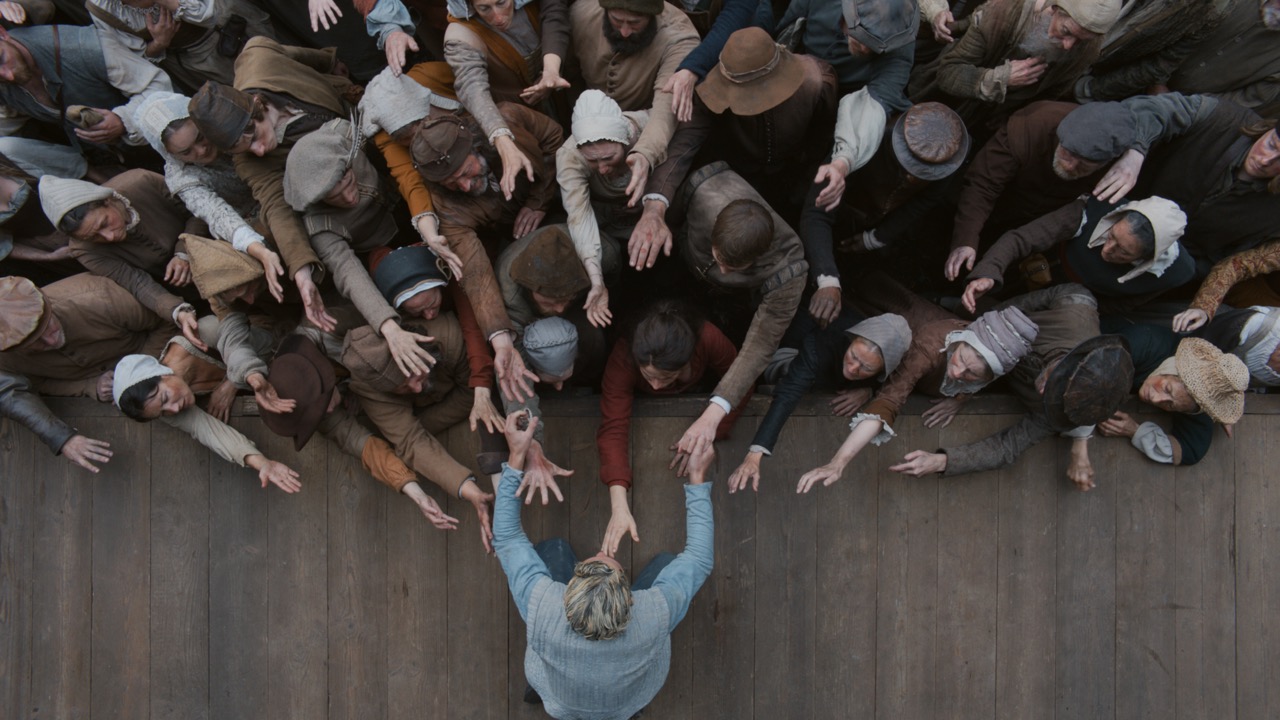
An example of this argument plays out in the film’s finale that takes place during a performance of Hamlet. Towards the end of the play, Agnes reaches out to touch the actor playing Hamlet. Her body is surrounded by a sea of arms reaching towards him. It’s a fictitious part of an already fictitious film—a hat on a hat of fanfiction. The performance of Hamlet touches Agnes; language barrier be damned, it’s the performance that captivates her, allowing her to meet her husband in the middle of their shared grief and for her son to be alive again for an illusory moment. In combination with Max Richter’s score “On the Nature of Daylight”, featured previously in Shutter Island and Arrival, Agnes lets go of her son, and Hamnet walks into the darkness of the stage door.
I understand why this might not work for a Shakespeare purist, but nothing here reads as grief porn. Is there a formula at play here, the use of music swelling during a poignant moment? Yes, there is, but that isn’t unique to Hamnet. When I watch Star Wars: Revenge of the Sith, I cry because of John Williams’ score, “Anakin’s Betrayal”. The first few notes kicking in as Order 66 is implemented twist at me, and I cry. There’s no rhyme or reason why watching Anakin Skywalker turn to the dark side allows me to tap into myself in a way that some complex dramas do not. George Lucas isn’t engaging in a Machiavellian form of torture; he’s telling a story.

“The alleged overwroughtness of this death scene felt realistic to me because when my own mother died in the middle of the night, I, too, wailed like a banshee. My voice rough, body and mind in a daze of confusion, pleading with God.”
Haaniyah Awale Angus
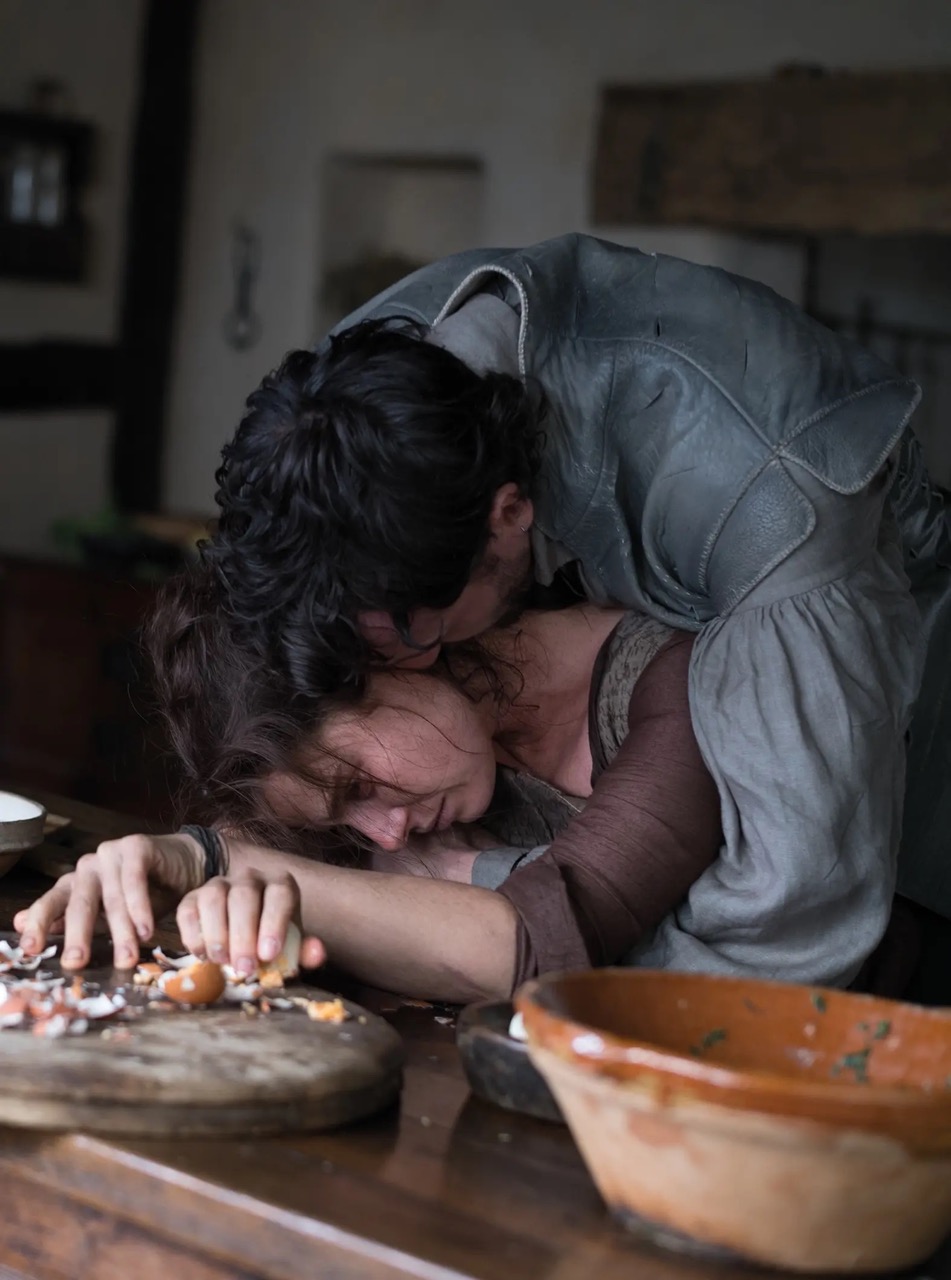
The scene of Hamnet’s death also strikes me as another odd entry into this classification of trauma porn. In the sequence, the young Hamnet pleads with his twin sister not to pass, taking matters into his own hands by swapping their places to trick death. It is both an immensely heartbreaking and brave sacrifice. When Agnes wakes to discover that her prayers for one of her children to survive have inadvertently damned the other, she screams into the void, his body limp in her arms. Sitting amongst a theatre of people at my local Odeon, I felt a tear fall down my face. Her screams sound familiar, the hoarseness of her throat settling into my own.
I am no historian, I can’t speak to the accuracy of O’Farrell’s research, but I don’t really care to. My own knowledge and understanding of Shakespeare is coloured by spotty secondary school attendance in the UK and high school in Saudi Arabia, where his work found little relevance to my teachers. I can spot references when watching movies and TV shows, but I can’t say I understand Shakespeare on a molecular level. The same goes for Zhao, who has said that her educational background in Beijing similarly limited her understanding of Shakespeare. On the set of Hamnet, she stated that she understood a third of the to be and not to be speech, a brave admission for a director of her calibre. Hamnet hinges not on pre-espoused knowledge but on the feeling of the performances at hand. A sentiment supported by Mescal, who reportedly informed Zhao that when Shakespeare is performed correctly, the sensations it stirs within us become the only form of language needed.
The alleged overwroughtness of this death scene felt realistic to me because when my own mother died in the middle of the night, I, too, wailed like a banshee. My voice rough, body and mind in a daze of confusion, pleading with God. That confusion turned into anger, and bitter resentment—much like Agnes—at everyone’s ability to go about their days. I found it a realistic portrayal of grief, and I was frankly shocked to discover a wave of accusations of manipulation. Could it be that my predisposition to grief has shaped me into a more malleable viewer? Softened my edges, where, years back, I too might’ve found Hamnet unbearable? In all honesty, I prefer the version of myself willing to engage in sentimentality over brackish cynicism.
Still from Hamnet, directed by Chloé Zhao. Photography by Agata Grzybowska.
When I watched Andrew Haigh’s 2023 All of Us Strangers (another Mescal weepy) shortly after my mother’s death, I was warned against doing so. My friends informed me of its reputation for making you cry. Ignoring them, I sat down in my childhood bedroom, braced myself to be overcome with sorrow and ooze out stockpiled tears, and yet, nothing. I felt slightly disappointed that I hadn’t resonated with the film and confused that I still couldn’t cry. Despite it being a film about parental loss, there was no grand conspiracy at play to trick me into breaking my week-long avoidance of crying. Haigh’s goal was not to elicit tears but to create a pensive drama about a man’s inability to accept his past. The lack of my flooding tears wasn’t a byproduct of failed arm-twisting; it was merely a lack of connection to the material at hand.
I wonder if the online fervour around Hamnet and how sad it is has contributed to the growing resentment? Or is it that Hamnet feels unworthy of vulnerability? I would be lying if I didn’t sense undertones of snobbiness in the criticism aimed at both the film and Zhao’s understanding of Shakespeare. In any case, given the times we find ourselves in, is it so bad that a film gives us the physical—and collective—release of crying? If there’s any space that lends itself to allowing us the full breadth of human experience, it’s the cinema. In her overly memed AMC ad, Nicole Kidman says that we come to cinemas to laugh and cry and to be reborn. And reborn, I was watching Hamnet—a meditation on grief, love, change and acceptance. From my research, that seems very much in line with Hamlet, but hey to cry or not to cry, that is the question.