

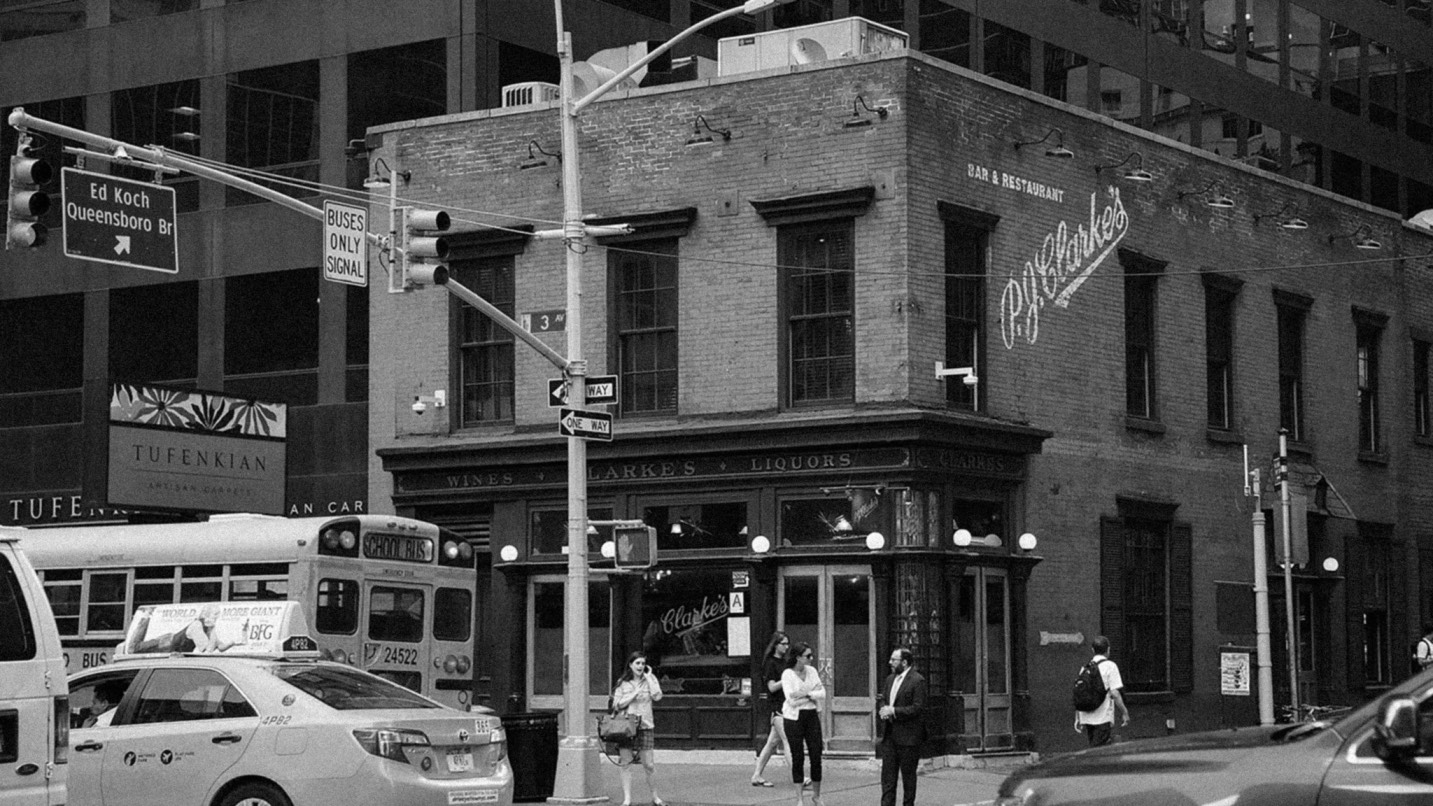
Jason Diamond pens a heartfelt love letter to New York restaurant and bar P.J. Clarke’s, which saw some of culture’s finest stars dining there at some point or another.
Here’s a dirty little secret about dining in New York City that I don’t tell people very often: even if a place isn’t especially good, if it’s a little overpriced and the menu hasn’t changed in 25-50 years, I will reserve some room in my heart for it if it was featured in a favourite film.
Take 21 Club, for instance. The venerable Midtown spot was featured in both 1957’s Sweet Smell of Success as well as 1987’s Wall Street, and continued to cater to J.J. Hunsecker and Gordon Gekko—the rich, powerful, and awful—types up until it closed in 2020. It was expensive, the burger was decent but highly overrated, and I was almost certainly the lowest-class diner there whenever I went. And I loved it.
21 Club is gone—although there are always rumours it will be revived—but there are still a few places that do the trick when I want that mix of nostalgia and feeling like I’m in a movie, even if the steak is overdone and the frites are soggy. Russian Tea Room, one of the last of the old 1970s and ‘80s power lunch spots, will always remind me of Tootsie; Meg Ryan’s fake orgasm scene in When Harry Met Sally takes place over pastrami at Katz’s, but the Loeb Boathouse in Central Park and Café Luxembourg on the Upper West Side also make appearances in the rom-com. Kermit the Frog tries to start a whisper campaign for his Muppets Take Manhattan musical at Sardi’s, Tavern on the Green shows up in Ghostbusters, Martin Scorsese filmed a scene in his short film in the 1989 New York Stories anthology at Odeon, and Whit Stillman’s Doomed Bourgeois in Love characters spent a little time at J.G. Melon in Metropolitan. Some of these spots deliver, others rise just above the mediocrity of a suburban chain restaurant. Yet no matter how much I may complain about the meal or service afterward, I will happily go to any of these places time and time again. But you will never hear a bad word from me about P.J. Clarke’s.

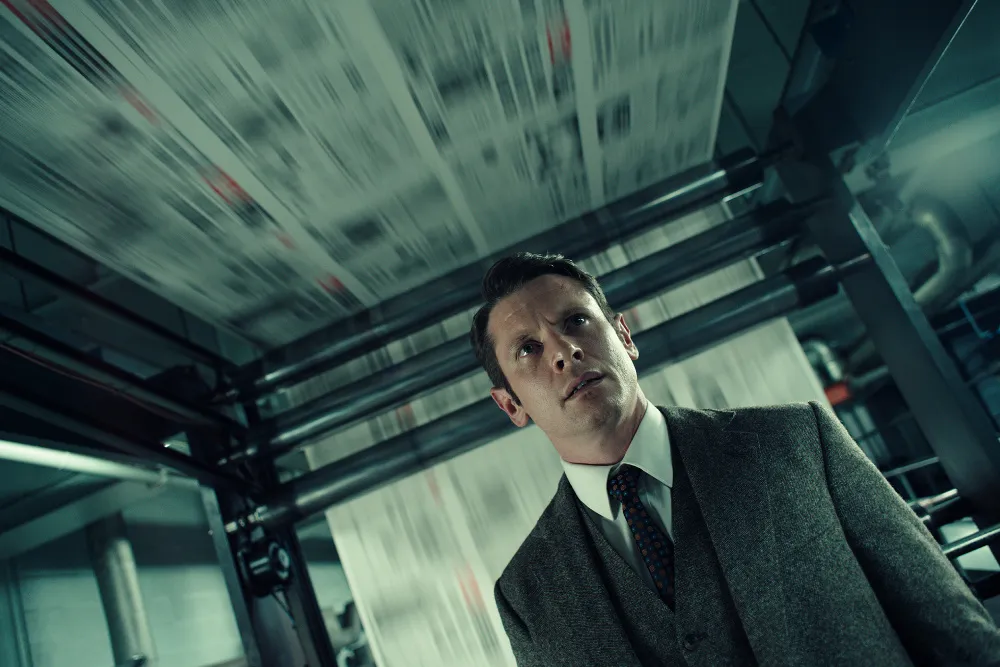
Still from Sweet Smell of Success (1957) taking place in P.J. Clarke’s. By Alexander Mackendrick.

“You can walk in knowing Sinatra, Nat King Cole, Hedy Lamarr, Elaine Stritch, Elizabeth Taylor, and Peter Falk all dined there at one point or several, but they didn’t eat Dover sole, some high-minded fusion of cuisine from France and one of the Indian or Asian countries it brutally once reigned over, or whatever the gastronomical du jour was at the time.”
Jason Diamond
Originally opened as a bar in 1894, P.J. Clarke’s sits on the corner of Third Avenue and 55th Street, meaning that it’s a hair shy of Upper East Side status, nearly at the top of Midtown. For those who don’t know, Midtown is the heart of the city. It’s where Times Square, Broadway, and many of the city’s most iconic skyscrapers and office buildings are, which means you also have lots of tourists and commuters everywhere you look. The Upper East Side, meanwhile, is better known as a more affluent W.A.S.P.s nest where Holly Golightly walked home to after a long night out and Tom Wolfe’s The Bonfire of the Vanities yuppies live. Third and 55th has never exactly been cool like the Bowery or Tribeca—although walk two blocks down and you’ll hit 53rd & 3rd, the corner the Ramones famously sang about going to when Dee Dee Ramone needed to score a few extra bucks by turning tricks—and that might be part of P.J. Clarke’s allure.
While P.J. Clarke’s might be a schlep from somebody coming from downtown, uptown, or nearly anywhere else in the five boroughs, it is close to the purposely secluded area known as Sutton Place. While privacy in New York City is next to impossible, Joan Crawford, Peter Lawford, Marilyn Monroe, and some of the city’s most famous socialites and power players have all called the little enclave home at points. And if I had to guess, just like the dark Irish steakhouse Neary’s and Michael Chow’s opulent Mr. Chow found success in the same neighbourhood because of who it attracted more than what it served, famous people have always loved P.J. Clarke’s. Even its bathroom has a celebrity story. When he looked at the towering art deco urinals in the bathroom, Frank Sinatra is rumoured to have joked. “You could stand Abe Beame in one of them and have room to spare,” about the city’s mayor. Beame stood about 5″1 with a few extra centimetres, in case you need a visual approximation.
I once called the original P.J. Clarke’s (there are now three more NYC locations and two in other cities) an “old-school preppy bar,” ranking it alongside such clubby spots with chequered green tablecloths and all kinds of random crap on the walls as the aforementioned J.G. Melon, Old Town Bar near Union Square also in Manhattan; the Tombs in Washington, D.C., and even Harry’s New York Bar in Paris. All of these places remind me of each other, because they evoke a certain mood, look somewhat similar in a cool, beat-up sort of way, and they all generally attract the sort of clientele I don’t especially like—for the most part. The frat boys, stockbrokers, and whatever sort of cliche douchebag haunts any city with a preppy bar. They may come and go, but now and then, somebody will walk through the doors and become part of the history and lore of the place. I can look past the tourists at Harry’s since George Gershwin and Humphrey Bogart seemed to love it once; Elaine’s, another long-gone New York City haunt that once counted Michael Caine, Woody Allen, George Plimpton, and Gay Talese among its regulars, was the epitome of this rule. Simply put, that place was not very good, but it crushes me that it’s no longer around.
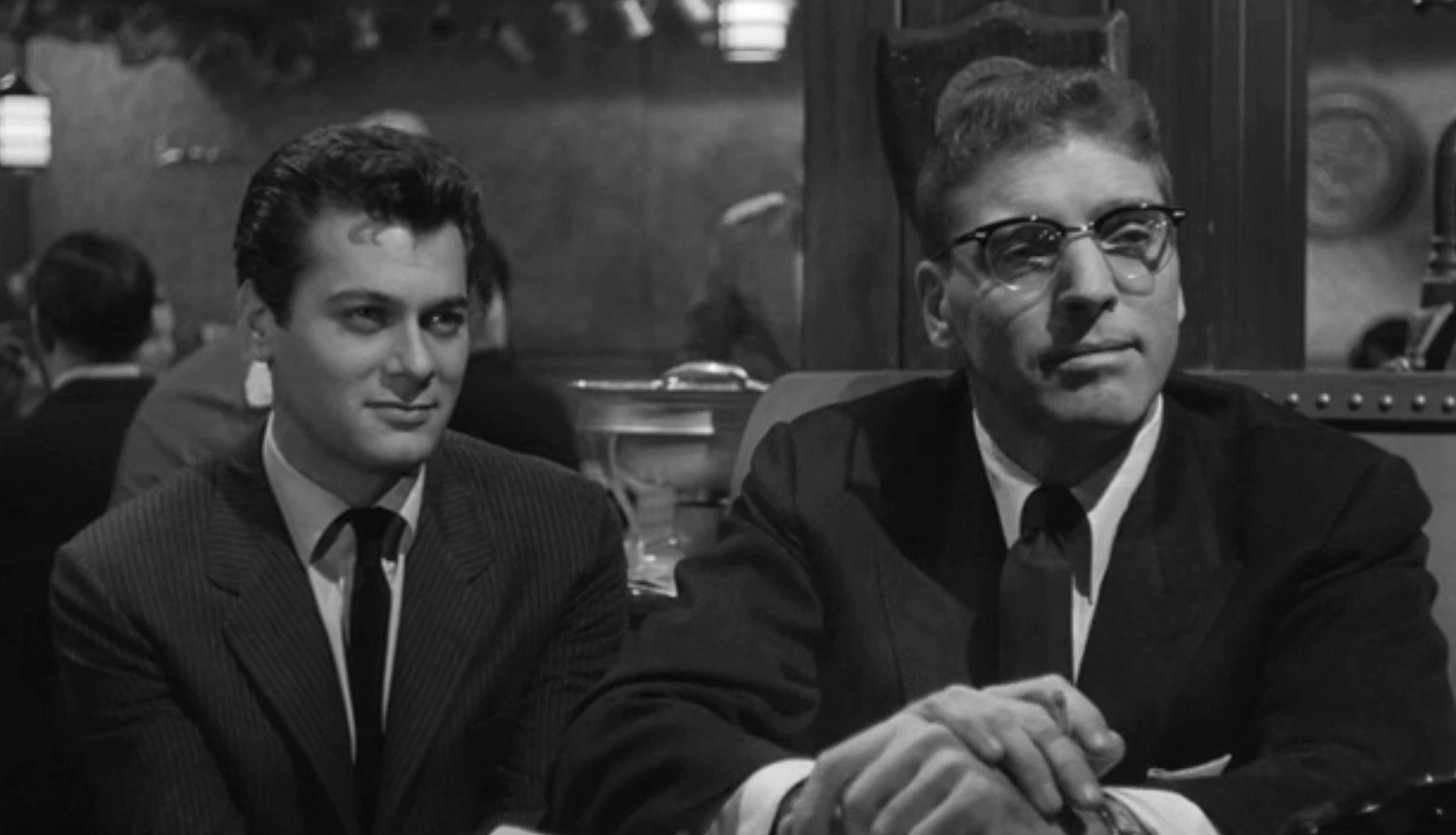
Still from Sweet Smell of Success (1957) taking place in P.J. Clarke’s. By Alexander Mackendrick.
That’s the key. Everywhere you go, it doesn’t matter what block or neighbourhood, you can find something that could occupy your interest if you’re open. And P.J. Clarke’s is that distilled into a bar. It’s everything great about New York City in one place, which is to say it’s wonderful and not great at the same time.
Jason Diamond
Thankfully, P.J. Clarke’s still stands, and you can feel the history when you go in there. It hasn’t been sanded out and given a new coat of Millennial Pink paint; it’s still got some grit that you can’t fake. You can walk in knowing Sinatra, Nat King Cole, Hedy Lamarr, Elaine Stritch, Elizabeth Taylor, and Peter Falk all dined there at one point or several, but they didn’t eat Dover sole, some high-minded fusion of cuisine from France and one of the Indian or Asian countries it brutally once reigned over, or whatever the gastronomical du jour was at the time. What these people ate has almost totally been lost to time, but if one had to wager a guess, it’s likely hamburgers were involved. Probably martinis, maybe a few Old-Fashioneds, and more than a couple of beers. P.J. Clarke’s is a bar, first and foremost. Today, because of rent, food trends, non-stop competition all around for customers, and about 10,000 other factors, P.J. Clarke’s has a large menu. I tend to get a round of oysters, then a drink, then either more oysters or fish and chips. But if I’m feeling classic and in need of some iron and heartburn, then sure, I’ll order a burger.
But, again, this isn’t about the food. Have I had some very average meals at P.J. Clarke’s? I think so, but I don’t care. I go there strictly because it’s a great place just to be. It’s perfect in the New York City sense in that it’s tight, loud, and most of the customers you get stuck around are obnoxious, but that’s Manhattan for you. Everything is cramped, noisy, and filled with some very detestable people. But it’s always interesting. That’s the key. Everywhere you go, it doesn’t matter what block or neighbourhood, you can find something that could occupy your interest if you’re open. And P.J. Clarke’s is that distilled into a bar. It’s everything great about New York City in one place, which is to say it’s wonderful and not great at the same time.